
India's high quality labour-intensive goods to get benefit from FTA with UK; though overall gains limited: GTRI.
India's high quality labour-intensive goods such as apparel, footwear, carpets and cars will benefit from the removal of import duties by the UK, under the proposed free trade agreement between the two countries, according to think tank GTRI. However, the overall gains for India will be limited because most of the goods from here are already entering the UK at low or zero tariffs (import or customs duties), the Global Trade Research Initiative (GTRI) said.
In 2022-23, India's merchandise exports to the UK were valued at USD 11.41 billion and out of this, USD 6 billion worth of goods such as petroleum products, medicines, diamonds, machine parts, airplanes, and wooden furniture entered Britain at zero levy, it said.
'The FTA is expected to have a limited impact on increasing these exports because over half of Indian products already enter the UK with low or no tariffs. The average duty on goods imported from India into the UK is 4.2 per cent,' GTRI Co-Founder Ajay Srivastava said.
However, there will be gains from reducing duties for Indian exports worth USD 5 billion and those items include textiles, apparel (shirts, trousers, women's dresses, bed linen), footwear, carpets, cars, marine products, grapes, and mangoes.
'These products face relatively low to moderate tariffs in the UK,' he said.
Citing examples, the think tank said that duties on yarn and fabric are 4 per cent, while tariffs on shirts, trousers, women's dresses, and bed linen range from 10 per cent to 12 per cent.
Similarly, handbags and trunk cases attract 8 per cent tariffs, levies on footwear vary from 4 per cent to 16 per cent.
These products will benefit from the FTA's tariff reductions by the UK.
Chief negotiators of both the countries are negotiating the pact in the national capital and talks are at a crucial stage, as the negotiations are expected to close by end of this month.
GTRI added that while the duty elimination in the UK can help Indian exports, significant growth requires improvements in product quality and signing an FTA alone may not lead to a substantial increase in India's labour-intensive goods exports.
For instance, India's textiles and apparel exports to Japan did not see significant gains from the free trade agreement, Srivastava said.
From 2007-09 to 2019-21, India's exports to Japan grew from USD 257.7 million to USD 368.6 million, a cumulative growth of 43.1 per cent, while India's global exports grew by about 67.9 per cent during the same period.
Therefore, the modest increase in exports to Japan may be attributed to natural growth factors rather than the FTA, he added.
Further, UK exporters would gain immediately after India eliminates high tariffs on most British products, it said.
India's merchandise imports from the UK were USD 8.96 billion in 2022-23. Out of this, it said, 91 per cent of total merchandise imports from the UK enter India on payment of average to high tariffs duties.
For example, the tariff on cars is 100 per cent and on Scotch whisky and wines are 150 per cent.
The simple average tariff in India on goods imported from the UK is 14.6 per cent, it added.
According to GTRI, British products which will gain from the FTA (free trade agreement)-led tariff reductions include precious metals (silver, unwrought platinum and gold, diamonds); metal scrap (aluminium, copper waste); petroleum products; scotch and other alcohol; machinery (turbojet, taps, valves); medicine; and make up items.
The UK exported USD 2.7 billion worth of precious metals; and USD 374 million worth of Scotch and other alcohol into India during 2022-23.
On automobiles, it said: 'for luxury cars like those from JLR, Bentley, Rolls-Royce, and Aston Martin, the UK might want zero tariffs, but India could reduce them from 100 per cent to 50 per cent. India might also consider allowing a few thousand units at a 25 per cent tariff'.
It added that India could reduce tariffs from 150 per cent to 50 per cent over a few years, similar to what it did for Australian wines.
These sectors in India have had high tariff protection, even more than agricultural products. Significant tariff cuts, especially for wines, will help the Indian market grow.
On Rules of Origin, an important issue in the agreement, GTRI said India tends to prefer more conservative rules compared to most developed countries, leading to extended discussions and negotiations in its FTA talks, including with the UK.
'However, India may need to be more flexible in its Rules of Origin framework, especially as its firms in sectors like chemicals, electronics, and synthetic textiles are increasingly using imported inputs,' it said.
Rules of Origin ensure that products from third countries do not receive FTA benefits unless they undergo significant transformation in the exporting country.
Source: economictimes.indiatimes.com

India s goods exports rise in signs of trade recovery.
India’s merchandise export growth turned positive for the first time in the current financial year with a 3.86% year-on-year rise in August at $38.45 billion, commerce secretary Sunil Barthwal said on Friday, citing revised figures that broke a monthly contraction sequence which started in February 2023 due to global headwinds.
Initial data released on September 15 reported a 6.86% y-o-y dip in merchandise exports in August to $34.48 billion. Officials said revisions of export figures are normal as some consignments that miss the customs radar are updated later.
According to the official data released on Friday, Indian merchandise exports year-on-year dipped by 2.6% to $34.47 billion in September 2023, while imports also fell by 15% to $53.84 billion, the 10th monthly decline in a row. This led to narrowing of the merchandise trade deficit to $19.37 billion in September, the lowest in five months.
Merchandise exports contracted by 8.77% to $211.4 billion in the first six months of current financial year (April-September 2023), the data showed. Imports also fell by 12.23% to $326.98 billion during this period with a trade deficit of $115.58 billion.
Commenting on the overall (merchandise and services combined) trade performance, Barthwal said 'green shoots' are visible on the export front, despite global headwinds and adverse geopolitical developments. According to the latest data, the fall in overall exports (merchandise and services combined) in April-September 2023 has narrowed to 2.97% on an annualised basis. Overall imports during the period are estimated to contract 10.14% over April-September 2022, it said. As actual services data comes with a lag, figures for services in September are an extrapolation of the previous month’s data.
Barthwal said 'there is optimism' for the coming months since the services sector is doing well, and the fall in merchandise exports has tapered. 'Weekly trend is also positive in October (2023),' he said, adding that India’s exports may see a positive growth in FY24. The World Trade Organisation (WTO) has, however, downwardly revised its global trade forecast from 1.7% in April to 0.8% in October.
The optimism comes at a time when India is making efforts to explore new markets and import substitution through ?1.97 lakh crore production-linked incentive (PLI) scheme. India has been supplying office equipment to Turkey; and has found takers for pharmaceuticals and drug formulations in Finland, Malta and Philippines.
'India’s merchandise trade deficit compressed considerably to $19.4 billion in September 2023 from $28.0 billion in the year-ago month, with a sharp contraction in imports reflecting the impact of lower commodity prices,' Aditi Nayar, chief economist and head (research and outreach), ICRA Ltd, said.
'The narrower-than-expected merchandise trade deficit print augurs well for the current account deficit for Q2 FY2024, although it is expected to enlarge vis-à-vis the Q1 levels. Crude oil price volatility amidst geopolitical tensions remains a risk to the CAD outlook for H2 FY2024,' she added.
Federation of Indian Export Organisations (FIEO) president A Sakthivel said in order to boost the economy there is a need to provide further momentum through easy and low cost of credit to MSMEs, marketing support to promoting overall exports, and GST exemption on freight on exports.
'Also, the interest equalisation support across all sectors of export and providing further extension to the Emergency Credit Line Guarantee Scheme by one more year till March 31, 2024, will provide much-needed cushion during these challenging times. The trade and industry would like to see important FTAs with UK and EU, to see the light of the day to further provide much needed boost to the sector,' he said.
Source: hindustantimes.com

Bangladesh: Imported eggs to arrive in country by this week: Commerce minister.
The first consignment of the imported eggs will arrive in the country within the next three to four days, Commerce Minister Tipu Munshi said.
Munshi said this after inaugurating the sale operations of TCB's commodities at subsidised rate among one crore family card holders through programme at the ward councilor's office near to Dhanmondi Lake in the capital on Sunday.
Earlier in two phases, the government gave permission to import some 10 crore pieces of eggs.
Considering the situation, the government has given approval to 15 companies to import 15 crore pieces of eggs and of them, seven companies have already opened up LCs so far, said the minister.
The government on September 14 fixed the prices of potatoes, onions and eggs in the wake of the exorbitant price hike of these daily necessary commodities in the local market.
According to the rate, per kilogram of potato was supposed to be sold at Tk 35 to Tk 36, per piece of egg at Tk 12 respectively. But, even after a month, the government fixed price has not yet been implemented in the market across the country.
Responding to a query whether the potato import will be allowed, he said the government has not yet given any permission to import potatoes though the government fixed price is ignored in the market.
'We have adequate stock of potatoes. We are monitoring the market spontaneously. If the price does not come down, we will take a decision through discussion with the agriculture minister,' he said.
Source: daily-sun.com
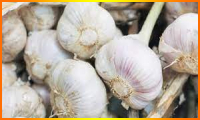
Indonesian: Agriculture Ministry has issued 200 recommendations for garlic imports.
Indonesia's Ministry of Agriculture disclosed on Sunday that its Directorate General of Horticulture has issued at least 200 recommendations for garlic imports with a total volume of 1.1 million tons.
'Well, it is not just for several importers. I convey that the authority for licensing garlic imports belongs to Trade Ministry,' Director General of Horticulture Prihasto Setyanto said.
After the Agriculture Ministry issued recommendations for importing the horticultural products or RIPH, ?importers then submit Import Approval (PI) applications to the Trade Ministry,' he said in a statement released in Jakarta on Sunday.
Setyanto explained that business people must apply for the RIPH (garlic) online through what is called the balance of commodity national system or SINAS NK.
Applying through the SINAS NK which is integrated with the RIPH System has been mandated by the Minister of Agriculture Regulation Number 39 of 2019. If an application meets all administrative and technical requirements, a RIPH will be issued.
Setyanto further said the RIPH is a technical recommendation stipulating that the horticultural products that will be imported meet requirements for quality assurance and safety for consumption. It also applies the principles of good traceability and safety standards for fresh food of plant origin.
'The RIPH is one of the required conditions that business people meet for importing horticultural products,' he stressed.
As for the 2024 RIPH application, the business actors may apply for the RIPH (garlic) according to their compliance in carrying out the mandatory planting and production of garlic as regulated in the Minister of Agriculture Regulation 39/2019, he said.
If a company has met its obligations, the Ministry of Agriculture cq. Directorate General of Horticulture will issue a payment confirmation letter (SKL).
Thus, for companies that have implemented mandatory planting and production of garlic with the issuance of one SKL and no other planting obligations have been completed, they can apply for RIPH in 2024 for up to 4,000 tons. For those having two SKL, they may apply for 5,000 tons.
To date, there have been more than 100 companies that have implemented the mandatory planting and production of garlic according to existing regulations. The ministry has also prepared various monitoring instruments for compliance in collaboration with the Food Task Force.
Acting Minister of Agriculture Arief Prasetyo Adi has earlier emphasized that his ministry is currently instilling an anti-corruption spirit and a spirit of upholding integrity in its ranks.
The spirit is shown by preparing a quick wins program within the next three months, including very fast initiative steps to reform the bureaucracy, especially those related to eradicating corruption, collusion and nepotism (KKN), including through the issuance of a transparent RIPH according to the rules of the game for all garlic importers.
'I believe that the Ministry of Agriculture after this will be a dignified Ministry of Agriculture, a Ministry of Agriculture that can be proud of and a Ministry of Agriculture that can be an example for other Ministries,' he explained.
Source: en.antaranews.com

As rice procurement begins, Govt buys 6% more till Oct 15.
Rice procurement has started with a bang in the first fortnight of the kharif marketing season that began on October 1. Total purchases have registered a 6 per cent growth, which experts have attributed to the early start to harvest this year.
According to official data, rice procurement was 37.58 lakh tonnes (lt) as of October 15, up 5.9 per cent from 35.48 lt a year ago. The government has set a target to procure 521.27 lt from the kharif-grown crop. During 2022-23 (October-September), the total rice procurement was 569.4 lt from kharif and rabi crops.
Procurement in Haryana began from September 25 and in Tamil Nadu from September 1, while it commenced from October 1 in Punjab and west Uttar Pradesh. The purchase in east Uttar Pradesh will start from November 1 as the harvest starts late there.
Good start in UP
Punjab, which is one of the top rice contributors to the Central Pool stock, has purchased 13.2 lt until October 15, which is 4 per cent up from a year ago and Haryana got 22.2 lt, which is 15.6 per cent more. But the purchase in Tamil Nadu has slipped by 44.6 per cent to 1.92 lt as its paddy crop has been affected by lack of irrigation.
Uttar Pradesh has seen a good start as procurement of rice has reached 6,844 tonnes against 488 tonnes in the corresponding period a year ago.
The Centre aims to buy 122 lt from Punjab, 40 lt from Haryana, 44 lt from Uttar Pradesh and 15 lt from Tamil Nadu from kharif season’s rice.
The government has already extended the validity of the 20 per cent export duty on parboiled rice until March 31, 2024, while the ban on white rice continues. The Agriculture Ministry is yet to release the crop estimate of the kharif season, fuelling speculation of a drop in production after the highest rainfall deficit of 36 per cent since 1901 witnessed in August. The paddy acreage this kharif season, however, was 2 per cent higher at 411.96 lakh hectares (lh) against 404.27 lh last year.
Source: www.thehindubusinessline.com

Govt approves 1.34 MT of non-basmati white rice exports to seven Asian & African countries.
The government has approved exports of 1.34 million tonne (MT) of non-basmati white rice to seven countries from Asia and Africa including Philippines, Malaysia, Cameroon, Ivory Coast and Nepal through National Cooperative Export Ltd (NCEL).
The food ministry following a meeting of the inter-ministerial committee on review of prices and availability of essential commodities on Friday recommended exports of white rice to the commerce ministry.
A formal notification by the Directorate General of Foreign Trade is expected shortly.
On July 20, while the government banned shipment of white rice to boost domestic supplies, the exports are allowed to meet the food security needs of the developing countries through a government to government (G2G) route.
The volume of non-basmati rice exports approved to countries – Philippines (0.29 MT), Cameroon (0.19 MT), Malaysia (0.17 MT), Ivory Coast (0.14 MT), republic of Guinea (0.14 MT), Nepal (95,000 tonne) and Seychelles (800 tonne).
Last month, the government approved exports of 75,000 tone of non-basmati rice to the United Arab Emirates through NCEL.
In August, the government approved exports of 0.14 MT of white rice to Bhutan (79,000 tonne), Singapore (50,000 tonne) and Mauritius (14000 tonne) through the NCEL.
Philippine, one of the world’s largest rice importers and usually source grain from neighbouring Vietnam, in July had envisaged interest in sourcing white rice from India.
A senior food ministry official told FE that the government is monitoring the rice harvest for the current kharif season and a decision to ease export relaxation on the varieties of rice would be considered only by next year.
Meanwhile, the government on Friday extended the 20% export duty on parboiled rice till March 31, 2024. The duty on shipment of parboiled rice was initially announced in August.
The extension of export duty on parboiled rice is aimed at improving domestic supplies and discouraging shipment.
In 2022-23, India exported nearly 7.5 MT of parboiled rice mostly to sub-Saharan Africa.
In September 2022, India had banned broken rice exports.
Retail rice prices rose by 11.9% in September, a marginally lower from the previous month. Rice inflation has been rising in double digits since the beginning of the year.
The Food Corporation of India is aiming to sell 2.5 MT of rice by the end of the year from its surplus stock in the open market to cool down the prices. The series of measures to restrict rice exports aimed at improving domestic supplies.
India has been the world’s largest exporter of rice over the last decade with more than 40% share in annual global rice trade of 55 MT.
In FY23, India exported a record 17.78 MT of non-basmati rice worth of $ 6.35 billion.
During the April-August period of the current fiscal, the country has exported 6.45 MT of non-basmati rice, a decline of 15% from the same period previous fiscal.
According to the US department of agriculture forecast in September, India rice exports is projected to decline to 17.5 MT in the current fiscal from a record 22 MT in FY23 mainly because of restriction in exports and lower production prospects.
Source: financialexpress.com
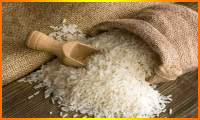
India may sell 1 mt of rice to help key partner Indonesia.
India may sign a memorandum of understanding (MoU) with its key diplomatic partner Indonesia to sell up to 1 million tonnes (mt) of white rice annually, two government officials said.
India’s 20 July ban on non-basmati white rice exports comes even as Indonesia plans to safeguard food security against disruptions caused by the El Nino weather pattern and difficulties with supplies from Vietnam, the current major supplier.
Although Indonesia is self-sufficient in rice production, it procures rice through MoUs when there is uncertainty in meeting its domestic demand. Currently, Indonesia has MoUs for the supply of white rice with Myanmar, Pakistan, Thailand, Cambodia and Vietnam.
'Indonesia is now facing difficulties as Vietnam, the current major supplier to the nation, aims to cut its rice exports significantly amid a drought forecast due to El Nino effects. To ensure meeting domestic demand, Indonesia is looking at India as an alternative supplier, and accordingly, the country has proposed an MoU for procuring up to 1 mt of white rice annually from India which is subject to availability.' one of the officials said.
Although white rice export from India is currently under the prohibited category, exports permission can be granted by the government to meet the food security needs of other countries at the request of their governments. India earlier approved exports of limited quantities of rice to Bhutan, Mauritius, UAE, and Singapore. The UN’s World Food Programme also requested India to supply 200,000 tonnes after the ban.
'The proposed MoU doesn’t impose any kind of binding commitment on India to supply rice if domestic production is not favourable. The purchase is subject to production in both countries. Also, the proposed MoU clearly lays down that it does not create any obligation on either party under international law. It also includes termination of the MoU at any time by either party with a 6-month notice period,' the official explained.
According to the commerce ministry, Indian exports of white rice to Indonesia in 2022-23 (April-March) was worth $1.05 million and $6.51 million till June in the current financial year. India’s share in Indonesia’s white rice import was 9.61% in 2020, 17.51% in 2021, and 7.06% in 2022.
Therefore, 'the MoU may push India’s rice export to Indonesia when export conditions are favourable. It will also help increase India’s exports to Indonesia, diversify the trade basket and reduce the wide trade deficit,' the other official said.
'Further, the MoU will work in favour of India to get a foothold in the Indonesian market and emerge as an alternate supplier to Indonesia in place of Vietnam, Thailand and Pakistan, leading exporters after India. This will also help India to enhance its reliability among other Asean (Association of Southeast Asian Nations) rice buyers such as the Philippines and Malaysia,' the official said.
Indonesia is India’s largest trading partner in the Asean region, with trade standing at $38.84 billion and accounting for a little over 29% in 2022-23 of India’s trade with Asean. With large palm oil imports from Indonesia, the trade deficit in the last financial year was $18.8 billion, according to commerce ministry data. 'The matter is still in an early stage, and will be taken to the authorities concerned before seeking approval from the cabinet committee,' the first official said.
Queries sent to the spokespeople of the Indonesian embassy in New Delhi, commerce and food & public distribution ministries on Friday remained unanswered at press time.
Source: livemint.com

Hafed procures four times more millet in Haryana than last year.
Hafed, a government agency has so far procured over four times more bajra produce across the state than last year at commercial rates of Rs 2,200 to Rs 2,250 per quintal while over 22 per cent procured produce is yet to be lifted from various grain markets in the state.
'A total of 3.31 lakh MT bajra (millet) has been purchased from various grain markets across the state till Sunday while a total of 80,382 MT bajra was procured by Hafed in the state in 2022. The figure will increase further in the coming days as the procurement process is still underway,' said Rajnish Sharma, Chief General Manager, Hafed.
Sharma said so far, 78 per cent of the procured bajra had been lifted from the grain markets across the state while the district authorities had been directed to ensure speedy lifting of the remaining produce so that the payment could be released to the farmers in due time.
'The procurement and the lifting is being done regularly in all districts. Even the farmers are getting the payment in due time. Initially, the bajra was procured at Rs 2,200 per quintal, but it is being purchased at Rs 2,250 per quintal since October 5,' said the Chief General Manager.
Bajra is mainly sown in eight districts — Mahendragarh, Rewari, Bhiwani, Charkhi Dadri, Jhajjar, Rohtak, Gurugram and Nuh — of South Haryana. As per information, a total of over 73,000 MT bajra in Mahendragarh, 72,496 MT in Rewari, 34,590 MT in Jhajjar and 6,668 MT bajra has been procured in Rohtak district so far.
Anoop Kumar, District Manager, Hafed, said nearly 27,377 MT bajra in Jhajjar and 6,445 MT in Rohtak had been lifted so far while the remaining produce would also be lifted soon.
Source: tribuneindia.com

BRICS antitrust regulators focus on fostering fair trade rules and consumer welfare.
Antitrust watchdogs of the BRICS grouping deliberated on the need for well-calibrated regulatory frameworks that strike a balance between fostering competition and safeguarding consumer welfare at a conference in the national capital, Competition Commission of India chairperson Ravneet Kaur said on Friday.
The joint statement formally ratified by the heads of BRICS competition authorities 'underscores the strategic alignment towards fostering competition-driven growth and socio economic progress in our regions', Kaur said.
The eighth edition of the BRICS International Competition Conference, a biannual event, was held from October 11 to 13, with India playing the host after a gap of 10 years. The BRICS grouping comprises Brazil, Russia, India, China and South Africa.
The next conference of the BRICS competition authorities will be hosted by South Africa in 2025.
The conference in New Delhi allowed the regulators to scrutinise the dynamic interplay between technological advancements, market structures and competition dynamics, paving the way for a more comprehensive understanding of the challenges and opportunities that lie ahead of the authorities, Kaur said.
'The knowledge and perspectives exchanged during this conference possess the potential to exert a profound influence shaping the future trajectory of competition policy and regulatory frameworks,' she said.
During the course of the conference, the BRICS competition regulators deliberated on a number of subjects, encompassing the implications of digitalization on the competitive landscape, the role of competition policy, nurturing innovation and its vital contribution to sustaining robust economic growth, Kaur said.
The BRICS ICC was last held virtually in China in 2021 due to the Covid-19 outbreak. India had hosted it once—in 2013—since 2009 when the heads of the BRICS grouping endorsed the need for such a meeting in Yekaterinburg, Russia.
Apart from Kaur, Maxim Shaskolsky (Federal Anti-Monopoly Service, Russia), Gan Lin (State Administration for Market Regulation, China), Doris Tshepe (CCSA, South Africa) and Victor Oliveira Fernandes (Administrative Council for Economic Defence, Brazil) deliberated on the key issues around antitrust regulations at the conference.
Source: economictimes.indiatimes.com

India, Brazil target over 3-fold rise in bilateral trade to USD 50 bn by 2030: Commerce Secretary.
India and Brazil are looking at an 'aspirational' target of increasing the two-way trade by over three-fold to USD 50 billion by 2030, Commerce Secretary Sunil Barthwal said on Friday. He was in Brasilia from October 1 to 4 to discuss ways to promote trade between the two countries. He chaired the sixth meeting of the India-Brazil Trade Monitoring Mechanism (TMM).
At present, the bilateral trade stood at USD 15.2 billion.
'We are looking at USD 30 billion in the next 3-4 years and by 2030, we are looking at an aspirational target of USD 50 billion. There is a huge potential for trade growth,' he told reporters here.
He added that during his visit, the two sides also discussed market access issues as well as new areas of cooperation.
Two working groups have been formed - market access issues and sectors of cooperation.
'Biofuels and renewables are important sectors which we will be looking at...Ethanol and biofuel blending is another area of cooperation,' he said.
Brazil has advanced technologies available for ethanol mixing with petrol and diesel.
'So that will help us in reducing our dependence on crude oil imports,' he said.
Further the two countries agreed to expand the existing preferential trade agreement between India and Mercosur, which is a trading bloc in Latin America, comprising Brazil, Argentina, Uruguay and Paraguay.
'At present, there are 452 tariff lines (broad product categories) and now both the sides agreed that we should expand it to all the tariff lines where trade occurs,' Barthwal said.
Speaking at the media briefing, Director General Foreign Trade (DGFT) Santosh Kumar Sarangi said that the sixth round of talks for India-EU free trade agreement is scheduled to be held from October 16-20 in Brussels.
On Indo-Pacific Economic Framework for Prosperity (IPEF), Additional Secretary in the commerce ministry Rajesh Agrawal said that the sixth round will be held in Kuala Lumpur, Malaysia from October 15-24.
'In-depth text based negotiations will be held in Pillar-III (clean economy) and Pillar-IV (fair economy),' he said adding 'most probably' talks on these two pillars will also be closed by October 25 and 'we look forward to agreeing to a substantial closure in the ministerial meeting which is scheduled to be held on 13-14 November at San Francisco'.
IPEF was launched jointly by the US and other partner countries of the Indo-Pacific region on May 23 last year in Tokyo.
The framework is structured around four pillars relating to trade, supply chains, clean economy and fair economy (issues like tax and anti-corruption). India has joined all the pillars except the trade one.
Australia, Brunei Darussalam, Fiji, India, Indonesia, Japan, the Republic of Korea, Malaysia, New Zealand, Philippines, Singapore, Thailand, the US and Vietnam are members of the bloc.
Source: economictimes.indiatimes.com