India must grow at 8% to be 'developed' by 2047, says World Bank's Kouame.
India needs to grow at 8% to achieve its goal of becoming a developed economy by 2047, and private investment needs to pick up to support it, the World Bank's India country director, Auguste Tano Kouame, said on Tuesday.
The World Bank has, in its India Development Update released on Tuesday, kept India's growth forecast for FY24 unchanged at 6.3% despite moderating consumption and challenging global environment.
'The 6.3% growth forecast for India is still going to be one of the highest growth rates among major economies in the world,' Kouame told ET in an interview. 'So, India's growth rate is very respectable.'
Resilient economy
Although high inflation and high interest rate environment are a downside risk to the forecast, he underlined the resilience of the Indian economy to global headwinds.
'India has been very resilient, one of the most resilient economies to the headwinds, whether there are headwinds from geopolitics or inflation of exchange rates,' he said, highlighting that the country has a comfortable level of foreign reserves to manage currency volatility. The World Bank has priced in oil at $90 per barrel as a baseline for its inflation and growth forecast.
The multilateral lender sharply revised the inflation outlook for FY24 to 5.9%, moving closer to the Reserve Bank of India's upper band level.
Private investment focus
Kouame said conditions will remain conducive for private investment despite high inflation.
'Tapping public spending that crowds in more private investments will create more favourable conditions for India to seize global opportunities in the future, and thus achieve higher growth,' he said. Kouame pointed out that while public investment is necessary, it is not a sufficient condition to lure the private sector.
'In addition to public investment, you also need policies and reforms and regulations that make it easier and more attractive for the private sector,' he said.
Kouame said that India needs reforms to make it easier for the private sector to access land, skilled workers and easier for the micro, small and medium enterprises (MSMEs) to access credit.
Kouame observed that the economy would overcome the savings challenge as well, and noted that India should reach the investment-to-GDP ratio of 35%, for which savings in the country need to grow to 32% of the GDP. 'I think savings are going to be higher, going forward, because people save when they can trust the banking system, and, in India, the financial sector is very strong,' Kouame said, highlighting that savings will pick up again.
Source: economictimes.indiatimes.com
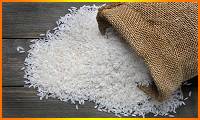
Rice-eating West Africa longs for the Indian grain.
If you chance upon a random person in a conference or in a hotel in Abidjan, the capital of Cote d’Ivoire (which is also known as Ivory Coast), and introduce yourself as someone visiting from India, the first question that confronts you will be – 'when is your country lifting the ban on rice exports?'
There is a reason for their anticipation. Prices of rice in the country with a population of 29 million have shot up by 25-30 per cent ever since India curbed rice exports a few months ago. Though it is predominantly an agricultural country, its focus is entirely on cocoa, rubber and coffee, with rice being grown only in 6 per cent of the country’s arable land.
While India banned exports of white rice on July 20, it imposed a 20 per cent export duty on parboiled rice from August 26.
4th largest importer
'It is not just about Cote d’Ivoire; it holds good for all of the West African bloc and some other African countries. We hope we get Indian rice sooner,' a person involved in agricultural trade said.
The rice-eating Cote d’Ivoire, like some of its African peers, depends on rice imports, mainly parboiled, to meet its domestic demand. That Cote d’Ivoire is the fourth largest importer of Indian rice shows how dependent it is on India. It contributed to 6.6 per cent of India’s total non-basmati rice export of 18 million tonnes in 2022-23. The aggregate value of its rice imports from India was $420 million.
'The increase in rice prices in the city is as high as 30 per cent after the ban (on white rice). A 25-kg bag is being sold at 19,000CFA francs (XOF in currency market) against 14,000 francs before theban on exports early this year,' Isabelle (name changed), a homemaker, said. (One Indian rupee fetches you around 7.5 local francs.)
Used to Indian rice
'We eat it three times a day and we don’t produce rice. It’s cheaper for us to import it rather than growing it here. Though there are other alternatives such as China, Thailand and Vietnam for importing rice and substitute the imports from India, we are hooked to the taste of Indian rice,' said.
The US Department of Agriculture in its mid-September 2023 said the sharp increase in rice prices (following India’s export ban) 'is expected to disproportionately impact countries in import-dependent Sub-Saharan Africa'.
Three of the top five India’s export markets are in Sub-Saharan Africa – Benin, Senegal, and Cote d’Ivoire – with each receiving more than one million tonnes of Indian rice in 2022. India is, by far, the largest supplier to these countries and many others in the region. Cote d’Ivoire imported 1.2 million tonnes from India in 2022-23.
According to an IFPRI (International Food Policy Research Institute) blog, India’s rice market share in 2022 exceeded 80 per cent for several African countries, reflecting the heavy dependence on Indian rice.
N’Khoh Abroise, a cocoa farmer from Abey Benigni village, which is a two-hour drive from the country’s capital, said Indian rice is popular in Cote d’Ivoire. 'It’s costlier growing rice here than getting it imported from outside. The northern and western parts of the country consume rice,' he said.
Source: thehindubusinessline.com
Ivory Coast looks to India for increasing rice production.
Cote dÍvoire (Ivory Coast) has firmed up plans to become a rice surplus country in the next few years to overcome a perennial shortfall in domestic supplies and production. It has reached out to India to help it in achieving the production and milling target.
The country has sought India’s participation and investments as part of its national rice strategy, which was launched recently.
'We are looking at investments from India to promote rice production and milling capacities. Indian investors can establish joint ventures for the purpose. India can use Côte dÍvoire as a base to cater to African countries instead of exporting rice from India,' a top official of the country’s rice regulator said.
Milling target
'We have set a target to mill 5 million tonnes of paddy and we are setting up 50 mills (with a capacity of 25,000 tonnes each) in different parts of the country. India’s Exim Bank is already helping us in expanding the milling capacities,' Aboubakary Traore, Director of Valorisation Support of ADERIZ (Rice Development Agency of Cote dI’voire, said.
Speaking to a team of Indian journalists on the sidelines of SARA (International Exhibition of Agriculture and Animal Resources), he said the country required 1.9 million tonnes of rice for a population of 29 million people, with a per capita consumption of about 84 kg.
'We are producing 1.2 million tonnes, while meeting the remaining gap by importing from countries such as India, China, Thailand and Vietnam,' he said.
The bulk (about 50 per cent) of the imports come from India. Of a total of six lakh tonnes of rice imported in the first half of 2023, India’s imports contributed 3.75 lakh tonnes.
Now that India has curbed rice exports - the latter banned white rice and imposed 20 per cent duty on parboiled rice-, the country is looking at plugging the gap by tapping the other rice exporting countries.
Prices up post-Indian curbs
The Indian curbs have pushed up prices in the retail market. 'Prices went up to 800 francs (local currency), up by about 250 francs,' he said. Globally, rice prices increased by $100 a tonne after India’s curbs to meet its food security and cool rising foodgrain prices.
With the country falling short of its rice requirements, the West African country created ADERIZ five years ago to promote cultivation and plan for all associated activities (seed development and post-harvest crop management etc).
Though a predominantly agro-economy with over two-thirds of people engaged in agricultural activities, the country’s focus is on cocoa and rubber. In order to become self-sufficient in rice and emerge as a net exporter of the commodity, the government introduced a National Strategy for the Development of the Rice Sector (SNDR) in 2012 and ADERIZ in 2018 to expand the rice production areas across the country.
Source: thehindubusinessline.com

Kendrapara s famous Rasabali gets GI tag.
Kendrapara’s famous sweet Rasabali received the geographical indication (GI) tag on Tuesday, bringing cheer to the people of the coastal district. Kendrapara Rasabali Makers’ Association and the Rural Infrastructure Development and Employment applied for GI tag for the sweet in 2021. The mouth-watering delicacy originates from the 262-year-old Baladevjew temple at Ichhapur on the outskirts of Kendrapara town. It consists of deep-fried flattened reddish-brown patties of cheese that are soaked in thickened and sweetened milk.
President of the association Baishava Panda said many people in the district earn their livelihood by selling Rasabali. 'We are delighted with the recognition as the GI tag will lend a distinct identity to the product and nobody can misuse the name to market similar sweets.'
Rasabali is one of the most delicious sweets in the country. But due to poor promotion and export facilities, it is not being marketed properly. The GI registration will help boost export of Rasabali and also put Kendrapara on the global map. 'In 2021, a team had prepared a dossier in support of our claim for GI tag for the sweet. We submitted the dossier to the state government which in turn sent it to the office of Geographical Indications Registry in Chennai,' informed Panda.
Similarly, the executive officer of Baladevjew temple Balabhadra Patri said Rasabali is one of the main Bhogs in the shrine which was constructed during the Maratha rule in Odisha in 1761. The GI tag for the sweet would differentiate it from competing products in national and international markets.
Expressing happiness over the GI tag, Rasabali maker of Kendrapara Souri Sahoo said the unique sweet will now acquire more prominence in the market. Besides, the tag would help the makers get best remunerative price. 'The GI certification would also stop adulteration of Rasabali and thereby, the authenticated sweet will fetch better prices,' he added.
Source: newindianexpress.com

UK PM Rishi Sunak says hopes to get free trade deal with India done.
British Prime Minister Rishi Sunak has reiterated his commitment to closer India-UK ties across different sectors, including a free trade agreement (FTA) between the two countries.
Addressing a reception by the diaspora group Conservative Friends of India (CFIN) on the sidelines of the ongoing Conservative Party conference in Manchester on Monday evening, the British Indian leader began by reflecting upon his 'successful' first visit to India as Prime Minister for the India-led G20 Summit last month.
'I've just come back from my first trip to India as Prime Minister and that was very successful,' said Sunak.
'Everybody here already knows just how strong the relationship between our two countries is. At the G20, we really saw a glimpse of what the future of that relationship can be, with closer cooperation on absolutely everything from trade to defence, innovation, security, research, and I hope... a free trade deal, and we can get it done,' he said.
The 43-year-old politician, who is leading his first Conservative Party conference as leader of the governing party, went on to say that he hopes to build on the success of his first India visit to work together as two 'great democracies, shaping the future of the world for the long term'.
'We're working together as partners to build a better future for all our citizens,' he added.
His visit to New Delhi for the G20 Leaders' Summit in early September had also concluded with a commitment to an India-UK FTA, even as Sunak told reporters that he 'won't rush things'.
Later in the month, amid a diplomatic standoff between two of its close allies - India and Canada - over the contentious issue of pro-Khalistan extremism, Sunak's spokesperson at 10 Downing Street had reiterated that trade talks with New Delhi remain on track.
'Work on the trade negotiations will continue as before... when we have concerns with countries we're negotiating trade deals with, we'll raise them directly,' the spokesperson told reporters.
According to official UK Department for Business and Trade (DBT) figures, UK-India bilateral trade was worth an estimated 36 billion pounds in 2022.
'We have never set a deadline. I think this is very optimistic briefing for newspapers. We are very close. It is possible, but I wouldn't be setting that sort of deadline. We will finish when we finish,' UK Business and Trade Secretary Kemi Badenoch told a UK parliamentary panel recently when asked about the prospect of a return visit by Sunak over the cricket World Cup in India to sign off on an FTA.
Earlier, Badenoch had reviewed progress on the trade talks with her Indian counterpart, Commerce and Industry Minister Piyush Goyal, during a visit to India in August coinciding with Round 12 of the FTA negotiations.
Source: economictimes.indiatimes.com
15th Meeting of the Joint Working Group on Trade between India and Bangladesh.
The 15th Meeting of the Joint Working Group on Trade (JWG) between India and Bangladesh was held on 26th and 27th September, 2023 in Dhaka, Bangladesh. The meeting was co-chaired by Joint Secretary, Department of Commerce, Ministry of Commerce and Industry, Government of India, Shri Vipul Bansal and Additional Secretary, Ministry of Commerce, Government of the People’s Republic of Bangladesh, Mr. Noor Md. Mahbubul Haq.
The 15th Meeting of JWG discussed a host of bilateral issues such as removal of port restrictions, ground work on commencement of Comprehensive Economic Partnership Agreement (CEPA), harmonization of standards, mutual recognition of standards, supply of essential commodities to Bangladesh, development of road and rail infrastructure, regional connectivity through multi-modal transportation and creation/ strengthening of infrastructure in Land Customs Stations/ Integrated Check Posts, border haats, etc.
The bilateral meeting successfully concluded with both countries reaffirming their commitment to deeper economic engagement, regional cooperation, and sustainable development. Both sides reiterated that the future holds great promise for enhanced trade relations and mutual prosperity.
The India-Bangladesh Joint Working Group on Trade (JWG) Meetings are held on an annual basis to discuss key trade related issues and explore opportunities for economic and technical collaboration, promotion, facilitation, expansion and diversification of trade between the two countries on the basis of equality and mutual benefit. These meetings play a vital role in quick resolution of bilateral issues by removing trade barriers, simplifying customs procedures, improvement of infrastructure, logistics, and transit facilities to facilitate smoother cross-border trade.
Several trade facilitative measures have been undertaken by both India and Bangladesh for facilitating trade between the countries. India has allowed exports from Bangladesh to India by rail in closed containers, with customs clearance facility at any Inland Container Depot (ICD) vide circular dated 17th May 2022. Bangladesh informed about successful commencement of Agreement on the use of Chattogram and Mongla Port (ACMP) and increasing the number of goods to be traded through various Land Custom Stations (LCSs).
Source: pib.gov.in
European Union ready to talk food stock policy at WTO.
The European Union has said it is willing to negotiate on global trade norms on the way governments purchase, stockpile and distribute food to ensure food security, issues pushed by India at the World Trade Organisation and deadlocked for the past 10 years.
The move is seen as a significant breakthrough ahead of a key ministerial conference of the WTO next year where India, among 80 others is keen on a deal on food security, insisting that the extant rules don't adequately address market failures such as food hoarding and market speculation that drive up food prices and inflation during crises.
'The EU has shown willingness to negotiate the public stockholding issue with India,' said a Geneva-based official.
The grouping of 80 countries has said that a permanent solution for public stockholding should account for inflation and also be based on a recent reference price instead of an old one, which is based on 1986-88 prices. They have also proposed to amend the anti-circumvention clause in the Bali Ministerial Declaration of 2013, as per which developing countries who procure food stocks for security 'do not distort trade or adversely affect the food security of other members'.
The US and the EU have so far opposed this approach. At an agriculture negotiations meeting of the WTO on Monday, the EU in a significant change in stance said a safeguards mechanism to prevent illegitimate exports stemming from excessive food stocks were key to deal with the possible impact of public stockholding policies. Public stockholding is a policy tool used by governments to purchase, stockpile and distribute food when needed.
Source: economictimes.indiatimes.com
Government waives export taxes on Bangalore rose onions.
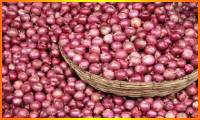
The Finance Ministry exempted export of Bangalore rose onion from duty with immediate effect, subject to certain conditions, as per a notification issued on Friday.
If the exporter provides a certificate from the state horticulture commissioner certifying the item and quantity of Bangalore Rose Onion to be exported, the exemption from export duty on Bangalore Rose Onion may be granted.
A 40 per cent duty on export of all varieties of onions was imposed by the government in August. The move was taken to increase domestic availability and check price rise in local market.
As on date, the average price of onions in the country stood at Rs 33.53, data from Consumer Affairs Department showed.
Beating past records, the Centre has procured 2.50 lakh tons of onion for the buffer in 2022-23. However, despite the ample stock of onions in the country, a high proportion of bad quality onions due to a prolonged period of excessive summer heat this year has made good quality onions expensive.
At the same time onion exports jumped 64 per cent in volumes to hit a six year high at 25.25 lakh tonnes during 2022-23.
Source: economictimes.indiatimes.com

Agriculture fair to begin on Oct 8.
Haryana Agriculture and Farmers Welfare Minister Jai Prakash Dalal has called upon the state’s farmers to visit the Haryana Agricultural Development Fair, to be held from October 8 to 10, at the Chaudhary Charan Singh Haryana Agricultural University in Hisar.
The event will be attended by Governor Bandaru Dattatraya, CM Manohar Lal Khattar, other state ministers and farmers.
Dalal expressed his intention to expand the event to a massive scale as that of the Surajkund Fair, and organise it on an annual basis in future. He also invited agricultural universities, scientists and entrepreneurs from other states.
Source: tribuneindia.com
Bangladesh: Govt assessing requests to allow more egg imports.
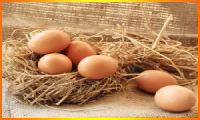
The traders recently requested the ministry to allow more egg import and each trader is seeking permission to import varying quantities of eggs, ranging from a minimum of 10 million to 200 million eggs, a top-ranking official of the ministry told The Business Post.
While some traders hope to contribute to the domestic supply, poultry industry experts argue that the country’s annual demand can be met through domestic production.
During a recent hearing, local poultry farmers expressed concerns about the potential negative impact of increased egg imports on the domestic industry branding the move as suicidal.
They suggested addressing firm-level issues, especially the reduction of raw material costs for feed, rather than relying on imports and called for taking a long-term policy to solve the supply shortage.
The government had previously granted permission to ten companies to import up to 100 million eggs to help control local market prices. The egg market had experienced volatility, with prices reaching as high as Tk 15 each. The government subsequently set the price of an egg at Tk 12.
In the fiscal year 2021-22, the country’s annual egg production surpassed the set annual target of 22.66 billion pieces, reaching 23.35 billion pieces, although it may fall short of the 23.15 billion egg production target for the last fiscal year due to the closure of some poultry firms, according to the Department of Livestock.
Currently, the country’s annual per capita egg consumption stands at 136 pieces, with the Food and Agriculture Organisation (FAO) recommending a minimum of 104 eggs per person annually.
Bangladesh produces around 40 million eggs daily, with 9-12 per cent originating from large poultry firms and the remainder from small entrepreneurs in rural areas.
Source: businesspostbd.com