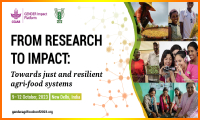
Research is vital to create a just and resilient agri-food system: Smt Droupadi Murmu.
President Smt Droupadi Murmu inaugurated an International Research Conference on ‘From research to impact: Towards Just and Resilient Agri-Food Systems’, hosted by the Indian Council of Agricultural Research (ICAR) and CGIAR GENDER Impact Platform today in New Delhi. Union Minister for Agriculture and Farmers Welfare Shri Narendra Singh Tomar, Union Ministers of State for Agriculture and Farmers Welfare Shri Kailash Choudhary and Sushri Shobha Karandlaje, Secretary for Department of Agriculture and Farmers Welfare Shri Manoj Ahuja, Secretary for Department of Agriculture Research and Education, and Director General for Indian Council of Agricultural Research Dr Himanshu Pathak, Executive Managing Director for CGIAR Prof. Andrew Campbell, Director for CGIAR GENDER Impact Platform Dr.Nicoline de Haan, Director, and South Asia Regional Director for CGIAR Temina Lalani-Shariff also graced the inaugural program.
In her address, Smt Droupadi Murmu highlighted the importance of empowering women engaged in agriculture to advance the vision of women-led development. She said that women are indispensable in making every grain reach from farm to plate as they sow, grow, harvest, process, and market our food. 'For ecologically sustainable, ethically desirable, economically affordable, and socially justifiable production, we need research which can enable conditions to reach these goals. She further said that 'We need systematic understanding of how to transform the agri-food systems. I hope this conference and this community will take all the measures and steps to achieve these milestones,' said Smt Murmu.
Smt Murmu emphasised that even though the world enters the modern age,the world is still grappling with the challenge of attaining just and resilient agri-food systems. 'Still across the world women are held back and are stopped by discriminatory social norms and barriers to knowledge, ownership, assets, resources, and social networks. Their contribution is not recognized, their role is marginalized, and their agency is denied in the whole chain of the agri-food systems. Their story needs to change,' she added.
While appreciating the gathered researchers, the President added, 'I am elated to know that the CGIAR GENDER Impact Platform is working on putting equality and inclusion at the heart of food systems research by focusing on women, not as the objects of transformation, but as the agents and drivers of the transformation.'
Shri Narendra Singh Tomar said that women have played critical roles in agriculture in India, and give as much time as men on the field. Additionally, they put in about 30 hours per week of unpaid care work. I am of the firm opinion that equality in agri-food systems will not only lead to a reduction in poverty, but will also give women better nutrition and health access. This is especially significant in view of the G20 Declaration which puts special emphasis on food security, nutrition and health of women as it recognized the critical role of women in holistic societal growth. This conference gains added significance as it follows on the heels of the highly successful G20 Summit under the Indian Presidency. G20 heads in the New Delhi Leaders’ Declaration called upon the world to embrace women-led development. In this context, research serves as a cornerstone for charting inclusive development pathways by proven innovations and priorities.
Shri Tomar said that we have a long legacy of investment and success in excellent research, development and innovation. The Union Minister said there are 86 percent small and medium farmers in the country, who, despite facing challenges, have continuously contributed to the sustenance of the nation and have been able to supply food to other countries as well. He added that despite the challenges, new dimensions aimed at the welfare of small farmers have been established in agriculture under the leadership of the Prime Minister, Shri Narendra Modi and policiy innovations have been successfully implemented. The minister said Along with climate-friendly varieties developed by ICAR, India is becoming a knowledge partner and role model in the world through agricultural innovation and intensive research. Shri Tomar said ' there is a need to continue investing in research and innovation to boost the production of healthy and affordable food, while also jointly addressing the challenges of climate change and other food system stresses. There is also a need to ensure that innovations to increase the productivity and adaptation of food systems as a whole integrate the Global Goals to strengthen gender equality and further social inclusion into policies.'
Dr Himanshu Pathak said that the conference is bringing together some of the top researchers, thought leaders and practitioners who are collectively deliberating how to make stronger and faster progress towards resilient, equitable and just food systems. He added that CGIAR and ICAR play pivotal roles in guiding research, policies and investments towards better and resilient agri-food systems. 'Mainstreaming women in agriculture can bring about a paradigm shift in economic growth through technical knowledge and greater access to resources,' Dr Pathak added.
Prof Campbell underscored that CGIAR research shows that when women have equity in access to knowledge, resources and decision-making, the whole community benefits, and food and nutrition security improve for all, further transforming food systems to be more resilient and sustainable. He further said that gender matters in bringing about inclusive agricultural transformation.
Recalling how the legendary late Prof.MS. Swaminathan stood firmly as a champion of agricultural research and steered the Green Revolution when humanity faced one of its worst crises, Dr de Haan said that we are in dire need of a new wave of research-backed innovation that can catapult women into the centre of food systems. Let’s ask if we can use research for the next revolution—one that includes women and that gives them the opportunity to contribute, benefit and lead. The gains—for farmers, food systems and nations—would be immense, and that is why we have to get started now.
The conference inauguration was followed by a keynote delivered by Mr Amitabh Kant, India’s G20 Sherpa, who shared his perspectives on what is at stake for gender equality in agri-food systems. He said, 'The research by CGIAR and its partners along with ICAR underscores the importance to focus on areas like food security and nutrition, climate smart approaches, inclusive agricultural value chains and digitisation to bring about gender inclusive agricultural transformation.'
The four-day conference (October 9-12) is welcoming gender researchers from 68 countries to share cutting-edge knowledge on gender and inclusion in food systems. The event is designed to catalyse scientific exchanges and dialogues among researchers from diverse types of organizations, and will create opportunities to engage with policymakers, practitioners, private sector actors, and others working toward the shared goal of equitable food systems transformation. Its goal is to bridge the gap between research and practice and foster gender-equal and socially inclusive, resilient food systems.
Source: pib.gov.in

Union Commerce & Industry Minister Shri Piyush Goyal unveils system based automatic Status Holder certificates under Foreign Trade Policy 2023.
In a meeting with the Export Promotion Councils today, the Union Minister of Commerce & Industry, Consumer Affairs, Food & Public Distribution and Textiles Shri Piyush Goyal unveiled a significant initiative to issue system based automatic ‘Status Holder’ certificates under the Foreign Trade Policy (FTP) 2023. Now the exporter will not be required to apply to the office of Directorate General of Foreign Trade (DGFT) for a Status Certificate and the export recognition will be provided by the IT system based on available Directorate General of Commercial Intelligence and Statistics (DGCIS) merchandise export electronic data and other risk parameters.
This perspective is a paradigm shift in doing things as it not only reduces compliance burden and promotes ease of doing business but also recognizes the need and importance of collaboration within the Government. At present, the exporter is required to file an online application along with an export certificate from a Chartered Accountant for grant of Status. The DGFT Regional Offices, as per the laid down timelines are supposed to issue the certificate in 3 days. The new arrangement will lead to a simplified regime where no applications are invited from exporters and the certification is granted every year in August based on annual export figures available with the partner government agency i.e. DGCIS.
Exporters who are eligible for a higher status based on additional export data relating to services export, deemed exports or double weightage to some entities like MSME etc., which is not getting captured in disaggregated form presently, can apply online for a Status modification also at a later date.
The Status Holder certification program provides credibility to the Indian exporters in the international markets. In addition, it provides certain other privileges including simplified procedures under FTP 2023 and priority custom clearances on self-declaration basis, exemption from compulsory negotiation of documents through banks, exemption from filing Bank Guarantee for FTP schemes etc.
With the launch of this new system, the Department of Commerce, Ministry of Commerce and Industry will be recognizing about 20,000 exporters under FTP 2023 as Status Holders which will be a quantum jump from the earlier number of 12,518 exporters. The biggest increase in Status certification is seen in the 1 Star category, which is the lowest category and requires a export performance of at least US$ 3 Million in the last 3 preceding financial years plus the 3 months of the current financial year. This will enable the Government to hand hold a larger number of small exporting entities and create a vibrant export ecosystem and help reach our export target of US$ 2 Trillion by 2030.
In line with digital India ethos, various e-initiatives have already been implemented where no manual examination or processing is required and various permissions/authorisations are issued under FTP 2023 based on a risk management system and self-declarations of the exporter including 24X7 online issue of Importer Exporter Code number (IEC), issue and renewal of Advance Authorisations.
Source: pib.gov.in

UAE launches Food Tech Valley to make Gulf into a hub for agri, food tech.
The United Arab Emirates (UAE) government has launched a Food Tech Valley to transform the Gulf nation into an international hub for agriculture and food technology, says its project head. 'We are uniting the food ecosystem all in one place with first-class infrastructure, business support and community programming. Our goal is to empower farmers, academics, business owners and entrepreneurs to address global food security challenges and pioneer sustainable food production that will reimagine the way the world produces and consumes food,' said Ahmed Al Shaibani, Project Lead, Food Tech Valley.
Launched in 2021 by Dubai’s Department of Economy and Tourism (DET), the Food Tech Valley aims to be a hub for future cleantech-based food and agricultural products. It will also be an incubator for researchers, entrepreneurs, start-ups and industry experts involved in developing solutions that have the potential to shape the future of the food industry.
Awareness
Over the past two years, the Valley has created awareness within the food and agriculture sector by taking part in exhibitions and building a strong ecosystem for its investors. It has helped them to forge partnerships with companies such as PepsiCo, FlyDubai, Tradeline and Emirates Development Bank.
The Food Tech Valley is made up of different zones that encompass all areas within the value chain including production, logistics and processing zone, R&D & innovation centre, business park, academy and residential zone. This covers all aspects from food pre-production all the way to logistics and then food surplus and waste management, he said. 'We have also started site construction with the infrastructure being close to completion in order to accommodate early tenants to the project,' said Shaibani on its progress.
The Food Valley Project has attracted the attention of many countries. It shows the importance of the sector and it has added to 'the success of the Dubai Expo'. The effect has been amplified and it enabled the project officials to begin dialogue and start collaborating (with other countries), he said.
Benefits
On the advantages of being part of the Valley, the project lead said it includes many benefits. 'Along with being part of a one-stop-shop which includes all areas of the supply chain, there will also be competitive leasing rates and up to 25-year lease agreements which gives companies more security for them to prosper,' said Shaibani.
UAE feels Dubai can be a gateway for Indian companies in the agri and food-processing sector to take its products and services global.
The untapped potential of the food sector in bilateral business has strengthened the UAE-India partnership in food trade and can strengthen food security in the entire West Asian and North African (WANA) region.
The development assumes significance on the heels of companies such as Waycool and Produze disrupting the market across the WANA region.
Source: thehindubusinessline.com
Special round of negotiations for the India-Peru Trade Agreement.
A Special Round of negotiations for the India - Peru Trade Agreement is scheduled to be held virtually on 10-11th October, 2023. The Indian track will be led by Chief Negotiator Mr. Vipul Bansal, Joint Secretary, Department of Commerce and Peruvian track will be led by Mr. Gerardo Antonio Meza Grillo, Director for Asia, Oceania and Africa, Ministry of Foreign Trade and Tourism.
Discussions on various chapters including Initial Provisions and General Definitions, Rules of Origin, Trade in Goods, Customs Procedures and Trade Facilitation, Technical Barriers to Trade, Sanitary and Phytosanitary Measures, General and Security Exceptions, Cooperation and Legal and Institutional Issues/Dispute Settlement are expected to be undertaken during this special round. Discussions on Services, Movement of Natural Persons, Trade Remedies and Investment chapter will be held later in the month based on mutual convenience of the negotiators.
Negotiations for the India-Peru Trade Agreement commenced in the year 2017 and the fifth round was concluded in August, 2019. On account of Covid, the negotiations came to a pause.
On the sidelines of CII India-LAC Conclave held in New Delhi on 3rd-4th August, 2023, a delegation led by H.E. Dr. Teresa Mera Gomez, Vice Minister of Foreign Trade of Peru met Shri Piyush Goyal, the Union Minister of Commerce & Industry wherein both sides expressed an interest in resuming the trade negotiations. Subsequently, Minister Goyal has directed to recommence the negotiations with Peru.
It is anticipated that the Trade Agreement will significantly boost trade, investment and enhance cooperation in various sectors. The sixth round is slated to be held in December, 2023 at Lima in Peru.
India and Peru have been experiencing a steady growth in their trade relationship. During FY 2022-23, the bilateral trade volume reached $3.12 billion. India exported goods worth $ 865.91 million to Peru, and imported goods valued at $ 2.25 billion from Peru. Key Indian exports to Peru include motor vehicles/cars, cotton yarn and pharmaceuticals, while Peru primarily exports gold, copper ores and concentrates.
Source: pib.gov.in
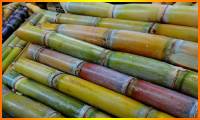
India mulls imposing 25% duty on molasses exports.
The government is considering imposing a 25% duty on exports of molasses - a by-product of sugarcane and key ingredient for ethanol productions - as it expects a decline in sugar production in the upcoming season, senior officials said.
The curbs on exports are expected to boost the availability of molasses for domestic distilleries, which will help them meet the government's ethanol blending target, said an officer on condition of anonymity.
India witnessed the driest August in 122 years with rainfall during the month being 36% below average, causing damage to the sugarcane crop in key cane-producing states such as Maharashtra and Karnataka.
In August, the Indian Sugar Mills Association (ISMA) released its preliminary estimate of sugar production for the 2023-24 season at 317 lakh tonnes against 328 lakh tonnes for the current season. The sugar year starts in October and ends in September next year.
However, ISMA said it is expected to come out with a more accurate estimate after a satellite assessment of the sugarcane plant by mid-October. This is despite the area under the sugarcane area going up to 59.91 lakh hectare this year from 55.66 lakh hectare last year.
The Netherlands, the Philippines, Vietnam, South Korea, and Italy are the top buyers of India's molasses, which is mainly used as cattle feed. Maharashtra, Gujarat, and Karnataka are the three states which export molasses from India.
Source: economictimes.indiatimes.com

India, Tanzania ties growing in terms of trade, investment ': Tanzanian President .
Tanzanian President Samia Suluhu Hassan on Monday said that India and Tanzania are growing in terms of trade and investment 'The numbers are satisfying,' further noting that India is the third largest trading partner in Tanzania.
While addressing the media after the exchange of Memorandum of Understanding (MoU) between India and Tanzania, she said, 'On trade and investment, the numbers are satisfying. We are growing. In investment Indian investors in Tanzania, the number is growing. The value of the projects is growing as well. On trade volumes, the numbers are growing. As we're speaking up to 2022, our figures were USD 3.1 billion. So this makes India the third largest trading partner in Tanzania and the fifth largest investor in our country.'
She further added that through this visit, both countries have managed to open more avenues of cooperation for economic development as well as political development.
'To us, Tanzania India is like an extended family member which is just a cost away. There's a story that before Gandhi's return to India he made a stop to Zanzibar on his way to South Africa. This and many more other tells signifies the historical brotherly ties and brotherly ties and friendship that span a century,' she said.
Tanzanian President further lauded PM Modi for successfully hosting the G20 Summit.
'My visit is occurring just a few weeks after the G 20 summit...I wish to commend honourable Modi and the government of the Republic of India for the successful hosting of the G 20 summit,' she said.
This visit is to reaffirm the commitment by Tanzania to enhance and deepen the historic friendship and bilateral cooperation that has existed over decades.
'It is also an opportunity for us to express our sense of gratitude for the invaluable support rendered by the government and the people of India to our socio-economic endeavours. Over decades we have been working together in the development of various sectors, as they have been mentioned by His Excellency,' Hassan said.
Source: aninews.in

Israel trade with India doubled after Covid-19 pandemic, shows data.
India’s trade ties with Israel have only strengthened in the years after 2019.
The total value of trade rose to $10.5 billion on a rolling four-quarter basis in June 2023
Source: business-standard.com
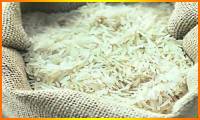
Jammu and Kashmir authorities plan revival of aromatic rice Mushk Budji, expand cultivation to 5,000 hectares.
Mushk Budji -- the indigenous aromatic rice variety from Kashmir -- is likely to get a major boost in its yield with the Jammu and Kashmir authorities planning to expand its cultivation area to 5,000 hectares in the next three years, a senior official has said. According to experts at the Sher-e-Kashmir University of Agricultural Sciences and Technology (SKUAST), this high-cost traditional variety of rice was on the verge of extinction and was pushed to a few pockets of the Valley because of its susceptibility to blast disease.
Besides, non-uniformity in the produce, lack of quality seed, poor yield potential due to the mixing of strains and also due to area expansion under high-yielding paddy varieties led to shrinking of acreage under it, they said.
Mushk Budji, mostly grown on over 250 hectares in five villages of Kokernag in south Kashmir, received a Geographical Indication (GI) tag in August due to the concerted efforts by the agriculture department and SKUAST.
'The niche crop is grown in particular climatic conditions and we are exploring various areas in different parts of the Valley to expand its acreage.
'We aim to bring 5,000 hectares of land under crop cultivation in the next three years under the holistic development of agriculture and allied sectors scheme,' Chowdhary Mohammad Iqbal, the director of the Department of Agriculture Production and Farmers Welfare, Kashmir, told PTI.
Last year, Jammu and Kashmir Lieutenant Governor Manoj Sinha approved the Holistic Development of Agriculture and Allied Sectors programme, with an outlay of Rs 5,013 crore over the next five years and covering 29 projects.
The aim is to transform the agriculture economy and put Jammu and Kashmir on a new trajectory of growth, boosting exports and heralding a new phase of farmer prosperity and rural livelihood security in the Union territory.
'We have been successful in expanding the Mushk Budji to Budgam and are expecting more farmers to grow the crop, leading to its increased production to meet the growing demand,' Iqbal said.
According to the experts, as part of the programme to revive the cultivation of Mushk Budji, Sagam and adjoining villages in Kokernag in Anantnag district were identified in 2013.
Officials said the success of Mushk Budji in Anantnag led to a variety of testing programmes in non-traditional areas under similar ecologies. The agriculture department with the help of SKUAST-Kashmir brought in a new variety of Mushk Budji seeds.
'The new seed is resistant to diseases and changing climatic conditions. With the setting up of farmers producers organization, we are endeavouring to make Mushk Budji tap the national and international markets,' Chowdhary Mohammad Iqbal said.
Referring to the week-long 'GI Mohatsav' which started at 'Kashmir Haat' in Srinagar on October 2, he said 100 GI-tagged agriculture and horticulture products both within and outside Jammu and Kashmir are on display.
Attending the event, Manzoor Ahmad Bhat from Sagam village of Kokernag said over 500 farmers from nearly half a dozen villages are growing Musk Budji and will benefit immensely from the GI tagging of their produce.
'We are selling one kg Mushk Budji for Rs 260 and have received a lot of response in Srinagar. We have also received calls from Dubai for the product,' he said.
In Sagam village, Ghulam Mohammad, an elderly farmer, said they stopped growing the crop a long time ago and started afresh sometime back with the government's support.
Source: economictimes.indiatimes.com
FSSAI clarifies addition of protein binders in dairy products is not permitted.
The Food Safety and Standards Authority of India (FSSAI) on Thursday clarified that addition of protein binders in milk and milk products are not permitted. Additives that have not been specified in the Food Safety and Standards (Food Products Standards and Food Additives) Regulation, 2011, cannot be added, a release said.
Sources said this clarification comes at a time when certain players are adding protein binders to offer thicker texture in dairy products such as curd.
'Binding agents have emerged as an important and required class of ingredients to manufacture a wide range of new food products, especially semi-solid or solid foods. However, such application is known to affect the digestibility of the protein bound and thus can affect the biological and nutritive value of milk proteins. Protein binding also influences the bioavailability and distribution of active compounds,' the FSSAI noted in an advisory.
The food safety authority added that every dairy product has its unique and 'well-accepted' textural and other sensory characteristics. 'Hence, addition of any binding material like protein binders to milk and milk products is not warranted to modify the textural or sensory parameters,' it added.
The food safety authority pointed out that milk protein on its own is a good source of essential amino acids; they are easily digestible and do not contain any anti-nutritional factors like many plant-based proteins. 'In addition, milk and milk products contain a wide array of proteins with biological activities ranging from antimicrobial ones to those facilitating absorption of nutrients, as well as acting as growth factors, hormones, enzymes, antibodies and immune stimulants,' it added.
FSSAI said it remains 'dedicated' to maintaining 'natural integrity and quality' of food products and will continue to prioritise the health and well-being of the consumers.
Source: thehindubusinessline.com
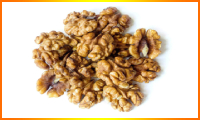
California Walnut Commission steps up efforts to woo Indians amid growing nut consumption.
India's appetite for walnuts shipped from California is growing steadily as more people learn about their health benefits and the daily consumption of the key dry fruit in the country is likely to double in the next 10 to 15 years, a top industry official has said. California walnuts account for 99 per cent of the commercial US supply and close to 50 per cent of the world trade. Germany is the top export market, followed by the Middle East and Turkiye.
In India, the consumption peaked in 2020 before Covid-19 disrupted the global supply chains and upended walnut exports to the country from nearly 19,000 metric tonnes in 2020 to just 6,500 metric tonnes last year.
'The desire for walnuts in India has been growing very steadily, year after year, as more people understand the health benefits and also eat them other than just at the time of the festive season,' Pamela Graviet, Senior Director, Global Programs, California Walnut Commission & Board, said.
'The maximum level was just under 19,000 metric tonnes in 2020. That was the height of Covid-19. California experienced supply chain issues and it was very difficult to get the walnuts into India in a timely manner. In 2021-22, we saw exports of California walnuts to India decline pretty rapidly and now we're starting to see them increase again,' she said on Friday.
The California Walnut Commission (CWC) has adopted a slew of measures, including roping in food connoisseurs, dieticians, researchers and social media influencers, to ramp up its business in India and create awareness about the nutritional and medicinal benefits of walnuts, which have been cultivated for over a millennium.
'Since 2012, we have had educational programmes talking about the health benefits of walnuts, as well as different ways to use them, not only in traditional Indian dishes but also in other types of cuisine,' Graviet said.
'To reach every corner, we don't have a budget large enough. But what we try to do is we try to work with influencers that are either chefs or those in fitness or lifestyle that are teaching the local population. We need either new recipes or new ideas,' she said.
The California walnut industry, which comprises over 4,000 walnut growers and nearly 75 handlers, sees a huge market for its products in India and is pulling out all stops to tap into it.
'The International Nut & Dried Fruit Council does an analysis of consumption around the world. And when we look at the number of walnuts that are available in India, and then across the population, the consumption is about two walnuts per person per year.
'It's very, very small. So, there's a tremendous opportunity for growth. And, we see that over the next 10-15 years, that consumption will double or probably triple,' Graviet said.
As the demand increases, the CWC is there to help fill the gap by providing education through events that also give some hands-on experience with California walnuts, she noted.
Walnuts are one of the oldest known tree fruits, dating back to 10,000 BC. Medical practitioners have known for time immemorial that the walnut has health-giving qualities. It took 20th and 21st-century science to assess and analyse the nutritional assets and medical benefits of the walnut, and there are many, including omega-3 fatty acids, antioxidants, fibre, and numerous vitamins and minerals.
Research has shown the diverse benefits of walnuts through many clinical studies. Because of the strong evidence of the walnut's potential role in cardiovascular health, the US Food and Drug Administration approved one of the first qualified health claims for a whole food in March 2004, according to a statement.
'Supportive but not conclusive research shows that eating 1.5 ounces of walnuts per day, as part of a low saturated fat and low cholesterol diet, and not resulting in increased caloric intake, may reduce the risk of coronary heart disease,' it said.
In addition to heart health, studies have shown that walnut consumption may benefit people with diabetes and cancer, promote bone health, assist with weight management, improve cognitive performance and counteract some effects of ageing.
Source: economictimes.indiatimes.com