
India's palm imports fall more than a quarter in September as stocks surge -dealers.
India's imports of edible oil fell 19% in September from August's record as refiners curtailed purchases of palm oil by 26% after inventories jumped to a record, five dealers told Reuters.
Lower purchases by the world's biggest importer of vegetable oils could lead to higher stocks of palm oil in key producers Indonesia and Malaysia, weighing on benchmark futures.
India's total edible oil imports in September fell to 1.5 million metric tons, including 830,000 tons of palm oil, average estimates from dealers show.
'Edible oil inventories have gone up to all-time high levels because of record imports in July and August,' said Rajesh Patel, managing partner at edible oil trader and broker GGN Research.
'That's why buyers are taking a pause now.'
Domestic stocks of vegetable oil jumped to 3.7 million tons by Sept. 1 from 2.4 million a year ago, says trade body Solvent Extractors' Association of India (SEA), which is likely to publish its data on September imports by mid-October.
Sunflower oil imports fell by 15% from a month earlier to stand at 310,000 tons, while soyoil imports edged up 2% to 365,000 tons, dealers estimated.
India buys palm oil mainly from Indonesia, Malaysia and Thailand, while it imports soyoil and sunflower oil from Argentina, Brazil, Russia and Ukraine.
'Drier weather in June and August, coupled with a slow start to planting, raised concerns about domestic oilseeds production,' said Ashwini Bansod, head of commodities research at Phillip Capital India Pvt Ltd.
'This led to higher import demand in July and August ahead of festivals.'
But improved rainfall in September eased concerns about a sharper decline in oilseed output, the analyst added.
August was the driest month on record with a 36% deficit in rainfall, though it revived in September for India to receive 13% more than the normal.
Imports of edible oil could fall further in October as stocks are more than enough to cater to festival season demand, said Patel of GGN Research.
Source: economictimes.indiatimes.com

Government of India notifies establishment of National Turmeric Board.
The Government of India today notified the constitution of the National Turmeric Board. The National Turmeric Board will focus on the development and growth of turmeric and turmeric products in the country.
The National Turmeric Board will provide leadership on turmeric related matters, augment the efforts, and facilitate greater coordination with Spices Board and other Government agencies in development and growth of the turmeric sector.
There is significant potential and interest world over on the health and wellness benefits of turmeric, which the Board will leverage to further increase awareness and consumption, develop new markets internationally to increase exports, promote research and development into new products, and develop on our traditional knowledge for value-added turmeric products. It will especially focus on capacity building and skill development of turmeric growers for harnessing greater benefits out of value addition. The Board will also promote quality and food safety standards and adherence to such standards. The Board will also take steps to further safeguard and usefully exploit turmeric’s full potential for humanity.
The activities of the Board will contribute towards greater well-being and prosperity of the turmeric growers through their focussed and dedicated attention to the sector and the larger value addition closer to the farms, which would provide better realisation to the growers for their produce. The Board’s activities into research, market development, increasing consumption, and value addition will also ensure that our growers and processors continue to maintain their pre-eminent position in the global markets as exporters of high-quality turmeric and turmeric products.
The Board shall have a Chairperson to be appointed by the Central Government, members from the Ministry of AYUSH, Departments of Pharmaceuticals, Agriculture & Farmers Welfare, Commerce & Industry of the Union Government, senior State Government representatives from three states (on rotation basis), select national/state institutions involved in research, representatives of turmeric farmers and exporters, and have a Secretary to be appointed by the Department of Commerce.
India is the largest producer, consumer and exporter of turmeric in the world. In the year 2022-23, an area of 3.24 lakh ha was under turmeric cultivation in India with a production of 11.61 lakh tonnes (over 75% of global turmeric production). More than 30 varieties of Turmeric are grown in India and it is grown in over 20 states in the country. The largest producing states of Turmeric are Maharashtra, Telangana, Karnataka and Tamil Nadu.
India has more than 62% share of world trade in turmeric. During 2022-23, 1.534 lakh tonnes of turmeric and turmeric products valued at 207.45 million USD was exported by more than 380 exporters The leading export markets for Indian Turmeric are Bangladesh, UAE, USA and Malaysia. With the focused activities of the Board, it is expected that turmeric exports will reach USD 1 Billion by 2030.
Source: pib.gov.in
FBOs told to obtain FSSAI licence or registration in Nagaland.
The Nagaland Health and Family Welfare Department has mandated that all Food Business Operators (FBOs) operating within the state must acquire or renew their Food Safety and Standards Authority of India (FSSAI) licence and registration certificate for their food establishments by October 31, 2023.
This directive aligns with the Food Safety and Standards (Licencing and Registration of Food Businesses) Regulations, 2011, and emphasises the importance of adherence to food safety standards.
A spokesperson from FSSAI stated, 'All Food Business Operators in the country are registered or licensed in accordance with the procedures laid down under the Food Safety and Standards (Licencing and Registration of Food Businesses) Regulations, 2011.
'All FBOs are required to adhere to Sanitary and Hygienic Practices as laid down under Schedule 4 of the said regulations. FBOs may also refer to the inspection checklists applicable to their food business which are available at FoSCoS Homepage,' the spokesperson added.
Under Section 31 of the Food Safety and Standards Act 2006, no person shall commence or carry on any food business except having a valid FSSAI licence/registration. FSSAI Licence/Registration is premises-based and the procedure for applying is completely online through the Food Safety Compliance System - FoSCoS portal.
Source: fnbnews.com

UNCTAD expects global economic growth for 2023 to slow down to 2.4%.
The UN Conference on Trade and Development (UNCTAD) expects growth of the world economic output to decelerate to 2.4% in 2023, before registering a small uptick to 2.5% in 2024.
In its trade and development report issued Wednesday, the multilateral body called for a change in policy direction, including by leading central banks, and accompanying institutional reforms promised during the Covid-19 crisis to avert a lost decade.
'The global economy is flying at 'stall speed', with projected growth in 2023 of 2.4%, meeting the conventional criteria for a global recession. The entire global economy, except East and Central Asia, has slowed since 2022,' UNCTAD said.
It forecasts India to grow 6.6% in 2023 and 6.2% in 2024.
Highlighting that globally, the post-pandemic recovery is divergent, it said: 'While some economies, including Brazil, China, India, Japan, Mexico, Russia and the United States have demonstrated resilience in 2023, others face more formidable challenges'.
In India, the external sector – alongside the private and government sector – has contributed to domestic growth, partly helped by many countries redirecting trade flows away from the Russian Federation, with which India maintains a direct relationship, the Geneva-based organisation said.
While growth in 2022 moved back in line with pre-pandemic rates, it is expected to continue into next year, according to the report.
'However, other indicators still suggest caution: with rates of unemployment still standing at 8.5% in June 2023, employment remains disappointingly low by historical standards. Inequality has also significantly increased – as suggested by data on real wages and the labour share – which could hinder growth,' UNCTAD said.
It highlighted that India’s 10 largest firms account for 8% of its total exports, although the total number of exporting firms exceeded 1,23,000 in 2021.
As per the report, in 2022, South-South trade accounted for around 54% of South’s total trade. South-South trade has also grown steadily in food, fuel, ores and metals, and fertilizers, with many developing countries, including Brazil, China, India, Indonesia and Thailand playing major roles.
Despite the announced rounds of production cuts by OPEC+ countries in April 2023 – representing a reduction of over 1 million barrels per day – a significant increase in oil production from non-OPEC+ countries as well as a substantial release of strategic petroleum reserves by OECD member countries has more than offset the agreed OPEC+ cuts.
For its part, western sanctions on Russian crude exports have mostly resulted in redirecting these flows to countries like China and India at a discounted price, meaning that their impact on global oil supplies has been minimal while also having a downward influence on global crude prices, the UNCTAD noted.
Debt worries
As per the report, the global economy is at a crossroads, where divergent growth paths, widening inequalities, growing market concentration and mounting debt burdens cast shadows on its future.
'Debt burdens, the silent weight on many developing countries, remain a major concern,' it cautioned and added that S
soaring debt requires urgent multilateral solutions and a sovereign debt restructuring mechanism.
Rising interest rates, weakening currencies and sluggish export growth have combined to squeeze the fiscal space for essential needs, transforming the growing debt service burden into an unfolding development crisis.
The multilateral body called for coordination between national and supranational authorities to manage inflationary pressures and ensure price stability, foster an environment conducive to investment-led growth, implement measures to reduce income disparities, improve real wages and reinforce social protection systems.
It said that the role of central banks needs to be expanded beyond inflation targeting to include a broader focus on long-term economic sustainability.
Source: economictimes.indiatimes.com

PM GatiShakti will become the planning tool for the entire world: Union Minister of Commerce & Industry Sh. Piyush Goyal.
The Department for Promotion of Industry and Internal Trade (DPIIT), Ministry of Commerce and Industry and GatiShakti Vishwavidyalaya (GSV) entered into collaboration today to advance India's infrastructure and logistics sectors. Under this Memorandum of Understanding (MoU), GSV shall be the nodal agency across India to design, develop and deliver courses and curriculum related to PM Gati Shakti National Master Plan and National Logistics Policy at various centres in different states.
Union Minister of Commerce & Industry, Consumer Affairs, Food & Public Distribution, and Textiles, Sh. Piyush Goyal said that PM GatiShakti will become the planning tool for the entire world. He acknowledged the importance of GSV that offers skill development and capacity building of logistics professionals paving way for formalisation in the logistics sector. More than 16 Central Ministries, including NITI Aayog, CBC came together for the signing of MoU. This collaboration shall mark the great culmination of three visions, i.e., smarter planning and implementation; structured specialised development; and capacity building.
Shri Goyal said that it will bring academic vigour to PM GatiShakti approach leading to reduced logistics cost, efficient logistics, and fostering a competitive business ecosystem. He said that this will lead to a virtuous cycle of growth and achievement of the vision of Amrit Kaal. This MoU is scripting a new chapter in Bharat logistics and infrastructure story. This shall give momentum to comprehensive logistics sector development and embarks Bharat’s journey to become a Vishwaguru.
Union Minister for Railways, Communications and Electronics & Information Technology and also the Chancellor of the Gati Shakti Vishwavidyalaya, Sh. Ashwini Vaishnaw, spoke about the importance of the industry focussed and innovation driven university offering courses on railway, metro and high-speed railways. He highlighted the development of focussed programs for specific industry/ sector. For instance five courses on railway have been developed, including with a focus on tracks technology, rail-wheel interaction, thermodynamics, signalling systems, etc. Focussed courses offered at GSV will make students ready for future workforce- 15000 students will be trained at GSV to get assured jobs in the aviation industry. GSV will ensure Indian skill development needs are aligned with global standards.
The MoU was signed by the Vice-Chancellor, Gati Shakti Vishwavidyalaya, Prof. Manoj Choudhary, and Joint Secretary, Logistics Division, DPIIT, Sh. E. Srinivas in the august presence of the respective Ministers, Sh. Piyush Goyal and Sh. Ashwini Vaishnaw.
Special Secretary, DPIIT, Ms. Sumita Dawra highlighted the importance of India improving its logistics performance ranking to global standards by 2030. The transformative reforms of Government of India for multimodal Infrastructure development to facilitate Ease of Doing Business and Ease of Living, and also facilitate EXIM trade related logistics, Government’s flagship initiative namely PM GatiShakti National Master Plan was launched by Hon’ble Prime Minister of India on 13th October 2021. This is for building Next Generation Infrastructure and developing a globally competitive logistics ecosystem.
GatiShakti Vishwavidyalaya is the brainchild and vision of the Prime Minister, Shri Narendra Modi. The idea was to utilise the existing infrastructure and resources, augment it suitably, so that it can be used for creating professional courses for logistics. It is India’s first Railway University and only third such in the whole world after Russia and China, which was dedicated to the nation in December 2018.
PM Gati Shakti Master Plan is a critical tool that also integrates economic and infrastructural planning with socio-economic development. In the last two years, remarkable progress in terms of development of the digital platform (NMP) and individual portals, data and quality management on these portals, onboarding of Ministries and States, and training and capacity building, besides usage, has been made.
As on date, 1463 data layers of Central Ministries and States/UTs have been uploaded on the GIS-data based National Master Plan portal. 39 individual portals for line Ministries and 36 States/UT portals have been developed and integrated. Twenty-two out of the above mentioned 39-line Ministries are Social Sector Ministries, which have also been onboarded onto the PM GatiShakti in last few months. This has paved way for enabling comprehensive socio-economic development in the spirit of Area Development Approach, across the country.
To complement the PM GatiShakti NMP, the National Logistics Policy (NLP) was launched on 17th September 2022 by Hon’ble PM, to address the soft infrastructure and logistics sector development aspect, inter alia, including process reforms, improvement in logistics services, digitization, human resource development and skilling. The NLP is a step in the right direction to drive economic growth and business competitiveness of the country through an integrated, seamless, efficient, reliable, green, sustainable and cost-effective logistics network. This will reduce logistics cost and improve logistics performance.
National Logistics Policy, under the Comprehensive Logistics Action Plan (CLAP) talks of creating a Logistics Human Resources Development & Capacity Building Strategy under which competency frameworks for formalization of logistics professionals are being developed, steps are being taken to mainstream logistics and supply chain in course curriculums in different institutions.
Significant progress has been made across key action areas such as services improvement; development of indigenous data-based decision support systems, digital integration of processes; tracking and tracing of 100% EXIM containerized cargo; State engagement; human resource development; logistics cost reduction; improved EXIM logistics; etc.
GSV shall co-work with the Logistics Division to conceptualize and establish 'knowledge centres' of PM GatiShakti in different states and institutions which shall serve as repository of best practices of PM GatiShakti approach, best practices in logistics, centres of further research and innovation in logistics. Using the 'hub and spoke' model, and leveraging infrastructure of Central Training Institutes and State Administrative Training Institutes, GSV shall co – work with the Logistics Division and build a repository of resource persons, both Public and Private Sector who have wide practical experience in logistics policy and sector.
Gati Shakti Vishwavidyalaya (GSV) Vadodara was established as a Central University through an Act of Parliament in 2022, for creating best in class manpower and talent for the entire transportation and logistics sectors. This Central University is sponsored by the Ministry of Railways, Govt. of India and is mandated to work across railways, shipping, ports, highways, roads, waterways, and aviation etc.
Following a demand-driven curriculum and leveraging state of the art infrastructure of all the Centralized Training Institutes of Indian Railways, the GSV shall create a resource pool of professionals across technology, economics, management and policy comprising multidisciplinary teaching (bachelors/masters/doctoral), executive training and research. GSV shall also undertake training for Indian Railways probationers and serving officers. Being an Industry-driven and Innovation-led university, GSV has a very strong focus on collaborations with leading institutions and industries across the world.
The outcomes of usage of PM GatiShakti NMP by Ministries and States/ UTs in the last 2 years, is demonstrating the variety and scale of NMP in planning infrastructure. It is important to share learnings of the benefits of using PM GatiShakti NMP among various stakeholders, for which an institution such as the GSV shall play a pivotal role.
International interest that PM GatiShakti is generating can also be taken forward through the collaboration with GSV which can serve as a knowledge centre for GatiShakti and logistics infrastructure related planning .
Source: pib.gov.in

Piyush Goyal to co-chair 11th India-UAE high-level joint task force meeting.
Union Minister Piyush Goyal will co-chair the 11th Meeting of the India-UAE High-Level Joint Task Force to boost investments between the two countries.
The UAE delegation will be led by Sheikh Hamed bin Zayed Al Nahyan, a Member of the Executive Council of the Emirate of Abu Dhabi.
'A delegation led by Piyush Goyal, Union Minister of Commerce and Industry, Consumer Affairs, Food and Public Distribution and Textiles, Government of India, will be visiting the United Arab Emirates from October 5-6 to co-chair the 11th India-UAE High-Level Task Force on Investments (HLTFI), and to engage with industry representatives and interact with the UAE delegation led by Sheikh Hamed bin Zayed Al Nahyan, Member of the Executive Council of the Emirate of Abu Dhabi,' the Ministry of Commerce and Industry said in a statement.
The two delegations will discuss issues and challenges pertaining to existing investments, both, made by UAE companies in India, and investments made by Indian Companies in UAE.
The meeting will also review the outcomes achieved through the work of the Joint Task Force to date, and the two sides will continue exploring ways to facilitate investment in areas of mutual interest with the potential for economic growth.
Over the two-day visit, Minister Goyal will also hold bilateral meetings to enhance general trade, investment matters and areas of cooperation for strengthening India-UAE ties, the Ministry stated.
The Joint Task Force was established in 2013 as a key forum to promote trade, investment and economic ties between the UAE and India. Over the years HLTFI has emerged as an effective platform for addressing key constraints that companies from either side may face.
Notably, this will be the first meeting post the one-year celebration of the India-UAE Comprehensive Economic Partnership Agreement (CEPA) signing, the Ministry added.
Source: timesofindia.indiatimes.com
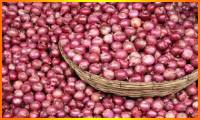
Trading Corporation of Bangladesh imports 201 tons of onions from India.
Although onion imports from India remain suspended following the export price hike by New Delhi, state-run Trading Corporation of Bangladesh (TCB) has continued to import onion through the Benapole land port.
The TCB will sell the onion to the low income group of people in open market at fair prices in different parts of the country. The customs and port authorities have been extending cooperation to the TCB so that the onion is released from the port as soon as possible. Meanwhile, onion prices have gone skyrocketed in the market after import from India has declined due to various complications. However, retailers have expressed the hope that the onion prices may decline in the market as the government has started import of onion through the TCB.
Source: freshplaza.com

Bright spot: UNCTAD raises India growth estimate to 6.6% for 2023.
The UN Conference on Trade and Development (UNCTAD) upped India's 2023 economic growth forecast to 6.6% from 6% predicted in April. However, it expects the country's growth to slow to 6.2% in 2024.
In its trade and development report issued Wednesday, the UNCTAD said its expects growth of the world economic output to decelerate to 2.4% in 2023 but register a small uptick to 2.5% in 2024.
This comes a day after the World Bank projected India's economy to grow 6.3% in FY24. India's FY23 economic growth was 7.2%.
The multilateral body called for a change in policy direction, including by leading central banks, and accompanying institutional reforms promised during the Covid-19 crisis to avert a lost decade.
'The global economy is flying at 'stall speed', with projected growth in 2023 of 2.4%, meeting the conventional criteria for a global recession. The entire global economy, except East and Central Asia, has slowed since 2022,' UNCTAD said.
Highlighting that globally, the post-pandemic recovery is divergent, it said: 'While some economies, including Brazil, China, India, Japan, Mexico, Russia and the United States, have demonstrated resilience in 2023, others face more formidable challenges'.
In India, the external sector-alongside the private and government sector-has contributed to domestic growth, partly helped by many countries redirecting trade flows away from the Russian Federation, with which India maintains a direct relationship, the Geneva-based organisation said.
While growth in 2022 moved back in line with pre-pandemic rates, it is expected to continue into next year, according to the report.
'However, other indicators still suggest caution: with rates of unemployment still standing at 8.5% in June 2023, employment remains disappointingly low by historical standards. Inequality has also significantly increased - as suggested by data on real wages and the labour share-which could hinder growth,' UNCTAD said.
It highlighted that India's 10 largest firms account for 8% of its total exports, although the total number of exporting firms exceeded 123,000 in 2021.
As per the report, South-South trade accounted for around 54% of South's total trade in 2022.
Source: economictimes.indiatimes.com
India urges WTO members to start text-based talks on finding permanent solution to public food stockholding.
India has urged WTO members to start text-based negotiations from this month on finding a permanent solution to the issue of public stockholding for food security purposes, an official has said. The official added that the European Union (EU) is ready for talks with India on the stockholding issue.
The issue came up for discussion at an agriculture negotiations meeting on October 2 in Geneva. It was chaired by Ambassador Alparslan Acarsoy of Turkiye.
At that meeting, the EU offered a positive response to the chair's textual suggestions related to the safeguards mechanism aimed at preventing illegitimate exports stemming from excessive food stocks, the official said.
The Geneva-based trade official also said that the EU explicitly recognized that the safeguards and anti-circumvention are indeed the key provisions which deal with the possible impact of public stockholding policies.
'India urged members to commence text-based negotiations as soon as possible, preferably at the senior official level meeting scheduled for late October,' the official said.
Under text-based negotiations in WTO, an agreement is finalised around draft texts floated by the chair of a particular committee dealing with the subject. The draft is based on discussions amongst the member countries and is fine-tuned till all the nations are in agreement with it.
India reiterated the importance of discussing external reference prices to accurately assess farm support in relation to public stockholding.
The issue of finding a permanent solution to the public stockholding programmes for food security purposes is important for developing countries like India as it provides support measures and procures rice from farmers at MSP (minimum support price) and sells at cheaper rates to poor populations for food security.
Developed countries term these support measures as trade distorting subsidies and they are against these programmes of public stockholding of food.
According to them, this procurement violates the prescribed limit of providing subsidies and WTO's agreement on agriculture. They also demand notification to WTO (World Trade Organization) by emerging economies about their programmes.
Developing economies like India are of the view that there is a need to change the way this subsidy limit is calculated.
They also demand a significant cut of subsidies being given to farmers of developed countries.
India has pitched for the need to recalculate the external reference prices to reflect the impact of inflation and other economic factors on food stock prices.
In 2013, it was agreed by the WTO members to find a permanent solution to these issues and till then there is a 'peace clause' under which no country would file any legal complaint against another member even if the 10 per cent level is breached.
As part of a permanent solution, India has asked for things like amendments in the formula to calculate the food subsidy cap and inclusion of programmes implemented after 2013 under the ambit of 'Peace Clause'.
At the agriculture negotiations meeting on October 2, the chair asked members to consider several proposed safeguards and anti-circumvention provisions as potential breakthroughs for the highly debated permanent solution for public stockholding.
'This topic of public stockholding is crucial for achieving an outcome on agriculture at the next ministerial conference in February 2024. India has been a leading advocate for this initiative and has been, arguably, the largest beneficiary of the Bali interim solution, with the US disputing that the interim arrangement has contributed to India becoming the top exporter of rice,' the official said.
In previous meetings, the US has specifically called out India for exceeding limits on rice stocks under the Bali interim decision.
Under global trade norms, a WTO member country's food subsidy bill should not breach the limit of 10 per cent of the value of production based on the reference price of 1986-88.
Subsidies over and above the prescribed ceiling are seen as trade distorting. The limit is fixed at 10 per cent of the value of food production for developing countries like India.
India has earlier informed WTO that it has used the peace clause to provide excess support measures to rice farmers for marketing year 2020-21, in order to meet the domestic food security needs of its poor population.
In the meeting, India expressed gratitude to the EU for changing its stance and showing a willingness to negotiate on the public stockholding issue.
Several African and Asian countries have echoed India's view, emphasizing the urgency of negotiating a permanent solution on public stockholding in times of crisis.
The issue is expected to figure prominently in the 13th WTO Ministerial Conference (MC13) that will take place in February 2024 in Abu Dhabi, United Arab Emirates. MC is the highest decision making body of the 164-member multi-lateral body.
Source: economictimes.indiatimes.com
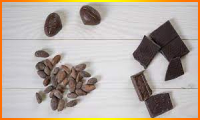
Cocoa to be Sourced Directly, Ivory Coast Appeals India.
Côte d'Ivoire, known as the world's largest cocoa producer, has reached out to India with a proposal to source cocoa directly from their country due to a significant rise in cocoa product consumption.
They plan to send a high-level delegation to India in the coming month for negotiations with the Indian government and potential partners and investors, particularly in the processing and value-added segments of the cocoa industry within their nation.
Despite producing a substantial 2-2.2 million tonnes of cocoa, which accounts for 45% of the global cocoa output totalling 5 million tonnes, Ivorian cocoa farmers have not been reaping the expected benefits.
In an effort to capitalize on their leading cocoa production status, Côte d'Ivoire has decided to explore direct marketing of cocoa.
However, their recently announced farmgate price of 1,000 francs, issued by the cocoa regulator on September 30, is still considered low, especially when compared to global cocoa prices.
The cocoa trade traditionally sees established players dominate, and these entities often enjoy the lion's share of the profits.
Therefore, Côte d'Ivoire is now focusing on promoting cocoa processing to increase the value of the commodity before selling it. They are actively seeking partnerships and the establishment of processing facilities to achieve this goal.
Yves Brahima Kone, the Managing Director of the regulator, stated during the International Exhibition of Agriculture and Animal Resources (SARA) that they plan to visit India in November to meet with potential partners and government officials to discuss the direct marketing of cocoa.
The objective is to market cocoa products or semi-finished goods, thus generating higher income for the country.
Regarding the high import duties on cocoa in India, it is expected to be a topic of discussion during their upcoming negotiations. The Ivorian regulator believes that these discussions will result in a mutually beneficial situation for both nations, enhancing cocoa trade and potentially leading to better returns for Ivorian cocoa farmers while meeting India's cocoa demands more efficiently.
Source: krishijagran.com