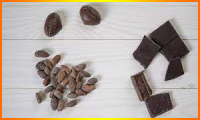
Cote d'lvoire looking for direct sale of cocoa products to India.
Cote d'lvoire, the world's largest cocoa producer and exporter, is keen to explore the Indian market for direct marketing of cocoa and cocoa-based products, and the sector regulator will visit the Asian country next month. Cocoa regulator Le Conseil du Cafe-Cacao not only wants market access in India for cocoa products, but is also looking for investors and partnerships for processing cocoa in Cote d'lvoire.
Currently, much of the cocoa produce in Cote d'lvoire -- also known as Ivory Coast located in West Africa -- is marketed through middlemen and third parties, leading to lower returns for farmers.
'Until now, our colonisers (France) built a system of dependency on Europe for cocoa trade. But we are open to selling our products to other countries. We are ready to sell directly to Indian manufacturers,' Cocoa regulator Le Conseil di Cafe-Cacao Managing Director Yves Brahima Kone told PTI in an interview.
'We are going to India in November and meet potential partners and government leaders to explore direct marketing of cocoa. We will be able to sell cocoa products or semi-finished products,' he said.
Asked whether the high duties on the import of cocoa will be a subject of discussion, the regulator said it would be one of the issues slated for discussion.
'It is going to be a win-win situation for both sides,' he said.
The regulator said the consumption of cocoa products in India is increasing, and that will drive the trade strategy during the discussion with Indian leaders.
It is the first time that the cocoa regulator from Cote d'lvoire will be visiting India -- which imports around 1 lakh tonne of cocoa products -- for the promotion of the cocoa trade.
At present, Cote d'lvoire is focusing more on processing and transformation of cocoa into products like cocoa powder and cocoa butter, among others, to ensure better returns to the farmers and expand its cocoa economy. It has capped annual domestic production at 2.5 million tonne.
'We are promoting processing of the commodity (as value addition will get us more income) before selling it. We are looking for partnerships and setting up processing facilities,' said Colulibaly Siaka Minayaha, Chairman of the Board of Directors of Le Conseil du Cafe-Cacao.
He said the country aims to achieve a processing level of 49 per cent in the current year.
To encourage the processing of cocoa, the regulator has taken several steps to organise farmers and establish cooperatives of smallholding growers, he added.
The regulator also said the country is in the process of complying with European norms on sustainability, deforestation and child labour.
International Cocoa Organization (ICCO) Executive Director Michel Arrion said India is an emerging market for the consumption of cocoa, used largely in the manufacturing of chocolates and should become a member of the inter-governmental body.
Out of 5 million tonne of global cocoa production, Cote d'lvoire alone produces about 2-2.5 million tonne annually and exports almost the entire quantity, including value-added products like cocoa butter.
Cote d'lvoire, located in West Africa, harvests cocoa twice a year, with the first crop picked during October-March, and the second crop in April-September. PTI LUX
The PTI journalist is in Abidjan on invitation from the cocoa regulator.
Source: economictimes.indiatimes.com

State of the Economy. Integration of physical mandis with eNAM and ONDC will transform Indian agriculture .
In this episode of the 'State of the Economy' podcast, Subramanian Ra Mancombu, Head, Agri-biz and Commodities, businessline and CA Aditya Sesh, a member of the expert committee in the Ministry of Agriculture and Farmers Welfare, Government of India discuss the challenges faced by Indian agriculture, including the impact of climate change events over the past few years.
Climate change has significantly affected agricultural production in India, particularly in food grains and pulses. India banned wheat exports and curbed rice exports due to these challenges. Prices of pulses have surged in recent months, and abnormal southwest monsoon patterns have added to the woes. The deficiency in monsoon rainfall, while partially addressed by September rains, has still raised concerns.
Sesh emphasizes the interconnectedness of all markets, from production to consumer markets, and the need to view them holistically. He discusses the integration of traditional physical mandis with virtual platforms like eNAM and ONDC, transforming Indian agriculture into an industry.
Regarding the upcoming crop season, Sesh expresses optimism about wheat production but highlights concerns about pulses, anticipating potential shortages. He also touches on the impact of El Nino on Indian agriculture and the global issues affecting food supply, such as the Ukraine-Russia wheat dispute.
The accuracy of crop assessments in India is questioned, with Sesh acknowledging data entry challenges and efforts to improve data quality. He also discusses the use of technology like drones, satellite imagery, and IoT in enhancing data collection and production estimation.
The conversation delves into the pricing of agricultural products and measures to ensure affordability while supporting farmers. Sesh emphasizes the shift from food security to nutritional security and the growing demand for pulses and proteins in India.
Finally, the discussion expands to the idea of a global agriculture strategy for India, involving agriculture production in other countries. Sesh suggests that India should explore opportunities for agriculture expansion beyond its borders, similar to strategies adopted by China and Saudi Arabia.
India’s economy has been hailed as a bright spot amid the general gloom that seems to have enveloped the rest of the world. But several sectors continue to stutter even as others seem set to fire on all cylinders. To help you make sense of the bundle of contradictions that the country is, businessline brings you podcasts with experts ranging from finance and marketing to technology and start-ups
Source: thehindubusinessline.com
Malaysia announces subsidy for imported rice in 2 states.
Malaysia's agricultural and food security ministry on Monday said it would provide a subsidy of 950 ringgit ($201.78) per ton for imported white rice in the states of Sabah and Sarawak from Oct. 5.
The ministry also asked the Federal Agricultural Marketing Authority to increase distribution of local white rice to rural areas.
Malaysia's Agriculture Minister Mohamad Sabu said the subsidy measures were announced to address concerns over higher prices of rice.
He also announced a task force had been formed to inspect local rice supply chains.
Source: deccanherald.com
HAFED procures 5 lakh quintals of millets, 95K tonnes paddy, says Haryana.
Haryana has so far procured 5 lakh quintals of millets and 95,000 tonnes of paddy from farmers till September 28, said the state government Friday.
'Haryana is experiencing a seamless and efficient procurement process for millet and paddy, ensuring the economic well-being of its farmers. As of now, Haryana State Cooperative Supply and Marketing Federation Limited (HAFED) has procured an impressive 5 lakh quintals of millet, with prompt payments directly into farmers bank accounts via RTGS system,' a government spokesperson said.
Chief Minister Manohar Lal Khattar has earlier issued directives to HAFED, a cooperative federation, to engage in commercial millet procurement. He has also directed to ensure that the payment of crop purchase should be credited directly into farmers’ bank accounts within 72 hours.
The millet procurement was originally scheduled to commence on October 1. However, taking into accpunt the early arrival of millet and the need to stabilize the market, HAFED initiated commercial millet procurement on September 23, the spokesperson said.
'HAFED is adhering to the Fair Average Quality (FAQ) specifications mandated by the central government. To date, HAFED has procured 5 lakh quintals of millet from over 16,000 farmers residing in 1,600 villages across 93 mandis or purchase centres in 17 districts of the state', the spokesperson said.
HAFED also procures paddy at the Minimum Support Price (MSP) on behalf of the Food Corporation of India, with paddy procurement commencing on September 25. By September 28, HAFED had procured 95,000 MT of paddy from 9000 farmers out of a total procurement target of 2.80 lakh MT, the official stated.
HAFED has emerged as the largest state procurement agency in Haryana, actively procuring wheat, paddy, mustard, millet, sunflower, gram, and moong from farmers.
Farmers are urged to bring their millet and paddy produce to the mandis after proper cleaning and in compliance with the moisture limits specified by the central government to ensure a seamless procurement process, the spokesperson said.
Source: indianexpress.com
Rice ban export is regulation rather than restriction for food security: India to WTO's agri committee meet.
India has said that the export ban on rice is a regulation rather than a restriction and is crucial for securing the food security of 1.4 billion people, according to an official. This was stated by India in response to concerns raised by a group of countries including the US during a meeting of the WTO's Committee on Agriculture in Geneva on September 27.
The Geneva-based official said that in the meeting, India reiterated its commitment to ensure food security in importing countries by granting exemptions to those in need upon their governments' requests.
The Indian government has already allowed exports of non-basmati rice to Bhutan (79,000 tonnes), UAE (75,000 tonnes), Mauritius (14,000 tonnes) and Singapore (50,000 tonnes) through the National Cooperative Exports Ltd (NCEL).
On July 20 this year, India banned exports of non-basmati white rice to boost domestic supply and keep retail prices under check during the upcoming festive season.
'The Government of India has the commitment that in case of food insecure, vulnerable countries and neighbouring countries request, it will provide with the required quantity of rice or wheat,' the government official said.
India has also argued that, in order to prevent private players from manipulating market conditions, advance notifications were not provided in the WTO.
Furthermore, these measures are temporary and are regularly reviewed to allow necessary adjustments based on domestic demand and supply situations.
A group of member countries of the World Trade Organisation (WTO) including the US has raised concerns about banning the export of non-basmati white rice by India, saying the decision may impact import-dependent nations, the Geneva-based trade official said.
The US has urged India to lift this export ban with immediate effect.
These countries have argued that such measures had a detrimental impact on nations which are heavily reliant on imports of these agri commodities, particularly during times of crisis, the official said.
The ongoing war between Russia and Ukraine, and this year's El Nino climate conditions are among the factors that have disrupted the foodgrain supply chain.
More than a dozen questions were raised by Japan, Australia, Brazil, Canada, the European Union, New Zealand, Switzerland, Thailand, the UK, and the US.
'They expressed concerns about the impact of India's export ban on the global food market, highlighting its significance as the world's largest rice exporter, accounting for over 40 per cent of global exports,' the official added.
Source: economictimes.indiatimes.com
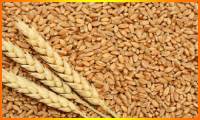
EU cuts wheat and maize crop estimates, revises up imports.
The European Commission on Thursday cut its estimates of this year's wheat and maize harvests in the European Union, but revised up its overall supply outlook for the cereals as it increased sharply expected imports.
For common wheat, or soft wheat, EU production was estimated at 125.3 million metric tons, down from 126.1 million forecast a month ago and now slightly below last year's crop of 125.7 million.
In its supply and demand data, the Commission also lowered its forecast for maize output, to 59.8 million tons from 61.7 million projected a month ago, though it remained well above last year's drought-ravaged harvest of 52.1 million.
In imports, projected EU soft wheat imports in the 2023/24 season were increased to 6.5 million tons from 4 million while forecast EU maize imports in 2023/24 were raised 20 million tons from 17 million.
The higher import projections led the Commission to increase its outlook for 2023/24 ending stocks in both soft wheat - to 17.8 million tons from 16.3 million last month - and maize - to 17.8 million from 17.3 million.
The Commission trimmed its estimate of this year's barley harvest by 200,000 tons to 48.4 million, putting it further below last year's 51.5 million.
Among EU countries, the Commission said it had made the biggest month-on-month cuts to estimated cereal production for Spain, with a 16% reduction, followed by Hungary (-5.8%) and Romania (-4.3%).
Poland was the only EU state for which a significant upward revision had been made to expected cereal output, with a 5.8% increase since last month, it said.
For EU exports, the Commission kept its 2023/24 forecasts unchanged for both soft wheat and barley, at 32 million and 10 million tons respectively.
In oilseeds, estimated production of rapeseed was revised up to 19.6 million tons from 19.1 million previously, now marginally above last year's output.
Projected 2023/24 rapeseed imports were kept unchanged at 5.8 million tons.
Source: nasdaq.com
India making new export records, economy will grow 10 times by 2047: Goyal.
Union Minister Piyush Goyal on Saturday expressed confidence that by 2047 the country's economy will increase tenfold.
'I am confident that the country's economy will increase tenfold by 2047. India will be free from poverty, will emerge as a big power in the world, and the youth will have a good education, Piyush Goyal said.
He further said that every class is on the path of progress today. India made new records in terms of exports.
'The people of MP are going to defeat the corrupt Congress leaders. Under the leadership of PM Modi and Shivraj Singh Chouhan, a new direction has been given to the development of the state,' he said.
Earlier today Prime Minister Narendra Modi emphasized making the country a developed nation by 2047.
PM Modi said that the model of a developed country does not mean that grandeur should be seen in Delhi, Mumbai, or Chennai and that the country's villages should be left behind.
'We want to take charge of the destiny of 140 crore people and bring about a change in their lives,' the Prime Minister said.
Madhya Pradesh is scheduled to go for the assembly polls later this year. Through the polls, the state will elect legislators from 230 Assembly constituencies.
The last Assembly polls in 2018 saw the Congress coming to power, with veteran leader Kamal Nath taking oath as the chief minister.
Nonetheless, a political upheaval rocked the state in 2020, after the then Congressman Jyotiraditya Scindia, along with 22 loyalist MLAs, switched over to the saffron camp.
The Congress government fell after being reduced to a minority and the BJP formed the government, with Shivraj Singh Chouhan returning as chief minister.
Source: business-standard.com
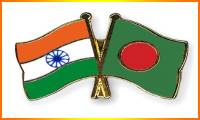
India, Bangladesh discuss preparations to start talks for free trade agreement.
India and Bangladesh have discussed preparations to start talks for a free trade agreement between the two countries to promote economic ties, an official statement said on Sunday. It was discussed during an official-level meeting of the Joint Working Group on Trade (JWG) between India and Bangladesh, which was held last week in Dhaka.
The meeting 'discussed a host of bilateral issues such as removal of port restrictions, ground work on commencement of Comprehensive Economic Partnership Agreement (CEPA), harmonization of standards, and mutual recognition of standards, supply of essential commodities to Bangladesh,' the commerce ministry said.
CEPA is a kind of free trade agreement, under which two trading partners significantly reduce or eliminate customs duties on the maximum number of goods traded between them. Besides, they also ease norms to promote trade in services and investments.
They also deliberated upon issues related to development of road and rail infrastructure, regional connectivity through multi-modal transportation and creation/ strengthening of infrastructure in Land Customs Stations/ Integrated Check Posts, border haats.
These meetings are held on an annual basis to discuss key trade related issues and explore opportunities for economic and technical collaboration, promotion, facilitation, expansion and diversification of trade between the two countries.
'These meetings play a vital role in quick resolution of bilateral issues by removing trade barriers, simplifying customs procedures, improvement of infrastructure, logistics, and transit facilities to facilitate smoother cross-border trade,' it said.
The bilateral trade has dipped to USD 14.2 billion in 2022-23, from USD 18.13 billion in 2021-22.
Source: economictimes.indiatimes.com
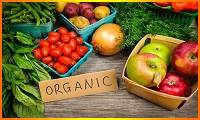
Organic ownership: India food authority orders upgrades for all state labs to boost exports.
The Food Safety and Standards Authority India (FSSAI) is attempting to balance plans for boost organic food exports with ongoing food safety concerns by mandating all state-authorised laboratories to adopt organic testing capabilities.
FSSAI had initiated strategies to improve organic standards and governance in India in June this year, but reinforced this order in the third quarter amidst continuing public concern over adulterated organic products in the market.
This was also driven by increased government emphasis on growing organic exports earlier in September, which was announced by India’s Commerce Secretary Sunil Barthwal.
'The global market for organic foods is around US$135bn, of which India is only taking a US$700mn share,' he said via in a formal address.
'There is a lot of potential for growth here in organic foods, and this is a very important area [to India] so we are focusing on growing this sector.?
'[Right now], more awareness must be generated regarding India’s organic food standards, and [to comply] with the standards of importing markets – one important thing to do is to promote our India organic logo to help improve the credibility of our organic products in the international market.'
India already has a wide range of organic food items from fruits such as avocado and passion fruit to grains such as rice and millets. All organic foods need to carry the local logo with the wording Jaivik Bharat in order to be legally recognised as organic.
This organic logo was established in India back in December 2017 and was widely publicised by the government, but food safety concerns have continued to run rife over potential adulteration despite its use.
Earlier this year, an FSSAI crackdown revealed over 170 cases of adulteration amongst products being sold in India within just six months, covering multiple areas usually requiring certification such as health supplements and organic foods.
In light of increased government focus and consumer fears surrounding the organic sector, FSSAI has responded by mandating that more organic testing and analysis be made available in all state-authorised laboratories.
'The Government has decided to promote organic products in India [and the] success of this ?depends on reliable testing, to ensure the authenticity of organic products,' FSSAI Quality Assurance Advisor Dr. Satyen Kumar Panda stated via a formal statement.
'Therefore, all food testing laboratories will need to optimise their facilities and procedures [to prepare to] handle organic testing efficiently and accurately.?
'All FSSAI Notified laboratories are hereby directed to review current capabilities [in this area [and take] the necessary steps to enhance organic product testing, as well as to apply to the Agricultural & Processed Food Products Export Development Authority (APEDA) as a recognised laboratory for organic testing.?
'Labs must also apply to the APEDA National Referral Laboratory to take part in proficiency testing, as a pre-requisite to qualify as a laboratory that can conduct pre-export testing for organic product exports.'
India’s organic potential?
It should come as no surprise that India is hoping to capitalise on organic food exports due to its already significantly large presence in the sector.
According to government data, the country has some 5.71 million hectares of certified organic land for crops, and ranks ninth globally for organic land area. It also has the largest number of organic food producers in the world, generating some 1.35 million MTs of organic foods for export yearly.
Expand the reach of exports from this sector would undoubtedly be a profitable and valuable move for India – but before significant growth can be achieved here, there is definitely a strong necessity to build up consumer trust and confidence – for both local and overseas consumers - in organic products originating from India.
Source: foodnavigator-asia.com
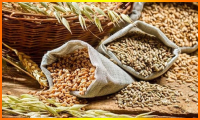
Rabi foodgrains target at 161 mt.
The government on Tuesday set rabi foodgrains production target at 161.2 million tonnes (mt). The national target for total food grains production for the 2023-24 (July-June) crop year is 332 mt.
As per the government’s third crop estimate, India’s foodgrain production in 2022-23 is pegged at 330.5 mt.
The agriculture ministry has kept a target of achieving a record wheat output of 114 mt in the 2023-24 rabi season against the output of 112.74 mt (as per the government’s third advance estimate) in 2022-23. Sowing of wheat, the main rabi or winter crop, begins in October along with other crops. Harvesting of the stable commodity starts in March-April.
While the Centre targets to bring 60% of the total wheat area (30 million hectares) under the climate-resistant varieties amid constant changes in weather conditions.
'There are certain changes in climate change, which is affecting agriculture. Our focus is on climate resilient seeds,' union agriculture secretary Manoj Ahuja said on Tuesday while addressing a national conference on Rabi crops to chalk out sowing strategies.
India last year had witnessed extreme heat waves that took a toll on crop quality and output, especially on the wheat crop and uneven distribution of monsoon rain this year hampering kharif crop plantation.
He also stressed up on the need for making India self-sufficient in producing pulses and oilseeds amid their shrinking production over the past couple of years.
'The priority of the government is agro-ecological based crop planning for diversion of land from excess commodities like rice and wheat to deficit commodities such as oilseeds and pulses and high value export earning crops,'
For the forthcoming rabi season, pulses production target has been set at 18.1 mt and oilseeds production target at 14.5 mt.
The department set a target to produce 29.2 mt and 44 mt oilseeds in the entire season.
Pulses production in 2022-23 has been 27.5 mt and oilseeds output 40.9 mt, as calculated by the department in its third advance estimate.
Agriculture Secretary Ahuja said, 'The strategy would be to increase the area through inter-cropping and crop diversification and productivity enhancement through introduction of high yielding varieties and adoption of suitable agronomic practices in low yielding regions.
To address the concern over large yield gaps in crop production, the government earlier set a vision to make the country self-sufficient in pulses and oilseeds production. For pulses, the department proposed to achieve the target of 32.5 million tonnes by 2025.
'Special projects such as inter-cropping, targeting rice, expansion in high potential districts and non-conventional regions will bring additional area under oilseeds. All this will increase domestic production of annual edible oilseeds from the current level of 36.2 to 54.1 mt and edible oil production from 8.5 to 13.6 mt by the end of 2025-26,' according to a government release. 'The renewed focus will help in reducing the import dependency from 56% to 36% in the next 5 years.'
Fertilizer secretary Rajat Kumar Mishra stressed on the need for a timely supply of fertilisers and balanced use of crop nutrients as fertiliser is one crop input after water that influences production.
He mentioned that nano urea and DAP fertilisers are the future.
The conference was held to review and assess the crop performance during the preceding crop seasons and fix crop-wise targets for rabi season in consultation with state governments, ensure supply of critical inputs and facilitate adoption of innovative technologies with a view to enhance production and productivity of the crops.
Source: livemint.com