
Sweetness of GI honey.
Market development has been strengthened through the Madhukranti portal where more than 20 lakh growers are registered. Upscaling of the capacity building programmes especially linking women SHGs is also on the cards. Honey production data is generally collected by the National Bee Board (NBB) through the registered growers and only registered growers are involved in the export process.
According to the PIB, there are 19.34 lakh honey bee colonies registered with the National Bee Board. India produces about 1.33 lakh tonnes of honey (2021-22 advance estimate) and exports over half of its output, at 74,413 tonnes in 2021-22, worth Rs.1,221 crore. The US constitutes the lion’s share of Indian honey exports (about 80 per cent) and prefers mustard honey, which is primarily used with bread.
To ensure checks on the issue of impurity, the Export Inspection Council (EIC) plays an important role through SPS (Sanitary Phytosanitary) measures. Recommended tests like C4, C3, and NMR (Nuclear magnetic resonance) are conducted on honey to detect impurities. However, prices have fallen drastically and growers are not able to cover their expenses.
One more important issue to note is the crystallisation of honey, which does not imply adulteration. Pure mustard honey tends to crystallise due to its higher pollen content. The government is also raising awareness about this aspect.
Assurances regarding honey’s originality and quality norms can be made through Geographical Indications (GI) tagging.
The government has engaged in dialogues with various stakeholders to expedite the process of geographical indications in the honey sector. However, it is surprising to learn that the current number of total GI-tagged agricultural products in India is approximately 450, much behind the leaders Germany and China. Unfortunately, right now there is only a single GI-registered honey product in India, — Marthandam Honey from Tamil Nadu. There are four other honey products in the process of obtaining a GI tag, belonging to Andhra Pradesh, Madhya Pradesh, West Bengal, and the Jammu region. Almost a decade ago, Cameroon registered its famous Oku honey under geographical indication, which led to improved price realisation.
However, researchers have claimed that even the GI tag could not ensure long-term economic viability for honey producers in Cameroon. A holistic development of the value chain, including honey by-products, is vital to ensure sustainability. For instance, Shahi Litchi from Muzaffarpur, Bihar, has a GI tag, but there should also be an emphasis on granting a GI tag for honey produced from it.
Booster Strategy
The government needs to prioritise a cluster-based approach to strengthen the Geographical Indication system for honey products. Emphasis must also be granted towards identifying and nurturing specific geographic regions, such as the Himalayan white honey from Himachal Pradesh. Producers are still at the mercy of supply chain agents. GI tag can provide unique identification not only in the domestic market but also in global markets, leading to increased income realisation for producers.
However, we should learn from the African example and focus on building more producer-friendly market channels based on quality and origin-based pricing. More emphasis should be placed on empowering the local community, facilitating knowledge exchange, and investing in modern paradigms to drive positive change in this direction.
Integrating honey-producing Farmer Producer Organisations (FPOs), co-operatives with various industries like wine, cosmetics, and pharmaceuticals is vital. Sustainable value chain development can uplift small and marginal farmers associated under collectives.
The writer is Faculty at Dr. Rajendra Prasad Central Agricultural University, Pusa, Bihar
Source: thehindubusinessline.com

Centre makes it mandatory for traders, wholesalers & processors to disclose weekly sugar stocks.
Keeping a close watch over sugar stocks and trades to avoid hoardings, the government on Thursday issued orders to mandatory disclose the stock position of sugar for traders, wholesaler, retailer, big Chain Retailer and processors of sugar on its portal (esugar.nic.in) of Department of Food and Public Distribution on every Monday of the week.
'This mandatory weekly stock disclosure for these entities is another proactive step in the Government of India's efforts to maintain a balanced and fair sugar market. By preventing hoarding and speculation, GoI is aiming to ensure that sugar remains affordable for all consumers. This proactive measure empowers regulatory authorities to closely monitor stock levels and take prompt action against any potential market manipulation,' the government release said.
'This fully digital initiative will facilitate smooth sugar market with deterrence to commodity hoarders from any speculative transactions. Besides, it will also provide real-time data on sugar stocks and help the Government to make further policy decisions, as and when need arises, to mitigate the impact of rumours of rising sugar prices on consumers and the industry,' the release added.
Further, the Centre is also expecting cooperation from sugar mills and traders to adhere to the relevant laws and monthly domestic quota norms. Strict action will be taken against the mills violating the same.
Source: economictimes.indiatimes.com
India to become USD 5 trillion economy, third-largest by 2027: RBI DG Patra.
India will be a USD 5 trillion economy and the third largest in the world by market exchange rates by 2027, aided by the demographic advantage and pace of financial sector development, Reserve Bank Deputy Governor Michael D Patra has said. Delivering a speech at the 16th SEACEN-BIS High-Level Seminar hosted by the National Bank of Cambodia on Monday, Patra said it is widely believed that during the next two decades -- if not for longer -- the centre of gravity of the global economy will shift eastward to Asia.
The IMF's Regional Economic Outlook for Asia and the Pacific indicates that this region will contribute about two-thirds of global growth in 2023 itself and India will account for a sixth of world output growth in 2023 and 2024, he said.
In terms of market exchange rates, he said India is the fifth-largest economy in the world and the third-largest economy on the basis of purchasing power parity.
'Our assessment is that by 2027, India will be a USD 5 trillion economy and the third largest in the world even by market exchange rates. A key driver in this transformation is likely to be the window of a demographic dividend that opened up in 2018 and will probably last till the 2040s, going by fertility and mortality rates,' Patra said.
'We are the most populous country in the world at 1.4 billion and the youngest at an average age of 28 years. The other major catalyst of India's progress will be the pace and quality of financial sector development, which is the theme of my address today,' he said.
For a high saving rate economy, like the rest of Asia, he said, a modern, efficient, and soundly functioning financial sector is essential for mobilising the resource requirements of India's developmental aspirations.
While the jury is still out on whether economic progress is finance or demand-led, Patra said a wealth of empirical evidence points to Asia's growth trajectory being that of the real economy leading financial development, and India is no exception.
There is also stylised evidence that the composition of the financial sector across Asia is changing, with hitherto bank-dominated systems giving space to alternative financial intermediaries like non-banks and capital markets, he said, adding these developments, in turn, generate impulses of growth for the rest of the economy.
In India, he said, additional dimensions have opened up exciting possibilities for leveraging our growth potential - the digital revolution; transformation of the payment and settlement ecosystem; and innovations in financial inclusion.
'More recently, India's exponential expansion of the usage of space technology is reshaping every aspect of our lives, including the financial sector,' he said.
The approach to the financial sector in India is reflecting a new paradigm in which macroeconomic and financial stability are seen as strongly complementary and providing the foundation for medium-term growth prospects, Patra noted.
Prudence is taking precedence over-exuberance, and this is reflected in the steady build-up of all types of buffers, he pointed out.
'In an overarching sense, this approach is reflected in the accumulation of foreign exchange reserves, which, as our experience has shown, has become our national safety net in the absence of a truly global financial shield. Besides providing the wherewithal to protect our financial markets and institutions from being overwhelmed by global spillovers, the reserves have helped to build bulwarks of external strength, as reflected in modest external debt servicing and debt to GDP ratios,' he said.
'We believe that this is strengthening our capability to manage new challenges, such as climate change and cyber threats while maintaining public confidence and ensuring the financing requirements of India's development strategy,' he added.
Source: economictimes.indiatimes.com
Union Minister of state for Agriculture and Farmers Welfare, Shri Kailash Choudhary Launches AI Chatbot for PM-KISAN Scheme today.
Union Ministry of Agriculture & Farmers Welfare, Government of India today launched AI Chatbot for the Pradhan Mantri Kisan Samman Nidhi (PM-KISAN) Scheme at New Delhi today. The AI Chatbot launch marks a significant step towards enhancing the efficiency and reach of the PM-KISAN scheme, and also providing farmers prompt, clear, and accurate responses to their queries.
Launching the AI Chatbot, Union Minister of State for Agriculture and Farmers Welfare, Shri Kailash Choudhary said the initiative is in in line with Prime Minister Narendra Modi’s vision to bring positive change to lives of farmers and improve governance through use of technology. Shri Chaudhary said the AI Chatbot will help in accessing scheme information and resolving grievances. He also called upon the need to widen the service to link it with other related issues like weather information, soil conditions and bank payments etc. The minister complemented the Ministry officials for onboarding the technology in a short span of time and added that it will ease the burden for agriculture officials at the Centre and states.
During the virtual event, dignitaries from the Government of India and the State Government gathered to celebrate this significant milestone in the agricultural sector. The successful launch of the AI Chatbot for PM KISAN scheme reaffirms the Government's commitment to leveraging technological advancements for the welfare of farmers.
Shri Manoj Ahuja, Secretary, Department of Agriculture & Family Welfare noted that the AI chatbot will also be implemented for other major schemes of the Ministry in coming months. Shri Pramod Mehreda, Addl. Secretary, Department of Agriculture & Family Welfare made a detailed presentation on the features of Chatbot and its benefits for farmers.
The AI Chatbot acts as a comprehensive guide for the beneficiaries, providing them with timely and accurate responses to their queries related to the scheme. This is the first AI Chatbot integrated with a major flagship scheme of the Union government. It has been developed and improved with the support of EKstep foundation and Bhashini. The introduction of the AI chatbot in the PM-KISAN grievance management system is aimed at empowering farmers with a user-friendly and accessible platform. In its first phase of development, the AI chatbot will assist farmers in seeking information related to their application status, payment details, ineligibility status, and other scheme-related updates. The AI Chatbot, accessible through the PM KISAN mobile app, is integrated with Bhashini, which offers multilingual support, catering to the linguistic and regional diversity of the PM KISAN beneficiaries. This integration of advanced technology will not only enhance transparency but will also empower farmers to make informed decisions.
Currently, the Chatbot is available in English,Hindi,Bengali, Odia, and Tamil. In a short period, it will be available in all 22 languages of the country.
Background
The Pradhan Mantri Kisan Samman Nidhi (PM-KISAN) is a central sector scheme launched in February 2019 to support the financial needs of land-holding farmers in India. The scheme offers an annual financial benefit of Rs 6,000/- in three equal instalments to eligible farmers’ families through Direct Benefit Transfer (DBT) mode. Since its inception, over Rs. 2.61 Lakhs Crores disbursed to more than 11 Crore farmers so far, it stands as one of the largest DBT schemes globally. The PM-KISAN scheme has played a vital role in providing income support to landholder farmer families across the country with cultivable land. The scheme’s direct benefit transfer has ensured timely financial assistance to millions of farmers, including women beneficiaries, contributing to their socio-economic well-being. During the Covid Pandemic, more than Rs. 1.75 lakh Crore was transferred to the beneficiaries that provided a great relief to farmers and their families in a difficult time.
Government of India has also developed a mobile app with the feature of face authentication-based e-KYC. This app is first mobile app that use face authentication-based e-KYC feature in any benefit scheme of the Government. This Mobile App is very easy to use and is easily available for download on Google Play store. This app is a wonderful example of modern technology, through which, now the farmer can complete his e-KYC sitting at home even in remote areas of the country without any OTP or fingerprint, just by scanning his face. Not only this, but they can also assist 100 other farmers in their neighbourhood to complete e-KYC at their doorstep. In addition, the Government of India has also extended the facility for completing e-KYC of farmers to State Government officials, allowing each official to do e-KYC for 500 farmers.
Source: pib.gov.in

Collaborative Efforts Between India and UAE Essential for Efficient Food Logistics and Security,' States Minhaj Alam, Additional Secretary, MoFPI at Future Food Forum, UAE.
The Future Food Forum, the Middle East's largest annual gathering of industry leaders, kicked off on September 21st with a focus on regional food security, sustainability, innovation, and consumer well-being discussions. Industry titans, government officials, and business leaders from across the globe descended upon Dubai for this milestone event.
The forum featured insightful sessions on India and UAE, tackling critical topics such as the India-UAE Comprehensive Economic Partnership Agreement (CEPA) and the growing investment trends in food tech startups. These discussions aimed to fortify food security and sustainability through cross-border collaboration.
Piruz Khambatta, Chairman of the CII Food Processing Committee, highlighted the need for international partnerships. 'By partnerships between countries like India and UAE, we are changing the future of our own citizens for the better,' Khambatta declared. He also underscored the significance of the India, Middle East, and Europe Corridor in creating a common free market. Mr Piruz Khambatta also led a panel discussion
Minaz Alam, Additional Secretary, Ministry of Food Processing and Industry, Government of India, emphasized India's commitment to food processing and the role of collaborative efforts between India and the UAE. 'Collaborative efforts between India and UAE can lead to the development of efficient logistics networks, cold storage facilities, and food processing units,' Alam stated. He highlighted the importance of reducing post-harvest losses and ensuring quality produce reaches the market promptly.
Mr Alam also spoke about the rising global interest in traditional foods like millets, promoting nutritional security. He mentioned the upcoming World Food India event, scheduled for November, which is set to be a monumental congregation of global investors, business leaders, and stakeholders. He also emphasized that the Ministry of Food Processing in India has been diligently working to drive the seamless growth of the food processing sector to its full potential. He declared that the Ministry is conscious of the many opportunities available in the sector and is acting as a catalyst to drive its growth to its fullest capacity.
He highlighted the Production Incentive Scheme, through which incentives are provided to the industry to encourage increased levels of processing and value addition. This initiative aims to create modern infrastructure with efficient supply chain management from farm to retail outlets. He also discussed the importance of strengthening Indian brands for global visibility and wider acceptance in international markets, stressing that robust and resilient supply chains are crucial for ensuring food security. The delegation from India included senior officials of the Ministry of Food Processing and Industries, and from CII.
Inaugurated by Abdulla Al Saleh, Undersecretary of Foreign Trade and Industry at the UAE Ministry of Economy, the forum's theme 'Inspiring Sustainable Well-being' set the stage for a series of compelling discussions aimed at reinforcing self-reliant food supplies and leveraging agri-tech to enhance food security in the Middle East.
Saleh Lootah, Chairman of the UAE Food & Beverage Business Group, welcomed the attendees, emphasizing the pivotal moment for the regional F&B sector. He stated, 'It is a pivotal moment for the F&B sector in the region, one where the sector is taking a new strategic direction to ensure UAE's position as the regional food hub of excellence.'
The Future Food Forum promises to be a catalytic event for the entire food industry, fostering dialogue and partnerships that will shape the future of food security, sustainability, and innovation in the Middle East and beyond. As discussions continue, experts and leaders from diverse backgrounds come together with a shared commitment to inspire sustainable well-being through food.
Source: newsonair.gov.in
MoFPI-IIM Jammu To Hold Regional Conference On Sept 29.
In a groundbreaking move towards enhancing agricultural incomes and promoting millets, Ministry of Food Processing Industries (MoFPI) in collaboration with Indian Institute of Management (IIM) Jammu & DICCI, convened a high-level meeting at IIM Jammu permanent Campus, Jagti under the leadership of IIM Jammu Director, Prof. B.S. Sahay.
The meeting brought together key stakeholders, including Gaurav Gupta from Theta Foundation for Development, along with several eminent dignitaries from industry, Industry bodies and experts.
The primary objective of this momentous gathering was to plan a Regional Conference dedicated to the promotion of Millets and FPOs in the Union Territory of Jammu and Kashmir.
Scheduled for September 29, 2023, at Hotel Radisson Blu, Jammu, the conference is expected to provide a stage for fostering exchange and collaboration opportunities within the realm of millets. The conference will witness the distinguished presence of eminent personalities from the field of administration, Industry, and Famer’s collectives. Milind. P. Kamble, Founder of DICCI and Chairman of the Board of Governors of IIM Jammu will also grace the occasion.
The meeting was attended by Aagam Jain, General Secretary, Laghu Udyog Authority, Arun Manas, J&K State Agro-Indo Development Corporation Ltd ( Online), C.M. Sharma, LEAD Network, Dr. Jyoti Kachroo, In-charge Incubation, SKUAST, Kamal Kaul and T.S Reen, from Federation of Industries, Manik Batra, Bhupesh Gupta and Amit Khajuria of ASSOCHAM, Kanav Padha, Jammu and Kashmir Angle Network, Gagan Jain from Nutraj, Abhimanyu from Jai Organics, Cmdr Kesavan Baskkaran (R), Chief Administrative Officer (CAO), IIM Jammu and Dr. Vivek Sharma, Chief Innovation Officer, IIM Jammu. Prof. B.S. Sahay, Director, IIM Jammu, mentioned that “As we embark on this transformative journey to promote millets and empower Farmers in association with Govt. of India and DICCI, we recognize the immense potential these initiatives hold for our region and beyond. Millets are not only nutritious but also ecologically sustainable, offering a solution to both food security and environmental challenges. With the upcoming Regional Conference, we aim to shine a global spotlight on millets as ‘the world’s emerging smart food’ and create a collaborative platform that fosters innovation and partnership.'
Source: statetimes.in

Avocado imports a stepping stone for improved India-Kenya bilateral relations, says MEA official.
Small domestic production opens an opportunity for good quality imports, said Swadha Rizvi, Deputy Secretary, East and Southern Africa Division, Ministry of External Affairs, Government of India, at the launch event of Kenyan Avocado in India jointly organised by Kenya High Commission and ASSOCHAM. This avocado launch event will improve bilateral relations with robust and multi-faceted partnerships. India offers immense potential for avocado consumption, she said.
She further focused on saying that it took eight long years of negotiations and diplomacy for Kenya to get market access in India for Avocados. So, it is definitely a moment to celebrate as Avocado represents the history, culture and emotions of Kenya and culture is a gateway that has the power to bind countries together and its people together. This is a milestone in the diplomacy and bilateral relations between India and Kenya. The Government of India is confident that Avocado imports from Kenya will help us to strengthen our trade relations with the African country.
Amb. Irene Oloo, Deputy High Commissioner of Kenya to India shared insights on how Kenya exports about 23 per cent of production of avocados. (95,000 tonnes). The increased production of avocados in Kenya calls for increased market access. It is for this reason that Kenya urged India to allow market access for Kenyan avocados.
She further added, 'The value of trade between two countries has been growing over the years to USD 1.83 billion in 2022. Currently, the balance of trade is in favour of India. We are confident the Indian market access to Kenyan avocados will help balance the trade deficit and will facilitate growth and development in this sector, she highlighted.
'Kenya is the world’s 6th largest avocado producer with a cultivated area of nearly 26,000 hectares and a production of 416,000 metric tonnes in 2021, double that of 2016. The increase of 20 per cent per annum on average has been achieved largely through the expansion of avocado plantations by an average of 14 per cent per annum with yields increasing by about 6 per cent. This sector is dominated by small farmers owning less than two hectares of landholding, who contribute 70 per cent of all Kenyan avocados,' Oloo further said.
'Kenya exports 23 per cent of the production of avocados. Kenya accounts for about 82 per cent of East African community avocado fruits export. Kenya’s main export markets are the Netherlands, USA, China, Spain, UK, UAE, Russia, Saudi Arabia, Turkey and Egypt among others. We are happy that India has been added to its export markets,' the Kenyan High Commissioner added.
Dr Umesh Kamble, Co-Chairman, ASSOCHAM MSDC and Founder & CEO, Farm to Forks highlighted the nutritional value of avocado and called avocado as green gold. Consumption of avocados is growing in India with respect to additional health benefits but the availability is less. It is a value-added product for agribusiness.
Dr. Kamble called for awareness creation and promotion of avocado consumption among Indians. 'To further boost the consumption of avocados in India, we need to focus on awareness campaigns and educational initiatives to educate people about the nutritional benefits of avocados, different ways to incorporate them into daily meals, and the importance of supporting domestic avocado farmers,' Kamble added. He also urged the industry to invest in research to develop innovative avocado-based products that cater to the Indian palate and meet consumer demands. Avocado imports from Kenya will help Indian consumers to get it from the local markets.
Source: agriculturepost.com
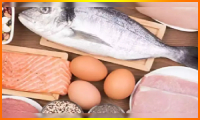
UAE bans meat imports from Pakistan via sea.
The meat consignment had been sent by a Karachi-based company by sea and the whole shipment was destroyed by the UAE authorities, while a ban was imposed on all further imports of frozen meat from Pakistan through maritime channels at least up till Oct 10.
However, meat exports by air will continue without any break.
Pakistan exports meat worth around $144 million per year to the UAE.
Naseeb Ahmad Saifi, a meat exporter, explains that it is not a ban rather the UAE authorities have put an embargo until Pakistani frozen meat exporters start following the protocol prescribed by the destination country for future shipments.
Under the protocol, the exporters are required to vacuum-pack their products before shipping them in a refrigerated container by sea, he says. The company in whose consignment fungus was allegedly detected had shipped the meat by wrapping it in cloth, he said, regretting that negligence while sending the export consignment has brought a bad name to the country. He confirmed that the ‘embargo’ on meat exports is only on the sea route, while the exports by air will continue without any interruption.
The country produces around 4.9 million tonnes of meat and of it exports only 95,991 tonnes or around 2pc of the total production. Gulf Cooperation Council states and some Far East countries are its major markets, while meat exports to China, Egypt and Indonesia have also started a few months ago.
Source: arabnews.com

Finance minister Nirmala Sitharaman launches key initiatives for farmers.
The initiatives included a portal for comprehensive data on financial services offered to farmers, a campaign to cover all beneficiaries of the PM Kisan cash-transfer programme under the Kisan credit card scheme and an integrated agricultural weather portal
Union finance minister Nirmala Sitharaman on Tuesday called for full digitisation of all rural regional banks and expansion of credit to farmers while launching three new initiatives to strengthen access of cultivators to financial services.
At an event at Pusa complex, which was also attended by agriculture minister Narendra Singh Tomar, Sitharaman launched the Kisan Rin Portal, unveiled a campaign to cover all beneficiaries of the PM Kisan cash-transfer programme under the Kisan credit card scheme and an integrated agricultural weather portal.
The Kisan Rin Portal, developed in collaboration with multiple government departments, is a digital platform that will offer comprehensive data on financial services offered to farmers, including information on loan disbursement, interest subvention claims and utilization, which will be integrated with banks for efficient disbursal of agriculture credit.
'We must remember that even during the Covid lockdown period, it was the agricultural community, the farming community and the rural community that kept us going. With whatever precaution farmers could take, they ensured that the nation’s food security did not suffer and agricultural growth helped the economy,' the finance minister said.
Sitharaman, in her speech, asked the secretary of the department of financial services Vivek Joshi, who also attended the event, to ensure full cooperation of all banks of the country in providing data and information to the Kisan Rin Portal.
The finance minister also called upon the department, which comes under her ministry, to ensure speedy digitisation of rural regional banks and improve credit disbursal by cooperative banks.
'When I look at data of sanction and disbursal of credit to farmers of scheduled commercial banks and cooperative banks, one sees a lack of correlation. I want the disbursal rate of credit of cooperative banks to farmers go up,' Sitharaman said.
The finance minister said after the creation of a separate ministry for cooperation, a massive project for digitisation of the sector was currently on. She commended the agriculture minister for coming up with a Kisan Rin portal within four months of its conception.
The agriculture minister said 'under the leadership of Prime Minister Narendra Modi and with the generosity of the finance minister, the budgetary allocation to agriculture ministry had gone up several time to Rs.1.41 lakh crore'.
Launching the Ghar Ghar KCC Abhiyaan to achieve universal financial inclusion of farmers by end of December, the finance minister said there was 'no shortage of money for farmers' but called upon officials to robustly implement all agricultural schemes.
Sitharaman also launched WINDS or Weather Information Network Data Systems, which will serve as a one-stop online platform for all information related to agricultural meteorology.
Source: hindustantimes.com

'We are very close' on FTA with India: UK trade minister.
India and the UK are 'very close' to achieving a mutually beneficial free trade agreement (FTA) but the aspects left to agree on are the toughest ones, Britain's Business and Trade Secretary in charge of the negotiations has told a parliamentary panel. Kemi Badenoch was answering questions posed by the cross-party House of Commons Business and Trade Committee, which scrutinises the work of the Department of Business and Trade (DBT), on Tuesday when she was asked about the timeline for signing off on the FTA - which has completed 12 rounds of negotiations.
The Cabinet minister was specifically asked about some UK media reports suggesting that cricket fan British Prime Minister Rishi Sunak may be planning a return visit to India next month to sign the deal on the sidelines of the World Cup being hosted across the country.
'We have never set a deadline. I think this is a very optimistic briefing for newspapers,' responded Badenoch.
'We are very close. It is possible, but I wouldn't be setting that sort of deadline. We will finish when we finish,' she said.
Referencing former British prime minister Boris Johnson setting a Diwali 2022 deadline for an agreement, Badenoch reiterated the Sunak-led government's approach of not setting any end dates.
'We had the same thing last year, where they said we're going to have a deal by Diwali. Once you set a date, you create problems on your own side. We have always been very, very specific that it's about the deal, not the day. And, we will get there when we have a deal that is mutually beneficial for India and for the UK. We've done quite a lot, so it is close,' she said.
'It's the Pareto principle, that the few bits left are always the toughest bits,' she added.
The Pareto principle, also known as the 80/20 principle, is named after Italian economist Vilfredo Pareto and is a phenomenon that states that roughly 80 per cent of outcomes come from 20 per cent of causes.
Badenoch reviewed progress with her Indian counterpart, Commerce and Industry Minister Piyush Goyal, during a visit to India last month coinciding with Round 12 of the FTA negotiations.
Sunak's visit to New Delhi for the G20 Leaders' Summit earlier this month also concluded with a commitment to an FTA, with the British Indian leader telling reporters that he 'won't rush things'.
Meanwhile, amid a diplomatic standoff between two of its allies -- India and Canada -- over the contentious issue of pro-Khalistan extremism, Sunak's spokesperson at Downing Street reiterated this week that trade talks with New Delhi remain on track.
'Work on the trade negotiations will continue as before... when we have concerns with countries we're negotiating trade deals with, we'll raise them directly,' the spokesperson told reporters on Tuesday.
According to official DBT figures, UK-India bilateral trade was worth an estimated GBP 36 billion in 2022 -- a figure expected to be significantly boosted with an FTA.
Source: economictimes.indiatimes.com