19 Sep, 2023
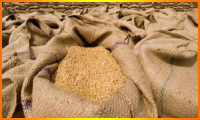
Hungary extends Ukrainian agricultural import ban.
The Hungarian government has extended and expanded a ban on Ukrainian agricultural imports. The decision was announced by Hungarian Agriculture Minister Istvan Nagy on Saturday, 16 September. Nagy highlighted the termination of the European Union's import restrictions on Ukrainian agricultural products on Friday night, 15 September, emphasising the necessity of maintaining the moratorium to address market disruptions, Xinhua news agency reported. The government also proposed the establishment of a transit support fund to facilitate the distribution of Ukrainian agricultural products to destinations beyond Europe, thereby averting famine and potential migration waves. Other Central European countries like Poland and Slovakia have rallied behind Hungary's stance, echoing the need to protect their farmers' interests. Romania, however, remains cautiously observant, awaiting Ukraine's action plan before deciding on its course of action. Meanwhile, Bulgaria on Thursday agreed to resume import measures for Ukrainian agricultural products. In May, the European Commission imposed a ban on grain exports from Ukraine to five European countries, namely Poland, Slovakia, Bulgaria, Romania and Hungary. Earlier this week, officials from Poland and Hungary said their countries plan to extend the embargo on Ukrainian grain imports
Source:
nationalheraldindia.com
|
19 Sep, 2023

NABARD-businessline Millets Conclave 2023. Millets production set to triple by 2030: Nabard Chairman.
Setting the tone for the future of millets in the International Year of millets, Shaji KV, Chairman, National Bank for Agriculture and Rural Development (Nabard) said the target is to triple their production to 45 million tonnes by 2030 and it is possible to do it. 'We are trying to bring back the area under millets which has dwindled,' he said. Addressing Nabard-businessline Millets Conclave 2023, here on Friday, he said India accounts for 41 per cent of the global millets production. It accounts for 81 per cent of the arable land under millets in Asia. The millets production target for the current year is at 17 million tonnes and is set to reach 45 million tonnes by 2030. 'Millets have a crucial role to play in the nutritional security of the country... With food security not a major concern now, we are looking at sustainability. Millets are efficient in fixing carbon and don’t need that much water and are also heat resistant ..the duration of the millets crop is less by 60 per cent compared to other cereals so the risk to the farmer is less and it’s time to renew millets cultivation,' he said. According to him, improving per unit productivity of millets will help address rural distress and nutritional security. Besides, 50 per cent of the population is dependent on agriculture, which supports 17 per cent of GDP. Talking about the role Nabard can play, he said, 'We are trying to take people out of pure agriculture activities to agri-processing. We are trying to rediscover co-operatives. Co-ops were the original FPOs.' Shaji said there is a need to improve the yield gap between various geographies of millets cultivation. 'If yield gaps are bridged, productivity can be increased,' he said. It also can be distributed through PDS, he said. Nabard along with APEDA is opening a line of exports, Shaji said, adding that '?600 crore Nabard Fund is being utilised for promoting start-ups in millets. The funding is done through our subsidiary, Nabventures.' Nabard is trying to create derivative products for FPOs through NCDEX and is working with RBI to redefine the Kissan credit card, looking at credit card innovations and making it not only for use in agriculture but also for farmers’ allied activities, he said. In a virtual address, Himanshu Pathak, Director-General of the Indian Council of Agricultural Research (ICAR), said, 'Millets have been a traditional food of India but had lost its sheen with more production of rice and wheat after the Green Revolution.' Global production of millets is about 100 million tonnes from about 80 million hectares of land. Sorghum and pearl millets, the most important millets, comprise more than 90 per cent of area under production. Keeping with the clean environment narrative, millets can fix carbon, nitrogen better. They adapt very well to lower soil fertility, he explained. To promote millets, there are certain things to be done in the area of science, economics and also policy fronts, he added. In the area of science there is a need to develop high-yielding varieties with good practices to increase productivity and production. Over the last five years, ICAR has developed 133 varieties. 'Efforts of all stakeholders is required to create a win-win situation and let us sensitise the civil society in the International Year of Millets,' he said, adding, 'let us make way for millets to the main stream of crop cultivation.' In his welcome address, businessline Editor Raghuvir Srinivasan said millets will have a crucial role to play in the country’s nutritional security. In his special address, delivered virtually, APEDA Chairman Abhishek Dev said India targets to export $100 million worth of millets by 2025. In the 2022-23 fiscal, millets exports were $75.43 million. The United Arab Emirates and Saudi Arabia make up 55 per cent of the export basket, while Nepal, Japan, Germany, Bangladesh and Egypt contribute 10 per cent. Millets are crucial since 42 per cent of the people survive on starchy staples and 600 million are chronically undernourished, he said. India contributes 20 per cent of global and 80 per cent of Asia’s millet production, Dev said. APEDA had conducted a number of events abroad and during the latest G-20 event to popularise millets. APEDA and TrooGood are the associate partners of the event and NewsX is the TV Partner.
Source:
thehindubusinessline.com
|
19 Sep, 2023
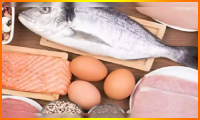
Bengal hopeful of tie-ups with middle-east nations for meat exports.
The West Bengal government is expecting 'tie-ups' with several middle-east countries for export of meat and meat products, a top official said on Friday. A team from Bahrain is likely to arrive by September-end to oversee the production and processing of various types of meat in the state, he said. 'We had already started export of goat meat to Qatar during the Football World Cup last year… We also approached Bahrain in August, and a team from that country may visit Bengal this month, though we are yet to get the exact dates,' said Gouri Shankar Koner, Managing Director of the West Bengal Livestock Development Corporation Ltd. He was speaking here on the sidelines of the Assocham-organised Global Trade Connect: Exporters Edition. 'If we receive a certification from Bahrain following the team members’ visit, it will be a gateway for us to six more countries, including Saudi Arabia and Dubai for meat exports… our focus is on meat shipments of goat, sheep, pig, duck and turkey,' Koner told PTI.The West Bengal government had last year received a contract of 1.2 metric tonnes of meat from Qatar, which is being shipped in batches, he said. Koner said representatives of companies from Singapore, Bangkok and Bhutan have also shown interest in value-added meat products.Bengal has two 'state-of-the-art' meat processing centres at Haringhata in Nadia and Phansidewa in Darjeeling, he said.' The two plants produce 20 MT of chicken meat daily and around 5 MT of pig meat apart from duck, turkey, goat and rabbit,' Koner added.
Source:
indianexpress.com
|
19 Sep, 2023
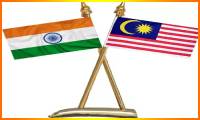
Malaysia to discuss rice export curbs with India.
Malaysia will talk to the Indian government to find a 'best solution' over the South Asian country's rice export restrictions, Malaysia's agriculture minister said on Monday, amid concerns over rising prices and supply shortages. State-run Malaysian rice importer Bernas will also be negotiating with other suppliers like Vietnam, Thailand, and Cambodia, Mohamad Sabu told parliament. Like other countries in Asia, Malaysia has seen lower supplies and an increase in rice prices in recent weeks as hot weather threatens harvests, with countries led by top exporter India restricting shipments to curb inflation and ensure food security. Malaysia has asked rice millers in the country to increase their monthly production by 20% for a year, Mohamad said, adding that current domestic rice shortages were expected to be resolved within a month. Malaysia currently has 900,000 metric tonnes in rice stockpiles, enough to cover the country's needs for four to five months, Mohamad said.
Source:
economictimes.indiatimes.com
|
19 Sep, 2023
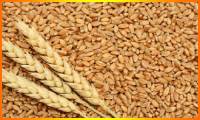
India exporting wheat, rice to needy countries for their food security.
India is exporting wheat and rice to food insecure, vulnerable and neighbouring countries on their request to meet their demands, a senior government official said today. In general, there is a ban on the export of wheat, broken rice and non-basmati white rice. Director General of Foreign Trade (DGFT) Santosh Kumar Sarangi said India has allowed exports of 3 lakh tonnes of wheat to Nepal on July 21 and 14,184 tonnes to Bhutan. Similarly, the government has permitted the export of broken rice to Senegal (5 lakh tonnes), Gambia (5 lakh tonnes), Indonesia (2 lakh tonnes), Mali (1 lakh tonnes), and Bhutan (48,804 tonnes). 'The Government of India has the commitment that in case of food insecure, vulnerable countries and neighbouring countries request, it will provide with the required quantity of rice or wheat,' he said. The government also allowed exports of non-basmati rice to Bhutan (79,000 tonnes), Mauritius (14,000 tonnes) and Singapore (50,000 tonnes) through the National Cooperative Exports Ltd (NCEL). On September 9 last year, the government banned the export of broken rice to check rising retail prices and boost domestic supply. On July 20, it banned exports of non-basmati white rice to boost domestic supply and keep retail prices under check during the upcoming festive season. The wheat export was banned in May.
Source:
dailyexcelsior.com
|
19 Sep, 2023
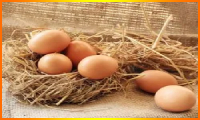
Bangladesh: Govt allows 4 companies to import eggs in a bid to bring prices down.
The four companies are: Mrs Mim Enterprise, Tiger Enterprise, Prime Energy and Arnob Trading, said a notification issued by the Ministry of Commerce on Sunday (17 September). According to the notification, the companies can only import eggs from bird0flu and influenza-free countries. The companies also must pay the determined taxes and show a bird-flu and influenza-free certification from the country where they are importing the eggs. In August, Commerce Minister Tipu Munshi said egg imports would be allowed in coordination with the Ministry of Fisheries and Livestock if the price does not come down soon. The egg market became volatile a few months ago, but the price started to fall after the commerce ministry announced to monitor the market. Egg prices went as high as Tk15 each. The government set the price of an egg at Tk12. Fisheries and Livestock Minister SM Rezaul Karim said the price of eggs should not be more than Tk12 a piece at the retail level as the production cost per egg is around Tk10.50. Egg producers said before the pandemic, the daily production of eggs in the country stood at around five crore pieces. But during the pandemic, many farms have been closed due to chronic losses. The Bangladesh Poultry Industry Central Council said the current daily egg production has fallen below four crore pieces due to the closure of many layer farms. Market insiders have alleged that banking on the supply-demand gap, a class of unscrupulous traders are making extra profits. Even some farmers are selling eggs at higher prices. Abu Luthfe Fazle Rahim Khan, senior vice president of the Breeders Association of Bangladesh, told The Business Standard, 'There is a big mismatch between demand and supply because we do not know what our actual demand is. Sometimes when the price is high, the production increases, and when the production is high, the price falls leaving producers in the lurch.' 'But despite the high production cost of eggs at present, the retail price should not be more than Tk13 a piece,' he added. According to producers, feed prices have gone up due to rising prices of various ingredients, which increased the cost of production. To reduce the cost, there are alternative ingredients for feed production, which traders want to import duty-free.
Source:
tbsnews.net
|
19 Sep, 2023
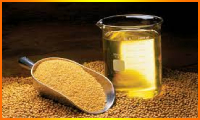
Oilmeals export up by 25.74% in August.
Export of oilmeals increased to 3.54 lakh tonnes (lt) in August against 2.81 lt in August 2022, recording a growth of 25.74 per cent. According to Solvent Extractors’ Association of India (SEA), the overall export of oilmeals stood at 19.45 lt during April-August 2023-24 as against 15.21 lt in the corresponding period of the previous fiscal, up by 27.85 per cent. BV Mehta, Executive Director of SEA, said India was out priced in the international market in soyabean meal last year. Stating that export revived during the current year, he said India exported 4.81 lt of soyabean meal during April-August of 2023-24 against 1.07 lt in the corresponding period of 2022-23. Mentioning that export of rapeseed meal is performing much better, he said the country exported 11.55 lt rapeseed meal in the first five months of 2023-24 against 10.77 lt in April-Aug of 2022-23. India exported 1.51 lt (2.04 lt) of ricebran extractions, and 1.46 lt (1.29 lt) of castorseed meal during the period. Referring to the ban on the export of de-oiled ricebran, he said the country annually exports 5-6 lt of de-oiled ricebran mainly to Vietnam, Bangladesh, and Thailand. During April-July of this year, the country exported about 1.5 lt of de-oiled ricebran. However, the Government has prohibited export of de-oiled ricebran with effect from July 28 until November 30. This decision could have far-reaching negative consequences for domestic ricebran processors and export of de-oiled ricebran. 'Neighbouring countries are the major export destinations for many solvent extraction units in eastern states, including West Bengal, producing de-oiled ricebran,' he said. Major importers During April-August, South Korea imported 3.82 lt of oilmeals (4.52 lt) from India. This included 2.91 lt of rapeseed meal, 68,732 tonnes of castorseed meal, and 21,600 tonnes of soyabean meal. Vietnam imported 2.85 lt of oilmeals (2.52 lt) from India during April-August. This included 90,540 tonnes of ricebran extraction, 1.44 lt of rapeseed meal, 49,044 tonnes of soyabean meal, and 748 tonnes of groundnut meal. India exported 3.49 lt of oilmeals (3.17 lt) to Thailand during April-August. This included 3.37 lt of rapeseed meal, 6,115 tonnes of soyabean meal, 4,666 tonnes of ricebran extraction, and 701 tonnes of castorseed meal. Bangladesh imported 3.82 lt of oilmeals (1.66 lt) from India during April-August. This included 27,771 tonnes of ricebran extraction, 1.90 lt of rapeseed meal, and 1.63 lt of soyabean meal.
Source:
thehindubusinessline.com
|
19 Sep, 2023

Govt launches unified portal for agri-statistics to provide credible data on agri sector.
The government on Friday launched an unified portal for agri-statistics (UPAg) that will empower stakeholders to access credible and objective data for taking informed decisions. The UPAg, developed by the Ministry of Agriculture, is a crucial component of digital public infrastructure for agriculture. The portal aims to address the data related governance challenges such as lack of standardised and verified data, which make it difficult for policymakers, researchers, and stakeholders to make informed decisions. After launching the portal, think tank Niti Aayog member Ramesh Chand said it is a groundbreaking move to address the complex governance challenges facing Indian agriculture. 'This innovative platform, designed to streamline and enhance data management in the agricultural domain, marks a significant step towards a more efficient and responsive agricultural policy framework,' he said in a statement. He also stated that higher the objectivity of data, lower is the scope of judgment in policy making, which translated into stable, transparent and informed decisions. Stating that the portal should ensure data credibility, Chand said a research suggests that one US dollar invested in data generated USD 32 impact. Agriculture Secretary Manoj Ahuja said UPAg Portal was being envisaged as a public good wherein users will benefit by reduced search costs and access to credible, granular and objective data. The UPAg portal will have key features such as 'data standardisation', 'data analysis', 'granular production estimates', 'commodity profile reports', and 'plug and play'. The portal will standardise data on prices, production, area, yield, and trade, making it accessible in one location, eliminating the need to compile data from multiple sources. It will perform advanced analytics, offering insights such as production trends, trade correlations, and consumption patterns, aiding policymakers in making informed decisions. The portal will generate granular production estimates with increased frequency, enhancing the government's ability to respond to agricultural crises swiftly. It will also produce commodity profile reports using algorithms, minimizing subjectivity and providing users with comprehensive insights. That apart, users will have the flexibility to use the portal's data to prepare their own reports, promoting data-driven decision-making, the statement said. According to the ministry, this initiative aligns with the principles of e-governance, bringing smartness, transparency, and agility to India's agriculture sector.
Source:
economictimes.indiatimes.com
|
18 Sep, 2023
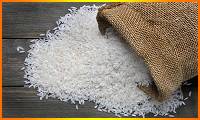
Rice sowing area surpasses 409 lakh hectares.
The Department of Agriculture & Farmers’ Welfare has released progress of area coverage under kharif crops as on 15th September 2023. Area: In lakh hactare | S. No. | Crop | Area Sown | | 2023 | 2022 | | 1 | Rice | 409.41 | 398.58 | | 2 | Pulses | 121.00 | 127.57 | | a | Arhar | 43.21 | 45.81 | | b | Urdbean | 32.25 | 32.97 | | c | Moongbean | 31.34 | 33.81 | | d | Kulthi | 0.36 | 0.35 | | e | Other pulses | 13.83 | 14.62 | | 3 | Shri Anna cum Coarse cereals | 183.11 | 181.48 | | a | Jowar | 14.22 | 15.68 | | b | Bajra | 70.89 | 70.49 | | c | Ragi | 8.85 | 9.31 |
pib.gov.in
18 Sep, 2023
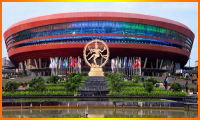
Bharat Mandapam and Yashobhoomi will promote trade, industry, export and employment: Shri Goyal.
The Prime Minister, Shri Narendra Modi dedicated Phase 1 of India International Convention and Expo Centre - ‘Yashobhoomi’ to the nation at Dwarka, New Delhi today. He also launched ‘PM Vishwakarma Scheme’ PM Vishwakarma logo, tagline and portal for traditional artisans and craftspeople on the occasion of Vishwakarma Jayanti. Addressing the gathering, the Prime Minister acknowledged the contribution of the Shramiks and Vishwakarmas in the construction of the magnificent facility. 'Today I dedicate 'Yashobhoomi' to every worker of the country, to every Vishwakarma”, he said. He told the Vishwakarmas linked with today’s program that 'Yashobhoomi' is going to be a vibrant center connecting their creations with the world and global markets. 'The Viksit Bharat of today is crafting a new identity for itself in every sector”, the Prime Minister said referring to the Bharat Mandapam which had become a topic of discussion across the world and stated that Yashobhoomi furthered this tradition with greater magnificence. 'The message from Yashobhoomi is loud and clear. Any event that takes place here will attain success and fame”, Shri Modi emphasized. He further added that Yashobhoomi will become a medium for showcasing the India of the future. He said that in order to showcase India’s grand economic prowess and commercial muscle, this is a worthy center in the capital of the country. It reflects, he continued, both multimodal connectivity and PM Gatishakti. He illustrated this by talking about the connectivity provided to the center by Metro and inauguration of Metro terminal today. He also highlighted that the ecosystem of Yashobhoomi will take care of the travel, connectivity, accommodation and tourism needs of the users. The Prime Minister said that Conference tourism will also progress only where there are necessary resources for events, meetings, and exhibitions, hence Bharat Mandapam and Yashobhoomi Center are now going to make Delhi the biggest hub of conference tourism. Lakhs of youth are likely to get employment. In the future, 'Yashobhoomi will become a place where people from countries all over the world will come for international conferences, meetings and exhibitions”, Shri Modi added. The Prime Minister invited the stakeholders to Yashobhoomi. He said, 'Today I invite people associated with the Exhibition and Event industry from countries around the world to come to Delhi. I will invite the Film Industry and TV Industry of every region of the country, East-West-North-South. You hold your award ceremonies, film festivals here, hold first film shows here. I invite people associated with International Event Companies, Exhibition Sector to join Bharat Mandapam and Yashobhoomi.” In his welcome speech, Shri Piyush Goyal, Union Minister of Commerce & Industry, Consumer Affairs, Food & Public Distribution and Textiles, said that the leadership provided by the Prime Minister in difficult times ensured that the G20 summit was taken to every nook and corner of the country and became a people’s presidency. This event has been so successful that it has been called as 'Modi-fied G20” by an expert, he said. New Delhi Leaders Declaration will give the future a new direction and will play a role in changing the direction of world affairs, Commerce and Industry Minister said. Shri Goyal said that Yashobhoomi is a proof of Prime Minister’s vision of 'Skill, speed and scale”. He informed that the project of IICC was completed speedily under Prime Minister’s leadership and is being inaugurated today as Yashobhoomi. The first phase of this project is complete and the second phase will enlarge it into double its size today, he said. This convention centre at Dwarka is a great example of PM Gatishakti ideal, Shri Goyal said adding that the International Airport can be reached by expressway in 5 minutes, metro connectivity connects it to Connaught place in 20 minutes and there is ample provision of hotels linked to this project. Shri Goyal said that in the last 9 years, the convention centres that are being set up in the country will become world class exhibition centres. Bharat Mandapam and Yashobhoomi will promote trade, industry, export and employment. Yashobhoomi will promote MSME sector, farmers and artisans and provide new opportunities and markets for them, he said. Prime Minister has laid the foundation of making India a developed nation in Amrit Kaal by creating a strong economy and infrastructure, uplifting the poor, digitisation and by ensuring a corruption free government, Commerce Minister noted. Today the entire world is witness to Prime Minister’s commitment to inclusive growth, he said. Making laws simpler to make the lives of common man easy, helping the start-ups, increase trade and exports, create new opportunities for employment and creating faith in the hearts of the people will ensure that the country has become unstoppable now, he said. Noting the inauguration of historic launch of Vishwakarma Yojana, Shri Goyal said that the Prime Minister has recognised the hard work of our artisans and the scheme will honour and strengthen them.
Source:
pib.gov.in
|
|