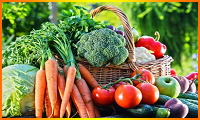
US Appreciates India s Decision To Reduce Tariffs On Agricultural Products Exports.
The US embraced India’s decision to reduce tariffs on various American agricultural products. Last week itself, India announced that it will reduce tariffs on certain agricultural products from the US such as frozen turkey, frozen duck, fresh and frozen blueberries, and cranberries, among others.
The decision was appreciated by the US government and officials who stated that this move would help boost economic opportunities for US agricultural producers and expose Indian customers to more products from the United States.
Appreciating the move, US Agriculture Secretary Tom Vilsack noted that the decision would generate new market opportunities for US producers and exporters. He added, 'Under the Biden-Harris Administration, USDA (US Department of Agriculture) and USTR (United States Trade Representative) have focused on rebuilding trust and strengthening relationships with our global trading partners, including India, and working through the World Trade Organization and other venues to ensure that those partners live up to their obligations so that US agriculture has full and fair access to key export markets,' as reported by PTI.
The development comes after India lifted retaliatory tariffs on US products, namely apples, chickpeas, lentils, almonds, and walnuts. These restrictions were lifted this week and announced earlier in the summer. Commenting on the tariff barriers, Vilsack said, 'While important progress has been made, significant tariff and non-tariff barriers to American agricultural products accessing the Indian market remain.'
Senator Amy Klobuchar also issued a statement welcoming India’s decision to reduce tariffs on US turkey exports to India. The move would lower tariffs on frozen turkey products exports to India from 30 per cent to 5 per cent.
'For too long, high tariffs have prevented American turkey farmers from exporting their products to India. That’s why I pushed for a resolution to create an even playing field and reduce trade barriers for American turkey farmers and producers, and I’m glad to see this agreement has been reached,' Klobuchar added.
Senators Mark Warner and Tim Kaine issued a separate statement stating that this decision will enhance India-US relations and help generate more demand for Virginia poultry, in turn supporting the economic activity.
Notably, Virginia stood as the sixth-largest turkey source in the US in 2021, with a production of 14.5 million birds. Joel Brandenberger, the president and CEO of the National Turkey Federation added, 'The National Turkey Federation applauds the efforts by the US and Indian governments to significantly reduce the tariffs. This move creates an important new market for US turkey producers and will give Indians more affordable access to a nutritious, delicious protein.'
Source: news.abplive.com
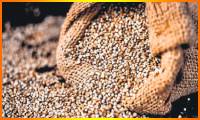
NABARD Businessline millets conclave to debate on nutritional aspects and financial security.
Businessline, in association with NABARD, is hosting a Millets Conclave in Hyderabad on Friday (September 15) to discuss various aspects of millets, right from its yield to exports, marketing and health and nutritional aspects.
The crux of the conclave will be panel discussions on ways to improve the nutritional value, and financial security of stakeholders in all sectors involved in millets.
The inaugural address will be by NABARD chairman Shaji K.V., followed by special addresses by secretary (DARE) and Director-General, ICAR, Himanshu Pathak, and APEDA chairman Abhishek Dev.
The panel on ‘millets for food security’ will have B Uday Bhaskar, Chief General Manger, NABARD; ED Israel Oliver King, Director, Biodiversity, MS Swaminathan Research Foundation, and Saraswathi Malluvalasa, CEO, Arogya Millets Producer Co Ltd, as panellists. The session on improving millet yield will see TE Nagaraja, Prof, Plant Breeding & Head, ICAR Small Millets; GV Ramanjaneyulu, CEO of Centre for Sustainable Agriculture; Ramon Peachey, Director, Communications, ICRISAT, as panellists.
The session on ‘increasing millet exports’ will see RP Naidu, AGM, APEDA; Raj Seelam, MD, Sresta Natural Bio Products Pvt Ltd; Vishala Reddy, Director, Millets Bank; Nitin Gaikwad, Sr Manager, ITC Agri-Business on the panel. There will be a panel on ‘health and nutritional seurity’ which will feature a presentation by Devraj JP, Scientist, National Institute of Nutrition, along with a fireside chat with Krishna Ella, Chairman, Bharat Biotech.
A panel on ‘value addition and branding millets’ will have Ashutosh Deshpande, Head of Value Chain, Reliance Foundation; S Kiran, ED, VIKASA; Raju Bhupati, CEO, TrooGood and Rishika Reddy, ED, Millets Marvels.
The valedictory session will see C. Tara Sathyavathi, Director, Indian Institute of Millets Research, speaking on the progress in millet yields and consumption.
The Associate Partners are APEDA and TrooGood while the TV Partner for the event is NewsX. The event can be watched live on September 15 on www.thehindubusinessline.com
India is the top producer of millets in the world and has many types of nutri-cereals. The COVID pandemic and rising health concerns and consciousness have resulted in consumers turning to nutri-cereals. The Indian government has realised the key role that millets are likely to play in the future and has impressed upon the United Nations to announce 2023 as the Year of Millets.
Source: thehindu.com
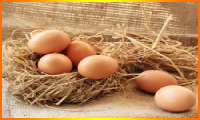
India to export Rs 350 crore eggs to Sri Lanka, Namakkal farms get ready to chip in.
Poultry farms in Namakkal are coming to the rescue of Sri Lanka, which is facing an egg crisis.
Under the Bay of Bengal Initiative for Multi-sectoral Technical and Economic Corporation (BIMSTEC), India will be annually exporting eggs worth Rs 350 crore to Sri Lanka’s State Trading Corporation to help the island nation tide over the crisis, according to Dineshkumar Gurusamy, chairman of India BIMSTEC trade council and founder of Aetram Group of Companies.
Due to the economic crisis in the island nation, egg price has skyrocketed to Lankan Rs 65 (Indian Rs 16). This was brought down to around Rs 13 due to eggs being imported from India, said Guruswamy.
He was speaking to TNIE after the BIMSTEC trade office was opened in Chennai in the presence of Myanmar Ambassador U Moe Kyaw Aung to promote India’s vision after the G-20 presidency.
Hit by an unprecedented economic crisis for more than a year, Sri Lanka faced a severe shortage of essential food and the country couldn’t produce eggs as animal feed and other necessities for the poultry industry were not available due to the dollar crunch.
Sri Lankan Cabinet had approved the proposal to import over 90 million chicken eggs per month from India to help domestic consumers buy eggs at a fair price. Guruswamy said 90 million eggs will be imported from Ponni Poultry from Namakkal.
'But we are looking at procuring eggs from other farms also as the demand is more,' he said.
Supply from India would result in bringing down the prices of eggs as it would reduce the demand and supply gap, he added.
During the event, BIMSTEC signed a memorandum of understanding with Sri Lanka in trading of eggs, chillies, onion, pulses, grains, minerals and chemicals.
The MoUs signed are worth around Rs 1,000 crore, said Guruswamy.
A total of 140 tonnes of dry chilly per week from Anushka Impex will be exported from Guntur while 500 tonnes of onions per week will be imported from Nashik.
India, Sri Lanka, Bangladesh, Myanmar, Thailand, Bhutan and Nepal are members of BIMSTEC fostering closer ties among nations bordering the Bay of Bengal.
Moe Kyaw Aung said India is the fifth largest trading partner of Myanmar. He wanted industries in India to invest in Myanmar while urging India to become the largest trading partner.
The Asian Development Bank is in the process of developing a BIMSTEC Grid Interconnection master plan. Policies and the master plan will be finalised in the next meeting of the working group, said Dr Asif Iqbak, president of the India Economic Trade Organisation.
He said that India is looking at alternative payment mechanisms to boost trade ties with nations like Iran, Russia, Cuba and others.
Tackling a crisis
BIMSTEC signs pact with Lanka for trade in eggs, chillies, onion, pulses, grains & chemicals
Sri Lanka couldn’t produce eggs as animal feed were not available due to the dollar crunch
Supply from India may reduce egg price as it would reduce the demand and supply gap
Source: newindianexpress.com

India and Saudi Arabia announce agreement to expand economic, security ties.
India and Saudi Arabia agreed Monday to expand trade and security ties, two days after their leaders and others attending a Group of 20 summit announced a new railways and port corridor deal that will link India, Middle East and Europe.
Indian Prime Minister Narendra Modi and Saudi Arabia’s Crown Prince Mohammed bin Salman met in New Delhi and chaired a meeting of the India-Saudi Arabia Strategic Partnership Council. The two leaders discussed issues ranging from energy security, trade and investment to defense, health care and food security, India’s foreign ministry spokesperson Arindam Bagchi said.
The India-Saudi Arabia Strategic Partnership Council, established in 2019, serves as a platform between the two countries to increase ties.
In a televised press statement, Modi called Saudi Arabia one of India’s 'most important strategic partners.'
He said the 'corridor will not only connect the two countries, but will also strengthen economic cooperation, energy development and digital connectivity between Asia, West Asia and Europe.'
During last week’s G20 summit, India, Saudi Arabia, the United States, the European Union and other countries announced an ambitious rail and shipping corridor that will link India with the Middle East and Europe in a bid to strengthen economic growth and political cooperation.
The corridor would help to boost trade, transport energy resources and improve digital connectivity. It would include India, Saudi Arabia, the United Arab Emirates, Jordan, Israel and the European Union, said Jake Sullivan, Biden’s national security adviser.
Signatories hope it can help integrate India’s vast market of 1.4 billion people with countries to the west, offer a counterbalance to lavish Chinese infrastructure spending, boost Middle Eastern economies and help normalize relations between Israel and Gulf Arab states, including Saudi Arabia.
Prime Minister Benjamin Netanyahu called the initiative 'a cooperation project that is the greatest in our history'
Ahead of the talks, Prince Mohammed was accorded a ceremonial welcome at the Rashtrapati Bhavan Presidential Palace in New Delhi. He is on a three-day trip to India that included the G20 summit.
India views Saudi Arabia as one of its most important strategic partners in the Middle East. Trade between the countries stood at over $52.8 billion in the fiscal year 2022-2023.
India also has warm ties with Israel, with Modi and Netanyahu enjoying a close personal friendship.
Source: timesofisrael.com

UNDP India Joins Hands With NABARD To Lift Agricultural Data-Driven Innovations.
The UNDP and NABARD have joined forces through an MoU to create data-driven innovations in agriculture and food systems for the benefit of smallholder farmers. The UNDC's full form is the United Nations Development Programme. However, they will collaborate by sharing open-source data to develop new products, transfer technology, and influence agricultural policies. UNDP will contribute its expertise in open innovations and data science to help NABARD incorporate data-driven decision-making into agricultural investments.
As per the UNDC report, The partnership involves improving and sharing collaborative digital resources like DiCRA, which provides open access to geospatial data for climate-resilient agriculture. With UNDP's support, NABARD will host and maintain DiCRA, using its datasets for policy and research. This five-year collaboration aims to promote climate action and economic empowerment in rural India. NABARD's Chairman, Shaji KV, is excited about the collaboration and envisions further cooperation with UNDP.
Reiterating UNDP's dedication, Isabelle Tschan, Deputy Resident Representative, stated, 'UNDP is firmly committed to this cause. Agriculture, which employs 80% of rural women in India, represents the primary source of livelihoods and is particularly susceptible to the effects of climate change. DiCRA employs advanced data science and machine learning techniques to distinguish farms that are resilient to climate change from those that are highly vulnerable.
These innovative uses of open data can highlight best practices, optimize agricultural investments, and protect communities against risks. Partnering with NABARD will enhance our efforts to promote sustainable agricultural practices and secure the livelihoods of small-scale farmers, especially women while reducing their vulnerability.
This partnership will facilitate the analysis of agricultural trends over time, offering insights to guide investment decisions in areas like watershed management, micro-irrigation, warehouse optimization, and climate-related initiatives. This collaboration will bolster the data resources of both UNDP and NABARD.
Source: krishijagran.com

MFN duty of 50% and 100% continues to be applicable on US apples and walnuts as only additional 20% duty is removed.
With the decision to resolve six outstanding World Trade Organisation (WTO) disputes between the US and India through Mutually Agreed Solutions in June 2023, India has withdrawn additional duties on eight US origin products, including apples, walnuts and almonds vide notification number 53/2023 (Custom).
Additional duties of 20% each on apples and walnuts and Rs 20 per kg on Almonds were imposed on the US's products in 2019 over and above the Most Favoured Nation (MFN) duty as a retaliation to the US's state protectionist measure of increasing tariffs on certain steel and Aluminium products. These additional duties imposed by India on US-origin products have been withdrawn as the US agreed to provide market access to Steel and Aluminium products under the exclusion process. There is no reduction on the Most Favoured Nation (MFN) duty on apples, walnuts and almonds, which still applies to all imported products, including US-origin products, at 50%, 100% and Rs 100 per kg, respectively.
Further, DGFT, vide its notification number 05/ 2023 dated 8 May 2023, made an amendment in import policy for Apples under ITC (HS) 08081000 by applying MIP (Minimum Import Price) of Rs 50 per Kg for imports from all countries except Bhutan. Therefore, this MIP will also apply to apples from the US and other countries (excluding Bhutan). This measure would protect against the dumping of low-quality apples and from any predatory pricing in the Indian market.
This measure will not result in any negative impact on domestic apple, walnut and almond producers. Rather, it will result in competition in the premium market segment of apples, walnuts and almonds, thereby ensuring better quality at competitive prices for our Indian consumers. Thus, the US apples, walnuts and almonds would compete on the same level playing field as all other countries.
The market share of the US apples dwindled as other countries benefited from the imposition of additional retaliatory duties on the US apple and walnut imports. This is evident in the increase of apple imports from countries besides the US, from US$ 160 million in FY 2018-19 to US$ 290 million in FY 2022-23. Turkey, Italy, Chile, Iran, and New Zealand emerged as prominent apple exporters to India, effectively acquiring the market share once held by the US. Similarly, in the case of walnuts, the imports increased from US$ 35.11 million in FY 2018-19 to US$ 53.95 million in FY 2022-23, and Chile and UAE became the largest exporters to India. In the last three years, the import of almonds has been about 233 thousand MT, while domestic production is only 11 thousand MT, and India is highly dependent on imports. Therefore, the removal of additional duties will now ensure fair competition among the countries which are exporting these products to India.
Source: pib.gov.in

India is the largest export partner of Bangladesh, says Government.
The Government today said that India is the largest export partner of Bangladesh; more so than Japan and China. Speaking at exploring new trade routes, India's North East to the Bay of Bengal via Bangladesh Transit Agreement in Agartala, joint secretary (Bangladesh and Myanmar) in the ministry of external affairs Ms Smita Pant said that the neighbouring country's export has touched a new high from 450 million US dollars to 2 billion US dollars.
She said the Agartala-Akhaura rail link project is almost complete on the Indian side and will be inaugurated by the end of this year. She said the work is under progress on the Bangladesh side, adding that it will be the seventh rail link connecting India with the neighbouring country.
The other five operational railway lines between the two countries are Petrapole to Benapole, Gede to Darshana, Singhabad to Rohanpur, Radhikapur to Birol and Haldibari to Chilahati. The seventh rail line will be connecting Assam.
Ms. Pant said, apart from trade and investment, the Government's Act East Policy is premised on connectivity and strong people to people ties.
Source: newsonair.gov.in

India, Saudi Arabia Invest Forum meets in New Delhi, decides to set up offices in both countries.
On the sidelines of the State Visit of the Crown Prince and Prime Minister of the Kingdom of Saudi Arabia, His Royal Highness Mohammed bin Salman bin Abdulaziz Al Saud to India, to participate in the Leaders’ Summit of the bilateral Strategic Partnership Council, Department for Promotion of Industry and Internal Trade, Ministry of Commerce and Industry of India and the Saudi Ministry of Investment organized an India-Saudi Arabia Investment Forum 2023 (“The Forum”) in New Delhi yesterday.
The Forum witnessed the attendance of more than 500 companies from India and Saudi Arabia. This is the first such formal investment symposium between India and Saudi Arabia and it comes as a follow-up to the announcement made, previously, by the Saudi Crown Prince to invest approximately $100 Billion in diverse sectors of the Indian economy.
The Ministerial Session of the India-Saudi Investment Forum 2023 was co-chaired by the Union Minister of Commerce & Industry, Consumer Affairs, Food & Public Distribution and Textiles, Shri Piyush Goyal and the Minister of Investment, Kingdom of Saudi Arabia, H.E. Mr. Khalid A. Al Falih.
Jointly addressing the business gathering, the two Ministers discussed, inter-alia, ways and means of expanding bilateral collaboration in various domains including start-ups, digital infrastructure development, increasing collaboration between the business and investor ecosystems of the two countries including through closer cooperation between the Investment promotion agencies of the two countries and through setting up of investment promotion offices, encouragement of Saudi Sovereign Wealth Funds to consider direct investments into India in addition to the current inflow of investments through funds, and possibility of joint projects.
Some of the other key outcomes during the Ministerial discussion included concurrence on fast-tracked realization of partnership opportunities identified under the Committee on Economy and Investments of the Strategic Partnership Council. The Ministers also outlined potential investment collaborations in the domains of food processing, logistics and infrastructure, healthcare, energy particularly renewable energy, skill development, space, ICT, start-ups particularly in the digital domain.
In welcome remarks at The Forum, Secretary, Department for Promotion of Industry and Internal Trade, Shri Rajesh Kumar Singh highlighted the importance of bilateral relationships between the two countries and emphasized upon mutual growth by furthering economic and cultural relations between the two countries.
The Forum also witnessed detailed Presentations by Invest Saudi, Invest India, Economic Cities and Special Zones Authority of Saudi Arabia, GIFT City, IFSC (International Financial Services Centre), Saudi Ministry of Culture and the Film Commission, and National Center for Privatization, Saudi Arabia, showcasing the abundant Investment Opportunities, both in India and in Saudi Arabia.
Further, breakout sessions were conducted with the discussion centred on potential bilateral collaboration in the domains of: ICT & Entrepreneurship; Chemicals & Fertilizers; Energy & Sustainability; Advanced manufacturing; and Food security. Concerned businesses from both sides with expertise and interest in these sectors addressed the gathering to share their views on the potential for enhanced collaboration in these respective domains.
Earlier in the day, more than 45 Memorandum of Understanding (MoUs) were concluded between the two sides, in G2B and B2B formats. These MoUs are expected to further deepen the economic engagement between the two sides and are also likely to accelerate investment flows between the two sides.
Source: pib.gov.in
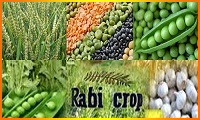
Good tidings for Indian rabi crops as Australian met sees rain from positive IOD.
A positive Indian Ocean Dipole (IOD), which helps in good rainfall over the Indian sub-continent and the African coastline, will likely develop during September-December with all models indicating such a development, the Australian Bureau of Meteorology (BoM) said on Tuesday.
IOD is the difference in sea surface temperatures (SSTs) between two areas or poles. hence a dipole. The prediction should bring relief to India since any rains, particularly under the influence of north-east monsoon, from now onwards, will help rabi season crops such as wheat, pulses and oilseeds.
'The IOD index is +1.13 °C for the week ending September 10. This is its fourth week above the positive IOD threshold (+0.40 °C), with the recent high values (above +1.0 °C) indicating an event is very likely. If the IOD index continues to remain above this threshold, a positive IOD event will be considered underway,' BoM said in its latest El Nino update.
Influence on El Nino
While the Indian subcontinent and African coastline will stand to benefit with better rains, it will affect rainfall over Indonesia, South-East Asia and Australia. 'A positive IOD typically decreases spring rainfall for central and south-east Australia and can increase the drying influence of El Nino,' the Bureau said.
The Australian weather agency said the long-range forecast indicated warmer and drier than average conditions across most of southern and eastern Australia from October to December.
'The Bureau’s El Nino Alert continues, with El Nino development likely during spring (September-December). When El Nino Alert criteria have been met in the past, an El Nino event has developed around 70 per cent of the time,' the BoM said.
Sea surface temperatures (SSTs) in the tropical Pacific are exceeding El Nino thresholds and have warmed up over the last fortnight. Further warming is likely and SSTs may remain above El Nino thresholds until at least early 2024.
'The 90-day Southern Oscillation Index (SOI) is currently -7.4, exceeding El Nino thresholds. Other atmospheric indicators have recently shown signs of possible coupling between the Pacific Ocean and the atmosphere,' it said.
Indications near Indonesia
This coupling is characteristic of the El Nino event. This will strengthen and sustain the event for an extended period.
Meanwhile, the Climate Prediction Center (CPC), a unit of the US weather agency National Oceanic and Atmospheric Administration, in its latest update issued on Monday night, said indication of suppressed convection and precipitation, known as outgoing longwave radiation (OLR) were evident in South-East Asia, the Philippines and Indonesia.
In particular, evidence of El Nino emerging was evident near Indonesia, the CPC said, reiterating that all models were indicating El Nino persisting through the northern hemisphere winter during 2023-24.
The US weather arm said over the last four weeks equatorial SSTs were above average across most of the Pacific Ocean, the Indian Ocean and across much of the Atlantic Ocean.
There were other indicators of El Nino having set in such as upper ocean heat anomalies and declining difference in the temperature on the sea surface and its bottom.
El Nino, caused by a rise in the Pacific Ocean temperature, leads to drought and deficient rainfall in Asia. The weather phenomenon resulted in India witnessing its driest August in over 120 years with monsoon rainfall being 32 per cent deficient. However, the emergence of positive IOD is in line with predictions that rainfall will improve from September onwards in India.
Source: thehindubusinessline.com

GI tag for Sulai Honey will benefit farmers economically .
Hundreds of farmers involved in the cultivation of Apis cerana (Indian/Asian bee) would see a rise in their economies as a result of the Geographical Indications (GI) tag for Solai Honey coming from Banihal in the Ramban region.
A geographical indications (GI) tag is a type of intellectual property right that distinguishes products from certain geographic places and links them to those locations' distinctive natural traits and attributes.
Deputy Commissioner Ramban, Mussarat Islam earlier announced that Ramban Sulai Honey has been awarded the GI tag. 'A testament to our district's natural heritage and dedication.'
The representative from the Agriculture Department claimed that after much effort, we were finally successful in registering the Geographical Indications (GI) tag for Solai, Honey from Banihal.
Ayaz Ahmed Rishi, an agriculture official for Banihal said that Ramban district is the major hub for beekeeping.
He claimed that more than 480 beekeepers are actively participating in the rearing of Indian/Asian Bees (Apis cerana), and more than 1200 farmers are indirectly involved. Each farmer has an average of two to seven colonies of Indian Asian Bees (Apis cerana).
More than 6000 quintals of honey are produced on average each year in the district.
Representatives of the Agriculture Department claim that the primary source of income for over 2,000 people's daily requirements is honey bee farming.
About 35,500 colonies of Italian/European bees (Apis mellifera) are owned by traders. Additionally, more than 8500 colonies of the Indian bee Apis Cerana are raised conventionally in log and wall hives in the area.
We have Acacia, Mustard, Multiflora, Solai, and other wild flora, according to agriculture officials. The focus is on this species since Plectranthus rugosus, also known as Solai locally, is a common plant in the area.
Experts of the Agriculture Department claimed the plant is used in traditional medical practices for toothache and is claimed to be effective as an antiseptic, a hypoglycemic, an anti-diarrheal and a bronchodilator.
They said the unique taste and texture of Sulai Honey from the Ramban region is due to the availability of wild flora.
Farmers who want to venture into integrated farming can avail financial assistance and other support from concerned government departments.
Earlier in January 2023, Lt, Governor Manoj Sinha had visited the stall of Sanglaab Valley FRO, for GI tagging of Ramban Sulai Honey during a 2-day workshop on Geographical Indications of North Western Himalayas at SKUAST, Jammu.
Source: greaterkashmir.com