
Meghalaya CM Conrad Sangma initiates plan to transform state into fruit wine capital of India.
Chief Minister Conrad K. Sangma of Meghalaya unveiled strategy on September 14 aimed at catapulting the state into becoming the 'Fruit Wine Capital of India.' Speaking at the inauguration of the North East Wine Incubation Centre in Mawdiangdiang, Shillong, the Chief Minister outlined a comprehensive policy designed to foster a thriving ecosystem that intertwines tourism, agriculture, entrepreneurship, and job creation through the promotion of local fruit winemakers.
The inspiration for this innovative initiative struck Chief Minister Sangma when he encountered a homemade pineapple wine, modestly presented in a handcrafted label on a beer bottle. Despite the unassuming packaging, the quality of the wine inside left a lasting impression on him, sparking the vision to revolutionize professional wine production and packaging in the state.
'Despite the unimpressive packaging, the wine inside was exceptional. This experience, combined with discussions and observations, led to the realization that there is immense potential in the fruit wine industry in Meghalaya,' the Chief Minister shared.
He emphasized that the initiative connects tourism, agriculture, and job creation, presenting the potential to unleash latent capacities lying dormant within the state. Chief Minister Sangma stated, 'I am in public life to make a positive difference in even a single individual's life. That is my driving force. The activity that we are trying to do here is going to make a huge positive difference in people's lives.'
The Chief Minister expressed his confidence in achieving the goal of making Meghalaya the fruit wine capital of the country through collaboration with all stakeholders. The newly inaugurated wine incubation center is expected to provide a platform for aspiring entrepreneurs to test and utilize machinery, fostering innovation and economic growth through wine production.
Addressing concerns about licensing and accessibility for winemakers, Chief Minister Sangma assured the public that licensing fees would remain nominal. He also announced that the government is actively streamlining the registration process to facilitate ease of access for local winemakers.
The inauguration of the North East Wine Incubation Centre, the first of its kind in the entire North East, was attended by Agriculture Minister Ampareen Lyngdoh and Excise Minister Kyrmen Shylla.
In September 2020, the Government of Meghalaya amended the Meghalaya Excise Rules to legalize the production and sale of Homemade Wines under license. This amendment aimed to create opportunities for Wine Tourism and provide impetus to the horticulture sector for the commercial cultivation and production of indigenous fruits. The move has opened new avenues for winemakers, entrepreneurs, and farmers in the state.
The Meghalaya Farmers’ (Empowerment) Commission (MFEC) has been actively involved in promoting local fruit wines and meads. The commission has organized Wine Appreciation & Wine Making Certification Courses to encourage winemakers to transition to modern winemaking techniques and meet national and international wine standards.
Source: indiatodayne.in

Govt launches unified portal for agri-statistics to provide credible data on agri sector.
The government on Friday launched an unified portal for agri-statistics (UPAg) that will empower stakeholders to access credible and objective data for taking informed decisions. The UPAg, developed by the Ministry of Agriculture, is a crucial component of digital public infrastructure for agriculture.
The portal aims to address the data related governance challenges such as lack of standardised and verified data, which make it difficult for policymakers, researchers, and stakeholders to make informed decisions.
After launching the portal, think tank Niti Aayog member Ramesh Chand said it is a groundbreaking move to address the complex governance challenges facing Indian agriculture.
'This innovative platform, designed to streamline and enhance data management in the agricultural domain, marks a significant step towards a more efficient and responsive agricultural policy framework,' he said in a statement.
He also stated that higher the objectivity of data, lower is the scope of judgment in policy making, which translated into stable, transparent and informed decisions.
Stating that the portal should ensure data credibility, Chand said a research suggests that one US dollar invested in data generated USD 32 impact.
Agriculture Secretary Manoj Ahuja said UPAg Portal was being envisaged as a public good wherein users will benefit by reduced search costs and access to credible, granular and objective data.
The UPAg portal will have key features such as 'data standardisation', 'data analysis', 'granular production estimates', 'commodity profile reports', and 'plug and play'.
The portal will standardise data on prices, production, area, yield, and trade, making it accessible in one location, eliminating the need to compile data from multiple sources.
It will perform advanced analytics, offering insights such as production trends, trade correlations, and consumption patterns, aiding policymakers in making informed decisions.
The portal will generate granular production estimates with increased frequency, enhancing the government's ability to respond to agricultural crises swiftly.
It will also produce commodity profile reports using algorithms, minimizing subjectivity and providing users with comprehensive insights.
That apart, users will have the flexibility to use the portal's data to prepare their own reports, promoting data-driven decision-making, the statement said.
According to the ministry, this initiative aligns with the principles of e-governance, bringing smartness, transparency, and agility to India's agriculture sector.
Source: economictimes.indiatimes.com

Govt to link 28 more mandis to eNAM: Agri Secretary.
The government will integrate 28 new wholesale mandis (market yards) with the online trading platform eNAM, taking the total count to 1,389 in the country, Agriculture Secretary Manoj Ahuja said on Tuesday. At present, 1,361 regulated mandis in 23 states and four Union Territories are linked with the electronic National Agriculture Market (eNAM), launched on April 26.
'To further strengthen e-NAM, 28 new mandis were approved recently for integration to take the total count of mandis to 1389,' Ahuja said at a workshop here on eNAM 2.0.
He also emphasised on the importance of providing key information to the stakeholders of e-NAM at the right time.
'It is important to remove information asymmetry,' he said.
Ahuja further said the information pertaining to quality of produce is as vital to the buyer, as the prices of commodities are vital to sellers.
'From an economic perspective, the whole value chain must be made efficient and wastage must be reduced,' he said.
Faiz Ahmed Kidwai, Additional Secretary in the Agriculture Ministry, said e-NAM 2.0 will be an advanced version of the existing e-NAM, wherein the reforms in the State Acts will be very important in the success of e-NAM 2.0.
Three farmer producer organizations, Churchu Nari Urja FPCL (Jharkhand), Maangani City Consortium (Tamil Nadu) and Jaivik Shri FPCL, Koraput (Odisha), shared their experiences of using the e-NAM platform.
Source: economictimes.indiatimes.com
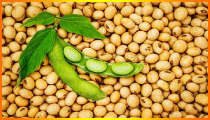
Soyabean carryforward stocks for oil year 2023-24 seen at record 32.26 lt.
India’s soyabean carryforward stocks for oil year 2023-24 starting October are seen at a record 32.26 lakh tonnes(lt), an increase of 28 per cent over same period last year. This is mainly on account of higher than expected imports and increased domestic output despite higher export of soyabean meal, according to the Soyabean Processors Association of India (SOPA).
The oil year 2022-23 started with high carryforward stocks of 25.15 lt (1.83 lt in the same period previous year), while the domestic crop during the year was estimated at 124.11 lt (118.89 lt). Imports during the year were revised at 7 lt (5.55 lt).
Total market arrivals of soyabean during Oct 22-Aug 23 were estimated at 112 lt (88 lt) and the crushing during this period was 100 lt (77 lt). Excluding the direct use and exports, the stocks with the plants, traders and farmers as on September 1 stood at 38.70 lt (32.17 lt), SOPA said. 'Looking at the soyabean import scenario, we have revised upwards the soybean import for oil year 2022-2023 to 7 lt from 5.5 lt. Due to good demand of the soyabean meal in the export and domestic market, we have revised upward the export of soya meal to 18 lt from 17.5 lt. The domestic consumption in food is estimated to be higher at 8 lt from 7.5 lt and domestic consumption in feed is pegged higher at 61 lt from 60 lt. Resulting which, we have increased soyabean crushing to 106.50 lt from 105 lt,' DN Pathak, Executive Director, SOPA said.
Delayed arrival
SOPA had recently said the arrival of the new crop was likely to be delayed by about a fortnight on account of delayed and erratic rainfall pattern witnessed during the sowing season. The crop condition is normal after the recent widespread rains in most part of the growing regions in the country, it said.
Source: thehindubusinessline.com
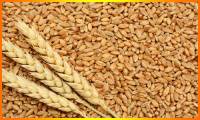
Smt. Sitharaman appreciated real time estimation for rice and wheat crop output and called for the estimation to be extended to Dalhan and Tilhan crops.
In a landmark event today here, Union Finance Minister Smt. Nirmala Sitharaman & Union Agriculture Minister Sh. Narendra Singh Tomar unveiled initiatives focused on agri-credit (KCC & MISS) and crop insurance (PMFBY/RWBCIS). The Ministry of Agriculture & Farmers Welfare launched three initiatives, namely the Kisan Rin Portal (KRP), KCC Ghar Ghar Abhiyaan, an ambitious campaign aiming to extend the benefits of the Kisan Credit Card (KCC) Scheme to every farmer across the nation and a manual on Weather Information Network Data Systems (WINDS). These initiatives aim to revolutionize agriculture, enhance financial inclusion, optimize data utilization, and improve the lives of farmers across the nation.
Delivering keynote address on the occasion, Union Finance Minister Smt. Nirmala Sitharaman assured full cooperation of banks for success of Ghar Ghar KCC Abhiyan. She said that the government under Prime minister Narendra Modi has allocated enough money under KCC scheme to ensure easy short-term loans to farmers and their onboarding for the scheme. The finance minister commended Ministry of Agriculture for its initiatives and successful implementation of Pradhan Mantri Fasal Bima Yojana (PMFBY). She said that over 1,40,000 crores of insurance amount has been disbursed to farmers so far against a premium amount of Rs. 29,000 crore. She also appreciated real time estimation for rice and wheat crop output and called for the estimation to be extended to Dalhan and Tilhan crops so that better planning can be done for their imports, if needed. The finance minister said that real time estimation of crops will help the economy and ensure right prices for farmers at the end of crop season. Smt. Sitharaman also called for full automation of regional rural banks and cooperative banks and directed Department of Financial services to study the gap between loan sanction and loan disbursement for these banks.
Union Agriculture Minister Sh. Narendra Singh Tomar in his address highlighted the importance accorded to agriculture and rural economy under the current government. He informed that budget for Ministry of agriculture has increased from Rs. 23,000 crore in year 2013-14 to Rs. 1,25,000 crore in 2023-24. Talking of WINDS manual, the minister said the aim is to ensure real time weather information so that farmers can take right precaution for their crops at the right time. Shri Tomar said that use of technology and transparency is important for agriculture and this government has taken necessary steps in this regard. The agriculture minister informed that there are around 9 crore beneficiaries under PM Kisan Samman Nidhi and the aim of KCC Ghar Ghar Abhiyaan is to connect around 1.5 crore beneficiaries who are not yet connected to KCC scheme. Shri Tomar also thanked Ministry of Finance and banks for providing around 2 crore KCCs to farmers even during Corona pandemic. The minister asserted that it was agriculture and rural sector which kept the economy going even during the pandemic.
Shri Ritesh Chauhan, JS (Credit) and CEO, PMFBY made a detailed presentation on the initiatives. He informed that Pradhan Mantri Fasal Bima Yojana (PMFBY) has seen record enrolment this year because of technological interventions made.
The launch was also attended by Minister of State for Agriculture Sushri Shobha Karandlaje and Sh. Kailash Chaudhary, Secretary Agriculture Sh. Manoj Ahuja, Secretary DFS Sh. Vivek Joshi, OSD (Credit) Sh. Ajit Kumar Sahu, CEO-PMFBY Sh. Ritesh Chauhan, Chairman NABARD Sh. Shaji KV and many dignitaries from allied departments and agri-sector.
The launch event epitomizes the Government of India's dedication to innovation and efficient service delivery for agriculture, with the aim of sustaining and doubling farmers' income. Initiatives like the Kisan Rin Portal (KRP), Ghar-Ghar KCC Abhiyaan, and WINDS Manual embody the government's commitment to farmers' prosperity, innovation, technology infusion, and objective service delivery. These efforts will further the goal of agricultural transformation and sustainable economic growth for the farming community across the nation.
BACKGROUND
Kisan Rin Portal (KRP)
Developed collaboratively by MoA&FW, the Department of Financial Services (DFS), Department of Animal Husbandry & Dairying (DAH&D), Department of Fisheries (DoF), RBI, and NABARD, KRP is poised to revolutionize access to credit services under the Kisan Credit Card (KCC). It will also assist farmers in availing subsidized agriculture credit through the Modified Interest Subvention Scheme (MISS).
The KRP portal serves as an integrated hub, offering a comprehensive view of farmer data, loan disbursement specifics, interest subvention claims, and scheme utilization progress. By fostering seamless integration with banks, this pioneering portal enables proactive policy interventions, strategic guidance, and adaptive enhancements for more focused and efficient agriculture credit and optimum utilization of interest subvention.
Ghar-Ghar KCC Abhiyaan: Door to Door KCC Campaign
The event also marks the commencement of the 'Ghar Ghar KCC Abhiyaan,'. MoA&FW's commitment to universal financial inclusion is underscored by this campaign, ensuring that every farmer has unhindered access to credit facilities that drive their agricultural pursuits. The campaign will begin from 1st October 2023 to 31st December 2023.
MoA&FW has diligently verified existing KCC account holders' data against the PM KISAN database, identifying account holders who match with the PM KISAN database and those who, although PM KISAN beneficiaries, do not have KCC accounts. This campaign plays a pivotal role in reaching out to non-KCC account holder PM KISAN beneficiaries and fostering the saturation of KCC Accounts among eligible PM Kisan beneficiary farmers.
3. Launch of WINDS Manual
The Weather Information Network Data Systems (WINDS) initiative stands as a pioneering effort to establish a network of Automatic Weather Stations & Rain Gauges at the taluk/block and gram panchayat levels. This initiative creates a robust database of hyper-local weather data, supporting various agricultural services.
This comprehensive WINDS manual launched today provides stakeholders with an in-depth understanding of the portal's functionalities, data interpretation, and effective utilization. It guides States and Union Territories in establishing and integrating with the WINDS platform, fostering transparent and objective data observation and transmission. It also offers practical insights into leveraging weather data for improved crop management, resource allocation, and risk mitigation.
Source: pib.gov.in
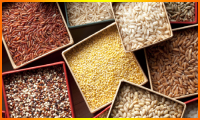
UPDATE 1-Romanian may extend trade ban on Ukraine grain if import requests rise -PM.
Romania would look to extend a trade ban on Ukrainian grain for 30 days if import requests rise, Prime Minister Marcel Ciolacu said on Monday after a European Commission-endorsed ban of imports into Ukraine’s five neighbours expired last week.
Romania is one of five eastern EU countries alongside Bulgaria, Hungary, Poland and Slovakia that saw a surge of Ukrainian grain imports after the start of the war, which distorted local markets and prompted protests from farmers, leading the EU to approve trade restrictions - while still allowing transit - until Sept. 15.
Poland, Slovakia and Hungary announced their own unilateral bans on Friday. Romania has not acted separately yet.
Ciolacu said Romania had not seen requests to import grain from Ukraine since Friday and did not want a repeat of the situation earlier this year that impacted Romanian farmers.
'The Ukrainian prime minister promised to send the export licensing proposal today, which we will discuss,' Ciolacu said.
'If there will be export requests to Romania I will ask the agriculture and economy ministers to draft an order extending the ban for a period of 30 days until things are clarified.'
The Bulgarian parliament voted to lift its ban on Ukrainian grains last week.
The EU Commission said Ukraine agreed to introduce any legal measures including an export licensing system within 30 days to avoid grain surges.
The countries of central and east Europe have been some of Kyiv’s strongest allies in its fight against Russia’s invasion since February 2022, but grain exports have been an area of friction.
EU Trade Commissioner Valdis Dombrovskis said on Friday countries should refrain from unilateral measures against imports of Ukrainian grain.
Ukrainian President Volodymyr Zelenskiy welcomed the EU’s decision not to further extend the ban on grain exports, but said on Friday his government would react 'in civilised fashion' if EU member states broke EU rules.
Romania’s Black Sea port of Constanta is Ukraine’s biggest route out for grains.
Source: reuters.com
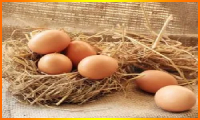
Bangladesh: Govt approves import of 4cr eggs from India.
The government has fixed retail egg price to check the exorbitant price. But even after four days of the price fixed by the government, buyers are not being able to purchase egg.
Under this situation, the Ministry of Commerce has given approval to import four crore eggs from India initially.
Four orgnisations would be able to bring eggs from the neighbouring country and each orgnisation can import one crore eggs.
Public Relations Officer of the Ministry of Commerce Md. Haider Ali confirmed this information while talking to journalist on Monday.
He said the government on Sunday gave approval to four organisations to import four crore eggs -- each one for one crore --from India. Each imported egg will be sold at Tk 12 per piece at retail level.
The imported egg will be arrived in the country within a week of the opening of Letter of Credit (LC), he hoped.
Source: daily-sun.com

BSI introduces world's first-ever std for whisky, streamlining value chain.
The British Standards Institution (BSI) has introduced a new standard, BS 8636 for whisky manufacturers calling it the world's first-ever standard for whisky, setting a new benchmark for quality in the alcoholic beverage industry.
India, which emerged as the largest Scotch whisky market by volume in 2022, with 242 million cases sold, relies heavily on whisky, accounting for nearly two-thirds of its $53 billion alcoholic beverage sales.
Theuns Kotze, managing director, Assurance, BSI India, Middle East, Turkey and Africa, in a reply to FnB News, stated that BSI's BS 8636 standard is poised to streamline and fortify India's whisky value chain, making the process more efficient and dependable.
'BS 8636:2023, Whisky uses analytical parameters and methods of analysis. While specification is a voluntary British standard designed to support distillers to produce whisky for local and global markets, the specification sets out the production process to help ensure a trusted supply chain for the main categories of whisky traded globally,' said Kotze.
Meanwhile, the notable requirements set by the standard include a minimum three-year maturation in wooden casks, a 40% minimum alcohol strength, and avoidance of sweeteners and additives to maintain the whisky's natural aroma and taste.
'Today, consumers in different markets expect whisky to be made from cereals, distilled in a certain way, aged for a minimum period in wooden casks, and sold at a strength not less than 40% alc. vol. This ensures whisky retains the colour, aroma and taste derived from its raw materials and production process,' said Kotze.
Under these standards, distillation is mandated to be conducted at less than 94.8% volume, preserving the raw materials' distinct qualities. Additionally, the standard offers guidance on packaging, particularly regarding product labelling. It addresses situations where animal products were used in other alcoholic beverages stored in the casks before whisky maturation helping consumers to make informed choices.
Kotze further said that the British standard has been developed by the consensus of whisky and industry experts in the UK and Ireland. Standards (whether national or ISO international) do not supersede local legislation but are designed to provide a best practice approach to help businesses should they wish to use a standard.
Source: fnbnews.com
FSSAI begins milk & milk products' survey across 766 districts, to submit report by December.
The Food Safety and Standards Authority of India (FSSAI) has started a nationwide surveillance study on milk and milk products this month, in a bid to curb adulteration of such items, an official of the country's apex food regulator said on Monday.
The exercise will continue till October, and the regulator is expected to submit its report to the Health Ministry by December, FSSAI Advisor (Quality Assurance) Satyen K Panda said.
'The surveillance survey will cover 766 districts across the country and over 10,000 samples will be collected during the exercise. Two agencies have been engaged for the purpose,' he told PTI.
'Quality Council of India, an autonomous body under the Ministry of Commerce and Industry, and the National Dairy Development Board will conduct the survey for FSSAI,' Panda said.
'The scope for the survey includes milk, khoa, chenna, paneer, ghee, butter, curd, and ice cream. The test parameters are adulterants, normal quality and compositional parameters, contaminants, antibiotic residues and microbiological indicators,' he said.
The study was initiated to assess milk and milk products sold in the country for compliance with Food Safety and Standards Regulations, and also to identify hotspots for adulteration. 'One of the objectives of the survey is to devise corrective action strategies,' Panda said.
The rationale behind choosing milk is its indispensable role in food culture either as a fresh fluid or as a processed dairy product, he said.
'We are hopeful of submitting a report on the findings of the survey to the health ministry by December,' Panda said.
The regulator has conducted five surveys on milk and milk items since 2011. FSSAI had, in 2022, conducted a milk survey in 12 states, including 10 where the Lumpy Skin Disease (LSD) was prevalent. It also undertook the PAN India Milk Products Survey, 2020 to understand the true picture of the safety and quality of milk products being sold in the market during festivals.
In all, 2,801 milk product samples from organised and unorganised sectors were collected from 542 districts across the country for the 2020 study.
These products were tested for all the quality and safety parameters, including pesticide residues, heavy metals, crop contaminants and melamine.
Source: thehindubusinessline.com

High international participation at Anuga Dairy.
Under the roof of Anuga, the trade fair Anuga Dairy is the leading international trade fair for the milk and dairy industry. Good registration figures are being recorded for the coming edition of Anuga. Around 500 companies are taking part at this year's Anuga Dairy.
Among others, the following exhibitors are represented in Hall 10.1 of the Cologne fair grounds: Bayernland/DE, Caeseria Cioffi/IT, DMK/DE, Fayrefield/GB, Garmo/DE, Geris Dairy/NL, Goldsteig/DE, Granarolo/IT, Hochwald Foods/DE, Hoogwegt/NL, IN.AL.PI./IT, Milchwerke Schwaben/DE, Milcobel/BE, Nordex/DK, St. Paul/NL and Vandersterre/NL.
This year's Anuga Dairy boasts a very international line-up. In total, 24 country participations are taking part in the trade fair. Alongside Germany, the top countries of origin are above all Greece, Italy, the Netherlands, Spain and France. Further participations have been confirmed from among others Bulgaria, Denmark, Dubai, Estonia, Great Britain, Lithuania, Austria, Poland, Turkey, Ukraine, USA and Cyprus.
Particularly with a view to its key theme 'Sustainable Growth', Anuga is dedicating special attention to the 'Dairy Alternatives', the so-called milk alternatives, which are recording a stronger presence than in previous years, above all in the scope of Anuga Innovations. Plant-based milk and cheese alternatives are not only extremely popular among the consumers, they are also becoming increasingly more important for Anuga Dairy. Over 80 exhibiting companies will present plant-based and vegan alternatives at Anuga Dairy.
Regarding the classic milk and dairy products, the manufacturers are above all relying on new flavours like cheese enriched with green or red pesto or with a high protein content as well as on the implementation of regional ingredients such as herbs, meadow-grazed or hay milk as well as organic milk from grass-fed cows.
Source: fnbnews.com