13 Sep, 2023

India eyes doubling coffee output over the next 10 years.
The State-run Coffee Board has mooted a proposal to double India’s coffee production over the next 10 years through increasing productivity in the traditional growing states, while bringing in new areas of around 2 lakh ha under cultivation in the non-traditional regions. Coffee has traditionally been grown in Karnataka, Kerala and Tamil Nadu, while the plantation crop has been making inroads in the non-traditional regions of Andhra Pradesh, Odisha and the North East in recent years. Coffee Board Secretary and CEO, K G Jagadeesha said the Board proposes to take a two-pronged approach to double the production by 2033. 'We are looking at a National Replantation Policy for the traditional States, where coffee plants in about 60 per cent of the areas have crossed the economic age. The yields start declining in arabica plants after 40 years and in robusta after 50 years. If we don’t take up replanting in those states where it has crossed the economic age then our yields are bound to go down. We can increase almost 50 per cent of our production by replanting the old and senile plants,' Jagadeesha said. To absorb interest As part of the proposal, the interest costs on the loans availed by growers to take up replanting in the traditional areas will be absorbed by the government for a period of five years, Jagadeesha said. The Board has sent the proposal to the Commerce Ministry and is awaiting for the government’s approval. Currently, coffee is grown in about 4.72 lakh hectares and the production during 2022-23 stood at 3.60 lakh tonnes. India’s coffee output has more than doubled over the past three decades from around 1.69 lakh tonnes in the early nineties and the Board is targetting doubling the yields over the next decade through improved productivity. Further, Jagadeesha said the proposed area expansion of about two lakh hectares in the non-traditional regions will be carried out by providing subsidies to the growers in collaboration with the respective States. The Centre proposes to share the subsidy burden equally with the States for new area expansion. Odisha’s mission Jagadeesha said Odisha has already announced a mission to bring about 1 lakh ha under coffee by 2030. In Andhra Pradesh about 80,000 hectares would be brought under coffee, while the cultivation can be expanded to about 25,000 hectares in Tamil Nadu and another 50,000-60,000 hecatres in North East. 'All these areas if we can bring under coffee, we can improve the output,' he said. India, which exports about two thirds of the coffee produced in the country, is hosting the World Coffee Congress (WCC 2023) in Bengaluru from September 25-28 and the event is expected to showcase the Indian coffees to the global buyers.
Source:
thehindubusinessline.com
|
13 Sep, 2023

India-Russia mull speedy operations on new sea route.
India and Russia seek to soon begin operations on the Eastern Maritime Corridor (EMC), Shipping Minister Sarbananda Sonowal said on Tuesday. An official statement said the EMC is estimated to reduce the time required to transport cargo between Indian and Russian Ports of Far-East Region by up to 16 days. Once complete, it will take 24 days, down from presently over 40 days, to transport goods from India to Far East Russia. The trade route between Mumbai and St Petersburg covers a distance of 8,675 nautical miles which takes approximately 35 to 40 days. The Chennai-Vladivostok sea route (EMC) will be covering a distance of about 5,600 nautical miles. A large container ship which travels at the normal cruising speed of 20-25 knots (37-46 km/hour), will be able to cover this distance in approximately 10 to 12 days, the statement added. Sonowal, who is on an official visit to Russia, said, 'Currently, there are 802 projects worth investment of more than $65 billion for implementation under the Sagarmala Programme by 2035. Out of which, 228 projects worth $ 14.6 billion have been completed and 260 projects worth $ 27 billion are under implementation.' Another 314 projects worth $ 24 billion are under various stages of development, he added.
Source:
economictimes.indiatimes.com
|
13 Sep, 2023

No duty cuts on US apple, almond imports: Piyush Goyal.
The Centre Tuesday said it had not removed customs duty on apple and almond imports from the US and had put in place measures to prevent cheap imports flooding the Indian market. 'There is no duty reduction on apples,' Commerce and Industry minister Piyush Goyal said. On the contrary, the government has imposed a minimum import price of Rs.50 per kg on imports of apples from all countries except Bhutan, he added. 'This will ensure that no one can flood Indian markets and hurt our farmers,' Goyal said, adding that India had imposed a 20% retaliatory duty in addition to a 50% import duty on some US imports in view of trade disputes at WTO. Only the retaliatory duty has been removed in view of the resolution of those disputes, he added. India is not self-sufficient in apple production to meet the domestic requirements. An official statement said that following the decision to resolve six outstanding World Trade Organisation (WTO) disputes between the US and India through Mutually Agreed Solutions in June 2023, India has withdrawn additional duties on eight US origin products, including apples, walnuts and almonds. 'Additional duties of 20% each on apples and walnuts and Rs.20 per kg on almonds were imposed on the US's products in 2019 over and above the Most Favoured Nation (MFN) duty as a retaliation to the US's state protectionist measure of increasing tariffs on certain steel and aluminium products', it said. There is no reduction in the MFN duty on apples, walnuts and almonds, which still applies to all imported products, including US-origin products, it added.
Source:
economictimes.indiatimes.com
|
13 Sep, 2023
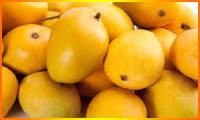
CSMIA reports 318% growth of mango exports.
Chhatrapati Shivaji Maharaj International Airport (CSMIA) reported exports of 4,700 tonnes of mangoes in 2023, a 318 percent increase compared to 1,123 tonnes in 2022. 'This exponential growth is a testament to CSMIA’s contribution to expanding the global presence of India's delectable mangoes. Moreover, it highlights the airport's contribution in driving India’s mango exports,' says an official release. The key aspect contributing to the achievement is the recent approval granted by the United States Department of Agriculture (USDA) for the export of Indian mangoes to the United States, the release added. 'This milestone development opens up the market for Indian mangoes in the USA, marking a significant moment for mango lovers. This approval comes after a hiatus in mango exports to the USA since 2020, primarily due to travel restrictions imposed on the USDA inspectors to visit India during the Covid-19 pandemic.' An official spokesperson says: 'CSMIA stands as a symbol of India’s commitment to delivering the finest produce to the world with the help and guidance from specialists in the field. We are proud to be a part of this growth story and are committed to providing the best possible facilities to support our exporters. This remarkable growth in mango exports reflects our dedication to excellence and our contribution in shaping the global perishable trade landscape.” CSMIA has created a dedicated and state-of-the-art temperature-controlled perishable facility with an annual capacity of 150,000 tonnes, the release added. Air Cargo Forum India (ACFI) launched its Kerala Chapter under the chairmanship of Manoj P Joseph, cargo in charge, Cochin International Airport (CIAL) on September 4, 2023 in Cochin. S Suhas, IAS, Managing Director, CIAL was the chief guest of the event. The event was attended by Yashpal Sharma, President, ACFI and Managing Director, Skyways Group, Sanjiv Edward, Vice President, ACFI and CEO – Cargo & Logistics, GMR Group, Satish Lakkaraju, Chairman, ACFI Event Management Task Pillar and Global Head – Air Freight & Pharma, WIZ Freight, Kamesh Peri, Governing Board Member, ACFI and CEO at Celebi Delhi Cargo Terminal Management along with K.S. Kunwar, Director General , ACFI and Santosh Kumar T.T., Vice Chairman, ACFI Kerala Chapter and Assistant Manager, GH & Cargo Operations, Kannur International Airport. The occasion saw participation from over 100 plus delegates from across the air cargo & aviation industry, some ACFI governing board members and senior leaders from various trade associations including Steamer Association, Indian Chamber of Commerce, FICCI, ACAAI, AMTOI, FFFAI and CCBA. The Kerala Chapter board members will be selected by the ACFI governing board and ACFI secretariat in due course of time with the aim to boost air cargo trade in the region, advocate regulatory changes with authorities, upskill the people by conducting trainings, events and workshops and invite collaboration with fellow trade bodies to steer the air cargo logistics sector in Kerala and at national level. The main aim of Kerala Chapter will be to align itself with the ACFI head office and drive common goals of promoting the air cargo industry to bring it at par with the best global air cargo ecosystems. The four major airports covered under Kerala chapter are: Cochin International Airport (CIAL), Thiruvananthapuram International Airport (TRV), Calicut International Airport (CCJ) and Kannur International Airport (KIAL). Joseph says, 'As the Chairman of Kerala Chapter, I am committed to maintaining close collaboration with every Task Force Pillar under the ACFI umbrella. This will ensure the effective execution of our initiatives in the region with the full support of our ACFI President and members of ACFI. My vision is to establish strong connections between ACFI Kerala Chapter and the prominent players in the air cargo and supply shain sector in Kerala. The realm of air freight logistics is undergoing a transformative phase, driven by advancements in technology, evolving regulations, shifting processes, and ever-changing business environments. This transformation marks the critical role of air cargo, and I am dedicated to navigating and embracing these changes for the benefit of our industry.’’ Sharma adds: 'ACFI is dedicated to the development of a world-class air cargo ecosystem in India, one that adheres to the highest international standards. I firmly hold the belief that India's air cargo infrastructure should serve as a model admired for its scale, efficiency and swift delivery even by the most advanced economies globally. I truly believe that our Kerala Chapter will play a pivotal role in our pursuit to establish an Indian air cargo framework that will soon be recognised and benchmarked as a global standard. Furthermore, Kerala Chapter will also ably align itself with the Ministry of Civil Aviation's ambitious target of achieving 10 million tonnes by 2030-31. However, accomplishing this goal requires intensifying our focus on process enhancements, collaborating closely with various entities such as participating government agencies at airports, regulators, shippers, freighters, airlines.'
Source:
itln.in
|
13 Sep, 2023

Global Rice Prices Hit 15-Year High After India's Export Ban: UN FAO.
Rice prices rose globally by 9.8% in the month of August, despite other food prices easing, because of 'trade disruptions in the aftermath of a ban on Indica white rice exports by India', the United Nations’ Food and Agricultural Organisation (FAO) has said in a report. This had led to rice prices reaching a 15-year nominal high. 'Uncertainty about the ban’s duration and concerns over export restrictions caused supply-chain actors to hold-on to stocks, re-negotiate contracts or stop making price offers, thereby limiting most trade to small volumes and previously concluded sales,' the report continued. In July, India had banned the export of non-basmati rice to try and curb rising prices. The consumer affairs and food ministry said at the time that the move would 'ensure adequate availability' and 'allay the rise in prices in the domestic market'. Non-basmati white rice constitutes about 25% of the total rice exported from the country. 'The prohibition on export of non-basmati white rice will lead to lowering of prices for the consumers in the country,' the ministry said. India has since announced exemptions for Bhutan, Mauritius and Singapore. Reports have said that over 40 nations depend on India for over half of their rice imports, and certain African and South Asian countries procure over 80% of their rice imports from India.
Source:
thewire.in
|
13 Sep, 2023

Rich agricultural heritage of our country has flourished due to the efforts of our farmers, who have carefully nurtured and developed numerous plant varieties - Shri Narendra Singh Tomar.
The President of India, Smt Droupadi Murmu inaugurated first 'Global Symposium on Farmers' Rights' (GSFR) today, in a ceremony held at ICAR Convention Centre, National Agricultural Science Centre, New Delhi. President Murmu conferred the ‘Plant Genome Saviour Communities’ Award (6) and ‘Plant Genome Saviour Farmers Reward’ (16) and ‘Plant Genome Saviour Farmers Recognition’ (4) awards to the invited Indian farmers. These awards are instituted by the PPVFR Authority as per the provisions of the PPVFR Act, 2001. She also inaugurated the newly constructed ‘Plant Authority Bhawan’, the office of the PPVFR Authority, and an online plant variety ‘Registration Portal’. Union Minister of Agriculture & Farmers Welfare, Shri Narendra Singh Tomar, MoS Shri Kailash Chaudhury and Secretary, Shri Manoj Ahuja were also present on the occasion. In her address, Smt Droupadi Murmu congratulated organizers FAO and the Secretariat of the International Treaty on Plant Genetic Resources for Food and Agriculture (the Treaty) for appropriately choosing India as the country to host the prestigious meeting, given its rich agricultural, cultural and ethnic diversity. She welcomed the delegates in the land of “Vasudhaiv Kutumabakam” (world is one family), a philosophy deeply ingrained in India’s culture and traditions. She said that farmers have toiled and enterprisingly developed or conserved landraces, wild-relatives and traditional varieties of crops, and provided the building blocks for the modern crop breeding programs, thus ensuring food and nutritional security for human beings and live-stocks alike. She said that holding of GFSR was very appropriate, as farmers are primary food producers (‘annadatta’) and only if there is food then there is body, and if there is body then any work gets done. That is why farmers need to be saluted and it is our duty to protect their rights and future. Union Minister of Agriculture & Farmers Welfare, Shri Narendra Singh Tomar while welcoming the President of India, expressed his happiness that the GFSR proposed by the GoI during the Ninth Session of Governing Body of the FAO’s International Treaty held in New Delhi (during September 17 to 24, 2022), has been ably organized by the Department of Agriculture & Farmers Welfare (DA&FW) in collaboration with Protection of Plant Varieties and Farmers’ Rights (PPVFR) Authority and in partnership with Indian Council of Agricultural Research (ICAR), ICAR-Indian Agricultural Research Institute (IARI), and ICAR-National Bureau of Plant Genetic Resources (NBPGR). He said that agricultural biodiversity conservation is not just a duty but a vital necessity for the survival of ecosystems. The rich agricultural heritage of our country has flourished due to the efforts of our farmers, who have carefully nurtured and developed numerous plant varieties. He said that these varieties of plants are not only a source of livelihood but also a living testimony of the deep connection between nature and culture. Secretary, DA&FW, Shri Manoj Ahuja informed that India has been the first country in the world to include Farmers’ Rights in the context of Plant Variety Registration through its Protection of Plant Varieties and Farmers’ Rights (PPVFR) Act, 2001. Chairperson, PPVFR Authority, Dr T. Mohapatra delivered the welcome address and apprised about the genesis and expectations of the GFSR. Dr. Himanshu Pathak, Secretary (DARE) & Director General (ICAR), Dr R.S. Paroda, Chairman, Trust for Advancement of Agricultural Sciences (TAAS) and former Secretary, DARE & DG, ICAR, Mr Kent Nnadozie, Secretary, ITPGRFA and Mr Takayuki Hagiwara, FAO Representative in India, were also present on the occasion. India is hosting the GFSR from September 12 to 15, 2023, that is being attended by more than 700 delegates from 59 countries. including the National Focal Points of the International Treaty, farmer bodies from around the world, policy makers, scientists, research scholars, industry representatives, government officers, intergovernmental and non-governmental organizations, legal experts and civil society. This first of its kind symposium aims to facilitate implementation of Farmers' Rights by Contracting Parties of the Treaty through discussions on innovative approaches, effective policies, best practices, knowledge, and experience sharing in implementing Farmers' Rights. The Global Symposium would also provide a platform to promote recognition of farmers as conservers of agrobiodiversity and guardians of global food security.
Source:
pib.gov.in
|
13 Sep, 2023
India and Turkey relation strengthened after PM Modi and Turkish President holds talk.
Signalling a way forward in their ties, Prime Minister Narendra Modi and Turkish President Recep Tayyip Erdogan explored potential in areas like trade and investment, defence and security, civil aviation and shipping. The two met on Sunday evening at the end of the G20 summit. Relations with Turkiye are stabilising since India extended relief for the earthquake in February and with the rise of Indian investors to Europe using Turkiye as a gateway. Later, talking to reporters, Erdogan described India as his country's 'greatest trade partner in South Asia.' 'Turkiye and India, which is our biggest trading partner in South Asia, have a serious potential in many fields, especially economy,' said Erdogan, as he seeks trade and investment to boost his country's economy. During the meeting between the two leaders, relations between the countries were discussed in all their dimensions, according to Turkish officials. Projects that would increase economic cooperation and bilateral trade volume, as well as current regional and international issues concerning both countries, were also on the agenda. Turkish officials affirmed that India and Turkiye have similar approaches to the Russia-Ukraine war and favour diplomatic solutions to the crisis. Trade volume between India and Turkiye rose from $5.7 billion in 2020 to $12.3 billion in 2022. Indian companies have invested about $ 126 million in Turkiye (as per Central Bank of Turkiye data) and Turkish investment in India is about $210.47 million (as per Department for Promotion of Industry and Internal Trade, India). India was also one of the first nations to send relief and rescue help to Turkiye in the wake of the February earthquakes that killed over 52,000 people in the south-eastern regions.
Source:
economictimes.indiatimes.com
|
12 Sep, 2023
India aspires to grow at an unprecedented scale in Amrit Kaal: Union Minister of Commerce & Industry, Shri Piyush Goyal.
The Union Minister of Commerce and Industry, Food and Public Distribution and Textiles, Shri Piyush Goyal while interacting with the Minister of Investment, Saudi Arabia, Khalid A. Al-Falih said that in Amrit Kaal, year 2047, India aspires to grow at an unprecedented scale. Shri Goyal highlighted the significance of the G20 Summit 2023 organized in New Delhi and also appreciated the organization of Startup20 under India's G20 Presidency. He said that both the countries are the two fastest growing economies in the world today adding on, that in the World Bank ranking in terms of Ease of Doing Business Saudi Arabia was placed at number 62 and India at number 63. However, the ranking have been discontinued since 2020. Shri Goyal also talked about how the trade between the two countries could be doubled which stands at about $52 billion presently and can be taken up at $200 billion. In this regard, the Union Minister invited the Saudi investors to visit Gujarat International Finance-Tech City and thereafter, bring investment. He said that the investors would appreciate India’s regulatory mechanism has been simplified. Also, there’s only one regulator for all regulations. Besides, India has brought about tax rebates and made it seamless to move funds in and out of the GIFT city. Shri Goyal suggested that the Federation of Indian Chambers of Commerce & Industry (FICCI) along with the Government of India and Invest India may open an office of Investment and Trade Promotion in Riyadh, Saudi Arabia. He emphasized that the GoI officials along with representatives from FICCI will encourage startups. Shri Goyal also talked about the opportunities wherein India may provide food security to Saudi Arabia while energy, oil and fertilisers may be provided to India, stressing on a balanced trade. The Union Minister also talked about NEOM City and said that Saudi Arabia government is setting it up at a cost of $0.5 trillion dollars and the very concept of having 100% clean energy in the entire city designed in a manner to be very user friendly using leveraging the huge landmass coastline. 'I think that's an area where India could contribute significantly,' Shri Goyal said highlighting that India may be helpful in areas like designing, construction, manning and developing business around. He quoted a recent study about the returns that investors have got from investment companies. He said that the study of the top five companies listed in the stock exchange shows that Indian companies have given a 20% CAGR return on investment for 20 years. He said that Indian companies are followed by those from US and China. The Union Minister thereby, said that its time to accelerate the investment coming from Saudi Arabia. He said that FDI from Saudi Arabia last year was just about $ 4 billion which was $ 2.8 billion during COVID period. He said that Saudi Arabia’s investments into India’s processing industry can be a great driver of agriculture and food security. Shri Goyal added that similarly, the Pharma sector has immense potential. He said that a greater understanding between the regulatory authorities of Saudi Arabia and India may help Pharma industries. He added that those living in Saudi should have easier access to Indian medicines which will also encourage Indian Pharma companies to invest in Saudi Arabia.
Source:
pib.gov.in
|
12 Sep, 2023

Rice sowing area surpasses 400 lakh hectares marks.
The Department of Agriculture & Farmers’ Welfare has released progress of area coverage under kharif crops as on 8th September 2023. Area: In lakh hactare | S. No. | Crop | Area Sown | | 2023 | 2022 | | 1 | Rice | 403.41 | 392.81 | | 2 | Pulses | 119.91 | 131.17 | | a | Arhar | 42.92 | 45.61 | | b | Urdbean | 31.89 | 37.08 | | c | Moongbean | 31.11 | 33.67 | | d | Kulthi | 0.31 | 0.29 | | e | Other pulses | 13.68 | 14.53 | | 3 | Shri Anna cum Coarse cereals | 182.21 | 181.24 | | a | Jowar | 14.08 | 15.58 | | b | Bajra | 70.84 | 70.46 | | c | Ragi | 8.73 | 9.29 | | d | Small millets | 5.24 | 4.93 | | e | Maize | 83.33 | 80.97 | | 4 | Oilseeds | 191.49 | 193.30 | | a | Groundnut | 43.73 | 45.30 | | b | Soybean | 125.40 | 124.06 | | c | Sunflower | 0.70 | 2.00 | | d | Sesamum | 11.98 | 12.97 | | e | Niger | 0.57 | 0.88 | | f | Castor | 9.00 | 7.94 | | g | Other Oilseeds | 0.11 | 0.14 | | 5 | Sugarcane | 59.91 | 55.65 | | 6 | Jute & Mesta | 6.57 | 6.97 | | 7 | Cotton | 125.00 | 126.87 | | | | | | | Total | 1088.50 | 1088.02 |
Source:
pib.gov.in
|
12 Sep, 2023

India, Brazil to work for expansion of PTA with Mercosur bloc.
India and Brazil on Sunday agreed to work together for the expansion of India-Mercosur preferential trade agreement (PTA) to further promote economic ties, an official statement said. Mercosur is a trading bloc in Latin America, comprising Brazil, Argentina, Uruguay and Paraguay. The issue came up for discussion during the meeting of Prime Minister Narendra Modi and Brazilian President Luiz Inacio Lula da Silva here at the sidelines of the G20 Summit. 'Expressing satisfaction over the growing trade between India and Mercosur, both leaders agreed to work together for the expansion of India-Mercosur PTA during Brazil's Mercosur Presidency, to leverage the full potential of this economic partnership,' a joint statement issued after the meeting said. The two countries also welcomed the establishment of the India-Brazil Business Forum as a dedicated platform for private-sector collaboration. 'The leaders noted with satisfaction the conclusion of domestic procedures for the entry into force of the India-Brazil Social Security Agreement,' it added. India-Mercosur preferential trade agreement (PTA) came into effect on June 1, 2009. In such agreements, two countries reduce or eliminate customs duties on a limited number of goods agreed between them. Expansion of the agreement would include more numbers of goods and negotiating norms to promote trade in services and boost investment. This PTA has limited coverage and contains only 450 tariff lines or products. India's exports to Latin America have increased to USD 17.7 billion in 2022-23 compared to USD 15 billion in 2021-22. Imports, on the other hand, rose to USD 22 billion in the last fiscal against USD 21.74 billion in 2021-22. The bilateral trade between India and Brazil has increased to USD 16.6 billion in 2022-23 from USD 12.2 billion in 2021-22.
Source:
economictimes.indiatimes.com
|