MoFPI revokes EoI for cold chain and value addition infra scheme.
The Ministry of Food Processing Industries (MoFPI) has decided to revoke the previously issued expression of interest (EoI) in June 2022 inviting applications for the Scheme for Integrated Cold Chain and Value Addition Infrastructure.
The ministry, however, did not reveal the reason for the same but has stated that a fresh EoI will be issued by the ministry regarding the scheme.
'It has now been decided that approval of any new projects under the Integrated Cold Chain and Value Addition Infrastructure Scheme will be on the basis of new Expression of Interest that may be floated in due course of time,' reads the notice issued by MoFPI.
The notice added that any entity who had submitted its application against the earlier EoI dated June 21, 22, may apply afresh as and when new EoI is issued by the ministry.
According to the ministry, a number of applications were received against the June’ 22 EoI and based upon availability of funds, and in terms of provisions of guidelines of the scheme, proposals have been approved. But now the decision was taken to invite applications afresh for the same scheme.
Source: fnbnews.com

India's vegetable oil imports up 33 per cent in Aug: SEA.
India's vegetable oil imports rose 33 per cent year-on- year to 18.66 lakh tonne in August due to lower duties and a revival of demand after a fall in domestic rates, according to industry body SEA. India, the world's leading vegetable oil buyer, imported 14.01 lakh tonne of vegetable oil in August 2022.
The country's total vegetable oil imports during the first ten months of the 2022-23 oil year (November-October) increased by 24 per cent to 141.21 lakh tonne, when compared to 113.76 lakh tonne in the year-ago period.
According to the Solvent Extractors' Association (SEA), edible oils comprised 18.52 lakh tonne, while non-edible oils at 14,008, out of total vegetable oil shipments undertaken in August.
In total, palm oil imports reached 11.28 lakh tonne in August.
'Looking to import of edible oils in first ten months at 141.21 lakh tons, it will not be surprised to see a record import of over 160 to 165 lakh tons during current oil year ending October 2023,' it said in a statement.
India's highest import was 151 lakh tonne in 2016-17, it added.
Citing reasons for the rise in imports, the industry body said despite ample domestic availability, a sharp drop in domestic edible oil prices has reignited demand, as reflected in the August data.
Crude palm oil imports rebounded, regaining competitiveness against soybean and other oils, totalling 8.24 lakh tonne in August, slightly down from 8.41 lakh tonne in the previous month, it said.
'This influx of imports is driven by the current low 5.5 per cent duty on crude palm oil, soybean oil, and sunflower oil, transforming India into a prime destination for excess oil supplies,' it added.
India imports palm oil mainly from Indonesia and Malaysia, and a small quantity of crude soft oil, including soyabean from Argentina. Sunflower oil is imported from Ukraine and Russia.
Source: economictimes.indiatimes.com
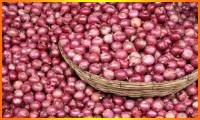
Onions, garlic and more imported from Afghanistan through ICP at Attari-Wagah border.
Onions and garlic are being imported this season from Afghanistan through the Integrated Check-Post (ICP) at the Attari-Wagah border after a few years and not only that the import of dry fruits from the war-torn country has doubled but their prices remain higher side as the festival season in the country has started.
Sources at that ICP said that after two to three years, one to two truckloads of onions have been coming for the last three days and each truck is carrying between 20 to 40 tons. Not only that, ten to fifteen trucks of garlic are coming daily.
The import of both onion and garlic to India was restarted because these crops were damaged this season due to untimely rain and hailstorms resulting in a price surge.
Source: freshplaza.com

Ahead of festive season, Nepal to import 20,000 metric tonnes of sugar from India.
Ahead of the festive season, Nepal is set to import 20,000 metric tonnes (MT) of sugar from India, which meets at least 70 per cent of the Himalayan country's domestic annual demand of approximately 3,00,000 MT.
In view of the upcoming festivals, including Vijaya Dashami and Deepawali, the Ministry of Industry, Commerce and Supplies has asked the Finance Ministry to give customs waiver for importing 60,000 MT of sugar to meet the local demand. The Finance Ministry has, however, given permission to import only 20,000 MT for the time being.
According to Finance Ministry spokesperson, Dhaniram Sharma, the Ministry has given 50 per cent discount on customs duty, which means 15 per cent less from the earlier imposed 30 per cent customs duty.
Two companies, Salt Trading Corporation (STC) and Food Management and Trading Company, both would import 10,000 MT sugar each for the upcoming festival season, according to Sharma. However, divisional manager of STC Brajesh Jha said that it had asked the government permission to import 50,000 MT of sugar.
According to Jha, Nepal's domestic demand for sugar stands at 3,00,000 MT and it needs to import a huge quantity of sugar mainly from India. There are 12 sugar factories in Nepal that produce around 1,00,000 MT of sugar.
According to an estimate, Nepal imports at least 70 per cent sugar from India. Besides, thousands of tons of sugars are brought through illegal channel without paying customs duty.
Sugar is available in the black market in Kathmandu and the prices ranges from Nepali Rupees 100 to 125 per kg, where as it costs around Rs 40 - 50 in India.
Source: economictimes.indiatimes.com
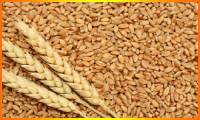
Centre revises Wheat Stock limit from 3000 MT to 2000 MT for Traders/Wholesalers and Big Chain Retailers.
In order to manage the overall food security and to prevent hoarding and unscrupulous speculation, the Government of India imposed stock limits on the Wheat applicable to Traders/Wholesaler, Retailers, Big Chain Retailers and Processors for all States and Union Territories. The Removal of Licensing Requirements, Stock Limits and Movement Restrictions on Specified Foodstuffs (Amendment) Order, 2023 was issued on 12 June 2023 and applicable until 31st March 2024 for all States and Union Territories.
To soften the prices of Wheat which are showing an increasing trend, Central Government has decided to revise the Wheat Stock limit from 3000 MT to 2000 MT with respect to Traders/Wholesalers and Big Chain Retailers as under:
Traders/Wholesaler- 2000 MT;
Big Chain Retailer- 10 MT for each outlet and 2000 MT at all their depots
For other categories, there is no change in stock limits. All wheat stocking entities are required to register on the wheat stock limit portal (https://evegoils.nic.in/wsp/login) and update the stock position on every Friday. Any entity which is found to have not registered on the portal or violates the stock limits will be subject to suitable punitive action under Section 6 & 7 of Essential Commodities Act,1955.
In case the stocks held by above entities are higher than the above prescribed limit, they shall have to bring the same to the prescribed stock limits within 30 days of issue of the notification. Officials of Central and State Governments will be closely monitoring enforcement of these stock limits to ensure that no artificial scarcity of wheat is created in the country.
The Department of Food and Public Distribution is maintaining a close watch over the stock position of Wheat to control prices and ensure easy availability in the country.
Source: pib.gov.in
President Draupadi Murmu inaugurated the Global Seminar on Farmers Rights in New Delhi.
President Mrs. Draupadi Murmu inaugurated the four-day global seminar on farmers’ rights in Pusa, New Delhi on 12th September. Union Agriculture Minister Mr. Narendra Singh Tomar presided over the function. On this occasion, 26 Plant Genome Patron Awards were given to farmers and organizations in various categories. On this occasion, the President inaugurated the Plant Authority Building and launched the online portal for registration of plant varieties. The President inaugurated the exhibition here and also visited it with the ministers. In the program, Union Minister of State for Agriculture Mr. Kailash Chaudhary , Secretary Mr. Manoj Ahuja , Director General of ICAR Dr. Himanshu Pathak ,Dr. Trilochan Mahapatra, Chairman, Protection of Plant Varieties and Farmers’ Rights Authority (PPVFRA), Dr. Kent Nandoji , Secretary, ITPGRFA , Mr. Takayuki, India Representative of FAO , Dr. R.S. , former DG, ICAR. Parodha , diplomats , representatives of treaty contracting countries , farmers , scientists , officials of agriculture related organizations were also present. PPVFRA , ICAR , Indian Agricultural Research Institute and National Bureau of Plant Genetic Resources are participating in the event .
In her address on the occasion of the global seminar organized by International Treaty on Plant Genetic Resources for Food and Agriculture (ITPGRFA) , Food and Agriculture Organization (FAO) , Rome and Union Ministry of Agriculture Mrs. Murmu said that India’s rich agriculture -Biodiversity has been a treasure for the global community. Our farmers have worked hard and enterprisingly to conserve local plant varieties , domesticate wild plants and nurture traditional varieties , which have provided the basis for various crop breeding programmes. This has ensured food and nutritional security for humans and animals. By preserving and nurturing biodiversity, the farming community is not only helping humanity ,Rather, they are saving the entire planet. He said that the crop varieties of a particular region are deeply connected to the society and culture , they also have medicinal properties.
Mrs. Murmu expressed happiness that ITPGRFA chose India as the venue for the first global symposium on farmers’ rights , it is appropriate because India is an ancient civilization , where our traditions , culture and agriculture are part of the same fabric. Are. This is the land that has imbibed the concept of 'Vasudhaiva Kutumbakam' through the ages. In biodiversity , India is one of the countries blessed with the widest range of plants and species. The efforts of our agro-biodiversity custodians and hardworking farmers , scientists and policy makers, coupled with government support, have played an important role in accelerating several agricultural revolutions in the country. He said that the year 2001The International Treaty on Plant Genetic Resources for Food and Agriculture , signed in 1979, was one of the most important international agreements between member states for the conservation , use and management of plant genetic resources for food and agriculture. For the first time it called for guaranteeing food security through the conservation , exchange and sustainable use of the world’s plant genetic resources for food and agriculture. India played a leading role in introducing the Protection of Plant Diversity and Farmers Rights Act (PPVFR)- 2001 , which is linked to the International Treaty on Plant Genetic Resources for Food and Agriculture, for the protection of our farmers.
Union Agriculture Minister Mr. Tomar said that agro-biodiversity conservation is not just a duty , but is a vital necessity for the survival of the ecosystem , the Government of India remains steadfast in its commitment towards this objective. Under the leadership of Prime Minister Mr. Narendra Modi , India has been committed to the principles agreed under this international treaty ( ITPGRFA) and is doing the best work in the world in implementing it in letter and spirit. This fact is very clearly underlined by the national law enacted by the Indian Parliament as the Protection of Plant Diversity and Farmers’ Rights Act- 2001 . Since the enactment of this law ,The Government of India has worked diligently to ensure its compliance with the provisions of the law. He said that one of the features of India’s plant variety protection framework is its focus on farmers’ rights. This Act recognizes the invaluable role of farmers in the conservation and development of plant genetic resources through the continuous efforts of generations of farmers. This Act gives the farmers the right to preserve, use, share and sell the seeds saved in the field. This provision empowers farmers to actively participate in the agricultural value chain while preserving their autonomy while promoting local knowledge and innovation.
Source: en.krishakjagat.org

More than 500 delegates from 60 countries, including National Focal Points of International Treaty,150 farmers and 100 foreign participants attends Global Symposium.
The technical sessions of 'First Global Symposium on Farmers' Rights (GSFR)' held at the ICAR Convention Centre, National Agricultural Science Centre, New Delhi was successfully concluded today.
The GSFR was attended by more than 500 delegates from 60 countries, including the National Focal Points of the International Treaty, more than 150 farmers and more than 100 foreign participants. Various issues pertaining to Farmers’ Rights as set out in the Article 9 of the International Treatywere deliberated in five different technical sessions, two panel discussions and three special sessions. A special session on Farmers Forum was an important inclusion in the GSFR.
The deliberations and suggestions emanating from the GSFR have been crystalized in a ‘Delhi Framework on Farmers’ Rights’, as a proposal from India to the Treaty:
Accelerate efforts to implement multiple options as advocated by the Treaty for realization of farmers’ rights. For this, Treaty Secretariat to create a handholding and capacity development mechanism.
Establish an institutional mechanism that is responsible for creation of awareness about the Farmers’ Rights, capacity building of custodian farmers and farmers’ seed systems, and facilitating equitable benefit sharing, and request Treaty Secretariat to coordinate such initiatives.
Advocate creation of functional synergy across different UN instruments (ITPGRFA, CBD, UNDROP, UNDRIP, etc.) to facilitate the realization of farmers’ rights.
Strengthen the Benefit Sharing Fund for supporting farmers and farmers’ seed systems to ensure conservation and sustainable use of PGRFA; and for the realization of farmers’ rights through enabling environment by national governments, international organizations and incentivize participation of private sector in supporting conservation activities.
Create conducive condition for active participation of different stakeholders and building farmer-centric partnership opportunities including South-South, triangular and regional cooperation to accelerate implementation of Farmers’ Rights.
Aspecial package be packaged as part of climate change adaptation and mitigation funds to directly support on-farm conservationand custodian farmers, who are the most affected by extreme climatic events.
Establish/support farmer-managed seed system for traditional varieties and create self-sustaining production and marketing value chain, to enhance farm income of custodian farmers and strengthening of local food systems.
Join hands to systematically document traditional knowledge associated with PGRFA, adhering to prior informed consent and respecting the sensibilities of communities. Treaty Secretariat to facilitate the process under ongoing documentation programmes.
Application of new science and technologies aimed at conservation and sustainable use of PGRFA, taking necessary precautions to avoid negative impact on farmers’ rights and ensuring enhanced benefit sharing opportunities.
Create legal and formal provisions in their existing system that recognize and protect farmers’ rights as envisaged in the Plant Treaty.
On the final day of the meeting tomorrow, delegates to visit the Pusa Campus (IARI and NBPGR), to see the phenomics, genomics and gene bank facilities.
The meeting was inaugurated by President Smt. Droupadi Murmu. Recognizing the farming fraternity as the true guardian of crop diversity, President Droupadi Murmu, said that India’s law on Farmers Rights (enshrined within the Protection of Plant Varieties and Farmers’ Rights (PPVFR) Act, 2001) can be a model for the world to emulate, especially in the context of climate change challenges. The President also conferred 26 Plant Genome Saviors Awards/Recognition to farmers and farming communities of India. Also, the newly constructed ‘Plant Authority Bhawan’, the office of the PPVFR Authority, and an online plant variety ‘Registration Portal’ was inaugurated by the President, in the august presence of Union Minister of Agriculture and Farmers’ Welfare, Shri Narendra Singh Tomar, and Minister of State for Agriculture and Farmers’ Welfare, Shri Kailash Choudhary.
Organized by the Secretariat of the International Treaty on Plant Genetic Resources for Food and Agriculture (International Treaty) of the Food and Agriculture Organization (FAO), Rome, the Global Symposium is being hosted by Ministry of Agriculture and Farmers' Welfare in collaboration with PPVFR Authority, Indian Council of Agricultural Research (ICAR), ICAR-Indian Agricultural Research Institute (IARI), and ICAR-National Bureau of Plant Genetic Resources (NBPGR).An exhibition showcasing the rich agrobiodiversity of India was put through support from 80 organisations and awardees farmers/farming community, ICAR institutes, SAUs, CAUs, CGIAR institutes and seed association.The Global Symposium was requested by the Ninth Session of Governing Body of the FAO’s International Treaty, held in New Delhi during September 17 to 24, 2022, to share experiences and to discuss possible future work on Farmers’ Rights.
Source: pib.gov.in
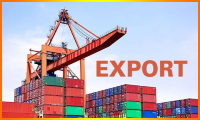
Perishable cargo exports pick up post Covid, Mumbai airport sees a three fold swell in mango exports.
After a three year lull brought on by the Covid pandemic, mango exports have gone strong this year with the Mumbai airport witnessing a 318 % jump in the fruit's exports this year versus 2022.
In 2022, 1,123 tons of mangoes we're exported from Mumbai airport, the number jumped to 4,700 tons this year, said a Mumbai International Airport Ltd spokesperson
The recent approval granted by the United States Department of Agriculture (USDA) for the export of Indian mangoes to the United States has led to increased export volumes. The approval comes after a hiatus in mango exports since 2020, primarily due to travel restrictions imposed on the USDA inspectors which stopped them from visiting India during the COVID-19 pandemic.
To handle mangoes and other perishable cargo such as fruits and vegetables, the airport has a temperature-controlled perishable facility with an annual capacity of 1,50,000 metric tons, said MIAL.
But India's leading airport for perishable cargo for three consecutive years has been Bengaluru (BLR), which is also the third busiest airport in India for passenger and air traffic.
'The BLR Airport has maintained its dominant position in the export of perishable goods, with 27% share in total cargo volumes across the Indian air cargo market and 41% share within airports in southern India,' said a BLR airport spokesperson.
'The airport witnessed growth in the export of perishable cargo, handling a record tonnage of 53,751 metric tonnes (MT) in financial year 2022-2023 (FY23). This represents a 3% increase compared to the previous year (FY22) when the airport handled 52,366MT of perishable cargo,' the official added. Among perishable goods, BLR Airport led in the export of poultry and floriculture/flowers in India with a 9% increase compared to the previous year.
Oman, Qatar, Singapore, Maldives, UAE, Kuwait, and the UK emerged as the top destinations for international exports, in FY23. 'The volume of perishable goods transported to Maldives and Kuwait rebounded to pre-COVID levels in FY23 and experienced a 50% growth compared to the previous year. The export of perishable goods to the United States has also tripled compared to FY22,' the BLR spokesperson added.
Source: timesofindia.indiatimes.com
India agrees to cut import duty to 5-10% on some processed food items.
India has agreed to bring down the import duty to 5-10 per cent on some fresh and processed food items as part of a larger dispute settlement between New Delhi and Washington at the World Trade Organization (WTO).
The duties will be reduced on import of frozen turkey, frozen duck, fresh/frozen/dried/processed blueberries, and cranberries. Currently, these items attract import duty of around 30-45 per cent.
'The duty reduction is on MFN (most favoured nation) basis,' government officials said. So, while the duty reduction is a result of the negotiations between India and the US, the tariff cut will be applicable to all WTO member nations, according to the WTO’s MFN principle.
The announcement was made by the United States Trade Representative (USTR), on the sidelines of the G20 Leaders’ Summit in New Delhi, after the bilateral meeting between Prime Minister Narendra Modi and US President Joe Biden on Friday.
While the product-specific import duty reduction is yet to be announced, people aware of the matter said that the finance ministry’s revenue department will notify the duty cut in less than six months. 'There’s time up to 180 days …Customs will decide the appropriate time,' a person aware of the matter told Business Standard.
The announcement came as part of the seventh trade dispute between the two nations at the WTO over poultry imports from Washington. The development came less than three months after Modi’s visit to the US in June when both countries decided to square off and close six of seven outstanding disputes at the WTO. India, in 2015, had lost a long-standing dispute over poultry imports–mainly chicken legs – from the US.
Rationale and impact
The rationale behind agreeing to the tariff cuts is that not only the dispute that India lost at various stages at the WTO is laid off, but that the US can get some market access to items that are not very popular in India, said the person cited above. 'This (tariff cut) is unlikely to hurt the domestic market. It is an exclusive market that caters to a limited segment that wants to buy international products. It will be the consumers' choice'.
For instance, India is not a major producer of blueberry and depends on import of the fruit to meet its local needs. The US, on the other hand, is the largest producer of blueberries in the world and has been trying to tap the Indian market. In the past, US-based farmers and exporters’ body US Highbush Blueberry Council had said that it had been working with importers and trade associations in India to help reduce the 30 per cent import duty.
Arpita Mukherjee, professor at the Indian Council for Research on International Economic Relations, said that import duty reduction of such products will be good for hotels, food processors, and consumers. These items at the moment are niche products and cater to high and middle-income consumers and the hospitality sector.
'Besides, the channels through which the products enter the Indian market could be through organised retail or hotel chains, and not through unorganised retail partners. As a result, despite the duty cut, the access of the product for the consumer may not substantially increase and the final price depends on retailer margins,' Mukherjee said.
'Gradually, India will have to reduce high tariff on agricultural/food items to facilitate agricultural trade, especially when the country is trying to ink more free trade agreements,' she added.
The US is India’s largest export market, with outbound exports at $78.5 billion in the financial year ended March 31, 2023. It is also the third largest import partner, after China and the United Arab Emirates, with inbound shipments amounting to $50.24 billion during the last financial year.
-- Tariff cut on some processed and fresh food items, such as turkey, blueberries, cranberries, duck
-- Import duty on such items usually hovers around 30-45 per cent
-- Tariff cut of 5-10 per cent depends on food item
-- Move is part of the larger dispute settlement between India-US at the WTO over India’s poultry import curbs, mainly of chicken legs
Source: business-standard.com
Hry minister pushes for horticulture.
Haryana agriculture and farmers’ welfare minister J P Dalal on Tuesday emphasised the need for the government, industrialists, and farmers to unite for the advancement and prosperity of the farmers.
He urged the farmers to engage in horticulture and related sectors, which will reduce their agricultural costs and enable them to fetch better prices for their produce, thus increasing their income. The minister was speaking at the closing ceremony of the 4th Innovative Farmers Meet organised by the Confederation of Indian Industry (CII). At the meet, farmers and experts discussed innovative approaches to address challenges facing the agriculture sector.
Source: timesofindia.indiatimes.com