
Koraput Kalajeera Rice Gets GI Tag.
Source: deccanchronicle.com

This G20, focus on how to make agriculture less damaging for the planet.
Source: indianexpress.com

FSSAI sheds light on safety standards for basmati rice.
Source: timesofindia.indiatimes.com
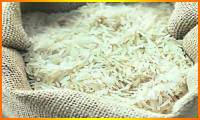
Rice sowing area stood at 398.08 lakh hectares.
The Department of Agriculture & Farmers’ Welfare has released progress of area coverage under kharif crops as on 1st September 2023.
Area: In lakh hactare
| S. No. |
Crop | Area Sown | |
| 2023 | 2022 | ||
| 1 | Rice | 398.08 | 383.79 |
| 2 | Pulses | 119.09 | 130.13 |
| a | Arhar | 42.66 | 45.27 |
| b | Urdbean | 31.68 | 36.65 |
| c | Moongbean | 30.98 | 33.57 |
| d | Kulthi | 0.29 | 0.26 |
| e | Otherpulses | 13.48 | 14.39 |
| 3 | Shri Anna cum Coarse cereals | 181.06 | 179.13 |
| a | Jowar | 14.06 | 15.57 |
| b | Bajra | 70.81 | 70.41 |
| c | Ragi | 8.13 | 7.73 |
| pib.gov.in | |||
04 Sep, 2023
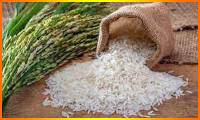
US diplomat visits Punjab Agricultural University to assess rice crop production. In a recent visit to Punjab Agricultural University (PAU) in Ludhiana, Dr Mariano J Beillard (PhD), Senior Regional Agricultural Attaché at the US embassy in New Delhi, engaged in a comprehensive interaction with Dr Satbir Singh Gosal, Vice-Chancellor of PAU and university officials. The meeting was conducted to delve into crucial agricultural matters and strengthen the ties between the United States and India in the realm of agriculture. Accompanying Dr Beillard were Dr Santosh K. Singh, Senior Agricultural Specialist of the US embassy and Arnella Trent, Crop Analyst (Indian Sub-Continent), International Production Assessment Division, USDA/Foreign Agriculture Service, Washington DC. The primary focus of their visit to the states of Haryana and Punjab was to assess the prospects of rice crop production in the upcoming season and gain a deeper understanding of the agricultural economy’s performance in Punjab. These two states are key players in India’s agricultural landscape, particularly in the production of rice, and this visit aimed to foster collaboration and knowledge sharing in this vital sector. At PAU, the discussions centred on the agriculture production outlook for the 2023-2024 season, with a particular emphasis on the upcoming rice crop. Dr Beillard highlighted the significance of India’s agriculture sector in ensuring food security and economic growth. He commended the strides made by India in agriculture and expressed the United States’ commitment for further collaboration and support in this critical domain. He also lauded the role of institutions like the Punjab Agricultural University in driving agricultural research and innovation. Dr Santosh K Singh raised several queries addressing areas such as rice cultivation, pest incidence, new basmati varieties, labour issues, crop diversification, mechanisation, potential for ethanol production and global food grain prices. He also fielded questions on the impact of geopolitical issues like the Ukraine-Russia conflict on foodgrain production and prices, India’s foodgrain trade and Minimum Support Price (MSP). On the other hand, Dr Satbir Singh Gosal shared his insight into the challenges faced by Punjab’s agriculture sector and the university’s initiative in addressing them. Besides updating the diplomat about the nitty-gritty of rice production, he specifically mentioned the rice variety PR 126 which has outshone its peers with a shorter growth period by one month compared to Pusa 44 and 2-3 weeks faster than other varieties. Farmers, in favourable conditions, even achieved an impressive yield of 38 quintals per acre, surpassing the average yield of 30 quintals per acre. He mentioned the PAU’s emphasis on training and advisories for chemical-minimal measures. Furthermore, Dr. Gosal discussed rust-resistant wheat varieties developed by PAU and the release of the heat-tolerant early maturing variety PBW 826, which holds promise for other states as well. Specialty varieties like PAU RS-1, PBW1 Chapati, and PBW1 Zn were also mentioned. Regarding ethanol production, Dr Gosal suggested options such as utilising broken grains or sugarcane juice and deliberated the importance of crop diversification in the context of Minimum Support Prices and marketing. He noted that wheat and rice cultivation in the region is predominantly mechanised, with prototypes developed by PAU. Source: tribuneindia.com |
|||
04 Sep, 2023
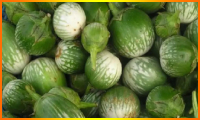
Nayagarh Kanteimundi Brinjal receives GI Tag. The ‘Kanteimundi Brinjal’ of Nayagarh received the Geographical Indication (GI) tag from the Geographical Indication Registry under the Department of Industry Promotion and Internal Trade, Ministry of Commerce and Industry. As per reports, Neelamadhav Krushi Sangathan applied for the tag back in 2021 with the help of Odisha University of Agriculture & Technology (OUAT). 'Nayagarh Kanteimundi Brinjal' is famous for its unique taste and quick cooking quality than other varieties of the vegetable. The plants/crop is resistant to major insects, pests, and diseases. This crop is grown both in the Kharif and Rabi seasons. It is an indigenous variety having unique characteristics other than local varieties grown in the district. Its effect on geographical positioning (climate, rainfall, temperature, soil quality, management practices, etc.) retains its quality including unique taste, size, appearance etc. The whole plant is covered with prickly thorns including the stem, leaf, and calyx of the fruit. After harvest, Nayagarh Kanteimundi Brinjal can be kept for 10-14 days in ambient conditions without deterioration. Kanteimundi Brinjal was originally cultivated / grown in Badabanapur and Ratanpur areas of Khandapada block and Dhanchangda, Laxmiprasad, Kumundi, and Fategarh areas of the Bhapur block. Now it is grown in the whole of Nayagarh district of Odisha. As per the local information collected through the baseline survey, this brinjal's origins can be traced back to over 100 years. It was found that the local people got this spiked brinjal from the hillside during cultivation of the brinjal and they collected seeds from it and started raising the seedlings. After that, they grew such brinjal variety and got better yield. The name of the brinjal, Kanteimundi was given by those local growers as per that locality (Kantilo) and the small prickly thorns on the stem and calyx as well as on the fruit. Due to more demand and acceptability in the market for its unique taste, the area of production is gradually increasing. Source: odishatv.in |
|||
04 Sep, 2023

'Gesture of strong friendship much appreciated': Singapore on India exempting country from rice ban. Singapore on Saturday thanked India for exempting the country from its rice ban, saying that 'the gesture of strong friendship is very much appreciated'. 'Singapore would like to thank GovIndia in particular @MEAIndia and @dgftindia for exempting us from the rice ban. Both countries are indeed close strategic partners. This gesture of strong friendship is very much appreciated,' read a tweet on the Singapore Embassy in India's official account on 'X' formerly Twitter on Saturday. India recently decided to allow the export of rice to Singapore to 'meet the food security requirements' of the southeast nation, the Ministry of External Affairs (MEA) said. 'India and Singapore enjoy a very close strategic partnership, characterized by shared interests, close economic ties and strong people-to-people connect. In view of this special relationship, India has decided to allow the export of rice to meet the food security requirements of Singapore,' MEA official spokesperson, Arindam Bagchi had said on Tuesday in response to media queries on rice export to Singapore. India on August 27 introduced additional safeguards on exports of basmati rice so as to prevent exports of non-basmati white rice, which is presently under the prohibited category. Earlier, the government said it had received credible field reports regarding misclassification and illegal export of non-basmati white rice. 'It has been reported that non-basmati white rice is being exported under the HS codes of parboiled rice and basmati rice,' the government said in a statement. Notably, the export of non-basmati white rice was prohibited from July 20 to check the domestic prices and ensure domestic food security. The government noticed that despite restrictions put on certain varieties, rice exports have been high during the current year. The central government on July 20 amended the rice export norms putting the non-basmati white rice in the 'prohibited' category. The export policy relating to non-basmati white rice (semi-milled or wholly milled rice, whether or not polished or glazed) has been revised from 'free' to 'prohibited' and it has come into force immediately, a Directorate General of Foreign Trade (DGFT) notification said. Source: economictimes.indiatimes.com |
|||
04 Sep, 2023

Joint outcome statement: UK-India round twelve of FTA negotiations. The twelfth round of negotiations for the UK-India Free Trade Agreement (FTA) took place from the 8-31 August, 2023. As with previous rounds, this was conducted in a hybrid fashion - a number of UK officials travelled to Delhi for negotiations and others attended virtually. On 24-25 August, 2023 India hosted the G20 Trade and Investment Ministerial Meeting in Jaipur. The Rt Hon Kemi Badenoch MP, the Secretary of State for Business and Trade visited India for the meeting and met with the Honourable Minister for Commerce and Industry, Government of India, Piyush Goyal. They took stock of the FTA and agreed ways to progress the negotiations. The thirteenth round of negotiations is due to take place in September. Source: pib.gov.in |
|||
01 Sep, 2023
Strong start: Q1 GDP growth at one-year high of 7.8%. India's economy expanded 7.8% in the June quarter from a year earlier, accelerating further from the 6.1% growth recorded in the preceding quarter. A smart recovery in services drove the economy as the numbers released on Thursday provided evidence of an investment revival with gross fixed capital formation rising 8% in the quarter from a year earlier. The data also indicated a pick-up in consumer demand with private final consumption expenditure (PFCE) rising 6% in the first quarter of FY24 compared with a tepid 2.8% rise in the March quarter. 'Rural demand is on a recovery mode and the government's sustained capital expenditure push is crowding in private investments,' chief economic advisor V Anantha Nageswaran said on Friday after the data release. Growth is expected to moderate going ahead with a waning base effect adding to a below-par monsoon, high inflation, elevated interest rates and an adverse global environment likely to weigh down demand. Election spending However, election spending and festive demand may support growth. 'We are going to now be entering the run-up to elections, which leads to a sharp increase in consumption expenditure. That's the silver lining,' said Pronab Sen, former chief statistician of India. He noted that the government is preserving fiscal space for a big boom in spending starting at the end of the third quarter. 'The Centre seems to be reserving its expenditure for the latter part of the year.' Economists expect the strong Q1 start should deliver over 6-6.5% growth in FY24, a moderation from 7.2% in FY23 but a good showing given global headwinds. 'Factors like sustained buoyancy in services momentum and policy thrust to increase trend growth could counter downward pressures,' said Madhavi Arora, lead economist, Emkay Global Financial Services. An ET Poll of 22 economists conducted a fortnight ago had pegged median growth in FY24 at 6.2%, slower than 6.5% projected by the Reserve Bank of India (RBI). 'Our current forecast of 6% GDP growth for this fiscal would make India the fastest-growing G20 country this year,' said DK Joshi, chief economist, Crisil. Private capex revival, economists said, was important to sustain growth in the coming quarters. 'Amid evolving conditions, private capex will have to match up the pace to sustain growth momentum,' said Rajani Sinha, chief economist, CareEdge. Investment, demand Experts said there are signs of a private spending recovery taking place. 'Early signs of a revival of private corporate sector capex are becoming visible. The Industrial Entrepreneur's Memorandum (IEM) and Business Expectation Index (BEI) data is indicating that the Indian economy is at the cusp of a new private corporate capex cycle,' said Ind-Ra economists Sunil K Sinha and Paras Jasrai. Finance minister Nirmala Sitharama told ET in an interview on Wednesday that private corporates had started to invest. 'I think the Indian private sector has come into the game... Investors are coming forward, industry is coming forward,' she had said. Economists noted that the 6% rise in private final consumption expenditure was also a positive. 'Consumption growth is likely to be led by urban demand, with strong real urban wage growth and nascent signs of recovery in rural demand,' said Gaura Sengupta, economist, IDFC First Bank. PFCE revival is key to a sustained recovery. 'The road ahead is not going to be easy so long as PFCE does not recover fully and become broad-based,' Ind-Ra economists said. Services boost Sluggish exports pulled down manufacturing, which grew 4.7% in the quarter, compared with 6.1% in the year ago. On the other hand, financial, real estate and professional services grew in double digits at 12.2% while trade hotels, transport, communication and services related to broadcasting expanded 9.2%. 'The strong growth in real estate was indicated by stamp duty collections and pick-up in financial services was expected on the back of strong credit and deposit growth,' Sengupta said. The construction sector recorded a 7.9% rise in the first quarter compared with 10.4% growth in the March quarter, whereas agricultural growth slowed to 3.5% from 5.5%. 'The impact of El Nino on this year's monsoon could bring agricultural growth under pressure and the spillover effect of this would be felt on food inflation,' Ind-Ra said. Source: economictimes.indiatimes.com |
|||
01 Sep, 2023

India, UK officials to start 13th round of FTA talks from Sep 4. Senior officials of India and the UK will start the 13th round of negotiations for the proposed free trade agreement from September 4, an official said on Thursday. The two sides concluded the 12th round of negotiations on August 31. Commerce and Industry Minister Piyush Goyal has recently stated that the negotiations between India and the UK for the proposed agreement are progressing and both countries are committed to concluding the talks as early as possible. UK Business and Trade Secretary Kemi Badenoch was here recently to review the progress of talks. She also held bilateral meetings with Goyal and Finance Minister Nirmala Sitharaman. Before the 12th round, the sides had concluded talks on 19 of the total 26 chapters in the FTA. Investment is being negotiated as a separate agreement (bilateral investment treaty) between India and the UK. The bilateral trade between countries increased to USD 20.36 billion in 2022-23 from USD 17.5 billion in 2021-22. Source: economictimes.indiatimes.com |
|||