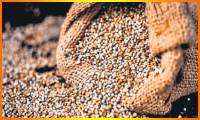
India saw 80 plus new startups in millet sector in past year and a half.
A significant growth of startups in the millet sector has turned the attention of the highest levels of Government to making the millet movement a mass movement in India and globally. Engagement of younger individuals and innovation from large retail organisations have sparked a vibrant startup movement for promoting millets with India witnessing the emergence of more than 80 startups in the millet sector within the past year and a half, responsible for developing well-packaged products.
The nation’s culinary history bears witness to millets being extensively used across all cultures, states, and cuisines in India before being overshadowed by rice and wheat. Millet is also being associated with environmental responsibility, as a low environmental impact grain, especially concerning water consumption. Khader Vali, known as the Millet Man of India points to the sustainable cultivation of millets, which requires minimal water.
A new FICCI PwC Knowledge Report on propelling India’s millet sector towards a sustainable future, outlines the policy implications for the next 10 to 15 years, production aspects, awareness creation, innovation, and market development for millets. The report emphasises the need to create both domestic and international demand for millets given their role in ushering in economic prosperity along and proposes ways to achieve these goals. To mainstream millets and bringing the 'Shree Anna' to every plate, the report proposes a four-pronged strategy centred on production enhancement interventions which entail crop and varietal improvements. It calls for concerted efforts on value-added product development, innovations in production and processing technologies and holistic policy support for millet promotion.
Shashi Kant Singh, Partner at PwC India, prioritises awareness creation as a key aspect of the proposed strategy in the report. 'The report highlights the importance of mainstreaming millets and prioritising the interests of cultivators, consumers, and investors alike,' says Singh. The third area of action is innovations for increasing the area under millet cultivation along with dedicated product development endeavours. This would be helpful in increasing consumption. 'Demand generation through public-private partnership models and global initiatives would be helpful in the long run to sustain the fervour,' adds Singh. Acknowledging the significant work done by the government in promoting millets, Singh also suggests that this can well be a jewel in India’s soft power diplomacy.
There are however formidable challenges as highlighted by the report. In most production areas in India, millets are still cultivated using indigenous traditional knowledge (ITK) by smallholder farmers who already lack resources for the adoption of farm mechanisation for millet cultivation. The core reason for this is not the lack of modern millet production technologies but farmers either lacking the awareness or accessibility to those innovations. Another obstacle that needs to be addressed is the short shelf life of processed millets. While prepared meals quickly go rancid, millet flour can only be stored for very short durations. This raises storage concerns and renders processed products more prone to pest infestation.
Going ahead, the Government is looking to drive continuous efforts to provide guidance and support to small entrepreneurs and startups in the millet area, recognising the need for handholding rather than focusing solely on large export houses. There is also focus on sustaining the momentum after the launch of the campaign to take it to the next level. Looking further, President of TAFE, TR Kesavan advocates for integrating millets into the regular diet given its nutritional value and climatic resilience and income generation for farmers. To ensure millets receive conscious attention from all stakeholders to transform them into an attractive and profitable crop for millet-growing farmers, Kesavan feels the concept of farmer producer organisations (FPOs) must be intensified, functioning as the cornerstone of this transformation. By seamlessly integrating FPOs with forward and backward linkages, empowering millet FPOs with knowledge and best agricultural practices, a robust supply chain can be forged that spans from the farm to the market. This has the potential to revolutionise the agricultural landscape, adds Kesavan.
Source: sundayguardianlive.com
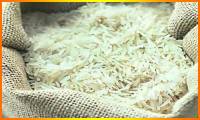
Thai rice price surges on India, Myanmar export bans.
Global rice prices continue to rise, pushing Thai rice prices to 12,000 baht per tonne after Myanmar followed India’s lead by implementing a two-month ban on rice exports.
India banned most rice exports on July 20, raising concerns that other rice-exporting countries might do the same, sparking volatility in the global rice market. Only 'basmati’ rice ' can be exported from India, though its government has opened channels to sell directly to other governments. Several countries have requested export quotas from India, leading to price fluctuations.
India is the largest rice exporter, accounting for around 40 percent of the global rice trade. It has a major impact on global rice prices. Other major exporters, like Thailand, Vietnam, Pakistan, and the United States, have been affected by India’s partial ban.
Chookiat Ophaswongse, honorary president of the Thai Rice Exporters Association, said the current rice-price situation makes it challenging for sellers to provide accurate prices. The recent ban on rice exports by Myanmar adds to the uncertainty.
Traders are closely watching India’s decision on which countries it will sell rice to, as this will impact global rice prices.
Vietnam, the third-largest rice exporter, has said it will not halt rice exports, but uncertainty remains about the future actions of other major rice-exporting nations, Chookiat said.
The goal of exporting 8 million tonnes of rice this year from Thailand remains, but it could fall short if major buyers like the Philippines and Indonesia succeed in purchasing rice from India, Chookiat said.
Source: thejakartapost.com
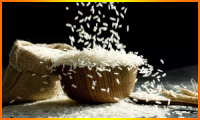
India allows exports of non-basmati white rice trapped at ports.
India has allowed traders to ship out their non-basmati white rice cargoes sitting at ports due to a sudden ban on exports of the category, a government order said late on Tuesday.
On July 20, India surprised buyers by banning exports of widely consumed non-basmati white rice to control rising domestic prices. The move followed a ban on broken rice exports last year.
The export ban trapped thousands of tonnes of non-basmati white rice at ports, leaving traders facing losses.
The Directorate General of Foreign Trade (DGFT), a unit of the trade ministry, in its latest order said it would allow shipments of trapped cargoes provided traders paid the export duty by July 20, when the ban was imposed.
Before the July ban on non-basmati white rice exports, overseas shipments of the grade would attract a 20% tax.
After the DGFT order, around 150,000 tonnes of non-basmati white rice cargoes would be shipped out of various ports, said Prem Garg, president of the Indian Rice Exporters Federation.
'Three ships were standing still at the Kandla port and a lot of containers were lying at different ports, causing a lot of problems for the rice industry,' he said.
India, which accounts for 40% of world rice exports, sells the staple to more than 150 countries, including a few poor and vulnerable countries in Africa and Asia.
New Delhi exported a record 22.2 million tons of rice in 2022.
After banning non-basmati white rice exports, India on Friday imposed a 20% tax on parboiled rice shipments and introduced a floor price for overseas sales of basmati rice, as part of efforts to keep a lid on local prices.
India's rice export curbs have put upward pressure on global rice prices.
'The permission to allow the cargoes stuck at ports will not only help Indian suppliers, it will also help consumers in some of the most needy countries,' Garg said.
Most of the trapped cargoes would go to East African and West African countries, he said.
Source: economictimes.indiatimes.com

Floriculture turns a profitable venture in Wayanad.
Every year, thousands of tourists from the northern districts of the State journey through Wayanad to Karnataka to enjoy the beauty of flower gardens set up on the Kerala-Karnataka border. However, civic bodies, farmers groups, and other organisations have set up their own gardens in the district this year to tap the tourism potential during the Onam holidays.
While the owners of the marigold gardens in Karnataka are charging Rs.50 to Rs.100 as entry fee for a person for a photography session, the project at Sulthan Bathery are charging only Rs.20 per person.
While the owners of the marigold gardens in Karnataka are charging Rs.50 to Rs.100 as entry fee for a person for a photography session, the project at Sulthan Bathery are charging only Rs.20 per person. | Photo Credit: Special Arrangement
An innovative floriculture project of the Sulthan Bathery Municipality aimed at attracting tourists to the town, known for its cleanliness, opened to visitors on Friday.
The project was launched in June in association with the Haritha Karma Sena (HKS) under the civic body. The initiative, launched as part of the Happy Happy Sulthan Bathery project, envisages popularising the 'happy culture' of the civic body across the State.
The HKS members have planted three types of marigold plants on two acres of land near Sulthan Bathery town. They have also planted other flowering plants such as sunflowers and gomphrena, says T.K. Ramesh, chairman, Sulthan Bathery Municipality.
The civic body has spent Rs.3 lakh for the project and the organisers anticipate to recoup the amount in a couple of weeks.
While the owners of the marigold gardens in Karnataka are charging Rs.50 to Rs.100 as entry fee for a person for a photography session, we are charging only Rs.20 per person, he said.
As the project is not a profit-making venture, the income generated from it would be disbursed among the HKS members, who keep the town clean, he added.
We are planning to launch cultural activities at the venue in connection with Onam from Sunday, Mr. Ramesh said.
A group of tribal women at Panappady in Noolpuzha grama panchayat have also set up a garden nearly 100-metres away from the Kozhikode-Kollegal National Highway 766. They have set the garden on half an acre of rented land. As many as 5,000 marigold plants blooming in yellow and orange would be a visual treat to visitors.
They have launched the pilot project with financial assistance from the Tribal Development department under the Haritarashmi project implemented through the Centre for Management Development (CMD).
The project aims at attracting tribal people to farming after imparting its basics.
'We have sold nearly 300 kg of marigold flowers when 30% of harvest has been completed. The price varies from Rs.80 to Rs.150 a kg depending on the market rate,' Anu Alfonsa, project officer, CMD said.
Kottathara grama panchayat has also set up a garden on half an acre of land apart from many a farmer who tried their luck in floriculture during the season.
Source: thehindu.com

India decides to allow export of rice to Singapore in view of special relationship.
India on Tuesday said it has decided to allow export of rice to Singapore in view of the special relationship between the two countries. Last month, India announced a ban on export of all non-basmati white rice that resulted in sharp increase in global rice prices.
External Affairs Ministry spokesperson Arindam Bagchi said formal orders allowing export of rice to Singapore will be issued shortly.
'India and Singapore enjoy a very close strategic partnership, characterised by shared interests, close economic ties and strong people to people connect,' he said.
'In view of this special relationship, India has decided to allow export of rice to meet the food security requirements of Singapore,' Bagchi said.
The MEA spokesperson said this while responding to media queries on export of rice to Singapore.
'Formal orders in this regard will be issued shortly,' he said.
Source: economictimes.indiatimes.com
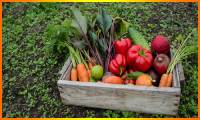
FSSAI's central advisory panel recommends 5-year license for food business operators.
Food regulator FSSAI on Thursday said a central advisory committee has recommended that licenses to food business operators (FBOs) can be issued for up to five years instead of one year. At the 41st meeting of the Central Advisory Committee (CAC) held on Thursday at Tirupati, Andhra Pradesh,
Food Safety and Standards Authority of India (FSSAI) CEO G Kamala Vardhana Rao reviewed the status of sampling of food products across states/Union Territories (UTs).
He encouraged states/UTs to ensure compliance with the prescribed standards.
More than 50 officials, including Commissioners of Food Safety (CFS), representatives from states/UTs, senior officials from FSSAI and nodal ministries and members representing the food industry, consumers, agriculture, laboratories and research bodies actively participated in the meeting, FSSAI said in a statement.
'It was recommended by the CAC that the food business operators (FBOs) need not to go for annual renewal hereafter, the licenses can be issued for up to 5 years instead of one year on the option of the FBO. This was one of the major requests made by the food industry as a part of Ease of Doing Business,' the statement said.
He also apprised the participants about his meeting held with the Executive Officer of Tirumala Tirupati Devasthanams (TTD) at Tirumala, Andhra Pradesh on August 23 on the establishment and strengthening of laboratories, training of food handlers and upgrading the overall canteen infrastructure into modern infrastructure under various Eat Right India initiatives.
This will help in testing key raw materials like ghee, milk, spices, etc. used in food preparation. This initiative will help TTD provide quality and wholesome food to more than 2.5 lakh pilgrims on a daily basis.
FSSAI will train the food handlers in hygiene protocols such as Hazard Analysis of Critical Control Points (HACCP).
Rao also encouraged the states/UTs to expedite the identification and implementation of 100 Healthy and Hygienic Food Streets across the country, with the assistance of the Government of India.
He stressed the importance of fortified rice for combating micronutrient deficiencies among children and pregnant women, for which awareness will be propagated in rural areas of states by FSSAI.
He asked states to make efforts to achieve the target of FoSTaC training of 25 lakh FBOs in the next 3 years.
Source: economictimes.indiatimes.com

No farmer needs to worry on the onion issue: Union Agriculture & Farmers Welfare Minister Narendra Singh Tomar.
Gwalior, Madhya Pradesh: On centre-imposed 40% duty on export of onions, Union Agriculture and Farmers Welfare Minister Narendra Singh Tomar says, 'No farmer needs to worry on the onion issue. Keeping the future conditions in mind, the central government has made a decision, but there is also a guarantee that no farmer gets low prices, special arrangements have been made for it. NAFED is buying the onions. It is providing good rates to the farmers..'
Source: timesofindia.indiatimes.com

India imposes 20% export duty on parboiled rice, MEP of $1200/tonne on basmati soon.
The Centre imposed a 20 per cent export duty on parboiled rice with immediate effect to curb a surge in shipments since July 20 when it banned exports of (non-basmati) white rice.
According to a notification issued by the Ministry of Finance late on Friday night, the duty will be in force till October 15. The Government will also soon notify a minimum export price (MEP) for basmati to ensure that other varieties of rice are not exported in the garb of the fragrant rice.
Though the Finance Ministry said the export duty comes into immediate effect, exporters who have contracted before the notification was issued are allowed to ship their consignments at zero duty until October 15, traders said. The October 15 date is seen as the time by which the Union Government will have a fair idea of the kharif rice production.
'The Food Corporation of India (FCI) will begin rice procurement for the central pool from October 1 and by October 15, it will have a fair idea based on the arrivals. After that, the Centre could even ban parboiled rice exports,' said a trading source, who did not wish to identify.
Trade analyst S Chandrasekaran said following the 20% duty will lead to inflation in rice, particularly in South-East Asia. Indian parboiled rice is currently quoted at $500 a tonne.
'If the 20 per cent duty is taken into account, then Indian parboiled will cost $600. Thailand parboiled is priced at $615 a tonne. If the rupee depreciation is factored, then the gap will be $20 and an arbitrage still exists,' he said. The Indian duty on parboiled rice will further push up rice prices further, particularly Thailand. Global rice prices are currently ruling at a 15-year high.
The Centre’s curbs on rice exports are seen as part of measures to control inflation as announced by Prime Minister Narendra Modi during his Independence Day address. The new measures on export of rice, a key staple for the majority of the population, will ensure higher domestic availability, officials said.
The Committee of Secretaries, headed by the Cabinet Secretary, decided to impose the MEP on basmati rice on August 21, sources said. However, unlike other commodities in which the Director-General of Foreign Trade notifies the MEP, in case of basmati, the agri-export promotion body Apeda will implement it, the sources said. Basmati rice export is allowed only after registration of a contract with Apeda which issues certificates to exporters allowing shipments.
Though overall acreage of paddy in the current kharif season is 4 per cent higher than year-ago, per data released by the Agriculture Ministry on August 25, the condition of crops in Southern States is in 'bad shape', experts said, pointing to deficient rainfall in many parts. Karnataka, for instance, has received 75 per cent below normal rain during August 1-25, officials said.
On the other hand, trade sources said the Centre’s current objective is to delay shipments, sources said.
Source: thehindubusinessline.com

India, UK to take stock of FTA at 'higher level' by end of the month.
India and the United Kingdom (UK) will review their proposed free trade agreement (FTA) at a ‘higher level’ after the 12th round of negotiations concludes by the end of the month, said the department of commerce, in a statement on Sunday.
The statement comes after commerce and industry minister Piyush Goyal’s meeting with his British counterpart Kemi Badenoch in New Delhi on Saturday.
Badenoch was on a three-day visit to India from August 24, attending the G20 Trade Ministers Meeting in Jaipur first. This was followed by a visit to New Delhi for the B20 summit, along with meetings with Goyal and industrialists.
'While expressing satisfaction over the last 12 rounds of negotiations wherein several chapters have been finalised, both exuded confidence that the next round of negotiations will see similar success,' the department said.
'Both the chief negotiators (India and UK) apprised the ministers about the current state of play, issues outstanding for resolution and their continuous joint efforts to iron them out.
While appreciating efforts of both the chief negotiators (CNs), the ministers desired that the good pace of exchanges be continued with better understanding of each other’s aspirations and sensitivities,' it said.
On the sidelines of the G20 Trade and Investment Ministerial last week, both Badenoch and Goyal had said that the proposed FTA is in its final stages. Of the total 26 chapters in the proposed FTA, 19 have closed.
Another statement from the department of commerce said that Goyal also met Helena Budliger, state secretary and director of the State Secretariat for Economic Affairs (SECO) in New Delhi.
'During the meeting, minister Goyal and Budliger engaged in detailed discussions regarding the trade and investment ties between India and the European Free Trade Association (EFTA) countries.
The talks encompassed a comprehensive review of the progress made in the ongoing negotiations for a Trade and Economic Partnership Agreement (TEPA) between India and EFTA,' it said.
It added that the discussions emphasised on addressing key issues and concerns to create an agreement, which will benefit the citizens of both the regions.
Meeting with USTR
On Saturday, Goyal also met United States Trade Representative (USTR) Katherine Tai, who was also in India for the G20 Trade Ministerial.
During the meeting, Tai raised concerns related to India’s import licensing requirements for laptops, PCs and tablets, among others.
'Ambassador Tai and minister Goyal agreed to explore this issue further and find a solution that addresses both the countries’ concerns,' USTR had said in a statement on Saturday.
Source: business-standard.com

Need to boost crop productivity with new technologies: India's G20 Sherpa Amitabh Kant.
India's G20 Sherpa Amitabh Kant on Monday stressed on the need to boost crop productivity through adoption of new cutting-edge technologies and said the farm sector should be made smart and adaptive to climate change. Kant was speaking at the G20 India Agri-tech Summit 2023 held here.
For higher economic growth of India, he said, 'India needs to grow in the agriculture sector. Its productivity must enhance rapidly. That would mean that we will require a lot of new cutting-edge technologies'.
Digitisation of agriculture, the technological transformation and innovation in the farm sector has been the central priority pushed in the Indian presidency in the GCO this year, he added.
'Transforming the agriculture sector into a data-driven, smart and adaptive to climate change is integral to the transformation of the agriculture sector,' Kant said, adding that this would entail focus on aspects like open access agricultural data platforms and recognising them as global public goods.
He also emphasised on the need to co-opt startups and responsible investments from the private and public sectors for enhancing the welfare of farmers, especially small and marginal farmers.
Kant stressed on ensuring that farmers adopt these technologies.
Agriculture working group had four priorities this year -- food security and nutrition; sustainable agriculture with a climate smart approach; inclusive agri value chains and food systems; and digitisation for agricultural transformation, he informed.
All these G20 priorities of India have been set up in the backdrop of addressing the global hunger and malnutrition for achieving SDG of zero hunger by leveraging technological advancement, Kant said.
He noted that technological advancement in agriculture is really the key. This would translate into providing farmers with real-time data and creating crop production forecast model.
G20 members, being the major agricultural producers, consumers and exporters, have come together to take a collective responsibility towards transitioning to a sustainable and resilient agricultural food system.
'Fundamentally, our ambition should be to transform agriculture, the agri-food sector into a very attractive and lucrative modern business enterprise. This needs to be done by keeping the farmers at the core of this digital revolution, by facilitating affordable access to an inclusive digital infrastructure and by exploring digital tools that cater to the needs of the agri sector,' Kant said.
The event saw participation from the agriculture industry, farmer associations and FPO, delegates from seven G20 nations, agri-tech startups, international delegates and investors, the statement said.
Source: economictimes.indiatimes.com