
Department of Agricultural Research and Education organizes G20 Technical Workshop on Climate Resilient Agriculture on 4th 6th September 2023 in Hyderabad.
The Department of Agricultural Research and Education (DARE), Ministry of Agriculture and Farmers Welfare is organizing the G20 Technical Workshop on 'Climate Resilient Agriculture' on 4-6 September 2023 in Hyderabad. The Workshop aims to bring together experts from around the world to discuss and highlight the challenges of Climate Change and would emphasize the cooperation and exchange of information to enhance the skills and competencies of countries in addressing challenges posed by climate change. The eminent speakers
The three-day event began today with the Inaugural Session which was graced by Minister of State for Agriculture and Farmers Welfare, Ms. Shobha Karandlaje. The first day was focused on the 'Climate Resilient Agriculture Research Needs and Innovations' wherein the eminent speakers shared their experiences in their respective countries to achieve resilience in agriculture. They shall also list out scientific and innovative solutions that are required to address these emerging challenges to reduce the uncertainty in the agriculture food systems. The event is attended by dignitaries including foreign delegates from G20 member states, Guest-invited countries, and International Organizations (IOs). Senior Officials from the Ministry of Agriculture and other Ministries also attended the meeting to deliberate in the technical sessions on the various issues of agriculture research predominantly on Climate Change and other techniques and methods for sustainable development of agriculture in the Global context.
Minister of State for Agriculture and Farmers Welfare, Ms. Shobha Karandlaje mentioned that agriculture is the most sensitive sector and is greatly influenced by climate change which is already happening in G 20 Nations. She said that the impacts of climate change are already being experienced by all of us and hope that the recommendations emanated from this workshop will give direction towards attaining climate-resilient agriculture.
Secretary DARE, and DG ICAR, Dr. Himanshu Pathak reiterated that agriculture in India is highly vulnerable to climate change and variability. He said that in recent years, the frequency of climatic extremes has increased resulting in increased risks to agricultural production and food security all over the World, including India and emphasized that the efforts of ICAR are very significant in meeting the challenges of climate change. Additional Secretary & FA, DARE, Ms. Alka Nangia Arora opined that Climatic risk is manifested in terms of the incidence of droughts, floods, and high intra-season variability in rainfall. Hence, risk - climatic and other forms of risk - remains a key challenge to researchers and policymakers.
DDG(NRM), ICAR, Dr. S.K, Chaudhari chairman of Technical Workshop for Climate-Resilient Agriculture, expressed that G20 Nations, mindful of G20’s leadership role, can position themselves as pioneers in developing climate-resilient practices for sustainable agriculture to enhance food security. Location-specific Climate Resilient Technologies (CRTs) are being demonstrated in India for coping with climate variability in vulnerable districts of India to generate awareness and to build the capacity of farmers and other stakeholders. Further ensured that the deliberations of this workshop would provide a road map for the research and development agenda to comprehensively address the climate change impacts on the agriculture sector. Director, ICAR-CRIDA, Dr. V.K. Singh profusely thanked the dignitaries and delegates for attending the Technical Workshop by travelling all the way from different nations.
The Theme of the G20 Indian Presidency is One Earth, One Family, and One Future, which celebrates the spirit of togetherness and harmony amongst us to ensure a bright future for the world. Upscaling Climate Resilient Agriculture Case studies and Experiences, Policy, Finance, and Institutional Needs for Climate Resilient Agriculture will be discussed in the upcoming technical sessions of the three-day event. As a part of the program, on 5th September 2023, the delegates would be taken on an excursion visit to ICAR-Indian Institute of Millets Research (IIMR) Hyderabad to showcase the scientific advances made in the field of research on Millets as part of the International Year of Millets 2023. India is looking forward to strengthening its Scientific Research and Development initiatives in the field of Millet and cooperating with other countries to help them develop these crops in their countries.
Later the delegates would be taken on a short trip to Shilparamam, Hyderabad on 5th September 2023 to witness the live dance performances of Indian folk artists depicting the traditional dance forms of music. The delegates would also explore the traditional products of India and the opportunity to buy them at the Shilparamam Complex, Hyderabad. The delegates on 6th September 2023 would be taken on an excursion visit to ICAR- CRIDA Hayathnagar Research Farm where they would be taken to field farms and given an overview of the crops and their management. The Department in close coordination with the support of district administration has made elaborate arrangements for the safety and security of the delegates. The delegates would leave for their respective countries on 6th 7th September 2023.
Source: pib.gov.in
FSSAI steps up efforts for organic food testing.
In a bid to make organic products comply with the stipulated standards, Food Safety & Standards Authority of India (FSSAI) has directed its notified laboratories 'to take the necessary steps to enhance the infrastructure and scope of the testing for organic products.'
The FSSAI has asked the notified labs to make an application to the Agricultural & Processed Food Products Export Development Authority (APEDA) for authorization, official sources told Bizz Buzz.
The food safety authority has directed the labs to apply to the National Referral Laboratory of APEDA for the proficiency testing programme and competence assessment in order to qualify for pre-export testing of organic products.
The labs have been also instructed to apply for organic products to compulsorily include this specific category within the FSSAI-NABL integrated scope. The NABL or National Accreditation Board for Testing and Calibration Laboratories is an accreditation body. It is one of the constituent boards of the Quality Council of India, an autonomous body under the Department for Promotion of Industry & Internal Trade (DPIIT), Ministry of Commerce and Industry.
The FSSAI had notified Food Safety and Standards (Organic Foods) Regulations in 2017 with the aim to benefit farmers by way of increasing their income. These regulations recognize two systems of certification: the Participatory Guarantee System implemented by the Ministry of Agriculture and the Farmers Welfare & National Programme for Organic Production implemented by the Ministry of Commerce & Industry. The regulations ensure integrity of organic food products and help in controlling unscrupulous practices in the market. All organic food products should be certified. Organic food that is marketed through direct sales to the end customer by a small original producer or a producer organization is exempted from certification. As per the FSSAI, a small original producer or a producer organization is one whose annual turnover is up to Rs12 lakh.
Source: bizzbuzz.news
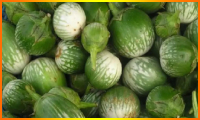
Odisha s Famous Nayagarh Kanteimundi Brinjal Gets GI Tag.
The famous Nayagarh Kanteimundi Brinjal of Odisha received the geographical indication (GI) tag from the Centre.
An advertisement in this regard has been issued by the Geographical Indications Registry on its official website.
The Odisha University of Agriculture & Technology (OUAT) on behalf of Neelamadhab Krushi Sangathan at Banapur under Khandapada Block in Nayagarh district, had applied in 2021 to get GI tag for the Kanteimundi Brinjal.
Originated from Badabanapur and Ratnapur area of Khandapada block and Dhanchangda, Laxmiprasad, Kumundi and Fategarh area of Bhapur block, the vegetable is cultivated entire in the district. It is largely grown in Kantilo area in Nayagarh.
Nayagarh Kanteimundi Brinjal is a tasteful vegetable with lots of prickly thorns on it as well as the whole plant. It is green in colour and round in shape containing more seeds as compared to other genotypes.
The vegetable crop is cultivated in the sandy soil and having unique taste, flavor. It is attributed to the skill of the local
growers who have been cultivating this crop for more than 100 years. The crop is confined to Nayagarh district.
The ‘Nayagarh Kanteimundi Brinjal’ is famous for its unique taste and quick cooking quality than other varieties of the brinjal species. The plant is resistant to major insects, pests and diseases. This crop is grown both in the Kharif and Rabi seasons.
Besides, the Geographical Indications Registry has granted the GI tag to Odisha’s three more products. These were ‘Gajapati Date Palm Jaggery’, ‘Dhenkanal Magji’ and ‘Mayurbhanj Kai Chutney’.
Source: sambadenglish.com

PM to attend ASEAN-India Summit in Jakarta 6-7 Sept.
Ahead of the G-20 Summit in Delhi under India’s Presidency, Prime Minister Narendra Modi will visit Jakarta on 6-7 September to attend the 20th ASEAN-India Summit and the 18th East Asia Summit, being hosted by Indonesia as current Chair of ASEAN.
Modi has been invited to Indonesia by its President, Mr Joko Widodo.
The forthcoming ASEAN-India Summit will be the first Summit since the elevation of India-ASEAN relations to a Comprehensive Strategic Partnership in 2022.
The Summit will review the progress of India-ASEAN relations and chart the future direction of co-operation.
The East Asia Summit would provide an opportunity for leaders of ASEAN countries and its eight dialogue partners, including India, to exchange views on issues of regional and global significance.
Source: thestatesman.com
Millets to take center stage as G20 leaders' spouses visit Delhi's Pusa campus.
A curated tour of the 1,200-acre Pusa-IARI campus has been organised on September 9 for the first ladies and spouses of the G20 leaders.
Millets will be the flavour of the day as not just cuisines, but startups dealing with 'super food', and celebrity chefs, and an exhibition will fete the visiting first ladies and spouses of G20 leaders as they visit the sprawling Pusa campus of IARI here while their better halves discuss geopolitics.
A curated tour of the 1,200-acre Pusa-IARI campus, the cradle of the green revolution in India, has been organised on September 9 for the first ladies and spouses of the leaders attending the G20 Summit to help them learn about India's rich agricultural heritage and taste a millet-based feast prepared by renowned celebrity chefs.
A majority of G20 leaders, including US President Joe Biden, French President Emmanuel Macron, Australian Prime Minister Anthony Albanese, German Chancellor Olaf Scholz, UK Prime Minister Rishi Sunak and Japanese PM Fumio Kishida, have already confirmed their participation at the summit.
According to official sources, the first ladies and spouses of the dignitaries will be guarded by the specially-trained men and women commandos of another paramilitary force -- Sashastra Seema Bal (SSB).
The first ladies and spouses of the participating heads of G20 countries have been extended a special invitation to an agriculture exhibition, said a senior government official associated with preparations.
They will have a unique opportunity to savour a millet-based feast prepared live by renowned celebrity chefs, including Kunal Kapur, Ajay Chopra and Anahita Dhondy.
Joining these chefs will be two culinary experts from the ITC group -- Kusha Mathur and Nikita Mehra.
In the 'Live Cooking Area', the chefs will prepare a 'full course meal' with a focus on millets.
From appetisers, salads, and main courses to desserts, the magic of millets will be showcased in its full glory.
The special guests will also get a first-hand experience of making rangoli using millets with two distinct themes -- 'Harmony of Harvest' and 'Unity in Sustenance'.
'The Ministry of Agriculture is adding a vibrant touch to the G20 Spouses Program at the NASC Complex with two exquisite millets based rangolis,' the official said.
These artistic creations will not only showcase India's expertise in integrated farming systems but will also highlight its significant role in bolstering global food and nutritional security.
Using indigenous agricultural crafts, ancient grains, and creative flair, these installations will encapsulate India's agricultural heritage and commitment to sustenance.
The first ladies and spouses will also get a chance to interact with farmers and agri-startups to learn about India's rich agriculture heritage, practices, and success stories.
The government has also planned a dedicated agriculture-themed excursion that will seek to acquaint the spouses with the strides taken across the vast agriculture space in India.
'An integral component of the event will be an exhibition of 15 startups that through unique and innovative solutions are integrating technology to address ground-level challenges and thereby digitising agricultural practices,' the official added.
The exhibition will cover the themes of 'Climate Smart Agriculture', 'Innovating the Agriculture Value Chain', 'Revolutionizing Agri-logistics and Supply Chains', 'Quality Assurance for Sustainable Consumption' and 'Millets: Sustaining Health, Empowering Agriculture'.
The guests from G20 members are also scheduled to interact with 22 enterprising women farmers from 11 millet-producing states who are orchestrating a millet renaissance in their respective milieu.
It may be mentioned that India's resolution to declare 2023 as the International Year of Millets (IYM) was supported by 72 members of the United Nations General Assembly, providing the country with a unique opportunity to promote millets on the global stage.
As a part of the exhibition an 'Agriculture Street' will also be on display, showcasing the agriculture value chain from Seeding to Feeding harmonising ancient agricultural practices with modern technological advancements.
The official further said the event will offer the spouses an immersive experience highlighting the remarkable diversity of Indian agriculture.
It will also provide a first-hand glimpse into the transformative role of technology and innovation in shaping the future landscape of the agricultural sector.
The agriculture value chain-themed stalls will display the first-hand journey of millets from the inception of seeds to the culmination of nourishing meals.
'The special guests will get to know the journey of millets from farm to fork.
The displays at the exhibition will offer a rare opportunity for distinguished guests to witness the integration of every step, all working in coordination to create meaningful value for end users,' the official added.
The visitors will also get a chance to interact with several Farmer Producer Organisations (FPOs), which have assumed a critical function within the supply chain, ensuring the accessibility of essential inputs for farmers.
Canadian Prime Minister Justin Trudeau, Indonesian President Joko Widodo, Saudi Arabia's Crown Prince Mohammed bin Salman and Brazilian President Luiz Inacio Lula da Silva are also among the G20 leaders who have confirmed their participation at the summit.
Source: hindustantimes.com

India s port connectivity gets booster shot, Nhava Sheva in Mumbai to now connect with Vietnam and Saudi Arabia.
India’s maritime connectivity will get a big boost with Thai shipping line –Regional Container Lines (RCL)– deciding to upgrade its service, connecting major hubs in Southeast Asia, India and the Gulf countries. Saudi Arabia’ King Abdulaziz Port will now be part of the route for the shipping line, which will start from Cai Mep Port in Vietnam. It will then touch upon Laem Chabang in Thailand, Port Klang in Malaysia, Nhava Sheva in Mumbai, Jebel Ali just off Dubai, and Sohar in Oman besides the Saudi port. Trade and economic activities in the entire stretch are expected to surge amid changing power dynamics the world over.
The service will extend from the current 35 days to 42 days.
Though the RCL continues to deploy one vessel in this cargo service, an analyst said that at a later stage, more vessels could use this route.
'For India, this particular route will be hugely beneficial as New Delhi looks to integrate more with the Southeast Asian giants as well as the Gulf. This particular shipping line connects India with both the worlds and will enhance trade activities in the post Covid era,' the analyst told.
Later this year, the Mediterranean Shipping Company (MSC) is also slated to start a liner service from Saudi Arabia’s Jeddah Islamic Port, connecting Mundra and Nhava Sheva in India. This is expected to lead to a surge in economic activities between the Gulf nations and India.
After India and the UAE signed the Comprehensive Economic Partnership Agreement, New Delhi is now keen to ink the proposed free trade agreement at the earliest with the Gulf Cooperation Council (GCC) countries. Saudi Arabia and UAE will also join the BRICS bloc next year. India is already strengthening trade with these countries in its own rupee.
Meanwhile India and ASEAN have an FTA but the two are looking to review the existing treaty in a bid to make it more fruitful and effective for both.
India shares maritime borders with Thailand, Malaysia, Myanmar, Bangladesh, Sri Lanka and Indonesia among other nations. Therefore for New Delhi it is key to boost maritime transport facilities. As India now looks to increase its cargo handling capacity at the ports by 300 per cent by 2047, connectivity with key hubs will benefit.
Source: indiashippingnews.com
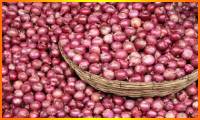
Nafed, NCCF sell 900 tonnes of onion worth Rs.1.9 crore via e-NAM in 2 days.
The National Agricultural Cooperative Marketing Federation of India (Nafed) and National Cooperative Consumers Federation (NCCF) have sold over 900 tonnes of onion during August 30-31 through online platform e-NAM, officials say.
The 900 tonnes sale includes 152 tonnes traded through inter-state transactions. The sale of onions through e-NAM platform was the government’s swift response to the traders’ protest in certain Maharashtra mandis, where they had halted auctions to oppose to the 40 per cent export duty imposed on onions. In response, the government directed both Nafed and NCCF to explore alternative avenues for releasing the surplus onion stock.
Sale objective
'The objective is to make the alternate route open for disposal as any disruption in supplies at any point of time could have a negative impact on our price control efforts,' said a government official involved in disposal of onion from buffer stock.
Nafed, which had initiated the disposal through e-NAM, has been able to sell 5,08.11 tonnes within a State after taking the physical stock from Lasalgaon, Maharashtra, while National Consumer Cooperative Federation (NCCF) has used both intra mandi within the State and inter-State transactions.
Both the agencies are hopeful of increasing sales through e-NAM if more traders are brought on the platform during auction, convincing them of the quality and logistics issues, sources said. The government has already facilitated on the e-NAM portal the logistics value chain in agri trade so that the buyers have the option to make arrangement for physical transport of the commodities, an official said.
After the government decided to offload onion in the market from the 3-lakh tonne buffer stock already created, before it was expanded to include another 2 lakh tonnes, NCCF has sold about 21,000 tonnes and Nafed about 15,000 tonnes. The Centre on August 11 announced that it would release onion in the open market from the buffer stock by targeting key markets in States or regions where retail prices are ruling above the all-India average rate.
Nafed has so far sent over 3,000 tonnes of onion to various mandis in Haryana, Punjab, and Himachal Pradesh and has sought the Consumer Ministry’s approval to start selling in mandis in Uttar Pradesh, official sources said. In Uttar Pradesh, major towns such as Lucknow, Varanasi, Prayagraj, and Kanpur are likely to be covered initially and later on other places may also be included depending on the response, sources said.
Quality assurance
NCCF sources said of the 152.5 tonnes sold through e-NAM as inter-State trade, 61 tonnes have been sold in Punjab and remaining quantity in Dhanbad as buyers have been assured of the quality as they have booked the trade online, while the onions are located at Lasalgaon.
The average realisation by NCCF through e-NAM in inter-state transactions was higher at about Rs.2,200 a quintal, whereas through intra-State auction it was about Rs.1,975. On the other hand, Nafed’s average realisation (all intra-state auctions) was about Rs.2,155, sources said.intra-state
'It all depends on prevailing market rate at a particular mandi on the date of auction where the buyer is located. Since, these agencies are conduction auctions at those select places where arrivals are lower or prices are higher, the selling rates also vary accordingly,' the official said.
Source: thehindubusinessline.com
Govt to tap districts for enhancing exports: DGFT.
Director General of Foreign Trade (DGFT) Santosh Sarangi on Friday said that the government will go to the districts to enhance exports. Seventy districts in the country account for 80 per cent of the country's exports total exports, he told reporters at the Indian Chamber of Commerce here.
In West Bengal, two districts - Darjeeling and Howrah have been identified for the purpose so far. Darjeeling for tea and Howrah for jewellery and engineering goods. Export plans for them have also been adopted, Sarangi added.
'Districts have a huge potential for increasing exports. Only 70 districts account for 80 per cent of the total exports of the country,' he said.
DGFT, which is under the commerce ministry, formulates the country's trade policy and also implements it.
Sarangi said India has a huge potential for export of electronic items, white goods and processed foods and with the kind of growth rates which the country is clocking for the last 15 years, it can aspire to become a middle-income economy 'very soon'.
India's exports to GDP ratio is at 22 per cent now, which is lower than countries like Germany and Taiwan.
The series of FTAs which India has signed or is in the process of signing will give greater access to export markets for Indian goods, he added.
Source: economictimes.indiatimes.com
Global rice supplies tighten after India's July export ban.
Rice prices in key exporting countries including Thailand and Vietnam have climbed around 20% since India, the world's biggest shipper of the grain, banned shipments of a key variety in July, tightening global supplies.
Traders expect similar supply curbs by other exporters needing to ensure domestic food security, which has left importers scrambling to secure shipments.
Last year, India banned exports of broken rice and imposed duty on shipments of various grades, ending the price stability that had lasted for more than a decade.
Following are key events since late July that led to tighter supplies.
* July 20 - India halts exports of its largest rice category, a move that would roughly halve shipments by the world's biggest exporter, triggering fears of further inflation in global food prices.
* July 21 - Vietnam, the world's third largest rice exporter, calls on the country's food association to ensure domestic rice supplies are sufficent a day after India announced its ban.
* July 21 - India's ban on non-basmati white rice exports results in the cancellation of contracts to supply around 2 million metric tons to the world market.
* July 27 - Prices of rice exported from Vietnam and Thailand soar to their highest in more than a decade as India's export curbs spark worries about supply.
* July 28 - India restricts exports of deoiled rice bran, used in the cattle feed industry, until Nov. 30.
* July 28 - The United Arab Emirates bans rice exports and re-exports for four months, including rice of Indian origin.
* July 29 - Philippine President Ferdinand Marcos Jr. says the country must boost its rice stocks and that he may seek a supply deal with India, worried about the potential impact of El Nino dry weather on the local harvest and about other suppliers.
The Philippines is the world's second-largest rice importer.
* Aug 1 - Rice exporters in Thailand and Vietnam, the second and third biggest exporters, start re-negotiating prices on sales contracts for around half a million metric tons for August shipment.
* Aug 4 - The United Nations food agency's rice price index rises 2.8% in July from a month earlier to its highest level in nearly 12 years.
* Aug 7 - The Philippines says it may extend reduced import tariffs on rice and other commodities beyond 2023 to ease pressure on inflation.
* Aug 11 - Retail prices for imported and locally produced rice in the Philippines have risen by 4% to 14% in around two weeks, government data shows, as global and domestic farmgate prices soared, adding pressure on food inflation.
* Aug 16 - The Philippines' Department of Agriculture recommends additional rice importation of about 500,000 metric tons to cover potential crop losses from the El Nino dry weather conditions.
* Aug 16 - Vietnamese exporters renegotiate higher prices for around half a million metric tons of rice.
* Aug 18 - Data shows that Indian farmers have planted 36.1 million hectares (89.2 million acres) with rice, up 4.3% on the same period last year, as ample monsoon rains in July and higher prices boost acreage.
* Aug 21 - Indonesia's state food procurement firm Bulog says it is looking to import rice from Cambodia and Myanmar to top up government stocks, anticipating output disruptions due to the El Nino weather pattern.
* Aug 25 - Myanmar plans to temporarily restrict rice exports to control rising domestic prices.
* Aug 25 - India imposes a 20% duty on exports of parboiled rice, which accounts for 30% of the country's rice exports.
* Aug 27 - India imposes a $1,200 per ton minimum export price on basmati rice shipments.
* Aug 29 - India's export duty on parboiled rice prompts buyers and sellers to postpone shipments of around 500,000 metric tons to after mid-October.
* Aug 30 - India allows traders to ship out non-basmati white rice cargoes that were stuck at ports when India imposed its export ban.
Source: reuters.com
April-Aug coffee exports up 5.85% at $520 million on higher prices.
India’s coffee exports have registered a 5.85 per cent growth during April-August of the current financial year at $520.45 million over $491.65 million in the same period a year ago on higher prices.
However, the volumes were down 5.71 per cent at 1.65 lakh tonnes against 1.75 lakh tonnes a year ago. In rupee terms, exports were up 11.62 per cent at Rs.4,282 crore over Rs.3,836 crore a year ago. The per unit value realised by the Indian exporters was higher at Rs.2.58 lakh per tonne during the April-August period compared with Rs.2.18 lakh per tonne in the year-ago period, as per Coffee Board’s latest data.
In the first eight months of the calendar year 2023, coffee exports in volume were down at at 2.74 lakh tonnes compared to last year’s 2.86 lakh tonnes. In value terms, the shipments were up 4.25 per cent at $831.43 million compared with $797.50 million a year ago. In rupee value, shipments have witnessed a higher growth at Rs.6,843 crore (Rs.6,136 crore in the year-ago period).
India exports two-thirds of the coffee produced in the country. During the January-August period, the shipments of India-grown coffees were down marginally at 2.06 lakh tonnes (2.23 lakh tonnes), mainly on account of a dip in robusta exports. However, imports for re-exports were up at 68,257 tonnes (63,286 tonnes). India imports coffees mainly the robusta variety from countries such as Vietnam to re-export them as value-added coffees.
Shipments of the arabica parchment variety during January-August were up at 30,458 tonnes (28,079 tonnes), while the arabica cherry were almost flat at 6,323 tonnes (6381 tonnes). Robusta parchment shipments were down at 22,492 tonnes (24,217 tonnes), while the robusta cherry exports were down 1.19 lakh tonnes (1.41 lakh tonnes). Italy continues to be the largest buyer of Indian coffees at 41,180 tonnes, followed by Germany at 27,380 tonnes and Russian Federation at 20,553 tonnes.
Source: thehindubusinessline.com