
G20 technical workshop on climate resilient agriculture kicks off in Hyderabad.
The G20 Technical Workshop on 'Climate Resilient Agriculture' commenced on September 4th in Hyderabad, India, organized by the Department of Agricultural Research and Education (DARE), Ministry of Agriculture and Farmers Welfare.
This three-day workshop aims to facilitate discussions on climate change challenges and foster international cooperation to enhance countries' abilities to address these climate-related agricultural issues.
The inaugural session of the workshop saw the participation of Shobha Karandlaje, Minister of State for Agriculture and Farmers Welfare.
Addressing the workshop, S.K. Chaudhari, Chairman of the Technical Workshop for Climate-Resilient Agriculture, highlighted the potential for G20 nations to lead in developing climate-resilient practices for sustainable agriculture. Location-specific Climate Resilient Technologies (CRTs) are already being demonstrated in India to cope with climate variability, read the release.
The workshop's agenda includes discussions on upscaling climate-resilient agriculture case studies and experiences, policy considerations, financial aspects, and institutional requirements.
Additionally, on September 5th, the delegates will visit the ICAR-Indian Institute of Millets Research (IIMR) Hyderabad to explore advances in millet research as part of the International Year of Millets 2023.
The following day, the delegates will visit Shilparamam, Hyderabad, to experience live performances of Indian folk artists showcasing traditional dance forms and cultural products.
Finally, on September 6th, the delegates will explore the ICAR-CRIDA Hayathnagar Research Farm, gaining insights into crop management and agriculture practices.
This workshop serves as a platform for international collaboration, knowledge exchange, and the development of strategies to address climate change's impact on agriculture, read the release.
India seeks to enhance its research and development initiatives in millet farming and collaborate with other nations in advancing these crops.
The safety and security of all delegates have been diligently arranged for during their stay in Hyderabad, ensuring a successful and productive event.
Source: zeebiz.com

UAE-bound first consignment of banana plant products flagged off from Varanasi.
The Agricultural & Processed Food Products Export Development Authority (APEDA) has facilitated the first-ever consignment of banana plant products from Varanasi to the UAE by air, boosting agricultural exports. APEDA plans to integrate more farmer producer organizations into the export supply chain. The Purvanchal region has seen a surge in demand for its perishable products, leading to a 248% increase in agricultural product exports in Q1 2022-23 compared to the same period last year. The region has become a preferred export destination for horticultural products, catering to Gulf countries, European nations, Nepal, and Bangladesh.
In a boost to agricultural products exports, the Agricultural & Processed Food Products Export Development Authority (APEDA), ministry of commerce & trade, has facilitated the maiden consignment of banana plant products – including fruit, flower, and leaf – from Varanasi to the United Arab Emirates (UAE) by air.
During the virtual flag-off ceremony, APEDA chairman Abhishek Dev emphasised the immense potential of agricultural products exports from Uttar Pradesh.
Reaffirming APEDA’s commitment to fostering international market linkages, Dev said, 'We have planned to integrate more farmer producer organizations (FPOs) into the agricultural export supply chain.'
The banana products consignment was sourced from the Zamania Fed Farmer Producer Company, Gazipur, UP and transported via air route from Lal Bahadur Shastri International (LBSI) Airport to the UAE on Monday, said Dr CB Singh, deputy general manager APEDA, Uttar Pradesh, Uttarakhand, Bihar.
Singh said that these developments are the result of APEDA’s sustained efforts, driving farmers and FPOs in the Purvanchal region to engage in export-oriented production. The region’s perishable products have seen a surge in demand in the international market, contributing to a 248% increase in agricultural product exports in the first quarter of the current fiscal compared to the same period in the previous year (2022-23).
In the financial years 2021-22 and 2022-23, 157 metric tonnes and 561 metric tonnes of vegetables and fruits were exported from Uttar Pradesh, said Dr Singh.
APEDA’s establishment of an office in Varanasi in 2020, with support from the Uttar Pradesh government, marked a significant milestone.
Despite the challenges posed by the pandemic, the region has emerged as a preferred export destination for horticultural products, including green chillies, okra, pointed gourd, green peas, mangoes, litchi, bananas, Ivy Gourd (kundru), guava, drumstick, jackfruit, brinjal, amla, lemon, and more, catering to Gulf countries, European nations, Nepal, and Bangladesh, said Dr Singh.
Currently, the Varanasi region boasts numerous exporters, and the facilitation of agricultural product exports via air routes has been made possible through the establishment of robust quarantine and custom clearance facilitation centers at the LBSI Airport.
Source: hindustantimes.com

Harnessing potential of districts as export hubs to boost country s overall exports.
Director General of Foreign Trade, Santosh Sarangi on September, 01, 2023 reportedly announced that the government intends to tap the districts for promoting exports of goods/services produced/manufactured in these to enhance overall exports of the country. Stating that districts have a huge potential for increasing the country’s exports, he said, at present only 70 districts out of the 750 districts in the country account for 80 % of total exports of the country.
Sarangi said, India has a huge potential for export of electronic items, white goods, and processed foods, and with the kind of growth rates the country has been experiencing for the last 15 years, she can aspire to become a Middle-Income Economy in the near future. In addition, the series of Free Trade Agreements India has signed, or is in the process of signing, will give greater access to Indian goods to the export markets of these countries, helping raise India’s exports to GDP ratio more than the present 22 %.
Genesis of the idea to set up district export hubs
Prime Minister Narendra Modi had given a call from the ramparts of the Red Fort in his Independence Day Speech in 2019 to convert each district into an export hub making Districts active stakeholders in the promotion of exports of goods/services produced/manufactured in these.
Following this, the Department of Commerce had launched the DEH initiative in 2019, under which the Government of India is collaborating with the State governments to harness the potential of districts to transform them into Export Hubs.
Approach to involve districts
Each district in India can be characterised as an exclusive source of distinct and distinguished products, that remains untapped. If the potential of each District is tapped fully, it can fuel economic growth, generate employment, boost rural entrepreneurship & enhance exports, helping the country to achieve the goal of Self-reliance, it is opined.
Earlier, Export Promotion as a subject was dealt by the Central Government only, without any active, credible mechanism, involving the State or the District level Stakeholders into the decision-making process to promote goods and services produced at the grassroots level.
To boost local production, and the need to make Districts active Stakeholders in driving export growth of local products/services therefore necessitated Decentralising the Export Promotion Activity to help fill the existing gaps and bottlenecks in exporting identified products/services from these.
Further, under the new Foreign Trade Policy which came into effect from April 01, 2023, government plans to aid homegrown businesses by taking forward the Districts as Export Hubs uplifting the export value of districts across the country.
The objectives the scheme wants to achieve:
Provide export opportunities to MSMEs, farmers and small industries in the overseas markets, with a focus on District led Export Growth for Self- reliance;
Attract investment in the district to boost manufacturing and exports and provide ecosystem for Innovation/ use of Technology at District level to make the exporters competitive;
Help reduce transaction cost for the exporters at various stages of export cycle and generate employment in the district;
Provide platforms for global reach to products and services from the district through E-commerce and Digital marketing.
Institutional mechanism in districts
District Export Promotion Committees are constituted in each District & all key officers related to agriculture, horticulture, livestock, fisheries, handicrafts, handlooms and industry in the district, and the Lead Bank Manager along with key Export Promotion Councils, Quality and Technical Standards Bodies, Government of India departments like MSME, Heavy Industry, Revenue and Textiles become a part of the DEPC;
The initial meetings in the identified Districts are conducted by the DGFT Regional Authorities in collaboration with the District and State Authorities;
DEPC will focus on the specific actions required to support local exporters / manufacturers in producing exportable products in adequate quantity and with the requisite quality, and reaching potential buyers outside India.
The primary function of the DEPC is to prepare and act on District Specific Export Action Plans in collaboration with all the relevant stakeholders from the Centre, State, and the Districts.
Decentralising export promotion
The Department of Commerce through Directorate General of Foreign Trade is working with the State / UT Governments in a phased manner to achieve the objective of increasing production, exports & generating economic activity to achieve the goal of Self-reliant India.
In this process:
In the initial phase, products/services with export potential in each District are identified and Institutional Mechanism in the form of State Export Promotion Committees at the state level and District Export Promotion Committees at the district level are created to provide support for export promotion to address the bottlenecks for export growth in the districts;
Specific action plans to increase exports are finalised by the DEPCs in each District through District Specific Export Action Plans while State Export strategy/policy and State Agricultural Plans are finalised by the States/UTs at their levels;
The District wise export data is now being generated by the ICEGATE (Indian Customs Electronic Gateway)/DGCIS (Directorate General of Commercial Intelligence & Statistics) to track the export performance from each District.
Progress made up to January, 2023
State Export Promotion Committees have been constituted in all the 36 States/UTs
District Export Promotion Committees have been constituted in all the 36 States/UTs.
Products/Services with export potential have been identified in all 733 Districts across the country, including Agricultural & Toy clusters and GI products in these Districts.
Epilogue
Coordinated and synergised effort towards trade and export promotion by the Central Government, State Governments and the District administration would enhance manufacturing activities, promote goods and services exports, support MSMEs and local artisans/craftsmen, broaden coverage of e-commerce linkages with Districts, promote GI products, improve logistics, agricultural sectors and increase employment opportunities in the districts. This is bound to lead to accrual of wide-ranging economic benefits, including investment, manufacturing & the overall export growth of the country.
Source: timesofindia.indiatimes.com
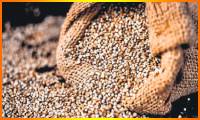
Nepal ready to work with India to push millet cultivation, consumption.
Nepal is ready to collaborate with India to promote the cultivation and consumption of millets, which have high nutritional value, as a staple food, agriculture and livestock minister Beduram Bhushal has said.
Speaking at an event here on Tuesday, Bhushal congratulated India for taking the lead in the millet campaign, aptly renaming the grains as 'Shree Anna' or auspicious grains.
Bhushal emphasised the potential health benefits of promoting millet as a staple food, highlighting its high nutritional value.
Noting that the United Nations has launched a campaign to promote the consumption of millets at India's initiative, the minister underscored Nepal's readiness to join hands with New Delhi in the campaign.
In 2021, India proposed to the UN to declare 2023 as the International Year of Millets (IYOM). The proposal received support from 72 countries and the United Nations General Assembly (UNGA) declared 2023 as the International Year of Millets.
The Embassy of India in Kathmandu, in collaboration with the Ministry of Agriculture and Livestock of Nepal, organised the programme to commemorate the International Year of Millet 2023.
During the event, Indian Ambassador to Nepal Naveen Shrivastava emphasised the importance of India and Nepal's cooperation in the field of agriculture for millet production and exploring its market potential.
'Millets can provide solutions to the challenges of climate change and global food security,' he said.
Food experts who spoke at the event highlighted the nutritional value of millet and stressed the need to promote its mass production, recognising its immense potential in export markets.
Millets, known as one of the oldest crops cultivated by mankind, are resilient, capable of thriving in adverse weather conditions, and require minimal irrigation facilities.
Various types of millets are available in the market, including kodo, foxtail, barnyard, browntop, little millet, bajra, and porso -- all known for their rich nutritional content.
Source: deccanherald.com
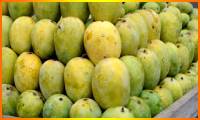
Malda: Growers of 3 varieties of mangoes get GI certificates.
There is reason enough to cheer for Malda. Growers of the three varieties of mangoes that had been awarded the Geographical Indication (GI) tag in 2008 from the Malda region, were handed over the GI certificates on Tuesday.
In the presence of Ujjwal Biswas, state minister of Science, Technology and Biotechnology department, the district administration handed over the certificates to growers of Khirsapati (Himsagar), Fazli and Laxman Bhog varieties of mangoes.
From now on, buyers and sellers will not have to verify the quality of these three varieties of Malda mangoes from certified growers. The GI label and a logo for these mangoes will be now designed.
The GI tag will emerge as a big boost, especially in the field of exports. A total of 235 growers of Malda have been identified to be handed over the certificates. Mangoes grown outside the GI region cannot bear the names — Khirsapati (Himsagar) Fazli and Laxman Bhog.
A programme was held at Malda Town Hall on Tuesday after which the farmers were selected and the programme was arranged to hand over GI recognition certificates to them. Biswas said: 'The Ashwina variety of Malda is also under process for GI tag. Further, the amsatwa (dried mango pulp) can also be considered for the same. More farmers will get such GI tag certificates in future.'
Loknath Kumar, a mango grower of Araidanga area in Ratua II block who has been associated with mango cultivation for 25 to 30 years, said: 'Even if mangoes are grown organically, their quality is checked when they go to other states or abroad. The GI tag has given confidence to the farmers and traders.'
Minister of state for Irrigation, Sabina Yasmin, said: 'In future, I hope that other types of mango and litchi will also get GI recognition.'
Nitin Singhania, District Magistrate Malda, said: 'With the GI tag, farmers will show more interest in growing these species of mangoes. In other parts of the country and the state, these mangoes will have added values as they have GI certification.'
Source: millenniumpost.in

PM Narendra Modi to visit Indonesia today for Asean-India Summit.
Prime Minister Narendra Modi will travel to Indonesia to attend the 20th Asean-India Summit and the 18th East Asia Summit (EAS) on Wednesday.
PM Modi will leave for Indonesia on Wednesday (September 6) evening and will return to New Delhi late in the evening on the following day.
The Prime Minister will be in Jakarta at the invitation of the President of Indonesia, Joko Widodo. Both the Asean-India Summit and the 18th East Asia Summit (EAS) will take place on September 7 (Thursday).
Indonesia, the current chair of Asean, made adjustments to the schedule for both summits to facilitate Modi's early return.
PM Modi's visit to Indonesia comes ahead of the G20 Summit to be held in New Delhi on September 9-10 under India's Presidency this year.
Indonesia is part of the G20 'troika' as it had the presidency of the grouping last year.
The forthcoming Asean-India Summit will be the first Summit since the elevation of ties between India and the Association of South East Asian Nations bloc of countries to a Comprehensive Strategic Partnership in 2022.
The foreign ministry said that the the Summit will review the progress of India-Asean relations and chart the future direction of cooperation.
This year the Asean Summit will be chaired by Indonesia under the theme "Asean Matters: Epicentrum of Growth." This theme indicates that Indonesia expects the Asean to be relevant and significant as the centre of economic growth
According to a statement, the East Asia Summit would provide an opportunity for leaders of Asean countries and its eight dialogue partners, including India, to exchange views on issues of regional and global significance.
In August, Asean-India Economic Ministers met in Indonesia and the main agenda of this year's meeting was the timely review of the Asean-India Trade in Goods Agreement (AITIGA) which was signed in 2009.
A joint committee agreed to a regular, quarterly schedule of negotiations, which would conclude the review of the Asean-India FTA in 2025.
In 2018, Prime Minister Narendra Modi visited Jakarta at the invitation of Indonesian President Widodo. During this visit, both leaders agreed to strengthen cooperation in all areas by establishing a New Comprehensive Strategic Partnership to take the bilateral relationship between Indonesia and India into a new era.
Source: timesofindia.indiatimes.com

India seeks to increase alcohol exports to G20, addresses non-tariff barriers.
Removal of non-tariff barriers in G20 nations such as minimum maturation condition for whisky will help in increasing exports of alcoholic beverages from India, apex body for liquor firms Confederation of Indian Alcoholic Beverage Companies (CIABC) said on Tuesday.
CIABC Director-General Vinod Giri said that the G20 countries not only account for 80 per cent of global alcoholic beverages imports, they also allow higher product prices and better operating margins.
However, India has a miniscule share of that pie, accounting for just 0.1 per cent of their imports.
'It is therefore a massive opportunity not only from the volume point of view but also from the value and profits. G20 nations have great interest in it. While allowing them better access to our markets, we must ensure a return access by demanding the removal of non-tariff barriers such as minimum maturation conditions for whisky that these countries have put up to protect their own industry,' Giri said.
He added that many Indian alcoholic beverages products are comparable with the best in the world quality-wise, but attracting customers is not an easy task in highly competitive markets of the G20 countries.
'The G20 presidency with India has helped on that front by moving India towards the centre of this grouping. It has increased engagement with India and we hope it spills over to an interest in Indian products and a favourable disposition towards them,' he said.
Giri also said that so far exports of alcoholic beverages have been driven by the industry with little intervention or support from the government, but the push by India's trading partners like the UK and Australia for liquor and wine has made the government take notice of the industry.
Seeing the opportunity in India, countries like the UK are seeking significant duty cuts on whiskey.
'We note a welcome interest in the government on promoting export of Indian alcoholic beverages products now. India is amongst the largest liquor markets in the world,' he said.
Besides removing barriers, he suggested that Indian missions abroad can help in promoting domestic products by serving those in their official functions.
'This is a great endorsement and this is what every other country does. Our trade fairs and exhibitions should include Indian products. We must showcase our indigenous liquor like Feny, Mahua etc. to the world as a specialty,' Giri said.
Alcoholic beverage exports from India to G20 countries are just 12 per cent of India's total alcohol exports.
G20 countries import USD 56.8 billion of alcoholic beverages, out of which India's share is just USD 36.7 million.
G20 has 43 members and not 20 countries. These include 19 countries (Argentina, Australia, Brazil, Canada, China, France, Germany, India, Indonesia, Italy, Japan, Korea, Mexico, Russia, Saudi Arabia, South Africa, Turkiye, the UK and the US) and the European Union (27-member group). Three EU countries -- France, Germany, and Italy -- are counted among 19 countries.
Share of G20 nations in India's merchandise export was 64 per cent and import was 52.4 per cent in 2022.
India's leading export destinations among G20 nations in 2022 were the US (USD 91 billion), the EU (USD 87 billion), China (USD 17.5 billion), the UK (USD 14.4 billion), Turkiye (USD 10.7 billion) and Saudi Arabia (USD 10 billion).
The country's leading import suppliers last year included China (USD 118.5 billion), the EU (USD 59.1 billion), Saudi Arabia (USD 43.3 billion), the US (USD 38.4 billion), Russia (USD 34 billion), Australia (USD 19.2 billion), Korea (USD 18.9 billion), and Japan (USD 13.9 billion).
Source: telegraphindia.com
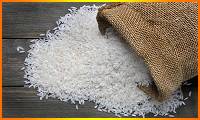
Rice market shows strain after India s 6-week campaign of curbs.
In about six weeks, India has rattled the rice market.
The world’s top shipper has placed restrictions on all of its exports, panicking governments from Asia to West Africa. Other big growers have tried to reassure consumers that rice supply is ample, but it’s done little to calm the market.
Rice prices in Asia jumped back near the highest level in almost 15 years on Wednesday after India slapped more curbs on parboiled and basmati over the previous weekend.
They were the last remaining varieties free from export restrictions, bringing to a head a recent campaign of tightening that started with a July 20 ban on the shipment of some grains.
'Spikes in rice prices always hurt poor consumers the most,' said Peter Timmer, Professor Emeritus at Harvard University, who’s studied food security for decades. 'The most pressing concern right now is whether Thailand and Vietnam follow India and put significant controls on their rice exports. If that happens, we will see world rice prices zoom past $1,000.'
The anxiety over supply is understandable. Rice is vital to the diets of billions and contributes as much as 60% of the total calorie intake for people in parts of Southeast Asia and Africa. The benchmark price is currently at $646 a ton and weather could shake up the market even further.
The onset of El Niño this year threatens to parch many key growing regions across Asia, with Thailand already warning of drought conditions in early 2024. The crop in China, the world’s biggest producer and importer, appears to have escaped poor weather so far, but India’s major growing areas need more rain.
India’s measures boil down to politics. The government of Prime Minister Narendra Modi is facing an election early next year and high food prices can make voters very unforgiving at the polls. The curbs have had some impact.
The cost of rice in the capital New Delhi was still higher than a year ago as of Aug. 31, but since the export ban in July, prices have held steady at 39 rupees (47 cents) a kilogram. Across the nation, they’ve inched up slightly. However, India’s restrictions are reverberating across other countries.
The Philippines was forced last week to place a cap on rice prices across the country due to an 'alarming' increase in retail costs and reports of hoarding by traders. The nation is the world’s second-biggest importer of the grain.
Other worried nations are opting for the diplomatic route.
Guinea has sent its trade minister to India, while Singapore, Mauritius and Bhutan have requested that New Delhi exempt them from curbs on the grounds of food security — a provision the South Asian nation added when banning one variety. The restrictions have also provided an opportunity for Thailand.
The world’s second-biggest shipper has been on a roadshow in recent weeks, with its trade officials making trips to the Philippines, Indonesia, Malaysia and Japan. If you want rice, we have it, was the message.
Vietnam is offering some support to the market, saying last month that the nation is likely to exceed its export target for the year, a feat it could achieve without jeopardizing its own food security. Volumes to Indonesia have soared over the first seven months of this year, while shipments to China are also higher, customs data show. However, Myanmar’s ambitions wavered recently.
The nation’s rice federation suggested a temporary halt to shipments to cool rising domestic prices, a proposal that was knocked back by the government. The federation had only recently said it could ship more.
The Thai Rice Exporters Association is expected to update its white rice 5% broken price following its weekly meeting on Wednesday, and investors will be watching the Asian benchmark to see if calm, or concern, is trending.
Source: timesofindia.indiatimes.com

Koraput Kalajeera Rice Gets GI Tag.
‘Koraput Kalajeera Rice,’ an aromatic rice variety with nutritional value, has got Geographical Indications (GI) status, bringing cheers to tribal farmers who have been growing it for ages.
The Odisha government supported Jaivik Sri Farmers Producer Company Limited at Pujariput had applied on January 11, 2022, for the registry of Koraput Kalajeera Rice.
An advertisement in this regard was issued on August 31, 2023 on the official website of the Geographical Indications Registry.
The farmers of Koraput district in Odisha, the centre of origin of cultivated rice, have domesticated Kalajeera rice over generations. With the support of the National Bank for Agriculture and Rural Development (NABARD) and the Odisha government’s department of agriculture and farmers empowerment, the farmers’ organisation received the GI tag for ‘Koraput Kalajeera Rice.’
Koraput Kalajeera Rice known as the ‘Prince of Rice’ is an aromatic variety originating from Koraput district of Odisha. Upholding the nutritional and cooking quality, the rice looks like coriander seeds. The ancestors of the present tribal communities of Koraput district have domesticated the rice in the region for thousands of years contributing to conservation of crop. It is popular among rice consumers for its black colour, good aroma, taste and texture.
Jeypore area of Koraput district and surrounding geographical area is very prominent for Kalajeera Rice. The rice is grown in Koraput district’s Tolla, Patraput, Pujariput, Baliguda and Mohuli areas.
The ancient text explains that Kalajeera rice improves memory and controls diabetes. It is believed to increase hemoglobin levels and the body metabolism. This fragrant grain has antispasmodic, stomachic, carminative, antibacterial, astringent and sedative properties.
Recently, ‘Nayagarh Kanteimundi Brinjal,’ a brinjal species grown in Nayagarh district, had received the GI tag from the Centre.
Source: deccanchronicle.com

G20 Summit receives full UK support; FTA talks with India at centre stage.
Alex Ellis, the UK High Commissioner, on Monday (September 4) expressed unwavering support for the upcoming G20 Summit, emphasising the shared ambition between the G20 Presidency and member nations.
Ellis's remarks also underscored the UK's commitment to boosting India's efforts to expand the G20 and its eagerness to forge a comprehensive Free Trade Agreement (FTA) between the two nations.
In an interview with CNBC-TV18, Ellis noted that the G20 Summit is expected to echo the same level of ambition and determination seen during the G20 Presidency. He commended India's aspiration to bring more countries into the G20 fold, indicating the UK's steadfast support for this endeavor.
Source: cnbctv18.com