
India, Brazil to work for expansion of PTA with Mercosur bloc.
India and Brazil on Sunday agreed to work together for the expansion of India-Mercosur preferential trade agreement (PTA) to further promote economic ties, an official statement said. Mercosur is a trading bloc in Latin America, comprising Brazil, Argentina, Uruguay and Paraguay.
The issue came up for discussion during the meeting of Prime Minister Narendra Modi and Brazilian President Luiz Inacio Lula da Silva here at the sidelines of the G20 Summit.
'Expressing satisfaction over the growing trade between India and Mercosur, both leaders agreed to work together for the expansion of India-Mercosur PTA during Brazil's Mercosur Presidency, to leverage the full potential of this economic partnership,' a joint statement issued after the meeting said.
The two countries also welcomed the establishment of the India-Brazil Business Forum as a dedicated platform for private-sector collaboration.
'The leaders noted with satisfaction the conclusion of domestic procedures for the entry into force of the India-Brazil Social Security Agreement,' it added.
India-Mercosur preferential trade agreement (PTA) came into effect on June 1, 2009.
In such agreements, two countries reduce or eliminate customs duties on a limited number of goods agreed between them. Expansion of the agreement would include more numbers of goods and negotiating norms to promote trade in services and boost investment.
This PTA has limited coverage and contains only 450 tariff lines or products.
India's exports to Latin America have increased to USD 17.7 billion in 2022-23 compared to USD 15 billion in 2021-22. Imports, on the other hand, rose to USD 22 billion in the last fiscal against USD 21.74 billion in 2021-22.
The bilateral trade between India and Brazil has increased to USD 16.6 billion in 2022-23 from USD 12.2 billion in 2021-22.
Source: economictimes.indiatimes.com
Japan's Kishida seeks easier investment rules.
PM Narendra Modi and his Japanese counterpart Fumio Kishida on Saturday held wide-ranging discussions on investment climate in India, status of Mumbai-Ahmedabad bullet train and India-Japan-Bangladesh trilateral as part of their bilateral Indo-Pacific partnership.
Modi and Kishida met here after the Session 1 of the Day 1 of G20 Summit in what was their third meeting so far this year.
'Held productive talks with PM @kishida230. We took stock of India-Japan bilateral ties and the ground covered during India's G20 Presidency and the Japan's G7 Presidency. We are eager to enhance cooperation in connectivity, commerce and other sectors,' Modi posted on X.
Sources said the Japanese PM raised the issue of regulatory framework for Japanese investments in India and urged Modi to look into the issue.
Japan is among the biggest investor in India and is committed to increase its FDI into the country in the backdrop of the strong partnership.
The two leaders reviewed status of bullet train project and emphasised on free and open Indo-Pacific region.
In this context, the two countries decided to widen their partnership including through the trilateral involving Bangladesh for Bay of Bengal. Japan is constructing deep sea port in Bangladesh that would link NE India with SE Asia via Bay of Bengal.
Source: economictimes.indiatimes.com

Labs told to upgrade testing as govt decides to promote organic food in a big way.
The FSSAI has once again asked notified labs to upgrade their organic food testing abilities as the Government of India has decided to promote organic food in the country in a big way.
FSSAI has issued another direction, in this regard, which is the second in the last three months, stating, 'In continuation to the order of even number dated 16th June 2023, it is again to inform that the Government of India is promoting organic products in our country by encouraging and strengthening cooperative societies. The success of this depends on reliable testing to ensure the authenticity of the organic products. Therefore, all food testing laboratories need to optimise their facilities and procedures to handle organic testing efficiently and accurately.'
All the FSSAI notified laboratories were directed to review their current capabilities and take the necessary steps to enhance the infrastructure and scope of the testing for organic products along with making an application to APEDA for authorisation as one of its laboratories by submission of the accreditation certificate and scope details.
The FSSAI direction added that the lab shall also indicate the inclusion in the list of laboratories for organic products besides applying to National Referral Laboratory of APEDA for proficiency testing programme/competence assessment in order to qualify for pre-export testing of organic products.
'It is also instructed to all laboratories applying for organic products to compulsorily include this specific category within the FSSAI-NABL integrated scope,' reads the direction.
Source: fnbnews.com
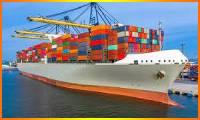
Trade sees India s lentils imports rising to over a million tonnes this fiscal.
India’s imports of lentils (masur) are set to rise this year on higher consumption as the production of other key pulses such as tur, moong and urad is seen lower on erratic weather. Based on the current import trend, the trade estimates India’s lentils purchases would rise by over a million tonnes this financial year over previous year’s 8.58 lakh tonnes.
'Masur imports from April till now have already crossed half a million tonne mark. Another 1.5-2 lt are on the way. We expect the masur imports to cross over a million tonnes this financial year,' said Bimal Kothari, Chairman, India Pulses and Grains Association (IPGA) the apex trade body.
India’s production of lentils during 2022-23 stood at over 15.8 lt, per third advance estimates released in May, higher than previous year’s 12.69 lt. Lentil imports, which touched a high of 11.16 lt in 2020-21, had dropped to 6.67 lt during 2021-22 and are seen rebounding.
'Prices of masur in mandis are hovering around Rs.61-62 per kg around the MSP levels and there’s nothing much to worry about as there is regular supply,' Kothari said.
US tariff removal
India imports lentils mainly from Canada and Australia and the latest move to remove the retaliatory customs tariff on imports from the United States may widen the sourcing base.
'The US produces more of green lentils, while in India red lentils are widely consumed. Prices are at a high in the US. We will have to see whether the US is competitive in the red lentils,' Kothari said. Production in Canada this year was a bit lower at 1.2 million tonnes, while Australia, where the harvest would begin in November, is seen harvesting 1.3 million tonnes, Kothari said.
Rahul Chauhan of IGrain India said the removal of tariff on US lentils may aid the Indian imports as the consumption of other variety of pulses is seen going up with the production of key pulses such as tur, moong and urad seen taking a hit. US produces around 2.5 lakh tonnes of lentils of which around 60 per cent is green lentils. For the US red lentils, besides India, Turkey is a major buyer.
Modal prices of masur in the mandis of producing regions of Uttar Pradesh are hovered around Rs.5,900-7,050 per quintal and in Madhya Pradesh in the range of Rs.5,100-6,200 over the past couple of days. Retail prices of masur dal was around Rs.92.33 per kg in UP and Rs.90.75 in M.P. on Friday, per the Ministry of Consumer Affairs data.
Source: thehindubusinessline.com
India, US agree to settle pending poultry trade dispute at WTO.
The United States and India have agreed to resolve their last outstanding dispute- related to poultry-at the World Trade Organization, the US Trade Representative said Friday.
In a statement, it also said that as part of the agreement to resolve their final outstanding dispute at the WTO, India agreed to reduce tariffs on certain U.S. products, including frozen turkey, frozen duck, fresh blueberries and cranberries, frozen blueberries and cranberries, dried blueberries and cranberries, and processed blueberries and cranberries
'These tariff cuts will expand economic opportunities for US agricultural producers in a critical market and help bring more US products to customers in India,' the USTR office said.
This announcement comes as US President Joe Biden met Prime Minister Narendra Modi today in New Delhi for the G20 Leaders' Summit.
'The leaders lauded the settlement of the seventh and last outstanding WTO dispute between India and the United States. This follows the unprecedented settlement of six outstanding bilateral trade disputes in the WTO in June 2023,' said a joint statement released Friday.
The two sides had last month discussed this WTO dispute and expressed their shared desire to reach a solution soon.
'Resolving this last outstanding WTO dispute represents an important milestone in the US-India trade relationship, while reducing tariffs on certain US products enhances crucial market access for American agricultural producers,' said USTR Katherine Tai.
The six disputes which have been already settled include countervailing measures on certain hot-rolled carbon steel flat products from India, certain measures relating to solar cells and modules, measures relating to the renewable energy sector, India's export-related measures, certain measures on steel and aluminium products, and additional duties on some products from the US.
Source: economictimes.indiatimes.com
G20 Delhi Declaration: WTO reform, discouraging protectionism, mutually supportive trade and green policies.
The G20 Summit on Saturday reiterated their commitment towards reform of the World Trade Organization (WTO), dispute settlement and that trade and environment policies should be mutually supportive consistent with global trade rules and multilateral environmental agreements.
In the New Delhi Leaders’ Declaration, the grouping- which added the African Union as its new permanent member- emphasised on avoiding discriminatory green economic policies.
'We renew our commitment to ensure a level-playing field and fair competition by discouraging protectionism and market distorting practices, to foster a favourable trade and investment environment for all,' the bloc said, highlighting its commitment to 'positive outcomes at the WTO’s Thirteenth Ministerial Conference (MC13).'
The 37-page declaration has the trade and investment agenda in a subhead titled 'Unlocking Trade for Growth.'
'We affirm that a rules-based, non-discriminatory, fair, open, inclusive, equitable, sustainable and transparent multilateral trading system, with WTO at its core, is indispensable,' they said.
The statement assumes significance as the WTO’s Dispute Settlement Body (DSB), is dysfunctional and a crucial point of discussion ahead of the upcoming ministerial meeting of the trade body.
'We will support policies that enable trade and investment to serve as an engine of growth and prosperity for all,' it said.
In the declaration, the G20 referred to the Jaipur Call for Action for enhancing micro, small and medium enterprises (MSME) access to information to promote their integration into international trade.
Digitalization of trade documents, enhancing information access to MSMEs, framework to map global value chains, best practices on mutual recognition agreements for professional services, and a standards dialogue, were the five outcomes of the G20 Trade and Investment Ministers Meeting last month which culminated into the Jaipur Call for Action.
As per the New Delhi Leaders’ Declaration, the G20 Generic Framework for Mapping GVCs will help members identify risks and build resilience.
The members said that trade and environment policies should be mutually supportive, consistent with WTO and multilateral environmental agreements.
Recognising the importance of WTO’s ‘Aid for Trade’ initiative to enable developing countries, notably LDCs to effectively participate in global trade, including through enhanced local value creation, they said: 'We welcome all efforts to mobilize necessary resources in this regard.'
Source: economictimes.indiatimes.com
G20 members to back EU-Mid East-India trade plan.
Major G20 partners will unveil ambitious plans Saturday to bolster trade between India, the Middle East and Europe, the United States said -- a modern-day Spice Route that could more closely bind three regions that account for about a third of the global economy.
Washington, Saudi Arabia, the EU, UAE and others will sign an agreement on the sidelines of the G20 summit to explore a railway and port project to augment trade flows between Europe and India, officials said.
The agreement comes with Washington actively engaging with Riyadh, a major oil producer and security partner, as it encourages the kingdom to normalise ties with Israel.
Jon Finer, US deputy national security advisor, said the announcement came after 'months of careful diplomacy, quiet, careful diplomacy, bilaterally and in multilateral settings'.
Finer said the plan could include shipping and rail transportation projects to 'enable the flow of commerce, energy and data from here in India across the Middle East to Europe'.
This project 'has enormous potential' he said. 'But exactly how long it takes, I don't know'.
The project is still in the early stages, with participants studying how best to link India's vast 1.4 billion population and quick-growing economy with markets to the west.
But Michael Kugelman, South Asia Institute director at The Wilson Center, said the plan could be a significant response to China's much-vaunted Belt and Road Initiative (BRI) -- which has spread Chinese influence, investments and commerce across Europe, Africa, Asia and Latin America.
'If finalised, it would be a game changer that strengthens connectivity between India and the Middle East and would aim to counter BRI,' Kugelman posted on X, formerly known as Twitter.
The agreement to discuss the project could be among the most tangible developments at a summit that has highlighted deep-seated divisions between key G20 members over Russia's war in Ukraine and how to pay for climate change.
The summit is nonetheless expected to agree to the accession of the African Union, giving the continent -- whose only G20 member is South Africa -- more of a voice on the global stage.
The Group of 20 was conceived in the throes of the 2008 financial crisis as a way of managing the global economy.
But finding consensus among members has been increasingly difficult in recent years.
Even before it began, the importance of the New Delhi summit was called into question when China's Xi Jinping decided to skip the meeting and send his number two, Premier Li Qiang, to India instead.
No official reason was given for Xi's absence, but the Asian giants have been at loggerheads over a border dispute and other issues, while Beijing is seeking to make US-led groupings such as the G20 more amenable to its own interests.
Russia's seat is taken by Foreign Minister Sergei Lavrov, with diplomatic opprobrium and war crimes charges keeping the country's leader Vladimir Putin from the summit.
United Nations chief Antonio Guterres warned Friday of growing global divisions, insisting countries must assume responsibility regardless of 'whether it's the president or the prime minister or the vice president' who is in New Delhi.
The backdrop to the talks could hardly be starker: the European Union's climate monitor has said this year is likely to be the hottest in human history, with Guterres declaring on Friday the 'climate crisis is spiralling out of control'.
G20 countries account for around 85 percent of global climate warming emissions, making action in the forum crucial to real progress.
India's Modi has painted the summit as his country's diplomatic coming of age -- evidence of New Delhi's clout and prestige on the global stage.
Modi argues developing nations need a greater say in global decision-making.
But on Ukraine, there was little sign of progress.
Moscow continues to press its allies to water down international condemnation of its invasion of Ukraine, throwing up a major roadblock to joint action.
Source: economictimes.indiatimes.com
MoFPI issues FAQs related to queries raised by entrepreneurs against CEFPPC.
The Ministry of Food Processing Industries (MoFPI) has issued FAQs (Frequently Asked Questions) in relation to the queries raised by the prospective entrepreneurs during a meeting held at the ministry in the fourth week of August against operational scheme guidelines of Creation/Expansion of Food Processing and Preservation Capacities issued in June this year.
On the question of mixed sectors like dairy with food & vegetable processing under single application, the ministry clarified that separate applications are required to be submitted under the CEFPPC scheme.
Further, the ministry clarified that new additional technical civil work specific to the expansion/upgradation/modernisation will be considered for grants-in-aid calculations under the scheme. Apart from this, new plant & machinery specific to the project guidelines will also be considered for the grant while a certificate from a CA is required as a proof for income of the applicant under the scheme for the financial year.
And, the applicants are required to submit the application with all the specified/required documents to avail any grant for the purpose of expansion, modernisation or upgradation under the scheme.
The ministry has, meanwhile, stated that projects for expansion/modernisation/upgradation are not allowed for availing grant-in-aid after two years under the CEFPPC scheme, in case the same unit had already availed the grant under the same scheme.
Source: fnbnews.com

Centre issues advisory for mandatory stock disclosure of Masur (lentil) with immediate effect.
The Department of Consumer Affairs, Government of India has issued advisory for mandatory stock disclosure of Masur (lentil) with immediate effect. All the stakeholders should mandatorily disclose their Masur stock on stock disclosure portal (https://fcainfoweb.nic.in/psp) managed by the department on every Friday. Any undisclosed stock if found, will be considered as hoarding and suitable action under EC Act would be initiated.
Shri Rohit Kumar Singh, Secretary, Department of Consumer Affairs, during the weekly price review meeting has instructed the department to broad-based the lentil buffer procurement. The objective is to procure available stocks at prices around the MSP. This came at a time when NAFED and NCCF had to suspend their tenders to purchase imported lentils due to exorbitantly high bids received from few suppliers amid hints of cartelization.
Secretary, Consumer Affairs stated that at the time when lentil import flow increases from Canada and Tur imports from African countries, few players are trying to manipulate the market against the interest of the consumers and the Nation. Government is watching the developments very closely and would initiate stringent measures to get the stock released into the market so that availability of all pulses at reasonable prices in the festival season is ensured.
He further added that judiciously balancing the interest of the farmers vis-à-vis the consumers is paramount and that the Department will not hesitate to initiate stern action against those trying to hurt the interest of Indian consumers and farmers in an unscrupulous manner.
Source: pib.gov.in
First round of talks for India, Asean FTA review may start from Nov.
India and the 10-nation bloc Asean are expected to formally launch the review exercise for the free trade agreement (FTA) in November, an official has said. They have agreed to fast-track negotiations for the review of the existing agreement in goods between the two regions and conclude the talks in 2025. It was agreed during the twentieth AEM (Asean Economic Ministers)-India Consultation meeting held at Semarang, Indonesia, in August.
'We will do stakeholder consultations with the industry soon before starting the review formally. Most probably, we will have the first round in November,' the official said.
Participating in the 20th ASEAN-India Summit in Jakarta, Prime Minister Narendra Modi emphasised the need to complete the review of the ASEAN-India FTA (AITIGA) in a time-bound manner.
The FTA was signed in 2009 and implemented in January 2010.
The review of the AITIGA was a long-standing demand of Indian businesses, and the early commencement of the review would help in making the FTA trade facilitative and mutually beneficial, the commerce ministry has said.
The two regions have agreed to follow a quarterly schedule of negotiations and conclude the review in 2025.
According to a joint media statement issued in Semarang, both regions have agreed to make the agreement more user-friendly, simple and trade-facilitative for businesses to increase trade and support sustainable and inclusive growth.
India is asking for a review of the agreement with an aim to eliminate barriers and misuse of the trade pact.
Members of the Asean include Brunei, Cambodia, Indonesia, Laos, Malaysia, Myanmar, the Philippines, Singapore, Thailand and Vietnam.
In general, such review exercises include implementation issues, rules of origin; verification process and release of consignments; customs procedures; further liberalisation of trade in goods; and sharing and exchange of trade data.
Trade experts said the review demand is there because India's exports to Asean have been affected due to non-reciprocity in FTA concessions, non-tariff barriers, import regulations and quotas.
Concerns have also been raised about the routing of goods from third countries in India through Asean members by taking the duty advantages of the agreement. Asean has a much deeper economic engagement with China through the Asean China Trade and Goods Agreement.
During 2010-11, India's exports to Asean increased to USD 25.7 billion from USD 18.11 billion in 2009-10. However, imports in 2010-11 rose to USD 30.6 billion from USD 25.8 billion in 2009-10.
Similarly, in 2022-23, India's exports to Asean increased to USD 44 billion from USD 42.32 billion in 2021-22. However, imports jumped to USD 87.57 billion in 2022-23 against USD 68 billion in 2021-22.
The trade deficit has widened to USD 43.57 billion in the last fiscal from USD 25.76 billion in 2021-22. It was just USD 5 billion in 2010-11.
Source: economictimes.indiatimes.com