
India, Africa can strengthen agri-business ties.
The world recognises Africa’s immense potential in terms of its enormous natural resource endowments (energy, minerals and agriculture) and large population. . India has enjoyed strong relationship with many of the nations in Africa (there are now 54 countries) for centuries.
Africa-India trade is currently valued at about $90 billion, but the potential for growth is huge. In particular, trade in agricultural commodities has been on a strong footing for years. Indian entrepreneurs have made investments in some of the African countries, helping create jobs and incomes there. Yet, considering the potential for growth, the business opportunities are rather under-explored.
There are several common features and challenges Africa and India face. Ensuring food and nutrition security to their large populations is the primary issue. Global warming and climate change are proving to be a formidable challenge for both. There is enormous scope for collaboration in building resilience against climate change.
There are many common issues as far as agriculture is concerned, and these include smallholder cultivation, low level of input usage, low productivity, inadequate mechanisation and inefficient supply chain. Agricultural infrastructure too needs rapid modernisation and investment so as to build supply chain efficiency.
Talking specifically of agri-business, India has a strong bilateral trade in agricultural commodities with many of the African countries. The major commodities India exports to Africa include rice, sugar, meat, dairy products, confectionery and beverages. From Africa, India imports pulses, oilseeds, spices, coffee, cotton and raw cashew. India enjoys strong trade ties with Tanzania, Mozambique, Malawi, Uganda, Kenya, Ethiopia, Nigeria and Ivory Coast among others.
To meet the domestic shortfall in pulses, India has signed a Memorandum of Understanding with Mozambique and Malawi for import of pigeon pea (tur/arhar). Interestingly, import from many of the African origins is allowed duty-free in India given their Least Developed Country (LDC) status. This helps promote trade and support Africa’s smallholders.
In a major development last year, India signed rupee payment agreements with as many as 18 countries around the world. Tanzania, Uganda, Kenya and Botswana figure in the list. As a result, invoicing and payment will be in rupees. The RBI issued a circular to that effect on July 11, 2022.
India has its own strengths in the agriculture sector and has made noteworthy progress in recent decades. Our farm R&D is arguably among the best in the world. Indian scientists’ domain expertise and skills can be utilised to strengthen African agriculture and related activities like livestock and fisheries.
Joint research in agricultural inputs — seeds, agrochemicals, fertiliser and water — to build higher levels of efficiency in input delivery and input utilisation is the need of the hour. Digitisation will help.
While two-way trade in agricultural commodities will continue, Africa and India can set up joint working groups to examine investment opportunities in processing and value addition. Investment in building agri-infrastructure — storage, logistics, electronic markets — is an area that provides opportunities.
Closer engagement between Africa and India will deliver benefits for stakeholders on both sides — growers, processors, consumers, traders and service providers.
Excerpts of keynote speech delivered by the author during the recently concluded Africa-India Agribusiness Summit in Dar es Salaam, Tanzania
Source: thehindubusinessline.com
FSSAI to set up lab in Tirupati.
The Food Safety and Standards Authority of India (FSSAI) is contemplating setting up a state-of-the-art laboratory in Tirupati to ensure quality and healthy food is served to the devotees visiting Tirumala.
The idea was mooted at the FSSAI’s 41st central advisory committee meeting held recently in Tirupati, where the authorities expressed willingness to establish a food quality testing lab in Tirupati, in view of the huge number of footfalls of nearly 50,000–70,000 on any given day.
According to FSSAI’s Chief Executive Officer G. Kamalavardhana Rao, steps will be taken to improve the quality of food and drinking water supply at Tirumala. Also, the management of the laddu-making unit and Anna Prasada Centre at Tirumala will be enhanced, in consultation with the Tirumala Tirupati Devasthanams (TTD).
FSSAI has also come forward to train the managers and staff of hotels in Tirupati, in collaboration with the TTD, to provide healthy and quality food to the devotees.
Source: thehindu.com
India, US must map out economies, form supply chains in complementary ways: Katherine Tai.
US Trade Representative (USTR) Katherine Tai said the India-US relationship is on an upward trajectory and the two sides should map out their economies to develop supply chains in complementary ways. In an interview with ET's Kirtika Suneja and Deepshikha Sikarwar, Tai, who was on a visit to India to attend the G20 trade ministers meeting, said the upcoming conference of the World Trade Organization (WTO) will be the first of the 'reform ministerials'. Edited excerpts:
Where do you see India-US trade relations going from here, especially on friendshoring and getting US companies to invest in India?
Minister (Piyush) Goyal and I held our first trade policy forum (TPF) in November 2021. The TPF hadn't convened since 2017 and it had broken down then and there was not even a joint statement between the US and India. It's maybe a marker in terms of a relationship that has been marked by tremendous potential, but also as significant underperformance of that potential. The joint statement was 5-6 pages long and included references to discussions on topics that have traditionally been challenging between the US and India. So I considered that to be a significant win.
In January, we had our second TPF and made market access and some market relaxation commitments to each other. So that was taking the relationship forward another notch. A couple of weeks ago, when Prime Minister Narendra Modi came to Washington for a state visit, we challenged ourselves to do even more and that's when we buried the hatchet on six of our seven outstanding WTO disputes.
So at this point, our trade relationship within the context of the larger relationship, is mirroring the dynamism and the upward trajectory that I see just over the course of a couple of days visiting Jaipur and Delhi (for G20). It is an incredible sense of optimism and forward-looking vantage point. We are challenging ourselves on what our next steps are going to be. Each one of these sets of outcomes creates a stair step forward and upwards. At this point, what we're able to accomplish is only limited by our own creativity and our own sense of what's possible.
On friendshoring, there is a lot in common that I see between President Biden's and PM Modi's vision on economic agendas for their countries. It is about investing in ourselves, empowering our people, workers, small businesses and small family farmers.
What about the WTO poultry dispute?
We are working on it. We continue to talk about it. If you know minister Goyal, you can imagine that he will be interested as I am, in completely clearing the slate, but we continue to have our technical teams working on it.
Did you take up with the minister the issue of India putting restrictions on import of personal computers, laptops and tablets?
Yes. We expressed our concerns around the substance but also in terms of the process.
Contrary to the process around the development of the Data Protection Act, where there was a lot of opportunity for stakeholders to engage, this one was quite sudden and I reflected to the minister that we see that with respect to the Data Act, there has been a tremendous sense of confidence in not just the outcome, but also the process... Should concerns arise in the next stages, there will be opportunity to engage and in the case of these import licensing requirements, (we) wanted minister Goyal to know that that engagement is really critical to partnership, but also to advancing a commercial environment that fosters the kind of confidence that businesses and investors like.
Did you get any kind of assurance?
We had a very good conversation and I was assured by Goyal's receptiveness to the points that I made and the desire to remain engaged.
What kind of outcomes can we expect from the G20 summit under India's presidency in the backdrop of geopolitical developments?
In terms of these past couple of years, these forums are institutions that are important. About geopolitical complexities, and I'll just call it out, Russia's invasion of Ukraine, many of our institutions that reflect a really important diversity of membership have had to contend with these challenges directly.
In terms of India's presidency, from what I've seen so far through the trade track, I have only the most positive reflections on the leadership that minister Goyal and his team have demonstrated in managing challenging circumstances very successfully.
Is there any indication from India that it now wants to join the trade pillar of the Indo Pacific Economic Framework? Are we looking at the November deadline?
It is so important for India to be a part of this framework. India is actively participating in pillars 2, 3 and 4. It is still engaged on pillar 1, although not an active participant. We're delighted to continue to engage with India on Pillar 1 and open to continuing to explore where and when India's interests might align with ours.
What outcomes does the US expect from WTO ministerial conference (MC13)?
My MC13 list is quite long. In 2017, it was a no outcome ministerial, and rough and quite demoralising for the WTO membership. So in 2022, we had a really robust package of outcomes, more than anyone expected. I want to give Goyal a lot of credit. His leadership of India's participation was a critical part to our success and we worked closely through that. For MC13, now that we've had two more years of relationship building, communication, and enhancing our understanding of each other, I'm even more bullish. We are keen for MC13 to be the first of our reform ministerials.
Do these reforms mean the dispute settlement body only, or something else too?
Well, it's the reform of the entire institution. The institution is almost 30 years old. Since 1995, so much has changed. A lot of us in all our different policy lanes are really focused on how to address the climate crisis-how to mitigate, adapt and change our economic incentives and turbocharge the innovation that's going to be required. The negotiations that happened through the 1980s that concluded in 1994 and 1995, the WTO agreements do not anticipate this movement- the digital transformation as well the need for more resilient supply chains. The membership has expanded and the members have themselves experienced significant economic changes.
The dispute settlement system undoubtedly is a piece of the reform agenda, but we also need to be looking at the other functions of the WTO. There is the negotiating function which at MC12, was a really important way to kick start to give us confidence that WTO members can still come together to agree to things. Also the daily monitoring and functioning of the WTO that happens in all the committees, that there are opportunities to reform the entire institution is so important.
We're not responsible stakeholders and members of this organisation if we are not constantly struggling to adapt it to be responsive to our needs as we and the global economy evolve.
Did you also discuss supply chain resilience with your Indian counterpart? Do you see India getting some part of investment?
One of the first things we need to do is map out our economies, where our strengths and needs are. We need to look at what are the policy tools we should deploy - the existing ones; do we need to adapt to new ones or take all tools and use them in new ways to create the incentives for the businesses that make the supply chain resilient. Given the size of India and the US, there could be interesting ways to explore the synergies and develop supply chains in complementary ways.
Source: economictimes.indiatimes.com
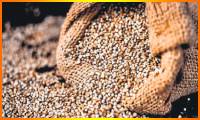
Millets: India eyes $2 billion export opportunity .
India is looking forward to tapping a $2 billion export opportunity by promoting millets – Ragi, Jowar and Bajra – and millet-based products, dubbed as a healthy and environment-friendly alternative to water-guzzling wheat and rice. Millets have been grown and consumed in the country for ages but they have faded into oblivion with the success of wheat and rice in recent decades.
India is the world’s millet capital as it accounts for more than 40 per cent of the world's production, and nearly 80 per cent of the millet production in Asia. There are three major millet varieties such as Ragi (Finger Millet), Jowar (Sorghum) and Bajra (Pearl Millet). In addition to these three major millets, several minor millets are also there such as Kutki (Little Millet), Kangni (Foxtail Millet), Barri (Proso Millet), Jhangora (Barnyard Millet) and Koden (Kodo Millet).
These millets offer several benefits over wheat and rice in terms of their nutritional value and also health benefits as they are good for maintaining low blood sugar levels, unlike wheat and rice. In addition to their nutritional and health benefits, millets are environment-friendly crops as they require little water and can withstand extreme weather and climatic conditions that is why they are known as environment-friendly and climate-resistant crops.
TR Kesavan, President of TAFE and Chairman of FICCI’s Agriculture Committee says millets are suited to diverse conditions, millets offer essential nutrients, manage diabetes, enhance food security, conserve biodiversity and symbolise cultural heritage. 'Millets present a potential crop for the future. It is high time to build the brand of India in millets, for they hold the potential to reshape our agricultural landscape,' Kesavan said.
Being the world’s largest producer of millet, India has been trying to boost its exports by taking advantage of the fact that the United Nations has declared the current year as the International Year of Millet (IoYM) which was supported by 72 countries in the world body. While India is the world’s largest producer, Africa remains the largest consumer of the millets with 40 per cent share in global consumption.
A $2 billion export opportunity
A knowledge paper jointly produced by the industry body FICCI and PwC projects that the global trade of millets will increase to nearly $14 billion in the next five years. In 2021, the world exported 509.73 tonnes of millets worth $198.66 million. The top exporters of millets were Ukraine ($45.71 million), the United States ($28.52 million), India ($27.42 million), the Russian Federation ($17.72 million) and France ($14.25 million).
In the same year, the world imported 553.71 tonnes of millets worth $256.86 million, with the top importers being Indonesia ($37.86 million), the European Union ($28.87 million), Germany ($16.55 million), Belgium ($13.80 million) and Canada ($13.51 million). The global market size of millets is projected to grow at a compound annual growth rate (CAGR) of 4.6 percent (from 2023–2028) and reach $13.80 billion by 2028.
'As a leading producer of millets, India’s share in international trade is projected to grow significantly, representing a $2 billion opportunity,' said the FICCI-PwC knowledge paper. 'These century-old grains are now gaining prominence as a smart and sustainable choice of crops which provide food, feed, nutrition and fodder security to the nation,' said Jitendra Joshi, Director of Seeds sales, South Asia, Corteva Agriscience.
Joshi says being nutritionally superior to rice and wheat, high in dietary fibre and low in glycemic index, millets are all set to tackle the nutritional challenges and lifestyle problems at the consumers’ end.
Millet production in India
Indian farmers produced an average of 16.39 million tonnes of millets between 2017–18 and 2021–22, including 9.75 million tonnes of pearl millet, 4.54 million tonnes of sorghum, 1.74 million tonnes of finger millet and 0.37 million tonnes of minor millets. The average area under millet cultivation in the country has been 13.28 million ha, with 55 percent under pearl millet, 33 per cent under sorghum, 8 per cent under finger millet and 4 per cent under minor millet cultivation.
While the desert state of Rajasthan was the largest producer of millets in the country in 2021-22, it was followed by Maharashtra, Uttar Pradesh, Madhya Pradesh, Gujarat, Haryana, Jharkhand, Karnataka, Tamil Nadu and Andhra Pradesh, which cumulatively have a more than 95 per cent production share.
80 startups in millet sector
Given the government’s push to promote India’s Shree Anna (millets), more than 80 startups have come forward to promote the production and export of millets in the last one and a half years.
The government is also mobilizing start-ups for export promotion of value-added products in the Ready to Eat (RTE) and Ready to Serve (RTS) category such as noodles, pasta, breakfast cereals mix, biscuits, cookies, snacks, sweets, among other things. As per the government’s millet promotion strategy in the global market, As per the government’s millet promotion strategy, major international retail supermarkets like Lulu group, Carrefour, Al Jazira, Al Maya, Walmart, and others would also be roped in to establish millet corner for branding and promotion of millets.
Source: etvbharat.com
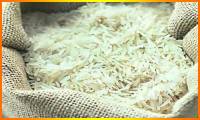
Myanmar to curb white rice exports from Sept 1.
The dry El Nino weather has begun to cast its shadow on the global rice market in a big way with Myanmar now joining India in curbing white rice exports.
Trade sources said Myanmar will begin curbing white rice exports from September 1. 'The curbs will continue for 45-60 days until the military junta ruling there is convinced that the cereal’s prices will stabilise,' the sources said.
Myanmar, which accounts for two million tonnes (mt) of white rice exports in the global market, has seen demand increase for its rice after India banned white rice exports on July 20. The curbs are seen as measures to control rising food prices and ensure domestic food security like India has done by banning white rice and wheat exports.
Local prices double
The neighbouring country exported 0.32 mt of white rice between April and July this year, a significant rise historically. This resulted in domestic prices increasing, another reason for the junta to curb shipments.
Local reports said domestic prices of common rice have more than doubled due to lower production in 2022 and difficulties in transportation. The Food and Agricultural Organisation, an arm of the UN, said Myanmar’s rice production declined by eight per cent in 2022.
One of the reasons is that Myanmar’s key paddy-growing regions of Sagaing and Magway — the third and fifth largest producers — are witnessing armed conflicts. This has resulted in many farmers getting internally displaced and they have been unable to return to work on their paddy fields due to fear of landmines and the military troops in some areas.
Indifferent July
According to the Asian Food Security Information System — a project of ASEAN, China, Japan and Korea — planting of wet season rice has been slower this year due to less availability of rainfall and irrigation water — a fallout of the El Nino impact.
In July, Myanmar experienced irregular rainfall and rising temperatures. 'It may impact the planting work of the wet season rice,' it said.
Myanmar will fulfill its export obligations and not bar parboiled rice exports, but the curbs will likely heat up the global market further. 'Parboiled rice will be under pressure further in view of Myanmar’s curbs since world-over white rice shipments are under curbs,' said S Chandrasekaran, a Delhi-based trade analyst.
India’s ban on rice exports, including last year’s prohibition on broken rice shipments, havs resulted in the cereal’s prices soaring to a 15-year high. However, VR Vidya Sagar, Director, Bulk Logix, said parboiled prices for exports have begun to drop.
Output may rise
'Currently, prices are around $490 a tonne free-on-board (f.o.b),' he said. In comparison, Thailand, India’s main rival in the market, is quoting between $612 and $615 f.o.b. Pakistan, another competitor, has run out of stocks.
Data from Thai Rice Exporters Association show that barring Indian parboiled rice, almost all rice varieties are quoting above $600 a tonne.
According to the FAO’s Agricultural Market Information System, rice production will likely be 523.7 mt in 2023-24 (September-August) against 517.6 mt in 2022-23.
India banned white rice exports to face any supply shortage in view of rains damaging paddy crops in Punjab and Haryana, besides deficient rains affecting the sowing of paddy in Karnataka, West Bengal, Chhattisgarh, Tamil Nadu, and Andhra Pradesh. But Ministry of Agriculture data show that the area under paddy has increased by four per cent during the current kharif season.
Experts are, however, divided on the prospects of production in view of delay in transplantation of paddy.
Source: thehindubusinessline.com
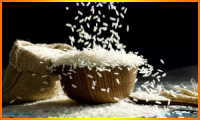
Introduction of additional safeguards for export of Basmati rice to prevent exports of Non-Basmati white rice through mis-classification as Basmati rice.
To check the domestic prices and to ensure domestic food security, the Government has been taking measures to restrict export of rice from India. The export of non-basmati white rice was prohibited on 20th July 2023.
It has been noticed that despite restriction on certain varieties, rice exports have been high during the current year. Up to 17th August 2023, total exports of rice (other than broken rice, export of which is prohibited) were 7.33 MMT compared to 6.37 MMT during the corresponding period of previous year, registering an increase of 15.06%. There has been a spurt in the export of parboiled rice and Basmati rice; both of these varieties did not have any restriction on exports. While the export of parboiled rice has grown by 21.18% (3.29 MMT during the current year compared to 2.72 MMT during previous year), export of Basmati rice has increased by 9.35% (1.86 MMT during the current year compared to 1.70 MMT during previous year). Export of non-basmati white rice, which had an export duty of 20% since 9th September 2022 and has been prohibited w.e.f. 20th July 2023, has also registered an increase of 4.36% (1.97 MMT compared to 1.89 MMT during previous year). On the other hand, as per third Advanced Estimate of Department of Agriculture & Farmers Welfare, during the Rabi Season 2022-23, the production was only 158.95 LMT against 184.71 LMT during Rabi Season of 2021-22 i.e., there was a decline of 13.84%.
Internationally, due to strong demand from Asian buyers, production disruptions registered in 2022/23 in some major producing countries like Thailand, and fears of possible adverse effect of the onset of El Nino, international rice prices have also been rising continuously since last year. The FAO Rice Price Index reached 129.7 points in July 2023; its highest value since September 2011, registering an increase of 19.7% over past year levels. As the prices of Indian rice are still cheaper than the international prices, there has been a strong demand for Indian rice, resulting in record exports during 2021-22 and 2022-23.
The Government has received credible field reports regarding misclassification and illegal export of non-basmati white rice, export of which has been prohibited with effect from 20th July 2023. It has been reported that non-basmati white rice is being exported under the HS codes of parboiled rice and Basmati rice.
As the Agricultural & Processed Food Products Export Development Authority (APEDA) is responsible for regulation of export of Basmati rice and already has a web-based system in place for the purpose, the Government has issued following instructions to APEDA to introduce additional safeguards to prevent the possible illegal exports of white non-basmati rice in the garb of Basmati rice:
Contracts for Basmati exports with the value of USD 1200 per MT only and above should be registered for issue of Registration – cum – Allocation Certificate (RCAC).
Contracts with the value of below USD 1200 per MT may be kept in abeyance and may be evaluated by a committee to be set up by the Chairman, APEDA, for understanding the variation in prices and use of this route for export of non-Basmati white rice. It has been noted that there has been large variation in the contract price of Basmati being exported with lowest contract price being USD 359 Per MT in backdrop of average export price of USD 1214 per MT during the current month. The Committee should submit its report within a period of one month, whereafter a decision on lower price exports of Basmati planned by industry can be taken appropriately.
APEDA should hold consultations with trade to sensitize them about the matter and work with them to discourage any use of this window for export of non-basmati white rice.
Source: pib.gov.in

India very close to a final call on FTA with UK: FM Sitharaman.
A free trade agreement is very close for a final call with the UK while negotiations for a trade pact with Canada are expected to conclude soon, Finance Minister Nirmala Sitharaman said on Friday. Speaking at the B20 Summit India 2023, organised by CII, the minister said India has already signed trade pacts with Australia, the UAE and several other countries.
'FTAs should actually encourage you (global investors) to be in India,' she told the gathering of global leaders.
'An FTA agreement is very close for a final call with the UK and I think negotiations with Canada are also progressing and I expect that to come to a conclusion sooner than later,' Sitharaman said.
She further said the finance ministry and commerce ministry are working closely on trade agreements with different countries.
'The fact that at this stage we are tying up the agreement with one of the Western developed countries shows that India is opening up for a lot more ... Mutually we should benefit from agreeing with each other,' she added.
Meanwhile in Jaipur, Commerce and Industry Minister Piyush Goyal said the negotiations between India and the UK for the proposed free trade agreement are progressing and both countries are committed to concluding the talks as early as possible.
Source: economictimes.indiatimes.com
India, EU make good progress in FTA, investment, GI pact talks: Govt.
India and the European Union have made good progress in the ongoing three negotiations- India-EU Free Trade Agreement; a standalone Investment Protection Agreement; and a Geographical Indications Agreement, the government said Saturday.
The commerce and industry ministry said in a statement that the two sides discussed their market access issues and review the progress made so far under the India-EU Trade and Technology Council.
Commerce and industry Piyush Goyal met the European Commission Trade Commissioner Valdis Dombrovskis for the third High Level Dialogue.
'Minister Goyal and I held a positive and thorough discussion on advancing our Free Trade Agreement during our High-Level Economic Dialogue today,' Dombrovskis said, adding that both sides would benefit enormously from a comprehensive trade and investment partnership.
He said: 'We need to see good progress in terms of investment protection - important to attract further European investment to India'.
The EU is India’s second largest trading partner but there is still a lot of untapped potential, Dombrovskis said, adding that there is a clear political willingness on both sides to change gear and make faster progress.
'We must now use this momentum to bridge major gaps that remain,' he said, adding that the two committed to important outcomes, including reform of the World Trade Organization (WTO).
The upcoming WTO ministerial conference matters were also briefly discussed during the meeting
Source: economictimes.indiatimes.com
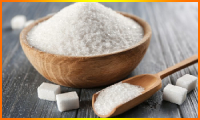
DGFT; Allocation of quantity 5841 MT Sugar by EU for export from India under TRQ for the year 2023-24.
The DGFT issued Public Notice No. 29/2023 dated August 25, 2023 regarding the quantity of 5841 MT Sugar to be exported to the EU from India under TRQ for the year 2023-24 (October 2023 to September 2024) has been notified.
In exercise of the powers conferred under Paragraphs 2.04 of the Foreign Trade Policy, 2023, the Director General of Foreign Trade hereby allocates quantity of 5841 MT for export of Sugar to EU from India under TRQ for the year 2023-24 (October 2023 to September 2024).
As per Notification No. 3/2015-20 dated April 20, 2015, export of sugar (HS Code 17010000) to EU under TRQ is ‘Free’ subject to the conditions notified in the ‘Nature of Restrictions’ in the above notification.
Certificate of Origin, if required, for preferential export of sugar to EU, shall be issued by Additional Director General of Foreign Trade, Mumbai on recommendation of APEDA regarding entity and quantity for which eligible. Other certification requirement, if any, prescribed specifically for export of sugar to EU would continue to be followed.
The quota will be operated by Agriculture and Processed Food Products Export Development Authority (APEDA), New Delhi as the implementing agency for export of TRQ items to EU.
The reporting requirement as notified vide Notification No. 3/2015-2020 dated April 20, 2015 read with Notification No. 20 dated September 07, 2015 would be followed.
Effect of this Public Notice: The quantity of 5841 MT Sugar to be exported to EU from India under TRQ for the year 2023-24 (October 2023 to September 2024) has been notified.
Source: a2ztaxcorp.com

India, US discuss ways to promote trade, investments.
Commerce and Industry Minister Piyush Goyal and US Trade Representative Katherine Tai on Saturday discussed ways to promote trade and investments between the two countries. In a message on social media network X (formerly known as Twitter), Goyal said he held a bilateral meeting with the US counterpart Tai.
'Discussed key bilateral issues of mutual interest and explored ways to give further impetus to the growing India-US partnership through enhanced trade and investments,' he said.
An official has recently said that both countries are looking at ending their last trade dispute related to poultry in the World Trade Organisation (WTO).
Besides they are also looking at enhancing the partnership by permitting companies in both countries to participate in each others' government procurement.
In July, India and the US mutually resolved six trade disputes pending at the WTO, in line with the commitment made by the two countries during the US visit of Prime Minister Narendra Modi in June.
During Modi's US visit in June, a joint statement said that the prime minister had expressed India's interest towards being recognized as a Trade Agreements Act-designated country by the US to further enhance the integration of both economies and promote bilateral trade and investment.
In this regard, the two sides have welcomed the initiation of discussions at an official level on issues related to bilateral government procurement.
The poultry case was filed by the US against India in the WTO in 2012. India has lost the dispute both at the panel as well as the appellate body levels. It was ruled against India that New Delhi's ban on imports of poultry products from the US was inconsistent with global norms.
As India was not able to implement the decision within the stipulated time frame, the US demanded compensation. After that, both countries are discussing ways to resolve the case mutually.
The US is the largest trading partner of India. In 2022-23, the bilateral goods trade increased to USD 128.8 billion as against USD 119.5 billion in 2021-22.
Further, Goyal also held a bilateral meeting with UK Secretary of State for Business and Trade Kemi Badenoch on the proposed free trade agreement between the two countries.
'Discussed ways to add further momentum to the India-UK free trade agreement negotiations for a mutually beneficial deal,' he added.
Negotiations for the agreement, which aims to boost trade and investment, have reached the last stage..
Finance Minister Nirmala Sitharaman also met Badenoch and discussed bilateral investment and FTA.
Earlier in the day, Sitharaman met European Commission Executive Vice-President V Dombrovskis and discussed bilateral economic and financial issues of mutual interests.
Source: economictimes.indiatimes.com