
BRICS admits 6 nations, PM seeks reform of global bodies.
Looking to emerge as a counterweight to the West, BRICS announced Thursday that 6 countries - Argentina, Egypt, Ethiopia, Iran, Saudi Arabia and UAE - will join on January 1, 2024, the group of nations that together account for 26 percent of global GDP. While many of these countries have close ties with China, which wanted expansion to be accelerated, all of them except Ethiopia are also India’s strategic partners.
Welcoming the development, PM Narendra Modi said that the expansion will consolidate the trust that many countries have in a multipolar world order and also send out a message – important in the context of the delayed UNSC reforms - that all international institutions must adapt to the changing times and circumstances. Modi also expressed satisfaction that BRICS had built a consensus on the criteria, standards, procedures and guiding principles for expansion.
India had earlier strongly denied it was blocking the proposal to expand membership saying it only wanted the rules finalised first for admitting new members. According to government sources, India had played the lead role in forging a consensus on the issue at the Johannesburg BRICS summit that ended Thursday.
In the joint press conference, where the leaders announced the decision after intense negotiations over 2 days, Modi said India had always and unequivocally supported the expansion of BRICS. South Africa was the last country to join what was then known as BRIC in 2010.
``We believe BRICS will become stronger with new members joining it and our shared efforts will also get a boost. This is an initiative that can set an example for the reforms of global institutions which were created in the 20th century, said Modi, as he spoke about how India enjoyed deep and historical ties with each of the 6 nations who will join the group. India’s historical links with Iran are well known but it has also worked in the recent past to cultivate ties with both UAE and Saudi Arabia, with which it has had a strategic partnership since 2010. Bilateral ties with UAE were upgraded to a comprehensive strategic partnership in 2017. India has also had a strategic partnership with Argentina since 2019 and with Egypt since Modi’s visit to Cairo in July.
``I’m confident together with these countries we will provide a new momentum and new energy to our cooperation. With support from BRICS, we will also add new dimensions to our bilateral cooperation with these countries,’’ he added.
While the 6 countries whose names were announced will joint as permanent members, more are expected to join later as partner countries. The PM said India will also help build a consensus for allowing membership as a partner country. Twenty-three countries had formally sought membership ahead of the Johannesburg summit.
Wary of China and Russia’s anti-West, particularly anti-US agenda, both India and Brazil didn’t want the expansion process to be rushed through. South Africa, however, announced Wednesday that it finally had a document after the leaders’ negotiations on the criteria and guiding principles for membership. Describing the development as historic, Chinese President Xi Jinping in a swipe at the West said that hegemonism was not in China’s DNA.
Source: timesofindia.indiatimes.com

India, Kuwait bilateral trade touches all-time high of USD 12.5 billion, says Indian envoy.
Bilateral trade between India and Kuwait has touched an all time-high of USD 12.5 billion, Indian ambassador to Kuwait Adarsh Swaika said, according to the Arab News Online.
Trade between the two countries have has seen a 90 per cent yearly jump and while currently it is skewed towards hydrocarbon exports from Kuwait and exports of mainly food products from India, bilateral trade has the potential for diversification the envoy said.
'There are excellent possibilities in pharmaceuticals and medical devices, automobiles and related spares, electronics goods and components, high-efficiency solar PV modules, textiles and apparel, white goods, ceramics, etc. But the main potential area of cooperation is in the field of investments from Kuwait to India because of the attractive political and financial investment climate that the country provides, the Indian ambassador told Arab News online.
'But the main potential area of cooperation is in the field of investments from Kuwait to India because of the attractive political and financial investment climate that the country provides. On May 8, we held a high-visibility investment seminar that presented the New India growth story. We saw much interest from our Kuwaiti partners in investing in India. There are some very positive experiences sharing Kuwaiti investments in India,' he added.
Swaika also stated that Kuwait Investment Authority's (KIA) investments in India are extraordinarily significant, and expressed hope for further acquisitions.
Swaika in the interview to Chaitali B Roy of the Arab News online published on Wednesday said that regarding food security, tourism, and health cooperation, Swaika said that both countries are working to enhance relations on the basis of all three sectors.
The Indian envoy noted that medical and health tourism offers tremendous potential for further growth and that India is exploring whether Indian private hospitals can set up their chains in the Kuwait.
Recalling the collaboration on the medical front between the two countries during COVID pandemic when India came forward to help Kuwait, Swaika said, 'What we did together to fight the Covid-19 pandemic in terms of assistance and collaboration was genuinely remarkable. This has set the bar of bilateral cooperation very high. This demonstration of shared solidarity has brought us closer.
'We had a significant investment seminar recently in which the representative of the Apollo group participated. He told me of the interest on the Kuwaiti side in such collaboration. The second thing is how Indian medicines can be made available in Kuwait much more cost-effectively. Ironically, Indian medication, many of which are US FDA approved, is not available in Kuwait. The Embassy is working on this. The third issue is of immense opportunities available in India for medical and wellness treatment. This would not only be much more cost-effective but of a world-class standard,' he added.
Regarding medical cooperation, the ambassador said that medicine is a promising sector with tremendous potential for further growth. He further added that most of the Kuwaitis go to India for medical treatment.
'Today, most Kuwaitis who go for medical treatment abroad generally go at Government cost to Western countries predominantly. At the same time, India is one place that attracts people from all over the world, including the Western world and, more importantly, from its neighbourhood and extended neighbourhood, for medical treatment. This is because it provides quality health care at an affordable cost,' he said.
'There are chains of private hospitals specialising in different areas, e.g., Apollo, Narayana Hyudalaya, Medanta, Shankar Netralaya, Fortis, etc. Given our solid historical linkages, geographical proximity, cultural affinity, and people-to-people contacts, India should be the preferred destination for medical treatment for Kuwaitis. The Embassy is working on this with both the Kuwaiti side and the Indian hospital chains,' he added.
Talking about India's growing economy, Swaika said that the country is one of the few major economies that has grown over 6 per cent consistently in the last few years and is expected to continue doing so, reported Arab News online.
India is the fifth largest economy currently, the third most significant in terms of purchasing power parity and is projected to be a USD 5 trillion economy by 2030. It will remain one of the major growth engines of the world, he added.
Source: economictimes.indiatimes.com
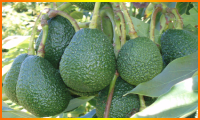
Kenya set to export avocados to India.
In a major milestone that will boost export trade between the two countries, Kenya has secured market for fresh avocado market in India. This development comes after the Indian government approved the export of the fresh produce beginning this September when the first shipment are expected to commence in a move that farmers welcomed with batted breath.
Kenya Plant Health Inspectorate Service (KEPHIS) Managing Director Theophilus Mutui confirmed that the government of India last week approved Kenya’s request to export avocados: 'The India Government allowed Kenya avocado market access after notifying the world trade organization (WTO) about the same. We are happy as export destinations continue to increase and thus help our farmers to grow more avocados.'
Kenya and India have been carrying out negotiation talks for the last five years and this therefore is good news for Kenya, which has already been exporting the fruits to China. In the next two weeks, exports will commence.
Source: freshplaza.com
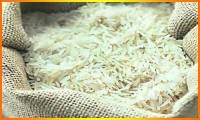
One day national seminar on rice fortification.
The Department of Food and Public Distribution, Ministry of Consumer Affairs, Food & Public Distribution organised a one day national seminar on rice fortification.
While addressing the seminar, secretary, DFPD, Sanjeev Chopra said, 'We are on track to achieve the target of 100% distribution of fortified rice across all rice consuming districts in the country.'
Government of India is committed to ensure the nutritional security of the country through fortified rice distribution across government food safety net schemes. The seminar served as a dynamic platform for multi stakeholder discussions where besides government stakeholders, technical experts from institutions and academia provided meaningful insights on different aspects of the rice fortification programme such as evidence, safety of consumption, operational challenges and quality assurance and quality control.
The prevailing challenges and queries of states were addressed by the group of experts and deliberations were made to derive a roadmap to the programme for the coming year.
The seminar was divided into four technical sessions, each deliberating on discussions held in prior working group meetings focussing on key aspects of rice fortification. The first of these sessions emphasised on concerns regarding safety of consumption of fortified rice for the general population as well as individuals with Haemoglobinopathies and SCD.
Dr Reena Das, Department of Haematology, PGIMER, Chandigarh recommended on behalf of the panel that fortified rice consumption is safe and addressed the prevailing myth regarding toxicity from its consumption.
The second session led by D. Prashant T., associate professor at St. Johns Research Institute, Bengaluru aimed at providing evidence-based insights from National and International experiences on rice fortification. He shared numerous studies which pointed out the effectiveness of iron fortification in the reduction of anaemia.
In the third technical session, a group of experts from organisations like FSSAI, FCI, BIS, WFP, Microsave and IIT Kharagpur working at the national level as well as at the field, engaged in a discussion to explore strategies to address on-ground operational challenges to streamline the distribution process.
Concluding the day's discussions, the last technical session led by Dr Balasubramaniam, joint director, FSSAI focussed on providing insights into the quality aspects and recommended strategies that may be adopted to improve the quality of fortified rice being distributed.
The seminar witnessed the launch of a national IEC campaign developed by the Department for awareness generation at the beneficiary level and release of a guidance handbook on rice fortification which will act as a ready reckoner for all guidelines, notifications and orders related to rice fortification.
The event brought together technical experts, leaders from government ministries, research institutes and international organisations fostering an enriching dialogue to build a common understanding and leverage universal supply of fortified rice in food safety net schemes.
Food Secretaries from States/UTs across the country along with technical experts in the domain and development partners working on-ground participated in the Seminar jointly reflecting upon the challenges and opportunities together for achieving the transformation of food and nutrition security ecosystem in the country.
Source: fnbnews.com
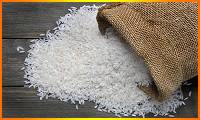
Govt sets target to procure 521.27 lakh tonnes of rice from kharif season.
The government has set a target to procure 521.27 lakh tonnes of rice being cultivated during the ongoing kharif season. It has procured 496 lakh tonnes of rice from last year's kharif crop.
Paddy is grown in both the kharif (summer-sown) and rabi (winter-sown) seasons.
Food Secretary Sanjeev Chopra chaired a meeting of State Food Secretaries and Food Corporation of India (FCI) on August 21 to discuss the procurement arrangements for the Kharif crop in the ensuing Kharif Marketing Season (KMS) 2023-24, which runs from October-September.
'A quantity of 521.27 lakh tonnes rice has been estimated for procurement during the forthcoming KMS 2023-24 (Kharif crop) as against the previous year estimates of 518 lakh tonnes wherein 496 lakh tonnes was actually procured during KMS 2022-23 (Kharif crop),' the food ministry said in an official statement.
During KMS 2023-24 (Kharif crop), rice procurement in Punjab is estimated at 122 lakh tonnes, Chhattisgarh (61 lakh tonnes), Telangana (50 lakh tonnes), Odisha (44.28 lakh tonnes), Uttar Pradesh (44 lakh tonnes), Haryana (40 lakh tonnes), Madhya Pradesh (34 lakh tonnes), Bihar (30 lakh tonnes), Andhra Pradesh (25 lakh tonnes), West Bengal (24 lakh tonnes) and Tamil Nadu (15 lakh tonnes).
A quantity of 33.09 lakh tonnes of coarse grains/millets (Shree Anna) has been estimated for procurement by the states during the KMS 2023-24 as against actual procurement of 7.37 LMT during KMS 2022-23 (Kharif & Rabi).
Six minor millets have also been introduced to be purchased by the states at MSP of Ragi starting this KMS 2023-24, up to three years.
Source: economictimes.indiatimes.com

PM Modi bats for expansion of Brics club, by consensus.
PM Narendra Modi backed the proposal for BRICS membership expansion by consensus and, in the presence of Chinese President Xi Jinping, expressed hope the member-states will support India’s proposal to make the African Union (AU) a permanent member of G20 at the summit next month in Delhi, and also its efforts to address Global South concerns.
Addressing the open BRICS plenary session, Modi made 5 suggestions to further intensify intra-BRICS cooperation including the creation of a BRICS space exploration consortium. He was speaking hours before India’s moon mission, Chandrayaan-3, successfully landed on the moon.
While seeking timelines for UNSC reforms, Modi also called for reform of multilateral financial institutions, WTO and urged BRICS to send a global message of unity and not polarisation
On BRICS expansion, the issue that dominated the summit agenda, government sources said India took the lead in forging consensus on membership criteria and selection of new members. India’s efforts are apparently guided by its objective to incorporate strategic partners like Egypt and Saudi Arabia as new members.
'India fully supports the expansion of the BRICS membership. And welcomes moving forward with consensus in this,' said the PM, adding that BRICS will be breaking barriers, revitalising economies, inspiring innovation, creating opportunities, and shaping the future.
South Africa said after the second day of the summit that the leaders agreed to a document which 'set out guidelines and principles, processes for considering countries that wish to become members of BRICS'.
With many developing countries looking at BRICS with renewed hope at a time of great global uncertainty, 23 countries have formally approached the grouping for membership. In his address, Chinese President Xi Jinping called for speeding up the expansion process saying more members will make global governance more just and equitable. India, however, wanted BRICS to first finalise the criteria and guiding principles for extending membership, something that the summit focused on. A formal announcement on expansion guidelines is expected on Thursday.
Modi also lauded South Africa’s focus on the Global South at the summit. 'We have also proposed to give permanent membership of G-20 to the African Union. I am sure all the BRICS partners are also together in the G20. And all will support our proposal. Giving special place to all these efforts in BRICS will increase the self-confidence of the countries of the Global South,' he said.
Apart from BRICS space consortium, Modi also proposed undertaking skill mapping, promoting mobility among BRICS countries and joint efforts for protection of Big Cats under International Big Cat Alliance. He also proposed establishing a repository of traditional medicine among BRICS countries.
The PM said public service delivery is being revolutionized through in India through Digital Public Infrastructure and offered the same to BRICS countries. 'Diversity is a great strength of India. The solution to any problem in India comes out at the test of this diversity. That's why these solutions can be easily implemented in any corner of the world,' said Modi.
Source: timesofindia.indiatimes.com
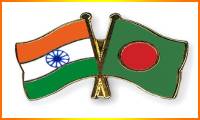
India and Bangladesh Foster Trade Ties: 14th Joint Group of Customs Meeting Charts Course for Enhanced Cooperation.
The 14th bilateral assembly of the Joint Group of Customs (JGC) involving India and Bangladesh took place in New Delhi on August 21st and 22nd, 2023. The co-chairpersons for the meeting were the Member in charge of Customs from the Central Board of Indirect Taxes and Customs in India, and the Member responsible for Customs: Audit, Modernization, and International Trade from the National Board of Revenue in Bangladesh.
This annual rendezvous between India and Bangladesh serves as a platform to delve into matters related to customs collaboration and the facilitation of cross-border trade. A pivotal outcome of these meetings is the bolstering of connectivity and the augmentation of trade infrastructure to ensure seamless customs clearance at terrestrial frontiers. Along the expanse of the India-Bangladesh Border, situated in the regions of West Bengal, Assam, Meghalaya, Tripura, and Mizoram, a network of 62 Land Customs Stations, encompassing land border crossing junctures, railway terminals, and riverbanks/ports, orchestrates the movement of goods and people.
Notably, India has recently undertaken various strides in facilitating trade, exemplified by measures such as permitting exports from Bangladesh to India via rail in enclosed containers. This initiative incorporates customs clearance capabilities at any Inland Container Depot (ICD), thereby contributing to the alleviation of congestion at border trade nodes. Additional circulars, dated September 9th, 2022, and September 14th, 2022, allow for cargo exports from Indian ICDs to Bangladesh through Inland Waterways and endorse transshipment of containerized export goods from Bangladesh, meant for third countries, through Indian routes. The circular of February 7th, 2023, extends the privilege of transshipping Bangladesh’s export cargo to third countries through Delhi Air Cargo.
Engaging in the discourse of the 14th JGC meeting were an array of bilateral matters, encompassing topics like inaugurating new land customs stations, ameliorating port restrictions, enhancing road and rail infrastructures, initiating the exchange of customs data prior to the arrival of shipments, and formalizing a mutual accord on customs cooperation. An expression of gratitude flowed from India to Bangladesh for their successful trial runs and subsequent notification to operationalize the Agreement on Use of Chattogram and Mongla Ports (ACMP), as decided during the 13th JGC meeting. Furthermore, discussions were ignited concerning the electronic interconnection of the respective transit modules of ACMP.
With shared commitment, the bilateral meeting culminated on a successful note, with both sides pledging to advance their collaboration in domains of mutual interest.
Source: organiser.org
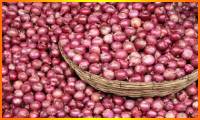
Nepal faces shortage after India slaps 40 per cent tax on onion exports: Report.
Nepal has started to face an acute shortage of onions, days after neighbouring India slapped a 40 per cent export tax on the vegetable, a media report said on Wednesday.
India last week imposed a 40 per cent tariff on the export of onions till December 31 to restrict overseas sales. The move comes amid anticipation of a price rise ahead of the festival season when demand for most commodities goes up, The Kathmandu Post newspaper reported.
The new tariff has severely affected Nepal as several traders in Kalimati Fruit and Vegetable Market -- the Himalayan nation's largest wholesale market for agricultural products-- reported a sudden scarcity of onions.
'There is a severe scarcity of onions in the Nepalese markets now. No onion shipments have been delivered since Sunday, and the remaining stocks were sold out by Monday,' Binay Shrestha, Information Officer for the country's largest produce bazaar, was quoted as saying in the report.
Shrestha said that onions cost Rs 54 per kg two weeks ago but now the retail price of onion has crossed Rs 100 per kg in Kathmandu Valley.
As Nepal imports almost all its onion requirements from India, the export duty has created shortages in the domestic market.
Traders said that the scarcity coincides with the start of Nepal’s festive season when onion consumption explodes.
The festival season is marked by endless feasting, and the spicy bulb is indispensable to local cooking.
'The price may rise further. We cannot say how much,' said Shrestha.
'There were no deliveries during the weekend, which is Saturday and Sunday in India. New shipments will arrive with 40 per cent tax added to the cost,' he said.
Mohan Baniya, president of the Potato-Onion Import-Export and Wholesaler Association, said that after the new Indian tax went into effect, the wholesale price of onion soared to Rs 78 per kg at the Kalimati market on Monday.
Source: telegraphindia.com

India, South Africa decide to add fresh momentum to defence, agri, trade ties.
Prime Minister Narendra Modi met South Africa's President Cyril Ramaphosa on the sidelines of the 15th Brics Summit in Johannesburg on Wednesday and discussed ways to strengthen bilateral cooperation in defence, agriculture, trade and health, among other areas.
Both leaders reviewed the progress made in bilateral relations and expressed satisfaction at the progress achieved in various fields, including defence, agriculture, trade and investment, health, conservation and people-to-people ties, according to an external affairs ministry readout.
Both sides also exchanged views on continued coordination in multilateral bodies and regional and multilateral issues.
Ramaphosa expressed support for India's G20 presidency and appreciated New Delhi's initiative to give the African Union full membership of the G20. He conveyed that he looked forward to visiting New Delhi for the G20 Summit.
Modi congratulated Ramaphosa on the successful hosting of the Brics Summit and accepted Ramaphosa's invitation for a state visit to South Africa.
During the Brics Plenary session, Ramaphosa said he wanted to congratulate India for the Chandrayaan-3 mission. 'I would like to congratulate India, particularly as you speak about the need for cooperation in space, in a few hours India's spacecraft Chandrayaan-3 will be landing on the moon. We congratulate you. This for us, as the Brics family, is a momentous occasion and we rejoice with you. We join you in the joy of this great achievement...'
Ramaphosa said he was 'willing to donate more cheetahs to India'. 'Should you need more cheetahs, you have come to the home of cheetahs,' he told Modi. Earlier this year, 12 cheetahs were translocated from South Africa to India under an agreement signed between the two nations.
Source: economictimes.indiatimes.com
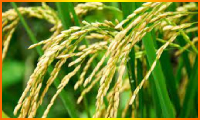
Govt sets target to procure 521.27 lakh tonnes of rice from kharif season.
The government has set a target to procure 521.27 lakh tonnes of rice being cultivated during the ongoing kharif season. It has procured 496 lakh tonnes of rice from last year's kharif crop.
Paddy is grown in both the kharif (summer-sown) and rabi (winter-sown) seasons.
Food Secretary Sanjeev Chopra chaired a meeting of State Food Secretaries and Food Corporation of India (FCI) on August 21 to discuss the procurement arrangements for the Kharif crop in the ensuing Kharif Marketing Season (KMS) 2023-24, which runs from October-September.
'A quantity of 521.27 lakh tonnes rice has been estimated for procurement during the forthcoming KMS 2023-24 (Kharif crop) as against the previous year estimates of 518 lakh tonnes wherein 496 lakh tonnes was actually procured during KMS 2022-23 (Kharif crop),' the food ministry said in an official statement.
During KMS 2023-24 (Kharif crop), rice procurement in Punjab is estimated at 122 lakh tonnes, Chhattisgarh (61 lakh tonnes), Telangana (50 lakh tonnes), Odisha (44.28 lakh tonnes), Uttar Pradesh (44 lakh tonnes), Haryana (40 lakh tonnes), Madhya Pradesh (34 lakh tonnes), Bihar (30 lakh tonnes), Andhra Pradesh (25 lakh tonnes), West Bengal (24 lakh tonnes) and Tamil Nadu (15 lakh tonnes).
A quantity of 33.09 lakh tonnes of coarse grains/millets (Shree Anna) has been estimated for procurement by the states during the KMS 2023-24 as against actual procurement of 7.37 LMT during KMS 2022-23 (Kharif & Rabi).
Six minor millets have also been introduced to be purchased by the states at MSP of Ragi starting this KMS 2023-24, up to three years.
Source: economictimes.indiatimes.com