
G20 Jaipur meet: India to seek revival of WTO dispute resolution mechanism.
India is seeking re-establishment of the dysfunctional dispute resolution mechanism under the World Trade Organisation (WTO) based on the principle of ‘common but differentiated responsibility’ along with a push towards consensus-based decision making as it sets the stage to discuss trade and investment issues during the two-day G20 Trade and Investment Ministerial Meeting beginning Thursday in Jaipur.
Union Commerce and Industry Minister Piyush Goyal Wednesday said India is confident that the ministerial meeting will yield a 'concrete actionable outcome' which will help the world withstand future shocks and invoked a 'Jaipur Call for Action' with support of G20 member countries to promote industry, MSMEs and expansion of trade.
Goyal said that there has been convergence on major issues in trade ministerial meetings among member G20 countries but acknowledged that there are some realities on which there is 'no possibility of a consensus' — referring to the Russia-Ukraine war.
'There is a good understanding between the member countries… but there are some realities (Russia-Ukraine conflict) on which there is no possibility of a consensus… agreeing on that is naturally not a possibility because it is a real situation… Barring this, we are trying to build a consensus on all the remaining priorities,' he said.
Goyal met WTO Director General Ngozi Okonjo-Iweala Wednesday and held bilateral meetings with trade ministers of Bangladesh, Brazil, France and the UAE. 'India wants the WTO to be modernised. Whatever changes are required as per today’s circumstances, India will play a crucial role in it. It is important that the dispute resolution mechanism, which has been dysfunctional from the last few years, is re-established. When WTO was established, the thinking was that growth rates were different for countries, there are different levels of development, the decisions should be based on that. Which is also referred to as common but differentiated responsibility (CBDR)…(there should be) consensus, decision should be as per agreement of everyone. This was an important issue when WTO was formed and India wants WTO to continue to stay like that,' he said.
Under the WTO, countries can appeal in the appellate body to adjudicate disputes. The appellate body at the WTO stopped functioning from December 2019, but the panels are still working. Several countries including the US have been pushing for reforms in the WTO.
Goyal said India supports the need for reforms in the WTO and the country’s engagement at the WTO ministerial will further the agenda as the voice of the less developed countries and the developing world. 'India has increasingly become the voice of the global south and our engagement with the WTO ministerial (in February 2024) will further our agenda as the voice of the less developed countries,' he said.
The discussions in the trade group meetings have focused on some of the world’s major challenges, complex issues to find concerted action-oriented solutions, he said. 'We have been able to come up with significant consensus amongst the member countries invoking a Jaipur call for action. The Jaipur call for action will help promote industry, MSME sector, upgrade the global trade help desk, and bridge information gaps for MSMEs to help them expand their business and trade,' Goyal said, adding that the members have deliberated on formulating high-level principles for digitalisation of trade and trade facilitation. There were five priorities before the Trade and Investment Working Group — trade for growth and prosperity, trade and resilient global value chains, integrating MSMEs in global trade, logistics for trade and WTO reforms, he added.
Source: indianexpress.com
Govt seeks duty removal on 90% exports to Asean.
The government is trying to get Asean nations to eliminate duties on nearly 90% of the goods exported from the country as it seeks to balance trade volumes and bring the 13-year-old treaty in line with 'more modern agreements'.
Earlier this week, India and the 10-nation bloc agreed to New Delhi's long-pending demand for a review, which the government believes is crucial to ensure that two trading partners have strong ties. Since the agreement was signed, India's trade deficit with Asean has shot up from around $5 billion in 2010-11 to $43.6 billion in 2022-23, a rise of 8.7 times. During this period, trade has increased 2.3 times to $131.6 billion, reflecting the asymmetry between growth in imports and exports.
Under the agreement, each Asean member had agreed to a different level of tariff elimination and India wants them - especially the higher income countries - to commit to greater opening-up given that free trade agreements with Australia and the UAE have seen tariffs eliminated on over 90% goods. Besides, India wants product specific restrictions imposed by Asean members withdrawn, as is the case with certain types of steel. Besides, the government is insisting that countries rework rules of origin as the current regime is seen to be porous and allows Chinese goods to be routed via third countries. Violations in goods such as set-top boxes from Vietnam, tin ingots from Malaysia, cold rolled stainless steel flat products, and cocoa of Ghana origin from Malaysia, have been reported by authorities.
While the services sector is not explicitly on the agenda, the government is also going to seek greater opening-up as someAsean members have refused to honour their obligations after pocketing the benefits on the goods side.
Source: timesofindia.indiatimes.com
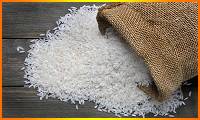
India to export rice to Mauritius & Bhutan in an exception for friends.
India will supply 14,000 tonnes of non-basmati rice this year to Mauritius and 79,000 tonnes to Bhutan under humanitarian operations, making an exception for two key diplomatic partners.
The decision has been taken after India received requests from both the nations to exempt the export prohibition on non-basmati rice, two government officials aware of the matter said.
Mint on 20 August reported that after the UN World Food Programme, and three nations—Singapore, Indonesia and the Philippines—had appealed to New Delhi to resume rice exports to their nations following India’s decision to suspend non-basmati white rice shipments to check prices effective from 20 July.
Bhutan requested India to allow rice exports after India’s ban on shipments of non-basmati rice caused global rice prices to rise. Bhutan in late July made a diplomatic request for rice shipments of up to 90,000 tonnes.
Similarly, a request from the Mauritius to exempt it from the prohibition for a supply of up to 14,000 tonnes was also received earlier this month.
'Consignments of 60 containers carrying about 1,500 tonnes of non-basmati rice were due to sail on 19 August from Mundra port (in Gujarat). After the clearance, the containers will reach Mauritius in the first week of September before their rice stocks exhaust on 15 September. A total requirement of 14,000 tonnes of non-basmati rice is to be imported from India this year,' one of the government officials said.
Mauritius is a close and trusted foreign partner of India and annually imports around 24,000 tonnes of long grain white rice that is consumed by vulnerable groups.
During April-June of the ongoing financial year, India exported 784.14 tonnes of rice to Mauritius as against 843.46 tonnes during the corresponding period last year. In 2022-23 financial year, nearly 10,040 tonnes rice were exported to the nation by India.
Queries mailed to the embassies of Mauritius and the Bhutan in New Delhi, and India’s department of food and public distribution remained unanswered at press time.
India is the world’s biggest rice exporter, accounting for nearly 45% of the global rice trade. In April-June of the current financial year, the country exported 1.55 million tonnes of non-basmati white rice and 371,000 tonnes of broken rice compared with last year’s 1.15 mt and 141,000 tonnes, respectively.Neighbouring countries, including Bangladesh and Nepal, are heavily dependent on Indian rice, while some African countries are purchasers of broken rice.
India’s rice export ban, however, allows for government-to-government deals and for requests made by 'friendly countries' with genuine food-security needs
'To ensure adequate availability of non-basmati white rice in the Indian market and to allay the rise in prices in the domestic market, the government of India has amended the export policy from ‘free with export duty of 20%’ to ‘prohibited’,' the government announced in July.'But there is no change in the export policy of non-basmati rice (parboiled rice) and basmati rice, which form the bulk of rice exports. This will ensure that the farmers continue to get the benefit of remunerative prices in the international market,' read a press release by the ministry of consumer affairs, food and public distribution.
Source: livemint.com
Government not planning to restrict parboiled rice exports, says food secretary.
India has clarified its stance on parboiled rice exports, with Food Secretary Sanjeev Chopra stating that the country has no plans to impose any restrictions on the export of non-basmati parboiled rice.
This announcement comes after India had previously banned the export of non-basmati white rice last month, catching many buyers off guard.
Currently, there are no limitations on the export of parboiled rice, which accounts for approximately one-third of India's total rice exports. Despite earlier reports suggesting the possibility of an export tax on parboiled rice, the government's position remains unchanged.
India’s export ban on non-basmati white rice had led to global concerns, triggering a sense of urgency among stakeholders and intensifying apprehensions about food security.
The move set off a chain reaction, prompting a race to secure supplies and raising concerns about the potential consequences of this disruption.
The implications of this export ban, projected to curtail the availability of a vital staple food by approximately one-fifth in the global market, spurred a scramble among stakeholders to adapt to the changing landscape.
Importers, in particular, continue to face the prospect of constrained supplies and surging prices, leading to increased volatility in the market.
As the international community grapples with the fallout from India's decision, importers are increasingly exploring alternative strategies to manage the impact. One possible outcome is the rise in government-to-government agreements, as importers seek to counter the shortage and regulate price fluctuations.
Amidst these developments, concerns over food security have taken center stage. The ban's potential to disrupt the supply chain has raised alarms, particularly in regions heavily reliant on imports to meet their food needs.
Source: indiatoday.in

NAFED begins to dispose 2022-23 chana stocks in some States.
The Government has started the process of offloading chana (Bengal gram) stocks procured during the 2023 rabi season in several states in a move aimed to keep the prices of the pulses variety under check.
Over the past couple of days, the National Agricultural Co-operative Marketing Federation of India Ltd (NAFED) has started inviting bids from interested buyers for disposal of chana procured under the price support scheme in Karnataka, Telangana, Andhra Pradesh and Rajasthan.
Chana prices have been heading north over the past couple of months, following the bullish trend in the pulses complex led by tur (pigeon pea) and urad (black matpe) as their production was impacted by excess rains last year, leading to short supplies and price rise. Also t sowing of tur and urad has been impacted in the ongoing kharif season due to delayed monsoon and deficit rainfall in Karnataka and Maharashtra, aiding the bullish price trend.
Chana prices have moved up by about a fifth since early July and in consuming market of Delhi closed at over Rs.6,000 per quintal on Wednesday.
Record output
According to the Agriculture Ministry’s third advance estimates, chana production during the rabi season in 2022-23 touched a record 135.43 lakh tonnes. NAFED has procured about 23.5 lakh tonnes during the 2022-23 rabi marketing season. Along with the carry-forward stock of around 14 lakh tonnes from the previous season, total stocks stood at 37.5 lakh tonnes before the start of disposal. NAFED has been selling the previous year’s stocks in the recent weeks and has began the process of selling the 2022-23 stocks now.
'The sale of rabi 2023 stocks is on expected lines and is likely to help contain the rising prices,' said Rahul Chauhan of IGrain India. 'We need to see what price NAFED gets for the 2023 tenders,' he said.
For the rabi 2022 stocks sold in the recent auctions, prices were in the range of Rs.5,519-5,699 in various States depending on the quality, Chauhan said.
Source: thehindubusinessline.com
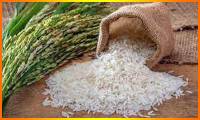
One Day Workshop on 'Production of Basmati Rice for Export' organised at Sherpur, Hiranagar.
Department of Agriculture Production and Farmers’ welfare Kathua, in collaboration with Basmati Export Development Foundation under Agricultural Processed Food Products Export Development Authority (APEDA) organized a One Day Workshop on 'Production of Basmati Rice for Export' here dat Sherpur, Hiranagar. The Event was organised to discuss an action plan to boost export from basmati Growing Regions of Kathua District thereby harnessing their potential of agricultural produce exports.
Joint Director (Extension), Agriculture Production & FW, Jammu R.K Hiteshi, Chief Guest on the occasion highlighted the importance for the production of quality Basmati of international standards. He exhorted the farmers to increase the area under basmati cultivation which will help in raising their income and also use judicious chemicals in paddy production so that international quality pesticide free basmati rice can be produced.
Chief Agriculture Officer, Kathua Sanjeev Rai Gupta said thrust has been made by Department of Agriculture Production and Farmers Welfare to aware the Farmers to promote export quality (Pesticide residue free) Basmati in Kathua’s Basmati growing regions. He said, during 2022-23, 6940 Ha of land in Kathua was under quality Basmati Cultivation with average Yield of 27 Qtl./ Ha producing 186680 Qtls. of good quality Basmati Rice.
Dr. Netra Pal Sharma, Senior Scientist, BEDF (Basmati Export Development Foundation) under APEDA gave detailed technical lecture on 'Good Agricultural Practices' for the production of Basmati meeting International standards. He informed that India is No. 1 Exporter of Basmati in the world and Jammu Basmati is most sought after. There is great scope for area expansion and doubling of farmers income by producing pesticide residue free Basmati for export.
Vishal Sharma, Scientist, deliberated upon good quality Basmati Production and covered all aspects of Integrated Pest Management / Integrated Disease Management underlining judicious use of insecticides/fungicides.
Dr. Vishal Mahajan, Head, Krishi Vigyan Kendra, Kathua deliberated upon the use of Organics for production of Basmati Rice, simultaneously assured transfer of technological advancements and new researches to farmers at every crop stage.
The successful workshop concluded with a 'vote of thanks 'by Murari Digra, District Agriculture Officer (Extension), Kathua and participation of large number of Basmati growers.
Other officers and officials present on the occasion were Rajiv Katoch, Programme Coordinator, Rajesh Mankotia (Subject Matter Specialist- District Level), Anil Kumar, Assistant Soil Chemist, Soil Testing Lab, Kathua, Purshottam Gupta, Sub divisional Agriculture Officer, Kathua, Ashwani Sharma, Sub Divisional Agriculture Officer, Hiranagar, H.Q Dayalachack, Sanjiv Mehta and Surinder Sharma, Subject Matter Specialists-Sub Division Level, Parmod Kumar, Agriculture Extension Officer, Kathua , Dr. Shivali Sharma and Pooja Andotra, District Nodal Officer, Women Self Help Groups, Kathua.
Source: universalnewstimeline.com

Area under maize gains as Indian growers switch from cotton, pulses.
Farmers have planted more corn (maize) in Madhya Pradesh, Karnataka and Maharashtra and the total area under the hardy crop in the country has exceeded 81.24 lakh hectares (lh) as of August 18. This is against 79.41 lh covered a year ago. Delayed arrival of monsoon and slow progress has resulted in a section of farmers preferring to plant corn over other crops such as pulses and cotton .
Madhya Pradesh has seen the area under maize increase to 17.41 lakh hectares (lh) from 15.99 lh a year ago. The area under maize in MP is above the normal (average of five years) of 13.48 lh. Similarly, Karnataka has seen maize area increase to 14.53 lh (13.79 lh in the same period a year ago) and Maharashtra at 8.77 lh (8.74 lh). The area is up marginally in Uttar Pradesh at 7.54 lh (7.49 lh), Jharkhand at 2.19 lh (1.99 lh) and Telangana at 2.05 lh (2.01 lh). However, the acreage is marginally down in Rajasthan at 9.42 lh (9.44 lh) and Gujarat at 2.82 lh (2.87 lh).
Hanuman Sahay Jat, Director, ICAR-Indian Institute of Maize Research (IIMR), said the kharif acreages are on the higher side compared to last year. Due to the late onset of monsoon farmers have taken up short-duration varieties. 'The crop condition is good and almost similar to the last year. We are expecting a good crop this year,' Jat said.
Record output
As per the third advance estimate, India’s maize production was a record 35.91 million tonnes (mt) during 2022-23.
However, Bhagirath Chaudhary, director, South Asia Biotechnology Centre, said the government must seriously look into the management of fall army worm, a dreaded pest that had surfaced in maize, a few years ago. 'The pest is still active, but it is below the economic threshold levels in maize. Farmers have learnt to deal with the pest, but at an additional cost of ?3,000-4,000 per acre, which results in a higher cost of cultivation for them,' he said.
'Though we are close to last year’s level of 81.5 lh , yields may be a concern this kharif on account of deficit rains and higher temperature levels in August,' said Tarun Satsangi, specialist- global commodity research at agritech firm Absolute.
Source: thehindubusinessline.com
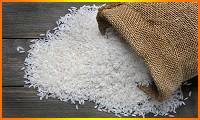
India not planning to restrict parboiled rice exports, clarifies food secy.
India is not considering imposing any restrictions on the exports of non-basmati parboiled rice, Food Secretary Sanjeev Chopra said on Tuesday.
Last month, India surprised buyers by imposing a ban on the export of widely consumed non-basmati white rice, following a ban on broken rice exports last year.
Currently, there are no restrictions on the exports of parboiled rice, which constitutes nearly a third of India's total rice exports.
Source: business-standard.com

Reserve Bank nudges banks to settle UAE trades in rupee, dirham: Sources.
India's central bank is nudging local banks to ask their clients to settle trade between the United Arab Emirates and India using the dirham (AED) or Indian rupee (INR) to reduce U.S.-dollar-based transactions, five sources told Reuters.
The move is part of the Reserve Bank of India's broader aim of promoting settlement in local currencies with countries with which India has a trade deficit, with the knock-on effect of boosting the rupee's global reach, three banking sources said.
India's trade deficit with the UAE was $21.62 billion in 2022/23, or 8.2% of its total deficit, government data shows. In July, the two countries agreed to facilitate trade in rupees instead of dollars.
The idea, a government source said, was to reduce the outflow of dollars on account of this trade deficit.
'The RBI has asked banks to encourage clients and corporates to initiate INR-AED trades gradually, instead of using the dollar,' said a treasury official at a private bank.
An RBI official communicated this message verbally to foreign exchange dealers at a seminar this month, four sources said. This communication has not been previously reported.
None of the sources wished to be named because they are not authorised to speak to the media. The RBI and trade ministry did not respond to a Reuters email seeking comment.
The RBI may consider setting internal targets for the quantum of India-UAE trade it would like to see moved away from dollars, said the government source.
The central bank is 'keen that volumes of such trades go up' and 'has assured the market that they will be ready to support banks with INR-AED trades,' this banker said.
While data on such cross-currency trade volumes is not publicly available, at least three bankers said the current volume is low and may act as a hurdle for corporates to pay for the entire import in dirhams.
Indeed, earlier this month, Indian Oil Corp paid Abu Dhabi National Oil Co (ADNOC) in rupees to buy a million barrels of oil.
'The RBI is telling banks to first encourage large clients and corporates to start INR-AED trades because their balance sheets are relatively stronger,' another banker said.
But large corporates have, so far, been reluctant in engaging in non-dollar-denominated deals, said a banker with a state-run firm.
With smaller companies, on the other hand, bankers have pushed for such transactions by offering discounted service charges as an incentive, the banker said.
Source: economictimes.indiatimes.com
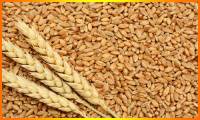
No plans to import wheat from Russia, says government.
Food Secretary Sanjeev Chopra on Tuesday said there are no plans to import wheat from Russia under any diplomatic deal.
Talking to reporters, he said that are also no plans to restrict non-basmati par boiled rice exports.
Last month, Centre had imposed a ban on the export of widely consumed non-basmati white rice, following a ban on broken rice exports last year.
He also informed that government will buy 52.1 lakh tonnes of rice from farmers this year as against 49 lakh tonnes procured last year.
He said that fortified rice will also be given through National Food Security Act.
Source: economictimes.indiatimes.com