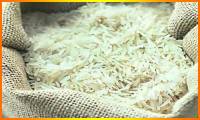
Govt sets higher rice procurement target as production may increase.
Based on initial estimates from States, the country’s rice production in the current kharif season will likely exceed last year’s 110 million tonnes (mt), sources said. Accordingly, the Food Ministry, on Tuesday, announced that the target for next season’s procurement beginning October 1 has been marginally raised to 52.1 mt from the current season’s actual purchase of 49.6 mt.
Last year the government had set the procurement target at 51.56 mt from kharif-grown rice. Though main procurement is carried out between October and March, the purchase in some States like Assam and West Bengal continue until June as kharif paddy’s harvesting is delayed in other States.
Addressing media, Food Secretary Sanjeev Chopra said the target is based on the feedback shared by State governments at the two-day Food Ministers’ conference on fortification that concluded on Tuesday.
4% higher area
Official sources said most of the State Government representatives informed that the production in their States would be almost at par with the previous year, based on the acreage report. The Agriculture Ministry will release its first estimate of kharif crops’ production for 2023 kharif season in the third week of September. The official target has been fixed at 111 mt for kharif 2023.
Paddy acreage has been completed in 90 per cent of normal area and is 4 per cent more than the year-ago period. The sowing area was 360.79 lakh hectares (lh) until August 18 against 345.79 lh a year ago. Higher acreage has been reported from Telangana (by 4.42 lh), Bihar (4.15 lh), Chhattisgarh (2.71 lh), Jharkhand (2.24 lh), Haryana (1.64 lh), West Bengal (1.47 lh), Uttar Pradesh (1.28 lh), Punjab (0.40 lh) and Madhya Pradesh (0.32 lh). But lower acreage was seen in Andhra Pradesh (1.53 lh), Karnataka (1.47 lh), Assam (0.61 lh) and Odisha (0.43 lh).
Fuelling speculation
Meanwhile, Chopra also said there is no proposal, as of now, to restrict exports of parboiled non-basmati rice. But until a decision is taken by the government, it could not be shared, he quipped, fuelling speculation that it could be still under consideration.
On July 20, the Centre banned exports of non-basmati white rice to boost domestic supply and keep retail prices under check during the upcoming festive season. In September last year, exports of broken rice were banned.
As per official data, India’s total exports of basmati rice were 4.56 mt worth $ 4.8 billion in 2022-23. Non-basmati rice exports were 17.79 mt worth $6.36 billion. In the April-June period of this fiscal, about 1.55 mt of non-basmati white rice was exported against 1.16 mt in the year-ago period.
The ban on the export of non-basmati white rice, which has a 25 per cent share in the rice export basket, will lower prices in the domestic market, benefiting consumers, the Food Ministry said last month.
Asked about the wheat import plan, Chopra said the government has no such plan. Some media reports have said the government has been negotiating with Russia to import wheat at discounted rates in a government-to-government deal.
Source: thehindubusinessline.com
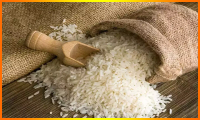
Centre to fully implement rice fortification programme before March 2024 target.
The government will implement fully rice fortification programme before the scheduled target of March 2024, a top food ministry official said on Tuesday. Prime Minister Narendra Modi, in his Independence Day address in 2021, said the government aims to distribute fortified rice via the government schemes by 2024.
Thereafter, a scheme for the distribution of fortified rice, containing prescribed micronutrients (Iron, Folic Acid, Vitamin B12) was launched in October 2021 in a phased manner in order to address the problem of anaemia in children and women.
In April 2022, the Cabinet Committee on Economic Affairs (CCEA) approved the supply of fortified rice throughout the Public Distribution System (PDS), Integrated Child Development Services (ICDS), Pradhan Mantri Poshan Shakti Nirman-PM POSHAN (erstwhile Mid-Day Meal Scheme) and other welfare schemes in all states and Union Territories (UTs) by 2024 in a phased manner.
The entire cost of rice fortification, which is around Rs 2,700 crore per annum, would be borne by the Centre as part of the food subsidy till its full implementation up to June 2024.
'We had planned to complete the universalisation of fortified PDS rice by March 2024. But, with the pace of distribution, we are hopeful of reaching the target before that and the entire PDS (rice) will be fortified ...in the next few months,' Food Secretary Sanjeev Chopra told reporters here.
As of date, he said the Food Corporation of India (FCI) has 240 lakh tonnes of rice, of which just 12 lakh tonnes is non-fortified rice.
Chopra also asserted that fortified rice is safe for people with sickle cell anaemia and thalassemia.
He explained that through PDS fortified rice only 7 mg per day of iron will be consumed while the human body can take 40-45 mg per day of iron.
The secretary said the government will also look at revising the advisory on fortified rice being harmful to people with sickle cell anaemia and thalassemia in light of new evidence.
Globally, Chopra said, 90 countries are using fortification of food items.
The Department of Food and Public Distribution organised a one-day National Seminar on Rice Fortification here.
While addressing the seminar, Chopra said, 'We are on track to achieve the target of 100 per cent distribution of fortified rice across all rice-consuming districts in the country.'
As per the plan, in the first phase, the target was to cover ICDS and PM POSHAN in India by March 2022.
Under the second phase, the plan was to extend the scheme to beneficiaries of PDS and other welfare schemes in all aspirational and high-burden districts on stunting (a total of 291 districts) by March 2023.
In the third phase, the target was to cover the remaining districts of the country by March 2024.
In April this year, Chopra informed that a total of 269 districts in 27 states started distributing fortified rice under PDS, achieving a 100 per cent target set for Phase II by March 2023.
The ministry has also developed Standard Operating Procedure (SoP) for adherence to Quality Assurance (QA) & Quality Control (QC) protocols on the production and distribution of fortified rice/ FRKs (fortified rice kernels).
Food regulator FSSAI, the regulatory/licensing authority for food fortification, has drafted standards for FRK and Pre-mix, and provided direction to all the stakeholders for the operationalisation of draft standards with immediate effect.
Source: economictimes.indiatimes.com

Uzbekistan s economic stability provides immense opportunities for Indian investors.
India’s key partner in Central Asia – Uzbekistan – has been maintaining stable economic growth and the re-election of President Shavkat Mirziyoyev has provided tremendous opportunities for prospective Indian investors in the resource rich country.
Several sectors in Uzbekistan are open to foreign investments and India is one of the sought after partners. Regular flights between Delhi and Tashkent could further contribute to growth momentum of the Uzbek economy. Political stability of Uzbekistan coupled with predictable policies could be point of attraction for Indian investors.
India and Uzbekistan signed a Joint Statement in September 2019 to set up a joint feasibility study for entering into negotiations for a Preferential Trade Agreement (PTA). It is hoped that PTA could be signed soon and that would open up India’s entry into Kyrgyzstan as well as Tajikistan.
Notable Indian investments in Uzbekistanby Indian companies include those in the field of pharmaceuticals, amusement parks, automobile components, and hospitality industry. Indian majors like GMR have expressed interest in investment in airports, development of air corridor, Navoi cargo complex in Uzbekistan; KDAH (Ambani Hospital) from Mumbai has expressed interest in setting up a specialty hospital.
Investments in various fields, including pharma and healthcare, textiles and auto components, agriculture and food processing, and mining and jewellery sector are in various stages of discussion.
In the field of education in October 2019, AmityUniversity and Sharda University opened campuses in Tashkent and Andijan respectively. Indian institutions like iCreate are actively cooperating with Uzbek counterparts for promoting start-up ecosystems in Uzbekistan and training entrepreneurs in setting up incubators. Indian companies like Dev IT have entered into bilateral cooperation in field research, technologies, start- ups and innovations with budding Uzbek partners.
India’s National Thermal Power Corporation is also participating in various tenders including solar PV power plants and consultancy assignment for gas projects in Uzbekistan. India and Uzbekistan have set up National Coordination Committees to oversee the implementation of mutually agreed projects and initiatives.
India has granted market access for lemon and melon from Uzbekistan. Pest Risk Analysis (PRA) for plum and sweet cherries have been completed and is further under process. Uzbekistan has granted market access for banana and mango from India. PRA for Soyabean oil cake has been completed and additional information has been sought. Request for PRA from India include wheat, wheat flour, potato, pomegranate and pomegranate seeds.
Indian investors can get further impetus from the fact that Uzbekistan has maintained high growth dynamics during the first half of the year despite an unstable external environment. Uzbekistan’s economy is expected to maintain stability through the year and is expecting higher investments from India. Today Uzbekistan provides predictable financial environment and friendly people besides regular connectivity to further promote business ties.
Inflation in Uzbekistan continues to slow down. In January-June, prices increased by 3.5%, while in the same period in 2022 by 6.5%. In annual terms, inflation slowed to 9% (in June 2022 – 12.2%). Food inflation slowed from 8.9% in January-June 2022 to 4.1% over the same period this year. Similarly, the growth of prices for non-food products slowed from 5.8% to 3.1%, for paid services from 3.3% to 2.9%, according to official data.
Investments from centralized sources in the first half of the year increased by 2.4%, in particular, at the expense of budget funds by 3.6%. Foreign investments and loans guaranteed by the government increased by 6.9%. Industrial production in the first six months of this year grew at a faster pace compared to the same period in 2022 – 5.6% versus 5.1%, respectively.
The main factors of economic growth are due to the timely adoption of urgent measures to support entrepreneurs, as a result of which the growth of the manufacturing industry amounted to 6.3% (5.9% for the first half of 2022), the mining industry by 0.2% (-0.5%).
In agriculture, in particular in crop production and animal husbandry, there is an acceleration in the growth rate of output to 3.8% (in January-June 2022 – 2.7%).
Foreign trade turnover in the 1st half of the year increased by 19.4% to $29.2 billion. Exports increased by 23% to $12.1 billion, imports by 17% to $17 billion.
The export growth is due to an increase in the supply of machinery and transport equipment to foreign markets by almost 60%, gold by 47%, services by 41%, food by 33%, various finished products by 25%. At the same time, exports of non-food raw materials decreased by 26%, fuel and energy resources by 20%.
Source: economictimes.indiatimes.com
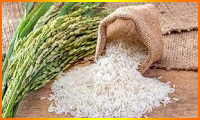
Advisory asks labs not to mention info on shelf life of fortified rice & kernel.
The food authority has put out an advisory regarding the shelf life of fortified rice and fortified rice kernel and asked the labs not to mention any info regarding shelf life, as a study is undergoing on the subject.
According to FSSAI, the Food Corporation of India (FCI) is conducting a study to determine the shelf life of fortified rice, and fortified rice kernel and it may take more than 2 years to complete.
'In order to avoid any ambiguity with respect to shelf life of fortified rice and fortified rice kernel, all FSSAI notified laboratories are advised not to mention date of expiry or any information related to shelf life of the fortified rice, and fortified rice kernel until any further directions from the food authority,' reads the advisory issued by the FSSAI.
It was brought to the notice of FSSAI that in some cases Certificate of Analysis (CoA) issued by the fortified rice kernel manufacturers, contains expiry date.
'It has been further informed by the FCI that the quantum of procurement of fortified rice is much more than the annual requirement of NFSA/OWS schemes, therefore, a bulk quantity remain in storage beyond one year period,' reads the statement issued by FSSAI.
Source: fnbnews.com

India s exports to FTA countries contract at a faster rate.
Most of the free trade agreements that India has entered into over the years are not delivering the expected benefits. Giving a starker view of this, a recent analysis has showed that exports to the countries with which India has no bilateral trade pacts are holding up better in the current scenario, as compared to the shipments to the FTA partner countries.
In the first six months (January-June) of 2023 merchandise exports to FTA partners declined 18.2% on year while the overall decline in shipments during the period was only 8.1%, according to the analysis by trade policy think tank Global Trade Research Initiative.
The decline in exports to FTA partners brought down their share in overall exports to 26.8% in the Jan-June 2023 from 30.1% in the same period last year. The FTA partners with the biggest decline in exports are South Asia Free Trade Area AFTA (33.2%), South Korea (30%), Australia (25.4%), Japan (15.6%) and ASEAN (13.4%), according to GTRI.
While overall imports from FTA partners have also declined during the six months by 11%.Overall exports to FTA countries were $ 58.6 billion in the first half of 2023, down from $71.6 billion in the year ago periodr. Imports during Jan-June declined to $ 88.6 billion from $ 99.5 billion in the year ago.
The trade deficit with FTA partners also increased to $ 30 billion in January-June this year from $ 27.9 billion the same period last year.More than half of this deficit or $ 16.1 billion is accounted for by Asean alone which explains the insistence of India on review of Asean-India Trade in Goods. Last year the deficit during the same period was $ 19.3 billion.
Only with SAFTA is India running a surplus of $ 10.3 billion on exports of $ 12.7 billion and imports $ 2.4 billion. Last year’s surplus with Safta which includes Afghanistan,Bangladesh, Bhutan, India, Maldives, Nepal, Pakistan and Sri Lanka was $ 16.7 billion.
Deficit with Australia ($ 4.2 b), Japan ($6.2 b), Korea ($ 6.7b), UAE ($7.2b). Overall India’s merchandise exports in Jan-June were $ 218.7 billion, down 8.1% from last year. Imports during the period were at $ 325 billion, down 8.3% on year. Services imports touched US$ 89.8 billion during January-June 2023, exhibiting a growth of 8.1 % over the same period last year (Jan-June 2022). Services exports reached a turnover of $166.7 billion during January-June 2023, exhibiting a healthy growth of 17.7 % over the same period last year .Services imports touched$ 89.8 billion during in the first half of 2023, exhibiting a growth of 8.1 % over last year.
India’s foreign trade – Exports and Imports of Merchandise and Services – reached$ 800.6 billion during January-June 2023.
Source: financialexpress.com

BRICS Summit 2023 Live: India will be growth engine of world, says PM Modi in Johannesburg.
Leaders from the economies of Brazil, Russia, India, China, and South Africa attended the Business Forum of the 15th BRICS Summit in Johannesburg on Tuesday. The summit, scheduled to take place from August 22 to 24, saw the attendance of Prime Minister Narendra Modi and Brazil's President Luiz Inacio Lula da Silva, upon the invitation of South African President Matamela Cyril Ramaphosa.
Russian President Vladimir Putin chose to address the meeting virtually rather than attend in person, while Russia's Foreign Minister Sergei Lavrov represented the country at the event.
Meanwhile, Chinese President Xi Jinping opted to skip the key meeting, although he had arrived in South Africa ahead of his state visit.
This marks PM Modi's third visit to South Africa, commemorating the 30th anniversary of the diplomatic relationship between India and South Africa.
The current BRICS summit is being presided over by South Africa, with the theme for this year's summit being: 'BRICS and Africa: Partnership for mutually accelerated growth, sustainable development, and inclusive multilateralism.'
Source: hindustantimes.com
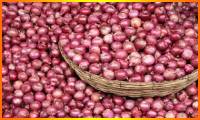
Govt will procure more stock, Piyush Goyal assures onion farmers.
Union minister for commerce and consumer affairs Piyush Goyal on Tuesday told onion farmers not to worry about the export curbs on the vegetable, saying the government will purchase an additional 200,000 tonnes of onions for the buffer stock at a 'historically high' price of Rs.2,410 per quintal to guard their interests. He said the Nafed and the NCCF will set up procurement centres at all onion producing areas in Maharashtra, MP and other states to ensure that the farmers get a good price for their produce.
Source: economictimes.indiatimes.com

Tripura to export 32 MT of processed maize to Maharashtra: Agriculture Minister.
Tripura Agriculture Minister Ratan Lal Nath on August 18 said that the state government will send 32 metric tons of processed maize to Maharashtra.
He said that 32 metric tons of processed maize from the state will be sent to Maharashtra through a private agency while in the first phase, 16 metric tons of maize will be sent on August 19.
Minister Nath said this while inaugurating the sale centre of NERAMAC organic crop on the premises of the Horticulture and Soil Conservation Office today.
'In this outlet of NERAMAC, various crops and products produced organically in the state will be available. Later, various products produced by self-help groups and self-entrepreneurs will also be available in this outlet along with products produced through natural means', said the Agriculture Minister.
The Minister said that at present, the state has such outlets of NERAMAC at Agartala-Akhaura Integrated Land Port, Sadar Sub-Divisional Magistrate's Office, and Secretariat.
'NERAMAC outlets will also be opened at Agartala Railway Station, Sabroom Integrated Land Port, and Srimantapur Integrated Land Port', said Nath.
Nath said that various products available in the outlet will be sold in various wards of the city area in a mobile vehicle approved by NERAMAC.
This mobile vehicle was also formally inaugurated today.
Minister Nath said that India ranks fourth in the world in terms of organic farming area.
'India ranks after Australia, Argentina, and Spain. According to a survey of 2021, 23 lakh hectares of land in the country are under organic farming. Sikkim has been declared a 100 percent organic state among the North-Eastern states. So far 26 metric tons of aromatic rice, 62 metric tons of ginger, 14 metric tons of turmeric, and 149 metric tons of pineapple have been marketed in the state in the financial year 2022-23 and 2023-24 under organic farming About 50 thousand metric tons of pineapples have been produced organically on 5 thousand 86 hectares of land in the state', he said.
Source: indiatodayne.in
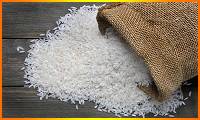
India s ban on white rice exports: Singapore seeks exemption.
The Singapore Food Agency (SFA) has said it is in contact with Indian authorities seeking an exemption from the ban on exports of (non-basmati) white rice.
In a statement to the media, SFA said through its forward looking strategies such as the Rice Stockpile Scheme, 'our overall supply of rice is currently stable and there is enough rice for everyone if everyone buys what we need'.
Under the Rice Stockpile Scheme, rice importers are required to hold an inventory equivalent to twice their monthly imports. This will ensure adequate supply of rice in the market.
India’s share in imports
'We review the inventory buffers regularly and stand ready to work closely with the industry, if any adjustments are needed,' the statement said.
India accounted for 40 per cent of Singapore’s rice imports, 'Only the import of non-basmati (rice) is affected by the ban,' it said. Shipments of non-basmati rice make up 17 per cent of the total rice imports.
Nevertheless, there could be supply disruption and the Singapore Government will do 'what we can to minimise the impact'. 'We will not be able to completely mitigate disruptions to our food supply,' the SFA said.
The agency said consumers 'are encouraged to be flexible and adaptable' by switching to other varieties of rice, or other sources of carbohydrates 'in the event of disruption'.
Imports from 30 nations
Singapore has a multi-pronged strategy of import diversifications and stockpiling to manage supply chain disruptions to rice imports, it said. The island-nation imports rice from over 30 countries.
The statement comes in the wake of India’s July 20 ban on exports of white rice and prices of rice soaring in the global market above $600 a tonne. Indian parboiled rice and Thailand’s 25 per cent broken are the only varieties ruling below $600.
The Indian government banned exports of white rice as part of its efforts to control rising foodgrain prices in a crucial year ahead of the 2024 Parliament elections. The move was a measure to overcome any supply shortage in view of rains damaging paddy crops in Punjab and Haryana, besides deficient rains affecting the sowing of paddy in Karnataka, West Bengal, Chhattisgarh, Tamil Nadu, and Andhra Pradesh.
Source: thehindubusinessline.com

India s exports to FTA countries contract at a faster rate.
Most of the free trade agreements that India has entered into over the years are not delivering the expected benefits. Giving a starker view of this, a recent analysis has showed that exports to the countries with which India has no bilateral trade pacts are holding up better in the current scenario, as compared to the shipments to the FTA partner countries.
In the first six months (January-June) of 2023 merchandise exports to FTA partners declined 18.2% on year while the overall decline in shipments during the period was only 8.1%, according to the analysis by trade policy think tank Global Trade Research Initiative.
The decline in exports to FTA partners brought down their share in overall exports to 26.8% in the Jan-June 2023 from 30.1% in the same period last year. The FTA partners with the biggest decline in exports are South Asia Free Trade Area AFTA (33.2%), South Korea (30%), Australia (25.4%), Japan (15.6%) and ASEAN (13.4%), according to GTRI.
While overall imports from FTA partners have also declined during the six months by 11%.Overall exports to FTA countries were $ 58.6 billion in the first half of 2023, down from $71.6 billion in the year ago periodr. Imports during Jan-June declined to $ 88.6 billion from $ 99.5 billion in the year ago.
The trade deficit with FTA partners also increased to $ 30 billion in January-June this year from $ 27.9 billion the same period last year.More than half of this deficit or $ 16.1 billion is accounted for by Asean alone which explains the insistence of India on review of Asean-India Trade in Goods. Last year the deficit during the same period was $ 19.3 billion.
Only with SAFTA is India running a surplus of $ 10.3 billion on exports of $ 12.7 billion and imports $ 2.4 billion. Last year’s surplus with Safta which includes Afghanistan,Bangladesh, Bhutan, India, Maldives, Nepal, Pakistan and Sri Lanka was $ 16.7 billion.
Deficit with Australia ($ 4.2 b), Japan ($6.2 b), Korea ($ 6.7b), UAE ($7.2b). Overall India’s merchandise exports in Jan-June were $ 218.7 billion, down 8.1% from last year. Imports during the period were at $ 325 billion, down 8.3% on year. Services imports touched US$ 89.8 billion during January-June 2023, exhibiting a growth of 8.1 % over the same period last year (Jan-June 2022). Services exports reached a turnover of $166.7 billion during January-June 2023, exhibiting a healthy growth of 17.7 % over the same period last year .Services imports touched$ 89.8 billion during in the first half of 2023, exhibiting a growth of 8.1 % over last year.
India’s foreign trade – Exports and Imports of Merchandise and Services – reached$ 800.6 billion during January-June 2023.
Source: financialexpress.com