
India-UK trade talks: Duty on cars, whisky likely to be slashed.
India and the UK have softened positions on most of their points of contention as both nations try to wrap up trade talks ahead of expected national polls next year, according to people with the knowledge of the matter.
While New Delhi has agreed to slash tariffs on British cars and scotch whisky, the UK is willing to relax some visa rules for Indian professionals, Indian officials said, asking not be identified as the discussions are private. Nevertheless, with immigration a politically sensitive subject in the UK, a British official indicated any visa relaxations are likely to be limited.
Prime Minister Narendra Modi and his British counterpart Rishi Sunak are pushing to double bilateral trade by 2030 through a pact that slashes tariffs and increases market access. The two governments hope to wind up the trade talks before year-end, Indian and British officials said.
Britain is willing to accept New Delhi’s standards on environment protections and labor — a key Indian demand given the differences in economic development and sensitivities involved for its micro-, small- and medium-sized firms, the officials added.
Striking a trade accord is critical for India’s ambition to become a manufacturing powerhouse, while the UK is seeking to clinch new deals to highlight the benefits of Brexit. Sunak and Modi will have an opportunity to discuss the matter face-to-face at a Group of 20 summit in New Delhi next month.
A spokesperson for the UK trade department said its made 'good progress' in closing chapters and both countries are now 'laser-focused' on goods, services and investment.
'While we cannot comment on ongoing negotiations, we are clear that we will only sign when we have a deal that is fair, balanced, and ultimately in the best interests of the British people and the economy,' they said.
The negotiations on visas are likely to be particularly sensitive. India has long demanded increased access for its citizens, but the UK’s vote for Brexit in 2016 was fueled in part by calls for greater control over the numbers of people coming into the country, and immigration remains a hot-button topic ahead of the next general election.
Underscoring the difficulties Sunak’s government faces, net migration to the UK reached a record 606,000 people last year, while separate visa data has shown one in three residence visas were granted to Indian workers. A UK official said talks are centering on time-limited business visas for highly skilled workers.
The deal, if it materializes, will be India’s biggest and most ambitious free trade agreement to date. This comes at a time when many western economies are pinning their hopes on the South Asian nation to become a bulwark against China’s growing economic and military clout.
Good Progress
Even as the two nations have been reluctant to set a date for completing the talks after missing a deadline last year, negotiations have been progressing well, the people said. Indian Commerce Minister Piyush Goyal’s decision to visit Britain last month put political momentum behind talks, one UK official said.
The Sunak administration is also considering signing an agreement that will help Indians claw back half a billion pounds in payments made by them toward Britain’s social security system, the Indian officials said.
India is looking to bring down the import duty on cars to 75% from the current 100%. However, this will exclude small capacity cars and there would be a cap on the number of vehicles sold under these lower tariffs, the people said.
Similarly, on scotch whisky, New Delhi may slash duties to 100% from the existing 150% charged above a minimum import price. The premium category may see a steeper tariff cut. Easier market access in both these sectors has been one of the main demands of the UK.
Most of the debate is now centered on determining the criteria for the import duty cuts on goods under the trade deal and India’s proposal for an investment protection treaty, the officials from New Delhi said.
The UK and India are yet to concur on the contours of the treaty promoting and protecting investments on a reciprocal basis, the officials said. New Delhi’s proposal to exhaust local judicial remedies before initiating international arbitration in case of disputes has still not found favor with the UK, they added.
Source: economictimes.indiatimes.com
J&K Govt to conduct GI Mahotsav.
J&K government Wednesday constituted a core committee and three sub-committees for successful conduct of the 'Gl (Geographical Indication) Mahotsav' in the Union Territory.
GI is a form of Intellectual Property Right (IPR) that identifies goods originating from a specific geographical location and having distinct nature, quality and characteristics linked to that location.
In the past couple of years, many J&K products have acquired GI tags. On August 8, Rajouri Chikri Wood craft from Rajouri district and Mushqbudji rice of Anantnag district received the GI tag.
As per GAD order, the Core Committee will oversee all arrangements and preparations for organizing the Gl Mahotsav. It will comprise Administrative Secretary of Agriculture Production Department as chairman, while Administrative Secretaries of Industries and Commerce; Rural Development & Panchayati Raj; Information & Public Relations; Transport; Hospitality & Protocol and Tourism & Culture departments will be its members.
Besides, a representative each of Department for Promotion of Industry & Internal Trade, Ministry of Commerce & Industry, Gol; Finance Department, not below the rank of Additional Secretary; Home Department, not below the rank of Additional Secretary and School Education/Higher Education Department, not below the rank of Additional Secretary will also be its members.
Director, Agriculture Kashmir and Jammu will be its member secretary for Srinagar and Jammu respectively. The Committee will be serviced by the Agriculture Production Department.
Its Sub-committees with Director Industries and Commerce, Kashmir and Jammu as chairman will operate at divisional level(s) and will identify and select 100 Gl registered products. They will identify and select and invite 100 artisans or exhibitors to showcase selected Gl products during the event.
They will ensure that all logistics (fabrication & infrastructure) like stalls, stage, decor etc. and other requisite facilities are made available at the venue besides any other arrangements as may be required.
Accommodation/Transport Committee with Director, Hospitality & Protocol Department, J&K as its chairman, will make arrangements for hotel accommodation up to 3-star ranking (twin sharing) for artisans or exhibitors; for their 'to & fro' transportation (from venue to accommodation) besides will make adequate arrangements of accommodation and transportation for VlPs and guests from Government of India and states for the event.
Publicity/Cultural Show Committee with Director Information, J&K as its chairman has been tasked to give wide publicity to the event at UT and national level, through newspapers, electronic media, social-media and online platforms.
It will facilitate design, print & installation of promotional materials- hoardings & banners, signage; ensure making of short films, videography and photography of the event besides making arrangements for one-hour cultural shows on each day- evening time and arrangements for quiz/cooking shows etc.
It will also facilitate Gl awareness, workshop interaction and knowledge sharing sessions for which it will invite experts, entrepreneurs, artisans, students, academicians, scholars etc.
It will submit the outcome or output report of the event also.
Source: greaterkashmir.com
More than 75 nations participates in the first-ever global Summit on Traditional Medicine.
The first World Health Organization Global Summit on Traditional Medicine was inaugurated today at Gandhinagar, Gujarat alongside the G20 health ministerial meet. Director-General of WHO Dr Tedros Adhanom Ghebreyesus and the Union Minister of Ayush, Shri Sarbananda Sonowal, Union Minister of Health and Family Welfare Dr. Mansukh Mandaviya were invited to light the ceremonial lamp to the accompaniment of auspicious hymns dedicated to Dhanvantari, the god of Ayurveda.
Chief Minister of Gujarat Shri Bhupendra Rajnikant Patel, Union MoS for Ayush Dr Munjpara Mahendrabhai Kalubhai, and senior delegates of WHO were also present on this occassion
On his inaugural address Dr Tedros Adhanom said, 'Traditional Medicine is as old as humanity itself. However, it is not a thing of the past. It has a growing relevance in communities and cultures even today.' Commending the Indian Government's Ayushman Bharat Initiative, he praised the country's medical system. Dr Tedros also noted the seamless integration of traditional medicine into primary healthcare in rural areas.
Addressing the gathering, Shri Sarbananda Sonowal said that the outcome of the historic WHO Traditional Medicine Global Summit will help to propose recommendations for a dedicated forum within future G20 presidencies. He reminded the gathering that the integrative approach of the government of India is resulting in the establishment of dedicated Ayush Departments in all AIIMS. He said that it all has happened just because Hon’ble Prime Minster Shri Narendra Modi ji had a clear vision about the efficacy of Ayush and he strongly supported the efforts to give allround boost to the Ministry of Ayush for the benefit of masses of India and the world.
On this occasion, Dr Mansukh Mandaviya, highlighted the significant contributions of Mahatma Gandhi and Sardar Patel in nation-building. He emphasized that with the WHO GCTM leading the way towards a more prominent role of traditional medicine in mainstream healthcare, India is well-positioned to become a knowledge hub and unlock the full potential of TM. The pharmaceutical and cosmetic industries are both showing significant interest in traditional medicine and more than 170 countries around the world are utilizing it. The summit provides an ideal platform for international collaboration and the exchange of ideas to promote best practices in the sector, he concluded.
Speaking next, the Chief Minister of Gujarat, Shri Bhupendra Patel shared how the Prime Minister Shri Narendra Modi believed that traditional medicine could play an effective role in dealing with a crisis like the covid pandemic. Following this thought, he began connecting other countries of the world with the mission of Traditional Medicine. His initiative has now emerged as the world's first Traditional Medicine Global Summit.
Many visitors were drawn to the experiential Ayush Exhibition Zone which took place alongside an exhibition of traditional medicine systems from WHO’s six regions. The theme of the exhibition was ‘Ayush for Planetary Health and Well-being’ and is envisioned with showcasing the achievements of the Ministry of Ayush in areas of Education, Healthcare, Research and Public health. The Zone welcomed visitors with a display of medicinal plants including those used in Ayurveda.
The ministry's pursuit of sustainable Ayush manufacturing and zero-waste was highlighted through an impressive pavilion. The exhibition featured their recycling practices and interactive kiosks, which allowed visitors to access comprehensive information about Ayush, including the location of all Ayush hospitals and a digital library with research papers related to the field. A virtual reality experience of Ayush Healthcare services was available. The mythical wish-fulfilling tree, the Kalpavriksha was the highpoint of the Ayush Exhibition Zone. In addition, visitors could engage in an immersive experience, featuring an AI-based Ayurveda Pulse diagnosis, body constitution analysis, and even a live Yoga demonstration.
Source: pib.gov.in
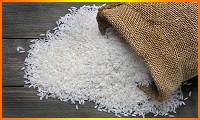
Myanmar Eyes Surge In Rice Exports After India Curbs Supply.
Myanmar expects rice exports to surge in coming months as curbs on Indian sales and a spike in Thai and Vietnamese prices force buyers to hunt for other origins.
The tightening in global supply should help revive the Southeast Asian nation’s rice shipments, which slumped 56% in the first four months of the fiscal year, and bring it closer to its annual goal of earning $1 billion from exports of the grain, Ye Min Aung, president of the Myanmar Rice Federation, said in an interview last week.
Source: bloomberg.com
Samples tested in primary lab can't be sent to NFL under PPP mode: FSSAI.
The food authority has issued an order with respect to labs working in Public Private Partnership (PPP) mode that if samples were tested in any of the primary notified lab, irrespective of their geographical location, the appeal samples cannot be sent to the National Food Laboratory operating under the PPP mode with such private labs.
The FSSAI has issued an order in this regard mentioning three private labs including M/s Arbro Pharmaceuticals Pvt. Ltd. (M/s APPL), M/s Vimta Labs Limited and M/s National Commodity Management Services Limited (Formerly National Collateral Management Services Limited), which are working in a PPP mode with National Food Laboratory Ghaziabad, National Food Laboratory, JNPT, Mumbai, and National Food Laboratory, CPT, Chennai, respectively.
The order reads that ‘It is to inform that, if a sample has been tested in any of the primary notified laboratories mentioned above, irrespective of their geographical location, the appeal/referral sample shall not be sent to the National Food Laboratory operating under the Public Private Partnership (PPP) mode with the same primary notified laboratory where the primary sample was tested.’
Earlier, FSSAI has ordered that the Appellate/Referral Samples may be sent to any Referral Laboratory as per their valid scope of testing irrespective of their areas of jurisdiction. However, since some labs are working in PPP mode with private labs, the food authority felt the need for a clarification, remarked an industry expert.
Source: fnbnews.com
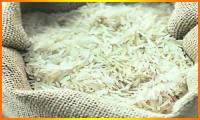
Rice prices top $600/tonne in global market except Indian parboiled.
Prices of all varieties of rice in the global market are ruling above $600 a tonne, barring Indian parboiled 5 per cent broken and Thailand 25 per cent broken white rice following India’s ban on white rice shipments from July 20.
The huge surge in prices, seen after almost a decade-and-a-half, has now led to fears among global traders that Thailand and Vietnam could resort to curbs on exports, while India could either ban or impose export on parboiled rice exports, traders have said.
'(Rice) Export prices further increased 3-6 per cent due to the panic buying from foreign buyers (in view of India’s white rice export ban),' the US Department of Agriculture said in its weekly note on rice prices.
Local reports in Bangkok, Thailand, said domestic prices in packets will rise by 3 baht (?7 approximately) a kg from September after paddy prices have increased to record highs.
20% jump in exports
Exporters and traders said demand for Indian parboiled rice has increased sharply after the ban on white rice export. This has resulted in fears, particularly among traders abroad — especially Singapore — that the Indian government might step in to curb the exports by either imposing a duty or ban it altogether.
Data made available to businessline show that at least 6.5-7 lakh tonnes of parboiled rice have been exported between July 21 and August 17 — a jump of 20-25 per cent — with the Kakinada port accounting for over 30 per cent of the shipments.
During the April-June period of the current fiscal, 2.02 million tonnes (mt) were exported, while in the 2022-23 fiscal, parboiled accounted for 7.85 mt of the 17.86 mt.
'Indian parboiled rice is quoted far lower than parboiled from other origins. So, there is an arbitrage which global traders are trying to cash in on,' said S Chandrasekaran, a New Delhi-based analyst.
El Nino impact
According to the Thai Rice Exporters Association, Thailand parboiled 100 per cent sortexed is ruling at $615, while Indian 5 per cent parboiled is quoted at $478-82 a tonne. Pakistan has no stocks. Thailand’s 25 per cent broken white rice is ruling at $582.
Fears of curbs on rice exports from leading producing countries are high since South-East Asia is currently going through a dry period.
'Thailand is witnessing a dry period as also Malaysia and Indonesia. Things are not looking bright for rice,' said a trade source. The prolonged dry period is seen due to the El Nino impact, which leads to drought and lower rainfall in Asia.
'Things will soon be under control. Parboiled prices have dropped to $450 a tonne in India today (August 17) and arrivals have begun in Nellore,' said BV Krishna Rao, President, The Rice Exporters Association (TREA).
DGFT meet with exporters
However, prices of rice in the domestic market are increasing. 'Consumers will have to pay more over the next couple of months,' said Rao.
The USDA said Thai rice export prices have increased by around $120/tonne since the Indian government imposed an export ban of non-basmati (white) rice on July 20, 2023. 'Also, domestic rice prices were under upward pressure as local mills reportedly secured rice supplies to build up their inventories and to fulfill contracted shipments,' it said.
Thai rice prices have increased despite the weakening of the Thai baht to 34.75 baht from 34.07 baht to the dollar last week.
Meanwhile, the Directorate-General of Foreign Trade had a meeting with rice exporters, who urged the Centre to permit exports of consignments that had entered the ports on July 19.
'The ban came into effect on July 20 but Customs Department stopped permitting exports the same day even if consignments had entered earlier. The Commerce Ministry wants these shipments to be allowed,' said a Delhi-based exporter.
Ban to control prices
Traders, who attended the meeting, see remote chances of the ban on white rice exports being lifted before February 2024 since the Government wants to review the kharif rice arrivals, which could continue till January.
The Government banned exports of (non-basmati) white rice as part of its efforts to control rising foodgrain prices in a crucial year ahead of the 2024 Parliament elections. The move was a measure to overcome any supply shortage in view of rains damaging paddy crops in Punjab and Haryana, besides deficient rains affecting sowing of paddy in Karnataka, West Bengal, Chhattisgarh, Tamil Nadu, and Andhra Pradesh.
However, the situation has improved since then with the area under kharif paddy increasing nearly 5 per cent as of August 11 to 328,22 lakh hectares. Rice stocks with the Food Corporation of India as of August 1 was 24.3 mt, a four-year low. However, it has an additional 19.61 mt of paddy (13.13 mt of rice), which is higher than 19.45 mt a year ago.
Source: thehindubusinessline.com
Trend line on India-UK FTA very positive, says High Commissioner Doraiswami.
Ahead of the 12th round of the India-UK free trade agreement (FTA) negotiations starting in New Delhi on Wednesday, the Indian High Commissioner to the UK has expressed optimism that officials on both sides will be 'able to get something working' and find a 'right fit' towards a mutually beneficial pact. High Commissioner Vikram Doraiswami told PTI that he is positive as both countries seem keen to make necessary adjustments, recognising the complexities involved with the very different structures of the two similar-sized economies.
On the wider bilateral partnership, he expressed similar optimism around an 'obvious synergy' across different sectors.
'I'm positive about it (FTA)… My intention is that to the extent we can, we would like a mutually beneficial forward-looking FTA to be concluded,' said the High Commissioner.
'I believe both sides are keen on making the necessary adjustments. Even though we're both similar-sized economies, we are dissimilar in the structures of our economies and the complexities of our economies. So, getting the right fit together is very important,' he said.
The senior diplomat closely involved with the FTA negotiations, which began in January last year, noted that it is important that the UK side recognises some of the complexities of the structure of the Indian economy.
'It can't be the same as a free trade agreement with a peer-developed country. On the other hand, we too have to take into account the fact that the UK hasn't actually negotiated many free trade agreements in recent years when it was part of the European Union. So, there are those things that have to be adjusted. But overall, the trend line seems very positive,' he said.
The 11th round of negotiations concluded on July 18, with a joint outcome statement saying it covered detailed draft treaty text discussions across nine policy areas. According to official UK government statistics, the bilateral trade partnership was worth around GBP 36 billion in 2022 and an FTA is set to significantly enhance that relationship.
'I think our government has been very clear that we want the best possible partnership with the UK and, I believe, from what I hear from the UK leadership on both sides of the political aisle as well as from the senior leadership of the government here, that they too want a forward-looking partnership with us,' said Doraiswami.
India's Commerce Secretary Sunil Barthwal has said the 11th round of talks in London was 'very intense' and many issues got closed.
Out of the total 26 chapters in the proposed FTA, 19 have been closed. Investment is being negotiated as a separate agreement (bilateral investment treaty) between India and the UK.
'Now, there are only a few issues left. The UK team is coming to India during the Trade and Investment Working Group meeting (in Jaipur) and we are hoping that we would be closing those remaining issues.
'So, our target is that we close the issues with the UK when the UK team visits us in India and we are very hopeful that the issues will be sorted out,' Barthwal told reporters in New Delhi on Monday.
Noting that India-UK history is a complex one, High Commissioner Doraiswami stressed the importance of the bilateral partnership after 76 years of Independence from colonial rule to be informed by what happened in the past but not allow 'ourselves to become prisoners of it'.
'It's important that we build a relationship that touches upon our respective strengths. London is still one of the world's great capitals of finance, for instance. India is the future direction of global growth. There is an obvious synergy between the need for high-quality, well-priced finance for our infrastructure rollout, for our green transitions. And, there is obviously a need for quality finance to find the best possible rewards in terms of places to go to invest. Both of these obviously speak for themselves,' he said.
Asked about the recent visit to India of UK Security Minister Tom Tugendhat, who announced a GBP 95,000 fund to tackle Pro-Khalistan Extremism in the wake of an attack on the High Commission in London in March, the High Commissioner said it marked a milestone moment in enhancing the security pillar of the bilateral partnership.
'We live in an uncertain and often challenging world, increasingly so… It makes absolute sense for countries like the UK and India to work much more closely together to recognise that there are more complex challenges than the simple ones that people talk about. It's not just nation-states alone. There are challenges in terms of what is happening among communities, how communities are being radicalised, how it is changing the shape of domestic politics,' he said.
'In all of this, it is important for countries like the UK to work with us because we too have an understanding of how some of this happens. So, the visit of Security Minister Tugendhat last week is a very important milestone and I think he would have come back with a strong sense of how keen we are to make a proper, viable functioning security pillar part of our partnership,' he added.
On the business aspect of the relationship, the envoy pointed to how Indian businesses have built a huge presence in the UK market and stressed that 'it is really now time that we got more British businesses into India as well'.
Source: economictimes.indiatimes.com
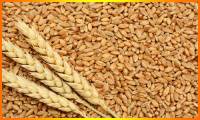
India considers wheat imports from Russia at discount to calm prices.
India is in talks with Russia to import wheat at a discount to surging global prices in a rare move to boost supplies and curb food inflation ahead of state and national elections next year, according to four sources.
The imports would allow New Delhi to intervene more effectively in the market to drive down wheat prices that stoked inflation to a 15-month high in July.
'The government is exploring the possibility of imports through private trade and government-to-government deals. The decision will be made cautiously,' one of the sources told Reuters, when asked about wheat imports from Russia.
India has not imported wheat through diplomatic deals in years. The last time India imported a significant amount of wheat was in 2017, when private traders shipped in 5.3 million metric tons.
The government's plan to import Russian wheat is one of the supply-side measures being considered to bring down prices of key commodities like fuel, cereals and pulse along with an extension of rural schemes to ease the impact of inflation on the poor, two of the sources with knowledge of the matter said.
Sources did not want to be named as the discussions are private and the final decision might be weeks away. India's finance, trade and government spokespersons did not reply to emails and messages seeking comment.
Last month, Sanjeev Chopra, the most senior civil servant at the federal food ministry, said there was no proposal to import wheat from Russia.
LOW WHEAT STOCKS
Although India needs only 3 million to 4 million metric tons of wheat to plug the shortfall, New Delhi might consider importing 8 million to 9 million tons of wheat from Russia to have a far bigger impact on prices, another source said.
Since the war in Ukraine last year, Russia has become India's second biggest seller of goods mainly on account of discounted oil purchases by New Delhi.
'Russia has indicated its willingness to offer a discount on prevailing market prices. There are no restrictions on the export of food commodities from Russia,' one official said.
India is also importing sunflower oil from Russia and settling payments in U.S. dollars and is planning to use the same approach, the official added.
'India can easily secure a discount of $25 to $40 per ton from Russia. This will ensure that the landed cost of wheat remains significantly below local prices,' said a dealer based in Mumbai with a global trade house.
Wholesale wheat prices in India surged around 10% over two months to a seven-month high in August on limited supplies.
Wheat stocks at government warehouses were at 28.3 million tons on Aug. 1, 20% below the 10-year average.
Last year, India banned wheat exports due to lower output, and this year's crop is also expected to be at least 10% lower than the government's estimate.
Source: economictimes.indiatimes.com
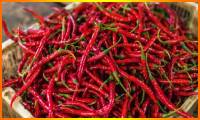
China may renew importing Indian chilli as its crop is hit by floods.
As floods in parts of China impact production, Indian red chilli exporters expect demand to return from the largest buyer amidst declining stocks in the neighbouring country. As a result, prices, which had retraced from the high levels in May, are seen rebounding in the weeks ahead.
China, the largest buyer of Indian chillies, had made aggressive purchases till May this year and the demand had slowed down in recent months.
Bangla too joins the list
'China’s production in some areas has been affected by 30-40 per cent due to floods and it may renter the market again. With fresh buying coming up from China and also from Bangladesh, we expect prices to go up by ?10-20 per kg in the coming weeks,' said Sambasiva Rao Velagapudi, Chairman, All India Chilli Exporters Association in Guntur, the largest market-yard for the spices crop.
Rao said chilli stocks in China are down by about 75 per cent. 'A month ago, China had 2,000 containers of stocks. Now they are having only 500 containers,' Rao said, adding that the low stocks would trigger renewed demand from the neighbouring buyer.
India’s chilli exports touched a record high in value during 2022-23 fiscal, exceeding ?10,444 crore, as per Spices Board data. China had purchased over 1.57 lakh tonnes of Indian chillies valued at over ?3,408 crore in 2022-23, accounting for about a third of the export value. Chilli is the largest produce in India’s spices export basket, accounting for almost a third of the value of overall shipments of ?31,761 crore.
After hitting a high of ?220-240 per kg in May, prices of Teja chilli, the pungent variety preferred by Chinese buyers, retraced a bit on slack demand during recent months. Now, prices of Teja chilli are likely to return to the ?220-245 range, Rao said, adding that another variety Super 10, which has medium pungency, is ruling in the same range. 'We are also expecting good demand for Super 10 chilli from Sri Lanka and Malaysia,' Rao said.
India’s current chilli stocks are similar to last year’s levels, Rao said, adding that in Guntur and Andhra stocks are estimated at around 60 lakh bags (of 40-kg each). The current stocks in Telangana are at around 27 lakh bags and 30 lakh bags in Karnataka, he added.
Further, Rao said many people who had bought at high prices during March-May may not want to sell now and wait for better prices till November-December.
'The market (prices) has been subdued in the last few weeks, with the price of chillis (Teja) hovering around ?24,000 per quintal. We expect the Chinese buyers to come back in the next few weeks in the wake of depleting stocks. If they come back, we expect the prices to go up by ?2,000-4,000 a quintal,' Rama Rao, a chilli exporter from Khammam, one of the major chilli trading centres in the country, said.
Another exporter, wishining anonymity, said that the Chinese stocked piled chilli by buying big time in May. 'If we go by the indications, their stocks plummetated. India being a major chilli producer in the world, we expect them to resume purchases in large quantities in the next few weeks,' he said.
Telangana is ranks fourth in chilli area with 1.55 lakh hectares and second in chilli production with 7.19 lakh tonnes. According to the Prof. Jayashankar Telangana State Agricultural University, the Guntur market, a hub for chilli trade, recorded arrivals of 1.55 lakh tonnes in January-February 2023, against 1.19 lakh tonnes during the same period previous year, showing a growth of 30.66 per cent.
Source: thehindubusinessline.com
Exports to UK holding up among top 10 destinations of Indian exports.
India and the UK are currently negotiating a Free Trade Agreement (FTA). Out of the total 26 chapters in the proposed FTA, 19 chapters have been closed
Among India’s top 10 export destinations, India’s merchandise exports in the first four months (April-July) of 2023-24 expanded only to the United Kingdom (UK) while shipments to all other major economies contracted amid sluggish global demand.
Overall merchandise exports fell 14.5 per cent to $136.2 billion during the April-July period with outbound shipments contracting for the sixth consecutive month. However, exports to the UK grew at a robust 20.6 per cent to $4.5 billion during the same period, elevating the country to India’s fifth largest export destination from eighth position during the same period in FY23.
While disaggregated country-wise trade data for July is not available, data for April-June period shows exports of aviation turbine fuel ($324 million), smartphones ($292.5 million) and wallpapers ($147.2 million) drove India’s exports to the UK.
Among other top export destinations, outbound shipments to the US (-12.5 per cent), China (-14.9 per cent), Singapore (-13 per cent) and Bangladesh (-36.5 per cent) contracted in double digits.
Among India’s top 10 sources for merchandise imports, except for Russia (96.3 per cent) and Switzerland (15.8 per cent), inbound shipments from the rest of the countries contracted. While a 171 per cent jump in discounted crude oil imports drove inbound shipments from Russia during April-June period, a 30 per cent jump in gold shipments propelled imports from Switzerland during the same period.
India and the UK are currently negotiating a Free Trade Agreement (FTA). Out of the total 26 chapters in the proposed FTA, 19 chapters have been closed. India is hoping to resolve pending issues like the rules of origin, bilateral investment treaty and intellectual property rights, among others, by the end of this month. Next week, key officials from the UK would be visiting India for the Trade and Investment Working Group (TIWG) meeting in Jaipur. Minister of Commerce and Industry Piyush Goyal visited London last month to hold discussions with his counterpart Kemi Badenoch that saw the "closure of several chapters" in the negotiations.
'The ministers identified and focused on low-hanging fruits, which included the closure of several chapters in the negotiations. This pragmatic approach aimed at resolving issues where negotiators had encountered challenges. The visit proved to be critical in overcoming crucial obstacles and charting a path towards an ambitious and mutually beneficial trade deal,' according to a statement released by the commerce department.
India is also negotiating a Trade and Economic Partnership Agreement (TEPA) with the European Free Trade Association (EFTA) states that include Iceland, Liechtenstein, Norway, and Switzerland. Goyal held discussions on the progress of the agreement with a delegation from the European Free Trade Association, led by the Swiss State Secretary for Economic Affairs, Helene Budliger Artieda, in London on July 11 and 12.
Union Minister of State for Commerce and Industry Anupriya Patel last week informed Parliament that FTA negotiations or its review are a long-drawn process and the timeline for completion of such negotiations cannot be predicted since the parties to the negotiations are required to agree to the outcome.
'The Government enters into FTA with its trading partners considering various factors such as leveraging comparative advantages and the market access thereof for Indian products including those from agriculture sector, the trade complementarities, the strategic relationship, promotion of cooperative and collaborative activities as well as the domestic sensitivities. The benefits under FTA in terms of exports or competitive and diversified imports depend on a number of factors including externalities like the domestic industrial growth, domestic consumption trajectory, growth in partner country,' Patel had told Rajya Sabha.
Source: business-standard.com