
Peru looks at exporting avocados, fresh grapes, blueberries, gold to India.
With India and Peru agreeing to resume talks for a free trade agreement, the South American nation is looking to export avocados, fresh grapes, blueberries, and gold to India, Vice Foreign Trade Minister of Peru Teresa Stella Mera Gomez said. She said that technical teams of India and Peru would meet to start talks on modalities and scope of the proposed agreement.
The two countries started negotiations for an FTA in 2017. Five rounds of talks were held until August 2019 before the COVID pandemic disrupted the process.
'We are going to talk again about that (the modalities). Due to the pandemic many things changed so we want to replan additional modalities and our technical teams will hold that conversation,' Gomez has said.
When asked about areas of interest for Peruvian businesses in India, she said Peru's main interests are in exporting agricultural products like avocados, fresh grapes, and blueberries, and natural resources like gold, copper and calcium phosphates.
Most of the blueberries that are sold in India are sourced from Peru, she said adding the proposed agreement will at least deal with trade in goods and services.
'If areas like investments are to be made part of it will be decided by the technical teams,' she said.
India-Peru trade in 2022-23 stood at USD 3 billion. While India's imports from Peru were USD 2.2 billion, exports stood at USD 865 million.
India's main exports to Peru include automobiles, motorcycles and three-wheelers, polyester and cotton yarns, pharmaceuticals, iron and steel products, plastic products, and tyres. Main imports from Peru are gold, copper, synthetic filaments, phosphates of calcium, fresh grapes, fish flour and blueberries.
'In manufactured products also we are interested in finding space in India,' the minister said. She was here recently for the India-LAC conclave.
She added that Peru has free trade agreements with all major economies like the US, EU, China and Japan and is also a member of the Comprehensive and Progressive Agreement for Trans-Pacific Partnership.
'We are not competing in the same product. Our economies are complementary, which is very helpful in the negotiation process,' she said.
On investments, she said there is huge scope for Indian investments.
'We are in the centre of South America and we are developing a new port at Chancy (80 km north of Lima). It is going to be ready next year and would be able to take in bigger ships and reduce time to connect with Asian countries. That could be an opportunity for Indian businesses to manufacture products there,' Gomez said.
'We want Mahindra, Tata and all the Indian brands doing business in Peru. Indian automobiles, two-wheelers, and three-wheelers are very well known there…We need to have your products (manufactured) there in order to compete with the rest of the countries we are importing from,' she said.
Source: economictimes.indiatimes.com

11 food processing units costing Rs 1719 cr launched in AP.
Andhra Pradesh Chief Minister Y S Jagan Mohan Reddy has officially launched 11 food processing units, which were established with a budget of Rs 1,719 crore. The inauguration ceremony was held virtually, with six units being inaugurated and the foundation stones being laid for five additional units from the camp office.
These units have a combined production capacity of 3.14 lakh tonne of food items annually, around 40,307 farmers would benefit from these initiatives.
The Chief Minister announced the launch of four primary vegetable and fruit processing centres in the Annamayya and Chittoor districts, a millet processing unit at L Kota in the Vizianagaram district and an onion and tomato dehydration cluster at Thadakanepalle in the Kurnool district.
The ceremony also marked the foundation stone laying for three primary tomato processing centres in Satya Sai and Anantapur districts. Additionally, a groundnut processing unit was initiated at Dharmavaram in the Satya Sai district and a Mondelez India foods unit in Sri City, Chittoor district.
Reddy has emphasised Andhra Pradesh's remarkable commitment to farmers, disclosing that the state has allocated an impressive 8,000 crore for intervening and ensuring Minimum Support Price (MSP) during price drops. The state stands alone in providing MSP even for millets, intricately connecting them with the Public Distribution System (PDS) through Rythu Bharosa Kendras (RBKs). Reddy also highlighted the state's proactive approach, extending MSP coverage to crops not encompassed by the Central government.
Furthermore, the Chief Minister unveiled plans for significant agricultural advancements, including an expansive 55,620mt-capacity groundnut processing unit in Dharmavaram, set to benefit 15,000 groundnut farmers. He also revealed upcoming projects such as four vegetable and fruit processing centres in Annamayya and Chittoor districts, catering to 2,414 farmers, along with proposed tomato processing units in Satya Sai and Anantapur districts, aimed at supporting 3,588 farmers. Additionally, he noted the emergence of 32 primary and 13 secondary processing units for millets, with a notable 7,200mt-capacity secondary millet processing unit in Vizianagaram district, aimed at aiding millet farmers.
Source: fnbnews.com

More countries, including Japan, a few from the West, interested in UPI linkages: RBI.
The Reserve Bank on Thursday said the internationalization of the unified payments interface (UPI) system is a work in progress as it works towards linking it with more and more overseas counterparts, including some in the West and Japan. On February 21, 2023, the RBI announced the first linkage of UPI by integrating it with Singapore's Paynow, paving the way for faster and more transparent remittances between the two countries.
Reserve Bank Governor Shaktikanta Das launched the new linkage in association with his Singaporean counterpart Ravi Menon, who is the managing director of the Monetary Authority of Singapore.
Announcing the third monetary policy review, Governor Shaktikanta Das said the RBI was planning to use artificial intelligence in UPI payments and also to deploy near-field communication (NFC) technology to be used in offline payments in UPI-Lite.
It also enhanced the transaction limit for small-value digital payments to Rs 500 from Rs 200 on UPI Lite.
On UPI linkages with more countries, the deputy governor T Rabi Shankar told reporters that 'such integration has already been done with Singapore. And recently we signed an agreement with the UAE's payment system Integrated Payment Platform (IPP) to link UPI with their payment system.
'It is a work in progress and it will happen in the coming months and discussions are underway with a few other countries also for linking their payment systems with ours, including some advanced economies which have evinced interest in linking to UPI,' he said.
Governor Das chipped in saying 'UPI has now become internationally recognised. I am not saying it myself, but it is recognised very widely, and that it is perhaps the most efficient and advanced payment system in the world.
'At the recent G20 finance ministers and governors meeting, UPI was widely recognised. So this is a work in progress. We are already in discussion with a few other countries and it will happen soon.'
To a question from a Japanese journalist whether some officials from the world's third-largest economy has contacted RBI for UPI linkage, Shankar answered in the affirmative saying a Japanese minister has contacted us.
'We are happy that a country like Japan which is an advanced economy, is showing interest in the UPI. Currently, it is only at an intention stage as the contact was mostly exploratory level. NPCI is talking to the relevant Japanese agencies,' the deputy governor said.
AK Goel, the chairman of the Indian Banks' Association (IBA) said more user-friendly measures for UPI by way of conversational payments in UPI and further promoting the UPI-Lite by facilitating offline transactions using near field communication are expected to widen the coverage of UPI.
Source: economictimes.indiatimes.com

Prices of parboiled rice surge 12 per cent as global demand picks up.
Prices of non-basmati parboiled rice like IR 64 have surged nearly 12% in the past ten days, as markets such as Africa and West Asia are heavily buying this variety of rice from India to meet their domestic demand. Overseas demand for parboiled rice has shot up following the Centre's decision to ban the export of raw, white rice on July 20, given apprehensions among global buyers that India may ban export of parboiled rice as well. Industry executives said if the government does not put an export duty on non-basmati parboiled rice, then the IR 64 variety, which is consumed by the common people, will go out of the reach of the people. Parboiled rice is one that has been partially boiled in the husk at the paddy stage and has a yellowish hue.
'Since the ban on the export of raw, white rice, the demand for parboiled rice has seen an upward trend in Africa and the Middle East. In the Middle East, many companies and agencies are buying this rice for feeding their workers,' said Suraj Agarwal, CEO of Tirupati Agritrade, which markets and exports rice under the brand name RiceVilla. India has been the world's largest exporter of rice since 2012. Currently, it exports more rice than the combined shipments of the next three largest exporters - Thailand, Vietnam and Pakistan.
BV Krishna Rao, president of the Rice Exporters Association, said after the procurement of paddy starts, the government might assess the supply situation by December and consider lifting the ban. 'There is a warehousing problem at the Food Corporation of India as it is running out of space. So government will have to take some steps,' he said.
Source: economictimes.indiatimes.com

Paradip Port Authority (PPA) becomes fastest Major Port to handle 50 MMT Cargo in current fiscal.
Paradip Port achieved a major milestone by clocking record cargo throughput of 50.16 MMT Cargo on 8th August, 2023, by exhibiting 6.5% growth over the corresponding period of previous fiscal. This feat has been achieved by the Port in 129 days in the current fiscal compared to 140 days during the previous year. PPA has also handled record 942 nos. of Vessels in comparison to 812 nos. handled in the corresponding period of previous fiscal.
For the above feat, Shri P.L. Haranadh, Chairman, PPA expressed his gratitude to Shri Sarbananda Sonowal, Union Minister of Port Shipping and Waterways (MoPSW) under whose dynamic leadership and guidance, PPA could turn a new chapter. He said, 'Together, with the unwavering support of our dedicated workforce and the collective will of our nation, we shall continue to script remarkable success stories for Paradip Port—a story that exemplifies growth, sustainability, and a brighter tomorrow for generations to come.'
Shri Haranadh also congratulated all Officers/Employees, the user Industries, Stevedores, Steamer Agents, Trade Unions, PPP Operators to have their continued faith in the ability of the Port to serve them.
Source: pib.gov.in

Over 4 lakh hectares brought under natural farming in 8 states: Govt.
About 4.09 lakh hectares have been brought under natural farming in eight states with Andhra Pradesh leading the group, Agriculture Minister Narendra Singh Tomar said in Parliament on Tuesday.
The eight states are Andhra Pradesh, Madhya Pradesh, Chhattisgarh, Kerala, Odisha, Himachal Pradesh, Jharkhand, and Tamil Nadu, the minister said in a written reply to the Lok Sabha.
The Centre is promoting natural farming since 2019-20 through a sub-scheme, Bharatiya Prakritik Krishi Paddhati (BPKP), under Paramparagat Krishi Vikas Yojana.
'So far, 4.09 lakh hectare area has been brought under natural farming in 8 states,' Tomar said.
About 1 lakh hectares have been brought under natural farming in Andhra Pradesh, 99,000 hectares in Madhya Pradesh, 85,000 hectares in Chhattisgarh, 84,000 hectares in Kerala, 24,000 hectares in Odisha, 12,000 hectares in Himachal Pradesh, 3,400 hectares in Jharkhand, and 2,000 hectares in Tamil Nadu, he said.
Natural farming is chemical-free and based on the integrated agriculture and animal husbandry approach using livestock and local resources. The method relies on on-farm biomass recycling with major stress on biomass mulching, and the use of on-farm cow dung-urine formulations from local livestock.
Source: economictimes.indiatimes.com

PMKSK can transform India s farming sector.
Around 65% of the country’s population lives in rural areas and 47% is dependent on agriculture for livelihood, according to the Economic Survey 2022-23. Agriculture is a time-bound activity that requires the right agri-inputs at the right time to maximise production and productivity. Agri-inputs are essential ingredients of agriculture and an efficient delivery system plays a crucial role in the growth of farm income.
Source: hindustantimes.com

India to import tomatoes from Nepal amid surge in price, says Nirmala Sitharaman.
Union finance minister Nirmala Sitharaman on Thursday said that India will be importing tomatoes from Nepal, amid a record high surge in prices in the country.
During her speech in Parliament, Sitharaman informed that the first lot of imports are likely to reach in Varanasi, Lucknow and Kanpur cities in northern India by Friday.
Tomato prices have surged more than 1,400 per cent at the wholesale market to a record 140 rupees ($1.69) per kg in the past three months, with farmers citing reasons including poor rainfall, higher temperatures and a virus outbreak that have hit the crop, as per a Reuters report.
RBI governor Shaktikanta Das also said that a spike in tomato prices and rise in cereal, pulses contributed to inflation, while announcing key decisions of the Monetary Policy Committee (MPC) meeting. He further stated that the vegetable prices may see a significant correction.
The tomato prices witnessed a significant surge in June and July leading to high inflation. Vegetables prices, which have a 6 per cent weighting in the overall consumer price index (CPI), hit a seven-month high in June, rising 12 per cent month-on-month, reported PTI, citing official data.
Prices usually ease from August, when the harvest makes its way to the market, but this year, traders expect costs to remain high until October as supplies stay tight.
Costlier staples such as onions, beans, carrots, ginger, chillies and tomatoes not only feed voter discontent ahead of state elections in the next few months: The higher prices are likely to stoke retail inflation, which is expected to hit a seven-month high in July, diminishing the potential for the Reserve Bank of India (RBI) to lower rates this year.
Farmers in the third-biggest tomato-producing region in the southern state of Karnataka say poor rainfall, higher temperatures and a virus outbreak have hit the crop, which was planted on less land than a year ago because of a crash in prices.
Source: economictimes.indiatimes.com
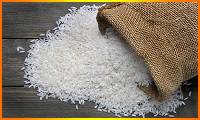
Indian parboiled rice prices surge as global buyers look to shift from white rice.
Prices of Indian parboiled (boiled) rice have increased by over $50 a tonne over the last couple of weeks on export demand following the government’s ban on shipments of non-basmati white (raw) rice.
Exporters were quoting prices between $460 and $500 a tonne (free-on-board), though some are wary of signing new deals as prices are swinging up and down on a daily basis.
On the other hand, trade sources said at least 1.7 lakh tonnes of parboiled rice are being shipped out of the Kakinada port this week, while many vessels have booked to call at the port to load rice shipments.
Thai continues to gain
The US Department of Agriculture (USDA) in its report on Thailand rice said export prices for all grades of rice increased by 5-10 per cent due to the strengthening of the baht and panic buying in the global market following India’s white rice shipments ban.
Thai rice export prices continue to increase with prices ranging between $15 and $45 a tonne higher than Vietnamese rice, compared to the typical price difference of $15-25/tonne, the USDA said.
'Parboiled rice is quoted at $475 a tonne. There is good demand for it from buyers of white rice, who are trying to shift since white rice prices are ruling over $550 a tonne,' said Delhi-based exporter Rajesh Paharia Jain.
'Parboiled prices were up until last week. They have cooled now to $460 as supply has increased. The downtrend will gain further over the next week,' said BV Krishna Rao, President, The Rice Exporters Association (TREA).
Daily price change
'F.o.b prices have touched $500 a tonne for parboiled rice. The market has gone crazy. Every day, prices are changing due to which not many transactions are taking place,' said VR Vidya Sagar, Director, Bulk Logix.
'Not many are willing to sign contracts with overseas buyers as they could get caught once prices change if they have commitments to meet,' said a trading source, without wishing to identify.
Sagar said he wasn’t signing any deals as prices are changing on a daily basis. 'Parboiled rice is quoted at ?40,000 a tonne ex-mill domestically,' he said.
'We got parboiled rice at ?37,100 a tonne. Export prices till top $500 a tonne over the next 7-8 days,' said Jain. 'We are seeing a shift from white rice as buyers are finding parboiled cheaper,' he said.
'There will certainly be a shift to parboiled rice but not fully. The current demand could be to test the variety, but not all will get converted to parboiled,' said TREA’s Rao.
Inflation control
There could be a 2-3 million tonnes (mt) of shift from white rice to parboiled, while Thailand and Pakistan could gain 2-3 mt of white rice market share. 'Another 2-3 mt could be lost out to demand restriction,' he said.
On July 20, the Government caught the global rice market by surprise, banning exports of white rice as part of its efforts to control rising foodgrain prices. The move is also seen as a measure to overcome any supply shortage.
Over the last two years, India has exported at least 17 million tonnes of non-basmati rice. On the other hand, rice stocks in the Central pool maintained by the Food Corporation of India (FCI) dropped to a seven-year low of 25.34 million tonnes in July. The agency has an additional 23.3 mt of unmilled paddy (15.72 mt of rice). The ban could result in rice shipments dropping by at least 6-7 mt.
Source: thehindubusinessline.com
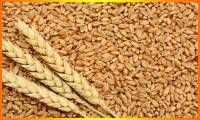
Government to sell five million tonnes of wheat, 2.5 million tonnes of rice in open market.
The government will sell 5 million tonnes of wheat and 2.5 mt of rice from its stocks in the open market, an official said on Wednesday, a move aimed at stabilising prices. This is in addition to the sale of 1.5 mt of wheat and 0.5 mt of rice announced a few months ago under the open market sale scheme (OMSS).
The domestic prices of these staples have been rising due to low supply. On Wednesday, the price of wheat surged to a six-month high.
"There has been a sharp increase in prices of wheat and rice recently," food secretary Sanjeev Chopra told reporters, adding that people have been hoarding wheat in anticipation of a price rise.
The country has adequate stocks of wheat and rice, which the government can release in the open market to stabilise prices, he said.
So far, about 0.7 mt of wheat has been sold through e-auction under the OMSS, while sale of rice has been negligible.
On August 1, the government's warehouses held approximately 28 mt of wheat and 24.3 mt of rice.
The average retail price of wheat declined from Rs.31.58 a kilogram in January this year to Rs.28.74 per kilogram in May but rallied again to Rs.29.59 a kilogram in July, the government told Parliament.
The average retail price of rice has risen to Rs.40.82 a kilogram in July from Rs.38.09 per kg in January.
Wholesale cumulative inflation in FY24 till the end of June was 7.6%, having added 10.7% in FY23.
A combination of low production, declining stocks and rising demand has fuelled the price rise.
The government pegged India's wheat production at a record 112.7 mt in 2023, but private estimates peg the harvest at 101-103 mt due to unseasonal rains.
Source: economictimes.indiatimes.com