09 Aug, 2023
APEDA facilitates export of first trial shipment of fresh pomegranate to USA via air.
In a major boost to fruits exports prospects, Agricultural and Processed Food Products Export Development Authority (APEDA), which works under the aegis of Ministry of Commerce and Industry, has facilitated the export of the first trial shipment of fresh pomegranate to the USA through air route. The first export consignment of pomegranate to USA was initiated by APEDA in collaboration with National Plant Protection Organization (NPPO) of India, the US’s Animal & Plant Health Inspection Service (US-APHIS), Maharashtra State Agricultural Marketing Board (MSAMB), ICAR-National Research Centre on Pomegranate, Solapur (NRC-Solapur) and others. Chairman, APEDA, Shri Abhishek Dev said that the increase in pomegranate exports to the USA would result in higher price realisation and increase in farmers' income. There has been encouraging response from the importers of the pomegranate shipment. The trial shipment of pomegranate was carried out by the APEDA registered ‘INI Farms’, which is amongst the top exporters of fruits and vegetables from India. It has built a value chain of banana and pomegranate by working directly with farmers. As a part of Agrostar group, complete services from agronomy, agri-inputs and off-take is provided to farmers with the produce exported to over 35 countries across the world. As the long-distance market and high cost was prohibitive in commencing commercial operations, the export of trial shipment of pomegranate would help in building capacities amongst Indian exporters and US importers by ensuring that quality fruits are exported. Buoyed over the acceptance of Indian mangoes in US markets, exporters are hopeful that pomegranate would also become a successful product in the USA. For ensuring traceability in the export value chain of pomegranate, APEDA organizes sensitisation programmes on a regular basis in association with state governments to register farms under AnarNet – a system developed by APEDA. APEDA has played a significant role in gaining market access by opening the pathway to allow high quality Indian pomegranates in USA and Australia. Because of its high antioxidant content and super fruit characteristics, ‘Bhagwa’ pomegranate from Maharashtra has a substantial export potential. The ‘Bhagwa’ variety of pomegranate has substantial demand in the overseas markets. The Solapur district in Maharashtra contributes almost 50 percent of the pomegranate export from the country. In 2022-23, 62,280 metric tonne of pomegranate worth USD 58.36 million was exported to the countries including United Arab Emirates (UAE), Bangladesh, Nepal, Netherlands, Saudi Arabia, Sri Lanka, Thailand, Bahrain, Oman. India is the second largest producer of horticulture crops. In 2021-22, India recorded a total 333.20 million metric tonne (MMT) production of horticulture crops out of which the share of fruits and vegetables is 90%. The total production of fruits during 2021-22 was 107.10 MMT and pomegranate accounted for around 3 MMT. India ranks seventh in production of pomegranate in the world and the total area under cultivation is around 2,75,500 hectares. In India, the major pomegranate producing states are Maharashtra, Gujarat, Karnataka, Rajasthan and Andhra Pradesh. APEDA has formed Export Promotion Forums (EPF) for Pomegranate to give an impetus to exports of pomegranate and remove bottlenecks of the supply chain. The EPF has representatives of the Department of Commerce, Department of Agriculture, state governments, national referral laboratories and top ten leading exporters of the product. In a continuous process, APEDA has taken several initiatives to address the concerns of the pomegranate value chain from pre production, production, post-harvest, logistics, branding, to marketing activities. Besides, establishing more than 250 export oriented European Union compliant pack houses in the private sector, financial assistance has also been provided to state governments under Common Infrastructure Development augment capacity infrastructures for exports. APEDA has chalked out strategies for country-specific export promotional programmes and organized International Buyer Seller Meets for EU countries, Middle East and South East Asian countries to tap export potential in new markets. The rise in the export of agricultural and processed food products is the outcome of APEDA’s various initiatives taken for the export promotion of agricultural and processed food products such as organising B2B exhibitions in different countries, exploring new potential markets through product-specific and general marketing campaigns by the active involvement of Indian Embassies. APEDA also organized a conference on the boosting export potential of natural, organic and GI-agro Products from the north-eastern states in Guwahati, Assam. The objective of the conference is to promote the export of natural, organic and GI agro-products grown in Assam and neighbouring states by creating international market linkages. In collaboration with the Union Territory of Ladakh, APEDA recently organized an International Buyer Seller Meet, which aimed at boosting exports of Apricots and other agri-products from Ladakh. Eighteen entrepreneurs from UTs of Ladakh and Jammu and Kashmir displayed a range of Apricots and other Agri Products. Twenty buyers from India, USA, Bangladesh, Oman and UAE participated in this event.
Source:
pib.gov.in
|
09 Aug, 2023
PLI schemes for food processing.
The Production Linked Incentive Scheme for Food Processing Industry (PLISFPI) was approved by the Union Cabinet on 31st March 2021 with a budget of Rs. 10,900 crores, to be implemented from 2021-22 to 2026-27. It consists of three components: incentivizing manufacturing in four major food product segments, promoting Innovative/Organic products of SMEs, and supporting branding and marketing abroad for Indian brands. Additionally, the PLI Scheme for Millet-based Products (PLISMBP) was launched in FY 2022-23 with an outlay of ?800 crore, utilizing savings from PLISFPI. The scheme boosts the capacity of the food processing industry by supporting food manufacturing entities that are willing to expand their processing capacity, incentivizing the growth of strong Indian brands, enhancing the presence of Indian food brands in the global market, creating more employment opportunities, and ensuring higher income for farmers. The Ministry is actively implementing three major schemes to promote the food processing sector: Pradhan Mantri Kisan SAMPADA Yojana (PMKSY), Pradhan Mantri Formalization of Micro Food Processing Enterprises (PMFME) scheme, and Production Linked Incentive (PLI) Scheme. These schemes offer comprehensive support across the entire food processing value chain, aiding the food industry in meeting international quality and safety standards for their food products. One of the objectives of the R&D scheme under PMKSY is to promote research and development in the field of food quality and safety standards in the food processing sector. Through this scheme, financial support is provided through grant-in-aid, covering 50% of equipment costs in general areas and 70% in difficult areas. Under another component scheme of PMKSY, known as 'Food Safety and Quality Assurance Infrastructure,' financial assistance is provided to Central/State Government and private sector organizations/universities for the establishment and enhancement of food testing laboratories across the country. This initiative plays a crucial role in ensuring compliance with FSSAI regulations, which, in turn, facilitates the maintenance of high-quality and safety standards of processed food products to meet global demands. To increase ethanol production, the Government is implementing the Ethanol Blended with Petrol (EBP) Programme nationwide. Various Ethanol Interest Subvention Schemes were introduced from 2018 to 2022, encouraging entrepreneurs to establish new distilleries or expand existing ones. The scheme offers an interest subvention of 6% or 50% of the interest charged by banks/financial institutions for five years, whichever is lower, along with a one-year moratorium, to promote ethanol production growth. Ethanol production from grain was also included under these schemes in 2021 to further promote ethanol production. The Ministry of Food Processing Industries (MoFPI) has been implementing the Pradhan Mantri Kisan Sampada Yojana (PMKSY), which addresses the infrastructure challenges being faced by SMEs and promotes technology adoption in the food processing sector. PMKSY supports establishment of cold chains, and other processing facilities, which contribute to improving the supply chain and storage capabilities in the food processing sector. 1,281 projects have been approved under PMKSY. The PMKSY provides significant support and incentives to food processing SMEs, encouraging their growth and development. Through financial assistance and other benefits, PMKSY facilitates the establishment of modern infrastructure/ technology, and capacity expansion for SMEs. This has led to increased processing levels, improved product quality, and enhanced market access for these SMEs. The Yojana has significantly boosted employment opportunities, particularly in rural areas, assisting in the generation of jobs for 13.09 Lakh people. The Ministry is implementing three major schemes – PMKSY, PMFME scheme, and PLI Scheme - to promote the food processing, thereby reducing food losses and promoting sustainability. The R&D Scheme under PMKSY aims to enhance production, including tech- based food processing innovation, quality, safety, and trade while promoting sustainability. The PLI Scheme for Food Processing Industry incentivises MSMEs that focus on innovative products, boosting innovation in the food processing sector. Additionally, the PLI Scheme for Millet-based Products promotes millets, which are special grains that need less resources to grow, provide excellent nutrients, and can withstand changes in the weather, which helps in achieving the goal of sustainability. To promote 'Brand India' globally, the PLI Scheme for Food Processing Industry supports companies with branding and marketing abroad, boosting emergence of strong Indian brands. Companies receive 50% financial incentives for expenditure on international branding, capped at 3% of food product sales or ?50 Crore per year, whichever is less. Presently, 77 applications are covered under this PLI component. This information was given by Union Minister of State for Ministry of Food Processing Industries Shri Prahlad Singh Patel in a written reply in the Lok Sabha today.
Source:
pib.gov.in
|
09 Aug, 2023

India exported Ayush, Herbal products worth $1,240 mn in last two years: Govt to Rajya Sabha.
India has exported a total of 1,240.6 million dollar Ayush and Herbal products in last two years (2021-2022 to 2022-23), the Central government told the Rajya Sabha on Tuesday. A total of 612.1 million dollar Ayush and Herbal products were exported in 2021-2022 while 628.25 million dollar Ayush and Herbal products were exported in 2022-2023, Union Minister for Ayush Sarbananda Sonowal informed through a written reply in the Upper House while responding to the query of a member. Citing the data provided by India Exim Bank, the Minister said Ayush and Herbal products are exported in different dosage forms such as tablets, powder, gel, ghee, paste, pills, eyedrops, nasal drops, body lotions, skin and hair care products. The Minister also said that 'India’s exports of Ayush and herbal products have witnessed an increased growth during the last few years.' Asked by MP Kartikeya Sharma about the schemes being implemented by the government and proposal for the future to increase the export of Ayurvedic medicines, Sonowal said 'Several schemes are being implemented by government to increase the export of Ayush and herbal products'. 'The Ministry has developed a Central Sector Scheme for Promotion of International Co-operation in Ayush (IC Scheme) under which the Ministry of Ayush provides incentives to drug manufacturers, entrepreneurs, Ayush institutions and Hospitals for international propagation of Ayush by participating in international exhibitions, trade fairs and road shows, and registration of Ayush products (Market Authorisation) at regulatory bodies of different countries for export; support for international market development and Ayush promotion-related activities,' said the Minister. Ministry of Ayush has signed 24 Country-to-Country MoUs, 46 Institute level MoUs, 15 Chair MoUs with different countries and has established 39 Ayush Information Cells in 35 foreign nations to enhance the export of Ayush and herbal products, he said. 'Ministry of Ayush and other Ministries such as the Department of Commerce, Department of Pharmaceuticals and Ministry of Health and Family Welfare all are engaged in bilateral and multilateral dialogue with different countries and forums like G20, SCO, and ASEAN,' the Minister said. The Ayush Export Promotion Council (AYUSHEXCIL) has been registered under section 8(4) of the Companies Act 2013 on January 4 last year under the Ministry of Ayush in support of the Ministry of Corporate Affairs to tackle the obstacles for registration of Ayush products abroad, undertaking of market studies and research activities abroad.
Source:
economictimes.indiatimes.com
|
09 Aug, 2023

Over 4 lakh hectares brought under natural farming in 8 states: Govt.
About 4.09 lakh hectares have been brought under natural farming in eight states with Andhra Pradesh leading the group, Agriculture Minister Narendra Singh Tomar said in Parliament on Tuesday. The eight states are Andhra Pradesh, Madhya Pradesh, Chhattisgarh, Kerala, Odisha, Himachal Pradesh, Jharkhand, and Tamil Nadu, the minister said in a written reply to the Lok Sabha. The Centre is promoting natural farming since 2019-20 through a sub-scheme, Bharatiya Prakritik Krishi Paddhati (BPKP), under Paramparagat Krishi Vikas Yojana. 'So far, 4.09 lakh hectare area has been brought under natural farming in 8 states,' Tomar said. About 1 lakh hectares have been brought under natural farming in Andhra Pradesh, 99,000 hectares in Madhya Pradesh, 85,000 hectares in Chhattisgarh, 84,000 hectares in Kerala, 24,000 hectares in Odisha, 12,000 hectares in Himachal Pradesh, 3,400 hectares in Jharkhand, and 2,000 hectares in Tamil Nadu, he said. Natural farming is chemical-free and based on the integrated agriculture and animal husbandry approach using livestock and local resources. The method relies on on-farm biomass recycling with major stress on biomass mulching, and the use of on-farm cow dung-urine formulations from local livestock.
Source:
economictimes.indiatimes.com
|
09 Aug, 2023

New Scheme in Public Private Partnership Mode.
Government has constituted a Screening Committee on leveraging agriculture innovations for farmer to facilitate combined implementation on pilot scale of selected technologies/interventions by Private companies/startups to develop and refine products based on field-level observations, data and inferences for a fixed period. Further, government has built Digital Public Infrastructure for Agriculture as an open source, open standard at interoperable public goods as per budget announcements for the 2023-24. In this regards, Architecture of three core registries i.e. Farmer registry, Geo referencing of village map registry, crop sown registry has been finalized. These registries can be used to develop various farmers centric solutions by the state governments as well as private sector entities. Expenditure Finance Committee has approved a Central Sector Scheme for blended Capital Support to finance startups for agriculture and rural enterprise relevant for Farm Produce Value Chain. Looking into the unique advantages of Drone technologies in agriculture, the Department of Agriculture & Farmers Welfare has released the Standard Operating Procedures (SOPs) for use of drones in pesticide and nutrient application in public domain in December 2021, which provide concise instructions for effective and safe operations of drones. In order to make this technology affordable to the farmers and other stakeholders of this sector, financial assistance @ 100% for purchase of agricultural drones and its attachments (actual cost of expenditure and its attachments or Rs. 10.00 lakhs, whichever is lower) together with the contingent expenditure is extended under Sub-Mission on Agricultural Mechanization (SMAM) to the Farm Machinery Training & Testing Institutes of Indian Council of Agricultural Research, Krishi Vigyan Kendra (KVK) and State Agricultural Universities (SAUs) and @ 75% to FPO’s for its demonstration on the farmer’s fields. In order to provide agricultural services through drone application, financial assistance @ 40% of the basic cost of drone and its attachments or Rs. 4 lakhs, whichever is less also provided for drone purchase by existing and new Custom Hiring Centers (CHCs) and also a general category farmers and @ 50% of the basic cost of drone and its attachments or Rs. 5 lakhs for SC/ST/women/small and marginal farmers and the agriculture graduates. A component called 'Innovation and Agri-Entrepreneurship Development' has been launched under Rashtriya Krishi Vikas Yojana (RKVY-RAFTAAR) in 2018-19 with the objective of promoting innovation and agri-entrepreneurship by providing financial support and nurturing the incubation ecosystem. Under this programme, start-ups are encouraged to use innovative technologies to resolve challenges faced in agriculture and allied sectors. A total of 1176 start-ups have been selected in various areas of agriculture and allied sectors under this programme for providing financial support through Knowledge Partners and Agri Business Incubators appointed by the Department for implementation of this programme. The Indian Council of Agriculture Research (ICAR) has been supporting Agri-based startups under the project called National Agriculture Innovation Fund (NAIF) initiated in year 2016-2017. It has two components viz. (I) Innovation Fund; (II) Incubation Fund and National Coordinating Unit (NCU): Component I: 10 Zonal Technology Management Units and 89 Institute Technology Management Units (ITMUs) established in 99 ICAR institutes provide a single-window mechanism to manage innovations, showcase intellectual assets, and pursue matters related to intellectual property (IP) management and transfer/commercialization of technologies in these institutes. Component II: Agri-business Incubator Centres (ABICs) are set up to speed up the delivery of the new technologies to stake holders. The ABICs are the nodal point to provide the desired link for Agriculture Research &Development (R&D) Institutions for incubation/ commercialization of the validated technologies. So far, 50 Agri-Business Incubation Centers have been established and are operational in the ICAR network under the NAIF scheme. This information was given by the Union Minister of Agriculture and Farmers’ Welfare, Shri Narendra Singh Tomar in a written reply in Lok Sabha today.
Source:
pib.gov.in
|
09 Aug, 2023
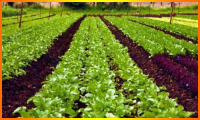
Promotion of Organic Farming.
Government has been promoting organic farming on priority in the country since 2015-16 through the schemes of Paramparagat Krishi Vikas Yojana (PKVY) and Mission Organic Value Chain Development for North Eastern Region (MOVCDNER). Both the schemes stress on end-to-end support to farmers engaged in organic farming i.e. from production to processing, certification and marketing and post-harvest management. Training and Capacity Building are integral part of the scheme. Incentives to farmers for producing and using organic fertilizers/manure are inbuilt in these schemes as on-farm and off-farm organic inputs. Direct Benefit Transfer (DBT) is provided to the farmers for using organic inputs including organic fertilizers. PKVY is being implemented in all the States other-than North Eastern (NE) States across the country whereas MOVCDNER scheme is being implemented exclusively in the NE States. Under PKVY, an assistance of Rs.50,000 per ha for a period of three years is provided to States including States of Tamil Nadu & Rajasthan for promotion of organic farming to cover different components like Training & Capacity Building, Data Management, PGS Certification, Value Addition, Marketing and Publicity. Out of this, assistance of Rs. 31,000 per ha for a period of three years is provided to farmers through DBT for on- farm /off –farm organic inputs. Whereas under MOVCDNER, an assistance of Rs. 46,575/ha for 3 years is provided for creation of FPO, support to farmers for organic inputs, quality seeds/ planting material and training, hand holding and certification. Out of this, assistance @ Rs. 32500/ ha for 3 years is provided to farmers for off -farm /on –farm organic inputs under the scheme including Rs. 15,000 as DBT to the farmers and Rs. 17,500 for the planting material to be given to the farmers by State Lead Agency (SLA) in kind. In view of the increasing demand of organic farming products of India in the global market, Government is facilitating value addition, certification and marketing. As per requirement of International market, Government has initiated third party certification under National Programme for Organic Production (NPOP) in 2001. Under PKVY assistance @ Rs 8800/ha for 3 years is provided to facilitate value addition, marketing and publicity to all the states/UTs including Tamil Nadu. Assistance is provided for certification and training, handholding & capacity building respectively @ Rs 2700/-ha for 3 years and Rs 7500/- ha for 3 years under PKVY for farmers of all the States including Rajasthan. Where as under MOVCDNER scheme assistance is provided @ Rs 10,000/-ha for 3 years for training, capacity building & certification. The scheme-wise and state-wise details of funds allocated, released and utilized under organic farming (under PKVY & MOVCDNER) schemes during the year 2022-23 are given at Annexure –I. A long-term experiment, at selected sites, for comparative evaluation of organic and conventional management conducted by Indian Council of Agriculture Research (ICAR) indicated that yield was found to be higher during kharif and rabi /summer crops for coarse/ basmati rice based cropping systems, soybean-based systems compared to inorganic approaches indicating better suitability of these systems under long-term organic management approaches. Soil organic carbon was found to be significantly higher under long-term organic approach for coarse rice, basmati rice and soybean-based systems. To disseminate information on organic and natural farming as well as on on- farm production and use of various kinds of organic fertilizers, National Center for Organic and Natural Farming (NCONF) and its Regional Center for Organic and Natural Farming (RCONF) located at Ghaziabad, Nagpur, Bangalore, Imphal and Bhubaneswar are organizing various trainings namely, One Day Farmers’ Training, Two Days Training for Extension Officers/Staff, Two Days Training on PGS, 30 Days Certificate course, One day Jaivik evam Prakratik Kisan Sammelan for 500 participants, One Day Stakeholder consultations/ conferences on Natural Farming for 100 participitants, Orientation Program on Natural Farming and awareness programmes across the country. NCONF and RCONF also organize online awareness campaign and training programmes on organic and natural farming and production and use of organic and bio-fertilizers. The ICAR also imparts trainings, organizes front-line demonstrations, awareness programs etc. to educate farmers on organic farming and organic fertilizers. Scheme-wise (PKVY & MOVCDNER) and State-wise details of funds allocation, released and expenditure under organic farming during the year 2022-23. Rs in lakh | S. No. | Name of the State | 2022-23 | | Allocation | Release | Expenditure* | | PKVY | | 1 | Andhra Pradesh | 826.35 | 0.00 | 0.00 | | 2 | Bihar | 2830.65 | 1547.68 | 789.75 | | 3 | Chhattisgarh | 3504.93 | 0.00 | 571.03 | | 4 | Gujarat | 20.50 | 0.00 | 0.00 | | 5 | Goa | 1025.10 | 0.00 | 283.05 | | 6 | Haryana | 10.25 | 0.00 | 0.00 | | 7 | Jharkhand | 1397.27 |
pib.gov.in
|
09 Aug, 2023

Increasing Agricultural Production under National Food Security Mission.
In order to increase the production and productivity of rice, wheat, pulses, coarse cereals (maize and barley), nutri-cereals (Shree Anna) and to fulfil the objectives of the National Food Security Mission (NFSM), assistance is being provided to the farmers through States/Union Territories for interventions like cluster demonstrations on improved package of practices, demonstrations on cropping system, seed production and distribution of high yielding varieties/hybrids, improved farm machineries/resource conservation machineries/tools, efficient water application tools, plant protection measures, nutrient management/soil ameliorants, processing &post-harvest equipment, cropping system based trainings etc. Initiatives like distribution of seed minikits of newer varieties of pulses, production of quality seed, creation of seed hubs at Indian Council of Agricultural Research (ICAR) Institutes/ State Agricultural Universities (SAUs)/ Krishi Vigyan Kendras (KVKs), technological demonstrations by KVKs have also been included under NFSM. To meet the objectives of NFSM-Oilseeds,incentives/ subsidies are being provided for purchase of breeder seeds, production of foundation seeds & certified seeds, distribution of certified seeds, distribution of seed mini kits, demonstrations (block demonstrations /front line demonstrations /cluster front line demonstrations), farmers field school, training, supply of water carrying devices, plant protection equipments, soil ameliorates, micro-nutrients, weedicides, insecticides, bio-fertilizer/bio agents, etc. Government of India has launched a separate Mission i.e. National Mission on Edible Oils - Oil Palm (NMEO-OP) in August 2021 to promote oil palm cultivation with the aim to augment the availability of edible oil in the country by harnessing area expansion, increasing crude palm oil production and productivity with the aim to reduce the import burden. Per Drop More Crop (PDMC) is being implemented from 2015-16 in the country to focus on enhancing water use efficiency at farm level through Micro Irrigation namely Drip and Sprinkler Irrigation systems. Indian Council of Agricultural Research (ICAR) has developed cost effective, location specific scientific technologies viz. rainwater harvesting and recycling, precision technologies for irrigation and farming practices, adoption of modern agronomic practices, diversifying cropping pattern from water guzzling crops like low land rice and sugarcane to pulses, oilseeds, maize and agro-forestry etc. Further, ICAR imparts training and organizes field demonstrations to educate farmers in these regard. Under the Command Area Development & Water Management (CADWM) programme of Pradhan Mantri Krishi Sinchayee Yojana (PMKSY) implemented by the Department of Water Resources, River Development & Ganga Rejuvenation (DoWR, RD & GR), lined field channels are constructed and wherever possible underground pipeline network is laid for providing last-mile connectivity to the irrigation system to enhance irrigation efficiency. The DoWR, RD & GR has set up Bureau of Water Use Efficiency (BWUE) on 20.10.2022 for promotion, regulation and control of efficient use of water in irrigation, industrial and domestic sector. The Bureau facilitates promotion of improving water use efficiency across various sectors namely irrigation, drinking water supply, power generation, industries etc. in the country. National Water Mission (NWM) launched the ‘SahiFasal’ campaign in 2019 to nudge farmers in water stressed areas to grow crops which are not water intensive but use water efficiently and are economically remunerative, healthy and nutritious and suited to the agro-climatic-hydro characteristics. The net irrigated area in the country has increased from 692.70 lakh hectare in the year 2016-17 hectare to 777.29 lakh hectare in the year 2020-21. This information was given by the Union Minister of Agriculture and Farmers’ Welfare, Shri Narendra Singh Tomar in a written reply in Lok Sabha today.
Source:
pib.gov.in
|
09 Aug, 2023
Implementation of PMKSY.
The Ministry of Food Processing Industries (MoFPI) has been implementing an umbrella scheme- Pradhan Mantri Kisan Sampada Yojana (PMKSY) since 2017-18 across the country. PMKSY is a comprehensive package of component schemes, which is aimed at creation of modern infrastructure with efficient supply chain management from farm gate to retail outlet. It provides boost to the growth of food processing sector in the country, helps in providing better prices to farmers, creates employment opportunities especially in the rural areas, reduces wastage of agricultural produce, increases the processing level and enhances export of the processed foods. 682 projects with grants-in-aid of Rs. 3530.25 crore during the last four years (2019-20 to 2022-23) and 33 projects with grants-in-aid of Rs. 160.22 crore during the current year 2023-24 (till 31.07.2023) have been approved under various component schemes of PMKSY across the country. Out of this, 53 projects with grants-in-aid of Rs. 248.44 crore and 4 projects with grants-in-aid of Rs. 13.30 crore have been approved during the last four years and current financial year (till 31.07.2023) respectively in the State of Tamil Nadu. Fund amounting to Rs. 3925.89 crore has been allocated to PMKSY and out of this, Rs. 2648.41 crore has been released under various component schemes of PMKSY across the country including the State of Tamil Nadu for the period from 2019-20 to 2023-24 (till 31.07.2023). The details of the same are provided at Annexure. Details of fund allocated / grants-in-aid released under various component schemes of PMKSY from 2019-20 to 2023-24 (till 31.07.2023) (Rupees in crore) | S. No. | Component scheme of PMKSY | Financial Year | Funds allocated | Grants-in-aid released | | 1 | Mega Food Parks (MFP) | | | | 2019-20 | 139.40 | 106.34 | | | | 2020-21 | 61.25 | 61.22 | | | | 2021-22 | 53.60 | 51.52 | | | | 2022-23 | 24.00 | 21.68 | | | | 2023-24 | 54.00(BE) | 0.00 | | | | Total | 332.25 | 240.76 | | | | | | | | 2 | Integrated Cold Chain & Value Addition Infrastructure (Cold Chain) | | | | 2019-20 | 324.16 | 269.13 | | | | 2020-21 | 250.58 | 204.89 | | | | 2021-22 | 260.82 | 223.44 | | | | 2022-23 | 220.00 | 201.64 | | | | 2023-24 | 194.00(BE) | 31.51 | | | | Total | 1249.56 | 930.61 | | | | | | | | 3 | Creation of Infrastructure Development for Agro Processing Clusters (APC) | | | | 2019-20 | 49.83 | 43.53 | | | | 2020-21 | 56.59 | 48.68 | | | | 2021-22 | 53.50 | 49.08 | | | | 2022-23 | 56.15 | 46.42 | | | | 2023-24 | 81.00(BE) | 5.73 | | | | Total | 297.07 | 193.44 | | | | | | | | 4 | Creation/Expansion of Food Processing & Preservation Capacities (CEFPPC) | | | | 2019-20 | 200.72 | 169.98 | | | | 2020-21 | 217.30 | 200.84 | | | | 2021-22 | 241.00 | 236.58 | | | | 2022-23 | 217.68 | 168.11 | | | | 2023-24 | 319.00(BE) | 26.62 | | | | Total | 1195.70 | 802.13 | | 5 | Food Safety & Quality Assurance Infrastructure (FTL) | | | | 2019-20 | 39.80 | 26.85 | | | | 2020-21 | 36.63 | 28.84 | | | | 2021-22 | 46.60 | 34.14 | | | | 2022-23 | 32.80 | 18.53 | | | | 2023-24 | 44.50(BE) | 2.47 | | | | Total | 200.33 | 110.83 | | | | | | | | 6 | Operation Greens (OG) | | | | 2019-20 | 28.03 | 2.37 | | | | 2020-21 | 38.00 | 38.00 | | | | 2021-22 | 71.50 | 65.15 | | | | 2022-23 | 73.34 | 69.91 | | | | 2023-24 | 212.34(BE) | 12.01 | | | | Total | 423.21 | 187.44 | | | | | | | | 7 | Creation of Backward Forward Linkage (CBFL) | | | | 2019-20 | 48.96 | 42.13 | | | | 2020-21 | 55.85 | 53.67 | | | | 2021-22 | 40.39 | 32.85 | | | | 2022-23 | 18.58 | 9.33 | | | | 2023-24 | 5.19(BE) | 0.42 | | | | Total | 168.97 | 138.40 | | | | | | | | 8 | Human Resources & Institutions (HRI) | | | | 2019-20 | 23.69 | 17.70 | | | | 2020-21 | 15.59 | 14.40 | | | | 2021-22 | 8.89 | 7.80 | | | | 2022-23 | 5.82 | 4.77 | | | | 2023-24 | 4.81(BE) | 0.13 | | | | Total | 58.80 | 44.80 | | | | Grand Total | 3925.89 | 2648.41 | This information was given by Union Minister of State for Ministry of Food Processing Industries Shri Prahlad Singh Patel in a written reply in the Lok Sabha today.
Source:
pib.gov.in
|
08 Aug, 2023
WTO ranks India 18th in merchandise exports.
Last Monday, the World Trade Organization (WTO) released its 2023 edition of the World Trade Statistical Review (WTSR), its annual flagship publication featuring key data on global trade in merchandise and commercial services. It gives data on merchandise and services trade broken down by geographical origin, main product groups and sectors, along with related data on key economic developments such as gross domestic product (GDP) growth, commodity prices, and exchange rate fluctuations, mostly for 2022. It also presents recent trends in international trade at a time of geopolitical and macroeconomic st
Source:
business-standard.com
|
08 Aug, 2023
FTA Talks: Top ministers, officials of India and the European Union to meet in month-end.
Top ministers and officials of India and the European Union will meet on the sidelines of the G-20 trade ministers meeting in the last week of August to discuss the state of negotiations of the proposed free trade agreement (FTA) and to speed up the talks, a senior official said. While trade ministers’ meeting is in Jaipur on August 24 and 25, the bilateral ones will be held in New Delhi. 'There will be a ministerial-level on August 26 in the national capital between India and the EU. Commerce Secretary Sunil Barthwal is also likely to meet EU director general for trade Sabine Weyand in Jaipur,' the official said. So far, five rounds of discussions have been held on the FTA, the last one being in June. In the fifth round, modalities for exchange of market access offers in goods and government procurement were finalised, negotiations on small and medium enterprises (SMEs) chapter has concluded and the textual part of government procurement chapter has also been agreed in principle. India and the 27-nation bloc resumed negotiations on the FTA on June 17 last year after a gap of over eight years. The first attempt at FTA with the EU was made in 2007 and after many rounds of discussions the progress stalled in 2013 due to differences on issues of tariffs on automobiles, wines and spirits and freer movement of professionals. Brexit (exit of UK from EU) further complicated matters. The proposal for FTA was drawn afresh and discussions began again. India’s merchandise exports to the EU increased to $ 74.5 billion in 2022-23 from about $65 billion in 2021-22. Imports too rose to $60 billion in FY23 from $51.4 billion in 2021-22. The EU accounts for about 17% of India’s total exports and about 8.5% of the country’s total imports.
Source:
financialexpress.com
|
|