FTA Talks: Top ministers, officials of India and the European Union to meet in month-end.
Top ministers and officials of India and the European Union will meet on the sidelines of the G-20 trade ministers meeting in the last week of August to discuss the state of negotiations of the proposed free trade agreement (FTA) and to speed up the talks, a senior official said.
While trade ministers’ meeting is in Jaipur on August 24 and 25, the bilateral ones will be held in New Delhi.
'There will be a ministerial-level on August 26 in the national capital between India and the EU. Commerce Secretary Sunil Barthwal is also likely to meet EU director general for trade Sabine Weyand in Jaipur,' the official said.
So far, five rounds of discussions have been held on the FTA, the last one being in June.
In the fifth round, modalities for exchange of market access offers in goods and government procurement were finalised, negotiations on small and medium enterprises (SMEs) chapter has concluded and the textual part of government procurement chapter has also been agreed in principle.
India and the 27-nation bloc resumed negotiations on the FTA on June 17 last year after a gap of over eight years.
The first attempt at FTA with the EU was made in 2007 and after many rounds of discussions the progress stalled in 2013 due to differences on issues of tariffs on automobiles, wines and spirits and freer movement of professionals. Brexit (exit of UK from EU) further complicated matters. The proposal for FTA was drawn afresh and discussions began again.
India’s merchandise exports to the EU increased to $ 74.5 billion in 2022-23 from about $65 billion in 2021-22.
Imports too rose to $60 billion in FY23 from $51.4 billion in 2021-22.
The EU accounts for about 17% of India’s total exports and about 8.5% of the country’s total imports.
Source: financialexpress.com

India, Peru decides to resume FTA talks.
India and South American country Peru have decided to resume negotiations for a proposed free trade agreement (FTA) with an aim to promote two-way commerce and investment, a top government official said on Friday.
'We have decided to proceed with the FTA negotiations. We would be working out the priority areas...Post September, we will start engaging,' Commerce Secretary Sunil Barthwal told reporters here.
He also said that Chile is also requesting a similar agreement.
'If the countries are interested in FTAs, we will also look into possibilities,' he said at the sidelines of CII's India-LAC conclave.
The talks for an FTA were halted after a few rounds due to the breakout of the Covid-19 pandemic in 2020.
The main chapters of the trade agreement could include market access for goods, trade in services, movement of professionals, investments, dispute settlement, technical barriers to trade, trade remedies, rules of origin of goods, customs procedures and trade facilitation.
In an FTA, two countries significantly reduce or eliminate duties on most of the goods traded between them besides relaxing norms and rules to promote trade in services and increase bilateral investments.
Peru ranked third among export destinations for India in the Latin America and Caribbean (LAC) region.
The bilateral trade between the nations dipped to USD 3.11 billion in 2022-23 (exports stood at USD 866 million and imports USD 2.25 billion) from USD 3.6 billion in 2021-22.
Among the top-10 commodities that India exports to Peru are motor vehicles, cars, products of iron and steel, cotton yarn and fabrics. While the imports include bulk minerals and ores, gold, fertilisers, crude oil and zinc.
Latin America and the Caribbean (LAC) Region nations include Belize, Ecuador, Nicaragua, Brazil, El Salvador, Panama, Chile, Guatemala, Peru, Costa Rica, Guyana, and Suriname.
While speaking at the conclave, Barthwal also said that considering that imports from India constitute less than 2 per cent of LAC's total imports, there is significant scope for expansion of India-LAC bilateral trade.
While efforts are underway to double the bilateral trade to USD 100 billion in the coming years, that will also call for a new approach to broadbase the trade exchanges, such as integrating with diversified global value chains in a re-globalised world, he added.
Further he also emphasised on the need for closer India-LAC cooperation in the area of energy transition.
Fresh thinking is called for in areas like renewals, battery manufacturing, energy storage technology, chemical industry impact, that are aligned with the net zero goal, he said.
He suggested a Joint Economic and Trade Cooperation (JETCO) model for cooperation between the two regions, besides calling for close India-LAC cooperation on issues in the forthcoming trade ministers level meeting of the WTO in Abu Dhabi next year.
Source: zeebiz.com
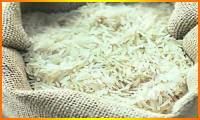
Bhutan reaches out for rice amid export ban, India likely to offer it.
Bhutan has requested India to allow rice export to the country after India banned overseas shipments of non-basmati rice, causing global rice prices to rise. Bhutan has made a diplomatic request for rice shipments of up to 90,000 tonnes. India's rice ban allows for exemptions for export under government-to-government deals and in cases of requests made by "friendly countries" with genuine food-security needs. India's share in global rice exports is nearly 40%.
Bhutan has requested India to allow rice export to the Himalayan kingdom, following India’s July 20 ban on overseas shipments of non-basmati varieties of the grain , a person aware of the matter has said. India’s decision has sent global rice prices soaring.
The world’s biggest rice exporter imposed the ban over growing concerns of El Nino, a weather pattern whose effects ripple around the globe, affecting the Indian monsoon and hitting rice output, and Russia’s blockade of Ukraine’s grain shipments.
Bhutan has made a diplomatic request to India for rice shipments of up to 90,000 tonnes, the person said. Global prices have hit a 12-year high following India’s ban. The FAO’s All-Rice Price Index leapt 129.7 points in July 2023, up 19.6% from a year ago. India’s share in global rice exports is nearly 40%.
India’s rice ban allows for exemptions for export under conditional government-to-government deals and in case of requests made by 'friendly countries” which have genuine food-security needs, the person cited above said. The same relaxations also apply to the wheat-export ban instituted in May 2022.
The conditions also stipulate that food exported by India under such exemptions cannot be used for trade and has to be utilized for domestic consumption, the person added.
Such diplomatic requests are first reviewed by the ministry of external affairs, a second person said, adding Bhutan’s request for rice is very likely to be acceded to. Once the proposal is sent to the food ministry, the Food Corporation of India, the Centre’s main food agency, will process the request and release the stocks.
Immediately after the wheat ban last year, food minister Piyush Goyal had said that India wasn’t a significant exporter of wheat, yet the country would cater to 'genuine food-security needs of any friendly country”.
In September last year, India also banned the export of broken rice, but it has allowed exports to some countries.
'In the case of rice also, India will take up requests of any country that may face a dire need of food and seeks humanitarian assistance. This especially applies to our neighbours,” the second person added.
Since imposing the wheat and broken rice bans, India cleared over 300,000 tonnes of wheat shipments to Nepal, 200,000 tonnes of broken rice to Indonesia, 500,000 tonnes of broken rice to Senegal and 50,000 tonnes of broken rice to Gambia under humanitarian food assistance.
Global supplies have tightened since Ukraine is a major supplier of all types of grain and Russia’s blockade of its food shipments has caused a rally in global cereal prices. On July 17, Russia announced it was pulling out of the so-called Black Sea grain deal under which Ukraine could operate its ports. Days later, India clamped a ban on rice exports.
Source: hindustantimes.com

Madhya Pradesh: Red Hot Chillies Of Khargone To Get GI Tag In Khargone.
The Madhya Pradesh horticulture and food processing department has selected a total of 46 products as specialities in the state and has applied for the geographical indication (GI) tag to aid with worldwide promotion.
These 46 products include Nimar's distinctive crop, Khargone Red Chillies which is already making a splash in foreign markets as part of the government's 'One District, One Product' initiative.
Red chillies of Khargone district are going to get special product status under Vikas Parv.
The chillies of the district have also been included in 46 special horticulture products of the state. For this work is going on in mission mode. Chilli crop was sown in the district in an area of 46556 hectares in 2023 in the state.
Notably, Bediya chilli mandi in Khargone district is the country's second-largest chilli market. Due to the branding of chilli crop here, the expectation of quality and business has increased.
Following the instructions of Chief Minister Shivraj Singh Chouhan, the department of horticulture and food processing conducted a survey of the status of horticulture products in various districts of the state.
Chilli To Probably Get GI Tag This Financial Year
Deputy director horticulture KK Girwal told that all the inputs including chilli area and research papers of the Agricultural Research Centre have been sent for documentation which is being done by government advisor Rajinikanth. The process will be completed in three months and thus chilli will probably get GI tag in this financial year.
Product Will Be Globally Branded
Distinctive geographical identification is what 'GI Tag' stands for and obtaining a GI tag will result in agricultural product branding. This will bring international attention to the product and farmers will get economic benefits. This initiative of the government is expected to increase the business here thus paving the way for increasing the prosperity of the district.
Source: freepressjournal.in

Meghalaya s turmeric now landing in UK, Netherlands. Mission Lakadong transformed farming.
The zigzag roads in the West Jaintia Hills district of Meghalaya are a gateway to villages that now draw traders from across India and abroad to the golden spice, turmeric. Beyond the mist and clouds that often wrap these remote villages, people have been growing Lakadong—considered to be the finest variety of turmeric in the world—for generations. Now, Meghalaya’s Lakadong Turmeric has got fresh legs. And one magic word is on every grower’s mind—curcumin, the active ingredient in turmeric that’s used for pharmaceutical purposes, lending it its premium value.
Five years after Meghalaya set up Mission Lakadong, the local turmeric has set the district abuzz with economic activity, trade, and transforming farming and making it export-ready. Now Meghalaya’s turmeric is landing in the United Kingdom and the Netherlands. The state’s biggest competitors are Telangana and Maharashtra.
Several other states eclipse Meghalaya when it comes to the quantity of turmeric produced, but when the scales of quality are put out, the numbers flip. Three varieties of turmeric are grown in the West Jaintia Hill district – Lachein, Lasyein and Lakadong. While the first two varieties yield only four to five per cent curcumin, Lakadong boasts an average of seven per cent curcumin content. And the number is only native to this tiny district, which is bordered by Bangladesh in the south and Assam in the north. All attempts at growing the same turmeric elsewhere resulted in a sharp fall in curcumin level.
India needs fair, non-hyphenated and questioning journalism, packed with on-ground reporting. ThePrint – with exceptional reporters, columnists and editors – is doing just that.
Source: theprint.in
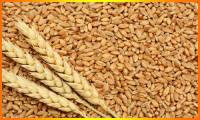
India may scrap wheat import duty, lower its stock limit.
The Indian government has decided to lower the stock limit for wheat to 2,000 tonnes from the current 3,000 tonnes in an effort to ensure ample availability in the domestic market. The move follows the Centre’s finding that over 40 million tonnes (mt) of wheat have been hoarded in the country, escaping the current stock limit provisions.
Besides, the government is considering lowering the import duty up to zero from the current 44 per cent (including cess) soon.
When asked about options available to the Government to check rising wheat prices, Food Secretary Sanjeev Chopra said the Centre has various options that are under consideration, including tweaking the stock limit as well as reducing the import duty. He did not specify when these measures would be in place. He, however, said the Government is aware of the fact that in the weekly auction by the Food Corporation of India (FCI), the average selling price has been increasing every week.
Chopra also said there was no plan under consideration for government-to-government import, especially from Russia.
Mystery over stocks
According to a June 12 notification, 10 tonnes of wheat limit has been fixed for any retail outlet, including big chains while 3,000 tonnes for traders and wholesalers. For processors of atta and other flour products such as sooji and maida, the maximum capacity will be either 75 per cent of the annual installed capacity of the mills or 10 months of actual requirement (June 2023-March 2024) based on monthly capacity.
According to sources, traders have declared to the government that they have 2.9 mt and processors have 6.2 mt, totalling 9.1 mt of wheat as on July 31. After factoring 30-35 mt, which is used for own consumption and seed and feed purposes, and an additional 9-10 mt declared stock held by processors and stockists, there should be 42-48 mt of wheat available in the market throughout the year, officials said. “When this stock outside the radar of stock limit will be released in the market no one knows,' an official source said on August 3.
The Agriculture Ministry has estimated wheat production in 2022-23 crop year at a record 112.74 mt. The wheat started arriving in the market from April and the government procured about 26.2 mt of the production. The official Agmarknet portal shows that the 21 mt of wheat arrived at various agri market yards (mandis) across the country between March 1 and July 31 this year.
Rising retail prices
The all India average retail prices of wheat and atta increased in June and July from their previous month’s rates. According to Consumer Affairs Ministry data, wheat prices were Rs.31.32/kg in April, Rs.31.27 in May, Rs.31.67 in June, Rs.31.96 in July and Rs.32.13 in August (1-3). Similarly, atta rates were Rs.36.55/kg in April, Rs.36.42 in May, Rs.36.95 in June, Rs.37.18 in July and Rs.37.37 in August (1-3).
The weighted average selling price in this week’s auction increased to Rs.2,208.33/quintal for FAQ from Rs.2,182.68 in the previous week. The reserve price for FAQ wheat is Rs.2,150/quintal. The weighted average selling price of URS wheat in current round was Rs.2,219.29, up from Rs.2,173.85 in previous round, whereas the reserve price is Rs.2,125. The highest price in the August 2 auction of FCI was recorded Rs.2,500/quintal in West Bengal and Maharashtra.
Source: thehindubusinessline.com
Thailand's rice exports benefiting from India's export ban: Minister.
Thailand is benefiting from India's rice export ban and has no reason to halt shipments of the grain itself, its commerce minister said on Monday.
The government would ensure sufficient rice output for both domestic consumption and exports, and also make sure domestic prices are not too high, minister Jurin Laksanawisit told a press briefing.
In the first seven months, Thailand shipped 4.8 million metric tons, he said, adding monthly exports stood at 700,000 to 800,000 metric tons.
Thailand, the world's second-largest rice exporter after India, is expected to export more than 8 million metric tons of rice this year, said Charoen Laothamatas, president of Thai Rice Exporters Association, up from 7.71 million last year.
Two trade sources said last week that some rice exporters in Thailand and Vietnam were re-negotiating prices on sales contracts for around half a million metric tons for August shipment, after India shocked global markets with a ban on exports of non-basmati white rice.
Source: economictimes.indiatimes.com
Rice ban impact: Basmati exporters gear up to tap incremental demand.
Anticipating an increase in demand, in the context of ban on non-basmati rice shipments, a section of basmati rice exporters have started gearing up themselves by leasing additional warehouse spaces near major ports such as Kandla and Mundra.
While basmati is not an alternative to the non-basmati rice, the trade expects an incremental demand to kick-in for the aromatic rice, if the ban prolongs. India banned shipments of non-basmati rice on July 20 to cool down the rising prices of the cereals, while the move has triggered a panic in the overseas market.
'Lot of basmati players are getting active and we have seen a little inflow of additional cargoes at the port now. We are seeing demand for more storage from some clients, who are anticipating additional demand to come up in view of the ban and want to be prepared with their cargo at the ports to tap any opportunity that’s going to open up,' said Shivan Shah of LP Logiscience, the warehousing division of Liladhar Pasoo.
Shah said LP Logiscience handles about 5 lakh tonnes of basmati rice annually at ports such as Kandla and Mundra for exporters from North India and overseas buyers of the aromatic rice. Besides handling warehousing, LP Logiscience also offers services such as sorting, grading, and packaging for the basmati rice exporters and buyers at its facility in Gandhidham near Kandla.
Insignificant gain
Vinod Kaul, Executive Director at All India Rice Exporters Association, said there could be a little gain for basmati for some time, but may not be significant as basmati rice is a high-value item when compared with non-basmati rice. Basmati exports registered a 12 per cent growth during the April-June quarter over the same period last year and the growth is likely to be sustained, Kaul said.
Trade analyst S Chandrasekaran said, 'Other speciality rice exports from India is too small, that is 1.45 lakh tonnes. The sona masoori is a small and fine grain. Matta rice is a double boiled product with specific taste. Basmati will never fit to the quality consciousness of NRI South Indian consumers.'
Source: thehindubusinessline.com
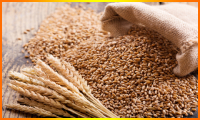
India might cut 40% import tax on wheat to boost supply.
India's Food Secretary Sanjeev Chopra on Friday said that the nation is considering to cut or abolish import tax on wheat. He said that the government is committed to control inflation in India. The official further stated that no proposal has been received from Russia to import wheat.
Source: economictimes.indiatimes.com
Sh. Goyal invites LAC nations to join development journey of India to work together as trusted partners.
Union Minister for Commerce and Industry, Consumer Affairs, Food & Public Distribution and Textiles, Shri Piyush Goyal emphasized upon the need for enhanced collaboration and trust-building between India and the Latin American & Caribbean (LAC) region. While addressing the Special Ministerial Session at the ‘9th CII India-LAC Conclave’ held yesterday in New Delhi, the Minister said that India and LAC region share cultural ties and have emerged out of the shadows of colonial past.
Shri Goyal said that India is keen for faster economic growth through enhanced trade and investment, integration of businesses through collaborations and Free Trade Agreements (FTA). He presented a comprehensive four-point agenda aimed at fostering deeper cooperation between India and LAC region: (i) Boosting Trade Flows, (ii) Leveraging Bilateral Partnership, (iii) Healthcare and Pharmaceuticals Cooperation and (iv) Addressing Global Issues.
For boosting trade flows, Shri Goyal advocated for the formulation of a well-structured roadmap that capitalizes on the comparative and competitive strengths of each country. He said that this strategic approach would facilitate the augmentation of trade flows between India and the LAC nations. He said that India and the LAC region must work towards larger Global South cooperation in various multilateral forums.
To leverage bilateral partnership, the Minister highlighted the potential for bilateral collaboration to stimulate greater investment inflows. He emphasized upon the importance of integrating supply chains, particularly in sectors such as tourism, hospitality, and healthcare. Shri Goyal said that by pooling resources, India and the LAC region can develop cost-effective solutions with global implications.
For healthcare and pharmaceuticals cooperation, the Minister underlined the significance of mutual recognition agreements in the pharmaceutical sector, coupled with the adoption of smarter regulatory practices. Shri Goyal said that this approach aims to prevent reliance on high-cost medicines and paves the way for collaborative solutions to complex challenges.
To address global issues, the Minister conveyed his belief that collective efforts between India and the LAC region could lead to innovative solutions for even the most intricate global problems. Shri Goyal said that contemporary global challenges call for all of us to work together by forging partnerships, integrating supply chains and utilising our mineral resources, technology, skills, labour force, etc. in a collaborative manner. The Minister said that this would help address challenges of poverty, climate change, inequality, etc.
Shri Piyush Goyal highlighted India's aspiration to achieve a USD 35 trillion economy by 2047 under the leadership of the Prime Minister, Shri Narendra Modi. He expressed his confidence that this ambitious goal would open up numerous avenues for robust India-LAC partnerships, which could serve as a catalyst for positive global impact. The Minister invited the LAC nations to join the development journey of India to work together as trusted partners and expand shared interests.
Shri Goyal said that India and the LAC region must work together towards making the world a better place for the future generations. The Minister said that efforts must be made to build an atmosphere of trust and work towards exponential growth of trade between India and the LAC region. He highlighted that infrastructural development, digital connectivity, strong macroeconomic fundamentals, etc. along with demographic dividend presents India as a leading partner for economic growth.
The session featured insights from various dignitaries from the LAC region: H.E. Johann Álvarez, Vice Minister of Foreign Trade and Investment Promotion, Ministry of Popular Power of Economy and Finance and Foreign Trade, Venezuela; H.E. Mr. Alexandre Corona Quintero, Governor of the People’s Power of the Cienfuegos Province, Republic of Cuba; H.E. Mr. Samuel Alejandro García Sepúlveda, Governor of Nuevo Leon State, Government of Mexico; H.E. Mr. Rodolfo Pastor de Maria y Campos, Secretary of State in the office of the Presidency, Republic of Honduras; H.E. Mr. Henry Charles Fernandez, Minister of Tourism, Civil Aviation, Transportation and Investment, the Government of Antigua & Barbuda; H.E. Mr. Sergio Armando Cusicanqui Loayza, Minister of Development Planning, Plurinational State of Bolivia; and H.E. Mr. Andy Joseph Williams, Minister for Mobilisation, Implementation and Transformation, Government of Grenada.
Overall, the session underscored the shared vision of India and the LAC region to forge closer ties, capitalize on each other's strengths, and collectively contribute to global welfare and progress. The ‘9th CII India-LAC Conclave’ encompassed discussions across 12 distinct sectors, embodying the overarching theme of 'Furthering Economic Partnerships for Shared & Sustainable Growth.' This theme underscores the collective goal of nurturing strong and lasting economic ties for mutual prosperity.
Under the trade and investment outreach strategy of the Department of Commerce, the CII India-LAC Conclave is scaled up with the collaboration of Invest India, Export Promotion Councils such as EEPC, Pharmexcil, Chemexcil, ESC, ACMA and SIAM. On the sidelines of the Conclave, the Department of Commerce hosted bilateral meetings with the Latin American and Caribbean countries.
Source: pib.gov.in