10 Aug, 2023

Government focusing on multilateral and bilateral commercial relations, trade facilitation, industrial development, investments in new and upcoming technology.
Government has undertaken significant initiatives to promote economic growth besides converting the disruption caused by COVID 19 into an opportunity for growth and investment. These includes Atmanirbhar packages, introduction of Production Linked Incentive (PLI) Scheme in fourteen (14) sectors, investment opportunities under National Infrastructure Pipeline (NIP) and National Monetisation Pipeline (NMP), India Industrial Land Bank (IILB), Industrial Park Rating System (IPRS), soft launch of the National Single Window System (NSWS), etc. An institutional mechanism to fast-track investments has been put in place, in the form of Project Development Cells (PDCs) in all concerned Ministries/ Departments of Government of India. All the above initiatives/schemes are implemented across various Ministries/Departments, Central Government, State Governments. Further, to improve Ease of Doing Business ecosystem in the country, DPIIT coordinates with Ministries/Departments and States/UTs for initiatives to reduce compliance burden on citizen and business activities. The objective of this exercise is to improve Ease of Doing Business and Ease of Living by Simplifying, Rationalizing, Digitizing and Decriminalizing Government to Business and Citizen Interface across all the States/UTs. In order to have a continuous evaluation framework, DPIIT initiated a dynamic reform exercise called Business Reforms Action Plan (BRAP) for assessment of business environment in the States/Union Territories (UTs). Under BRAP, States and UTs are assessed on the basis of implementation of designated reform parameters contained in the Action Plan. BRAP covers both the Business-centric and Citizen-centric reforms spread across various reform areas. Some of the reform areas are Investment Enablers, Access to Information and Transparency, Online Single Window System, Land Allotment, Construction Permits Enablers, Labour Regulation Enablers, Environment Registration Enablers, Inspection Enablers, Obtaining Utility Permits, Contract Enforcement, Citizen- centric Certificates, Public Distribution System, Healthcare, etc. To attract more FDI, the Government has put in place an Investor friendly Foreign Direct Investment (FDI) policy, wherein most sectors, except certain strategically important sectors, are open for 100% FDI under the automatic route. Further, the policy on FDI is reviewed on an ongoing basis, to ensure that India remains an attractive and investor friendly destination. FDI policy provisions have been progressively liberalized and simplified across various sectors such as Pension, Other Financial Services, Asset reconstruction Companies, Broadcasting, Pharmaceuticals, Single Brand Retail Trading, Construction & Development, Power Exchanges, e-commerce activities, Coal Mining, Contract Manufacturing, Civil Aviation etc. In the recent past, reforms in the FDI Policy have been undertaken in sectors such as Defence, Insurance, Petroleum & Natural Gas and Telecom. Further, all proposals seeking Government approval under FDI route are now filed on National Single Window System (NSWS) Portal. Some of the key measures and initiatives undertaken to promote exports and enhance market access are holding Periodic engagement at G-G level with partner countries. One such engagement is that of the West Asia and North Africa (WANA) region under the existing Institutional mechanisms with specific objective to propel bilateral Trade and Investments forward including through addressing any issues/hurdles affecting Trade and Investments. Various Export promotion events, including under the Market Access Initiative (MAI) scheme, have been organized in target markets in the WANA region, by the Department, in association with Export Promotion Councils, Industry Associations, and respective Indian Missions in the region. For instance, India and the United Arab Emirates (UAE) signed the Comprehensive Economic Partnership Agreement (CEPA) in February, 2022, on the side-lines of the India-UAE Virtual Summit which provides for an institutional mechanism to encourage and improve bilateral Trade and Investments between the two countries. Make in India initiative was launched on September 25, 2014, to facilitate investment, foster innovation, building best in class infrastructure, and making India a hub for manufacturing, design and innovation. The development of a robust manufacturing sector continues to be a key priority of the Indian Government. Since its launch, Make in India initiative has made significant achievements and presently focuses on 27 sectors under Make in India 2.0. which is implemented across various Ministries/Departments, Central Government, State Governments. In addition to ongoing schemes of various Departments and Ministries, Government has taken various steps to boost domestic and foreign investments in India. These include the introduction of Goods and Services Tax, reduction in corporate tax, improving ease of doing business, FDI policy reforms, measures for reduction in compliance burden, measures to boost domestic manufacturing through public procurement orders, Phased Manufacturing Programme (PMP) and QCOs (Quality Control Orders), to name a few. Further, in order to build a strong ecosystem for nurturing innovation, startups and encouraging private investments in the startup ecosystem of the country, the Government launched the Startup India initiative on 16th January 2016. Since the launch of Startup India initiative in 2016, DPIIT has recognized 98,119 entities as startups as on 30th April 2023. The recognized startups have reported to have created over 10.34 lakh direct jobs. Keeping in view India’s vision of becoming ‘Atmanirbhar’, PLI Schemes for 14 key sectors have been announced with an outlay of Rs. 1.97 lakh crore (over US$26 billion) to enhance India’s Manufacturing capabilities and Exports. With the announcement of PLI Schemes, significant creation of production, employment, and economic growth expected over the next 5 years and more. The PLI Schemes will help achieve following objectives: Attract investments in sectors of core competency and cutting-edge technology; Ensure efficiency and economies of scale in the manufacturing sector; and Make Indian companies and manufacturers globally competitive so that they can penetrate global markets and integrate with global value chains. The 14 key sectors are: (i) Mobile Manufacturing and Specified Electronic Components, (ii) Critical Key Starting Materials/ Drug Intermediaries & Active Pharmaceutical Ingredients, (iii) Manufacturing of Medical Devices (iv) Automobiles and Auto Components, (v) Pharmaceuticals Drugs, (vi) Specialty Steel, (vii) Telecom & Networking Products, (viii) Electronic/Technology Products, (ix) White Goods (ACs and LEDs), (x) Food Products, (xi) Textile Products: MMF segment and technical textiles, (xii) High efficiency solar PV modules, (xiii) Advanced Chemistry Cell (ACC) Battery, and (xiv) Drones and Drone Components. PLI Schemes for all 14 Sectors have been notified by the concerned Ministries/ Departments after approval of the Union Cabinet. These Schemes are in their various stages of implementation. Approvals to 733 applications have been accorded under all 14 PLI Schemes so far. This information has been provided by the Union Minister of State for Commerce and Industry, Shri Som Parkash in a written reply in the Lok Sabha today.
Source:
pib.gov.in
|
10 Aug, 2023
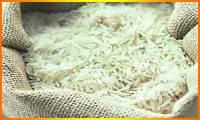
Bhutan reaches out for rice amid export ban, India likely to offer it.
Bhutan has requested India to allow rice export to the country after India banned overseas shipments of non-basmati rice, causing global rice prices to rise. Bhutan has made a diplomatic request for rice shipments of up to 90,000 tonnes. India's rice ban allows for exemptions for export under government-to-government deals and in cases of requests made by "friendly countries" with genuine food-security needs. India's share in global rice exports is nearly 40%. Bhutan has requested India to allow rice export to the Himalayan kingdom, following India’s July 20 ban on overseas shipments of non-basmati varieties of the grain , a person aware of the matter has said. India’s decision has sent global rice prices soaring. The world’s biggest rice exporter imposed the ban over growing concerns of El Nino, a weather pattern whose effects ripple around the globe, affecting the Indian monsoon and hitting rice output, and Russia’s blockade of Ukraine’s grain shipments. Bhutan has made a diplomatic request to India for rice shipments of up to 90,000 tonnes, the person said. Global prices have hit a 12-year high following India’s ban. The FAO’s All-Rice Price Index leapt 129.7 points in July 2023, up 19.6% from a year ago. India’s share in global rice exports is nearly 40%. India’s rice ban allows for exemptions for export under conditional government-to-government deals and in case of requests made by 'friendly countries' which have genuine food-security needs, the person cited above said. The same relaxations also apply to the wheat-export ban instituted in May 2022. The conditions also stipulate that food exported by India under such exemptions cannot be used for trade and has to be utilized for domestic consumption, the person added. Such diplomatic requests are first reviewed by the ministry of external affairs, a second person said, adding Bhutan’s request for rice is very likely to be acceded to. Once the proposal is sent to the food ministry, the Food Corporation of India, the Centre’s main food agency, will process the request and release the stocks. Immediately after the wheat ban last year, food minister Piyush Goyal had said that India wasn’t a significant exporter of wheat, yet the country would cater to 'genuine food-security needs of any friendly country'. In September last year, India also banned the export of broken rice, but it has allowed exports to some countries. 'In the case of rice also, India will take up requests of any country that may face a dire need of food and seeks humanitarian assistance. This especially applies to our neighbours,' the second person added. Since imposing the wheat and broken rice bans, India cleared over 300,000 tonnes of wheat shipments to Nepal, 200,000 tonnes of broken rice to Indonesia, 500,000 tonnes of broken rice to Senegal and 50,000 tonnes of broken rice to Gambia under humanitarian food assistance. Global supplies have tightened since Ukraine is a major supplier of all types of grain and Russia’s blockade of its food shipments has caused a rally in global cereal prices. On July 17, Russia announced it was pulling out of the so-called Black Sea grain deal under which Ukraine could operate its ports. Days later, India clamped a ban on rice exports.
Source:
hindustantimes.com
|
10 Aug, 2023

Govt has started trade with neighbouring countries in INR, says Anupriya Patel.
The government has started trade in the rupee with neighbouring countries, including Nepal and Bhutan, Parliament was informed on Wednesday. Replying to a question in the Lok Sabha, Minister of State for Commerce and Industry Anupriya Patel said a significant part of the India-Nepal trade is being carried out in Indian Rupee (INR) and all bilateral trade with Bhutan is also transacted entirely in INR. 'Rupee trade mechanism has been initiated to facilitate trade in national currency with Russia. As of July 2, RBI has approved 34 applications from different Russian banks for opening SRVA in 14 Indian commercial banks,' the minister said in a written reply. RBI has issued guidelines for opening Special Rupee Vostro Accounts (SRVA) by foreign banks in Indian commercial banks. She said Sri Lanka has included INR in its list of designated foreign currencies. Authorised dealer (AD) banks in India have been permitted to open rupee vostro accounts. Accordingly, these accounts 'of eight corresponding banks from Sri Lanka have been opened with respective AD banks in India, with prior approval of the RBI,' she added. With Iran, she said that an arrangement to facilitate bilateral trade payments between India and Iran was adopted on November 5, 2018. India and Bangladesh have also formally launched a new mechanism to settle trade in INR on July 11. Two Indian and Bangladeshi banks each have been designated to settle bilateral trade in INR. These are SBI and ICICI Bank from India; and Sonali Bank PLC and Eastern Bank Ltd from Bangladesh. 'To formally launch trade in INR, a formal Exchange of the Letters of Credit, i.e, LC documents in INR between the first exporter and importer through their banks was also carried out on July 11, 2023,' she said.
Source:
economictimes.indiatimes.com
|
10 Aug, 2023
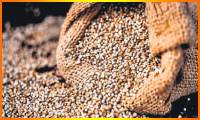
Agricultural & Processed Food Products Export Development Authority promotes export of millets.
The Agricultural & Processed Food Products Export Development Authority (APEDA) has the mandate to promote export of millets. APEDA provides assistance to registered exporters of millets under Agriculture & Processed Food Export Promotion Scheme of APEDA. The assistance is provided under various components of the schemes viz. Infrastructure Development, Quality Development and Market Development. The Government has been working to leverage partnerships with start-ups, academic & research institutions, Indian missions, processors, retailers and exporters to promote Indian millets in the global markets. An Export Promotion Forum (EPF) dedicated to promoting millets in the international market has been established. The EPF provides a platform for stakeholders to collaborate, share knowledge, and explore opportunities in the global millet market. APEDA is also actively engaged in capacity building, awareness creation and knowledge sharing amongst international stakeholders by organizing virtual Buyer Seller Meets (BSMs), capacity building programs, collaborating with state millet mission programs, conducting FPO meets etc. A separate millet-specific web portal has been developed containing information about millets, their health benefits, production and export statistics, millet exporter’s directory etc. APEDA has also organized a comprehensive global marketing campaign showcasing India’s potential and accordingly E-catalogues of 30 importing countries and 21 millet producing states have been released. A Virtual trade fair (VTF) for millets has been developed and made available for exporters and importers from across the globe providing a single platform to interact and negotiate business deals. VTF is operational for 24X7, 365 days. APEDA has also organized participation in international trade fairs like BIOFACH - Germany, Gulfood - Dubai , Natural Products Expo West - USA , International Food and Drink (IFE) and BSM - UK , SIAL Food - Canada, Seoul Food & Hotel – South Korea etc. facilitating exporters to present and promote their millet products in global markets. APEDA is also associating with Indian Missions in importing countries to promote millets and value-added products. State-wise details of India’s millet exports during the year 2022-23 including Uttar Pradesh are at Annexure. The Government of India is implementing a multi-stakeholder approach towards celebration of International Year of Millets (IYM) -2023. The action plan of IYM-2023 focuses on strategies to enhance production and productivity, consumption, export, strengthening value chain, branding, creating awareness for health benefits etc. Further, a year-long action plan for monthly activity has been prepared by Central Ministries, State Governments and Indian Embassies to create awareness about millets. In addition, states such as Assam, Bihar, Chhattisgarh, Karnataka, Madhya Pradesh, Maharashtra, Odisha, Rajasthan, Tamil Nadu, Uttarakhand and Uttar Pradesh are implementing State Millet Missions to increase production and consumption. The Global Millets (Shree Anna) Conference was organised on 18th to 22nd March 2023 at New Delhi to stimulate the exports of millets from India, to provide market linkage to the producers and to create awareness, especially among youth and children, about the benefits of consumption of millets. More than 20,000 students from various schools and colleges attended the event to see the wide range of value-added innovative millet products, which were showcased at the event. In order to encourage consumption of millets among Government employees/officers, all Government offices have been advised to include millet snacks in all departmental trainings/meetings and millet-based food items in departmental canteens. Vending machines for millet products have also been installed in buildings, housing various Ministries/Departments. This information has been provided by the Union Minister of State for Commerce and Industry, Smt. Anupriya Patel in a written reply in the Lok Sabha today. Annexure referred to in reply to Part (c) of Lok Sabha Unstarred Question No. 3250 for answer on 09.08.2023. Annexure | State-wise Details of India's Exports of Millets during 2022-23 | | Qty. in MT; Value in USD Millions | | State | Qty | Value | | Gujarat | 78106.15 | 34.19 | | Maharashtra | 50486.43 | 24.07 | | Bihar | 19917.76 | 5.53 | | West Bengal | 12587.49 | 3.52 | | Telangana | 1680.25 | 3.30 | | Tamil Nadu | 2952.63 | 2.48 | | Andhra Pradesh | 1319.78 | 0.61 | | Haryana | 301.59 | 0.42 | | Karnataka | 429.25 | 0.35 | | Madhya Pradesh | 345.76 | 0.28 | | Kerala | 326.95 | 0.27 | | Rajasthan | 405.71 | 0.26 | | Uttar Pradesh | 112.14 | 0.11 | | Punjab | 50.64 | 0.07 | | Other States | 26.69 | 0.02 | | Total | 169049.22 | 75.48 |
Source:
pib.gov.in
|
10 Aug, 2023

APEDA facilitates first trial shipment to US to boost fruit exports.
In a major boost to the prospects of fruit exports, the Agricultural and Processed Food Products Export Development Authority (APEDA), which works under the aegis of the Ministry of Commerce and Industry, has facilitated the export of the first trial shipment of fresh pomegranate to the United States through air route. The first export consignment of pomegranate to the US was initiated by APEDA in collaboration with National Plant Protection Organization (NPPO) of India, the US’s Animal & Plant Health Inspection Service (US-APHIS), Maharashtra State Agricultural Marketing Board (MSAMB), ICAR-National Research Centre on Pomegranate, Solapur (NRC-Solapur) and others. APEDA Chairman Abhishek Dev said that the increase in pomegranate exports to the US would result in higher price realisation and increase in farmers’ income. There has been an encouraging response from the importers of the pomegranate shipment. The trial shipment of pomegranate was carried out by the APEDA registered ‘INI Farms’, which is amongst the top exporters of fruits and vegetables from India. It has built a value chain of banana and pomegranate by working directly with farmers. As a part of Agrostar group, complete services from agronomy, agri-inputs and off-take is provided to farmers with the produce exported to over 35 countries across the world. As the long-distance market and high cost was prohibitive in commencing commercial operations, the export of trial shipment of pomegranate would help in building capacities amongst Indian exporters and US importers by ensuring that quality fruits are exported. Buoyed over the acceptance of Indian mangoes in US markets, exporters are hopeful that pomegranate would also become a successful product in the US. For ensuring traceability in the export value chain of pomegranate, APEDA organises sensitisation programmes on a regular basis in association with state governments to register farms under AnarNet – a system developed by APEDA.
Source:
thestatesman.com
|
10 Aug, 2023

Indian parboiled rice prices surge as global buyers look to shift from white rice.
Prices of Indian parboiled (boiled) rice have increased by over $50 a tonne over the last couple of weeks on export demand following the government’s ban on shipments of non-basmati white (raw) rice. Exporters were quoting prices between $460 and $500 a tonne (free-on-board), though some are wary of signing new deals as prices are swinging up and down on a daily basis. On the other hand, trade sources said at least 1.7 lakh tonnes of parboiled rice are being shipped out of the Kakinada port this week, while many vessels have booked to call at the port to load rice shipments. Thai continues to gain The US Department of Agriculture (USDA) in its report on Thailand rice said export prices for all grades of rice increased by 5-10 per cent due to the strengthening of the baht and panic buying in the global market following India’s white rice shipments ban. Thai rice export prices continue to increase with prices ranging between $15 and $45 a tonne higher than Vietnamese rice, compared to the typical price difference of $15-25/tonne, the USDA said. 'Parboiled rice is quoted at $475 a tonne. There is good demand for it from buyers of white rice, who are trying to shift since white rice prices are ruling over $550 a tonne,' said Delhi-based exporter Rajesh Paharia Jain. 'Parboiled prices were up until last week. They have cooled now to $460 as supply has increased. The downtrend will gain further over the next week,' said BV Krishna Rao, President, The Rice Exporters Association (TREA). Daily price change 'F.o.b prices have touched $500 a tonne for parboiled rice. The market has gone crazy. Every day, prices are changing due to which not many transactions are taking place,' said VR Vidya Sagar, Director, Bulk Logix. 'Not many are willing to sign contracts with overseas buyers as they could get caught once prices change if they have commitments to meet,' said a trading source, without wishing to identify. Sagar said he wasn’t signing any deals as prices are changing on a daily basis. 'Parboiled rice is quoted at ?40,000 a tonne ex-mill domestically,' he said. 'We got parboiled rice at ?37,100 a tonne. Export prices till top $500 a tonne over the next 7-8 days,' said Jain. 'We are seeing a shift from white rice as buyers are finding parboiled cheaper,' he said. 'There will certainly be a shift to parboiled rice but not fully. The current demand could be to test the variety, but not all will get converted to parboiled,' said TREA’s Rao. Inflation control There could be a 2-3 million tonnes (mt) of shift from white rice to parboiled, while Thailand and Pakistan could gain 2-3 mt of white rice market share. 'Another 2-3 mt could be lost out to demand restriction,' he said. On July 20, the Government caught the global rice market by surprise, banning exports of white rice as part of its efforts to control rising foodgrain prices. The move is also seen as a measure to overcome any supply shortage. Over the last two years, India has exported at least 17 million tonnes of non-basmati rice. On the other hand, rice stocks in the Central pool maintained by the Food Corporation of India (FCI) dropped to a seven-year low of 25.34 million tonnes in July. The agency has an additional 23.3 mt of unmilled paddy (15.72 mt of rice). The ban could result in rice shipments dropping by at least 6-7 mt.
Source:
thehindubusinessline.com
|
10 Aug, 2023
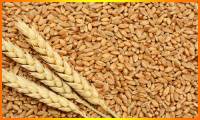
Government to sell five million tonnes of wheat, 2.5 million tonnes of rice in open market.
The government will sell 5 million tonnes of wheat and 2.5 mt of rice from its stocks in the open market, an official said on Wednesday, a move aimed at stabilising prices. This is in addition to the sale of 1.5 mt of wheat and 0.5 mt of rice announced a few months ago under the open market sale scheme (OMSS). The domestic prices of these staples have been rising due to low supply. On Wednesday, the price of wheat surged to a six-month high. "There has been a sharp increase in prices of wheat and rice recently," food secretary Sanjeev Chopra told reporters, adding that people have been hoarding wheat in anticipation of a price rise. The country has adequate stocks of wheat and rice, which the government can release in the open market to stabilise prices, he said. So far, about 0.7 mt of wheat has been sold through e-auction under the OMSS, while sale of rice has been negligible. On August 1, the government's warehouses held approximately 28 mt of wheat and 24.3 mt of rice. The average retail price of wheat declined from Rs.31.58 a kilogram in January this year to Rs.28.74 per kilogram in May but rallied again to Rs.29.59 a kilogram in July, the government told Parliament. The average retail price of rice has risen to Rs.40.82 a kilogram in July from Rs.38.09 per kg in January. Wholesale cumulative inflation in FY24 till the end of June was 7.6%, having added 10.7% in FY23. A combination of low production, declining stocks and rising demand has fuelled the price rise. The government pegged India's wheat production at a record 112.7 mt in 2023, but private estimates peg the harvest at 101-103 mt due to unseasonal rains.
Source:
economictimes.indiatimes.com
|
10 Aug, 2023
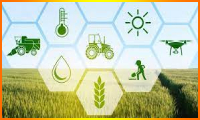
Information Technology in Agriculture Sector.
Information technologies are finding increasing use in the agricultural value system, and farmers are increasingly becoming more informed. The Government has taken various measures to provide access to technology and information across the country, through various Digital Initiatives, such as: National e-Governance Plan in Agriculture (NeGP-A) wherein, funds are provided to the State(s)/UT(s) for project involving use of modern technologies viz. Artificial Intelligence (AI), Machine Learning (ML), Robotics, Drones, Data Analytics, Block Chain etc. After receiving proposals from the States, funds are released for development of various solutions. The Government has announced for development of Digital Public Infrastructure (DPI) for agriculture as an open source, open standard and inter-operable public good to enable inclusive farmer centric solutions through relevant information services for crop planning and health, improved access to farm inputs, credit and insurance, help for crop estimation, market intelligence etc. In this regards, following action has been taken so far: Architecture of three core registries i.e. Farmer registry, Geo referencing of village map registry, crop sown registry has been finalized. To generate crop sown registry, Digital crop survey has been launched on pilot basis in 12 states from Kharif 2023. An MoU has been signed with Pixxel Space India Pvt. Limited to develop use cases with the hyperspectral data of Pixxel for crop identification and mapping, crop health monitoring and soil organic carbon estimation over selected regions on pilot basis. Sub Mission on Agricultural Mechanization (SMAM) is being implemented w.e.f April, 2014.The scheme aims at 'reaching the unreached' by bringing to the small and marginal farmers in the core and giving the benefits of farm mechanization, by Promoting 'Custom Hiring Centers' , creating hubs for hi-tech & high value farm equipments, distribution of various agricultural equipments, creating awareness among stakeholders through demonstration and capacity building activities, and ensuring performance- testing and certification at designated testing centers located all over the country. National Agriculture Market (e-NAM) is a pan-India electronic trading portal which networks the existing Agricultural Produce Market Committee (APMC) mandis to create a unified national market for agricultural commodities. Digital services are provided to traders, farmers, Farmers Producer Organizations (FPO), Mandis through various modules of e-NAM platform such as FPO trading module, warehouse based trading module. Under PM KISAN Scheme, fund is directly transferred into the bank accounts of the eligible farmers under Direct Benefit Transfer mode. Farmers can do their self- registration through the Farmers Corner in the portal. PM-KISAN Mobile App was launched to broaden the reach of the scheme where farmers can view beneficiary status, update or carry out corrections of name based on their Aadhaar card and also they can see history of benefits transferred to their bank accounts. Recently, face authentication feature has also been included in PM-KISAN mobile App. Agriculture Infrastructure Fund (AIF): To mobilize a medium - long term debt finances facility for investment in viable projects for post-harvest management Infrastructure and community farming assets through incentives and financial support in order to improve agriculture infrastructure in the country. Financial assistance is provided digitally in the form of Interest Subvention and Credit Guarantee for setting up post- harvest management Infrastructure to beneficiaries such as Farmers, Primary Agricultural Credit Societies (PACS), Farmer Producers Organisations (FPOs), Self Help Groups (SHG), State Agencies/APMCs. National Mission on Horticulture: It Promotes holistic development of Horticulture sector (including bamboo & coconut) HORTNET project is a web enabled work flow- based system for providing financial assistance under MIDH. It is a unique intervention to accomplish e-Governance in NHM where-in total transparency has been envisaged in all the processes of workflow i.e., online application filing, authentication, processing and online payment to the beneficiary’s bank account through DBT. National Project on Soil Health and Fertility:-Issuance of soil health cards to farmers of the country, so as to provide a basis to address nutrient deficiencies in fertilization practices. Soil Health Card Portal is available where farmers can track soil samples. Several new technological initiatives has been taken under the Pradhan Mantri Fasal Bima Yojana such as Yield Estimation System, based on Technology (YES-Tech), Weather Information Network Data Systems (WINDS) portal and door to door enrollment app AIDE/Sahayak. YES-TECH, a technology-driven yield estimation system, offering methodologies, best practices, and integration insights for accurate yield assessments at the Gram Panchayat level. WINDS Portal is a centralized platform that hosts, manages, and processes hyper-local weather data collected by Automatic Weather Stations and Rain Gauges at Taluk/Block and Gram Panchayat levels. The portal enhances risk assessment and decision-making in crop insurance, agriculture advisories, and disaster mitigation, supporting the agricultural sector and rural economy. The AIDE app's aims to revolutionize the enrolment process, bringing it directly to the doorstep of farmers. This door-to-door enrolment ensures a seamless and transparent process, making crop insurance more accessible and convenient for farmers. The Indian Council of Agriculture Research (ICAR) has also compiled more than 100 mobile apps developed by ICAR, State Agricultural Universities and Krishi Vigyan Kendras and uploaded on its website. These mobile apps developed in the areas of crops, horticulture, veterinary, dairy, poultry, fisheries, natural resources management and integrated subjects, offer valuable information to the farmers, including package of practices, market prices of various commodities, weather related information, advisory services, etc. Further, ICAR has developed a Digital multimedia platform named as 'Kisan Sarathi' which is being used to provide advisories to the farmers through 731 KVKs across the Country. This information was given by the Union Minister of Agriculture and Farmers’ Welfare, Shri Narendra Singh Tomar in a written reply in Lok Sabha today.
Source:
pib.gov.in
|
09 Aug, 2023
Union Commerce and Industry Minister Shri Piyush Goyal participates in the 13th BRICS Trade Ministers' Meeting.
Union Minister of Commerce and Industry, Consumer Affairs, Food & Public Distribution and Textiles, Shri Piyush Goyal attended the 13th BRICS Trade Ministers’ Meeting held yesterday under the BRICS Presidency of South Africa virtually. The theme of BRICS this year is “BRICS and Africa: Partnership for Mutually Accelerated Growth, Sustainable Development and Inclusive Multilateralism”. Shri Piyush Goyal, touched upon issues related to WTO, Supply chain, Digitalisation, MSMEs and on the issue of Mispricing and under-invoicing in the meeting. The Minister lauded the South African Presidency on having an ambitious Agenda and successfully completing outcome oriented activities under the Contact Group on Economic and Trade Issues (CGETI). He extended strong support to BRICS spirit of equality, openness, inclusiveness, consensus, mutual respect and understanding. Shri Piyush Goyal stressed upon building trust among each other and expressed strong belief in small, achievable, incremental steps towards WTO Reform. He also expressed how India wishes to see invigorated, improved, inclusive WTO as it completes three decades, talking about ’30 for 30’, which is an effort to bring at least 30 operational improvements to the WTO before the Organization completes 30 years, i.e., by 1 January 2025. Reflecting India’s efforts to meet its commitments towards global efforts to fight the climate related challenges, the Minister apprised the BRICS Member countries about India’s achievement and its recent ranking at 5th position as per Climate Change Performance Index, published by German Watch. In this context, he also mentioned that India was the only G20 country in the top 10 rank. As BRICS members are also a part of G20, he sought cooperation for significant outcomes under the ‘Trade and Investment Working Group’ of G20 under India’s Presidency. Shri Goyal also made it clear that for collective efforts amongst the BRICS countries, the utmost important issue would be to work in a trust based open atmosphere through transparency and sharing information. In this context, he also expressed disappointment that even within BRICS membership, a few Members had expressed concerns on Transparency. There are concerted efforts to bring in non-tariff barriers through the use of non science based Sanitary and Phyto-Sanitary measures to stall the collective efforts of the BRICS countries, which is the core of collaborative efforts for trade. Our efforts to get the agreement amongst the Members to be fair under the prevailing system, unfortunately did not bring in the desired result. He made it clear that unless trade and investment activities are carried out cooperatively in a transparent manner, it would not yield the desired results. On Supply Chains, Shri Goyal stressed that the principles of trust and transparency along with security and diversification being the most important factors for resilient and robust supply chains. This will be the foundation for an ensuring early warning system amongst BRICS countries which would play an important role in preventing wide ranging disruptions as were experienced during COVID-19. On digital economy, while acknowledging that technology is a great equalizer and not a source of division, the Minister expressed deep concern over deprivation of the access to virtual platforms, tele-medicine, distance education and e-payments. He mentioned about pro-active actions and concerted decision taken by India to adopt whole- of-society approach to digital technology and improved public services. Shri Goyal mentioned the initiatives taken by India under the able leadership of the Prime Minister, Shri Narendra Modi, aiming at bridging the digital divide by leveraging cost-effective technology-based solutions. As MSME’s are an integral part of the BRICS Members, Shri Piyush Goyal brought the importance of cooperation and collective efforts to the foreground for MSME’s. He expressed the need to focus on key areas like, exploring cooperation in the form of Research and Development, Technology transfers and joint Ventures as well as the Business development opportunities for possible partnerships in the future. On Mispricing and underinvoicing, the Minister expressed his concern about the negative impact trade mis-pricing and under-invoicing has on the economies. He even mentioned that India had acknowledged its importance under its Chairship in 2021 and included it as an outcome through Capacity Building Workshop. He commended the efforts made by the South African Presidency for conducting a workshop in the continuity on the initiative taken by India. In conclusion, the Minister laid stress upon the importance of collaborative efforts and commitment along with resilience, unity and transparency to face challenges under the principles of compassion, empathy and understanding, for a common brighter future.
Source:
pib.gov.in
|
09 Aug, 2023

5th India-Vietnam Joint Trade Sub-Commission meeting in New Delhi.
The 5th meeting of India-Vietnam Joint Trade Sub-Commission (JTSC) was held in New Delhi today. The meeting was co-chaired by the Additional Secretary, Department of Commerce, Ministry of Commerce & Industry, Shri Rajesh Agrawal from the Indian side and Deputy Minister, Ministry of Industry and Trade, Ms. Phan Thi Thang from the Vietnam side. This meeting was held after a gap of more than four years since 4th JTSC meeting held in January 2019, on account of COVID-19 pandemic and other factors. Vietnam is the 23rd largest global trade partner of India and the 5th largest among ASEAN countries with bilateral trade of USD 14.70 Bn during 2022-23. Vietnam accounts for 11.2% of India’s total trade with ASEAN. Vietnam is an important destination for India’s iron & steel and agricultural and animal products mainly meat products, animal fodder, cereals and marine products. Both sides reviewed the progress on bilateral trade and economic cooperation and discussed ways to unlock the vast untapped potential in bilateral trade to enable the business communities from the two sides to benefit from the partnership of two of the fastest growing economies. Both sides identified potential sectors such as agriculture, fisheries, textiles, footwear, pharmaceuticals, chemicals, fertilizers, machinery and equipment, consumer products, energy and automobile industry, for expanding trade cooperation and agreed to work together to resolve market access issues and technical barriers faced by the exporters through regular and sustained bilateral discussions. The Indian side raised the issues of pending registration of Indian fishery and meat establishments for export, restricted market access in public procurement of drugs for Indian pharmaceutical companies and high anti-dumping duties imposed on Indian polyster filament yarn products and sorbitol. The Indian side highlighted the potential in service sector cooperation and suggested cooperation in IT, financial services, education sector, tourism, healthcare, tele-medicine, medical tourism and start-up ecosystem. The Indian side also suggested Mutual Recognition Agreements (MRAs) on professional services, internationalization of RuPay card, QR based payment system, and domestic currency trade settlement. Both sides discussed logistics challenges affecting bilateral trade and agreed to continue efforts for exploring direct shipping services, collaboration in freight movement and improving air connectivity.
Source:
pib.gov.in
|