16 Aug, 2023

India and Taiwan to boost supply chain partnership in new world trade order.
India can be a trusted supply chain partner of Taiwan, which leads in hi-tech manufacturing in the Asian region, remarked Edison Hsu, Director, Taipei World Trade Center Liaison Office in Mumbai at an interactive meeting organized for an in-bound Taiwan Trade Mission at WTC Mumbai. Notably, India ranks as Taiwan’s 14th largest export destination and 18th largest source of imports. Bilateral trade between the two countries totaled US$8.45 billion in 2022, representing an increase of 9.8% over the previous year. In 2022, India's exports to Taiwan amounted to US$3.14 billion, consisting of mineral fuels, aluminum, iron, steel, organic chemicals, plastics, and articles thereof, while Taiwan's exports to India amounted to US$5.31 billion, consisting mainly of primarily of plastics, electronic integrated circuits, organic chemicals, electrical machinery, iron, and steel. ,The time has come for India and Taiwan to reimagine their economic relationship. Both the countries can be reliable trade partners at a time when the global supply chain faced a series of shocks right from pandemic to Russia-Ukraine war and the prolonged lockdown in China. I invite Indian companies to participate at the Taiwan Expo, which is scheduled from October 5 to 7, 2023 at Mumbai. More than 50 Taiwanese firms will be actively exploring new supply chain partners from India at the Expo and this opens a promising window to strengthen bilateral commercial relationship,, said Hsu. The event was also addressed by Christian Li, Senior Specialist, Taiwan External Trade Development Council (TAITRA), Taiwan. The interactive meeting was followed by B2B networking session between the Taiwanese business delegates and their Indian counterparts. The members of the delegation represent strategic sectors such as electronic components, medical devices, electric vehicle batteries and energy storage systems, which are the focus sectors of India’s Production Linked Incentives (PLI) schemes. At a time when India is aspiring to gain foothold in semiconductor manufacturing, Taiwan can be a potential partner for India in this area. The delegation members also represent industrial machineries, CCTV & surveillance, locks, surface treatment technology, smart home devices and other high-tech products. Vijay Kalantri, Chairman, WTC Mumbai, said in a statement, ,Today, bilateral trade has touched USD 10 billion mark and Taiwan is the 31st largest trade partner of India, with potential to be the 10th largest in the next few years. I am sure this meeting will lead to fruitful outcome in the form of increase in trade, technology exchange, joint-venture and investment between both the sides. Taiwanese firms can consider Maharashtra as the gateway to their entry into the Indian market as it is the most progressive state. Both the countries have huge scope for collaboration in semiconductor, printed circuit boards, white goods, medical devices and so on., He suggested Taiwanese companies to consider India and especially Maharashtra as a promising investment destination as it has abundant skilled workers. He pointed out that AIAI has been working closely with TAITRA to promote bilateral trade through exhibitions and trade missions as early as 1987-88 and AIAI was one of the first Indian associations to envision a strong business partnership with Taiwan, when Indian industry was not convinced about the scope for bilateral economic collaboration. Rupa Naik, Executive Director-WTC Mumbai, said, ,WTC Mumbai is the first WTC in India established in 1970 to fulfil the vision of Bharat Ratna Sir Dr. M Visvesvaraya who dreamt of a world-class trade promotion organisation in the commercial capital of India. Today, the Center offers multi-dimensional trade support services through its world-class trade facilities, trade education programs, research and trade promotion initiatives.,
Source:
economictimes.indiatimes.com
|
16 Aug, 2023
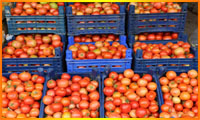
Nepal seeks easier market access as it prepares to export tomatoes to India amid price surge.
India's neighbouring country, Nepal, has sought easy access to the market and other necessary facilities while stating that it is ready to export tomatoes to India in bulk on a long-term basis. The move comes post India's finance minister Nirmala Sitharaman told the Parliament that India has started importing tomatoes from Nepal due to skyrocketing prices of the red fruit in the country. For the fist time, India will be importing tomatoes due to high retail prices of around Rs 242 per kg amid supply disruptions caused by heavy rains Agriculture Ministry spokesperson Shabnam Shivakoti told PTI that Nepal is desirous to export vegetables, such as tomatoes, on a long-term basis to India, but for that India has to provide easy access to its market and other necessary facilities. Though Nepal has already started exporting tomatoes to India through official channels a week ago, it is not in big quantities, she said. Arrangements are yet to be made for large-scale export of tomatoes, she added. ,If we are provided with easy access to the Indian market, Nepal can export huge quantities of tomatoes to India,, said Binaya Shrestha, Deputy Director at Kalimati Fruits and Vegetable Market Development Board. ,India is a good market for Nepalese tomatoes,, he pointed out. Tomatoes are grown in abundant quantities in the three districts of Kathmandu Valley -- Kathmandu, Lalitpur and Bhaktapur -- and it is more than sufficient to meet the local demand, he said. Some of the tomatoes grown in Kathmandu are being exported to the Indian market through unofficial channels, Shrestha admitted. Some one-and-a-half months ago, farmers threw around 60,000 to 70,000 kg of tomatoes on the roads near Kalimati Fruits and Vegetable Market in Kathmandu after they failed to get a market for their products. At that time the farmers could not get even Rs 10 per kg of tomato in the wholesale market. However, one month ago, the market price of tomatoes increased by four times, after traders started exporting tomatoes to India through illegal channels causing shortages in the local market, market analysts said. The tomato which was sold in the retail market for Rs 40-50 per kg soared to Rs 200 to 250 per kg, as farmers started selling tomatoes to the Indian market through unofficial channels, according to Badri Shrestha, one of the major growers and suppliers of tomatoes in Kathmandu. ,We can fetch up to NRs 150 per kg after our products are exported to India through unofficial channels. Last month, 70,000 kg to 90,000 kg tomatoes were exported to India through unofficial channels on a daily basis,, PTI quoted Badri as saying.He grows 2,000 to 3,000 kg of tomatoes every alternate day from his farm located in Lalitpur district near Kathmandu during the vegetable season. He claimed to have exported around 40,000 kg of tomatoes grown on his farm over the past one-month period to India through unofficial channels. During his recent visit to India in July, Agriculture Minister Beduram Bhushal held discussions on facilitating Nepalese agricultural products, including tomatoes, to India with his Indian counterpart Narendra Singh Tomar. Nepal has also asked Indian authorities to arrange quarantine and other facilities to export tomatoes, peas and green peppers, agriculture ministry spokesperson Shivakoti said. Prior to importing vegetables to India, the Nepal government's Plant Quarantine and Pesticide Control Office (PQPCO) has to issue certificates to the exporters. Over the past week, Nepal exported tomatoes through its two border checkpoints, including one situated in Birtamode, agriculture ministry deputy spokesperson Tapendra Prasad Bohara said. The Government of India has already included some vegetable items, including tomato, produced in Nepal in its quarantine list so as to facilitate its export to India, he said. Meanwhile, about 10 tonnes of tomatoes imported from Nepal are in transit and the commodity will be distributed in Uttar Pradesh during the weekend at a subsidised rate of Rs 70 per kg, National Cooperative Consumers' Federation of India Limited (NCCF) Managing Director Anice Joseph Chandra said on Friday. Since July 11, the NCCF has been selling tomatoes at a discounted rate on behalf of the central government to boost domestic availability and contain prices. So far, NCCF has sold 9,38,862 kg of tomatoes in Delhi-NCR, Rajasthan and Uttar Pradesh.
Source:
economictimes.indiatimes.com
|
16 Aug, 2023

Kashmir saffron price over Rs 2 lakh, Kesar farming boost, GI tag & best in world - Explained.
Saffron prices in India have skyrocketed since the kesar from Jammu & Kashmir was given the Geographical Indication (GI) tag by the government. Saffron is often called the world’s costliest spice by weight with saffron prices touching over Rs 2 lakh to a kg in recent times. Why does Kashmir’s saffron fetch such good prices? What makes the saffron in India unique and of premium quality and what are the government’s plans to step up production and connect saffron farmers to buyers across the world? In this week’s episode of TOI Business Bytes, Chowdhary Mohammad Iqbal, Director Agriculture, Kashmir talks about how the cultivation of saffron is difficult and why Kashmir’s saffron fetches higher rates compared to kesar from other countries.
Source:
timesofindia.indiatimes.com
|
16 Aug, 2023

Fast track action to remove non-tariff barriers key to realise trillion-dollar merchandise export goal: GTRI report.
India needs to act in a fast-track manner for removal of non-trade barriers (NTBs), being faced by domestic exporters in different countries like the US, China and Japan, to achieve one trillion dollar outbound shipment target for goods by 2030, a report by think-tank GTRI said on Tuesday. The Global Trade Research Initiative (GTRI) has suggested a two-pronged strategy to mitigate the influence of NTBs on exports. It asked for upgrading domestic systems, in cases where Indian products are rejected due to quality issues; and retaliating if unreasonable standards or rules continue to obstruct exports from New Delhi. 'Many of India's exports suffer due to time taking prior registration requirements and unreasonable domestic standards/rules in many countries. India must talk to partner countries for reasonable solutions,' GTRI Co-founder Ajay Srivastava said. He added that many of India's food and agriculture products face problems due to higher pesticide levels, presence of pests and contaminations due to foot and mouth disease. 'India must take each issue and address it in the shortest possible time,' Srivastava said adding 'India's exports are far below potential as they face NTBs in the EU (European Union), USA, China, Japan, Korea and many other countries'. Key Indian exports that routinely face high barriers include -- Chillies, Tea, Basmati Rice, Milk, Poultry, Bovine Meat, Fish, Chemicals Products to EU; Sesame Seed, Black Tiger Shrimps, Medicines, Apparels to Japan; Food, Meat, Fish, Dairy, Industrial Products to China; Shrimps to the US; and Bovine Meat to South Korea. According to the report, the other products which face these barriers include Ceramic Tiles in Egypt; Chili in Mexico; Medicines in Argentina; Microbiological Regents in Saudi Arabia; Electrical, Medical Devices, Household Appliances in Brazil; Veterinary Pharmaceuticals, Feed Additives, Machinery in Russia. Most non-tariff measures (NTMs) are domestic rules created by countries with an aim to protect human, animal or plant health and environment. NTM may be technical measures like regulations, standards, testing, certification, pre-shipment inspection or non-technical measures like quotas, import licensing, subsidies, government procurement restrictions. When NTMs become arbitrary, beyond scientific justification, they create hurdles for trade and are called NTBs (non-tariff barriers). 'The hindrance posed by NTBs on India's export performance is a critical challenge. A time frame must be decided to resolve important NTBs,' it said. About these barriers, the report said that there are three sub-categories that are reducing pesticide levels in food products; presence of pests like food and mouth disease; and higher inspection due to suspect product quality. India's exports of basmati rice, chillies, tea and many other agriculture products face difficulty in foreign markets due to higher use of pesticide and fungicides. The traces pesticides leave in treated products are called 'residues' and a maximum residue level (MRL) is the highest level of a pesticide residue that is legally tolerated in food or feed. Citing certain examples, the report said the EU has set MRL for tricyclazole, a fungicide in rice, to 0.01 mg per kg as against the ten times higher limit earlier. Now the EU has proposed to raise the limit to 0.09 as the current level is 'unreasonable and hampers' trade. Similarly, the EU has set MRL for aflatoxins B1 level in chilies and other spices at 5 to 10 ppb (parts per billion). The US limit is a higher 20 ppb for all spices. The European Union has set the level for Anthraquinone for tea at 0.02 mg/Kg. No tea grower in India uses anthraquinone as a pesticide. Tea leaves get it from the dust in the atmosphere. Japan stopped importing sesame seeds from India from 1992-93 due to pesticides/DDT traces, it said. Export of milk and poultry, bovine meat products to the EU and bovine meat to China and South Korea is difficult due to the prevalence of foot and mouth disease (FMD) in India. 'India needs to invest in creating FMD free zones to export freely,' it suggested. It added that each consignment of Black Tiger Shrimp and Vannamei exported from India to Japan undergoes 100 per cent inspection by Japanese Authorities. This is done to rule out the presence of an antibiotic residue called Nitrofuran metabiolite AOZ. There has been no detection of AOZ in Black Tiger shrimp for the last three years. Likewise, the EU has increased the sampling frequency from 10 per cent to 50 per cent on marine products exported from India due to frequent detection of prohibited antibiotics. Mexico has also suspended import of Indian dry chilies in May, 2017 after live pest (Trogoderma) was detected in two containers. Further regarding registration systems in different countries, the report said that registration, in most cases, requires physical submission of documents and payment of exorbitant fees. 'Big pharma firms abuse patent laws as they recycle and repurpose old drugs and patent them as new, thereby encouraging ever-greening of patents. Three of every four drugs associated with new patents are not new, but existing drugs. This delays the launch of affordable generic drugs,' it said.
Source:
economictimes.indiatimes.com
|
16 Aug, 2023
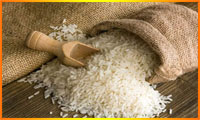
Myanmar eyes surge in rice exports after India curbs supply.
Myanmar expects rice exports to surge in coming months as curbs on Indian sales and a spike in Thai and Vietnamese prices force buyers to hunt for other origins. The tightening in global supply should help revive the Southeast Asian nation’s rice shipments, which slumped 56% in the first four months of the fiscal year, and bring it closer to its annual goal of earning $1 billion from exports of the grain, Ye Min Aung, president of the Myanmar Rice Federation, said in an interview last week. Myanmar exported about 320,000 tons from April to July, earning just $138 million, according to data from the federation, after the government decided to prioritise selling higher-grade rice. But prospects improved last month when India, the world’s top exporter, banned a substantial portion of its overseas sales to keep a lid on domestic prices ahead of a general election due early next year. That’s pushed up prices in some of Myanmar’s regional competitors. ,We hope to take advantage, even though we’ll maintain our focus on exporting only higher-quality varieties,, Ye Min Aung said. Myanmar is another nation troubled by food insecurity, a situation worsened by political instability since a military coup in 2021, and its export policy is designed to conserve domestic supplies. While sales of better-quality grain can reap as much as $700 a ton compared to $300 or $400 a ton for lower grades, according to Ye Min Aung, it also limits customers to relatively wealthy countries. Myanmar earned over $800 million from rice sales in each of the two previous fiscal years, according to the federation, and its biggest buyers include China, the Philippines and Belgium. The US Department of Agriculture ranked it as the world’s sixth-biggest exporter last year.
Source:
economictimes.indiatimes.com
|
16 Aug, 2023
Prime Minister says India s exports rising rapidly, world rating agencies recognizing India s potential.
The Prime Minister, Shri Narendra Modi, speaking from the ramparts of the Red Fort on the occasion of 77th Independence day today, said that India’s exports is rising rapidly and the world is saying that India will not stop now. World rating agencies are praising India and in the new world order post-Corona, the ability of Indians is being recognized, he said. At a time when the global supply chains were disrupted, we showed the world that the solutions can be found only by focusing on human needs, he said. Prime Minister said that today India has become the voice of global South and Indian economy is now a part of global supply chain, providing it stability. Speaking on Startups, Prime Minister said that the youth of India have placed the country in the top three StartUp ecosystems of the world. He added that the youth of the world are amazed at this development, amazed seeing the ability of India’s youth. Today’s world is technology driven and given the talent that India has in technology, we will have an important role to play in the world. Prime Minister also noted that the world leaders of the most developed nations have recognized the success of digital India, and want to know more about these initiatives.
Source:
pib.gov.in
|
16 Aug, 2023
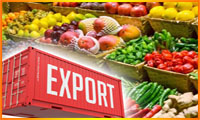
Agricultural exports registered robust growth: Fruits and Vegetables exports increase by 18.94%, Oil Seeds by 32.83%, Oil Meals by 34.24%, Rice by 5.38% in July 2023 over July 2022
- India’s overall exports (Merchandise and Services combined) in July 2023* is estimated to be USD 59.43 Billion, exhibiting a negative growth of (-) 5.06 per cent over July 2022. Overall imports in July 2023* is estimated to be USD 67.77 Billion, exhibiting a negative growth of (-) 12.92 per cent over July 2022.
Table 1: Trade during July 2023* | | | July 2023 (USD Billion) | July 2022 (USD Billion) | | Merchandise | Exports | 32.25 | 38.34 | | Imports | 52.92 | 63.77 | | Services* | Exports | 27.17 | 24.26 | | Imports | 14.85 | 14.06 | | Overall Trade (Merchandise +Services) * | Exports | 59.43 | 62.59 | | Imports | 67.77 | 77.83 | | Trade Balance | -8.35 | -15.24 | * Note: The latest data for services sector released by RBI is for June 2023. The data for July 2023 is an estimation, which will be revised based on RBI’s subsequent release. (ii) Data for April-July 2022 has been revised on pro-rata basis using quarterly balance of payments data. Fig 1: Overall Trade during July 2023* 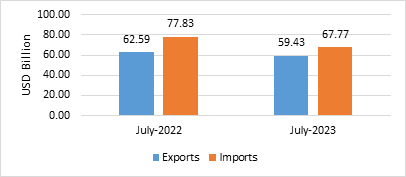 - India’s overall exports (Merchandise and Services combined) in April-July 2023 is estimated to exhibit a negative growth of (-) 5.98 per cent over April-July 2022. Overall imports in April-July 2023 is estimated to exhibit a negative growth of (-) 11.09 per cent over April-July 2022.
Table 2: Trade during April-July 2023* | | | April-July 2023 (USD Billion) | April-July 2022 (USD Billion) | | Merchandise | Exports | 136.22 | 159.32 | | Imports | 213.20 | 247.31 | |
pib.gov.in
|
16 Aug, 2023

India open to more FTAs; focus to go beyond trade: Commerce secretary.
India is open to more free trade agreements, and the focus of future agreements will go beyond trade, according to Sunil Barthwal, secretary, department of commerce. Outlining the progress India has made in free trade agreements, Barthwal pointed out that a lot of countries were approaching India to sign FTAs, and the country would also consider its strategic needs before signing these agreements. 'Looking at FTAs from strategic needs, in addition to trade,' Barthwal said, highlighting that critical mineral supply, from the point of view of the energy transition, was one area the country was considering. Peru and Chile are the two Latin American countries which have expressed interest in signing an FTA with India. Bangladesh and Sri Lanka have also expressed interest. India is in the process of finalising its FTA with the United Kingdom. Recently, India concluded negotiations on 19 of the 26 chapters and hopes to complete the process before the end of the year. India is also negotiating the Comprehensive Economic Cooperation Agreement with Australia. Last year, it had signed India-Australia Economic Cooperation Agreement, which came into force on December 29, 2022. The United Arab Emirates and India entered into a Comprehensive Economic Partnership Agreement (CEPA) last year, which saw trade between the countries increase 16% to $84.5 billion in FY23 from $72.9 billion in FY22. The ministry said that talks were also undergoing for agreements with Canada, European Union and for the Indo-Pacific Economic Framework.
Source:
economictimes.indiatimes.com
|
14 Aug, 2023

G-20 agriculture ministers meeting
G20 Agriculture Ministers’ Meeting was held in Hyderabad from 15thto 17th June 2023. Aligned with India’s G20 Presidency theme 'One Earth, One Family, One Future', under leadership of India, the following issues were discussed during the G20 Agriculture Ministers’ Meeting:- (i) Food security and nutrition, (ii) Sustainable agriculture with climate smart approach, (iii) Inclusive agri-value chains and food systems and (iv) Digitalization for agricultural transformation The Chair Summary and Outcome Document of the Ministerial Meeting outlines in detail the consensus that was reached for strengthening cooperation among the G20 nations in the above mentioned areas. The two key outcomes of the meeting are (i) Deccan High Level Principles on Food Security and Nutrition 2023 and (ii) International Millets and Other Ancient Grains Research Initiative (MAHARISHI).On India’s initiative, it was the first time in the history of G20 that the Agriculture Ministers have agreed on champion the High Level Principles on food security and nutrition. The Principles demonstrate the G20’s collective responsibility in reinforcing and complementing efforts across geographies in response to global food security crises by : facilitating humanitarian assistance to countries and populations in vulnerable situations; enhancing availability and access to nutritious food and strengthening food safety nets; strengthening policies and collaborative actions for climate resilient and sustainable agriculture and food systems; strengthening resilience and inclusivity in agriculture and food value chains; promoting the one health approach; accelerating innovation and the use of digital technology and scaling up responsible public and private investments in agriculture. The seven (07) principles of the Deccan High Level Principles 2023, are placed below. Millets and Other Ancient Grains International ReSearcH Initiative (MAHARISHI) is research collaboration on millets (Shree Anna) and other ancient grains, which are highly nutritious and climate-resilient crops. By building on the momentum of the efforts undertaken during the International Year of Millets 2023 and emphasizing research in areas of production, processing, marketing, and utilization. India envisages to leverage the potential of millets (Shree Anna) for sustainable agriculture, food security, and rural development. The proposed Millets And other Ancient Grains International ReSearcH Initiative, initiated by India, was unanimously approved by the agricultural chief scientists of all G20 countries and invited international organizations in the meeting held in Varanasi and welcomed by the Agriculture Ministers in Hyderabad. The G20 nations also pledged to alleviate the immediate suffering and build resilience in communities affected by food security crises by providing assistance and support. The G20 countries encouraged responsible investments from all sources in infrastructure, research, and innovations that support sustainable, climate-resilient, and productive agriculture. Cognizant of the transformative potential of innovation and digital technology, the G20 nations committed to fostering scalable solutions that support the transition towards sustainable food systems. This involves ensuring affordable and inclusive access to digital infrastructure, as well as promoting the development and safe application of digital tools tailored to the specific needs of the small holder farmers. To promote food security and nutrition programs, the G20 countries and 9 invited guest countries (Spain, Netherlands, Singapore, Vietnam, Oman, Nigeria, UAE, Bangladesh, Mauritius) agreed to share best practices and experiences with each other in the G20 Agriculture Ministers’ Meeting. G20 Deccan High Level Principles on Food Security and Nutrition 2023 PRINCIPLE1: Facilitate Humanitarian Assistance to Countries and Populations in Vulnerable Situations PRINCIPLE2: Enhance Availability and Access to Nutritious Food andStrengthen Food Safety Nets PRINCIPLE 3: Strengthen Policies and Collaborative Actions for Climate Resilient and Sustainable Agriculture and Food Systems PRINCIPLE 4: Strengthen Resilience and Inclusivity in Agriculture and Food Value Chains PRINCIPLE 5: Promote the One Health Approach PRINCIPLE 6: Accelerate Innovation and the Use of Digital Technology PRINCIPLE 7: Scale-Up Responsible Public and Private Investments in Agriculture This information was given by the Union Minister of Agriculture and Farmers’ Welfare, Shri Narendra Singh Tomar in a written reply in Lok Sabha today.
Source:
pib.gov.in
|
14 Aug, 2023
Food Processing Sector as Employment Intensive Industry
Ministry of Statistics and Programme Implementation (MoSPI) releases data on various aspect of registered manufacturing sectors, including employment in registered food processing sector through the Annual Survey of Industries(ASI). As per the latest Annual Survey of Industries 2019-20, food processing sector contributed 12.22% of total persons engaged in the registered manufacturing sector. The details of employment in food processing sector for last three years, as per Annual Survey of Industries, are as under: | Year | Employment (In lakh) | | 2017-18 | 19.33 | | 2018-19 | 20.05 | | 2019-20 | 20.32 | Source: Annual Survey of Industries 2017-18,2018-19 & 2019-20 In addition, as per the 73rd round of National Sample Survey (July 2015 to June 2016), 51.11 lakh persons were engaged in unincorporated food processing sector. The Ministry of Food Processing Industries (MoFPI) commissioned a study titled "Study to assess Human Resource and Skill Requirements in Indian Food Processing Sector during 2021-2030” through M/s. Feedback Business Consulting Services Private Limited, Bangalore. The study was mandated to cover 11 sub-sectors of the Food Processing Sector as they are considered the major segments in terms of production, huge scope for increasing processing levels, the requirement of the skilled labour force, etc. The 11 sub-sectors are – Bread and Bakery products, Cold Chain (including logistics), Dairy Products, Fish and Seafood processing, Fruits & Vegetables Processing, Meat & Poultry Processing, Milling (Grains & Oilseeds), Beverages (Tea & Coffee), Ready-to-Eat & Ready-to-Cook Products, Soya Processing and Spices. The study has identified that the net expected number of skilled human resource requirement in these 11 sub-sectors of Food Processing during 2021-30 is around 13.4 Lakh. The programmes for capacity building and skill development for food processing sector are provided through: -
National Institute of Food Technology, Entrepreneurship and Management (NIFTEM) – at Kundli and Thanjavur- under the Pradhan Mantri Kisan Sampada Yojana (PKSKY) of MoFPI. -
Capacity Building component under Pradhan Mantri Formalisation of Micro Food Enterprises (PM FME) Scheme of MoFPI. -
Food Industry Capacity & Skill Initiative (FICSI)- the concerned Sector Skill Council- under the Pradhan Mantri Kaushal Vikas Yojana (PMKVY) of Ministry of Skill Development & Entrepreneurship (MoSDE) This information was given by Union Minister of State for Ministry of Food Processing Industries Shri Prahlad Singh Patel in a written reply in the Rajya Sabha today.
Source:
pib.gov.in
|
|