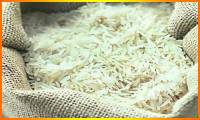
After India s ban on white rice exports, Thailand and Vietnam hike prices.
Thailand and Vietnam increased rice prices by $5-10 a tonne on Friday even as the global rice market switched to a 'wait and watch mode' after India banned exports of (non-basmati) white (raw) rice with immediate effect on Thursday evening.
However, traders and analysts expect both rivals of India, the numero uno rice exporter, to increase prices by at least $50 a tonne when the market opens next week.
Neighbour’s pride
'India’s envy, neighbour’s pride is what Indian rice export situation is. Prices will be up at least 10 per cent in the global market,' said Rajesh Jain Paharia, a New Delhi-based exporter.
According to a Thailand trade source, prices of five per cent, 25, and 100 per cent Thai rice have gone up by $5-6 after the ban. 'It has been difficult to get quotes today,' the source said, pointing to the 'wait and watch' attitude.
All grades of Vietnam white rice were quoted above $515 a tonne, while Pakistan rates were above $500 a tonne. Myanmar rice prices were also quoted above $500.
'Prices could rise to $700 a tonne within a month and don’t be surprised if you see a 2008-like bullish run when the rates topped $1,000 a tonne,' a trade source said on the condition of anonymity.
Impact spill-over
'There was not much activity in Thailand and Vietnam. But we expect prices to rise by $50-100 a tonne,' Jain said.
'We have no idea as of now what Vietnam or Thailand are up to. But they will definitely hike the prices and we will see next week,' said VR Vidya Sagar, Director, Bulk Logix.
The increase in rice prices will not be confined just to white rice. Parboiled (boiled) rice rates will likely increase as some countries may shift to that variety, whose exports are allowed.
According to the Thai trade source, India’s parboiled rice prices shot up to $475-495 a tonne, up at least $30 a tonne.
Food price inflation
'If white rice prices rise to say $650 a tonne and parboiled is available at $500, some consumers will definitely shift to the variety,' said the analyst. 'Parboiled rice exports could be next in the line (for export ban),' he said.
Research agency BMI, a unit of Fitch Solutions, said the Indian Government’s decision to promptly ban white rice exports was 'the June rise in the rate of Indian food price inflation to 4.5 per cent year-on-year'.
The Centre’s decision will have material implications for Indian inflation as well as substantial ramifications for trends in the global rice market, it said.
S Chandrasekharan, a Delhi-based trade analyst, said on Thursday that despite India imposing 20 per centexport duty on white rice shipments in September 2020, they had gone up by 23 per cent.
‘Watch out mislabelling’
In addition, he said, white rice monthly exports since the beginning of the fiscal year had increased to over 5 lakh tonnes from around four lakh tonnes a year ago. During April-May this fiscal, nearly 11.5 lakh tonnes of white rice were shipped out of the country.
'The government has now to ensure that no mislabelling of white rice is done as parboiled for exports. It has to also ensure that white rice is not pushed out as some cheap Basmati rice. The authorities have to be strict in enforcing the ban,' he said.
In addition, he suggested that the Centre fix a minimum export price for basmati shipments.
Customs authorities got going in Chennai on Friday by not permitting idli rice as it is seen as single-boiled rice and not parboiled. Steamed rice shipments are also expected to be curbed as a result, the trade source said.
El Nino factor
Research agency BMI said the global rice market remains tight by recent historical norms, which the Indian ban will exacerbate. 'In conjunction with India’s September 2022 ban on the export of 100 per cent broken rice, between 30 per cent and 40 per cent of India’s rice exports are now offline. In conjunction with the supply-side risks associated with El Niño, we expect the export ban to keep upside pressure on prices,' it said.
Rice prices had surged to a five-year high earlier this month on fears El Nino may affect rice production in Asia. Thailand was among the first to say that its rice production might be 6 per cent lower this year. 'Vietnam production will also likely be hit by El Nino,' said the trade source.
In India, kharif paddy sowing has encountered different problems. One, deficient rains has affected sowing in key regions such as West Bengal, Andhra Pradesh, Chhattisgarh, Tamil Nadu and Karnataka. The second problem has been caused by floods in Punjab and Haryana, which forced the Centre to ban exports of white rice.
Tardy kharif sowing
On Thursday, the Indian Government caught the global rice market by surprise, banning exports of white rice as part of its efforts to control rising foodgrain prices. The move is also seen as a measure to overcome any supply shortage.
In addition to rise in white rice exports, at least three lakh tonnes of the rice were under-invoiced and exported below $300 a tonne since September 2022. Over the last two years, India has exported at least 17 million tonnes of non-basmati rice.
The Centre’s decision came following tardy progress in kharif paddy sowing, which was 8.5 per cent lower than last year at 122.18 lakh hectares (lh) as of July 14.
On the other hand, rice stocks with the Central pool maintained by the Food Corporation of India (FCI) dropped to a seven-year low of 25.34 million tonnes. The agency has an additional 23.3 mt of unmilled paddy (15.72 mt of rice).
Source: thehindubusinessline.com
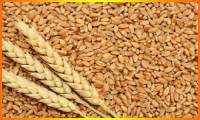
India s share in world food grains market based on export values stands at 7.79% in 2022.
India’s share in the world food grains market, based on the exported values in 2022, was 7.79% (Source: ITC Trade Map calculations based on UN COMTRADE and ITC statistics).
Details of top 10 agriculture commodities exported from the country and top 10 importing countries of India’s agriculture products, during the last five years, are given in the table below:
India’s exports of foodgrains have registered a steady growth in last few years which is reflected in the increase in India’s share in world foodgrain exports from 3.38% in 2010 to 7.79% in 2022 as per UN COMTRADE statistics. Export promotion is a continuous process. The Government has taken several steps at State/ District levels to promote exports of agriculture products, including foodgrains. State-specific Action Plans have been prepared and State Level Monitoring Committees (SLMCs), Nodal Agencies for agricultural exports and Cluster Level Committees have been formed in a number of States. Country and product-specific action plans have also been formulated to promote exports.
The Agricultural & Processed Food Products Export Development Authority (APEDA), a statutory body under the administrative control of Department of Commerce, has been providing financial assistance to the exporters of agricultural and processed food products, including foodgrains, under components such as Development of Export Infrastructure, Quality Development and Market Development under its scheme namely “Agriculture & Processed Food Export Promotion Scheme of APEDA”. APEDA assists exporters in promoting exports by organising buyer-seller meets (BSMs); participation in international trade fairs and exhibitions; taking up the Sanitary and Phytosanitary (SPS), Technical Barriers to Trade (TBT) and Market Access issues with the importing countries; and regular interactions with the Indian Missions to tap export opportunities in various countries.
Further, Export Promotion Forums (EPFs) for Rice and Nutri-Cereals have been set up under the aegis of APEDA. The EPFs strive to identify and anticipate developments pertaining to production and exports of these products, reach out to stakeholders across the entire production/ supply chain of exports and make recommendations for necessary policy interventions and other measures to promote exports.
Farmer Producer Organizations (FPO) have been established for the purpose of leveraging collective economies of scale in the production and marketing of agriculture and related products. This helps lower the average cost of production, hence increasing competitiveness in foreign markets.
Source: pib.gov.in

Timeline for assessment scheme for food labs extended till March 31.
The FSSAI has decided to extend the timeline for FSSAI-NABL integrated assessment scheme for food labs until March 31, 2024.
The food authority has issued an order, in this regard, saying that all laboratories already notified by FSSAI, which have not obtained FSSAI-NABL (National Accreditation Board for Testing & Calibration Laboratories) integrated assessment accreditation, must obtain the same prior to the expiry of their NABL accreditation validity period or before March 31, 2024, whichever is earlier.
According to the food authority, FSSAI will only accept fresh proposals from laboratories for FSSAI recognition and notification if the laboratory has obtained accreditation under FSSAI-NABL integrated assessment scheme.
And such labs should get FSSAI-NABL integrated assessment on or before March 31, 2024.
In 2019, FSSAI issued a notice, in this regard, asking all the notified laboratories to get integrated assessment for accreditation under FSSAI-NABL unified approach of laboratory accreditation/recognition/approval system which also has other regulatory boards.
And, accordingly, the food testing labs willing to apply for FSSAI recognition/ renewal/extension of scope and so on were asked to apply only through the unified system of integrated assessment.
Subsequently, in September 2022, the date for such integrated assessment was extended until June 30, 2023.
This will be the third time FSSAI extended the timeline.
Source: fnbnews.com
Encouragement to Agri-Startups in Rural Areas.
The Government of India, Department of Agriculture & Farmers' Welfare (DA&FW) is implementing 'Innovation and Agri-Entrepreneurship Development' programme under Rashtriya Krishi Vikas Yojana (RKVY) from 2018-19 with an objective to promote innovation and agri-entrepreneurship by providing financial support and nurturing an incubation ecosystem in the country. This Department has appointed five Knowledge Partners (KPs) and twenty-four RKVY Agribusiness Incubators (R-ABIs) from across the country for incubation of startups and implementation of this programme.
Start-ups are trained and incubated at various Knowledge Partners (KPs) and RKVY Agribusiness Incubators (R-ABIs) appointed under the programme across the country. Technical and financial assistance is provided to startups to launch their products, services, business platforms, etc into the market and facilitate them to scale up their products and operations to attain business viability.
Besides, KPs and R-ABIs are promoting these startups by linking them with various institutions and organizations for their product & technology validation, certification, etc. Government of India organizes various national level programmes including agri-startup conclave, agri fair and exhibitions, webinars, workshops to serve as a platform for the promotion of agri startups by linking them with various stakeholders.
Under the programme, a financial support up to Rs. 5.00 lakh is provided at the idea/pre seed stage and up to Rs. 25 lakh at the seed stage. So far, a total of 1176 agri startups have been supported under the programme with financial assistance of Rs. 75.25 crores.
Besides, Government of India has approved a proposal to set up an 'Accelerator Fund' of Rs. 500 crore for five years commencing from 2023-24 to encourage the young entrepreneurs to setup agri-startups. Accelerator fund will help to scale up the successful startups with innovative technologies having the potential of modernizing the agriculture ecosystem of the country. This initiative will also help to the farmers by having value addition to the agricultural produces, better supply chain and market linkages etc and to boost agricultural economy in the rural areas of the country.
Under the Accelerator Fund programme, certain activities are planned like development of institutional mechanism and operational guidelines, identification of problem statements in agriculture & allied sectors, selection of agri-startups having high impact & innovative solutions, technical and financial support to encourage selected agri-startups and capacity building, etc during 2023-24.
This information was given by the Union Minister of Agriculture and Farmers Welfare, Shri Narendra Singh Tomar in a written reply in Rajya Sabha today.
Source: pib.gov.in
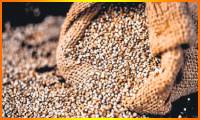
Promotion of Millets.
To promote millets in restaurants and hotels, the Ministry of Tourism is taking several steps such as establishment of millet experience centres, create awareness on health benefits about dishes made out of millets amongst Indian and International chefs, meetings with hotel associations and hotel chains. Further, prominent Indian chefs are also encouraged to promote consumption of millets and sensitize on health benefits across all hotel chains and restaurants. The Government is celebrating International Year of Millets (IYM)-2023 at national, state and district level through organization of events, workshops, seminars, road shows, kisan melas etc., to create domestic & global demand, promote climate resilient crops, enhance production, consumption, export etc., due to their unique properties.
The Department of Agriculture & Farmers Welfare has taken a proactive multi-stakeholder engagement approach with central government ministries, states/union territories, farmers, start-ups, exporters, retail businesses, hotels, Indian Embassies etc., to achieve the objectives of IYM 2023 and to promote Indian millets globally. Twenty-Four Ministries/ Departments of the central government, all the State Governments and Indian Missions abroad are conducting two-week dedicated activities on millets for improving millets value chain and creating awareness on IYM.
The ICAR-Indian Institute of Millets Research (IIMR), Hyderabad is providing training to the farmers, women farmers, home makers, students and young entrepreneurs on manufacturing of value-added millet food products, daily recipes etc., and supporting them to establish self-enterprise. The institute has developed 67 value-added technologies including 'Ready to Eat' and 'Ready to Cook' for millet foods, branding of millet foods under 'Eatrite' tag, organizing awareness programmes, agri-business incubator, technology business incubators etc.
This information was given by the Union Minister of Agriculture and Farmers Welfare, Shri Narendra Singh Tomar in a written reply in Rajya Sabha today.
Source: pib.gov.in

Britain sees improved momentum in latest round of India trade talks.
Talks between Britain and India on a free trade agreement (FTA) have gained momentum but further work is needed on services and tariffs to secure a deal, a British source close to the negotiations told Reuters.
Britain began free trade talks with India in January last year as it looks to establish its credentials as an independent trading nation after leaving the European Union and is seeking an Indo-Pacific tilt to its foreign policy.
Talks had seemed stuck earlier this year, with the two sides struggling to make progress in a number of key areas amid concern there could be further political complications if talks drag on. Elections are expected in both countries next year.
However, momentum has improved following the conclusion of the eleventh round of talks this week, the source said, allowing negotiators to turn to more commercially sensitive topics that are likely to be some of the most difficult to resolve.
'The talks certainly kicked up a gear during the last round, and gained momentum, but there is still a long way to go, such as on services or tariffs for various goods,' the source said.
'It's not about a race to the finish – it's about driving home an ambitious deal that will benefit us both in the years and decades to come.'
After the ambitious timelines of former prime minister Boris Johnson slipped, current British leader Rishi Sunak has emphasised that his government will take time to strike the right deal.
In a sign of the political impetus in the talks, India's trade minister Piyush Goyal and Commerce Secretary Sunil Barthwal both visited London during the round.
The Indian government has said the talks are at a critical stage, and that ministerial engagement during the round had helped to overcome obstacles in talks. The next round is expected to commence in August.
Source: economictimes.indiatimes.com
Global Food Regulators Summit 2023 Focuses on Strengthening Food Safety Systems.
The Global Food Regulators Summit 2023 was inaugurated by Union Minister for Health and Family Welfare, Dr. Mansukh Mandaviya, marking a significant step towards strengthening food safety systems across the world. The summit, organized by the Food Safety and Standards Authority of India (FSSAI) under the Ministry of Health and Family Welfare (MoHFW), brought together food regulators from various nations to exchange perspectives and knowledge on crucial issues related to food safety and regulatory frameworks.
The event commenced with the gracious presence of esteemed dignitaries, including Union Minister for Agriculture and Farmer’s Welfare, Narendra Tomar, and special guest Minister of Agriculture and Livestock Development, Govt. of Nepal, Dr. Bedu Ram Bhusal. The session was also attended by Prof S P Singh Baghel and Dr. Bharati Pravin Pawar, Union Ministers of State for Health and Family Welfare, adding to the significance of the summit.
Addressing the audience, Dr. Mansukh Mandaviya emphasized the importance of safe and nutritious food in promoting good health and well-being. He highlighted how balanced and wholesome food acts as preventive care, safeguarding public health. The Union Minister stressed the need for food regulators to adopt an integrated 'One Health' approach, considering the health of climate, humans, animals, and plants in their regulatory systems.
With a focus on the ongoing G20 India Presidency, Dr. Mandaviya emphasized that 'One Health' remains a key priority for the Health Working Group. He also called for international cooperation and solidarity, aligning with the theme of India's G20 Presidency, 'Vasudev Kutumbhakam: One Earth, One Nation.' Considering agro-climatic diversities across regions, he urged for exploration of how regional differences can be integrated into global best practices for food safety.
The Union Minister emphasized the crucial role of soil health in ensuring the quality of food. He mentioned the recently announced PM-PRANAM scheme, which encourages balanced chemical use in food cultivation and promotes organic, natural, and alternative farming methods. Dr. Mandaviya appealed to countries worldwide to collaborate in addressing the global food shortage problem, emphasizing the philosophy of 'Vasudhaiva Kutumbakam' (the world is one family).
Narendra Singh Tomar, the guest of honour, highlighted the fundamental right to food and the need to ensure its availability and affordability for all. Stressing on the importance of farmers, he urged that they must be at the center of any food supply policies to protect their interests. Additionally, Tomar advocated for the promotion of millets, citing their water-efficient nature, resilience to adverse climatic conditions, and high nutritional value.
Dr. Tedros Adhanom Ghebreyesus, WHO Director-General, congratulated the organizers through a recorded message, stating the importance of ensuring safe and nutritious food for everyone, everywhere.
During the summit, several essential initiatives were launched. The Food-o-Copoeia, a collection of food category-wise monographs, was released, serving as a comprehensive reference for applicable food safety standards and regulations. Another crucial database, 'SaNGRAH' - Safe food for Nations: Global food Regulatory Authorities Handbook, was introduced, providing information on Food Regulatory Authorities of 76 countries, their mandates, food safety ecosystems, and contact details.
A Common Digital Dashboard was unveiled, offering comprehensive information on standards, regulations, notifications, advisories, guidelines, contamination limits, and the latest developments by Food Regulators in India.
Furthermore, an exhibition featuring 35 exhibitors, including Food Business Operators (FBOs) and esteemed organizations like APEDA, MPEDA, EIC, Spice Board, Tea Board, and Coffee Board, was inaugurated during the summit. The exhibition provided a platform for exchanging ideas and information on food safety, food standards, food testing capabilities, product reformulation, and advancements in food technologies.
The summit also featured technical sessions focusing on various critical topics, including roles and responsibilities of global food regulators, challenges and solutions for global food safety, robust standard setting, and innovation in food emergency response.
Source: krishijagran.com
Andhra Pradesh ranks 8th in export index 2022.
Andhra Pradesh secured eighth place in the overall category in the country-level analysis of Export Preparedness Index 2022 released by NITI Aayog. The State stood ninth in the previous year.
The report categorised the States and Union Territories as Coastal and Landlocked. In the overall rankings, AP scored 59.27 points while Tamil Nadu topped the list with 80.89 points. Telangana, falling under the Landlocked Category, scored 61.36 points and stood sixth.
Among the Coastal Category States, AP scored 59.27 points and stood fifth among the eight States in the category. Visakhapatnam is the only district from the State, which found a place in the top 10 export districts of India with 1.80 per cent of exports. In all, eight districts from the State found a place in the top 100 export districts. According to the report, Visakhapatnam and East Godavari stood 15th and 24th in terms of export value.
'Developed as a part of Kakinada Development Project, top exports from both districts are engineering goods. Specifically, Visakhapatnam also exports organic and inorganic chemicals, drugs and pharmaceuticals, and marine products. East Godavari district has a large number of rice mills and falls under the Kakinada SEZ, and therefore exports rice and electronic goods as other principal commodities,’’ the report said.
The two districts are connected with Kolkata via land and have access to international waterways owing to their coastal proximity, resulting in ease of transportation which in turn facilitates trade.The report further said in tune with the vision of Districts as Export Hubs, the district export action plans have identified coconut-based products, alloys, cashew, coir, and sugar as potential exports.
'Towards that direction, the districts require information to disseminate knowledge in terms of value addition, global trade and management of products. Expanding its export basket, and creating a conducive environment to multiply its export value can prove beneficial for the State, which is gifted in terms of natural resources,’’ the NITI Aayog report stated.
The report observed that AP in the financial year 2022 recorded an export value of over USD 19 billion by exporting products such as floats, seafood, and iron products.
'The State has achieved this by creating a solid policy framework which enables export at the district level. In terms of export ecosystem, the State has the highest area under Export Promotion Zones, and Agri Export Zones, which provide a huge boost to its exports. Along with that, to facilitate exporters, the Andhra Pradesh government pro-actively organises capacity-building workshops and trade fairs. The presence of testing labs and research institutes in the State enables quality measures for its products which help it compete in the global markets. This enabling environment has led to a decent increase in its exports and consequently, export growth,' the NITI Aayog report added.
Source: newindianexpress.com

First PH agricultural import inspection hub rising in Bulacan.
The Philippines’ first border inspection facility located in this province will be completed in less than a year, bolstering the country’s ability to fight smuggling and animal diseases.
The government and the private sector partnered to establish a cold examination facility in agriculture (Cefa) in this part of Bulacan, a first of its kind in the country.
This facility, situated in a 10-hectare property, will house an inspection area as well as state-of-the-art testing laboratories and an incinerator to examine all imported animals, fish, plants and other commodities.
The project will funded by the P2.3-billion allotment made by the government this year for the development of such facilities.
The Department of Agriculture (DA) and Pacific Roadlink Logistics Inc. (PRLI) signed a memorandum of agreement on Thursday to establish Cefa.
Based on the accord, PRLI will contribute the resources and a suitable property for the first border facility. PRLI will build the inspection area while the DA will develop the laboratories for the inspection of agricultural products with perceived risk.
'We expect the construction to commence immediately,' said Bureau of Animal Industry Director Paul Limson in a media briefing, adding the construction would be concluded in six to eight months.
Particularly, the Cefa will thoroughly check all imported agricultural products depending on risk level, such as those coming from banned countries with existing disease/pest outbreaks, unaccredited/unregistered agricultural imports, misdeclared or smuggled agricultural goods, as well as those involved with suspected agricultural regulatory violations and other food items that are deemed high-risk.
'The involvement of PRLI is to provide a facility for the government because the primary issue was ASF (African swine fever). Smuggling, I will say, will be secondary. Now, we’ve seen the effect of ASF and avian influenza on the industry. That’s the primary reason,' PRLI president Edgar Dominic Milla said.
According to Milla, the design of the facility is scalable. The number of refrigerated containers coming from the Bureau of Customs and the DA can be increased to about 250 containers a day.
Agriculture Assistant Secretary James Layug said the Cefa would not only strengthen efforts to combat agricultural smuggling but also improve the process of examining imported food items.
'Right now, what happens is that we are only given a designated examination in the ports of entry, for example, at MICT (Manila International Container Terminal) and the Port of Manila,' Layug said.
At present, Layug noted that local authorities were only able to inspect about 10 percent of the entire shipment as the process of inspecting the imported goods was limited to opening and closing the containers.
After Bulacan, the DA is looking for other potential sites to put up other cold examination facilities in Cebu and Davao.
Source: business.inquirer.net
FSSAI and AOAC INTERNATIONAL Join Forces to Strengthen Food Safety Analytical Ecosystem in India.
The Food Safety & Standards Authority of India (FSSAI) and AOAC INTERNATIONAL (AOAC) have signed a Memorandum of Understanding (MoU) to collaborate and enhance the food safety analytical ecosystem in India. The MoU signing ceremony took place at the FSSAI headquarters in New Delhi, in the presence of esteemed dignitaries, including G. Kamala Vardhana Rao, CEO of FSSAI, Satyen Kumar Panda, Advisor (Quality Assurance) FSSAI, Shrinvas Joshi, President, AOAC-India Section, Dr Ganesh Ramamurthi – President-Elect, AOAC-India Section, and Dr Saurabh Arora – Director, AOAC-India Section.
Source: theprint.in