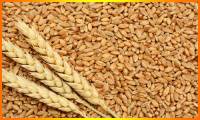
1.06 LMT wheat and 100 MT rice sold in the 5th e auction of 2023-24.
The Food Corporation of India (FCI) organized the 5th e auction of 2023-24 to sell wheat and rice here today. In the e-auction, 1.06 LMT wheat and 100 MT rice was sold.
In order to control the retail price of rice, wheat and atta, weekly e auctions are being organized. Government of India is committed towards price stabilization and its market intervention is aimed at providing relief to the consumers.
A quantity of 1.16 LMT wheat from 361 depots and 1.46 LMT rice from 178 depots were offered from across the country.
The weighted average selling price was Rs. 2182.68/qtl for FAQ wheat against the reserve price of Rs. 2150/qtl Pan India whereas weighted average selling price of URS wheat was Rs. 2173.85/qtl against the reserve price of Rs. 2125/qtl.
The weighted average selling price was Rs. 3151.10/qtl for rice against the reserve price of Rs. 3151.10/qtl Pan India.
In the current tranche of e-auctions, the reduction in retail price is being targeted by offering up to 100 tons maximum for a buyer for wheat and 1000 tons for rice. This decision is to encourage small and marginal end users and to ensure that more participants could come forward and bid for the quantity from their depot of choice.
Source: pib.gov.in
FSSAI extends enforcement of ads & claims norms by 6 mths.
The FSSAI has decided to extend the date of enforcement of FSS (Advertising and Claims) Second Regulations, 2022, for six months from June 13 so that food businesses could exhaust their existing food packaging materials.
In a similar move, the apex food regulator had earlier in February extended the timeline for implementation of the regulation until June 2023.
'After due consideration of the representation received from industry and also to ensure sustainable practices for food business operations, it has been decided to extend the date of enforcement of Sub-Regulation 7 of Regulation 4 of FSS (Advertising and Claims) Second Regulations, 2022, by a further period of six months from 13th June 2023,' reads the order.
The Sub-Regulation (7) of Regulation 4 of the amended regulations specifies that in case of trade mark, brand name or fancy name containing adjectives such as 'natural', 'fresh', 'pure' etc., a disclaimer 'This is only a brand name or trademark, or fancy name and does not represent its true nature:(relevant one may be chosen as applicable)' shall be mentioned 'prominently' on the front of pack of the label.
Since the food businesses could not exhaust the pre-printed packaging material in the previously given extension, the FBOs sought an extension again and FSSAI agreed.
Source: fnbnews.com
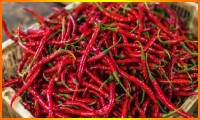
AP big player as chilli exports hit 10,000 cr.
Riding on the massive demand from global markets, chilli exports from India crossed 10,000-crore mark during 2022-23. With AP being the leading producer, about 50 per cent of the stock was exported from the state. The total exports from India were just around 6,500 crore in 2019-20.
The continuous export orders helped farmers make huge returns during the just concluded sale season. The crop in the Indian market usually enters around the middle of December while the markets start flooding with the stocks by middle of January.
The unexpected rains and floods during last November-December damaged chilli crop in many districts of the state. The crop output was reduced by at least 30-40 per cent leaving farmers worried over facing huge losses. Luckily, a booming export market brought cheers to the faces of farmers.
The prices in retail market have continuously hovered around 20,000 per quintal, which is an all-time high in recent history. The average price farmers fetched last year was around 10,000-12,000 per quintal. In fact, a price not less than 8,000 per quintal is said to be remunerative to recover the costs.
However, the overall cost went up due to the damage of over 30-40 per cent crop.
Interestingly, prices, which would normally go up after the farmers selling their stocks, remained high right from the beginning of the season and stable throughout till the completion of sales. This helped farmers make a killing during the last season. The sale value jumped by almost 25 per cent despite a dip in the volume of total exports during the 2022-23.
High prices in the export market helped the traders as well as the farmers. The total volume of exports witnessed a fall of nearly 40,000 tonnes when compared to last year’s exports. The chilli exports were steadily going up from India due to the demand from European countries, China, Sri Lanka and the USA.
India exported nearly 6.46 lakh tonnes making 9,241 crore during 2020-21 when the entire world was stalled following the outbreak of Covid-19. Trade analysts say that the demand for chilli will continue to go up in the coming season too based on positive inputs from global exporters.
Source: timesofindia.indiatimes.com
Constitution of Farmer Producer Organizations.
The Government of India has launched the Central Sector Scheme for 'Formation and Promotion of 10,000 Farmer Producer Organizations (FPOs)' in the year 2020 with a total budgetary outlay of Rs.6865 Crores which will enable farmers to enhance their bargaining power, leverage economies of scale, reduction in cost of production and enhancing farmers’ incomes through aggregation of their agricultural produce, thus playing a major role towards sustainable incomes.Under the said scheme, FPOs being provided financial assistance upto Rs.18.00 lakh per FPO for a period of 03 years. In addition to this, provision has been made for matching equity grant upto Rs.2,000 per farmer member of FPO with a limit of Rs.15.00 lakh per FPO and a credit guarantee facility upto Rs.2 crore of project loan per FPO from eligible lending institution to ensure institutional credit accessibility to FPOs. Further, Rs.25 Lakhs are given to CBBOs for hand holding each FPO over a period of five years.
Considering the significance and strategic role of the State Government and its machinery down the line in synergizing the efforts in mobilizing the farmers, offering various services relating to production and post-production and also periodically reviewing the development and functioning of FPOs, the Government has made provisions in Operational Guidelines of the 10,000 Farmer Producer Organizations (FPOs) scheme wherein a State Level Consultative Committee called SLCC is constituted with Additional Chief Secretary/Secretary, In-charge of Agriculture/ Agriculture Marketing as its Chairperson.
In addition to above, under 10,000 FPOs scheme, at district level, a District Level Monitoring Committee (D-MC) is constituted under the Chairmanship of District Collector/ CEO/ Zilla Parishad with representatives of different line departments and experts which provides approval for potential produce clusters in the block and also responsible for overall coordination, monitoring and implementation of the scheme at the district level. Provisions have also been made in Government of India schemes for availing benefits by FPOs.
As on 30th June, 2023, 10,000 FPOs have been allocated to various Implementing Agencies (IAs) out of which 6319 FPOs have been registered across the country.
FPOs started business transactions, the details of work carried by FPOs are as follows:
Supply of quality inputs like seed, fertilizer, pesticides, etc;
Undertaking aggregation of farmer-members’ agri produce for marketing/selling.;
Making available machinery and equipment on custom hiring basis for members;
Undertaking value addition like cleaning, assaying, sorting, grading and processing of agri produce.
This information was given by the Union Minister of Agriculture and Farmers Welfare, Shri Narendra Singh Tomar in a written reply in Lok Sabha today.
Source: pib.gov.in
India targets 12% annual merchandise export growth for $1tn vision: DGFT's Santosh Sarangi.
The Indian government aims to achieve USD 2 trillion total export by 2030, one trillion each in merchandise and services.
Santosh Sarangi, IAS, Director General, Directorate General of Foreign Trade, New Delhi, Government of India, today said that currently India's export is USD 450 billion, and to reach USD one trillion mark, the country needs to grow at year-on-year rate of 12%. 'Similarly, in service sector we need to grow at 16.6 percent on an average every year,' Sarangi said at the World Trade Day 2023 programme in Bhubaneswar organised jointly by World Trade Centers in four cities, viz. Mumbai, Bhubaneswar, Jaipur and Goa.
The event focused on creating awareness about international trade's impact on the State's economy and regional growth. The event was marked by a discussion on the theme 'International Trade - Growing Business Across Borders'.
'Odisha needs investment in Pharmaceuticals and Plastics sectors to grow its export scenario. Majority of the exporters are from places like Mumbai, Delhi, Chennai, Gujarat etc and not from interior places of the state like Sambalpur, Bolangir, Raygada etc even though there is huge potential from such places. In order to bridge the gaps, DGFT shall organize workshops focused on e-commerce in collaboration with the State Government. These workshops shall provide end-to-end assistance on on-boarding, payment gateways etc. We will also ensure the facilitation of Export Incentives like RODTEP are made accessible. We have recently signed three FTAs (Free Trade Agreement) and working towards signing more FTAs with countries in near future.' Sarangi added.
In his view, the country's 'World Trade Centers' can help the exporters of the state by handholding them and acting as a bridge between the central as well as the state government to ensure Odisha has a better trade footprint on the global map.
Saswat Mishra, IAS, Principal Secretary, MSME Department, Government of Odisha, spoke about the digital initiatives being undertaken by the state for facilitating the exporters. He announced Air Cargo services starting in September to boost Odisha's exports. 'Stakeholder Meeting has been scheduled where exporters from the state shall discuss with the officials of Indigo Airlines on various export related aspects', he added.
Petula Thomas, CEO of Indo-Australian Chamber of Commerce, highlighted the potential for trade collaborations between India and Australia in various sectors like metals & mining, food processing, and educational services. She highlighted how WTC can act as a great platform for such collaborations where both the countries can work towards better trade relations and surge in bilateral trade.
Vijay Kalantri, Chairman, World Trade Center Mumbai, said, in a statement, 'As India aspires to become a five trillion dollar economy, MSMEs have a major role to play in realising this vision. In terms of economy, we stand at 5th position. In the next 5 years, India aspires to be placed in 3rd position and we need to work towards the goal in a substantial manner which can be achieved through integration with ASEAN, BRICS, BIMSTEC etc. We have potential in sectors like IT, ITes and Pharmaceuticals'.
Source: economictimes.indiatimes.com
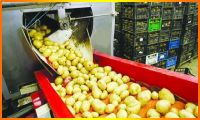
Production linked incentive scheme for Food Processing Industry.
On 31st March 2021, the Union Cabinet approved the Central Sector Scheme - 'Production Linked Incentive Scheme for Food Processing Industry (PLISFPI)' with an outlay of Rs. 10,900 crores, to be implemented from 2021-22 to 2026-27. The scheme consists of three components: incentivizing manufacturing in four major food product segments (Ready to Cook/ Ready to Eat foods, Processed Fruits & Vegetables, Marine Products and Mozzarella Cheese), promoting Innovative/Organic products of SMEs, and supporting branding and marketing abroad for Indian brands. Additionally, the PLI Scheme for Millet-based Products (PLISMBP) was launched in the FY 2022-23 with an outlay of ?800 crore, utilizing the savings under PLISFPI.
Under the scheme, 158 applications have been approved for availing incentives. As per the information received, the beneficiaries have invested 7,427.22 crore (as on 31st March 2023) under the scheme. So far, incentive of 517.604 Crore has been disbursed for the Financial Year 2021-22.
The Government is fully aware of the potential issues that could arise from the PLISFPI scheme. To ensure its effectiveness and fairness, proactive measures were taken during the scheme formulation stage. Various stakeholders were actively engaged, and an extensive consultative process was followed, involving large-scale manufacturers, SMEs, etc. As a result, the scheme guidelines ensure the scheme benefits all stakeholders, including farmers.
Category-II of the PLI scheme, with a specific focus on Innovative and Organic products, is exclusively for eligible MSMEs. 16 applications have been selected under this particular category. Additionally, 22 applicants (out of 30 selected applicants) selected to participate under PLI Scheme for Millet-based products are MSMEs. Apart from the PLI scheme, the government has introduced several other schemes to offer support across entire food value chain, which also helps SMEs in meeting international quality and safety standards for their food products.
The scheme guidelines specify that the entire manufacturing process, including primary processing, of the food products eligible for coverage under the scheme must occur in India, with the exception of additives, flavors, and edible oils. This approach aims to foster a strong value chain that benefits farmers and supports domestic production. These guidelines ensure farmer inclusivity, particularly for small-scale farmers, by guaranteeing remunerative prices for farm produce and higher income.
This information was given by Union Minister of State for Ministry of Food Processing Industries
Shri Prahlad Singh Patel in a written reply in the Lok Sabha.
Source: pib.gov.in
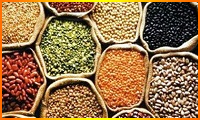
Production of Pulses and Vegetable Oils.
The Indian Council of Agricultural Research (ICAR) has assessed the impact for pulses cultivation in different agro-ecologies with respect to soil health, soil microbial biomass, resilience to climate change etc.
Government of India is supplementing the efforts of state governments to encourage diversified production of crops including pulses, coarse cereals, nutri cereals, cotton & oilseeds under National Food Security Mission (NFSM) and horticultural crops under Mission for Integrated Development of Horticulture (MIDH). Government of India also provides flexibility to the states for state specific needs/priorities under Rashtriya Krishi Vikas Yojana (RKVY).
Further, to encourage farmers to adopt alternative crops to paddy, Department of Agriculture & Farmers Welfare (DA&FW) is implementing the Crop Diversification Programme (CDP) under RKVY in the Original Green Revolution States viz; Haryana, Punjab and Western Uttar Pradesh since 2013-14 towards alternative crops like pulses, oilseeds, coarse cereals, nutri cereals, cotton etc. CDP aims at demonstrating alternative crops at farmers field. A pilot project for “Diversification of 4.85 million hectares” in five years (2023-24 to 2027-28) in identified 75 districts of 17 States / Union Territory namely Andhra Pradesh, Arunachal Pradesh, Assam, Bihar, Gujarat, Himachal Pradesh, Jammu & Kashmir, Jharakhand, Karnataka, Maharashtra, Madhya Pradesh, Rajasthan, Odisha, Tamil Nadu, Telangana, Uttarakhand and West Bengal representing 14 Agro Ecological Regions of the country has been approved to ICAR-Indian Institute of Farming Systems Research (IIFSR), Modipuram.
While the production of oilseeds is not sufficient to meet the domestic demand of vegetable oils, however, the increased production of pulses has narrowed down the import of pulses to around 9 per cent of the domestic production. In order to enhance the production of oilseeds and pulses, Government is implementing National Food Security Mission (NFSM) in the country. Under NFSM, assistance is given through State Governments to farmers for interventions like cluster demonstrations on improved package of practices, demonstrations on cropping system, seed production and distribution of High Yielding Varieties/Hybrids, improved farm machineries/resource conservation machineries/tools, efficient water application tools, plant protection measures, nutrient management/soil ameliorants, cropping system based trainings to the farmers etc. The production of pulses has increased from 163.20 lakh tonne in 2015-16 to 275.04 lakh tonne in 2022-23 (as per 3rd Advance Estimates) and oilseeds from 252.50 lakh tonne to 409.97 lakh tonne during same period. Further, import of pulses has declined from 58 lakh tonne in 2015-16 to 24.96 lakh tonne in 2022-23.
In addition, the mission also provides support to Indian Council of Agricultural Research (ICAR) & State Agricultural Universities (SAUs)/Krishi Vigyan Kendras (KVKs) for technology back stopping and transfer of technology to the farmer under supervision of Subject Matter Specialists/Scientists. Government has also launched a separate Mission for Oil Palm namely, National Mission on Edible Oils (Oil Palm) in 2021-22. Both, NFSM- Oilseeds and NMEO (OP) mission components are being implemented in the country with an objective to augment the availability of vegetable oils by increasing the production and productivity of oilseeds & oil palm. Further, Targeting Rice Fallow Area (TRFA) under NFSM is implemented for cultivation of pulses & oilseeds in rice fallow of 12 states. RKVY also supports pulses and oilseeds production in the states.
The prices of pulses and oilseeds being sold to the farmers in various states comprise of incentives provided by Government of India under NFSM programme on certified seed distribution of High Yielding Varieties (HYVs) of pulses and oilseeds (except sesame) upto Rs. 5000 per quintal and Rs. 4000 per quintal, respectively and for Hybrids in oilseeds and varieties of sesame upto Rs. 8000 per quintal. Further, Government is also supplying seed minikits of HYVs of pulses and oilseeds free of cost to the farmers.
This information was given by the Union Minister of Agriculture and Farmers Welfare, Shri Narendra Singh Tomar in a written reply in Lok Sabha today.
Source: pib.gov.in
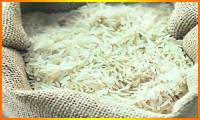
'We Encourage Removal Of Restrictions On Rice Export': IMF To India.
The International Monetary Fund has said it would 'encourage' India to remove restrictions on export of a certain category of rice, which, it said, would have an impact on global inflation.
The Indian government on July 20 had banned the export of non-basmati white rice to boost domestic supply and keep retail prices under check during the upcoming festive season. This type of rice constitutes about 25 per cent of total rice exported from the country.
There would be no change in export policy of par-boiled non-basmati rice and basmati rice, which forms the bulk of exports, the food ministry had said in a statement.
In the current environment, these types of restrictions are likely to exacerbate volatility on food prices in the rest of the world. They can also lead to retaliatory measures, Pierre-Olivier Gourinchas, Chief Economist, International Monetary Fund (IMF), told a press conference here.
'So, they are certainly something that we would encourage the removal of these types of export restrictions, because they can be harmful globally,' he said in response to a question.
The total exports of non-basmati white rice from India was $4.2 million in 2022-23 as against USD 2.62 million in the preceding year. Major destinations of India's non-basmati white rice exports include the US, Thailand, Italy, Spain and Sri Lanka.
In order to ensure adequate availability of non-basmati white rice in the domestic market and to allay the rise in local prices, the government has amended the export policy from 'Free with export duty of 20%' to 'Prohibited' with immediate effect. The IMF in its latest economic update released here on Tuesday projected India's growth rate to be 6.1 per cent for fiscal year 2024, which is slightly up from 5.9 per cent estimated projection for the same period in April.
'India remains an economy that is growing quite strongly. I mean, it's coming down from really a very strong year in 2022, at 7.2 per cent. That was also revised upwards, by the way -- but still slow down, but still fairly strong growth and fairly strong momentum,' Gourinchas said.
Later in an interview, when asked about India's rice export ban, Daniel Leigh, Division Chief, IMF Research Department, told PTI that the context is clearly, an environment of declining inflation around the world.
'That's important because then it allows monetary policy to ease up and not to start increasing interest rates, which means currencies move around,' he said.
'We see it in the interest of the overall global community to keep that food and energy inflation trend down. Now the challenge is that if we see restrictions in other countries as well as India, we've been very clear that in our view we understand the domestic consideration, but if you see that global impact, then that would go against the reduction in inflation. So our perspective is that such restrictions should be phased out as soon as feasible,' Leigh said.
He also said that India's digital public infrastructure is really world class and it is enabling efficiency gains for businesses.
'Really what is great to see is India sharing its experience with the other members of the G20. Under its presidency of the G20, India is helping to spread the understanding and the opportunities and the risks that we need to talk about when it digitises more generally,' he said.
The Indian economy, Leigh said, has already been very robust. 'But the reforms when it comes to female labour force participation to make it easier for women to stay in the workforce, for the youth to find the kind of training that they need. This is a very dynamic economy. The question is how to maximize the potential,' he said.
'India's economy is growing strongly and also inflation is in the range of the central bank target. So those are positive things and the growth forecast itself is for growth of 6.1 per cent this year. This means that basically 16 per cent of the world economy, one in six of the world's economic growth is coming from India,' he said, Referring to the upward revision of the Indian growth projections, Leigh said this is mainly because of what happened at the end of last year. More government investment, more private investment, give it the economy boost and that has a knock on effect for this year, he said.
'Now we do see growth continuing to be above six next year as well, 6.3 per cent and in the medium term about six per cent. This is the kind of above average growth for the region that is really going to help economic well being,' Leigh said.
Noting that the IMF expects India's inflation to be at 4.9 per cent and then 4.5 per cent next year, he said the monetary policy action really deserves a lot of the credit for this 250 basis point increase in the interest rate since May of last year. 'There's also though the fortunate decline that all of the countries are benefiting from in food and energy prices globally. This is also driving inflation down,' Leigh said.
Source: ndtv.com
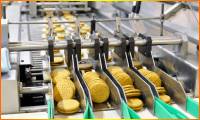
Food Processing Industry Schemes In Rural Areas.
In order to ensure overall development of Food Processing Industries including processing of agro- products, Ministry of Food Processing Industries (MoFPI) has been incentivizing setting up/expansion of related infrastructure through its Central Sector Umbrella Scheme Pradhan Mantri Kisan SAMPADA Yojana (PMKSY), Production Linked Incentive Scheme for Food Processing Industry (PLISFPI) and Centrally sponsored PM Formalization of Micro Food Processing Enterprises (PMFME) scheme across the country including rural areas of Karnataka and thus benefitting and increasing the income of the farmers in the country.
Under component schemes of PMKSY, MoFPI provides mostly credit linked financial assistance (capital subsidy) in the form of grants-in-aid to entrepreneurs. PMKSY is not any region or state specific but demand driven and is implemented across the country including the rural areas of Karnataka. So far, Ministry has approved 41 Mega food Parks, 382 Cold Chain projects, 72 Agro Processing Clusters, 469 Food Processing Units, 61 Creation of Backward & Forward Linkages Projects & 46 Operation Green projects across the country under corresponding component schemes of PMKSY. Out of this, 2 Mega Food Parks, 17 Cold Chain projects, 4 Agro Processing Clusters, 19 Food Processing Units and 3 Creation of Backward & Forward Linkages Projects are located in Karnataka. The completed projects of PMKSY are estimated to benefit more than 32 lakh farmers across the country and more than 1.8 Lakhs farmers in Karnataka.
Ministry also provides financial, technical and business support for setting up/ upgradation of 2 lakh micro food processing enterprises under PMFME scheme. The scheme is operational for a period of five years from 2020-21 to 2024-25 with an outlay of Rs. 10,000 Crore.So far, a total of 38466 micro food processing enterprises have been approved for assistance in the country, out of which 2444 micro food processing units located in Karnataka.
PLISFPI is, inter alia, intended to support creation of global food manufacturing champions and support Indian brands of food products in international market. The Scheme is being implemented over a six-year period from 2021-22 to 2026-27 with an outlay of Rs. 10,900 crores. So far, a total investment of Rs 318.97 Cr has been committed in projects located in Karnataka under the scheme.
At times, the projects approved under PMKSY face delays in obtaining statutory clearances/ certificates from the State Govt. regarding Consent to Establish, Consent to Operate, building plan approval, electricity connection etc. Also, release of matching state funds gets delayed sometimes in centrally sponsored PMFME scheme. Ministry coordinates with stakeholders for removal of these bottlenecks.
This information was given by Union Minister of State for Ministry of Food Processing Industries
Shri Prahlad Singh Patel in a written reply in the Lok Sabha.
Source: pib.gov.in
India, UK concludes 11th round of FTA talks; next meeting in coming months.
India and the UK have held detailed draft treaty text discussions in nine policy areas in the just concluded eleventh round of Free Trade Agreement talks. The commerce and industry ministry said that technical discussions were held across nine policy areas over 42 separate sessions.
On July 18, 2023, the two concluded the eleventh round of talks for the UK-India FTA.
'As with previous rounds, this was conducted in a hybrid fashion - a number of Indian officials travelled to London for negotiations and others attended virtually,' it said.
Commerce and industry minister Piyush Goyal visited the UK on July 10-11 where he discussed with UK’s Secretary of State for Business and Trade, Kemi Badenoch and Minister of State for International Trade, Nigel Huddleston, ways to make progress on the FTA negotiations and wider trade and investment opportunities for the UK and India.
As per the statement, commerce secretary, Sunil Barthwal also visited the UK during the round where he met with senior UK trade officials and took stock of the progress made in the eleventh round of negotiations.
'The twelfth round of negotiations is due to take place in the coming months,' the ministry said.
Source: economictimes.indiatimes.com