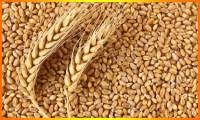
India supports U.N.'s efforts in continuing Black Sea Grain Initiative.
India has voiced support for the U.N.'s efforts in continuing the Black Sea Grain initiative and expressed hope for an early resolution to the present impasse, a day after Russia announced it was terminating implementation of the U.N.-brokered deal that allowed export of grain and related foodstuffs and fertilisers from Ukrainian ports.
Moscow on Monday said it was terminating the implementation of the Black Sea Initiative — a U.N.-brokered deal that allowed food exports from Ukraine amid the ongoing conflict with Russia — including the withdrawal of Russian security guarantees for navigation in the North-Western part of the Black Sea.
Addressing the U.N. General Assembly's annual debate on the 'Situation in the Temporarily Occupied Territories of Ukraine' on Tuesday, India's Permanent Representative to the U.N. Ambassador, Ruchira Kamboj, said New Delhi is concerned about the recent developments in the region, which have not helped in securing the larger cause of peace and stability.
'India has supported the efforts of the U.N. Secretary-General in continuing the Black Sea Grain Initiative and hopes for an early resolution to the present impasse,' Ms. Kamboj said.
'India continues to remain concerned over the situation in Ukraine. The conflict has resulted in the loss of lives and misery for its people, particularly for the women, children and elderly, with millions becoming homeless and forced to take shelter in neighbouring countries,' she said.
Ms. Kamboj asserted that India's approach to the Ukrainian conflict will continue to be people-centric.
'We are providing both humanitarian assistance to Ukraine and economic support to some of our neighbours in the Global South under economic distress, even as they stare at the escalating cost of food, of fuel and of fertilisers — which has been a consequential fall out of the ongoing conflict,' she said.
U.N. Secretary-General Antonio Guterres voiced deep regret over Moscow's termination of the implementation of the Black Sea Initiative decision, saying the initiative ensured the safe passage of over 32 million metric tonnes of food commodities from Ukrainian ports.
The World Food Programme (WFP) has shipped more than 725,000 tonnes to support humanitarian operations — relieving hunger in some of the hardest-hit corners of the world, including Afghanistan, Horn of Africa and Yemen, Mr. Guterres said.
He added that the Black Sea Initiative and the Memorandum of Understanding on facilitating exports of Russian food products and fertilisers have been a 'lifeline' for global food security and a beacon of hope in a troubled world.
'At a time when the production and availability of food are being disrupted by conflict, climate change, energy prices and more, these agreements have helped to reduce food prices by over 23 per cent since March last year,' he said.
The U.N.-brokered Black Sea Initiative agreed by Russia, Turkiye, and Ukraine allowed millions of tonnes of grain and other foodstuffs to leave Ukraine's ports, which Guterres said played an 'indispensable role' in global food security.
The U.N. noted that nearly one year into the agreement, more than 32 million tonnes of food commodities have been exported from three Ukrainian Black Sea ports to 45 countries across three continents.
The partial resumption of Ukrainian sea exports enabled by the Initiative has unblocked vital food commodities and has helped reverse spiking global food prices, which reached record highs shortly before the agreement was signed, the UN said.
Ms. Kamboj underlined that it is unfortunate that as the trajectory of the Ukranian conflict unfolds, the entire Global South has suffered substantial collateral damage.
'It is thus critical that the voice of the Global South be heard, and their legitimate concerns be duly addressed,' she said.
Ms. Kamboj further said in her remarks that reports of attacks on civilians and civilian infrastructure are deeply worrying.
'We have consistently advocated that no solution can ever be arrived at the cost of human lives. Escalation of hostilities and violence is in no one's interest. We have urged that all efforts be made for an immediate cessation of hostilities and an urgent return to the path of dialogue and diplomacy,' she said.
The Indian envoy underscored that dialogue is the only answer to settling differences and disputes, however daunting that may appear at this moment. 'The path to peace requires us to keep all channels of diplomacy open,' she said.
Noting Prime Minister Narendra Modi's repeated engagements with both Russia and Ukraine, Ms. Kamboj said it is essential to emphasise that 'we firmly believe that this is not an era of war. It is with this understanding and spirit that India actively participates in this debate.' She said that the global order that 'we all subscribe to' is based on international law, the UN Charter and respect for the territorial integrity and sovereignty of all States. 'These principles must be upheld without exception,' Ms. Kamboj said.
Source: thehindu.com
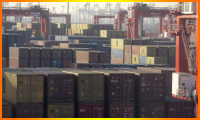
Commerce ministry looking at fixing export target in a range for this fiscal.
With the increasing global economic uncertainties, the commerce ministry is looking at fixing this fiscal year's export target in a range instead of a single figure, an official said. To set the target range, a detailed study on 200 countries and 31 commodity groups is in the process, the official said.
The target range would depend on parameters such as the USD 1 trillion merchandise exports target by 2030; import to GDP ratio of importing countries; export to GDP ratio of India that will tell the potential and past trends.
'We are not fixing any export target as a figure. In fact, my team has done an exercise, where we are saying that let us talk in terms of range. In the best scenario, the exports can be this much and in the worst scenario, it can be this much,' the official said.
For a monitoring purpose of exports every month, the official said a fixed number would be required and that could be a mid-value or an average may be accepted.
The ministry has though fixed an internal target which has been to export promotion councils and Indian missions abroad.
'But we will take some more time before we will come up with our exports targets because based on the current trends, it can not be right on our part to fix those targets as of now, so we are waiting and watching,' the official added.
A trade expert said that in 2022-23, India's merchandise exports were USD 450 billion, so the lower band of new target range could be USD 451 and even if one assumes a 10 per cent growth in 2023-24, then the upper band of the range could be around USD 495 billion.
In April this year, apex exporters body Federation of Indian Export Organisations (FIEO) said that they are targeting to take the shipments to USD 500-510 billion during the current financial year.
India's exports contracted by 22 per cent, the steepest decline in the last three years, to USD 32.97 billion in June on account of global demand slowdown, especially in the Western markets like the US and Europe.
Cumulatively, exports dipped by 15.13 per cent to USD 102.68 billion during April-June this fiscal.
Source: economictimes.indiatimes.com
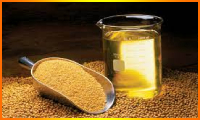
India s overall oilmeal exports rise 19 pc in Apr-Jun quarter.
India’s overall oilmeal exports rose 19 per cent on a yearly basis during the first quarter of the financial year 2023-24 to 1.21 million tonne, data put out by The Solvent Extractors’ Association of India (SEA) showed. In June, exports were, however, 35 per cent lower.
In the same quarter of 2022, the total oilmeal exports were 1.01 million tonne.
Source: theprint.in
Trade Fair of GI certified products to be held in Greater Noida from July 20-24.
The Export Promotion Council for Handicrafts (EPCH) is organising the GI Fair India 2023 at India Expo Centre in Greater Noida from July 20-24.
GI Fair India is a one-stop-shop where one can see and buy the largest variety of India’s GI tagged products from regions far and wide, across the country. It is being supported by Ministry of textile and Ministry of Commerce & Industry.
Besides exhibitors from the several states and union territories of India, participating organisations include Tea Board of India; Spices Board India; Agricultural and Processed Food Products Export Development Authority; Jammu & Kashmir Trade Promotion Organization (JKTPO); Uttarakhand Handloom and Handicraft Development Council (UHHDC); Uttarakhand Organic Commodities Board; Goa State Council for Science & Technology and many more.
Speaking about the upcoming fair, Dileep Baid, Chairman, EPCH, said, 'this show will offer a common platform to find Muzaffarnagar Gur; Sambhal Horn Craft; Mainpuri Tarkashi; teas, Gamosa and Muga silk from Assam and many more authentic products from across India.'
GI Fair aims to connect these invaluable native products, aptly called Legal Local, to connoisseurs and clientele in India as well as the global market. The Fair will be open from 10 am to 7 pm on all 5 days and the entry to the fair is free.
Source: knnindia.co.in
Two more rounds of talks likely for IPEF to conclude: Sources.
India expects two more rounds of negotiations for the conclusion of the Indo-Pacific Economic Framework (IPEF) by the end of the year.
While the legal scrubbing of the Supply Chain Agreement - which was finalised in May - is on, discussions are moving fast on the clean economy and fair economy pillars, said people aware of the matter.
The fourth round of IPEF negotiations took place from July 9-15 in South Korea. India is yet to take a call on joining the trade pillar of the IPEF.
'There are two more rounds to go before it gets concluded. Discussions are on for pillars 3 and 4,' said one of the persons, who did not wish to be identified.
Pillar 3 in the IPEF relates to a clean economy while Pillar 4 deals with a fair economy.
Source: economictimes.indiatimes.com

USDA Plans to Lower Food Costs and Increase Competition among Agri Businesses.
To address concerns over rising food prices and promote fair competition within the agricultural industry, the U.S. Department of Agriculture (USDA) has announced plans to collaborate with 31 states and the District of Columbia. The goal is to target price-fixing practices and anticompetitive behavior that have been adversely affecting farmers and consumers alike.
On Wednesday, the USDA revealed its strategy, which includes working with attorneys from both political parties to enforce laws against price-fixing and the consolidation of businesses. This move comes after months of farmers expressing dissatisfaction with low prices for their products and unfair contracts with major buyers and processors in the agriculture sector.
Agriculture Secretary Tom Vilsack issued a statement in which he emphasized the importance of creating a more robust and competitive agricultural sector. To achieve this, the USDA aims to shed light on anticompetitive activities, including price gouging, which occurs when sellers demand unfairly high prices during times of increased demand.
In addition to addressing current concerns, the USDA also plans to implement new research programs to study the root causes of price fluctuations and anti-competitive practices. By better understanding the underlying issues, the department hopes to develop more effective solutions and regulations.
The USDA's efforts extend beyond addressing unfair pricing practices. The department is also set to finalize new rules under the Packers and Stockyards Act, which aims to protect livestock, meat, and poultry industries from unfair trade and monopolistic business practices. These changes seek to ensure a level playing field for all stakeholders involved.
In line with President Joe Biden's executive order supporting competition in the American economy, the USDA's new initiatives are part of a broader 'whole-of-government' competition policy. The administration seeks to create a fair and competitive economic landscape that benefits both producers and consumers.
Furthermore, the USDA plans to allocate funds to expand the meat and poultry industries, with the goal of increasing processing choices available to farmers who raise animals. By diversifying the options available, farmers can have more control over their products and mitigate the influence of dominant market players.
Source: krishijagran.com
Goyal to meet industry leaders on July 22 to discuss ways to boost manufacturing, exports.
Commerce and Industry Minister Piyush Goyal will hold discussions with representatives of top 100 companies on July 22 in Mumbai on ways to increase share of domestic manufacturing and boost the country's exports, an official said. Senior officials from the Department for Promotion of Industry and Internal Trade (DPIIT) including Secretary Rajesh Kumar Singh are also expected to participate in the deliberations.
In the discussions, the ministry would seek suggestions from the industry on ways to increase share of manufacturing in India's GDP; increase exports of goods and services; and reforms to further unlock economic development and improve business environment, the official added.
The deliberations -- Unnati Roundtable: Top 100 companies from NSE/BSE -- assume significance as the country's exports are declining due to global demand slowdown.
India's exports contracted by 22 per cent, the steepest decline in the last three years, to USD 32.97 billion in June on account of global demand slowdown, especially in the Western markets like the US and Europe.
Cumulatively, exports dipped by 15.13 per cent to USD 102.68 billion during April-June this fiscal. Imports too declined by 12.67 per cent to USD 160.28 billion.
The growth of eight key infrastructure sectors slowed down to 4.3 per cent in May 2023 due to a decline in the production of crude oil, natural gas and electricity, according to the data released by the government.
India's industrial production rose to 5.2 per cent in May from 4.5 per cent in April 2023, mainly due to good performance by the manufacturing and mining sectors. The factory output growth measured in terms of the Index of Industrial Production (IIP) stood at 19.7 per cent in May 2022, mainly due to a lower base effect. As per the IIP data released by the National Statistical Office (NSO), the manufacturing sector's output grew 5.7 per cent in May 2023 against a 20.7 per cent expansion a year ago.
Over the years, the government has taken a series of measures such as rolling out of the production linked incentive scheme and Remission of Duties and Taxes on Export Products scheme and reducing compliance burden for industry with a view to promote ease of doing business.
Source: economictimes.indiatimes.com

Exports of oilseeds to rise 10-15% as traders getting good orders.
Traders associated with oilseed export business said that oilseed exporters are currently getting good orders from South East Asia, Latin America and Africa and the export of oilseeds is expected to increase by 10 to 15 per cent in the current financial year.
Oilseeds exports have increased by more than 20 per cent to $1.33 billion (Rs 10,900 crore) in the financial year 2022-23.
Shankar Thakkar, national president of the All India Edible Oil Traders Federation and general secretary of the Confederation of All India Traders (CAT), said 'Mainly groundnut, sesame, soyabean, Raida and sunflower seeds are exported. Also the area under oilseeds cultivation increased this year. This will increase production and with the increase in production, exports will also increase.'
At the national level, the share of Madhya Pradesh in the total cultivated area of oilseeds is 34.64 per cent. Maharashtra has 22 per cent, Gujarat 13.53 per cent, Rajasthan 11.43 per cent, Karnataka 5.04 per cent, Andhra Pradesh 5.02 per cent, Uttar Pradesh 2.66 per cent, Telangana 1.74 per cent and Tamil Nadu 1.21 per cent while India exports oilseeds to Indonesia, Vietnam, China, Malaysia, the Philippines and European Union wherein groundnut and sesame account for 80 to 85 per cent of the total exports of oilseeds.
Shankar Thakkar said that on the one hand, the government is importing substandard oilseeds and edible oils on a large scale and, on the other hand, it is getting the nutritious and healthy oilseeds produced in the country exported abroad, which should be stopped.
Source: fnbnews.com

India to lift 20% retaliatory duty on Washington apples.
Indians can again gorge on Washington apples, as the retaliatory tariff of 20% imposed by the Indian government on this red, juicy variety of the fruit four year ago during the Trump era is set to go by the end of September.
Washington apples currently attract an import duty of 70%, compared with 50% on apples imported from Iran and Turkey. The higher duty, and the resultant increase in the price, had resulted in steep fall in its imports. Meanwhile, the possibility of Washington apples flooding the market has irked domestic apple growers.
'The government on June 22 had indicated to do away with the 20% retaliatory import duty that was imposed during the Donald Trump regime, and it will become effective within 90 days,' said Sumit Saran, the India representative of the Washington Apple Commission. 'Washington apple growers have already started cultivating more apples for the Indian market.'
Before the imposition of the tariff, India used to import 7 million boxes, each weighing 22 kgs, of Washington apples.
Washington apples are imported between September and February, when the Indian crop comes to an end, he added.
Meanwhile, apple growers in the Kashmir valley fear that the reduction in import duty will have significant repercussions. 'Such a development would result in limited opportunities for the domestic production of apples,' said Gulam Ahmad, an apple grower from the valley.
Source: economictimes.indiatimes.com
India s 440-odd GI products to get showcased at 2nd GI Fair.
India’s 440 GI-tagged products (Geographical Indication) will be exhibited at the second edition of the GI Fair India which would be held in Greater Noida this week. GI tag is given to products having distinct qualities and tradition linked to their place of origin.
The Export Promotion Council for Handicrafts (EPCH) said that the five day fair opens for overseas buyers, domestic trade and consumers on July 20 at India Expo Centre and Mart in Greater Noida.
'Here one can see and source India’s best nurtured treasures, traditions and rarities. Curated with an ambition to take these to the world markets, this show offers buyers, an opportunity to carve their niche too,' said R K Verma, Executive Director, EPCH.
The fair will also feature Blue Pottery, Sanganeri hand block printing and Bikaneri bhujia of Rajasthan; Gulabi Meenakari, Banaras brocade and Lucknow Chikan craft from Uttar Pradesh to tezpat, aipan art and Munsyari razma from Uttarakhand, Kangra tea, Chamba Rumal and Kullu Shawls from Himachal Pradesh to Allepy green cardamom, Vedic era mirror and navara rice from Kerala amongst many others.
'India boasts of many such rarities of which 440+ are registered GI Tagged products and GI Fair India, brings together the largest congregation of products and authorized producers from this list,' said Rakesh Kumar, chairman IEML.
Around 400 exhibitors will participate in the fair from July 20-24.
The exhibitors at the fair will share backgrounds and stories about their products, crafts and hand skills.
India GI Fair aims to connect these invaluable native products, aptly called Legal Local, to connoisseurs and clientele in India as well as the global market, according to the council.
The fair will also include theme areas highlighting GI clusters & hubs, Live demonstration of GI products, Knowledge seminar on Introduction to Export Business, and Unlocking Packaging Convenience for Export Target Markets.
Source: economictimes.indiatimes.com