26 Jul, 2023

Land customs stations in NE proposed to be doubled to 50.
The Centre has proposed to double land customs stations in the Northeast to 50 by the end of this financial year, following a surge in the smuggling of narcotics in the region over the past 12 months. The Central Board of Indirect Taxes and Customs (CBIC), the country's apex indirect taxes body, has identified many porous spots along the country’s borders with Myanmar and Bangladesh. India shares borders with four countries in the northeast and has 25 land customs stations, of which 20 are fully functional and only 15 have electronic facilities. 'We are planning to take the number to at least 50 by the end of this fiscal,' a senior official told ET on condition of anonymity. All the land customs stations will be equipped with advanced technology infrastructure, artificial intelligence and real-time reporting to stop the smuggling, said another official. While gold, cigarettes and opium were always smuggled via northeast, the official said there has been a sharp increase in smuggling of psychotropic drugs, both in the form of tablets and syrups. Generally, decongestant and antihistamine are sent to Myanmar, where they produce methamphetamine tablets and smuggle them back into India, said the official. In 2022, the Guwahati Police alone seized drugs worth `407 crore, out of which psychotropic tablets alone were worth about Rs 200 crore, the official said.
Source:
economictimes.indiatimes.com
|
26 Jul, 2023
Implementation of Pradhan Mantri Kisan Sampada Yojana.
The Ministry of Food Processing Industries (MoFPI) has been implementing an umbrella scheme- Pradhan Mantri Kisan Sampada Yojana (PMKSY) since 2017-18 across the country. PMKSY is a comprehensive package of component schemes, which is aimed at creation of modern infrastructure with efficient supply chain management from farm gate to retail outlet. It provides a big boost to the growth of food processing sector in the country, helps in providing better prices to farmers, creates huge employment opportunities especially in the rural areas, reduces wastage of agricultural produce, increases the processing level and enhances the export of the processed foods. Under the following component schemes, financial support in the form of grants-in-aid is provided for setting up of food processing projects across the country: Mega Food Parks scheme (MFP) (discontinued w.e.f. 01.04.2021) Integrated Cold Chain and Value Addition infrastructure (Cold Chain) Creation of Infrastructure for Agro Processing Cluster (APC) Creation/ Expansion of Food Processing And Preservation Capacities (CEFPPC) Creation of Backward and Forward Linkages (CBFL) (discontinued w.e.f. 01.04.2021) Operation Greens(OG): Long Term Interventions Food Safety and Quality Assurance Infrastructure – Setting up / Up gradation of quality control/ food testing laboratories (FTL) Human Resource & Institutions (HRI) No state-wise fund allocation is made under PMKSY. A total of 96 food processing projects have been approved under aforesaid component schemes of PMKSY as on date (19.07.2023) in the State of Tamil Nadu with the total grants-in-aid of Rs. 376.40 crore. Out of this, Rs. 206.52 crore has already been released for implementation of these projects. The benefits / facilities created/ to be created on implementation of food processing projects under PMKSY in the states of Tamil Nadu, Assam and Rajasthan are provided in Annexure. The details of targets proposed by MoFPI for the 15th Finance Commission Cycle period (2021-22 to 2025-26) and achievements made as on date (19.07.2023) against them under various component schemes of PMKSY are as under: | S.No. | Component scheme of PMKSY | Project in numbers | | Proposed Target | Achievement made | | 1. | Mega Food Parks scheme | Discontinued w.e.f. 01.04.2021 | | 2. | Cold Chain scheme | 30 | 36 | | 3. | APC scheme | 30 | 21 | | 4. | CEFPPC scheme | 162 | 233* | | 5. | CBFL scheme | Discontinued w.e.f. 01.04.2021 | | 6. | OG scheme | 80 | 40 | | 7. | FTL scheme | 25 | 19 | | 8. | HRI – R&D scheme | 100 | - | * 233 projects approved against the funds available under (i) proposed target of 162 (ii) cancellation of projects by MoFPI (iii) withdrawal of projects by the Project Implementing Agency and (iv) transfer of funds from OG scheme. 4.29 lakh, 0.39 lakh and 1.52 lakh farmers have been benefited/ expected to be benefitted from 96, 50 and 48 food processing projects approved under various component schemes of PMKSY in the States of Tamil Nadu, Assam and Rajasthan respectively, out of total 47.52 lakh farmers have been benefitted/ expected to be benefited across the country since the inception of various component schemes of PMKSY. Yes, PMKSY has assisted to generate total employment (direct and indirect) of 13.09 lakh from various component schemes of PMKSY since their inception. This information was given by Union Minister of State for Ministry of Food Processing Industries Shri Prahlad Singh Patel in a written reply in the Lok Sabha. ****** ANNEXURE Benefits /Facilities created / to be created on implementation of food processing projects under PMKSY in the states of Tamil Nadu, Assam and Rajasthan | No. of projects approved | Cold Storage/ Frozen Storage (in Lakh MT) | Warehouse Capacity (in Lakh MT) | Preservation Capacity (in Lakh MT) | Processing Capacity (in Lakh MT) | | Tamil Nadu | | 96 | 1.02 | 0.47 | 2.71 | 13.63 | | Assam | | 50 | 0.16 | 0.31 | 0.466 | 9.27 | | Rajasthan | | 48 | 0.66 | 0.65 | 4.71 | 7.12 |
Source:
pib.gov.in
|
26 Jul, 2023

Food testing infrastructure.
Food Safety and Standards Authority of India (FSSAI) under Ministry of Health & Family Welfare, Government of India is implementing a Central Sector Scheme named 'Strengthening of Food Testing System in the Country including provision of Mobile Food Testing Labs (SOFTeL) under which an assistance of Rs. 14.80 Crore has been released to Assam from FY 2016-17 to 2022-23, towards up-gradation of State Public Health Laboratory, Baminimaidan, Guwahati, Assam. Further, FSSAI has provided assistance in the form of mobile food testing laboratories, Raptor Diagnostic Reader, Frying Oil Monitor, Compact Cabinets, Vehicle Mounted Mobile Freezer Units, portable chill boxes and backpack style box to the State of Assam. FSSAI has also imparted Capacity building of laboratory personnel. Ministry of Food Processing Industries has also supported one of the project of Govt. of Assam namely State Public Health Laboratory, Guwahati, under the Scheme of Setting up/Up gradation of Food Testing Laboratories with grant in aid of Rs.1.72 Crore. The project got completed on 26.02.2020. The Government has taken initiatives regarding Food Safety and Consumer Empowerment. Under Eat Right India, FSSAI has increased awareness of consumers towards healthy, safe and sustainable eating habits. Funds have been provided to States under MoU for various certification programmes and to conduct IEC activities through media for raising consumer awareness. FSSAI has provided assistance of Rs 4.58 crore for FY 21-22 & 22-23, under the annual Memorandum of Understanding (MoU) with the state of Assam for strengthening of State Public Health Laboratory, Guwahati. Further, FSSAI has also an online grievance portal on Food Safety Compliance System (FoSCoS) namely ‘Food Safety Connect’ where a consumer can register complaint relating to the food articles. Further, Food Business Operators (FBOs) are required to mandatorily display License / Registration number on the invoices/ sale or cash receipts enabling consumers to make informed choices while making food purchase. Further, regarding empowerment of consumers, the Consumer Protection Act, 2019 has been enacted, which provides for establishment of three-tier quasi-judicial machinery, called Consumer Commissions, at the District, State and National levels to provide simple and speedy redressal to consumer disputes; establishment of a Central Consumer Protection Authority(CCPA), Ministry of Consumer Affairs, Government of India to regulate misleading advertisements and unfair trade practices affecting consumers as a class; simplification of the adjudication process in the Consumer Commissions such as enhancing pecuniary jurisdiction of the Consumer Commissions, filing of complaint from the Consumer Commission having jurisdiction over the place of work/residence of the consumer irrespective of the place of transaction, e-filing and e-payment, videoconferencing for hearing, deemed admissibility of complaints if admissibility is not decided within 21 days of filing; court monitored mediation to facilitate early disposal of cases; provision of product liability; penal provisions for manufacture/sale of adulterated products/spurious goods; provision for making rules for prevention of unfair trade practice in e-commerce and direct selling. Under the provisions of the Consumer Protection Act, 2019, the Central Consumer Protection Authority (CCPA) has been established w.e.f 24.07.2020 to regulate matters, inter alia, relating to false or misleading advertisements which are prejudicial to the interests of public and consumers as a class. Provision for filing cases online through e-Daakhil has been introduced in Consumer Commissions at the district, state and national level for speedy and hassle-free resolution of cases. The National Consumer Helpline (NCH), as a pre-litigation mechanism, has been set up to receive grievances of consumers through telephone (short code 1915), web portal, letters, SMS, emails etc. and Mobile App. These grievances are taken up with the concerned entities for resolution. Department of Consumer Affairs has launched the 'Jago Grahak Jago' campaign through electronic and print media for consumer awareness and joint awareness campaigns on consumer rights and responsibilities. Department of Consumer Affairs has also launched 'Jagriti', a mascot for empowering consumers and making them aware of their rights. By bringing the Jagriti Mascot, DoCA aims to strengthen its consumer awareness campaign presence in digital and multimedia and reinforce a young empowered and informed consumer as a top-of-mind consumer rights awareness recall brand. This information was given by Union Minister of State for Ministry of Food Processing Industries Shri Prahlad Singh Patel in a written reply in the Lok Sabha.
Source:
pib.gov.in
|
26 Jul, 2023
IMF raises India s GDP forecast to 6.1% for FY24.
Even as global economy is yet to be out of the woods, International Monetary Fund (IMF) on Tuesday upped India’s economic growth forecast by 20 basis points to 6.1 per cent for fiscal year 2023-24. The multilateral body expects growth to be 6.3 per cent in Fiscal Year 2024-25. In April, IMF projected growth rate at 5.9 per cent for FY24 and 6.3 per cent for FY25. With the current growth rate projection, India will continue to be fastest growing economy in the world. Though this rate is lower than estimates by government and other agencies, still reflect change in stance based on economic activities picking up. 'Growth in India is projected at 6.1 per cent in 2023, a 0.2 percentage point upward revision compared with the April projection, reflecting momentum from stronger-than-expected growth in the fourth quarter of 2022 (FY23) as a result of stronger domestic investment,' latest update of IMF’s flagship publication World Economic Outlook (WEO). The current reading endorses optimism of the government. Earlier, Chief Economic Advisor V Anantha Nageswaran had said India to have another solid performance during the current fiscal with risk evenly balanced. The government expects growth rate to be 6.5 per cent. The economy grew by 7.2 per cent in FY23 led by the upward movement in the January-March quarter. 'This upside to the growth estimate takes the momentum deep into the current year,' said the Annual Economic Review, prepared by the Economic Affairs Department of the Finance Ministry. It pointed out that several forecasting agencies share similar optimism as they revise upwards their growth estimates for FY24. Fitch Ratings raised its forecast for India’s economic growth to 6.3 per cent for the current fiscal year from its previous estimate of 6 per cent. S&P Global Ratings retained its growth estimate for FY24 at 6 per cent and pegged it at 6.9 per cent for FY25. In its recent report, the RBI projected the FY growth at 6.5 per cent. Global Outlook Meanwhile, Pierre-Olivier Gourinchas, Economic Counsellor of IMF, said in a blog, titled 'Global Economy on Track but Not Yet Out of the Woods,' said the global economy continues to gradually recover from the pandemic and Russia’s invasion of Ukraine. In the near term, the signs of progress are undeniable. The Covid-19 health crisis is officially over, and supply-chain disruptions have returned to pre-pandemic levels. Economic activity in the first quarter of the year proved resilient, despite the challenging environment, amid surprisingly strong labor markets. Energy and food prices have come down sharply from their war-induced peaks, allowing global inflation pressures to ease faster than expected. And financial instability following the March banking turmoil remains contained thanks to forceful action by the US and Swiss authorities. 'Yet many challenges still cloud the horizon, and it is too early to celebrate, he said. Under baseline forecast, growth will slow from last year’s 3.5 per cent to 3 per cent this year and next, a 0.2 percentage points upgrade for 2023 from April projections. Global inflation is projected to decline from 8.7 per cent last year to 6.8 per cent this year, a 0.2 percentage point downward revision, and 5.2 per cent in 2024, he added.
Source:
thehindubusinessline.com
|
26 Jul, 2023
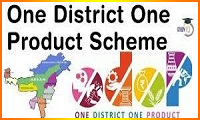
One District One Product.
The Ministry of Food Processing Industries (MoFPI) has notified 137 unique products of 713 districts across 35 States/UTs as One District One Product (ODOP) based on recommendations from the States/ UTs and in consultation with the Ministry of Agriculture & Farmer’s Welfare. 15 unique products from all the 24 districts of Jharkhand have been notified by MoFPI as ODOP. These are Peda, Honey, Jaggery, Tomato based products, Chilly based products, Lime based products, Mango based products, Guava based products, Custard Apple based products, Jackfruit based products, Potato based products, Papaya based products, and Minor Forest Produce (Tamarind, Mahua, Chironjee). ODOP are selected based on agriculture production, presence of micro-food processing enterprises, SHGs/FPOs/Cooperative/micro-enterprises engaged in processing of ODOP, etc. and accordingly modification to the notified list is done based on recommendation of the respective State/UT government. MoFPI is extending credit linked subsidy to the interested individual/entity for upgradation of existing or setting up of new micro-food processing facility, in accordance with the guidelines of Pradhan Mantri Formalization of Micro Food Processing Enterprises (PMFME) scheme. Establishment of Common Infrastructure projects by FPOs/SHGs/Cooperative/Govt. Entities; Seed Capital to SHG members; Marketing & Branding projects for ODOP; and Capacity Building through training institutions are also supported as per the PMFME scheme guidelines. This information was given by Union Minister of State for Ministry of Food Processing Industries Shri Prahlad Singh Patel in a written reply in the Lok Sabha.
Source:
pib.gov.in
|
25 Jul, 2023
Startups to get airfare support for export promotion.
India's contracting exports have prompted the government to introduce incentives for startups and new exporters, and relax compliance norms for the existing exporters. Under the Market Access Initiatives (MAI) Scheme, startups and new exporters have been made eligible for airfare reimbursement to participate in overseas events while the ceiling for this incentive for existing exporters has been raised 20%. India's goods exports shrank the most in three years, at 22% on-year, in June to $32.97 billion. Under the scheme, financial assistance is provided for export promotion activities. Earlier, new exporters and startups didn't get such incentives but now those with Rs 50 lakh annual turnover in the domestic market will get some support. The benefits of higher airfare reimbursements will also apply to the exporters when they host foreign buyers in reverse buyer-seller meets in India. 'Incentives are important as mega trade fairs are being thought of and there is a need to scale up our exhibitions and invite foreign companies to exhibit here,' said an official. India plans mega trade fairs for food, textiles and auto components, on the lines of Messe Frankfurt, Gulf Food and Canton Fair, to achieve 12% growth in good exports by 2030. 'The coverage of new entrepreneurs with nil exports for airfare support under the scheme is well conceived and pragmatic to encourage startups to enter into exports field particularly as we are looking towards a $1 trillion exports by 2030,' said Ajay Sahai, director general, Federation of Indian Export Organisations (FIEO). Benefits under the MAI scheme are availed through activities organised by the government, states, export promotion councils and commodity boards, among others.
Source:
economictimes.indiatimes.com
|
25 Jul, 2023

WEF says India's agri sector can scale new highs with AI, other emerging technologies.
The agriculture sector in India can be transformed by promoting the use of artificial intelligence (AI) and other emerging technologies, according to a new World Economic Forum report. Releasing the phase-1 report of the 'Saagu Baagu' ('agriculture advancement' in the Telugu language) being implemented by the Telangana government in collaboration with it, the WEF said its AI for Agriculture Innovation (AI4AI) initiative has helped more than 7,000 chilli farmers get access to agritech services in the first phase. These agritech services include AI-based advisories, soil testing, produce quality testing and e-commerce -- all in the project's pilot phase. The state government plans to scale existing and additional agritech services in phase II (from 2023 onwards) to 20,000 chilli and ground nut farmers in three districts. The digital public infrastructure will also be introduced in phase II, while in phase III (by 2025), the target is to reach 1,00,000 farmers in the state. The project was initiated in 2022 and is being implemented by Digital Green (in consortium with three agritech startups) with support from the Bill & Melinda Gates Foundation. The WEF said the project report can serve as a playbook for governments to enable their local agritech ecosystem and uplift smallholder farmers. 'As the urgency of the climate crisis becomes more evident and conflicts and natural calamities continue to devastate communities, threatening global food security, the industry is under mounting pressure to embrace sustainable practices and revamp its portfolios. 'Consequently, agriculture has evolved into a dynamic arena with investment opportunities and innovative solutions, making it an attractive domain for tech-savvy and entrepreneurial minds,' the Forum said. It said the AI4AI initiative aims to transform the agriculture sector in India by promoting the use of AI and other emerging technologies. While these technologies have the potential to significantly contribute to improving productivity and sustainability, they are often marked by fragmented technological infrastructure, high costs of operations, lack of access to data and limited technical expertise, while hampering the scale of their impact. 'The AI4AI addresses these challenges to scale emerging technologies, and it lies at the heart of the 'Saagu Baagu' project,' the WEF said. The WEF described this project as an example of agriculture value chain transformation by focusing on easing agritech services delivery to the end customer through administrative and policy support and digital public infrastructure, including its 'Agriculture Data Exchange' and 'Agritech Sandbox'. 'Telangana's experience highlights the need for governments to play an enabling role and consider non-financial yet high-impact areas to help scale agri-tech services. A focus on value chains is also needed to ensure efforts are focused, organised and outcome-oriented,' said Purushottam Kaushik, Head of the WEF's Centre for the Fourth Industrial Revolution in India. 'I am thrilled to announce the release of the Saagu Baagu Phase-1 report, highlighting our groundbreaking collaboration with the WEF. Through the utilisation of artificial intelligence, we aim to empower farmers with data-driven crop advisories and market intelligence, ultimately striving to foster agricultural prosperity within our state,' said KT Rama Rao, Minister of ITE&C, Industries and Commerce, and Urban Development of Telangana.
Source:
economictimes.indiatimes.com
|
25 Jul, 2023

India, Australia explore easing whiskey exports.
A newly formed India-Australia joint working group is looking at the possibility of a mutual recognition agreement (MRA) that would help Indian whiskey makers tap into the Australian market, which has a significant Indian population and growth opportunity, two people aware of the development said. India and Australia are working together on a solution for the smoother entry of Indian whiskey to the Australian market, two people aware of the development said. A newly formed India-Australia joint working group is considering the possibility of a mutual recognition agreement (MRA) in this respect. Under Australia’s rules, the spirit must be matured for two years before it can be labelled whiskey, a disadvantage for potential liquor exporters from India, which has no such rule. Indian companies claim that spirits mature quicker in India due to its warmer climate, and the maturation rule limits access in a market which has a significant Indian population offering good growth opportunities. They claim that a two-year maturation in India will also cause a 10% loss due to evaporation. 'There is a difference in maturation rate for whiskey that both countries follow, and that is an obstacle in trade. A joint working group has been formed to look into the issue and find a way out. Several stakeholders are part of the committee, including the ministry of food processing industries that is looking into the matter,' one of the two people said, requesting anonymity. The group’s formation comes seven months after Australia gained concessional duty access for its high-end wines under the India-Australia interim trade deal called Economic Cooperation and Partnership Agreement (ECTA) that took effect on 29 December. The Indian liquor industry is pushing for similar relaxations in the UK as well, where the minimum maturation period is three years. India is particularly interested in market access for rum and whiskey, said an industry executive, the second person cited above. 'It may be difficult for Australia to amend their maturation rule, but maturation equivalency is proved in the Indian climate. An MRA could be a solution. Easing of maturation rules in the UK, Canada, and Australia can open up big markets for our producers because there is a significant Indian diaspora in all these countries,' the person added. The formation of the working group comes after India, for the first time ever, opened up its alcoholic beverage market for foreign players under a free trade agreement with Australia last year. While large foreign firms are keen on access to India’s fast-growing whiskey and wine market, the Indian liquor industry, too, wants a relaxation in non-tariff barriers such as the maturation rules. According to a side letter of ECTA signed by the trade ministers of India and Australia last year, market access for Indian spirits and whisky will be examined by a working group, which shall meet within six months of the agreement coming into force. 'The parties shall consider issues relating to market access, including maturation rules for whisky and other alcoholic beverages…Both parties shall regularly review the progress of the working group through the subcommittee on trade in goods,' it said. The 'Australian rule requiring minimum maturation of two years for whiskey and one year for rum is a big hurdle that denies the majority of Indian liquor products access to the Australian market. We believe that these are legacy regulations, not backed up by scientific facts, and not relevant for products made in India where climatic conditions lead to a much more rapid maturation,' said Vinod Giri, director-general of the Confederation of Indian Alcoholic Beverage Companies (CIABC). These matters could not be concluded in the early harvest deal in the absence of time needed for due process but were acknowledged as outstanding issues to be resolved through a working group later, he said. According to CIABC, India is fast emerging as a producer of high-quality liquor, including single malt whiskies like Amrut, Rampur and Indian craft gin like Jaisalmer, Terai, Stranger & Sons, etc. 'We are happy to note the rolling out of the JWG and look forward to an educated dialogue and fact-based review of such regulations and also of any other similar matter which restricts the two countries from maximizing the benefits out of the FTA. We will, of course, be glad to assist in whichever manner our Government deems appropriate,' said Giri. Queries sent to the commerce ministry and the Australian High Commission in India remained unanswered.A 2021 survey by the Indian Council for Research on International Economic Relations (ICRIER) and PLR Chambers showed that over 70% of the growth in alcoholic beverage consumption in India in the next decade will be driven by the lower middle and upper middle-income groups and 26% consumers are estimated to move to higher brands by 2030. Under the trade pact with Australia, India allowed tariffs on wine from Australia with a minimum import price of $5 per bottle to be reduced from 150% to 100% on the deal’s implementation and subsequently to 50% over 10 years. The duty on bottles with a minimum import price of $15 was reduced from 150% to 75% on deal implementation and subsequently to 25% over 10 years.
Source:
livemint.com
|
25 Jul, 2023

India, UK concludes 11th round of FTA talks; next meeting in coming months.
India and the UK have held detailed draft treaty text discussions in nine policy areas in the just concluded eleventh round of Free Trade Agreement talks. The commerce and industry ministry said that technical discussions were held across nine policy areas over 42 separate sessions. On July 18, 2023, the two concluded the eleventh round of talks for the UK-India FTA. 'As with previous rounds, this was conducted in a hybrid fashion - a number of Indian officials travelled to London for negotiations and others attended virtually,' it said. Commerce and industry minister Piyush Goyal visited the UK on July 10-11 where he discussed with UK’s Secretary of State for Business and Trade, Kemi Badenoch and Minister of State for International Trade, Nigel Huddleston, ways to make progress on the FTA negotiations and wider trade and investment opportunities for the UK and India. As per the statement, commerce secretary, Sunil Barthwal also visited the UK during the round where he met with senior UK trade officials and took stock of the progress made in the eleventh round of negotiations. 'The twelfth round of negotiations is due to take place in the coming months,' the ministry said.
Source:
economictimes.indiatimes.com
|
25 Jul, 2023

Basmati rice export to get a boost from India-UAE currency trade.
Basmati exporters are hopeful of steady returns after the UAE-India currency trade agreement. This will likely give a boost to Iran window via Dubai reducing the risk of a payment default. Iran is an important destination of Indian Basmati, remaining among the top five destinations. Basmati rice shipments increased to 4.56 million tonnes (mt) worth $4.79 billion (?38,524 crore) during the 2022-23 fiscal from 3.94 mt in 2021-22. The unit value realisation from export went up last year to $1,050 a tonne from $897 in 2021-22. Besides, global uncertainties due to Ukraine-Russia conflict, partial restrictions on the export of non-Basmati rice — ban on broken variety and 20 per cent duty on non-parboiled rice — also had some influence over Basmati prices. 'Business with Iran will definitely get a boost,' said Vijay Setia, a former president of All India Rice Exporters Association (AIREA) referring to the current trade agreement. He said Iranian businessmen sitting in UAE prefer barter as they have establishments in both countries. 'Currently, many Iranian businessmen are facing problems to clear payments despite the rupee trade in place. With the new agreement, re-export of Basmati to Iran from Dubai will increase,' Setia said. Under the agreement between the RBI and the UAE Central Bank, both the agencies will establish a framework to promote the use of local currencies (rupee and dirham) for cross-border transactions. Another MoU, also between the two central banks, is aimed at interlinking the 'payment and messaging systems'. Less fluctuations When currency (USD) appreciates, exporters face loss and when it depreciates, there is gain. By shifting to local currency such fluctuations can be avoided, which is very important for Basmati trade, said Vinod Kaul, executive director of AIREA. 'Transaction will definitely become much easier. However, it is too early to get a clear picture as the agreement has just been announced,' he said. There are several more steps to be decided including nominating a bank or more than one bank, opening Vostro account and also setting up a corpus, he said. Further, Kaul said the risk of payment default (from Iran) will likely reduce. 'Exports will be fast-tracked and possibility of higher shipments to Iran will always be there,' he added. The export of Basmati rice to UAE was 3,15,313 tonnes and to Iran was 9,98,879 tonnes in 2022-23.
Source:
thehindubusinessline.com
|