
7,000 Telangana farmers benefit from WEF s Saagu Baagu pilot.
Source: thehindubusinessline.com

Timeline for assessment scheme for food labs extended till March 31.
Source: fnbnews.com
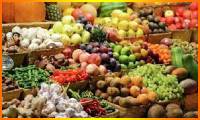
Kashmir vegetables in huge demand across India.
Source: risingkashmir.com
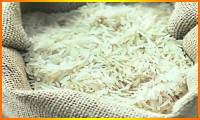
Global rice market turns precarious as sellers hike prices of cargo in transit.
Source: thehindubusinessline.com
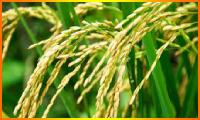
Kharif Crop Sowing Crosses 733 Lakh Hactare Area.
The Department of Agriculture & Farmers’ Welfare has released progress of area coverage under kharif crops as on 21st July 2023.
Area: In lakh hactare
| S. No. |
Crops | Area Sown | |
| Current Year 2023 | Last Year 2022 | ||
| 1 | Rice | 180.20 | 175.47 |
| 2 | Pulses | 85.85 | 95.22 |
| a | Arhar | 27.20 | 33.33 |
| b | Urdbean | 22.91 | 25.36 |
| c | Moongbean | 26.12 | 26.67 |
| d | Kulthi | 0.18 | 0.15 |
| e | Other pulses | 9.44 | 9.72 |
| 3 | Shri Anna cum Coarse cereals | 134.91 | 128.75 |
| a | Jowar | 10.07 | 9.72 |
| b | Bajra | 57.99 | 52.11 |
| c | Ragi | 1.69 | 1.67 |
| d | Small millets | 2.17 | pib.gov.in |
24 Jul, 2023
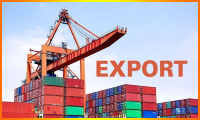
Startups to get airfare support for export promotion. India's contracting exports have prompted the government to introduce incentives for startups and new exporters, and relax compliance norms for the existing exporters. Under the Market Access Initiatives (MAI) Scheme, startups and new exporters have been made eligible for airfare reimbursement to participate in overseas events while the ceiling for this incentive for existing exporters has been raised 20%. India's goods exports shrank the most in three years, at 22% on-year, in June to $32.97 billion. Under the scheme, financial assistance is provided for export promotion activities. Earlier, new exporters and startups didn't get such incentives but now those with Rs 50 lakh annual turnover in the domestic market will get some support. The benefits of higher airfare reimbursements will also apply to the exporters when they host foreign buyers in reverse buyer-seller meets in India. 'Incentives are important as mega trade fairs are being thought of and there is a need to scale up our exhibitions and invite foreign companies to exhibit here,' said an official. India plans mega trade fairs for food, textiles and auto components, on the lines of Messe Frankfurt, Gulf Food and Canton Fair, to achieve 12% growth in good exports by 2030. 'The coverage of new entrepreneurs with nil exports for airfare support under the scheme is well conceived and pragmatic to encourage startups to enter into exports field particularly as we are looking towards a $1 trillion exports by 2030,' said Ajay Sahai, director general, Federation of Indian Export Organisations (FIEO). Benefits under the MAI scheme are availed through activities organised by the government, states, export promotion councils and commodity boards, among others. Source: economictimes.indiatimes.com |
|||
24 Jul, 2023
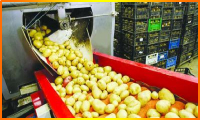
Employment Generation in Food Processing Industry. As per evaluation studies carried out for relevant component schemes of Pradhan Mantri Kisan SAMPADA Yojana (PMKSY), substantial direct/indirect employment opportunities have been created in projects supported through its relevant component schemes. The evaluation study of Integrated Cold Chain and Value Addition Infrastructure Scheme under PMKSY, conducted by M/s NABARD Consultancy Limited in the Year 2020, has estimated that each project has resulted in creation of about 600 direct/ indirect employment opportunities. It is estimated that about 9.69 Lakh direct/ indirect employment opportunities have been generated through projects completed under component schemes of PMKSY. As Production Linked Incentive Scheme for Food Processing Industry (PLISFPI) and Pradhan Mantri Formalisation of Micro food processing Enterprises (PMFME) are relatively new schemes, no such evaluation study has been conducted for these. Ministry of Food Processing Industries (MoFPI) is implementing a centrally sponsored PM Formalisation of Micro food processing Enterprises (PMFME) Scheme for providing financial, technical and business support for setting up / upgradation of 2 lakh micro food processing enterprises in the country through credit linked subsidy during five years from 2020-21 to 2024-25 with an outlay of Rs. 10,000 cr. The scheme aims to enhance the competitiveness of individual micro-enterprises in the unorganized segment of the food processing industry and promote formalization of the sector. Under the Capacity Building component of PMFME Scheme, MoFPI provide Grants for training of Trainers, District Resource Persons, Entrepreneurs and various other groups. Grants upto 50% for branding and marketing support to groups of Micro Food Processing Enterprises is available under related component of PMFME Scheme. This information was given by Union Minister of State for Food Processing Industries Shri Prahlad Singh Patel in a written reply in the Rajya Sabha. Source: pib.gov.in |
|||
24 Jul, 2023

No loss to India due to removal of retaliatory customs duties on eight US products: Minister. The removal of retaliatory customs duties on eight American products, including apples, walnuts, and lentils, will not result in a loss to the country, Parliament was informed on Friday. India had imposed these duties on 28 US products in retaliation to America's move to increase import duty on certain steel and aluminium goods. During Prime Minister Narendra Modi's recent visit to Washington, both sides decided to resolve six trade disputes at the World Trade Organisation. India also agreed to remove the duties. The government has decided to remove retaliatory customs duties on import of almonds (fresh or dried, in shell), walnuts, chickpeas, lentils, apples, medical diagnostic reagents, and boric acid, Minister of State for Commerce and Industry Anupriya Patel said in a written reply to the Rajya Sabha. 'The removal of retaliatory tariffs or cuts in import duty with the US does not result in a loss to India,' she said. 'It simply means that the additional duties imposed as a response to the US measures are no longer applicable and the MFN (most favoured nation) tariff rates as applicable to all countries prevail,' she added. In a separate reply, she said India's foodgrains exports have registered a steady growth in the last few years. This, she said, is reflected in the increase in the country's share in world foodgrains exports from 3.38 per cent in 2010 to 7.79 per cent in 2022, according to UN Comtrade statistics. Wheat exports declined to USD 1.52 billion in 2022-23 as compared to USD 2.12 billion in 2021-22. India has currently banned wheat exports. Source: economictimes.indiatimes.com |
|||
24 Jul, 2023
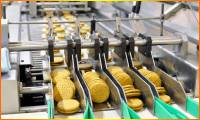
Food Processing Units In Karnataka. In order to ensure overall growth and development of food processing sector across the country including Karnataka, Ministry of Food Processing industries (MoFPI) has been implementing Central Sector Umbrella Scheme - Pradhan Mantri Kisan SAMPADA Yojana (PMKSY) since 2016-17, centrally sponsored PM Formalization of Micro Food Processing Enterprises Scheme (PMFME) since 2020-21and Production Linked Incentive Scheme for Food Processing Industry (PLISFPI) since 2021-22. Under component schemes of PMKSY, MoFPI mostly provides credit linked capital subsidy with total outlay of Rs 4600 Cr for 15 Finance Commission Cycle. Ministry also provides financial, technical and business support to micro food processing enterprises through PMFME scheme with outlay of Rs 10,000 Cr for a period of 5 Years (2020-21 to 2024-25), whereas PLISFPI is targeted to facilitate expansion of food processing capacity by creating champion brands in Food Processing Sector with total outlay of Rs 10,900 Cr for a period of 6 years (2021-22 to 2026-27). Since 2019-20, a total of 373 food processing units have been approved for assistance under Creation/ Expansion of Food Processing & Preservation Capacities (CEFPPC), a component scheme of PMKSY, out of which 16 units are located in Karnataka. A total of 38466 micro food processing enterprises have been approved for assistance under PMFME since 2020-21, out of which 2444 micro food processing enterprises are located in Karnataka. This information was given by Union Minister of State for Food Processing Industries Shri Prahlad Singh Patel in a written reply in the Rajya Sabha. Source: pib.gov.in |
|||
24 Jul, 2023

Green credits for sustainable development of agriculture. Agriculture is a victim and a source of climate change. But it also offers solutions. Developing countries heavily depend on agriculture and lack the resources to look for cost-effective solutions to climate change in agriculture itself. India has committed to achieving the target of net-zero emissions by 2070, and towards this, it has taken several proactive actions. The Government of India enacted “The Energy Conservation (Amendment) Bill, 2022” for promoting the use of renewable energy and creating a national carbon market. The recent Union Budget 2023 lays considerable emphasis on Green Growth for sustainable economic development. Nonetheless, most of such actions are broad-based and indicative and not specific to any economic activity. Recognising this gap, the Ministry of Environment and Forests has recently proposed a Green Credit Programme under the Environment Protection Act, 1986, which provides a basic framework for harnessing the green growth potential of different farm and non-farm activities through economic incentives. Nodal agency to issue credits The programme provides for a market-based mechanism to reward voluntary environmental actions that help conserve nature and mitigate climate change. It offers green credits as incentives for specific activities that deliver positive environmental outcomes. The programme involves all stakeholders, that is, individuals, industries, farmer producer organizations, urban local bodies, gram panchayats, and private entities to earn green credits for the adoption of eco-friendly practices including tree plantation, water conservation, sustainable agriculture, waste management, mangrove conservation and restoration, eco mark labelling, sustainable building and infrastructure, and air pollution reduction. The Indian Council for Forestry Research and Education (ICFRE) is designated as the main agency to issue green credits, and oversee its implementation and tracking the progress. The green credits earned through these activities can be traded on a domestic market platform. In addition, the activities generating green credits are also eligible for carbon credits for trading in the carbon market. The Government of India has taken several initiatives for promoting sustainable development of agriculture, but it is for the first time a dedicated domestic voluntary national market mechanism has been proposed to incentivize stakeholders engaged in agriculture for their adaptation and mitigation actions. Repurposing subsidies The Programme can be a game changer for providing much-needed market mechanism for sustainable development of agriculture and enhancing farmers’ income. First, several agricultural practices such as zero-tillage, direct seeding and alternate wet and drying systems in rice, green manuring, organic manure, cultivation of legume crops, rainwater harvesting and conservation, organic or natural farming, precision agriculture, and agro-forestry generate several intangible ecosystem services, which are not valued but are freely available to the society. Through the green credits the farmers will be rewarded for the adoption of farm practices that generate positive externalities to the environment, human and animal health. Second, the programme can serve as an entry point for repurposing agricultural subsidies, which have become detrimental to natural resources and unsupportive of sustainable production patterns. For instance, the heavily subsidised electricity for irrigation has caused a significant reduction in the groundwater table in States such as Punjab and Haryana. The burning of paddy straw pollutes the environment, affecting human and animal health. The current subsidy regime can be transformed by linking economic incentives for the green credits with the adoption of environmental-friendly agricultural practices. Challenges Though quite promising, several practical challenges are likely to crop up while operationalising the Green Credit Programme. The biggest challenge is the establishment of an equivalence factor for allocating green credits across different activities. For example, estimating equivalence factor for water conservation and carbon sequestration is complex and difficult task. Another hurdle is the valuation of intangible ecosystem system services that agriculture generates. As the primary objective of the Programme is to provide monetary incentives for the protection of the environment, the absence of robust mechanisms for the verification of green credits and their monitoring may lead to greenwashing. Furthermore, measuring green credits at the farm level is a difficult task due to the significant diversity in farm size, cropping patterns, and agronomic practices. Of the total farm households, about 86 per cent have landholdings of less than or equal to two hectares, and they often face significant financial constraints on the purchase of eco-friendly inputs and the adoption of capital-intensive farm practices. The first step for implementation of the Green Credits Programme is that the prices of the green credits from agricultural practices need to be differentiated from the prices of the practices in other sectors. There is a very probability of a reduction of crop yields in the initial years of switching over to green practices. Second, the programme should adopt a community approach for the certification of green credits to minimize transaction costs. Third, to avoid the risk of greenwashing, the pricing of the green credits must be differentiated by the type of activity. Finally, agriculture mitigates the greenhouse gas emissions and enhances carbon sequestration; hence the price of green credits should be fixed higher for the agricultural activities. Source: thehindubusinessline.com |
|||