
Muzaffarnagar jaggery to Assam tea at GI fair.
From Mainpuri’s tarkashi to Sambhal’s horn craft, Muzaffarnagar’s jaggery to Assam’s tea, gamusa and muga silk — the second edition of GI (geographical indication) fair at the India Expo Centre and Mart, Greater Noida, will bring an amalgamation of culture and uniqueness of India.
The five-day fair will be inaugurated by Union minister of state for textiles Darshana Vikram Jardosh on Thursday.
GI-tagged crafts, organic foods, home décor, lifestyle, beauty and wellness products from across India will be on display. A GI tag is given to products that have distinct qualities and traditions linked to their place of origin. Over 440 products are GI tagged in India.
'One can expect to find Muzaffarnagar’s jaggery, Sambhal’s horn craft, Mainpuri’s tarkashi, teas, gamusa and muga silk from Assam, traditional moirang phee (garments) from Manipur, Jamnagar bandhani, Kutch shawls, and Surat’s zari craft from Gujarat,' said Dr Rakesh Kumar, chairman of India Expo Centre and Mart Limited (IEML).
Organised by the EPCH, the fair is supported by the Ministry of Commerce and Industry, Textiles, Cell for IPR Promotion and Management (CIPAM) and Management and Geographical Indications Registry Department (MGIRD), controller general of Patents, Designs and Trademarks (PDTM).
Exhibitors from the several states and union territories of India will also be part of the fair. Some of these include the Tea and Spices Boards of India, Agricultural and Processed Food Products Export Development Authority (APFPEDA), Jammu and Kashmir Trade Promotion Organization (JKTPO), Uttarakhand Handloom and Handicraft Development Council (UHHDC), Uttarakhand Organic Commodities Board (UOCB), Goa State Council for Science and Technology (GSCST) and many others.
As per Dr Neeraj Khanna, vice-chairman of EPCH the exhibitors will share backgrounds and stories about their products, crafts, and hand skills. 'India GI Fair aims to connect these invaluable native products, aptly called ‘legal local’, to connoisseurs and clientele in India as well as the global market.'
Highlighting the fair as a great business opportunity, RK Verma, executive director of EPCH said, 'Here one can see and source India’s best treasures and traditions. The show offers buyers a great opportunity.'
Source: timesofindia.indiatimes.com

India to cut import duty on Washington apples to 50% by September end.
Centre has decided to abolish the retaliatory tariff of 20 per cent on Washington apples by the end of September, The Economic Times (ET) has reported. The government imposed the tariff on the red and juicy variety of fruit around four years ago when President Trump was in power.
An import duty of 70 per cent is imposed on Washington apples, which is 20 percentage points more than the 50 per cent import duty applicable for the apples imported from Iran and Turkey. The higher duties resulted in a higher price for these apples leading to a decline in their imports.
As the prices of Washington apples are set to ease, there is a possibility of these apples flooding Indian markets, this has made domestic apple growers apprehensive of the development. Apple growers in the Kashmir valley fear that the reduction in import duties will have a negative impact on demand for their apples.
The India representative of the Washington Apple Commission, Sumit Saran was quoted in the ET report as saying, 'The government on June 22 had indicated to do away with the 20 per cent retaliatory import duty that was imposed during the Donald Trump regime, and it will become effective within 90 days.'
Washington apple growers have already started cultivating more apples to cater to the expected rise in demand from the Indian markets, the report said.
Before the imposition of a higher tariff on Washington apples, India imported seven million boxes with 22kg of apples in each box. Washington apples are imported between September and February, as the domestic produce comes to an end, the report cited Saran as saying.
Source: business-standard.com

Farmers must be at centre stage while framing food safety norms: Tomar.
Union Agriculture Minister Narendra Singh Tomar on Thursday asked global food regulators to keep farmers at centre stage while framing food safety regulations and ensure they get the right price for their produce.
Addressing the Global Food Regulators Summit 2023 here, Tomar said food is a basic right for every person and therefore, it is important to ensure the availability of food and global food safety. The summit is being organised by the Food Safety and Standards Authority of India (FSSAI) under the Health Ministry.
The minister highlighted that the Indian government has taken many steps to boost production and productivity in the agriculture sector, and the country is a surplus state in foodgrain production.
India also strives to fulfil the requirement of global food demand, Tomar said.
He also emphasised that regulations on processing, packaging and labelling of food products must ensure food safety and said the food regulator FSSAI is doing a great job in this aspect.
The minister told global food regulators that farmers should be at centre stage while framing food safety standards.
He said farmers are food producers and it is essential to ensure that farming is profitable to protect their interests.
While making regulations, Tomar said, it is important to keep in mind that consumers get good quality food products at an affordable price, and also farmers get the right price for their produce.
He made a strong case for promoting the use of millets by highlighting positive attributes of millets like their less water consumption compared to other crops, resilience to adverse climatic conditions and high nutritional value.
Minister of Agriculture and Livestock Development, Government of Nepal, Bedu Ram Bhusal was also present at the event.
Through a recorded video message, Tedros Adhanom Ghebreyesus, WHO Director-General, congratulated the Union Health Ministry and FSSAI for organising this maiden global food regulators summit.
He said, 'We must collectively ensure that everyone everywhere enjoys access to safe and nutritious food'.
Amitabh Kant, G20 Sherpa, requested the gathering to utilise this platform for learning, strengthening networks to improve food safety and creating a mechanism for investing in food safety in a sustainable way.
Recognising the need to ensure a resilient food supply, he stressed the need to reduce food wastage, utilise digital tools for enhancing food supply and promote the use of resilient food crops like millet.
Principal Scientific Advisor Ajay Kumar Sood urged the participants at the two-day conclave to discuss the potential health hazards of plastic, nutraceuticals and metals in food supply and encouraged them to explore alternatives to single-use plastics, promote circularity in food-grade plastic production and use of sustainable material across supermarkets and take away services.
G Kamala Vardhana Rao, CEO of FSSAI, stated that safe and nutritious food is key to good health, while unsafe food causes 600 million infections and 4.2 lakh deaths every year.
He hoped that this gathering will brainstorm on the critical aspects of food safety and bring innovative solutions to ensure a safe food supply.
The Global Food Regulators Summit 2023 brings together food regulators from around the world to exchange perspectives and knowledge on crucial issues related to food safety systems.
The summit will have various technical sessions focusing on various topics, such as the roles and responsibilities of global food regulators, challenges and solutions for global food safety, robust standard setting, innovation in food emergency response and more.
Source: business-standard.com
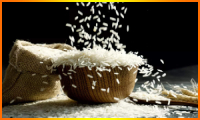
India bans export of non-basmati white rice.
The Indian government has prohibited export of non-basmati white rice, a Directorate General of Foreign Trade notification said on Thursday.
'Export policy of non-basmati white rice (semi-milled or wholly milled rice, whether or not polished or glazed)...is amended from free to prohibited,' the DGFT said in a notification.
However, it will allow the consignments of this rice to be exported under certain conditions like in cases where loading of this rice on the ship has commenced before this notification.
Earlier, news agency Bloomberg reported the Indian government is considering banning exports of most rice varieties. The ban may affect around 80 per cent of India's rice exports, can reduce rice prices within India but may impact global prices negatively.
Uneven distribution of rainfall in the key rice-growing areas of the country has pushed up prices of the grain by up to 20% in the last 10 days, ET reported earlier.
Prices of rice exported from Vietnam soared to their highest in more than a decade this week, on growing supply concerns due to the El Nino weather pattern and India taking this step, Reuters reported. Traders said information about India's possible move to curb exports also pushed prices higher. Traders expected prices to rise further if India were to limit exports.
Meanwhile, rice planting in India has gained momentum with the revival in monsoon rainfall over the past fortnight.
India - the world's biggest rice exporter - banned overseas shipments of broken rice and imposed a 20% duty on exports of various other grades in September 2022 amid concerns over production.
B.V. Krishna Rao, president of the Rice Exporters Association (REA) said a government move to increase paddy procurement price had been pushing up rates. 'But, the government is holding more stocks than needed for welfare schemes. There is no need to restrict exports,' he told Reuters.
Source: economictimes.indiatimes.com

India, Germany to strengthen bilateral ties, increase investments: German Vice Chancellor.
Germany's Vice Chancellor and Minister of Economic Affairs and Climate Action Robert Habeck on Thursday said India and Germany want to further strengthen bilateral cooperation and increase investments and collaboration among companies. He arrived on a three-day visit to India on Thursday.
Talking to reporters on the sidelines of the Indo-German Business Forum in New Delhi, Habeck also said China is Germany's biggest trading partner and a lot of German and European companies have invested in that country.
'It is a huge market and this goes the same for India and for the US for example. On the other hand we see that being dependent on only one market could be a risk and even more so if we see that economic issues are not politically neutral, that interests are interwoven in the economic relations,' he said.
He further said 'we can't decouple from China' but de-risking and diversification is of highest importance.
Diversification, he said means that other partnerships, the Indo-German partnership and other ones as well, become more and more important.
'My understanding also from the talks ahead with the Indian partners is, that goes the same for India. So there is a mutual interest from the German side and the Indian side to strengthen our cooperation and bringing more companies together, bringing more investments, creating a common trade sphere also as an answer that we are not becoming too dependent on only one country and from the German side that is also China,' he said.
He further said from the European side, the Russian aggression on Ukraine is unprecedented and it has destroyed the European peace order built after the second World War.
'I know that Europe is a little bit away from Asia of course, but on the other hand this is of such importance that I urge all democracies worldwide to be clear in language and political position that this is not acceptable,' Habeck said.
Referring to the price cap imposed on purchase of Russian crude oil, he urged countries 'not to use the sanctions system to give credit, more money to Russia that they can fuel their war in Ukraine'.
To a question regarding the situation in Manipur, Habeck said 'this is not on the table for me'.
He said he would be discussing economic matters during his meetings with the Indian side, besides the energy matters regarding sanctions and renewable energy.
Source: economictimes.indiatimes.com

UK, US oppose extending WTO food subsidy clause.
The US, UK, EU and Japan have opposed extending the temporary peace clause agreed upon at the 2013 World Trade Organization (WTO) Bali conference that prevents legal action against any developing nation that breaches the food subsidy limits specified in the agreement on agriculture.
At an agriculture negotiation meeting at the WTO on Monday, the US said India’s expansion of support to its rice and wheat farmers has negative spillover effects. India has invoked the clause thrice.
'India said that the strongest evidence supporting the necessity of public stockholding was in its own actions during the pandemic, when it mobilised its food stocks and provided food to 80 million people in 18 months’ span,' said a Geneva-based official.
Public stockholding is a policy tool used by governments to purchase, stockpile and distribute food when needed.
Developing countries’ food subsidies are protected by an interim peace clause which shields food procurement programmes against action from WTO members in case the subsidy ceilings—10% of value of food production in the case of India and other developing countries—are breached.
India, Indonesia, South Africa and China are among the 80 WTO member countries that have called for initiating text-based negotiations to find a permanent solution on public stockholding (PSH) for food security. Developing countries and the African Group have demanded a food security package at the 2024 conference.
Their joint proposal represents 6.6 billion people and more than 80% of the global population.
Source: economictimes.indiatimes.com
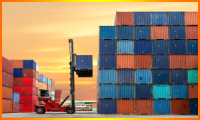
Tamil Nadu tops NITI s Export Preparedness Index 2022 among coastal states.
Tamil Nadu has pipped Maharashtra and Gujarat to emerge as the top state among coastal states in the Niti Aayog’s Export Preparedness Index 2022.
The index is aimed at assessing the readiness of the states in terms of their export potential and performance.
Tamil Nadu is followed by Maharashtra, Karnataka, Gujarat, Andhra Pradesh, Odisha, West Bengal and Kerala in that order in the ranking of coastal states, according to the government think tank’s report released on Monday.
Among hilly/Himalayan states, Uttarakhand has ranked at the top position. It is followed by Himachal Pradesh, Manipur, Tripura, Sikkim, Nagaland, Meghalaya, Arunachal Pradesh and Mizoram in that order.
Haryana topped the chart among the landlocked regions. It was followed by Telangana, Uttar Pradesh, Punjab, Madhya Pradesh and Rajasthan.
In the category of union territories/small states, Goa was ranked first. Jammu and Kashmir, Delhi, Andaman and Nicobar and Ladakh were ranked second, third, fourth and fifth, respectively.
The index can be used by the regions to benchmark their performance against their peers and analyse potential challenges to develop better policy mechanisms to foster export-led growth at the sub-national level. The ranking is based on four main pillars: policy, business ecosystem, export ecosystem and export performance.
The index is also aimed at promoting competition among all states (coastal, landlocked, Himalayan and UTs) to bring about favourable policies, ease the regulatory framework, create necessary infrastructure and assist in identifying strategic recommendations for improving export competitiveness.
Speaking at the release of the report, NITI Aayog CEO BVR Subrahmanyam said that states are fundamental stakeholders in the country’s exports 'because that is where the action is.' 'Entire ecosystem for export happens in states,' he said adding the report will help in raising awareness about the subject. He also said that the country needs to broad-base its exports.
Source: indianexpress.com
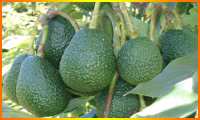
Australian avocados get green light to export to India.
Avocados Australia have announced that all 10 trial shipments of fresh Australian Hass avocados have been successfully received by Indian officials.
Market access to India was pending the successful despatch of these 10 trial shipments and now that this is complete audited and accredited Australian avocado growers can proceed with the next step toward broad market access to India.
Avocados Australia would like to thank Simpson Farms, Costa Group, The Avolution and Dons Fort Packing for their professionalism and care in ensuring that the trial shipments went smoothly. This is great news for the Australian avocado industry.
Source: freshplaza.com

UK, US oppose extending WTO food subsidy clause.
The US, UK, EU and Japan have opposed extending the temporary peace clause agreed upon at the 2013 World Trade Organization (WTO) Bali conference that prevents legal action against any developing nation that breaches the food subsidy limits specified in the agreement on agriculture.
At an agriculture negotiation meeting at the WTO on Monday, the US said India’s expansion of support to its rice and wheat farmers has negative spillover effects. India has invoked the clause thrice.
'India said that the strongest evidence supporting the necessity of public stockholding was in its own actions during the pandemic, when it mobilised its food stocks and provided food to 80 million people in 18 months’ span,' said a Geneva-based official.
Public stockholding is a policy tool used by governments to purchase, stockpile and distribute food when needed.
Developing countries’ food subsidies are protected by an interim peace clause which shields food procurement programmes against action from WTO members in case the subsidy ceilings—10% of value of food production in the case of India and other developing countries—are breached.
India, Indonesia, South Africa and China are among the 80 WTO member countries that have called for initiating text-based negotiations to find a permanent solution on public stockholding (PSH) for food security. Developing countries and the African Group have demanded a food security package at the 2024 conference.
Their joint proposal represents 6.6 billion people and more than 80% of the global population.
Source: economictimes.indiatimes.com

ADB retains India's growth forecast at 6.4% for current FY.
The Asian Development Bank (ADB) Wednesday retained India's economic growth forecast at 6.4% for FY24, on the back of recovery in consumption demand in both rural and urban areas, but said suppressed exports due to global slowdown will be a drag.
The Indian economy grew 7.2% in 2022-23. In an update to its Asian Development Outlook (ADO), ADB lowered its inflation projection for current fiscal year (FY24) at 4.9%, from 5% pegged in April, on softening crude oil prices, even though it estimated core inflation to remain 'stubbornly high'. 'Assuming normal rainfall and other weather factors, and no further geopolitical shocks, India is expected to grow by 6.4% in FY2023 and 6.7% in FY2024, as projected in ADO April 2023,' ADB said.
In current fiscal year, consumption demand in India is expected to recover with improvement in both rural and urban demand as reflected in such indicators as consumer confidence, urban unemployment, and motorbike sales.
Investment growth will remain robust, underpinned by strong bank credit growth and demand for housing, and supported by fewer interest rate hikes by the central bank.'However, the global economic slowdown has suppressed merchandise trade, which will be a drag on growth. On the supply side, growth will be buoyed by manufacturing as input prices cool,' ADB said in its July update to the outlook for Asia. With regard to inflation, ADB said as food and oil prices moderated, inflation eased below the 6 % upper tolerance level of the monetary policy.
Retail inflation has remained above 6 per cent for most part of 2022. As per latest data, it was 4.81% in June 2023. 'Expected softening of Brent crude prices in 2023 should lower headline inflation, but core inflation, which excludes food and fuel, is expected to be stubbornly high,' ADB said.
It said developing economies in Asia and the Pacific are expected to grow at 4.8 % in 2023, as robust domestic demand continues to support the region's recovery. Inflation is expected to continue falling, approaching pre-pandemic levels as fuel and food prices decline.
The growth forecast for 2024 is marginally revised down to 4.7% from a 4.8 % estimate in April, as demand for the region's exports of electronics and other manufactured goods is slowing, ADB said. China's economy is projected to expand 5% in 2023, unchanged from the April forecast, amid strong domestic demand in the services sector. In 2024, China's GDP is projected to grow 4.5%.
'Domestic demand and services activity are driving growth, while many economies are also benefiting from a strong recovery in tourism. However, industrial activity and exports remain weak, and the outlook for global growth and demand next year has worsened,' Park added.
Source: economictimes.indiatimes.com