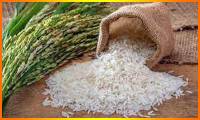
India may maintain rice shipments in current fiscal on strong demand.
Indian non-basmati rice exporters hope to sustain the record-high shipments this fiscal as witnessed in the 2022–23 fiscal. In 2022-23 fiscal, shipments touched a new peak in volumes and value on the robust demand for the cereal.
Indian non-basmati rice exports, despite a levy of 20 per cent duty, a ban on broken rice and a decline in purchases by Asian buyers such as Bangladesh and China, touched a record 17.78 million tonnes valued at over $6.35 billion in 2022–23. In the previous year, non-basmati shipments were at 17.26 million tonnes valued at $6.12 billion. Overall, Indian rice exports in FY23 stood at over 22.28 million tonnes valued at over $11.13 billion.
African demand
The higher demand for Indian non-basmati rice from traditional buyers from African countries such as Benin, Cote D’Ivoire, and Senegal helped offset the decline in off-take from Asian customers such as Bangladesh, China, Nepal, and Vietnam.
Benin, with purchases exceeding 1.55 million tonnes, was the largest buyer of non-basmati rice , compared with 1.52 million tonnes a year ago. Cote d’Ivoire at 1.21 million tonnes (0.93 mt a year ago), Senegal at 1.33 mt (1.09 mt), and Togo at 0.94 million tonnes (0.67 mt) were among the large African buyers. China reduced its rice purchases to 1.5 mt (1.63 mt), while Bangladesh almost halved it to 0.84 mt (1.62 mt) whereas Nepal also reduced the offtake sharply at 0.76 mt (1.38 mt) and Vietnam at 0.64 mt (0.70 mt) during the year. India gained market share from Pakistan, which had a bad crop last year.
'We expect to maintain the same figures both in value and volumes this year as there is strong demand for Indian rice,' said BV Krishna Rao, President, The Rice Exporters Association, commenting on the export outlook. There is no other country that can replace India as a rice supplier, he said. India accounts for about 45 per cent of the global rice trade.
Despite the levy of a 20 per cent duty last year, the demand for Indian rice is intact. 'With shipments of 22 million tonnes in 2021–22, we clocked $10 billion, and last year we clocked over $11 billion with almost the same volumes. The higher value is because of the duty,' Rao said.
On potential concerns about El Nino in the upcoming kharif season, Rao said it is unlikely to have any impact on the supplies. Even last year, weak rains in eastern India, mainly in Bihar and parts of West Bengal, did influence output, but higher supplies from other States, including Telangana, offset the impact, he said.
Source: thehindubusinessline.com
Iranian NSA pitch for trade in national currencies in his meeting with Doval.
Iranian NSA Ali Shamkhani has pitched for using national currencies for trade with India including in oil during his meeting National Security Advisor Ajit Doval in Tehran on Monday.
Shamkhani said using national currencies in bilateral trade between Iran with India would help the two countries achieve their joint economic objectives, officials said.
During the meeting, Shamkhani and Doval discussed economic, political, and security issues concerning Iran and India as well as the most important regional and international developments.
Stating that improved Iran-India ties are not against any other country, the Iranian NSA underlined that global and regional developments had created very good conditions to strengthen interactions between the two countries in the field of energy, transportation and transit, technology, and banking. India in the past used national currencies for oil trade with Iran and over the last year has introduced trade with number of countries in national currencies.
Welcoming the role played by India in regional and international developments, Shamkhani highlighted that Iran considers the active participation of New Delhi in political, economic, and security initiatives with the participation of the countries of Central Asia and the Persian Gulf region as necessary and helpful.
Doval, for his part, said that the deep influence of Iranian culture in the daily life of the Indians is a sign of deep ties between the two nations.
Doval added that the recent agreement between Iran and Saudi Arabia to normalize their diplomatic ties would have profound regional effects on changing relations in the international system.
Emphasizing the need for cooperation between Iran and India to boost stability in Afghanistan, the Indian NSA said the two countries should work together to combat terrorism.
He said India considers Chabahar port, in southeastern Iran, as a gateway for increased cooperation between Iran and India. The two also discussed about boosting International North South Transport Corridor.
Source: economictimes.indiatimes.com
MP gets GI tag on nine things including Rewa s Sundarja mango.
Madhya Pradesh has taken a big jump in the world of GI tag as it received GI tag for nine things or products in simultaneous manner. This is also for the first time that state received so many GI tags in one go. Now state is having total 19 GI tags for different things.
' Sundarja' mango of Rewa, Sharbati wheat, Morena Gazak, Gond painting of Dindori, carpet of Gwalior, Batik print of Ujjain, stone craft of Bhedaghat (Jabalpur), Balaghat’s Waraseoni Saree, wrought iron craft of Dindori.
The Sundarja mango is found in abundance in Govindgarh town of Rewa district. The Sundarja mango grown in the Govindgarh Orchard is light white in colour while the Sundarja mango produced in Kuthiala Fruit Research Centre in Rewa is light green. The Sundarja mango has a wide popularity and even a stamp has been issued in the name of it. This mango is called pride of the Vindya and it is fibre free fruit.
The Gazak of Morena is known all over the India due to its delicious taste. It has acquired a phenomenal fame. Sharbati wheat has crossed the boundaries to become to earn fame in foreign countries as well.
Source: freepressjournal.in
FSSAI amends labeling rules for pre-packaged foods.
The Food Safety and Standards Authority of India (FSSAI) has amended labeling and display rules for pre-packaged foods.
It has asked the Food Business Operators (FBOs) to substitute 'Best Before Date' on the packages with 'Expiry Date' or 'Use By Date'.
The 'Best Before Date' can be displayed as additional or optional information on the label, stated an official release from the state government on Monday.
Foods with less than three months of shelf life need to display production details in the 'date-month-year' format.
Source: indianexpress.com
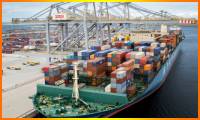
Iranian NSA pitch for trade in national currencies in his meeting with Doval.
Iranian NSA Ali Shamkhani has pitched for using national currencies for trade with India including in oil during his meeting National Security Advisor Ajit Doval in Tehran on Monday.
Shamkhani said using national currencies in bilateral trade between Iran with India would help the two countries achieve their joint economic objectives, officials said.
During the meeting, Shamkhani and Doval discussed economic, political, and security issues concerning Iran and India as well as the most important regional and international developments.
Stating that improved Iran-India ties are not against any other country, the Iranian NSA underlined that global and regional developments had created very good conditions to strengthen interactions between the two countries in the field of energy, transportation and transit, technology, and banking. India in the past used national currencies for oil trade with Iran and over the last year has introduced trade with number of countries in national currencies.
Welcoming the role played by India in regional and international developments, Shamkhani highlighted that Iran considers the active participation of New Delhi in political, economic, and security initiatives with the participation of the countries of Central Asia and the Persian Gulf region as necessary and helpful.
Doval, for his part, said that the deep influence of Iranian culture in the daily life of the Indians is a sign of deep ties between the two nations.
Doval added that the recent agreement between Iran and Saudi Arabia to normalize their diplomatic ties would have profound regional effects on changing relations in the international system.
Emphasizing the need for cooperation between Iran and India to boost stability in Afghanistan, the Indian NSA said the two countries should work together to combat terrorism.
He said India considers Chabahar port, in southeastern Iran, as a gateway for increased cooperation between Iran and India. The two also discussed about boosting International North South Transport Corridor.
Source: economictimes.indiatimes.com

India expects $50 billion exports to UAE by FY27.
Commerce secretary Sunil Barthwal on Monday said that India’s exports to the UAE are expected to reach $50 billion by 2026-27 from $31.3 billion in 2022-23. The two sides signed a trade pact on May 1, 2022 and India’s utilisation of the agreement is the second highest among all its free trade agreements (FTA).
In the first year of coming into effect of the Comprehensive Economic Partnership Agreement (CEPA), 54,144 certificates of origin were issued between May 2022-March 2023 only next to 1.49 lakh under the India-Asean FTA.
'We are hoping that we would be able to reach $50 billion exports by 2026-27,' Barthwal said, adding that trade between the two countries has gone beyond normal growth for both exports and imports and labour-intensive sectors have seen significant growth.
India’s exports to the UAE in 2022-23 rose by 11.8% to $31.3 billion, while imports grew by 18.8% to $53.2 billion in the last fiscal.
Non-oil imports rose 4.1% in FY23.
Iron and steel exports to the UAE dropped 36% on-year in FY23.
India’s exports of essential oils, automobiles, mineral oils, electrical equipment, cereals, perfumery and cosmetic preparations were the biggest gainers in the pact.
Imports of aircraft, spacecraft, and parts rose a whopping 4,859% on-year to $1.93 billion in FY23.
'UAE is a transit hub and the increase is part of the normal most favoured nation (tariffs),' said an official.
Gold imports declined in FY23 due to non-utilisation of the full quota of tariff available under the CEPA.
'With the DGFT opening a fresh window of gold tariff rate quota, the gold imports from UAE should go up,' he said.
India announced that it will open a fresh window for the import of 140 MT of gold in FY24 at concessional duty from the UAE through an import quota system.
Sources said that the meeting of the joint working group will be held in June to discuss the exchange of data between customs of India and the UAE, and also review the trade data under the CEPA.
Source: economictimes.indiatimes.com
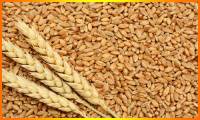
Punjab, Haryana, MP achieve 77% of wheat procurement target, other States falter.
Wheat procurement has surged 38.3 per cent to 22.29 million tonnes (mt) in the first month of the procurement period (April-June), from 16.12 mt a year-ago, according to the latest official data. The procurement target has been fixed at 34.15 mt for the current season.
Out of 28.7 mt targetted from three States — 13.2 mt in Punjab, 8 mt in MP and 7.5 mt in Haryana -- nearly 77 per cent has been achieved, so far. The government has to ensure the deficit in other States is covered, as only 4.4 per cent of the targetted 5.45 mt has bee purchased, so far.
Prices decline
According to official data, mandi prices have declined to as low as Rs.1,680/quintal in Madhya Pradesh and to Rs.1,900/quintal in Rajasthan during the ongoing procurement season, which started on April 1. Farmers in Uttar Pradesh are receiving Rs.2,125/quintal, same as the minimum support price (MSP). On the other hand, the maximum mandi rate in MP on April 30 was reportedly Rs.2,720/quintal, in Rajasthan Rs.2,580/quintal, and in UP Rs.2,210/quintal.
Punjab has shown a 20.2 per cent increase in purchases at 10.65 mt as of April 30, from the year-ago level of 8.86 mt. Haryana has reported a 57.6 per cent jump at 5.83 mt from 3.7 mt a year ago, and in Madhya Pradesh wheat purchase is up by 63.5 per cent at 5.56 mt, from 3.4 mt.
Procurement in Uttar Pradesh, the largest wheat-producer, reported a 8 per cent dip at 0.13 mt from 0.14 mt, official data show. But Rajasthan has contributed 0.1 mt to the Central Pool stock so far, against only 749 tonnes year-ago.
Wheat procurement in the country dropped to a 15-year low of 18.79 mt in the 2022-23, prompting the government to ban export last year and it still continues.
Source: thehindubusinessline.com
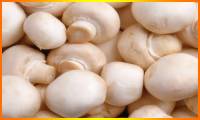
Shiitake Mushroom Cultivation To Benefit Farmers in Jammu And Kashmir.
Farmers engaged in mushroom cultivation in Jammu and Kashmir are upbeat over the government announcement to introduce one of the costliest mushrooms 'Shiitake' for commercial farming in the Union Territory. The agriculture department will launch commercial farming Shiitake in September after successful field trials of the cultivation of this Japanese-origin variety. 'We are happy. I have heard it (Shiitake mushroom) is being launched in September (for commercial farming). We will go for it,' Mushroom farmer Rahul Sharma told PTI. Sharma, who owns a 4,000-bag unit in the border belt of Marh, said that it is grown in states like Haryana, but it is good news that it will be grown in Jammu for the first time.
'Its cost and market value is very good. Farmers would be largely benefited. For Jammu and Kashmir, it will be good to cultivate Shiitake mushroom, as you can grow anywhere due to suitable climate,' he added. Like him, Arvind Kumar, who has been into mushroom farming for the last 15 years, said they were waiting for the success of its trials in Jammu and Kashmir. 'We welcome commercial farming of Shiitake mushrooms. We will adopt it as soon as the government introduces it', he said. The cultivation trials were carried out successfully for spawn production and cultivation of Shiitake mushrooms in a spawn production laboratory in Jammu as well as in fields. It was done on sawdust of broad leaves in polypropylene bags as per the guidelines of the Directorate of Mushroom Research (ICAR), Solan.
'As the trials and standardisation of all the parameters were successful, the cultivation technique of Shiitake mushroom will be transferred to the farmer level in September. This initiative will provide farmers with an opportunity for round-the-year cultivation of mushrooms with enhanced returns,' KK Sharma, Director of the Department of Agriculture, told PTI. All trials turned out to be a success with the growth of fruiting bodies first and full growing up of mushrooms, he added. Shiitake mushroom (Lentinus edodes), which is native to Japan, is a type of edible fungus and contains a chemical called lentinan, which some medical professionals use to boost the immune system. It will be considered a move to bring an economic boom in the farming sector with regard to mushroom cultivation in J&K. 'The fresh mushroom sells for Rs 1,500 per kilo in the market. If we dry it, it is sold at Rs 15,000 per kilo in the market. With the introduction of the Shiitake mushroom, over 2,500 mushroom farmers will benefit directly from its cultivation,' Sharma said.
Their farming will be diversified, apart from growing three mushroom varieties - Button, Dingri and Milky mushrooms. The fourth, Shiitake mushroom, will be introduced. It will diversify cropping as well as the farming system. It will benefit economically to all, even small mushroom growers, he noted. Terming it a big immunity booster, he also said that it has anti-carcinogenic properties, used in the treatment of cancer. Aiming to support small-scale farmers, the J&K government is going to implement a full-fledged project at a cost of Rs 42 crore in the next three years for the promotion of round-the-year mushroom cultivation for sustainable and profitable crops. 'The project will be implemented at a cost of around Rs 42 crore over the next three years by the Agriculture Production Department in J&K, which will increase the production of mushrooms by 3.5 times and accordingly, the employment will be generated by 3 times,' Additional Chief Secretary, Agriculture Production Department (APD), Atal Dulloo said.
Source: outlookindia.com
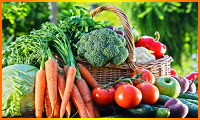
One Day Seminar On 'Export Opportunities For Agro And Agri Related Products Held.
A one-day Seminar on 'Export Opportunities for Agro and Agri Related Products from Telangana held at FTCCI on Friday. It was organized by FTCCI in partnership with the Telangana Government, TSTPC, APEDA, Indian Institute of Millet Research, Sahasra Crop Science, HARIOM, Dodla Dairy, Sudhakar Pipes, and others. About 300 people participated.
Singireddy Niranjan Reddy, Agriculture Minister, Govt of Telangana inaugurated the same. Speaking to the packed hall immediately after the inauguration he said, Farmers of India are going to be protectors of the world in terms of food protection. We are not only self-secured but also in a position to export many products, especially some from Telangana. Focus on Agri Products and Food Processing products, which have great potential for exports, he told his audience.
Mr. Reddy told them to identify such export-worthy products. Indian exports have become essential food needs of many countries. We know California almonds are good. The way their products are branded, they are perceived as the best in the world and one must definitely try them. They have become a symbol of prestige. Our Telangana Groundnuts are eight times more nutritious and better than theirs. People in the Netherlands can not dream of their day without groundnut butter. We must focus more on producing groundnuts and exporting the same. Even educational institutions must focus on offering courses on groundnut research.
Ground nuts are one example. And we have many such products which are export worthy, he said.
A lady from Gujarat exports groundnut butter and related products. Now she exports to many countries. But the raw material (groundnuts) sourced is from Telangana. Her name is Sonia. The groundnuts grown in Telangana have less aflatoxin. Groundnuts are one example and there are many others, maybe mangoes, Millets and what have you. New Zealand with just 45 lakh population exports many products to neighboring countries, he told them.
The per capita meat consumption in Telangana is much higher than the national average. Our villages’ rivers produce more fish. The surplus quantity can be exported, Mr Reddy told.
Speaking further Mr Reddy added that today’s degrees need to be relevant to current societal needs. He told the youth to be job creators rather than job seekers.
Agricultural exports are expected to play a pivotal role in doubling the farmers’ income and linking agriculture production to the export market is a critical step. The State government has been striving to achieve all possible linkages to the export markets. Telangana has made significant progress in the agriculture sector by adopting innovative methods, increasing technology use, expanding irrigation facilities, and providing financial support to farmers. Accordingly, the scope for exports of agro and agri-related products from Telangana has widened considerably. The day-long seminar was organized in light of the background, said Anil Agarwal, President of FTCCI.
Telangana is a state that is rich in agricultural resources and has a long history of being a major contributor to India’s agricultural economy. Telangana’s government rightly prioritized expanding irrigation projects in the State to bring more and more land under irrigation. It is heartening to note that there is a 117% rise in irrigated areas in Telangana since 2014, due to the planned investments in new irrigation projects and revitalization of existing irrigation systems, said Mr. Anil Agarwal.
Dr. E Vishnu Vardhan Reddy, IFS, Special Secretary, Investment Promotion & NRI Affairs, and Jt MD of TSTPC graced as the guest of honor.
Dr. B Neeraja Prabhakar, Vice Chancellor of Sri Konda Laxman Telangana State Horticultural University; Anil Agarwal, President of FTCCI, S. Chandra Mohan, Chair, Agro and Food Processing Committee, Meela Jayadev, Sr VP and Suresh Kumar Singha, VP of FTCCI; Smt T. Sujatha, Dy CEO of FTCCI also graced.
The day-long seminar had several sessions such as Government Schemes for Export Promotions and Finance Schemes for Exporters. A panel discussion on Infrastructure and Logistics challenges for exports was held. It was moderated by Thumma Reddy Shanmukha, Co-chair of the Agro and FP Committee of FTCCI. Other sessions on Export Opportunities for Botanical Products; Export Opportunities for Millet & Millet Based Products, Agriculture/Horticulture Products, and Spice Products; Agriculture Infrastructure fund schemes held
Source: indtoday.com
Niti Aayog Member Predicts India's Potential to Become a Global Power in Agriculture Commodities Market.
On Saturday, Ramesh Chand, a Niti Aayog member said that India can emerge as a global power in the selected three or four agricultural yields if the government seeks modernization and motivates corporates to invest in agriculture.
While ensuring food security and taking part in the panel session on ‘Can India be the food bowl for the World at the Food Conclave here, he spoke that to become a global leader, India could look at rice, milk, and sugar as commodities.
Also, he said that our share in global exports is 2 to 2.5 per cent but India’s agriculture production is just 6 to 7 per cent of the total global output. The Rule of thumb is that we can be a world power if we are among the top 5.
For some years, India was relishing a 50 per cent share in rice which was huge enough. Chand also said that we account for 24 per cent of the global milk production and 18 per cent of the sugar output.
Lesser Yield
One of the Niti Aayog members said that although, India’s per hectare and per animal yield is lower but, we can accelerate the production and export. There is a scope to expand the production in the states itself. Production of milk in Assam is 1.5 kg per animal against the 11 to 12 kg in other states. To accelerate production, we need to identify such commodities as well. We need to become an efficient producer on the milk front and not be afraid of imports as anyone scared of imports can never improve. All we need to do is to tap the potential via nature and government policies and in 10 to 15 years we can become a global power.
Amounting UPI
The Niti Aayog member said that India should have a look into the matter with precision and science-based farming, besides producing one or more arable areas.
India’s ‘agristack’ programme has the capability to amount to the success of UPI and its ecosystem while it was being formed, said S Sivakumar, CEO of ITC. Also, he said that we can go in for climate risk and market proximity to decide on the crops with a competitive advantage to make their way in the global market.
Quality Examination
India is a resilient country in agriculture production, said Sanjay Sancheti, Country head and Executive Director, Olam Agro India.
Additionally, he said that no one thought that India can generate 130 million tonnes of rice. With the government’s support, advanced technology, and climate resilient characteristics, India can do better. Although, India will have to look at the quality of exports and not volume.
Thailand and Vietnam, on the other hand, were selling their yield at a premium with growers shifting to other crops from rice.
Source: krishijagran.com