
FTAs will help India join MNC supply chains: Arvind Virmani, member, NITI Aayog.
India's free trade agreements with developed countries will greatly facilitate its entry into the supply chains of multinational companies and significantly push up exports, Arvind Virmani, member, NITI Aayog, said in an interview to ET.
Outlining the challenges and opportunities before India as it strives to become a developed nation by 2047, Virmani said global inflation and oil prices are expected to cool over the next one year and that will have a positive impact on the Indian economy with an expected enhanced capex from the private sector.
'The big export boom, whether in Asia, Malaysia, Thailand or South Korea since the 1980s has all been led by MNCs. Since supply chains of MNCs now constitute something like 50% of the world exports, FTAs with developed countries will greatly facilitate the entry of India into their MNC supply chains, push labour intensive manufacturing and increase exports,' he said.
According to Virmani, it is very important to diversify supply chains out of China because of the recent supply shocks and the direct threat that India faces from its neighbour. 'The main reason is that we are already too enmeshed in the Chinese supply chain,' he said.
'Further, due to the geo economic coercion and a direct security threat, it's too dangerous for us in the future and hence we want to reduce dependence on at least critical inputs from China,' Virmani said, hence the decision not to join the Regional Comprehensive Economic Partnership and instead go for FTAs with developed nations.
Speaking on the revival of the private sector investment to match the government's enhanced capex in 2023-24, Virmani said the multiple waves of the pandemic, and each happening at different times in different parts of the world, has messed up the whole demand supply global equation much more than anticipated, leaving businesses confused on the future of their investments.
'So, assuming the current condition persists and there are no fresh major shocks, I expect global inflation will come down and this will soften the interest rates. So, everything will reverse, and things should look better, but the exact timing is very hard to predict,' he said.
Commenting on the impact of high oil prices on India, Virmani said the Ukraine war and geopolitical movements have pushed up oil prices which has negatively impacted our GDP growth. 'However, now Russia's supply chain is shifting from Europe to China and Asia. So, in that sense, prices should moderate over time,' he said.
However, Virmani cautioned that the change in objectives, goals and methodology of OPEC nations has left it unclear as to how it will benefit India. 'It is unclear that even when global output falls, oil prices will fall as much as they used to. And that is very critical for us. So, this is a new risk to India,' he said.
In his candid conversation, Virmani outlined several opportunities that can drive India's economic growth over the next 25 years.
Source: economictimes.indiatimes.com

APEDA-promoted agri products exports up 9% to record high of $27 billion in FY23.
Surpassing the target of $23.56 billion, exports of major agriculture and processed products (broadly divided under 27 categories) promoted by nodal agency Agricultural and Processed Food Products Export Development Authority (APEDA) jumped 8.74 per cent to $26.72 billion during the last fiscal from $24.57 billion in 2021-22.
Pulses, Basmati rice, guar gum, groundnut and poultry products were the top performers which registered over 32 per cent growth rate. However, wheat, floriculture and meat (other than buffalo, sheep and goat meat) exports declined.
Due to thesudden ban imposed by the Centre on wheat exports last May, which still continues, the volume dropped to 4.69 million tonnes(mt) worth $1.5 billion from 7.24 mt a year ago.
India’s agricultural exports, including marine products and spices, surged about 20 per cent to $50.21 billion during 2021-22, in which APEDA-promoted products had over 50 per cent share. The government is yet to release the total agri export performance.
Top earners
In the APEDA basket, rice (both basmati and non-basmati) remained the top forex earner at $11.14 billion during 2022-23 against $9.67 billion in 2021-22. Data show that though Basmati rice had an impressive performance, the low rise in the non-Basmati segment dragged the overall growth in the rice sector to 15.2 per cent.
Exports of non-Basmati rice were 3.62 per cent up at $6.36 billion, while that of Basmati were up 35.3 per cent at record $4.79 billion last fiscal from year before.
APEDA’s major exporting destinations were Bangladesh, UAE, Vietnam, USA, Nepal, Malaysia, Saudi Arabia, Indonesia, Iran, and Egypt last year. 'The rise is significant in agri-exports amid the geopolitical tensions and we are committed to perform better with the focus on several key products identified already,' said M Angamuthu, Chairman, APEDA. The emphasis on Shri Anna (millets) and their promotion via G20 meetings will be booster for its exports, both of raw grains and valued-added products, he added.
Export of pulses grew to $662 million in 2022-23, up 84 per cent from $359 million a year before. Shipments of poultry products grew by 89 per cent to $134 million from $71 million, while that of guar gum increased by 38 per cent to $617 million. Export of groundnuts rose 32 per cent to $832 million, that of processed vegetables by 24 per cent to $509 million($412 million).
Fresh fruits and vegetables exports were up by 5.7 per cent to nearly $1.79 billion from $1.69 billion, while processed fruits and vegetables exports were up by 19 per cent to reach $1.42 billion ($1.19 billion). Exports of alcoholic beverages grew by 18.5 per cent to $325 million from $274 million.
Source: thehindubusinessline.com
Small farmers of the country should get the benefit of technology - Shri Tomar.
The Union Minister of Agriculture and Farmers Welfare Shri Narendra Singh Tomar inaugurated the Summit on Farm Machinery Technology, organized by Confederation of Indian Industry (CII) and Tractor and Mechanization Association (TMA). Shri Tomar said that there are about 85 percent small farmers in the country, who should get the benefit of technology & machinery. Under the leadership of Prime Minister Shri Narendra Modi, the government is continuously working in this direction at its level. An amount of Rs.6120.85 crore has been released to the states from 2014-15 to 2022-23 for various activities like training, testing, setting up of CHCs, hi-tech hubs and Farm Machinery Banks (FMBs) under the Sub-Mission on Agricultural Mechanization (SMAM). Besides 15.24 lakh farm machinery and equipment have been distributed at subsidized rates through state governments, including tractors, power tillers and automated machinery.
Chief Guest Union Minister Shri Tomar said that by implementing the new system at the Central Farm Machinery Training and Testing Institute (CFMTTI), Budni (M.P.), the Government of India has reduced the time taken for completing the testing of tractors to a maximum of 75 working days. Also, from the year 2014-15 to 2022-23, 1.64 lakh workers have been trained by the Central Government through its four FMTTI designated authorized test centers. The introduction of the Rupees One lakh crore Agricultural Infrastructure Fund is also an important step in this direction, in which projects worth Rs. 14,000 crore have been approved which are benefitting the farmers. Kisan drones are being promoted, for which along with introducing the drone policy, subsidies are being given to various sections including farmers, SC-ST category, women farmers while crop specific SOP has also been issued for application of pesticides with drones.
Shri Tomar said that agriculture is a priority of the country, no one could destroy the fabric of our agriculture-based rural economy even in adverse circumstances. In terms of agricultural products, India stands at Number One or Second rank in the world today, which is a result of the hard work of the farmers, the contribution of scientists and industry, and the farmer friendly policies of the government with the support of technology. But we do not have to rest on our laurels, rather we have to prepare a roadmap keeping in view the requirement of the population that will increase by 2050 and in the changing political scenario, according to the growing importance of India in the world, we are concerned about meeting the needs of our country as well as other countries. While doing so, we have to play an important role. After 2014, a different type of work culture has taken roots in the country under the leadership of Prime Minister Shri Modi. The changes that have come in these years have spread hope across the country and the world. If the resolution of the government is strong and the intent of the leader is noble, then the initiative is good and the ability to accept it also increases. Today, India is ahead of America, Japan and Germany in cashless transactions.
The Union Minister said that when we are in the competition of production, we should increase it by comparing it with the production of foreign countries instead of the figures of previous years of our own country. We have to keep on increasing the production of food grains even if the land is less. Agricultural scientists have crucial role in this, as well as the importance of technology including machines has also increased in the present circumstances. The waste lands should also be made cultivable and according to the demand of the time, there is a need to attract the new generation towards agriculture. The government is working in this direction under the leadership of Prime Minister Shri Modi. Farmers' access to the market has also been increased through e-NAM mandis and the gaps in the agriculture sector are being filled up, for which more than Rs 1.5 lakh crore packages have been earmarked for Agriculture and Allied sectors. He emphasized on taking technology like micro-irrigation to maximum number of farmers while saving water.
Shri Bhartendu Kapoor, Shri Mukul Varshney, Shri Krishna Kant Tiwari, Shri Antony Cherukara and other office bearers and members were present in the program. The conference was attended by stakeholders including Original Equipment Manufacturers, policy planners, suppliers, product development and design firms.
Source: pib.gov.in
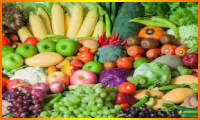
India's horticulture sector holds untapped potential despite challenges.
India’s horticulture sector has proven to be more profitable and productive than the agricultural sector and has emerged as a rapidly growing industry. According to the Agricultural and Processed Food Products Export Development Authority (APEDA), India ranks second in fruits and vegetable production in the world after China. The country's advantage lies in being a low-cost producer of fruits and vegetables because of a combination of factors such as favourable agro-climatic conditions, availability of labour, and low input costs. As a result, fruits and vegetables account for almost 90% of the total horticulture production in the country.
Horticulture contributes around 30.4% to the Gross Domestic Product (GDP) while using only 13.1% of the gross cropped area, making it a significant player in India's agricultural growth. In recent years, the total horticulture production in India has even exceeded the total production of food grains, highlighting the potential of the sector. Horticulture not only contributes to the nutritional needs of the country but also creates additional job opportunities in rural areas, expands the range of agricultural activities, and generates higher incomes for farmers.
The productivity of horticulture has increased significantly from 8.8 tonnes per hectare (TPH) in 2001-02 to 12.1 TPH in 2020-21, leading to a sharp rebound in production and acreage, far outpacing foodgrains production since 2012-13. In 2021-22, the total horticulture production was around 341.63 million tonnes, with fruit production at around 107.10 million tonnes and vegetable production at around 204.61 million tonnes. With its vast production base in horticulture, there is ample opportunity for export, with fresh fruits and vegetables being a major contributor. APEDA estimates that the country exported fresh fruits and vegetables worth INR 11,412.50 crore during 2021-22. Bangladesh, UAE, Nepal, Netherlands, Malaysia, Sri Lanka, the UK, Oman, and Qatar are the major export destinations for fresh fruits and vegetables.
But despite the fact that India's horticulture sector is growing, the country's share in global trade remains insignificant, accounting for only 1% of the global trade in vegetables and fruits. Export growth is being undermined by production challenges, marketing challenges, inadequate transport infrastructure, fragmented supply chains, and insufficient storage facilities. These factors result in delays and wastage and discourage farmers from improving the quality of their produce.
The horticulture sector faces many production challenges that stop it from realising its full potential, such as small operational landholdings, lack of irrigation and poor soil management. Take for instance, small operational landholdings that limit the amount of land available for cultivation, which in turn limits the number of horticultural crops that can be produced. Limited land availability also affects crop rotation and the use of sustainable agricultural practices, as small farmers may not have the space to rotate crops effectively or implement sustainable soil management practices. This can lead to reduced yields and decreased soil fertility over time.
Insufficient access to water for irrigation, coupled with poor soil management practices such as over-tilling, over-fertilising, and monocropping, can reduce soil fertility, leading to lower yields and lower-quality produce. Lack of irrigation can be particularly detrimental during dry spells or droughts, where crops can quickly wither and die due to insufficient water supply. In contrast, excessive water can also be harmful, leading to waterlogging, root damage, and reduced yields. The Government is addressing the irrigation problem through the Pradhan Mantri Krishi Sinchayee Yojana (PMKSY), which aims to promote the development of irrigation infrastructure, expand the cultivable areas, and enhance on-farm water efficiency. Pests and diseases are another constant threat to horticultural crops. Insect infestations, fungal infections, and other diseases can spread quickly, leading to lower production levels and crop losses.
The limited outreach of farm insurance and farm mechanisation, combined with a lack of access to institutional credit for small and marginal farmers, contribute to lower investment in the sector. To ensure the flow of adequate credit, the Government sets annual targets for the flow of credit to the agriculture sector, Banks have been consistently surpassing the annual target. Notably, the Government provides interest subvention of 2% on short-term crop loans up to INR 3 lakh.
Climate change, such as changing weather patterns, droughts, floods, and other natural disasters, is another significant challenge that can lead to crop failures and losses, which ultimately affects the sector's overall output. Land lease constraints also pose a challenge, particularly for small farmers who may not have access to adequate land for cultivation.
The horticulture sector also suffers because of weak Farmer Producer Organisations (FPOs), which typically play a vital role in the development of the horticulture sector by providing farmers with access to markets, financing, and technical assistance. The weakness of these organisations contributes to the sector's challenges, limiting farmers' ability to benefit fully from the opportunities available. Recognising the need to increase the bargaining power of farmers, the Government is implementing an FPO formation and promotion scheme with a budgetary outlay of over INR 6,300 crore. This scheme aims to promote the formation and strengthening of FPOs and agri-entrepreneurship development among farmers.
The horticulture marketing chain faces its own set of challenges due to the perishable nature of fruits and vegetables, which makes it difficult to store and transport them efficiently. Poor logistics and lack of equitable cold storage and warehousing facilities contribute to delays and wastages. The cold storage distribution among the states is inequitable, with around 59% of the storage capacity (i.e., 21 MMT) present in the four states of Uttar Pradesh, West Bengal, Gujarat, and Punjab, and most of it is only for the potato crop. Top crops have a short shelf life because of the absence of storage and warehousing facilities, which causes price rises in the same months every year. There is also a lack of guidance for farmers on which crops to plant, resulting in overproduction of certain commodities and shortages of others.
The horticulture sector will have to take measures to improve its production and value chain system. To address the issues faced by the horticulture sector, Bayer and The Economic Times have come together to organise a national seminar called the India Horticulture Future Forum 2023 on 26 April 2023. Grant Thornton Bharat LLP is the Knowledge Partner for the event. The forum aims to deliberate on the future of Indian horticulture, focusing on developments, opportunities, and challenges in the sector.
Despite the numerous constraints faced by the horticulture sector, there are several opportunities for improvement. One such opportunity is the Agricultural Marketing and Farmer Friendly Reforms Index, launched by the NITI Aayog, which ranks states and union territories based on their implementation of provisions proposed under the model APMC Act, joining the e-NAM initiative, providing special treatment to fruits and vegetables for marketing, and tax levies in mandis.
The Government is also working on reducing crop losses through the Pradhan Mantri Fasal Bima Yojana (PMFBY), which provides comprehensive crop insurance coverage from pre-sowing to post-harvest losses against non-preventable natural risks. Another key initiative is the Centre's Cluster Development Programme which has the potential to revolutionise the value chain by enhancing its scale. The programme aims to promote the integrated and market-led development of pre-production, production, post-harvest, logistics, branding, and marketing activities by leveraging the geographical specialisation of horticulture clusters.
Meanwhile, the Ministry of Food Processing Industries has launched several schemes aimed at promoting the food processing industry in India, including the creation of cold chain infrastructure, agro-processing clusters, backward and forward linkages, preservation infrastructure, Operation Greens, and Mega Food Parks. These schemes provide various facilities to food processing units, such as storage, testing labs, and logistics, while also stabilising the supply and prices of perishable commodities and promoting their value addition. The Government has also introduced post-harvest infrastructure schemes to reduce post-harvest losses, a Land Lease Act to help legalise leasing and allow tenants access to insurance and credit, and Soil Health Cards to promote soil health.
India is globally recognised as one of the top producers of fruits and vegetables, and the horticulture sector has consistently performed well in terms of production. By implementing these measures, the horticulture sector can expand even further and generate increased profitability for farmers. This growth can also help meet the rising demand for fruits and vegetables, both domestically and internationally.
Source: economictimes.indiatimes.com
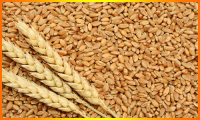
Tunisia buys estimated 75,000 tonnes soft wheat in tender.
Tunisia's state grains agency is believed to have purchased about 75,000 tonnes of soft wheat in an international tender on Wednesday, European traders said.
Traders said they believed the wheat was bought in three 25,000 tonne consignments.
One consignment was said to have been sold by trading house Finagrit at an estimated $304.80 a tonne c&f and two consignments were bought from trading house Viterra at $309.89 and $311.19 a tonne c&f, traders said.
Results reflect assessments from traders and further estimates of prices and volumes are still possible later.
Finance for the purchase is being provided by the African Development Bank, which is among agencies assisting Tunisia with food purchases recently in the face of the country’s financial difficulties. Wheat can only be sourced from countries eligible to participate in the bank’s tenders, which basically excludes much of east Europe and the Black Sea region.
An offer for 50,000 tonnes of Russian-origin wheat was said to have been made in the tender at $310.00 a tonne c&f but was rejected, traders said.
Shipment was sought between June 5 and July 5, depending on origin selected for supply, they said.
Source: nasdaq.com

Gujarat to incentivise millet production.
Following the declaration of the year 2023 as ‘the international year for millets’ by the United Nations, the Gujarat Government is promoting the Dang region in Gujarat as an organic millet producing region. Farmers are being incentivised to produce pesticide free millets.
Arohi Prajapati from Dang Ahwa Farmer Producer Company Limited, an FPO from the tribal area, said, 'Our main focus is on Ragi, Little Millet and Finger Millet. We are maintaining our production with 332 small and marginal tribal farmers'. Prajapati said adding 'We have introduced 7-8 millet based products. We are getting a 90% loan from the government to set up our Primary Processing Unit to improve our production.'
According to Trupti Shah, Gujarat Chamber of Commerce and Industry, 'To encash on the opportunity in the global market, India is working hard to increase the acceptability of millets as primary breakfast serials'. Pertinently, millets have always been a traditional food of rural India. 'We are the largest producer of millets in the world but we are only the fifth largest exporter of this commodity'. According to Shah millets are important because being rich in calcium, protein and antioxidants they can ensure food security. Shah said, 'The government is aiming to export 30,000 metric tonnes of millets this year out of which 766 metric tonnes will be the share of Gujarat'. She revealed that Minimum Support Price (MSP) and Special Crop Blocks are the main incentives that are currently being provided to millet farmers.
Jowar, Bajra, Ragi, Little millet and Finger millet are the main millets that are prevalent in Gujarat. Said Vinod Pate from Vavechi Sarhad Farmer Producer Company Limited, a Farmer Producer Organization (FPO) in Banaskantha, Gujarat, 'We are focussing on local markets only as there are very few opportunities for us to tap into the global export market. One major problem that we are facing is that the big corporations are offering us prices lower than the prevailing APMC prices. According to data released by the Agriculture and Processed Food Products Export Development Authority there are around 25 large exporters of millet in the country includng Eco Export, Rkd Agro Export, M.B. International, Magnus overseas among others.
Arohi further added, 'We focus on the training of local farmers which is why we hire mostly locals, especially females as our workforce. But the problem is the number of FPOs in the region. Excess FPOs create unwanted competition and that hampers the goals of expansion and collaboration'.
Commenting on the need for the betterment of farmers, Vinod Patel said, 'It would be really beneficial for us if the government makes it mandatory for big exporting corporations to procure some amount of the millet produce from the small FPOs only'. Echoing similar sentiments, Prajapati from Dang Ahwa FPO suggested further strengthening of the supply chain with mandatory procurement from farmers. 'Additionally the farmers and the organizations need to understand that their representatives like CEOs of these FPOs should be well-trained so that they can navigate their way through the complex corporate system', said Arohi.
Source: financialexpress.com

Kerala Feeds facilitates maize cultivation in state.
In a major breakthrough in agricultural practices, Kerala Feeds Ltd (KFL) has facilitated the production of five tonnes of maize within the state. The coarse cereal is a key ingredient used in making cattle feed. The grain was harvested at a farm located 18 km from its manufacturing unit in Thrissur.
The recent steep rise in maize prices prompted KFL to encourage local farmers to grow the crop, which is largely grown in Madhya Pradesh, Bihar, Maharashtra and Karnataka. The PSU roped in the Indian Institute of Maize Research (IIMR) headquartered in Delhi to provide training to the growers. The efforts paid off as C.A. Rajan of Annamanada initiated maize cultivation in his three-and-a-half-acre field. The field was otherwise used to grow paddy.
Less effort needed
KFL provided the farmer high-yielding seeds and technological support. 'There were practical hiccups since it was my debut venture,' says Rajan, a retired government employee. 'Yet, the effort put into growing maize is less than that for paddy cultivation.'
The maize began flowering within 60 days. Rajan harvested and dried the crop in his house. He was assisted by wife Ambika and children Arun and Ashik. 'The stem of the maize is good fodder for cattle,' he said. 'That gives us extra income.'
The first five-tonne load of maize to arrive at the PSU near Irinjalakuda, was given an enthusiastic reception by KFL Chairman K. Sreekumar and top colleagues, besides representatives of the employees’ unions.
Sreekumar said farmers can earn a better income by growing maize, which does not involve high cost. 'KFL will undertake discussions aimed at enabling maize production in open fallow lands. It can be carried out through the district panchayats under their annual schemes,' he said.
KFL requires 6,000 tonnes of maize every month. 'Not that we can grow all of it in Kerala. But efforts in this direction can check the price of KFL’s products considerably,' the Chairman said.
KFL Managing Director B. Sreekumar said the PSU sought ways to grow maize indigenously, when the price of the crop began going through the roof. 'Our earnestness shows in our move to rope in the services of an institute as big as the IIMR,' he said. 'We are holding discussions to broaden the cultivation of maize to other areas of the state.'
Farmers going in for two paddy crops a year, are being encouraged to go for maize cultivation. As they would be given high-yielding seeds and technological support, the PSU expects more farmers to enter maize farming.
KFL, founded in 1995, manufacturers products for various breeds of cows.
Source: thehindubusinessline.com
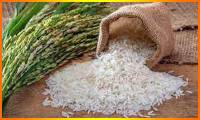
Indian white rice export prices gain on tight supplies.
Indian non-basmati white (raw) rice prices for exports have increased by over $25 a tonne during the past fortnight on tight domestic supplies and demand from markets abroad, traders and exporters said.
However, parboiled (boiled) rice prices have dropped by $5 a tonne and Indian white rice continues to be competitive by $20-30 over the nearest competitor in the global market. In the case of parboiled rice, the Indian cereal is at least $100 a tonne competitive.
'We are facing problems in getting white rice supplies in the domestic market as the Centre is procuring it for the central pool stocks. On the other hand, parboiled rice availability has increased, pulling down its prices,' said VR Vidya Sagar, Director, Bulk Logix.
New crop arrivals begin
'Though our prices have increased, we are still competitive in the global market. Arrivals of new rabi paddy crop have begun in Odisha, Telangana and Andhra Pradesh. Exporters are paying farmers prices closer to the minimum support price (MSP),' said BV Krishna Rao, President, The Rice Exporters Association (TREA).
The MSP for paddy this year is ?2,040 a quintal. India is quoting $453-57 a tonne for 5 per cent broken white rice against $432-36 two weeks ago. The 25 per cent broken white rice is offered at $438-442 compared with $417-22. India’s nearest competitor Vietnam is quoting at least $25 higher for both these varieties.
'There is good demand for 5 per cent broken white rice from Vietnam. We are getting enquiries from East Malaysia and Timor too,' said M Madan Prakash, President, Agricultural Commodities Exporters Association (ACEA).
'It is all down to demand-supply. The next crop in Thailand will arrive only in September. Vietnam may have to fulfill demand from China in case El Nino strikes and affects the Indian monsoon,' said a New Delhi-based trade analyst.
Enquiries from Africa
Sagar said parboiled rice was available even at $370 a tonne from India. 'Now that Ramzan is over, we expect some movement in rice to Africa and West Asia,' he said.
'This year, our exports are likely to match last year’s volume. We will be meeting all requirements,' said Rao.
'We are getting enquiries from Africa, while demand for South-East Asia is in small volume,' said Prakash.
The analyst said China has maintained silence over its stock situation. 'Vietnam and Thailand are expecting a bigger crop. There is no cause for worry with regard to India,' he said.
Data from Agricultural and Processed Food Products Development Authority (APEDA) show that non-basmati rice exports during the April-February period of 2022-23 fiscal were marginally higher at 16.09 million tonnes (mt) compared with 15.64 mt a year ago.
Export curbs
The rise was despite India imposing a 20 per cent export duty on non-basmati white rice from September and banning shipments of fully broken rice. The Government took these measures to curb exports as it feared rice production could be hit by deficient rain during the south-west monsoon.
Though kharif rice production dropped to 108 mt against 111 mt a year ago, overall production of the cereal has been estimated higher at a record high of 130.83 mt during the current crop year to June against 129.47 mt last crop year.
As regards rice, India’s central pool stocks are comfortable as the government has procured a good volume, said the analyst.
According to the Food Corporation of India, rice stocks as of April 1 were 24.86 mt compared with 32.32 mt a year ago. In addition, it has 27.64 mt of paddy (19.35 mt of rice).
'There might be a sharp uptrend in rice prices after June,' the analyst said.
Source: thehindubusinessline.com
High-level delegations from India and EFTA meet to boost bilateral trade and economic partnership.
Ministers and high-level representatives from India and the European Free Trade Association (EFTA) States (Iceland, Liechtenstein, Norway, and Switzerland) gathered in New Delhi today to discuss the prospects of resuming their negotiations towards a Trade and Economic Partnership Agreement (TEPA).
The high-level delegations were composed of Shri Piyush Goyal, Minister of Commerce & Industry, Consumer Affairs & Food & Public Distribution and Textiles of India; Jan Christian Vestre, Minister of Trade and Industry of Norway; Helene Budliger Artieda, Swiss State Secretary at the State Secretariat for Economic Affairs SECO; Martin Eyjólfsson, Permanent Secretary of State of Iceland at the Ministry for Foreign Affairs; Kurt Jäger, Ambassador and Permanent Representative of Liechtenstein to EFTA, WTO and the UN in Geneva; and Henri Gétaz, Secretary-General of the European Free Trade Association.
The meeting provided an opportunity for both sides to exchange views on the state of play of their negotiations and explore ways to advance the talks. The participants acknowledged the challenges posed by the current global economic and trade environment, as well as the need to address the bilateral trade and economic partnership issues in a constructive and pragmatic manner. Both sides agreed to continue their efforts to resolve all outstanding issues and work towards deepening and strengthening the economic partnership, while contributing to a more inclusive global trading system.
Source: pib.gov.in

India signs new Work Plan on Quality Infrastructure with Germany during Indo-German Working Group meeting in Berlin.
The Department of Consumer Affairs and the German Federal Ministry for Economic Affairs and Climate Action signed the new Work Plan for 2023 during the 9th Annual Meeting of the Indo-German Working Group on Quality Infrastructure. The plan was signed in Berlin, Germany on 25 April 2023.
This year's Annual Meeting marks the 10th anniversary of the Working Group. Smt. Nidhi Khare, Additional Secretary, Department of Consumer Affairs and Dr. Daniela Broenstrup, Director General, Digital and Innovation Policy, Federal Ministry for Economic Affairs and Climate Action during the meeting emphasised the important role of the Working Group in reducing technical barriers to trade and promoting innovation and consumer protection.
The technical dialogues of the Working Group address key areas of economic cooperation between the two countries. In addition, they promote systemic harmonisation of quality infrastructure (QI) at an international level.
The annual meeting was attended by stakeholders from both sides including the Bureau of Indian Standards (BIS), the German Institute for Standardization (DIN), the German Commission for Electrical, Electronic & Information Technologies (DKE), other quality infrastructure organisations as well as industry associations including Federation of Indian Chambers of Commerce and Industry (FICCI).
The Stakeholders from QI bodies and industry provided insights on current QI developments in Germany and India. These included the Standards National Action Plan for India, as well as the German Standardization Roadmaps Circular Economy and Industries 4.0. Other contributions covered market surveillance activities in India, as well as applications of Artificial Intelligence (AI) in market surveillance and the digital accreditation symbol.
The Work Plan 2023 is structured along the key elements of QI, including standardisation, accreditation, conformity assessment, legal metrology, product safety and market surveillance. It addresses cross-cutting topics like harmonised global solutions as well as sector-specific cooperation topics, such as digitalisation (Industry 4.0, Artificial Intelligence, cyber security), circular economy, smart farming and machinery safety.
Source: pib.gov.in