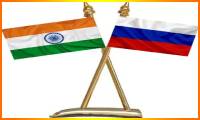
Indian apex exporters body sign MoU with Business Russia to promote trade & FDI.
Indian Apex exporters body FIEO has announced that it has signed an MoU with Business Russia to promote trade and investments between the two countries.
It said the two organizations will cooperate to arrange exhibitions, buyers-sellers’ meetings, workshops, seminars and encourage enterprises to work in tandem with their counterparts for joint ventures.
The Memorandum of Understanding (MoU) was inked during a visit of a 50-member delegation of the agro and food processing sector to Moscow.
The delegation is 'exploring opportunities in diverse business ventures such as ready-to-eat meals, fish meal, animal feed, soyabean apart from conventional products,” said N K Kagliwal, Board Member of FIEO (Federation of Indian Export Organisations).
Kagliwal is leading the business delegation.
He added that exporters are looking to increase agro and processed food exports from about $750 million to over $3 billion in the next three years.
About the rupee-ruble trade mechanism, he said it is 'moving forward, but the pace is slow'.
FIEO Director General Ajay Sahai said that exporters, importers and bankers on both the sides have to do a little extra work to resolve the issues.
A direct exchange rate between rupee and ruble will help streamline the process in a big way,' Sahai said.
He added that huge trade deficit is a concern, but it is also an opportunity to push exports from India to Russia.
'We have to diversify exports to automobiles and auto components, electronics, medical devices, solar cells, textile, food and agriculture etc,' he said.
Source: economictimes.indiatimes.com
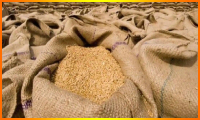
Tunisia tenders to buy estimated 75,000 tonnes soft milling wheat.
Tunisia's state grains agency has issued an international tender to purchase an estimated 75,000 tonnes of soft milling wheat, European traders said on Tuesday.
The origin was optional. The deadline for submission of price offers in the tender is Wednesday, April 26, they said.
Source: nasdaq.com
The President graces the 19th convocation ceremony of National Dairy Research Institute.
The President Smt. Droupadi Murmu graced the 19th convocation ceremony of the National Dairy Research Institute, Karnal in its centenary year. Governor of Haryana, Shri Bandaru Dattatreya, Chief Minister Shri Manohar Lal Khattar, Union Minister of Agriculture and Farmers Welfare, Shri Narendra Singh Tomar, Union Minister of Fisheries, Animal Husbandry and Dairying, Shri Parshottam Rupala, Union Minister of State for Agriculture and Farmers Welfare, Shri Kailash Choudhary, Director General of ICAR, Dr. Himanshu Pathak were the special guests at the convocation. The President Smt. Murmu said that women power is playing an important role in the management of dairy industry in India. More than 70 percent participation in the Dairying sector is by women. It is heartening to note that today more than one-third of degree awardees are girls, 50 per cent of gold medalists are also girls.
President Smt. Murmu said that the Dairying sector has special significance in making women self-reliant as well as in bringing changes in their social and economic status. We need to ensure that these women have equal rights and opportunities to make decisions and provide leadership. For this, there is a need to provide more opportunities for education, training and skill development to these women. Along with this, there should be facility of easy loan and market access to women to make them entrepreneurs in dairy farming. She congratulated the farmers of Punjab and Haryana while mentioning the special role played by them in the success of Green Revolution as well as the White Revolution. She said that milk and milk derivatives have always been an integral part of Indian food and culture. Along with mother's milk, cow's milk is also considered nectar for health. In the Rigveda it is said ‘???? ??????? ????? ????????’, meaning, cow milk is like nectar, which protects against diseases. Milk is considered holy, so it is also used for the consecration of the deities. Even today, women in the country are blessed with '???? ????-???? ???' by the elders. Cow and other livestock have been an integral part of Indian society and traditions. In Indian tradition, livestock including cow is considered a symbol of prosperity and good fortune. The stories of Shri Krishna's love for the cow, Shivji and Nandi are included in our culture. Animal Husbandry is the main means of livelihood in the agro-based rural economy.
The President said that the dairy industry plays an important role in ensuring food and nutritional security of the country. It is a matter of pride that India is the largest milk producing country in the world. India accounts for about 22 percent of the global milk production. Dairy sector contributes about 5 percent to the country's GDP and dairy industry provides livelihood to about 8 crore families, therefore institutions like NDRI have an important role in the inclusive development of the country. NDRI, established in the year 1923, has made a significant contribution to the development of the dairy industry in India. The institute's research has helped in improving productivity, efficiency and quality in the dairy production sector. She expressed happiness that the technology to produce clones of high milk yielding buffaloes and cows has been developed by the NDRI. With this, the milk production capacity of the cattle will be increased and the income of the farmers will rise. She said that due to the increasing population of the country, the demand for milk related products is increasing. Also, the dairy sector is grappling with problems such as management of good quality fodder for cattle, changes in weather due to climate change and cattle diseases. Making milk production and dairy farming sustainable is a challenge before us, for which it is the responsibility of all stakeholders including the government to find a solution to meet the needs of the country. It is our responsibility to develop the dairy industry by adopting environment friendly and climate smart technologies, keeping animal welfare in mind. She also expressed happiness that NDRI is promoting various technologies to reduce the emission of greenhouse gases from dairy farms. Along with this, emphasis is also being laid on sources of clean energy like biogas production. She told the students that you are moving towards a new chapter of life, you should always try to learn new things and work for the welfare of the people. Some of you students must become job providers and entrepreneurs in the dairy industry. There are immense possibilities of growth in this industry and you should take advantage of these possibilities. Efforts are being made by NDRI to promote entrepreneurship and startups in the dairy sector in different parts of the country. It is expected that you will start as an entrepreneur by taking advantage of this and other schemes of the government and make the best contribution to the progress of the nation.
Union Minister Shri Tomar said that the NDRI is a very important institution of the country, which has completed a glorious journey of 100 years. ICAR affiliated NDRI has secured First position for five consecutive years in the competition among agricultural universities across the country, which is a matter of pride. He said that the contribution of scientists in the Animal Husbandry-Dairying sector, where the country is standing today, is also a landmark. India is an agricultural country, in which it is not possible to imagine the Agriculture sector without Animal Husbandry and Fisheries. Especially the livelihood of small and landless farmers also depends on Animal Husbandry. Animal Husbandry has a significant contribution in the GDP of Agriculture. There is a need to keep moving forward while solving the challenges in this area. He said that the per capita availability of milk in the country in the year 2021-22 was 444 grams per day, while the global average during 2021 was 394 grams per day. There has been an increase of about 44% in the per capita availability of milk in the country between 2013-14 to 2021-22. Shri Tomar said that for any student, the convocation ceremony is an unforgettable moment in his life, it is even more a matter of pride that this occasion coincides with the centenary celebrations of the institute. Congratulating the students who received the degree, he said that they are going to be of great service to the country.
Governor of Haryana, Shri Dattatreya, Chief Minister Shri Manohar Lal and Union Minister Shri Rupala also addressed the ceremony. During the convocation, undergraduate-postgraduate & Ph.D. degrees were presented and Gold medals awarded to the best students. The Director and Vice Chancellor of the Institute, Dr. Dheer Singh and other dignitaries were present.
Source: pib.gov.in

World is looking at India; grasp this opportunity to grow exports: Piyush Goyal urges industries.
Union minister Piyush Goyal on Sunday said the world is now looking up to India and its industries and this is the right time for entrepreneurs and industry players to grasp the opportunity and grow exports. Entrepreneurial abilities in the country with innovation, new ideas, new ways of marketing and branding products can unleash the true potential of the country, the Commerce and Industry Minister said while addressing the 49th India Gem and Jewellery Awards.
'On April 24, I have a meeting with ministers of the European Free Trade Association (EFTA), consisting of four countries including Iceland, Liechtenstein, Norway and Switzerland, who are keen to negotiate with India.
'Other Gulf countries and Russia are also keen to negotiate with India. The world is now looking up to India and its industries, and this is the right time for the industries and entrepreneurs to grasp the opportunity and grow exports,' Goyal said.
Further, Goyal said jewellery exporters have shown good promise and good results and the gem and jewellery industry is the diamond of India's exports.
'The industry's talent is spread across every zone and this industry can generate lots of jobs commensurate with the talent. The future is bright but we seek a collective commitment from every exporter to contribute to increasing exports despite headwinds and challenges,' said the minister.
The government is working towards ease of doing business honestly and efficiently and expects the industry players to engage in ethical practices, he said.
Talking about the mega Common Facility Centre (CFC) in Santacruz Electronics Export Processing Zone (SEEPZ), Goyal said it is on track and is expected to be ready by 'Ganesh Chaturthi' this year.
Meanwhile, the Gem and Jewellery Export Promotion Council (GJEPC) chairman Vipul Shah, who was present on the occasion urged the government to have dialogue with the US and the G7 to avoid imposing sanctions, which may cripple the Indian natural diamond cutting and polishing industry.
'We met the top officials of the US and EU governments recently to deliberate and put forward our viewpoint on this,' he added.
Shah emphasised that time has also come to grow exports of plain gold and silver jewellery from India as only 10-15 per cent of gold and silver, which is imported is used to manufacture jewellery for exports.
'We require the minister's direct intervention in the implementation of the Ad Valorem scheme for gold and silver, whereby the effective import duty on gold and silver procured from domestic market - just like GST - should be put into exporters' accounts at the rate prevailing on the day of exports to have a level-playing field with exporters from Singapore, Italy and Vietnam,' Shah added.
In 2022-23, the overall gem and jewellery exports grew 2.48 per cent to Rs 3,00,462.52 crore, as compared Rs 2,93,193.19 crore in the year-ago period.
Source: economictimes.indiatimes.com
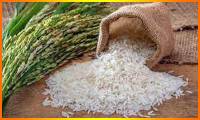
Bundi Basmati rice on its way to snag GI tag.
The popular Basmati rice of Bundi is aiming for the prestigious Geographical Indication (GI) tag with the joint support of the National Bank for Agriculture and Rural Development (NABARD) and the Consortium for Industry Development and Awareness (CIDA) which held a one-day workshop for rice millers and other stakeholders to discuss the registration of the produce in Bundi on Friday.
CIDA and NABARD have jointly decided to file an application for the GI tag of the Basmati variety. At the workshop, a presentation was made on the history of the Bundi rice, evidence and documentation required for the GI tage to millers, district industry officials and other stockholders, said CIDA secretary Prasun Jain.
'No efforts made earlier by millers to apply for GI tag'
Due to the absence of the geographical marker, local millers were unable to export the product directly and had to depend on exporters from Haryana and Delhi, reducing the brand value. However, no efforts were made earlier by local millers to apply for the GI tag and CIDA initiated the process, he said.
The rice is produced in over 67,000 hectares in Bundi and is exported to Kuwait, Oman, Qatar, and Saudi Arabia as well as big businesses in India and abroad, CIDA president Dr Rohit Jain said. The rice recorded a business of Rs 1,800 crore in 2022, including Rs 1,400 crore through exports. Over 6,000 people were directly or indirectly employed in rice production in the district, he said. Famed as 'Dhan Ka Katora', production has increased from 52 lakh quintals last year to 80 lakh quintals in the current district, Jain said. The rice bears similar characteristics and quality of popular Basmati variants available in the country, he said. Neeraj Goyal, who presides over a Bundi rice business association, said that there were 26 millers currently operating in Bundi.
Source: timesofindia.indiatimes.com
Traditional Tamil Snack 'Manapparai Murukku' Finally Gets GI Tag.
Although Tamil Nadu is a beautiful blend of different cultures and colourful traditions, traditional Tamil snacks like ‘Murukku’, ‘Seedai’, and ‘Adhirasam’ have a separate fan base. The town of Manapparai in the Trichy district is renowned for ‘Murukku’, which has received a Geographical Indication (GI) tag after almost a decade-long wait.
‘Murukku’ is very popular among travellers passing through Manapparai in Trichy City. The moderate-sized crunchy snack is made of a thick dough consisting of rice flour, urad dal, spices and salt and is double-fried for its flavourful crunch.
'Besides major festivals like Pongal and Diwali, Manapparai Murukku is also in demand on many other special occasions. People from foreign countries also visit the state to taste the traditional snack,' a worker said.
Speaking to News18, Muthu, a seller of Murukku products, said, 'We are happy to get a GI tag for Manapparai Murukku. Designation from Chennai’s GI Registry is a significant step in the right direction. We believe the GI tag has verified the special flavour and authenticity of Murukku. However, if we want to maintain the demand for this traditional snack in the market, we must modernize our manufacturing process. The Tamil Nadu government should provide necessary assistance in order to promote the cottage industry and the livelihood of the workers.'
The Manapparai Murukku Manufacturers, who represent almost 500 families working in Manapparai to produce Murukku, applied for the GI tag in 2014. According to the manufacturers, the quantity of Murukkus that can be mechanically produced will go up to 4-5 tonnes every day, as opposed to 50 kilograms per day earlier. 'However, since the shelf life is a major issue, we need to develop recipes that will help keep the snack fresh for at least a month, and advertise it extensively,' added the manufacturers.
Source: news18.com

Indian trade delegation visits Russia to explore agriculture exports.
A trade delegation from India is on a four-day visit to Russia to explore opportunities of boosting Indian farm and processed food exports from $750 million to $3 billion in three years to balance burgeoning Russian goods imports that saw over 369% year-on-year growth in 2022-23 to $46.33 billion, mainly on purchase crude oil.
Sensing robust demand for food and food products in Russia, a 50-member delegation of the Federation of Indian Export Organisations (FIEO) is visiting the country between April 24 and 27, which will 'further deepen the economic ties' between the two countries, director general and CEO Ajay Sahai told HT from Moscow.
There is a 'massive push' from governments of the two countries to enhance bilateral trade, he said. The Indian exporters are in Russia close on the heels of Russian deputy prime minister Denis Manturov’s India visit last week that revived a dormant free trade agreement (FTA) negotiations involving Russia-led Eurasian Economic Union (EAEU). Manturov is also Russia’s trade minister.
'We see significant demand for India food items, soy, animal feed and processed food,' Sahai said. 'Indian exporters can supply these items. We are also discussing the possibility of rupee-rouble trade.' Other potential areas of exports are automobiles and auto components, he said. The demand for these items have jumped in Russia because many foreign manufacturers and suppliers have shut Russian operations.
The delegation is taking part in buyers and sellers’ meetings in Moscow and St Petersburg, he said. FIEO signed a memorandum of understanding with Business Russia to promote trade and investment between the two nations. Business Russia is an apex industry association representing the private sector.
'The two organizations will cooperate to arrange exhibitions, buyer-seller meetings, workshops, seminars and encourage enterprises to work in tandem with their counterparts for joint ventures,' Sahai said. 'We are looking to increase our agro and processed food exports from about $750 million to over $3 billion in next three years,' said FIEO board member NK Kagliwal, who is leading the Indian delegation.
India can diversify exports to other areas such as electronics, medical devices, solar cells and textiles to reduce the trade deficit, Sahai said.
During the India visit of Manturov, external affairs minister S Jaishankar had highlighted the urgent need to address the trade imbalance created by the recent increase in two-way trade to over $45 billion.
India-Russia trade saw a jump since 2022, mainly driven by India’s increased purchases of discounted Russian crude oil after the producers’ cartel – the Organization of the Petroleum Exporting Countries (OPEC) -- and its allies resorted to unprecedented output cuts to keep international oil prices high. Due to Western sanctions on Moscow over the invasion of Ukraine, India and China have emerged as two preferred buyers of crude from Russia.
The two countries have also agreed to revive the FTA negotiations. 'The EAEU FTA is being renewed, which could not progress much due to pandemic,' a government official said, requesting anonymity. Russia-led five-member EAEU includes Armenia, Belarus, Kazakhstan, Kyrgyzstan. A joint statement to launch negotiations for FTA between India and the bloc was signed on June 3, 2017.
In fact, a meeting between India and EAEU was scheduled on March 16-18, 2020, in Moscow after a report of a joint feasibility study group was prepared to launch the negotiations. The meeting could not take place due to the spread of the Covid-19 pandemic, the official said.
The FTA will help the two partners to collaborate in key areas such as oil and gas, gold and diamond, timber, pharmaceuticals, agriculture, aviation, railways and logistics, he added.
Source: hindustantimes.com
India likely to continue shielding farm sector in extended free trade pact with Australia.
India will give continued protection to its sensitive agriculture and dairy sectors against tariff cuts under the Comprehensive Economic Cooperation Agreement (CECA) being negotiated with Australia and limit market access offers only to items where producers would not be affected, sources have said.
'In India, agriculture is high-density and the farming conditions are very different from those in Australia, the peculiarity of which make the sector very sensitive. That is why in the India-Australia interim ECTA, India did not commit on agriculture. Although, Australians are looking for more market access under the full-fledged India-Australia CECA now being negotiated, our sensitivities remain,' a source tracking the matter told businessline.
While India is not going to say no to discussions on opening up the farm sector, it will see if there are items where opening up could benefit consumers without harming producers, and offer market access only for such products,' the source said.
Limited commitments
For instance, in the India-Australia interim Economic Cooperation and Trade Agreement (ECTA), implemented on December 29, 2022, India extended limited commitments in agriculture for just a few items. It agreed that over the next six years it would eliminate tariffs for avocados, certain peas and beans, onions, leeks, asparagus, cherries, berries, macadamias, cashews in-shell, shelled pistachios and hazelnuts and reduce tariffs for apricots, garlic and strawberries.
It also agreed to tariff reduction for lentils, almonds and oranges and mandarins, but within a fixed annual quota. 'Australia produces and exports a wide variety of farm products, including wheat, pulses, nuts and meat, that Australian farmers would want included in the CECA without quota restrictions. India will be very careful while weighing demands,' the official said.
While India largely insulated its agriculture and dairy sectors from tariff cuts in the ECTA, wine was an important sector where an exception was made. For wine bottles valued over $5, India agreed to immediately cut import duties to 100 per cent from 150 per cent and phase it to 50 per cent over nine years. For wine bottles valued over $15, import duties were immediately reduced to 75 per cent from 150 per cent with a commitment to phase it to 25 per cent over nine years.
'There is a possibility that more demands will be made in the area of wines. Decisions will be taken by India after consulting its domestic industry,' the source said.
The ECTA covered most of the goods traded between the two countries. While Australia agreed to provide zero-duty access to 100 per cent of Indian goods in five years time, India will provide zero-duty market access to 91 per cent items over ten years. However, the ECTA’s coverage of other areas such as e-commerce, IPR, government procurement, financial services and investments has been minimal. 'The India-Australia CECA is expected to move beyond goods for a more comprehensive coverage of other sectors including services, government procurement and investments,' the source said.
India and Australia are hoping to conclude the CECA negotiations by the year-end and have set the target of increasing bilateral trade to an annual $100 billion from $30 billion over the coming years.
Source: thehindubusinessline.com
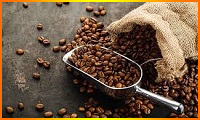
India's Coffee Exports to Rise 10% YoY on Shift to Mid-Premium Coffee & Firm Global Price.
Ramesh Rajah, President of the Coffee Exporters Association said, 'The higher value because of the profit in the global market has made up for the decrease in volume.' Prices in the international market rise due to the lower crop outlook in prominent yielding nations like Brazil in view of torrential rainfall.
For the next two quarters, India’s coffee exports are expected to go up by 10% year-on-year in value terms due to a shift to mid-premium coffee from expensive premium-quality coffee amid firm international prices, Rajah said.
Rajah predicted Arabica coffee prices to be approximately 200 cents per pound on the New York exchange, and $2,300 per tonne for the Robusta variety on the London exchange because of likely shortfall in supply in main producing countries such as Vietnam and Brazil as El Nino weather phenomenon are expected to disturb monsoon rainfall.
Globally, Brazil is the largest coffee producer followed by Vietnam, and Colombia, while India’s contribution to the global market is approximately 2.5-3.0%. India is an importer of raw coffee and an exporter of instant coffee.
Coffee exports for the last financial year ended March hit a record high for the second consecutive year at $1.126 billion against the $1.088 billion target fixed by the commerce ministry.
Ajoy Thipaiah, Chairman of the Coffee Committee of the United Planters Association of South India said, 'Exports are expected to be on par with the last financial year in value terms,' However, the volume of exports may remain low.
Data from the Coffee Board of India indicated that the exports of coffee diminished by 3.6% in volume to 398,000 tonnes in FY23 against 413,000 tonnes in FY22.
The market for Indian coffee is niche and preferred by countries such as Germany, Italy, and Russia.
Exports in 2023-24 (April-March) will depend on prices and coffee production in India. Globally, the prices are good. However, the delayed blossom showers in major plantations in Kerala, Tamil Nadu, and Karnataka may weigh on India’s coffee production this season significantly which raises concerns over export volumes.
Source: krishijagran.com
Indian FPOs taste success exporting watermelon to Dubai.
Indian watermelons are earning a premium over those from Iran in Dubai with a few farmer producer organisations (FPOs) beginning to ship the fruit to the United Arab Emirates (UAE) following initiatives taken by exporters.
'We exported two containers of black watermelon to Dubai on a trial basis. It fetched a premium in the markets there. FPOs fetch double the domestic price in the Gulf,' said Mukesh Singh, Director of Mumbai-based MuBala Agro Commodities Pvt Ltd.
M Angamuthu, outgoing Chairman of Agricultural and Processed Food Products Export Development Authority (APEDA), another company, IG International, took up the initiative to export watermelon produced by an FPO, Swasangharsh Organic Farmer Producer Organisation. It shipped 25 tonnes of seedless watermelon to Dubai.
Holding advantage
'It was the first consignment sent and the FPO got Rs.10/kg, which is almost the double of what they get in the domestic market,' he said.
Tarun Arora, Director, Single Family Office, IG International, said, 'Indian watermelon enjoys a premium in the Dubai market due to its quality and taste. Our watermelons are known for their sweetness, juiciness, and excellent texture.'
'The size of Indian watermelon is small, weighing between 3 and 5 kg. It, thus, holds an advantage over Iranian ones that weigh up to 10 kg, which is better for, probably, mass consumption,' said MuBala’s Singh.
Singh said multinational retailers were ready to pick Indian watermelons and willing to pay a premium over Iranian watermelons.
Landed cost vs return
Indian watermelon commands over 4 UAE dirham (Rs.89.25) in super stores, whereas Iranian ones, which till now enjoyed a monopoly, cost around 3 dirham (Rs.67) at retail outlets. In the wholesale market, the Indian fruit fetches at least 1.7 dirham (Rs.38).
Exporters are sourcing watermelons from FPOs on a commission basis. 'We charge a small commission for this. Once you land the watermelon in Dubai, you can be sure you will not make any loss. If you can get to sell directly to multinational retailers such as Carrefour your margins can increase more,' Singh said.
The landed cost of watermelon in Dubai could come to about Rs.20. According to exporters, the daily demand for watermelon in UAE is about 15 containers and at least a couple of containers are landing from India everyday. 'Iran’s advantage is that it can reach its watermelon in Dubai in four hours,' Singh said.
'Exporting watermelon to Dubai has been a positive experience for us. We have received a good response from the Dubai market, and our watermelons have been well received. We have been able to fetch a good price for our produce,' said IG International’s Arora.
Opportunity missed
Many exporters missed out on the opportunity to cash in on the Ramzan demand this year, when the demand could rise to about 30 containers a day. 'This time, we did not tap the opportunity as we tested the waters. Probably, next year we could fully take advantage of the Ramzan season' said Singh.
'We are likely to export around 500 tonnes of watermelon to Dubai in the upcoming season. However, the amount may vary depending on the demand and supply dynamics of the market,' Arora said.
Angamuthu said IG International has signed an agreement with Swasangharsh for cultivating watermelon on 50 acres of land. 'It is providing all support to the FPO to develop new varieties of watermelons. Such efforts are likely to bring watermelon as a potential fruit in the export basket of horticulture produce,' he said.
Arora said exporters are complying with all the necessary regulations and certifications required for exporting fresh produce such as watermelon.
The APEDA Chairman said cucurbits such as watermelon hold excellent potential for international trade. 'The export process has to be strengthened with proper sea and air protocols. We are working on it,' he said.
Source: thehindubusinessline.com