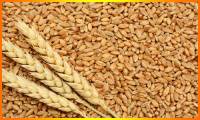
Wheat procurement surges 37 per cent to stand at over 21 million tonnes.
Wheat procurement has surged 36.6 per cent to 21.31 million tonnes (mt) as of April 28, from 15.6 mt a year ago, according to the latest official data. The procurement target has been fixed at 34.15 mt for the entire season, which ends on June 30.
According to official data, mandi prices have declined to Rs.1,780/quintal in Madhya Pradesh and to Rs.1,800/quintal in Rajasthan during the procurement season, which started on April 1. The MSP in Uttar Pradesh is at Rs.2,125/quintal. On the other hand, the maximum mandi rate in MP on April 26 was reportedly Rs.2,698/quintal, in Rajasthan Rs.2,580/quintal, and in UP Rs.2,250/quintal
Punjab has shown a 16.6 per cent increase in purchases to 9.99 mt as of April 28, from the year-ago level of 8.57 mt. The target for the year is 13.2 mt. The state contributed the maximum wheat, more than half the total purchases made in the Central Pool last year, which saved the Centre when exporters and traders paid higher than MSP in other states.
Procurement in Madhya Pradesh is up by 65.2 per cent at 5.45 mt, from 3.3 mt, whereas the target is to buy 8 mt by June 15. Last year, the Centre could purchase only 4.6 mt, against a target of 12.9 mt from MP.
Haryana has reported a 53.2 per cent jump at 5.67 mt from 3.7 mt a year ago, and the largest wheat-producer, Uttar Pradesh, reported a 2.8 per cent dip in procurement at 119,378 tonnes, from 122,805 tonnes as on April 28 a year ago, official data show.
Among other states, the government has bought 82,770 tonnes (against 749 tonnes year-ago) in Rajasthan. Gujarat is yet to purchase any quantity, while Bihar has reported procurement at 255 tonnes. The government aims to buy 1 mt from Bihar, 0.5 mt from Rajasthan and 0.2 mt from Gujarat.
Wheat procurement in the country dropped to a 15-year low of 18.79 mt in the 2022-23 season (April-March).
Source: thehindubusinessline.com

MoA&FW and NAFED launch Millets Experience Centre (MEC).
Union Minister of Agriculture & Farmers Welfare, Shri Narendra Singh Tomar, along with Shri Rajbir Singh, Managing Director, NAFED, commemorated the launch of the first of its kind ‘Millets Experience Centre (MEC)’ at Dilli Haat, INA, New Delhi today. NAFED in collaboration with the Ministry of Agriculture and Farmers Welfare (MoA&FW) established the Millets Experience Centre with an aim to raise awareness on Millets and encourage its adoption among general public.
Acting upon India’s proposal supported by 72 countries, the United Nations General Assembly declared the year 2023 as the International Year of Millets (IYM 2023). The declaration positioned India at the forefront of the celebrations and the Government of India has been working on ‘mission mode’ to champion millets as a crop good for farmer, environment and consumer. The ministry-led initiative of establishing a consumer-oriented ‘Millets Experience Centre’ would not only promote the dietary benefits of the ancient grain, but also popularize millets or Shree Anna as a nutritional powerhouse fit for cooking a variety of dishes like Millets dosa, Millets pasta etc. In addition to a unique dining experience, customers can also purchase a variety of ready-to-eat and ready-to-cook products from local millet start-ups at the MEC.
In his inaugural address, Shri Tomar praised India’s dynamic celebration of IYM 2023, led by the Prime Minister Shri Narendra Modi. Highlighting the visionary efforts of the Prime Minister, starting from the declaration if the National Year of Millets in 2018 and further with the International Year of Millets (IYM), Shri Tomar said India is gearing towards becoming a ‘Global Hub’ for Millets. The setting up of the MEC is a step in that direction, he added. Situated in the heart of Delhi, Dilli Haat is a national & cultural hub for visitors from all around the world, the MEC will further help the global outreach of the local millets and provide visitors a chance to witness India’s ‘Millet Movement’, he said.
Shri Tomar also highlighted that the year-long celebrations for millets (Shree Anna) will entail myriad activities aimed at creating awareness around the environmental, health and economic benefits of millet farming.
Shri Manoj Ahuja, Secretary, Department of Agriculture & Farmers Welfare, also highlighted the government-led initiatives for mainstreaming millets. Speaking about the collaboration of NAFED and MoA&FW, he said that ventures like the Millets Experience Centre would help widen the horizon for consumers who are actively looking for healthier alternatives and bring visibility to India’s robust millet-based start-up community. He also added that more such Millet Experience Centres are likely to open across Delhi and other states very soon through partnership with retail chains, hotels and F&B industry.
Shri Rajbir Singh, Managing Director, NAFED, praised the joint efforts by the MoA&FW and NAFED for the initiatives being undertaken for the promotion of Millets (Shree Anna) and execution of IYM-2023. He said that the Millets Experience Centre (Shree Anna) is a unique concept that will help in the recognition of the immense potential of millets (Shree Anna) as a versatile and healthy grain. He added that this MEC (Shree Anna) will enable the consumers to enjoy an expansive Millet menu and an ‘in-store’ shopping experience featuring a wide variety of millet-based products developed by home grown startups- all under one roof. He further said that the millets (Shree Anna)-based products will also be instrumental in promoting healthy snacking among customers, encouraging them towards adopting healthier millets-centric diets.
Source: pib.gov.in

APEDA-promoted agri products exports up 9% to record high of $27 billion in FY23.
Surpassing the target of $23.56 billion, exports of major agriculture and processed products (broadly divided under 27 categories) promoted by nodal agency Agricultural and Processed Food Products Export Development Authority (APEDA) jumped 8.74 per cent to $26.72 billion during the last fiscal from $24.57 billion in 2021-22.
Pulses, Basmati rice, guar gum, groundnut and poultry products were the top performers which registered over 32 per cent growth rate. However, wheat, floriculture and meat (other than buffalo, sheep and goat meat) exports declined.
Due to thesudden ban imposed by the Centre on wheat exports last May, which still continues, the volume dropped to 4.69 million tonnes(mt) worth $1.5 billion from 7.24 mt a year ago.
India’s agricultural exports, including marine products and spices, surged about 20 per cent to $50.21 billion during 2021-22, in which APEDA-promoted products had over 50 per cent share. The government is yet to release the total agri export performance.
Top earners
In the APEDA basket, rice (both basmati and non-basmati) remained the top forex earner at $11.14 billion during 2022-23 against $9.67 billion in 2021-22. Data show that though Basmati rice had an impressive performance, the low rise in the non-Basmati segment dragged the overall growth in the rice sector to 15.2 per cent.
Exports of non-Basmati rice were 3.62 per cent up at $6.36 billion, while that of Basmati were up 35.3 per cent at record $4.79 billion last fiscal from year before.
APEDA’s major exporting destinations were Bangladesh, UAE, Vietnam, USA, Nepal, Malaysia, Saudi Arabia, Indonesia, Iran, and Egypt last year. 'The rise is significant in agri-exports amid the geopolitical tensions and we are committed to perform better with the focus on several key products identified already,' said M Angamuthu, Chairman, APEDA. The emphasis on Shri Anna (millets) and their promotion via G20 meetings will be booster for its exports, both of raw grains and valued-added products, he added.
Export of pulses grew to $662 million in 2022-23, up 84 per cent from $359 million a year before. Shipments of poultry products grew by 89 per cent to $134 million from $71 million, while that of guar gum increased by 38 per cent to $617 million. Export of groundnuts rose 32 per cent to $832 million, that of processed vegetables by 24 per cent to $509 million($412 million).
Fresh fruits and vegetables exports were up by 5.7 per cent to nearly $1.79 billion from $1.69 billion, while processed fruits and vegetables exports were up by 19 per cent to reach $1.42 billion ($1.19 billion). Exports of alcoholic beverages grew by 18.5 per cent to $325 million from $274 million.
Source: thehindubusinessline.com
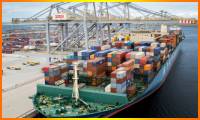
India's trade with 'Latin America' approaching a volume of 'USD 50 billion': S Jaishankar.
External Affairs Minister S Jaishankar on Friday asserted that 'deeper globalization' and a 'broadening of India's interest' is the reason that Latin America is no longer considered 'a region too far, adding that India's trade with it is approaching a volume of 'USD 50 billion'.
The EAM made the above remarks while apprising the diplomatic corps and students in the Dominican Republic about India's engagement with Latin America.
During his speech, Jaishankar spoke on three themes: How does India approach the world and secure its growing global interest; How is India engaging Latin America; What should India - today's and tomorrow's - mean to you (Dominican Republic).
Following his speech, Jaishankar tweeted, 'Happy to speak to diplomatic corps and young minds of the diplomatic school of @MIREXRD, Dominican Republic. Offered my thoughts on - How does India approach the world? How is India engaging Latin America? What should India - today's and tomorrow's - mean to them? Watch my speech to know the answers.'
The External Affairs Minister, during his first official visit to the Dominican Republic, while speaking further on India's engagement with Latin America said, 'In the last decade there has been a conscious deepening of this process. Our trade with Latin America is today approaching a volume of USD 50 billion. Our export to Brazil at USD 6.48 billion is more than Japan at USD 6.18 billion. That to Mexico at USD 4.43 billion is more than to Canada at USD 3.7 billion. In fact, with the Dominican Republic, our exports at USD 329 million is more than some ASEAN partners. The deeper globalization and a broadening of India's interest, Latin America is no longer considered a region too far.'
Underlining India's growing investments, he said, 'Surge in investments in the energy sector, India today imports crude from Brazil, Mexico, Colombia and Guyana. Our presence in sectors like IT, pharma and two-wheelers is increasing.'
Jaishankar also noted India's growing political coordination with regional blocs of Latin America, 'The political engagements are growing in parallel. Since 2016, we have a structured engagement with CELAC. Similarly, there is an arrangement to regularly interact with CARICOM and SICA. India is an associate member of Pacific alliance.'
Explaining the students of diplomacy about what should India - today's and tomorrow's - mean to them, Jaishankar said that as the fifth largest economy, India's economic presence will be more strongly felt in this region.
'Not just as a most populous country but also one of growing skills and talent, we are becoming increasingly central to the global workplace. The big change of our era is digital revolution. In that sense, India's digital experience holds lessons for the world,' he said.
Noting other major steps taken by India, Jaishankar said, 'A parallel story is taking place in the domain of health. Covid period recognised India's true potential in health sector. In a world that is more self-obsessed India has stepped in providing humanitarian assistance.'
Prior to this, the External Affairs Minister stated the different aspects of 'How does India approach the world?'
'Like any other country, India's most pressing priorities are in its neighbourhood. Given its size and economic strength, it is very much for the collective benefit that India takes generous and non-reciprocal approach to cooperation with smaller neighbours.'
Jaishankar also explained them India's Neighbourhood First Policy, which focuses on peaceful relations with its South Asian neighbours.
He said, 'This what we have done in the last decade under the leadership of PM Modi and Neighbourhood First Policy. It has seen a dramatic expansion in connectivity, contact and cooperation across the region. The exception to this is, of course, Pakistan in view of the cross-border terrorism it supports,' adding, 'Whether it is the Covid challenge or more recent debt pressure India has always stepped up for its neighbours.'
Jaishankar, in his lecture, explained India's global ties in all directions. He said, 'Beyond South Asia, India is developing a concept of extended neighbourhoods, in all directions. With ASEAN, this has taken the form of what we call the Act East Policy that has opened up a pathway to a deeper engagement with the Indo-Pacific that is being pursued amongst others through a mechanism, called the Quad.'
'Towards the West, there has been a perceptible intensification with India's relationship with the Gulf and with the Middle East. One reflection of that, is a new grouping called I-2U-2, comprising India, Israel, UAE, USA,' he added.
The External Affairs Minister also said, 'To the South, the outlook that shapes India's thinking goes by the acronym of Sagar, an Indian word for oceans. First time in 2015, PM Modi articulated a comprehensive view that span the entirety of Indian oceans and its islands. These subsequently became the building block for the Indo-Pacific vision that merged thereafter.'
He added, 'To the North, India has been pursuing a strategy of connecting to Central Asia more effectively and this has taken the form of structured engagements across multiple domains.'
On Friday, Jaishankar arrived in Santo Domingo, Dominican Republic for his first official visit to the country.
Source: m.economictimes.com

GCCI, Netherlands look to tie up for agriculture promotion.
The Goa Chamber of Commerce and Industry (GCCI) has decided to tie up with the Netherlands’ HAS University to promote agriculture in both countries. The Netherlands is also keen on sharing technical know-how with Goa in the fields of waste management, climate change, and sustainable development goals.
Deputy consul general of the Netherlands, Thierry Van Helden, led a delegation to hold a meeting with GCCI officials, including GCCI president Ralph de Sousa. Van Helden also met tourism minister Rohan Khaunte, with whom he discussed collaboration in tourism and information technology between Goa and the Netherlands.
'It was a productive meeting exploring innovative ideas to strengthen our partnership,' said Khaunte.
Van Helden also informed GCCI that the Netherlands is open to working with and supporting Goa’s startups.
'GCCI will also be signing an MoU with HAS University, Netherlands, for the promotion of agriculture in both countries. A team of Dutch students is already in Goa and is undergoing training for the same,' said de Sousa.
Goa has been exporting horticulture products like cassava, Goan okra (lady finger) and averrhoa (bimbli) to the Netherlands. The Netherlands has been India's top trading partner in Europe, with FDI of $4.6 billion last year. The Netherlands imports tea, coffee, spices, and essential oils from India.
De Sousa also said that diamonds and jewellery are the main business areas in which both countries have shared interests.
Van Helden said that the Netherlands wants to expand trade with India. He also enquired about IT and startups in Goa and offered to support the startup industry.
GCCI’s director general, Sanjay Amonkar, briefed the Dutch delegation about the startup incubators in the state, particularly BITS Pilani, which focuses on medical engineering research and semiconductors. 'New innovations in managing waste and plastic are welcome,' said Amonkar.
Source: timesofindia.indiatimes.com
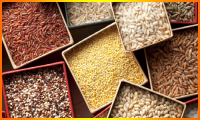
EU to Ban Ukrainian Grain & Oilseed Exports to Romania.
While Ukraine, a major grain exporter, has had to seek alternative shipping routes through neighboring countries due to its own Black Sea ports being blocked and later limited by Russia's invasion, Romania has refrained from implementing a ban.
However, Poland, Hungary, Bulgaria, and Slovakia have taken individual measures to safeguard their local markets from a surge of Ukrainian agricultural goods.
Millions of tonnes of grains and oilseeds, cheaper than those produced in the European Union and duty-free, ended up in Central and Eastern Europe, with local farmers complaining about distorted demand and pricing for local products. The European Commission announced earlier this month that it would take emergency 'preventive measures' for wheat, maize, sunflower seeds, and rapeseed, compensating local farmers and only allowing grain to enter the five countries from Ukraine if it was intended for export to other EU members or the rest of the world.
Daea stated that the Commission's actions were contingent on nations lifting their unilateral bans. If a deal cannot be reached, Daea stated that the Commission will take action to prohibit exports to Romania in particular.
'Negotiations with the states are still ongoing,' Daea said to reporters following discussions in Brussels and Luxembourg.'Romania will be protected by a European Commission decision, and farmers will be compensated.'
On Tuesday, the European Union's agriculture head voiced confidence that surrounding countries will soon ratify an agreement allowing Ukrainian grain to enter their country for export elsewhere.
Source: krishijagran.com

Nellore: 147 Agriculture Labs to be set up in State says Minister Kakani Govardhan Reddy.
While asserting his government's commitment over uplifting the living standards of the farming community, Agriculture Minister Kakani Govardhan Reddy said that the government has proposed to establish as many as 147 Agriculture Labs in every rural area in the entire State to prevent farmers from getting cheated while purchasing fertilisers, seeds, pesticides from various companies.
Along with Joint Collector Ronanki Kurmanath and District Agriculture Advisory Council Chairman (DAACC) Niranjan Reddy, the Minister inaugurated the newly constructed Bio-Fertilisers and Organic Fertilisers Quality Control Lab (BFOFQCL) on the premises of Nellore RDO office here on Thursday. This lab is the first of its kind in the State and costs about Rs 2.4 crore.
Speaking the occasion, the Minister said that 73 Agriculture labs were already started and 50 were under various stages of construction while construction of another 24 are yet to be begin. Describing the establishment of BFOFQCL as the brainchild of Chief Minister YS Jagan Mohan Reddy, he stated it was decided to set up this kind of labs at every district headquarters, as part of the initiative of bringing radical reformations in agriculture sector.
Minister Govardhan Reddy informed that the government will introduce Plant Doctor Procedure (PDP) very soon for conducting soil testing. This is a unique concept, which will help in creating awareness among farmers over performing cultivation based on soil capacity in the lands, he added. He further disclosed that 1,077 Rythu Bharosa Kendram buildings were completed out of the total 3,000 buildings and construction of the remaining are under progress.
Source: thehansindia.com
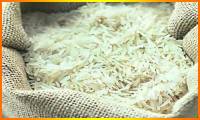
Indian white rice export prices gain on tight supplies.
Indian non-basmati white (raw) rice prices for exports have increased by over $25 a tonne during the past fortnight on tight domestic supplies and demand from markets abroad, traders and exporters said.
However, parboiled (boiled) rice prices have dropped by $5 a tonne and Indian white rice continues to be competitive by $20-30 over the nearest competitor in the global market. In the case of parboiled rice, the Indian cereal is at least $100 a tonne competitive.
'We are facing problems in getting white rice supplies in the domestic market as the Centre is procuring it for the central pool stocks. On the other hand, parboiled rice availability has increased, pulling down its prices,' said VR Vidya Sagar, Director, Bulk Logix.
New crop arrivals begin
'Though our prices have increased, we are still competitive in the global market. Arrivals of new rabi paddy crop have begun in Odisha, Telangana and Andhra Pradesh. Exporters are paying farmers prices closer to the minimum support price (MSP),' said BV Krishna Rao, President, The Rice Exporters Association (TREA).
The MSP for paddy this year is ?2,040 a quintal. India is quoting $453-57 a tonne for 5 per cent broken white rice against $432-36 two weeks ago. The 25 per cent broken white rice is offered at $438-442 compared with $417-22. India’s nearest competitor Vietnam is quoting at least $25 higher for both these varieties.
'There is good demand for 5 per cent broken white rice from Vietnam. We are getting enquiries from East Malaysia and Timor too,' said M Madan Prakash, President, Agricultural Commodities Exporters Association (ACEA).
'It is all down to demand-supply. The next crop in Thailand will arrive only in September. Vietnam may have to fulfill demand from China in case El Nino strikes and affects the Indian monsoon,' said a New Delhi-based trade analyst.
Enquiries from Africa
Sagar said parboiled rice was available even at $370 a tonne from India. 'Now that Ramzan is over, we expect some movement in rice to Africa and West Asia,' he said.
'This year, our exports are likely to match last year’s volume. We will be meeting all requirements,' said Rao.
'We are getting enquiries from Africa, while demand for South-East Asia is in small volume,' said Prakash.
The analyst said China has maintained silence over its stock situation. 'Vietnam and Thailand are expecting a bigger crop. There is no cause for worry with regard to India,' he said.
Data from Agricultural and Processed Food Products Development Authority (APEDA) show that non-basmati rice exports during the April-February period of 2022-23 fiscal were marginally higher at 16.09 million tonnes (mt) compared with 15.64 mt a year ago.
Export curbs
The rise was despite India imposing a 20 per cent export duty on non-basmati white rice from September and banning shipments of fully broken rice. The Government took these measures to curb exports as it feared rice production could be hit by deficient rain during the south-west monsoon.
Though kharif rice production dropped to 108 mt against 111 mt a year ago, overall production of the cereal has been estimated higher at a record high of 130.83 mt during the current crop year to June against 129.47 mt last crop year.
As regards rice, India’s central pool stocks are comfortable as the government has procured a good volume, said the analyst.
According to the Food Corporation of India, rice stocks as of April 1 were 24.86 mt compared with 32.32 mt a year ago. In addition, it has 27.64 mt of paddy (19.35 mt of rice).
'There might be a sharp uptrend in rice prices after June,' the analyst said.
Source: thehindubusinessline.com
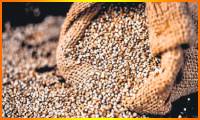
Two-day millet festival kicks off in Khunti district.
The Khunti district administration on Thursday started a two-day millet festival to observe the International Year of Millets 2023, which was declared by the United Nations. The festival is organised at the Birsa Agricultural College in association with the PHD Chamber of Commerce and Industry under the Pradhan Mantri Formalisation of Micro Food Processing Enterprises scheme and will have a conclave and an exhibition.
Notably, India is playing a huge part in the UN initiative to promote millet through various measures.
Khunti deputy commissioner Shashi Ranjan, said, 'The purpose of this festival is to spread awareness on the nutritional values and importance of millet.'
An official of PHDCCI, Mili Dubey, said, 'The festival will increase awareness that coarse grains like sorghum, maize and millets are important for food security and nutrition. It will also promote the sustainable production and quality improvement of millets. The objectives also include research and development, expansion of services and drawing attention for increasing investments in millets.'
Source: timesofindia.indiatimes.com

Panama well positioned to be India s regional business gateway due its unique capacities: Foreign Minister.
Panama is well positioned to serve as India’s gateway to the Latin American region, offering unique logistical capabilities as a maritime hub and business- and investment-friendly economic environment, its foreign minister, Janaina Tewaney, told ET.
Tewaney had hosted external affairs minister S Jaishankar on Monday on his arrival from Guyana. Jaishankar is on a nine-day official trip to the Latin American countries and the Caribbean.
Panama is India’s largest trade partner in Central America, with bilateral trade reaching $610 million in 2022, according to Tewaney. She played a key role in organising two regional meets for Jaishankar during his stay in Panama City where the leaders brainstormed ideas to enhance India's business footprints across Central America and Latin America.
'One characteristic of Panama can enable the country to position itself as the entry point for India to the Latin American region: stability,' Tewaney said. 'We had the lowest level of inflation in the region at only 2.1% in 2022, and currently have the highest GDP per capita (measured in purchasing power parity terms) in the region, according to the latest figures from the IMF.'
Panama sees the pharmaceuticals sector as a priority area for cooperation with India. 'Panama is working with the UNIDO to develop its capacity as a pharmaceutical hub, both boosting domestic pharmaceutical production and leveraging the Panama Canal and the country’s unique market access advantages to get medicines to those who need them,' she said.
Tewaney said Jaishankar had meetings with ministers and officials from six different ministries and departments.
'This week, Panama was the convener for two larger regional groupings: first as the host of the Latin America-India Forum, a business forum that brought together executives from India and the broader Latin American region, and the next day as the meeting point for the SICA-India Ministerial meeting,' she said. 'Both meetings were underscored by a sense of optimism and shared interests to deepen cooperation, specifically in four areas: green energy and sustainability, healthcare, digitalisation and industries 4.0, and gender equality.'
The Panama Canal handles an estimated 6% of the world’s maritime commerce and is obligated under international law to be neutral, positioning Panama as a unique partner for any country seeking to build stable global supply chains and exports, including India, the minister said, adding, 'I was delighted to take Minister Jaishankar to visit the canal. Already, some Indian companies have begun to realize the importance of Panama as a business hub for the Americas. As a result of the increased momentum in the political and economic relationship, we may see more such investments soon.'
Source: m.economictimes.com