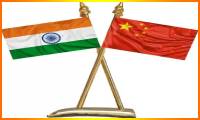
China keen to promote balanced trade with India: Chinese Consul General.
India hardly exports $30 billion worth of merchandise to China, though the latter imports $2 trillion worth of goods from across the globe, said Kong Xianhua, Consul General, Consulate-General of the People’s Republic of China.
'We are keen to promote a balanced trade with India,' the Consul General said in a statement at an interactive session organized by MVIRDC World Trade Center Mumbai.
'Indian companies should look at the Chinese market seriously by creating awareness about their local brands in the Chinese market. I invite Indian entrepreneurs to visit China and identify potential buyers for their products,' Xianhua said with the objective of exploring the huge untapped export potential for India.
Stating that many Chinese entrepreneurs are interested to visit India to explore new trade and investment opportunities, Xianhua said, 'I intend to facilitate bilateral exchange of trade and business delegation to promote two-way trade and investment. I also propose to organize an India-China Entrepreneur Summit in Mumbai to strengthen two-way investment.'
Earlier in his welcome remarks, Vijay Kalantri, Chairman, MVIRDC WTC Mumbai pointed out, 'Economic cooperation plays an important role in strengthening bilateral ties between India and China. India’s trade with China grew from a meager $2 billion 15 years ago to more than $150 billion. But the major cause of concern is that the official trade deficit with China is $100 billion and if we include the unofficial imports, then the total deficit runs to more than $150 billion as a lot of Chinese goods is routed to India through Hong Kong, Dubai, Nepal, Sri Lanka, and other Asian countries. In order to promote bilateral trade and reduce this deficit, both the countries need to explore actionable steps to facilitate Indian exports to China,'
Speaking about the role of WTC Mumbai in promoting balanced bilateral trade, Kalantri said, 'WTC Mumbai can work with the Chinese Consulate General in Mumbai to bring a delegation of Chinese buyers and organize a buyer-seller meet to promote Indian exports to the Chinese market. WTC Mumbai can also recommend visas for genuine Chinese investors looking for investment opportunities in India. WTC Mumbai will also work closely with the Chinese Consulate in Mumbai to process Chinese visas for Indian businessmen. WTC Mumbai can collaborate with China Council for the Promotion of International Trade (CCPIT) of China to promote bilateral trade and investment. We can also collaborate with the two largest Chinese banks, viz. ICBC and Bank of China to promote their investment in Indian projects. WTC Mumbai also suggests both governments explore trade settlement mechanisms in local currency to promote bilateral trade.'
Source: economictimes.indiatimes.com
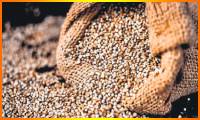
It s millets & honey at this year s Konkan fruit fest.
Millets make a debut at the Konkan fruit fest this year — the year that celebrates this grain — with a fruit and millet dish competition.
Participants can get any homemade product that has at least one millet and fruit, or nut as the key ingredient. The dish has to be prepared by the contestant and have a portion size of 200ml or 250gm.
Even the fancy dress contest this year will permit participants to dress in the millet theme.
The Konkan Fruit Fest will be held from April 21 to 23 from 10am to 8pm at the Francisco Luis Gomes garden, Campal, Panaji.
Honey farmers will also debut at the event, with this year’s edition hosting the best honey competition for the first time. Participants have to present home-produced honey in a 100ml glass jar. The quantity of honey should not be more than 50gm. On the label, participants must mention the location from which the honey was collected. Only two types, Apis cerena indica and Trigona spp, will be accepted in the contest.
The spotlight will also be on the tender jack fruit (TJF), identified under One District, One Product of PM-FME program for North Goa.
'The Konkan Fruit Fest seeks to give it a boost,' said founding member of the Botanical Society of Goa, Miguel Braganca. 'One multi product fruit processing unit has been set up at Pale-Velguem for the same under the CSR of Goa Shipyard Ltd,' he added.
Berries like jamun, kanttam (Indian cherry), churna, amboram (mulberry), charam (charoli), and kokum (garcinia) will also be in focus, along with other summer fruits like the bull’s heart (anona).
Source: timesofindia.indiatimes.com
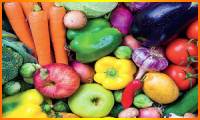
Export through Kerala airports stands at 14,898 ton from Jan to March; 85% fruits and vegetables.
Four international airports in Kerala shipped a total of 14,898.305 ton of various products from January to March this year. This included fruits, vegetables, flowers, fish, meat, eggs, and coconut.
In March alone, 5,265.503 ton of products were exported through the Thiruvananthapuram, Kochi, Kozhikode, and Kannur airports. Exports of unprocessed food products and vegetables have increased since the Covid lockdowns. The lion's share of exports from Kerala going to Gulf countries, as well as the UK, Ireland, and the US, among other markets.
Approximately 39 percent of the state's airport exports go through Kochi International Airport (CIAL), with 5,807.947 ton of products exported through CIAL from January to March. Exports via CIAL increased by 24.2 percent in March compared to January. In contrast, Thiruvananthapuram airport shipped 3,520.11 ton, Kozhikode airport shipped 3,645.88 ton, and Kannur airport shipped 975.80 ton of products.
Exporters complain of space constraints at airports other than Kochi. The ban on non-scheduled foreign cargo flights at Kerala airports, along with the lack of cold storage facilities in and around the airports adversely affect exports. Exports are carried out on passenger flights in limited quantities, which forces exporters to depend on airports in Bengaluru and Chennai.
Fruits and vegetables make up 85 percent of Kerala's four airport exports, with 12,795.075 tons shipped during January-March. Additionally, 66.135 tons of eggs and 529.139 tons of fish products were exported during this period. There was a considerable increase in egg exports during this time, with most going to Gulf countries, particularly Oman.
Source: english.mathrubhumi.com
White brinjal and Langda mango from Banaras get GI tag.
Along with the famous white Brinjal of Ramnagar, the famous Langda mango has got the Geographical Indication (GI) tag. As per the latest list of GI & Intellectual Property Rights (IPR) 11 items from Uttar Pradesh have been given the tag. During the COVID-19 period, GI applications were filed for 20 UP based products in collaboration with National Bank for Agriculture and Rural Development (NABARD).
Out of this, 11 could manage to get the prestigious GI tag which included seven products that come under the One District One Product (ODOP) scheme of UP government and four food items from the Varanasi region.
Source: freshplaza.com
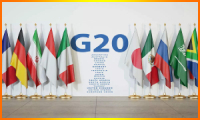
G20 MACS: India, France keen on promoting millets, natural farming.
The second day of G20 MACS (Meeting of Agricultural Chief Scientists) witnessed deliberations on 'digital agriculture and sustainable agri value chain' and 'public-private partnership in agricultural research' between delegations of India and France, in Varanasi on Tuesday.
According to an official communiqué, one of the sessions discussed India’s Millets and Other Ancient Grains International Research Initiative (MAHARISHI) initiative. Representatives from the G20 countries and international organisations supported the initiative by stating that international research cooperation was pivotal for the promotion and adoption of millets.
Dr Himanshu Pathak, secretary of the Department of Agricultural Research and Education, and Philippe Mauguin, chair and CEO of France’s INRAE (National Research Institute for Agriculture, Food and the Environment) led their respective delegations in the bilateral meeting between India and France.
Both countries expressed keen interest in cooperation in the areas of climate change, crop diversification, soil and water conservation, natural farming, and biofortified crops.
The discussion on 'digital agriculture' was led by Dr. Pathak.
Earlier, in a bilateral meeting with the UN’s Food and Agriculture Organization (FAO), Dr Pathak emphasised that the extension service through Krishi Vigyan Kendras to farmers would be a key area for cooperation.
FAO’s Dr. Ishmahane Elouafi (chief scientist) and Dr Selvaraju Ramasamy (senior agriculture officer) recognized India’s strength in the seed sector.
The delegates also visited Saranath to witness a light and sound show in the evening. About 80 foreign delegates from G20 member states, international organizations and special Invitees are participating in the meeting.
Public-private alliance can strengthen agri sector: Expert
'Public-private partnerships have emerged as an effective way to address the challenges in agriculture. These partnerships can improve the efficiency and effectiveness of research and development by combining the strengths and resources of both the sectors,' observed Dr Jean Balié, the director general, of the International Rice Research Institute (IRRI), Philippines.
Dr Balie was speaking at a session during the G20 Meeting of Agricultural Chief Scientists (MACS) in Varanasi on the second day of the three-day event on Tuesday. The meeting discussed the conditions, gaps, best practices, and opportunities for effective public-private partnerships in agricultural research and development.
Dr Balié drew the guests’ attention to IRRI’s efforts and experiences in generating innovations and accelerating impact.
'Private sector involvement can provide the necessary funding and expertise to develop, commercialise, and scale new technologies and innovations. Moreover, partnerships can promote knowledge sharing and capacity building, thus enhancing the overall productivity and sustainability of the agricultural sector,' he added.
IRRI works toward finding solutions for the world’s biggest challenges and contributing to the UN Sustainable Development Goals.
Source: hindustantimes.com

Russia to intensify FTA talks with India.
India and Russia are discussing a free trade agreement (FTA), Russian deputy Prime Minister Denis Valentinovich Manturov said on Monday. The move is seen further boosting bilateral trade ties after New Delhi’s sharp increase in crude imports from Moscow since the outbreak of the Ukraine war.
Russia’s share in India’s crude oil import basket rose to a record 28% in January compared with a mere 0.2% before the Russian invasion of Ukraine on February 24, 2022.
As a result, India’s imports from Russia more than quadrupled to around $46 billion in FY23.
'We pay special attention to the issues of mutual access of production to the markets of our countries,' Manturov, who is also Russia’s trade minister, said at an event in New Delhi. 'Together with the Eurasian Economic Commission, we are looking forward to intensifying negotiations on a free trade agreement with India.'
Foreign minister S Jaishankar said the Covid pandemic had disrupted discussions on an FTA between India and the Russian-led Eurasian Economic Union, and that he hoped 'our colleagues will pick up on this because we do believe it will make a real difference to our trade relationship'.
Jaishankar said payments, logistics and certification are some of the key areas, and it is possible to find solutions to them.
In his address at the India-Russia Business Dialogue, Jaishankar said, 'We are discussing the importance of connectivity and the north-south and maritime corridors have been considered. There is also discussion on payment issues like international trade settlement in Indian rupee.'
Manturov also said Russia would consider widening the use of 'national currencies and currencies of friendly countries'. India has been keen on increasing the use of rupee for trade with Russia.
Manturov said road construction material and equipment and chemicals and pharmaceutical products were in demand in Russia, and 'I am sure that this will create opportunities for Indian companies to increase their supplies to Russia'.
Trade ties between India and Russia are on an upswing notwithstanding the increasing disquiet from Western powers over the Ukraine war.
By importing fuel, India chose to protect it’s citizens from hardening global commodity prices.
New Delhi is also currently engaged in FTA discussions with the UK and the European Union, among others.
Russia’s efforts to improve trade with India form part of its strategy to help evade the impact of Western sanctions by boosting commerce with Asian giants, including China.
On February 25, the two-day meeting of finance ministers and central bank heads of the G20 countries concluded in Bengaluru without producing a joint communique, given the irreconcilable differences between the G7 segment of the grouping and Russia-China on how to describe the one-year-old Ukraine conflict. The G7 insisted on unequivocal condemnation of Russia for invasion of its neighbour, while Russia, with support from China, wouldn’t budge and demanded that it be called 'a special military operation'. As the chair, India had sought a consensus and suggested the word 'war' could be dropped.
Source: financialexpress.com
South Korea tenders to buy about 43,500 tonnes rice - traders.
South Korea’s state-backed Agro-Fisheries & Food Trade Corp. has issued an international tender to purchase an estimated 43,500 tonnes of rice, European traders said on Monday.
It should be sourced from Thailand and Vietnam, they said.
The tender seeks non-glutinous brown long grain rice and short grain rice in a series of consignments for arrival in South Korea in 2023 between July 1 and Sept. 30, they said.
The deadline for submissions of price offers in the tender is April 25.
Source: nasdaq.com
FAO recognizes India s strength in seed sector.
The Food and Agriculture Organization (FAO) of UN has recognized India’s strength in the seed sector which it would be useful to other countries, said a statement from the union agriculture ministry.
Earlier in the morning, a bilateral meeting was conducted with FAO. Secretary (DARE) & Director General (ICAR), Himanshu Pathak, who is also the MACS Chair, led the discussions and emphasized that the extension service through KVK to farmers would be a very important area of cooperation.
FAO representatives also expressed keen interest in extending cooperation in extension service.
'Ishmahane Elouafi, Chief Scientist, FAO, and Selvaraju Ramasamy, Senior Agriculture Officer, FAO participated in the meeting. They recognized India’s strength in the seed sector, which will be very useful to other countries,' the ministry said.
Later in the evening the delegates visited the archaeological site and ASI Museum at Sarnath and witnessed the light and sound show.
The three-day G20 Meeting of Agricultural Chief Scientists (MACS) with the theme, 'Sustainable Agriculture and Food System for Healthy People and Planet' is underway at Varanasi. The Meeting was inaugurated by the Union Minister of State for Civil Aviation, and Road Transport and Highways, General (Dr.) V K Singh (Retd) yesterday.
A session was conducted to discuss India’s initiative on Millets and Other Ancient Grains International Research Initiative (MAHARISHI). The representatives of G20 Nations, invited countries and International Organisations supported the MAHARISHI Initiative and expressed that millets being climate a smart crop and super health food, the International Research cooperation is pivotal for its promotion and adoption.
Himanshu Pathak and Philippe Mauguin, Chair & CEO, INRAE - National Research Institute for Agriculture, Food and the Environment (France) led their respective delegation in the bilateral meeting between India and France.
Both countries expressed keen interest in cooperation in the areas of climate change, crop diversification, soil & water conservation, natural farming and biofortified crops.
Last evening the delegates experienced Ganga Arati on a river cruise through the Ganges followed by an exhilarating cultural programme.
About 80 foreign delegates from the G20 member states, invited guest countries, international organizations and special invitees by India are participating in the three day meeting.
On the concluding day on 19 April, 2023 discussion on MACS Communique will continue.
Source: livemint.com
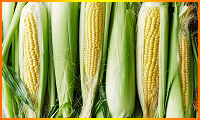
Quantity jump. India needs to raise maize production by 10 million tonnes in next 5 years: Agriculture Secretary.
The Indian government, on Tuesday, said it estimates maize output to increase by 10 million tonnes (mt) over the next five years if the growing demand for ethanol production and poultry industry has to be met.
Inaugurating India Maize Summit, organised by FICCI, Union Agriculture Secretary Manoj Ahuja stressed the need to cut down losses in the entire value chain of maize in a systematic manner.
'Currently, maize production is in the range of 33-34 mt. We need a quantity jump in maize to 44-45 mt in the next five years in order to meet the rising demand for ethanol and the poultry industry,' Ahuja said. As the potential is high to achieve the target, making better seed availability, providing storage and marketing linkages, public and private partnerships should be the focus when agriculture is threatened by climate change impact, he said.
As per the second advance estimates, maize production in 2022-23 crop year (July-June) is estimated at a record 34.61 mt against 33.73 mt the previous year. But, a YES Bank-FICCI report released on the occasion said the production will likely fall (from the current level) to 34.21 mt in 2026 and marginally improve to 37.02 mt in 2031.
Support for value chain
Maharashtra Agriculture Minister Abdul Sattar said the State government is ready to support private players that are keen to invest in the value chain of maize, especially ethanol. 'If companies are keen to invest in the maize value chain, we are ready to support as this will empower our farmers,' he said.
The sugar sector, in the last season, contributed over 80 per cent of ethanol supplied to oil marketing companies (OMCs) under the ethanol-blending programme, while the remaining 20 per cent came from grain-based plants. Many grain-based plants use rice as their feedstock as it is cheaper than maize. The government provides rice for ethanol at subsidised rate of Rs.20/kg.
Currently, the country has the total capacity to produce 1,082 crore litres of ethanol per annum, out of which 723 crore litres (67 per cent) are installed by sugar mills and others to be produced from molasses and 359 crore litres (33 per cent) from grain-based plants. Some sugar mills have dual-feed ethanol plants, which allow them to shift to grains in case there is lower availability of sugarcane.
Sattar said Maharashtra has the second highest number of sugar mills in the country after UP, and maize can be used for ethanol making in the State as this would enhance the income of the farmers, he said. Further, he said private companies are welcome to set up warehouses in Maharashtra as maize growers would be benefitted by keeping their stocks to sell at the appropriate time when prices improve.
Source: thehindubusinessline.com
India wants WTO mechanism to ensure development issues are not ignored.
India has proposed an institutional mechanism at the World Trade Organization (WTO) to keep a check on actions taken on decisions in favour of developing countries and ensure that the development issues are not lost sight of.
In a submission, New Delhi said that the WTO's key committee responsible for work on development and issues relating to the trade of developing countries, is unable to deliver on its mandate.
As per the submission, a lack of institutional mechanism, within the WTO, as regards the continuous review by the Committee on Trade and Development (CTD) of participation of developing country members is impeding it from acting as a focal point for development, as envisaged.
'As a result, CTD is not able to deliver on its overarching mandate of focal point on development,' India said.
It proposed an institutional mechanism for sharing of information by other WTO bodies on development related work to CTD, and co-ordination between the CTD and other committees.
Besides continuously reviewing participation of developing members in multilateral trading system, the CTD should highlight challenges, measures and initiatives and report regularly to the General Council in a structured manner on the development function for appropriate action.
India also told the WTO General Council last month that such a move would make sure there is a proper repository of development discussions in the WTO at a single place and CTD acts as a catalyst for ensuring discussion.
However, it clarified that such a mechanism will not usurp upon the powers of any of the bodies of WTO but only consult and coordinate, ensure that the discussions on the issues would continue to happen in relevant bodies and be the custodian of some of the information which can work as institutional memory.
Source: economictimes.indiatimes.com