India-UAE cooperation to sow regional food security.
Multiple points of convergence will ensure that India is an essential partner in the plan of the United Arab Emirates to strengthen food security in the Global South
The United Arab Emirates (UAE), whose food security has been built on imports from global markets, is now focusing on the twin objectives of food access and readiness to confront supply chain crises. India, the world’s second-largest food producer, is an essential partner in the UAE’s ambition to strengthen food security. The India-UAE food security partnership stands to benefit from multiple points of convergence.
Many capabilities
India has built its status as a global agri-export powerhouse using its vast tracts of arable land, a highly favourable climate, and a large and growing food production and processing sector. Along with serving global markets with its diversified agri-produce, India has, in recent years, acted as a humanitarian provider of food to developing countries, demonstrating awareness of its evolving role in advancing regional and global food security. India has also made major budgetary outlays towards setting up massive food parks, with due emphasis on modern supply chain management spanning farm gate to retail outlet. These investments, complemented by how India has placed its food sector to benefit from bilateral trade agreements, reflect the country’s strong and sustained intent to make the most of its agri-capabilities in the global food marketplace.
In parallel, India runs the Public Distribution System, the world’s largest food subsidy programme, providing nearly 800 million citizens with subsidised grains, providing its people with the reassurance of daily, affordable meals. Equally laudable is India’s ‘Prime Minister’s Overarching Scheme for Holistic Nutrition (POSHAN) Abhiyaan’, the world’s largest nutrition programme for children and women. As a part of its G-20 presidency, India is promoting the consumption and farming of millets — nutritious, drought-resistant, sustainable, crops — that demonstrate the resilience focus that India offers to the global food security dialogue. In the realm of food security, India’s G-20 presidency seeks to address the three Cs, of “Covid, Conflict, and Climate' (to borrow from India’s External Affairs Minister S. Jaishankar’s address last year), issues pernicious to food security in India and across the globe.
What the UAE brings to the table
Seen together, India brings to the table an incredible wealth of food sector experience and the ability to operationalise the world’s largest food supply chains — formidable capabilities that are strengthening the India-UAE food security partnership in a variety of ways. During the I2U2 (India, Israel, the United Arab Emirates and the United States) summit in July last year, the UAE committed $2 billion in investment towards constructing food parks in India (in Madhya Pradesh and Gujarat), while the signing of a food security corridor on the Comprehensive Economic Partnership Agreement (CEPA)’s sidelines (with logistics partner DP World) has taken forward India’s envisioned presence on the global food value chain, beyond the UAE.
Source: thehindu.com
Technology support is necessary in agriculture to meet the challenges - Shri Tomar.
Union Minister of Agriculture and Farmers Welfare Shri Narendra Singh Tomar today released Crop Specific “Standard Operating Procedures (SOP) for the Application of Pesticides with Drones” in the public domain for the guidance of farmers and other stakeholders. Shri Tomar also released a booklet titled "Machinery for Millets Production, Processing and Value Addition". On this occasion, Shri Tomar said that agriculture is our priority, so whether it is research or initiating schemes, the first priority of the government is to promote agriculture and improve the financial condition of the farmers. Today there are many challenges in the Agriculture sector. To retain the farmers, to attract the new generation and to increase the remuneration of the farmers by reducing the cost of production. For this, technical support in the agriculture sector is very important, the government is making continuous efforts in this direction.
Union Minister Shri Tomar said that there are possibilities of new challenges in the agriculture sector, therefore, along with change in strategy from time to time, change in methodology is necessary. Talking about the agriculture sector, without the support of technology, we will not be able to achieve our goals in the future, so efforts are being made to link the schemes with technology. Prime Minister Shri Narendra Modi also always emphasizes on the support of technology and also works on them himself. Talking about major schemes, today under the Prime Minister Kisan Samman Nidhi, about Rs 2.5 lakh crore have reached the accounts of the farmers, in which there is no question mark. The micro irrigation project is also yielding good results. Topics like Natural Farming are being taken forward. Our country made Nano Urea and the farmers will soon be able to avail the benefits of Nano DAP. Drone technology has been accepted by the government in the Agriculture sector. Last time when there was an outbreak of locusts, the need for the use of drones was felt at that time, since then drone technology is before us with the full support of the central government under the guidance of Prime Minister Shri Modi. In reducing the cost in agriculture and avoiding the side effects of pesticides, farmers will get extensive benefits from drones.
Shri Tomar said that whenever we undertake any new scheme, we must keep in mind that its benefits reach the last person. This is the reason why when the scheme of drones was being made, common farmers, common graduates were also included in it, so that the use of drones could be made accessible to small farmers. Everyone needs to work together in this direction. For this, he stressed on the need to make Krishi Vigyan Kendras (KVKs) more efficient and said that awareness sessions should be organized for graduate/post-graduate agricultural students in agricultural universities & colleges, through which they can get employment, besides making them capable for farming on their own land. A plan should be made for the benefits of drones to reach the common man.
Shri Tomar said that on the initiative of Prime Minister Shri Modi, according to the declaration of the United Nations, the year 2023 is being celebrated worldwide as the International Year of Millets (Shree Anna). Shree Anna is getting priority and recognition in various events. For this our responsibility has increased along with making us proud. If the demand and consumption of Shree Anna will increase in the country and the world, then along with production-productivity, processing and export will also have to be increased.
Secretary, Department of Agriculture and Farmers Welfare, Shri Manoj Ahuja, Director General of ICAR, Dr. Himanshu Pathak, Additional Secretary, Ministry of Agriculture and Farmers Welfare, Shri Abhilaksh Likhi, Joint Secretary Smt. Shubha Thakur, Smt. S. Rukmani and Ms. Vijayalakshmi, Agriculture Commissioner Shri P.K. Singh, Deputy Commissioners (Mechanization & Technology) Shri C.R. Lohi and Shri A.N. Meshram, Senior Officers, Scientists and representatives from Drone Federation of India, ICAR, SAU and States, Civil Aviation Ministry, FMTTI Director and farmers participated.
Grant-in-Aid for Drones - Under the Agricultural Mechanization Sub-Mission, ICAR institutes, KVKs, SAUs, other State/Central Government Agricultural Institutes and Government of India PSUs engaged in agricultural activities are provided financial assistance at the rate of 100% of the drone cost (up to Rs. 10 lakh per drone) besides Contingent Expenses for the purpose of demonstration of drones in the farmers' fields. FPOs are given grant-in-aid at the rate of 75% for purchase of drones for demonstration on farmers' fields. For the purpose of providing agricultural services through the use of drones, financial assistance is given at the rate of 40% of the original cost of the drone by CHCs to Farmers Cooperative Society, FPOs and Rural Entrepreneurs for the purchase of drones, subject to a maximum of Rs.4 lakh. Agricultural Graduates setting up CHCs are provided financial assistance up to Rs. 5 lakh at the rate of 50% of the cost of drone. Individual small and marginal farmers, SC-ST farmers, women farmers, farmers of North-Eastern states will also get 50% of the cost of the drone subject to a maximum of Rs 5 lakh while other farmers are eligible for assistance at 40% of the cost of the drone, subject to a maximum of Rs. 4 lakhs.
Source: pib.gov.in
13th Joint Trade Committee meeting of India and Thailand held in New Delhi.
The 13th Meeting of India Thailand Joint Trade Committee (JTC) was held today in New Delhi. The meeting was co-chaired by Director General of Department of Trade Negotiations, Ministry of Commerce of Thailand, Ms. Auramon Supthaweethum and Joint Secretary, Department of Commerce, Ministry of Commerce & Industry, India Ms. Indu C. Nair. This was the first physical meeting of the JTC after it was revived in 2020, after 17 years.
Thailand is India’s important trading partner in ASEAN with total trade of USD 16.89 Billion in 2022-23. Thailand accounts for 13.6% of India’s total trade with ASEAN. Thailand is an important destination for India’s gems and jewellery, mechanical machinery, auto and auto components and agricultural products especially marine products.
Reviewing the status of bilateral trade and each partner’s modest share in other’s global imports, the chairs emphasised the need for identifying new potential products and priority sectors for expanding the bilateral trade. Both sides also discussed various market access issues and technical barriers faced by their exporters and agreed to resolve the same through regular and sustained bilateral discussions. India raised the restriction faced in its export of marine, poultry and meat products.
Both sides identified a range of potential commodities and sectors for strengthened partnership such as value added marine products, smartphones, Electric vehicles, food processing and pharmaceuticals. The countries also agreed that there is huge scope in collaboration in the Service Sector and agreed to explore establishing mutual recognition/cooperation arrangements in Nursing, Accounting, Audio Visual and Medical Tourism.
The meeting also reviewed the progress of the ongoing efforts on connecting Unified Payment Interface (UPI) of India with Prompt Pay Service of Thailand and the settlement of trade transactions in local currency.
Source: pib.gov.in
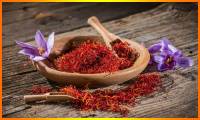
JKTPO, Invest India (DPIIT) organised Organic Certification program for Kishtwar Saffron Growers under ODOP initiative.
Jammu and Kashmir Trade Promotion Organisation (JKTPO) under the guidance of Principal Secretary, Industries and Commerce, Prashant Goyal and under supervision of Managing Director JKTPO , Khalid Jahangir, organised the National Programme for Organic Production (NPOP) Awareness Drive for organic certification of Saffron, ODOP product of Kishtwar District in collaboration with Invest India (One District One Product) team, DPIIT, Union Ministry of Commerce and Industry at District office complex here.
The workshop organised with the vision to provide training and certification to farmers who are already pursuing organic farming but don't have the necessary certification for their products authenticity.
This workshop is one of the initiatives of JKTPO for the promotion of ODOP products in Jammu and Kashmir which includes conduction of Buyer Seller meets, participation in national and international trade fairs/ exhibitions and capacity building programs. The drive will increase the export potential of saffron as organic certified products have huge international market.
National Programme for Organic Production (NPOP) under Ministry of Commerce & Industries, Government of India involves accreditation of Certification Bodies, standards for organic production, promotion of organic farming and marketing etc.
The NPOP standards for production and accreditation system have been recognized by European Commission and Switzerland for unprocessed plant products as equivalent to their country standards.
With these recognitions, Indian organic products duly certified by the accredited certification bodies of India are accepted by the importing countries.
This was the second National Programme for Organic Production (NPOP) Awareness Drive after Pulwama for organic certification of Saffron organized by JKTPO. The workshop was attended by more than 45 saffron producers of Kishtwar district, and more farmers will come under organic certification.
On this occasion, Saffron Development Officer, Kishtwar, said: 'there is a huge demand of Kishtwar saffron in India and abroad due to its unique aroma and flavour but farmers are not getting good prices due to less marketing linkages.
This organic certification of Saffron will boost the demand of saffron and will help to increase the income of farmers.'
Source: jammulinksnews.com

Israel Seeks to Broaden Free Trade Agreement with India.
Barkat was speaking at the Confederation of Indian Industry's India Israel Business Forum in Delhi. He is bringing a delegation of Israeli businessmen to India for a series of talks with business and government figures. Barkat stated that the Israel-India FTA will be discussed with Indian ministers later on Monday.
'The FTA should cover a wide range of topics, including Agrotech and health care. India's economy is growing to become the world's third largest. What I see here is a huge mutual opportunity, and we're here to take advantage of it,' Barkat explained.
'Take a look at the chip industry; Israel is very strong in this industry and has a lot to offer. We should take a serious look at how to co-develop ideas; there are a lot of joint ventures here,' he said, emphasizing the need of pushing for semiconductors, which are included in almost every modern electrical product.
'We are going to focus on issues and business clusters in which Israel has a competitive advantage, one of which I found that there is interest here, which we call desert technologies to improve quality of life in deserts, managing water, creating water, saving water, creating energy from the sun from the wind in a distributed way, and that tailors to deserts food production agrotech creating food from the sea using hydroponics.'
Source: krishijagran.com
'Rapid growth of trade is testament to bilateral ties of US-India'.
The United States becoming India's largest trading partner is a testament to the strengthening of bilateral ties between the two democracies, a prominent Indian American Congressman has said, underlining that the partnership increases both the prosperity and security of the two nations and the broader world.
These remarks were made by Indian-American Congressman Raja Krishnamoorthi on Tuesday in response to recent news that the US has emerged as India's biggest trading partner in 2022-23 on account of increasing economic ties between the two countries.
According to the provisional data of India's Commerce Ministry, the bilateral trade between India and the US has increased by 7.65 per cent to USD 128.55 billion in 2022-23 as against USD 119.5 billion in 2021-22. It was USD 80.51 billion in 2020-21.
The rapid growth of trade between the United States and India is a testament to the ties between our democracies growing stronger as our partnership increases both the prosperity and the security of our nations and the broader world, Krishnamoorthi, a Democrat, said.
Even as the United States has become India's largest trading partner, it is essential that we continue to recognise the enormous potential for further growth to strengthen both of our economies and create American jobs, Krishnamoorthi said.
America is one of the few countries with which India has a trade surplus. In 2022-23, India had a trade surplus of USD 28 billion with the US.
Source: business-standard.com
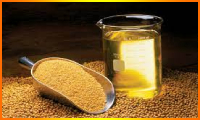
India s oilmeal export earnings up by 103% in 2022-23.
Export of oilmeals from India witnessed a 103.33 per cent growth in terms of value and 82.58 per cent growth in terms of tonnage during 2022-23.
Data available with the Solvent Extractors’ Association (SEA) of India showed that India exported 43.36 lakh tonnes (lt) of oilmeals valued Rs.11,401.30 crore during 2022-23 against 23.74 lt valued Rs.5,607.09 crore in 2021-22.
BV Mehta, Executive Director of SEA of India, said the export earnings went up by up by 103 per cent due to sharp increase in export of soyabean meal and rapeseed meal.
India exported 10.22 lt of soyabean meal valued at Rs.4,725 crore in 2022-23 against 3.72 lt valued at Rs.2,206 crore in 2021-22.
He said the fall in local soyabean price to the level of Rs.4,500 a quintal from the highest level of Rs.7,640 in April 2022, encouraged larger crushing and better price parity. This made export of soyabean meal attractive in the last six months.
Positive trends
South-East Asia is the major consumer of Indian soyabean meal where India has a logistic advantage and also can supply in small lots.
Mehta said the rupee depreciation is also pushing the overall export. This helped India to revive the export of soyabean meal in new crop since November 22.
Export of rapeseed meal increased to 22.96 lt valued Rs.5,188 crore in 2022-23 against 8.66 lt valued Rs.2,035 crore in 2021-22. India’s rapeseed meal export broke the earlier highest record export of 12.48 lt in 2011-12.
He said currently India is the most competitive supplier of rapeseed meal to South Korea, Vietnam, Thailand and other Far-East countries. The better realisation from rapeseed (mustard) oil and the export of rapeseed meal not only supported the domestic price of mustard seed but also encouraged higher coverage under the mustard crop during the last rabi season.
Major importers
South Korea imported 9.14 lt of oilmeals from India during 2022-23 (compared with 6.43 lt in 2021-22). This included 6.15 lt of rapeseed meal, 2.58 lt of castor seed meal, and 39,928 tonnes of soyabean meal.
India exported 10.29 lt (6.09 lt) of oilmeals to Vietnam during 2022-23. This included 4.01 lt of rice bran extraction, 2.89 lt of rapeseed meal, 3.32 lt of soyabean meal and 5,877 tonnes of groundnut meal.
Thailand imported 7.80 lt of oilmeals from India during 2022-23 (1.51 lt in 2021-22). This included 7.05 lt of rapeseed meal, 58,067 tonnes of soyabean meal, 4,038 tonnes of groundnut meal, 11,208 tonnes of rice bran extraction, and 954 tonnes of castorseed meal.
Source: thehindubusinessline.com
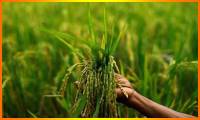
Union Agriculture Minister Shri Tomar launches Seed Traceability portal and mobile app.
Union Agriculture and Farmers Welfare Minister Shri Narendra Singh Tomar today launched the SATHI (Seed Traceability, Authentication and Holistic Inventory) Portal and Mobile App, a Centralized Online System for seed traceability, authentication and inventory designed to deal with the challenges of seed production, quality seed identification and seed certification. It has been developed by the NIC in collaboration with the Union Ministry of Agriculture and Farmers Welfare on the theme of ‘Uttam Beej – Samriddh Kisan’. On this occasion, Shri Tomar said that the Government of India is constantly trying to overcome the challenges and difficulties faced by Agriculture sector through various schemes and programmes. SATHI portal is an important step in this direction. When its use starts right to the grassroot level, it will prove to be a revolutionary step in the field of agriculture.
Chief guest Union Minister Shri Tomar said that Agriculture is of great importance to India. This importance has increased in the changing scenario. Earlier, we had only the aim of fulfilling our needs in agriculture, but at present the expectations of the world are also increasing from India. In such a situation, it is our responsibility to help feed the world while dealing with all the challenges of agriculture, climate change etc. Shri Tomar said that seeds, pesticides, fertilizers and irrigation play a major role in agriculture. Inferior quality or spurious seeds affect the growth of agriculture. This causes loss to the farmers, it also affects the agricultural production of the country. It has been said from time to time that we should devise such a system so that the market of spurious seeds is checked and quality seeds reach the farmers, for this the SATHI portal has been launched today. In this era of climate change, new types of pests are affecting the crops, on which agricultural scientists should focus their research to eradicate the menace. If we are able to save this loss, then we can save 20 percent of the entire agricultural production.
Union Minister Shri Tomar said that the first phase of SATHI (Seed Traceability, Authentication and Holistic) portal has just been launched. He directed the officials to ensure that the second phase does not take long. Efforts should be made to increase awareness so that the farmers get full benefit from it. There will be a QR code under this system, through which the seeds can be traced. Training should be imparted through Indian Council of Agricultural Research (ICAR), Krishi Vigyan Kendras and State Governments. He urged all the states to join the Seed Traceability System.
SATHI portal will ensure quality assurance system, identify the source of seed in the seed production chain. The system will consist of integrated 7 verticals of the seed chain - Research Organisation, Seed Certification, Seed Licensing, Seed Catalogue, Dealer to Farmer Sales, Farmer Registration and Seed DBT. Seeds with valid certification can only be sold by valid licensed dealers to centrally registered farmers who will receive subsidy through DBT directly into their pre-validated bank accounts.
Secretary, Ministry of Agriculture and Farmers Welfare, Shri Manoj Ahuja, Joint Secretary (Seed) Shri Pankaj Yadav and other officers were present in the programme, while key officials of the States and ICAR joined through video conference.
Source: pib.gov.in
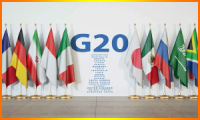
The 100th G20 Meeting under India s G20 Presidency, the Meeting of Agricultural Chief Scientists (MACS) concludes successfully at Varanasi.
The Meeting of Agricultural Chief Scientists (MACS) of G20 nations on 'Sustainable Agriculture and Food System for Healthy People and Planet' concluded successfully at Varanasi today.
General (Dr.) V K Singh (Retd.), Union Minister of State for Civil Aviation and Road Transport and Highways inaugurated meeting on 17th April 2023.
About 80 delegates from G20 Member States; Invited Guest Countries, International Organizations participated in the meeting.
Dr.Himanshu Pathak, Secretary (DARE) & Director General (ICAR) chaired the meeting for three days (17-19 April 2023).
The discussions were focused on Innovations and Technological Interventions for Agri-Food Systems Transformation, Frontiers in Science and Technology for Achieving Food Security & Nutrition, Biofortification in Food Crops for Enhancing Nutritional Value, Tropical Seaweed Farming for nutrition and blue growth, Millets And otHer Ancient Grains International Research Initiative (MAHARISHI), One Health as an Integrated and Unifying Approach: Partnerships and strategies for coordinated action, Transboundary Pests and Diseases: R&D Priorities for resilient agri-food systems, Climate Resilient Technologies and Innovations for sustainable agri-food systems, Nature-Positive Agriculture: Science and Innovations for building resilient agri-food system, Biological Nitrification Inhibition (BNI): Reducing GHS emissions and increasing crop yields.
Digital Agriculture and Traceability, Digital Technological Solutions for reducing Food Loss and Waste, Agri-tech Startup Ecosystem, Pluralistic Agricultural Extension and Advisory Services (EAS): partnerships for improving lab to land and outreach, Smallholder and Family Farming: G20- Global South Cooperation forAgri-R&D, Public-private Agri-R&D for Public Goods: Experience in Generating and Accelerating Innovations.
The meeting adopted chair summary cum outcome document focussing on major area of cooperation in agricultural research and development for food security and nutrition, digital agriculture, resilient agri food systems and public private partnership in agricultural R&D. MACS 2023 also supported launching of MAHARISHI which inter-alia will include.
Establish mechanisms to connect researchers and institutions working on identified grain crops to enhance the dissemination of research findings, and identify research gaps and needs.
Establish web platforms to connect researchers, exchange data, share communication products and thematic briefs to encourage research and information sharing.
Organize capacity-building activities and international workshops and conferences.
Performance identification and recognition to scientists
MAHARISHI secretariat shall be housed at Indian Institute of Millets Research (IIMR), Hyderabad with technical support from ICRISAT, One CGIAR Centres and other International organisations.
On the sidelines of G20 MACS, bilateral meetings were held with France, United Kingdom, Argentina and Germany for future collaboration in agriculture research.
The bilateral meeting was also held with Food and Agriculture Organization, Rome, Italy . In the meeting Dr. Pathak emphasized that the FAO and ICAR may develop collaborations for strengthening extension service through KVKs.Dr. Ishmahane Elouafi, Chief Scientist, FAO also expressed keen interest in extending cooperation in extension service. Dr. Selvaraju Ramasamy, Senior Agriculture Officer, FAO also joined the meeting.
Indo-German bilateral meeting discussed to address the challenges of Food Loss and Waste Prevention targeting SAARC Region.
The Government made arrangements to give a taste of the unique experience of India’s rich cultural and spiritual heritage to the foreign delegates arriving at Varanasi. The state government and district administration made a very exhaustive and grand arrangements for providing the basic amenities for the movement of delegates as well as showcasing the cultural heritage and local folks to the delegates arrived at Varanasi from developed and developing countries across the world.
During the course of the meeting, the delegates were taken on a cruise ride to witness the scintillating view of Ganga Aarti followed by a Welcome dinner and cultural program is organized at Taj Ganges. The delegates were also taken to Sarnath. They were given a guided tour of ASI Museum and Buddha Stupa and also witnessed the Light and Sound show. Subsequently, the Cultural Performance for delegates were arranged at the serene surroundings of the Buddha Theme Park.
The Delegates visited Trade Facilitation Centre on 19th April 2023 and had a glimpse of textile history of the city along with live demonstrations of the local artisans making their products. A small exhibition of leading institutions of Indian Council of Agricultural Research (ICAR) and State Agriculture Department, IRRI-SARC including other organisations such as NDDB, APEDA was also organized at TFC. The delegates were shown live preparations of millets dishes at the venue. Thereafter, Farewell Dinner and cultural performances was organized.
The MACS Chair Dr. Himanshu Pathak thanked all the delegates for their participation & contribution and handed over the MACS Presidency to Brazil.
Source: pib.gov.in
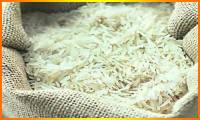
IRRI, India sign 5-year plan to develop better rice.
Renewing its ties with India, the popular International Rice Research Institute (IRRI) and the Indian Council for Agricultural Research (ICAR) signed a five-year plan in Varanasi on Wednesday.
Between 2023 and 2028, the Philippines-headquartered IRRI and ICAR will work to establish a framework to develop market-oriented rice varieties with higher genetic gains, develop climate-resilient rice systems, and towards bettering rice health and nutrition.
The work plan was signed between Dr. Jean Balié, (IRRI director general) and Dr. Himanshu Pathak (ICAR chief) revitalising the non-profit’s 60-year-old collaboration with India. The signing event was held in the backdrop of the G20 MACS conference that concluded in the city on Wednesday.
'While IRRI and India’s collaboration has evolved over the years, so have the needs, expectations, and the environment of doing business in relation to what is happening in India and globally. IRRI...has been a staunch supporter of research and development to address the continuously changing challenges of the agri-food system,' said Dr Balié said on the occasion.
Most delegates condemn war in Ukraine
Most representatives from G20 member states who attended the G20 MACS in Varanasi on Wednesday, opposed and condemned the Russian aggression on Ukraine since February last year, a senior official said.
The chair’s summary and outcome document released on the occasion read: '...Most members strongly condemned the war in Ukraine and stressed that it is causing immense human suffering and exacerbating existing fragilities in the global economy constraining growth, increasing inflation, disrupting supply chains, heightening energy and food insecurity, and elevating financial stability risks. There were other views and different assessments of the situation and sanctions.'
'Paragraphs 3 and 4 of this document, as taken from the G20 Bali Leaders’ Declaration (15-16 November 2022), were agreed to by all member countries except Russia and China,' it added.
Source: hindustantimes.com