
Bharatiya Prakritik Krishi Paddhati scheme becomes National Mission on Natural Farming.
Source: thehindubusinessline.com

New foreign trade policy may be released by end of this month: Commerce Secretary.
Source: economictimes.indiatimes.com

Soyameal exports jump 87% in Oct-Feb.
Source: thehindubusinessline.com

Union Minister Shri Narender Singh Tomar inaugurates 'AgriUnifest' in Bengaluru; says, Youth Energy will help in India s development.
Source: pib.gov.in

We should work towards creating quality consciousness in the country and win the confidence of our customers: Shri Goyal.
Source: pib.gov.in

India s overall exports is projected to grow at 16.18 percent during April-February 2022-23 over same period last year (April-February 2021-22), with one month remaining in the current financial year.
Table 1: Trade during February 2023*
|
|
| February 2023 (USD Billion) | February 2022 (USD Billion) |
| Merchandise | Exports | 33.88 | 37.15 |
| Imports | 51.31 | 55.90 | |
| Services* | Exports | 29.15 | 21.30 |
| Imports | 14.55 | 12.97 | |
| Overall Trade (Merchandise +Services) * | Exports | 63.02 | 58.46 |
| Imports | 65.85 | 68.87 | |
| Trade Balance | -2.83 | -10.41 |
* Note: The latest data for services sector released by RBI is for January 2023. The data for February 2023 is an estimation, which will be revised based on RBI’s subsequent release. (ii) Data for April-February 2021-22 and April-September 2022 has been revised on pro-rata basis using quarterly balance of payments data.
Fig 1: Overall Trade during February 2023*
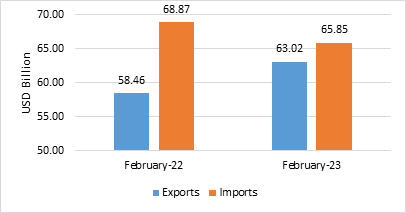
Table 2: Trade during April-February 2022-23*
|
|
| April-February 2022-23 (USD Billion) | April-February 2021-22 (USD Billion) | ||||||||||||||||||||||||||||||||||||||||||||||||||||||||||||||||||||||||||||||||||||||||||||||||||||||||||||||||||||||||||||||||||||||||||||||||||||
| Merchandise | Exports | 405.94 | 377.43 | ||||||||||||||||||||||||||||||||||||||||||||||||||||||||||||||||||||||||||||||||||||||||||||||||||||||||||||||||||||||||||||||||||||||||||||||||||||
| Imports | 653.47 | 549.96 | |||||||||||||||||||||||||||||||||||||||||||||||||||||||||||||||||||||||||||||||||||||||||||||||||||||||||||||||||||||||||||||||||||||||||||||||||||||
| Services* | pib.gov.in |
||||||||||||||||||||||||||||||||||||||||||||||||||||||||||||||||||||||||||||||||||||||||||||||||||||||||||||||||||||||||||||||||||||||||||||||||||||||
16 Mar, 2023

APEDA entrusted to promote Indian millets in international market. The Agricultural & Processed Food Products Export Development Authority (APEDA) has been entrusted with the task of promoting Indian millets in the international market, the Minister of State in the Ministry of Commerce and Industry, Smt. Anupriya Patel said in reply to a parliamentary question today. The following steps, inter-alia, are being taken to meet the export demand during International Year of Millets 2023: APEDA has published e-catalogues for 30 major millet importing countries and for 21 millet-producing Indian states. The e-catalogues have information on individual country profile; Indian millets and millet value-added basket; millet production scenario, India's export of millets; international standards of millets; and contact list of exporters, startups, FPOs, importers, and Indian missions in the country. APEDA has identified three knowledge partners - Indian Institute of Millet Research (IIMR); Centre of Excellence on Millets — University of Agriculture Sciences, Bengaluru; and Yes Bank. These knowledge partners collaborate for preparation of content for publication of millet promotion material; identification of participants for the millet-promotion events to be organized by Indian Missions abroad; and millets value chain development. APEDA has planned promotion of Indian millets across international trade fairs and hold B2B (business-to-business) meetings for the year 2023. A millet-specific web portal has also been launched. The portal contains information about millets, their health benefits, production and export statistics, millet exporters’ directory, and other relevant information. APEDA has been conducting capacity-building programs throughout the country to facilitate export of millet and millet products. Start-ups on millets are being mobilized for export promotion of value-added products such as Ready to Eat (RTE) and Ready to Serve (RTS) categories, including noodles, pasta, breakfast cereal mix, biscuits, cookies, snacks, sweets, and other millet-based products. A knowledge book titled "Superfood Millets: A USD 2 Billion Export Opportunity for India" has been published by APEDA, in association with a knowledge partner. This book will help the prospective exporters of millets. An e-platform for Virtual Trade Fairs (VTFs) has been created specifically for millets. This platform is designed to invite buyers and visitors from across the globe to interact with exhibitors showcasing millet-based products. APEDA has stepped into brand building of Indian millets; ‘Shree Anna’ to promote the consumption of millets and to create a niche market for Indian millets across the globe. Various sampling and tasting campaigns are being organized at significant destinations. Millets and millet-products are being promoted using cutting-edge comprehensive campaigns; encompassing social media, and digital branding. In order to reorient APEDA and enable it to effectively pursue market access, provide commercial intelligence, promote quality and adherence to standards in agriculture exports, and handle Sanitary and Phytosanitary Measures (SPS) issues, the Government has approved restructuring of APEDA. Creation of 20 new posts has been approved under the restructuring plan. The restructuring plan also enables APEDA to hire Subject Matter Experts in various fields for a specific purpose and time. Source: pib.gov.in |
|||||||||||||||||||||||||||||||||||||||||||||||||||||||||||||||||||||||||||||||||||||||||||||||||||||||||||||||||||||||||||||||||||||||||||||||||||||||
16 Mar, 2023

Next round of India-Canada talks on trade agreement likely in April. The next round of negotiations for the proposed interim trade agreement (FTA) between India and Canada is expected to be held in April, a senior commerce ministry official said on Wednesday. Krishan Kumar, Joint Secretary in the department of commerce, said negotiations are at an advanced stage in goods and services, and in other areas. 'Six rounds have completed. The seventh round may be held in April,' he told reporters here. In March last year, the two countries re-launched negotiations for an interim agreement, officially dubbed as an early progress trade agreement (EPTA). Apart from traditional areas, the agreement may cover areas like SMEs, trade and gender, environment and labour. 'We have already exchanged goods offer and discussions are starting to improve the services offer,' he said. Briefing reporters, Commerce Secretary Sunil Barthwal said that talks for a free trade agreement with the UK and European Union are moving in a progressive direction. India and the UK launched negotiations for the FTA in January last year. On the progress on the Indo-Pacific Economic Framework (IPEF) talks, it was informed that productive and constructive text-based discussions held under IPEF pillars supply chain, clean economy and fair economy during the special round held here in February. The Indian delegation at present is participating in the second round of negotiations being held in Bali from March 13-19. Source: economictimes.indiatimes.com |
|||||||||||||||||||||||||||||||||||||||||||||||||||||||||||||||||||||||||||||||||||||||||||||||||||||||||||||||||||||||||||||||||||||||||||||||||||||||
16 Mar, 2023

Govt identifies 14 garlic varieties suitable for kharif production. As many as 14 varieties of garlic have been identified for cultivation under different agro-climatic conditions, the Centre told the Lok Sabha on Tuesday. Answering a query on the steps taken to make rabi season garlic suitable for kharif crop cycle, Narendra Singh Tomar, Union Minister for Agriculture and Farmers’ Welfare, said planned research on genetic improvement of garlic for identification of varieties suitable for cultivation under different seasons and agro-climatic conditions in India is being carried out by the ICAR - Directorate of Onion and Garlic Research, Pune, and the National Horticulture Research and Development Foundation, Nasik. Location-specific adaptive trials are being taken up at different locations of the country through ICAR - All India Network Research Project on Onion and Garlic, Pune, he said. Suitable climate Stating that the agro-climatic conditions of Maharashtra, Karnataka and Tamil Nadu are suitable for garlic production during the kharif season, he said 14 varieties of garlic have been identified for cultivation under different agro-climatic conditions, comprising 11 varieties for plains and three varieties for hill areas. Another land race named 'Gadag local' has localised adoptability in Karnataka. Of these garlic varieties, ‘Bhima Purple’ and ‘G282’ has been identified for cultivation in Maharashtra, Karnataka and Tamil Nadu (Ooty) during kharif, whereas ‘Gadag local’ land-race is ideal only for Karnataka. He said ‘G282’ and ‘Bhima Purple’ produced 40-50 quintals of garlic per hectare during kharif season. One advance breeding line of garlic, namely ‘G389’, has been observed suitable for kharif (40-60 quintals per hectare) in Maharashtra, Gujarat, and Madhya Pradesh as well as for rabi (60-70 quintals per hectare), he said. Digital infra to be open source In another reply, Tomar said the Government has proposed to build Digital Public Infrastructure (DPI) for agriculture as an open source, open standard, and inter-operable public good to enable 'inclusive farmer-centric solutions' and support for growth of agri-tech industry and start-ups. For this, the Government has proposed initiatives such as the development of the Central Core of the DPI, and the development of Krishi Decision Support System (KDSS). Registries (farmers, crop sown registry, and geo-referencing of village maps and crop sown registry), unified farmers service interface, agri data exchange, and consent manager will be part of the development of Central Core of the DPI, he said. Fodder FPO In a separate reply, Parshottam Rupala, Minister for Fisheries, Animal Husbandry and Dairying, said around 100 fodder-plus FPOs (farmer producer organisations) will be registered during 2023-24. The Department of Agriculture and Farmers Welfare had designated National Dairy Development Board (NDDB) as implementing agency to form and promote 100 FPOs, primarily fodder-centric FPOs, during 2022-23. While Gujarat has been allotted 16 fodder-plus FPOs, Karnataka has been allotted 11. Other States such as Bihar and Kerala have been allotted nine fodder-plus FPOs. Source: thehindubusinessline.com |
|||||||||||||||||||||||||||||||||||||||||||||||||||||||||||||||||||||||||||||||||||||||||||||||||||||||||||||||||||||||||||||||||||||||||||||||||||||||
16 Mar, 2023

Area under cultivation of millets in 2021-22 is 15.48 million hectares, in 2013-14 it was 12.29 million hectares. The Union Minister of State for Consumer Affairs, Food and Public Distribution, Ms. Sadhvi Niranjan Jyoti in a written reply to a question in Lok Sabha today informed that, the details of millet production in terms of annual production and area under cultivation, State- wise, since 2014 are at Annexure-I-VI. The area under cultivation of millets has ranged from 12.29 to 15.48 million hectares from 2013-14 to 2021-22. To promote the consumption of millets/coarse grains, distribution period of these commodities has been enhanced to 6-10 months from earlier period 3 months. Further provisions of inter-state transportation and advance subsidy have been incorporated in the guidelines. State Governments are also being requested repeatedly through written communications and in various meetings convened with them to procure millets and distribute under Targeted Public Distribution System (TPDS), Pradhan Mantri Poshan Shakti Nirman (PM POSHAN), Integrated Child Development Services (ICDS) and Other Welfare Scheme (OWS). For promoting millets, following steps taken by Government: Millet Awareness Quizzes/Competition and Conferences are being conducted by Food Corporation of India and Central Warehousing Corporation of Department of Food and Public Distribution. The Year 2023 is being celebrated as International Year of Millets-2023 for promotion of millets. Millets has been termed as ‘Nutri-cereals’ owing to their health benefits. All the offices/Central Public Sector Enterprises of Department of Food and Public Distribution have been directed to introduce and promote millets in their canteens. Government of India fixes Minimum Support Prices (MSPs) for twenty-two (22) mandated crops based on the recommendations of the Commission for Agricultural Costs & Prices (CACP) after considering the views of concerned State Governments and Central Ministries/Departments. The millets such as Ragi, Jowar and Bajra are covered under Minimum Support Price (MSP). Government makes allocation of coarse grains (millets) under Public Distribution System (PDS) and Other Welfare Schemes (OWSs) including Wheat Based Nutrition Programme (WBNP) and Pradhan Mantri Poshan Shakti Nirman (PM POSHAN) Schemes based on the requirement projected by the State Govts., Ministry of Women and Child Development and Department of School Education & Literacy subject to the availability of coarse grains (millets).
| |||||||||||||||||||||||||||||||||||||||||||||||||||||||||||||||||||||||||||||||||||||||||||||||||||||||||||||||||||||||||||||||||||||||||||||||||||||||