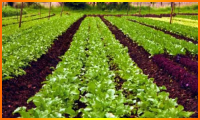
B20 Conference to showcase vibrant organic farming of Sikkim to start in Gangtok tomorrow.
The vibrant organic farming of Sikkim will be prominently showcased to the world through the third B20 Conferences being organized in Gangtok, Sikkim from tomorrow till 17th March 2023. It will also highlight opportunities for Multilateral Business Partnerships in Tourism, Hospitality & Pharmaceuticals. Department for Promotion of Industry and Internal Trade (DPIIT) is organizing four B20 Conferences in the North Eastern region to showcase the untapped potential and opportunities within the region out of which two have already been held earlier in Imphal and Aizawl and the third and fourth are to be held in Gangtok & Kohima respectively.
Senior Advisor, DPIIT, M/o Commerce & Industry, Ms. Rupa Dutta gave a detailed presentation on Business 20 and its working at a press briefing today. She stated the key deliverables of B20 like action plan for reskilling and up-skilling of the workforce to operate in a technological world, promoting investment in green energy across countries and improving climate finance options and non-financial disclosures, development of an inclusive ecosystem for innovation and R&D, promoting higher private sector participation to build regional value chains and industrialization of Africa, etc. The schedule of important B20 events with special focus on the upcoming B20 conference in Gangtok, Sikkim was also presented. The hosting of B20 Conference in Sikkim is significant to showcase the vibrant Organic Farming of the state to the world. In addition to this, the B20 event at Gangtok will highlight the.
Dr. Chintan Vaishnav, Startup20 India Chair & Mission Director Atal Innovation Mission, NITI Aayog gave a presentation on the Startup20 which is the new official engagement group under the Indian presidency 2023. He stated that StartUp20 in Gangtok will deliberate on ways to strengthen the global Start Up ecosystem, of which India has emerged as the third most powerful nation. He explained how it is envisioned to act as the voice of the global startup ecosystem bringing together varied stakeholders on a common platform. He said that startups originate in niche settings, they thrive in crisis situations and they see global challenges & disruptions as opportunities. Ms. Rupa Dutta added that startups have created a generation of job creators & not job seekers in India.
G20 has two Tracks- Sherpa Track and Finance Track. Sherpa Track has 13 Working Groups and 11 Engagement Groups. DPIIT is the nodal Ministry for two engagement groups viz., Startup 20 and Business 20 (B20). Engagement Groups comprise non-government participants from each G20 member who provide recommendations to the G20 Leaders and contribute towards the policy-making process.
The Business 20 was formed in 2010 and is the official G20 dialogue forum with the global business community. B20 aims to deliver concrete actionable policy recommendations on the priorities of each rotating presidency to spur economic growth and development. The B20 has scheduled a total of 100 meetings with the number of in-person meetings being 65 and the number of Hybrid Meetings being 35.
The Startup 20 has been established under India’s G20 Presidency. It aims to act as a dialogue forum with the global startup ecosystem stakeholders and intends to represent the global startup ecosystem to raise the macroeconomic concerns and challenges faced by entrepreneurs with G20 leaders. The Start-Up 20 engagement group has a total number of 60 meetings planned, out of which 5 are in-person meetings. The forthcoming event is Startup 20 Gangtok, Sikkim on 18-19 March 2023.
The B20 Summit is scheduled to be held in New Delhi from 26th -27th August 2023 and the Startup 20 Summit is scheduled to take place in Gurugram from 2nd -4th July 2023.
Source: pib.gov.in

Plant based foods are an important option to meet future needs - Shri Tomar.
In order to deliberate on plant-based foods as an option for Food Security in the future, a conference was organized on the topic 'Dawn of a Plant-Based Age' during the ‘Aahaar’ exhibition organized at Pragati Maidan, New Delhi. Inaugurating the conference organized by the Plant Based Foods Industriy Association (PBFIA), the Chief Guest, Union Minister of Agriculture and Farmers Welfare, Shri Narendra Singh Tomar said that plant-based foods, along with meeting the needs of the times, will create job opportunities and boost agriculture. It will also give strength to the Agriculture sector. In view of the challenges that agriculture is facing, a plant-based alternative diet is an important step.
Union Minister Shri Tomar said that if we prepare the options that will be needed in the future, then we can avert any crisis in the coming times. We are well aware of the present and future challenges, Food Security being one of them. In the coming decades, India will complete the centenary of Independence, by that time the population will also increase, whereas due to the works like infrastructural development, laying of new railway lines in large numbers, construction of world class national highways for modern and developed India, we have to be prepared for the possible reduction in the area under cultivation. The Government of India, under the leadership of Prime Minister Shri Narendra Modi, along with the State Governments, is rapidly engaged in fulfilling the ambitious target of making India a Developed nation by the year 2047. There is a need to think from now on how much food we will need till the year 2050 and how much global demand will increase from us. In this direction, the Central Government is making all efforts at its level and Prime Minister Shri Modi has taken steps in a planned manner towards realizing the vision of overall and balanced development. People's interest in agriculture should increase continuously, this is also our responsibility, that is why Prime Minister Shri Modi always insists that private investment should come in agriculture sector, new techniques should come, work should get simpler and farmers reap more profit, thus the next generation will be attracted towards agriculture. It has to be understood that the farmer is the basis of farming. The first priority should be to give benefits and prestige to the farmers, so that they can stay in farming, feed the country and also fulfill the expectations of the world. Continuous efforts are being made in this direction through various schemes by the government.
Shri Tomar said that along with food security, it is the need of the hour to prepare alternatives from the point of view of nutrition. On the initiative of Prime Minister Shri Modi, the United Nations has declared the year 2023 as the International Year of Millets. Shree Anna's production-productivity increases, processing, packaging, exports also increase, millet based dishes regain pride of place in our food plates, that's why the Year of Millets is being celebrated. As a result, the nutritious diets will increase, farmers will benefit and job opportunities will also increase. PBFIA office bearer Shri Sanjay Sethi, APEDA's Secretary Dr. Sudhanshu & ITPO's Shri Rajat Agarwal were also present in the programme.
Source: pib.gov.in
Union Agriculture Minister says if the Small Farmers will be empowered, it will boost India s GDP.
Union Agriculture and Farmers Welfare Minister Shri Narendra Singh Tomar today said if the Small Farmers will be empowered, it will boost India’s GDP. Speaking at an event after launching the Kisan Tak channel and its website of the India Today Group in New Delhi, he said that Small Farmers constitute 85% of the farming community and they face the challenge of lack of private investment. Farming is the backbone of India’s economy and the farm ecosystem is the main pillar of Indian economy, he added.
Shri Tomar said that the Central Government has undertaken an ambitious programme of forming 10,000 Farmers Producers Organizations (FPOs) with an outlay of Rs.6,865 crore to boost the economic capacity of the Small Farmers. While in the plains, 300 farmers can form an FPO, in the Hilly and North-Eastern Region 100 farmers can join to form an FPO. The FPOs can have a bargaining power to have new technologies, improved fertilizers and quality seeds as well as equipment and can add productivity through cluster farming.
Shri Tomar said that Rs.1,50,000 crore of Atmanirbhar package has been earmarked for the farmers including Rs.15,000 crore for Horticulture, Rs.20,000 crore for Fisheries, Rs.4,000 crore for Herbal Agriculture and Rs.10,000 crore for Food Processing Industries.
The Agriculture Minister said that in 2013-14 the Agriculture Budget was Rs.21,000 crore, which has been increased by the Prime Minister Narendra Modi led Government to Rs.1,25,000 crore at present. He informed that Rs.2,40,000 crore has been disbursed through PM Kisan Samman to 11.5 crore farmers.
Shri Tomar said that in the last nine years the Modi Government has provided a total sum of Rs.20 lakh crore as Short Term Loan to free them from the clutches of money lenders. He said that new innovations in farming as well as application of new technologies has also added to enhance productivity as well as increased production of food grains. The Minister pointed out that last year, Rs.4 lakh crore of Agri Exports has been recorded, which is the highest since Independence.
Shri Tomar said Agriculture will continue to play a major role as India, under the able guidance of PM Modi, aims to scale as a $5 Trillion economy soon and will emerge as a Developed nation during the Amrit Kaal by the year 2047. He said that in the last 8-9 years, under the leadership of Prime Minister Shri Modi, many concrete steps have been taken by the Government of India in the Agriculture sector, the benefits of which is evident in the farmers’ community and agriculture sector. Today the responsibility has come upon the Indian agriculture sector and our farmers to eradicate hunger from the world. Expectations from us has increased so much that instead of demanding, we have become a nation of exports.
Shri Tomar said that the Agriculture sector not only provides food grains in the country, but also provides employment in large numbers. With the hard work of farmers and research of scientists, we can meet the needs of the country as well as the world. Government of India is working sincerely to increase technical support in Agriculture. The Prime Minister has initiated the Agri Infra Fund worth Rs 1 lakh crore to fill the gaps in infrastructure, besides Rs. 50,000 crores for Allied Sectors. The work of compensating farmers for loss has also been done under the leadership of PM Modi. The Pradhan Mantri Fasal Bima Yojana is being run to provide security cover to the farmers, through which claims worth Rs 1.30 lakh crore have been disbursed so far. The Prime Minister also ensured that the farmers got at least Rs 20 lakh crore as short-term credit through the Kisan Credit Cards (KCC).
Shri Tomar said that the Prime Minister's emphasis is on Natural Farming, it is cow-based farming, for which the government is working in Mission mode. He said that on the initiative of Prime Minister Modi, 2023 has been declared by the United Nations as the International Year of Millets (Shree Anna). A major international event on Shree Anna is scheduled to be held in Delhi on 18 March 2023 with the Prime Minister as the chief guest. When the demand for millets will increase in the country and the world, our small farmers will be benefited.
Source: pib.gov.in

India & Australia to Conclude Talks for Expanding Scope of FTA By 2023; Discusses Sanitary & Phyto-Sanitary Issues.
Both countries also agreed to aim for USD 100 billion in bilateral trade. Don Farrell, Australia's Minister for Trade and Tourism, who is accompanying Australian Prime Minister Anthony Albanese on an official visit to New Delhi, said the two countries 'can achieve' this goal.
On December 29, last year, India and Australia implemented an economic cooperation and trade agreement (ECTA) and are now negotiating to broaden the scope of the agreement for a comprehensive economic cooperation agreement (CECA). ECTA was the initial stage of our economic engagement.
'We are now entering phase 2 of our discussions, in which we are looking at a much broader range of subjects and taking this into a CECA,' Goyal told reporters at a joint press conference here. Both ministers have expressed 'dissatisfaction' with trade negotiators and stated that they 'will be much more ambitious and aim for a USD 100 billion trade between the two economies,' he said.
According to Farrell, the two countries 'can achieve' this goal. On the deadline for completing the CECA negotiations, Goyal stated that while anything done under a deadline is always 'dangerous' because 'you may end up making mistakes,' 'we' must do things quickly. He stated that both trade ministers are committed to expediting the negotiations.
Both the prime ministers have 'collectively tasked us to work towards closing the CECA negotiations within this calender year. That would be fantastic. We would work in the same spirit as ECTA and hope for quick results without sacrificing quality,' Goyal added.
He also stated that 'we are very dissatisfied' with the USD 30-billion bilateral trade, and that India and Australia have set a target of USD 45-50 billion over the next five years. According to Goyal, there are numerous opportunities to expand cooperation in areas such as education, technology, audio-visual services, and sports.
While Australia has some 'very' fine technologies, education institutes, and sports, he believes India can offer more in terms of talent pool, manufacturing base, and startup ecosystem. Concerning increased agri-trade with Australia, the Indian commerce minister stated that several areas of mutual interest are being considered by agriculture ministries on both sides to resolve sanitary and phyto-sanitary (plant and animal) problems.
Albanese stated that both countries are looking at firming up the ambitious CECA by 2023 following the first India-Australia summit talks here on March 10 on a range of key issues, while a joint statement stated that the two prime ministers tasked the concerned officials to expedite the conclusion of a Migration and Mobility Partnership Arrangement (MMPA) within the next three months. Goyal praised Australia for addressing Indian concerns in the agricultural and dairy sectors, which involve small and marginal farmers.
'We are looking at win-win opportunities in many areas, such as space technology, Australian education systems and critical minerals, energy storage systems developed in Australia, and sports. 'Our focus has been on capitalizing on each other's comparative competitive advantages to increase trade,' he added. According to Farrell, Australia possesses all of the critical minerals required to manufacture batteries for electric vehicles.
He also stated that Australia shipped goods worth USD 2.5 billion to India in the first month of the ECTA. Farrell went on to say that the Australian wine industry can come to India and help the Indian wine industry by sharing knowledge and quality. 'I hope that in the coming months, we will be able to send our teams from the wine sector from India and invite teams from Australia to come in forging alliances with mutual cooperation,' Goyal said.
Goyal added that because Australia has a long coastline, India can learn various water sports from it. Farrell responded to a question about whether Australia is considering including gender and sustainability issues in the CECA by saying that the country is considering these issues as part of the CECA. According to Goyal, India is open to negotiations and wants to engage with the rest of the world from a position of strength, learning from best practices.
Source: krishijagran.com
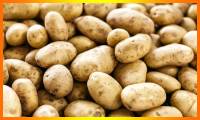
Over 6,000 quintals potatoes exported from Agra to Malaysia, Qatar, Dubai.
The potato, known as the king of vegetables, is in high demand in countries outside India. While potatoes are common in India and are easily available, the vegetable is purchased at exorbitant prices abroad.
According to information obtained by India Today, approximately 6,000 quintals of potatoes are being exported from Agra in response to demand from hotels and homes in Malaysia, Qatar, and Dubai.
After flagging off trucks loaded with potatoes today, Agra's Chief Development Officer A Manikandan told India Today that farmers have been paid Rs 900 per quintal for export potatoes, while the government's procurement price is set at Rs 650 per quintal. Exporting potatoes is proving to be a profitable business for these farmers in this situation.
Kaushal Kishore, Deputy Director Horticulture, told India Today that in collaboration with the Horticulture Department and the Uttar Pradesh State Horticulture Cooperative Marketing Federation, Siddhi Vinayak Agro Processing Khandauli (Agra) has exported 6,000 quintals of potatoes abroad to ensure that potato farmers get the best price for their produce. Around 3000 quintal potatoes have been sent to Malaysia, and 3000 quintal potatoes have been sent to Dubai and Qatar.
Many trucks of potatoes have also been transported from Agra to Himmatnagar in Gujarat, where they will be exported to other countries via the Mundra Port. This LR variety potato was exported at a cost of Rs 900 per quintal.
Potato farmer Murarilal told India Today that potatoes are being sold at the weekly haat in Agra's Midhakur town for Rs 4 per kg, while lemon prices have skyrocketed.
Nirauti Lal, a Nagla Laldas resident who sells vegetables in the market, stated that such apathy towards potatoes has not been seen in several years. At the moment, a kilogram of potato costs only Rs 4 while a kilogram of lemon costs Rs 200. The price of green chillies is Rs 100 to 150 per kg and ginger is Rs 800 to 100 per kg.
Vishal Sharma, Vice Chairman of Hindustani Biradari, stated that the time has come for farmers to reduce potato cultivation and focus on growing other vegetables because it is difficult to recover the cost of potato cultivation at the current prices. If the area of potato cultivation is reduced, the demand for potatoes will increase, as will the price. Aside from that, there is a need to focus on the cultivation of advanced potato varieties. Such varieties should be grown that are in high demand in foreign countries, because good prices for potatoes in the Indian market are not available, whereas potatoes exported abroad fetch good prices.
Source: indiatoday.in
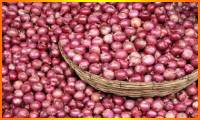
NAFED to begin procurement of Kharif Onion in Gujarat.
National Agricultural Cooperative Marketing Federation of India Ltd (NAFED), on the direction of Government of India, will initiate procurement of Kharif Onion to address the issue of falling prices of onion in Gujarat. This move of Government of India will provide stability to the onion market in the State.
Taking stock of the situation due to depressed prices of Onion in late Kharif season in the State, Department of Consumer Affairs has directed NAFED to start procurement of Onion from three major markets in Gujarat. NAFED will start procurement of onion in Bhavnagar (Mahua), Gondal and Porbandar.
This intervention has been planned by Government of India in order to give immediate relief to the farmers from crashing prices of onions in the State. Farmers are requested to bring their good quality and dried stock to the procurement centres to avail of better rate at these centres. Payments to the farmers will be done online.
More centres will be opened from time to time as required.
Source: fnbnews.com

World Food Safety Day 2023 will highlight food standards.
The World Food Safety Day 2023 campaign has started recently, with the theme 'Food standards save lives'. The theme coincides with the 60th anniversary of Codex Alimentarius this year and encourages food safety advocates around the world to focus on the importance of applying standards in every aspect of food production - from the source to the table.
The launch saw the publication of this year’s guide in all six UN languages, which provides information on the theme and Codex Alimentarius, as well as some tips on the kinds of activities people could organise and the key messages being promoted this year. In addition, the World Food Safety Day website has been updated in anticipation of the 2023 celebrations that will take place on (or around) June 7.
This will be the fifth observance of World Food Safety Day. Since the first celebration in 2019 World Food Safety Day has grown every year in terms of the number of countries where it is celebrated, and the number of events organised. This year, then, is likely to be bigger than ever, as people become increasingly aware of the need to apply good food safety practices all along the food chain.
In a video message, Tom Heilandt, Codex Secretary, underlines the World Food Safety Day slogan saying: food safety is everyone’s business. Foodborne illness is almost entirely preventable and can be significantly reduced if we all raise awareness and inspire action on food safety.
Source: fnbnews.com

Gujarat To US: Bavla Facility Makes Possible Direct Export Of Kesar.
Farm fresh kesar and Alphonso from Gujarat will be transported directly to the US, without having to go through the inspection facility through Maharashtra. It also means farmers will now be able to increase exports to the US. With the US Department of Agriculture’s Animal and Plant Health Inspection Service (USDA-APHIS) having approved the agro radiation processing facility at Bavla in July 2022, there’s good news for mango lovers in the US.
The facility at Bavla, near Ahmedabad, has been developed by Gujarat Agro Industries Corporation Ltd (GAIC). 'USDA-APHIS approved the Bavla radiation processing facility last July. The coming mango season will be the first in which Gujarat will directly export mangoes to the US market. Currently, mangoes from Gujarat are sent through Maharashtra, which means higher logistics costs. Our facility was ready in 2014 but the approval was delayed. If the weather does not play spoilsport, we expect nearly 400 tonnes of mangoes to be exported between mid-April and June.'
According to the Agriculture and Processed Food Products Export Development Authority (APEDA), last year India’s mango exports to the US was 813 tonnes, valued at Rs 33.68 crore.
Hiren Gandhi, former chairman of GCCI’s food committee, explained: 'The US mandates that mangoes and other food products undergo irradiation, which kills insects on the fruit. The irradiation facility will help Gujarat farmers get better prices for their kesar mangoes in the international market. The US is a big market for mangoes. The Australian market will also open for direct exports from Gujarat with this facility. Irradiation also increases the shelf life of mango by at least 25 days.'
Adding further, Ashish Guru, chairman, of Gujarat Chamber of Commerce and Industry (GCCI), Agriculture Committee stated: 'Gujarat is a leading mango producer. Our mangoes are of better quality than the Mexican varieties being sold in the US. The irradiation facility will help expedite the exports and augur premium returns for the harvesters.'
Source: vibesofindia.com

Kamalam (Dragon Fruit) cultivation area in India expected to expand to 50,000 hectares in five years under MIDH scheme from the present 3,000 ha.
Kamalam or Dragon Fruit, a herbaceous perennial climbing cactus widely known as Pitaya, has its origin in Southern Mexico, Central America and South America. It is widely cultivated in South-East Asia, India, USA, The Caribbean Islands, Australia throughout the tropical and sub-tropical world. Pitaya, called as Dragon fruit in English, is popular by different names such as Pithaya in Mexico, Pitaya Roja in Central and Northern America, Pithajah in Thailand and Kamalam after the Sanskrit name lotus in India. It is also known as 'Wondrous Fruit of the 21st century'.
The Kamalam (Dragon fruit) has recently drawn much attention of the growers worldwide, not only because of their red purple colour and economic value as food products but also for their enormous health benefits. The skin of the fruit is covered with bracts or scales which may have attributed the fruits resembling the mythical creature 'dragon', hence the name dragon fruit. Pitaya or dragon fruit is a climbing, fast growing perennial vine cactus species which originated from the tropical regions of Mexico and Central and South America. From its centers of origin, dragon fruit has spread over tropical and sub-tropical America, Asia, Australia and Middle East. Currently it is being cultivated in at least 22 countries of tropics. Historical evidence indicates that the French introduced the crop to Vietnam about 100 years ago and it was grown for the King. Later, it became popular among the wealthy families of the entire country.
In India, the cultivation of Kamalam Fruit is fast picking up and farmers of Karnataka, Kerala, Tamil Nadu, Maharashtra, Gujarat, Chhattisgarh, Odisha, West Bengal, Andhra Pradesh, Andaman & Nicobar Islands, Mizoram and Nagaland have taken up its cultivation. Presently, the total area under cultivation of Dragon Fruit in India is more than 3,000 ha. which is not able to meet the domestic demand, hence majority of the dragon fruits available in Indian market is imported from Thailand, Malaysia, Vietnam and Sri Lanka.
In India, Kamalam import started during 2017 with a quantity of 327 tonnes, which has increased sharply to 9,162 tonnes in 2019 and the estimated import for 2020 and 2021 is about 11,916 and 15,491 tonnes, respectively. The projected import value was about Rupees 100 crores for 2021. Dragon fruit provides fast return with economic production in the first year after planting and full production is attained in 3-4 years. The life expectancy of the crop is about 20 years. Average economic yield after 2 years of planting is 10 tonnes per acre. At present the market rate is Rs 100 per kg fruit, so the revenue generated by selling fruits per year is Rs 10,00,000. Benefit Cost Ratio (BCR) is: 2.58.
With focus on Atmanirbhar Bharat, there is need to reduce import and increase our own capacity for production. In this endeavor under Mission for Integrated Development of Horticulture (MIDH), a roadmap is being prepared for cultivation of this crop in the identified potential area to increase the production of exotic and niche area fruits including Kamalam. The target for area expansion under MIDH for Kamalam is 50,000 ha. in 5 years. The cultivation of this fruit has started recently and a plantation of this healthy fruit is established at ICAR-Central Island Agricultural Research Institute, Port-Blair, Andaman and Nicobar Islands and IIHR, Bengaluru, Karnataka.
Under MIDH, the Ministry of Agriculture & Farmers Welfare has approved a Centre of Excellence (CoE) for Kamalam Fruit to be established by Indian Institute of Horticultural Research (IIHR), Bengaluru, Karnataka at Hirehalli, Bengaluru, Karnataka on 09-03-2023 to focus on production, post-harvest and value addition of Kamalam.
The Centre will work for development of latest production technology as per the international standard & off season production and demonstration of these technologies for high yield production. The Centre will aim to achieve self-sustenance in Kamalam fruit production, value addition and enhancing economic development of the farming community.
The Centre of Excellence will focus on developing high performance variety with improved yield, nutrient use efficiency, nutritional quality, tolerance against biotic & abiotic stresses, Standardization of propagation techniques, distribution of quality planting material through public participatory approach, development of protocol for post-harvest handling and storage to reduce post-harvest losses and promote export to distant markets, development of value-added products and processes for product diversification & higher revenue realization, dissemination of developed technologies to the farmers & other stakeholders through training, field visits, etc.
With the growing interest in farmers and the quick returns that they are getting from cultivation of Kamalam in agricultural and marginal lands, it is expected that the new areas will come up under Kamalam and the import will be totally substituted through domestic cultivation.
Source: pib.gov.in
FY23 exports to cross $750 billion: Piyush Goyal.
Commerce and industry minister Piyush Goyal on Monday said that India’s goods and services exports will cross $750 billion in the financial year 2022-23, and that country is expanding rupee trade with several countries, many of which are at an advanced stage of dialogue and finalisation.
'Last year, we grew to $676 billion, a massive jump and an all-time record for India, and we are inching close and marching ahead to cross $750 billion of goods and services exports in 2022-23,' Goyal said, at the Confederation of Indian Industry (CII) Partnership Summit 2023. In 2021, India’s goods and services exports were $500 billion.
Goyal also said that India is offering its digital prowess in the form of digital public goods for use by the rest of the world.
'Singapore and India have recently partnered on UPI and we hope to do the same with the UAE in the near future', he said. UPI is Unified Payments Interface.
'We are expanding rupee trade with several countries, many of which are at an advanced stage of dialogue and finalisation,' Goyal said.
On the issue of building resilient and global value chains, the minister said that the world must collectively address the challenges of tariff and non-tariff barriers.
'There are so many non-tariff barriers and as countries create them, others are tempted to follow suit. It is imperative that nations must address these in a mission mode,' he said.
Goyal also pushed for a strong and responsive international institutional framework on the issue of financing global recovery.
'A strong and responsive international institutional framework is called for within which we must reform several multilateral organisations and trading arrangements that have, over the years, led some non-transparent economies whose economic systems are totally opaque- to enjoy the fruits of multilateral engagements,' he said.
As per Goyal, 'it is time the world called out such countries and made them accountable and transparent'.
On emerging technologies, he suggested world skill mapping to find certain nations with skills to be matched with the rich countries which need those skills.
'Singapore and India are making serious efforts to do that matchmaking. UAE and India have been doing that…With Australia, we are working on such mobility and migration partnerships,' he said.
Mary Ng, Minister of International Trade, Export Promotion, Small Business and Economic Development, Canada said: 'Last year, our trade was nearly $21 billion and we will do better. Canada’s portfolio investment in India has reached $70 billion.'
She said that Canada’s indo-pacific strategy is 'most ambitious and consequential' and said the two sides are working on a trade agreement that is meaningful and that would make trade seamless and help develop supply chain links, create partnerships in the digital economy in clean tech, agri tech, health tech, and creating solutions for the future in climate change and food security.
'The recent pandemic and geopolitics has caused pain and panic in many ways to developing and small economies like ours. A country like mine looks forward to getting support and understanding towards diversification of import and export markets, raw materials, financing and domestic productive capacities,' said Lyonpo Loknath Sharma, Minister of Energy & Natural Resources, Industry, Commerce and Employment, Royal Government of Bhutan.
Sharma also said that ICT allows LDCs with limited products and capacities to be drivers of suppliers in the global economy and not mere consumers.
'Landlocked countries must use ICT and avoid being digitally locked. We were geographically locked, let's not be digitally locked,' he said.
Source: economictimes.indiatimes.com