
Income of Zardalu mango farmers will increase in Bhagalpur: will be transported abroad through APEDA, farmers will get benefit.
Preparations are underway to send Bhagalpur's famous Zardalu mango abroad. Through APEDA, both Zardalu mango and Katrani Chuda will be sent abroad. Preparations have also started for this. Last year it was sent to England, Belgium and Bahrain. Will be shipped to many more countries this year. The District Magistrate told that after marking the farmers, their mangoes are sent abroad.
Mango reaches many dignitaries
Bhagalpur in Bihar has become world famous for Zardalu Mango and Katrani Chuda. Every year this mango reaches many big personalities including His Excellency the President, the Prime Minister. Jardalu Mango Secretary Ved Vyas Chaudhary said that Bihar's Bhagalpur is known throughout the country for Jardalu Mango and Katrani Chuda. Maintaining its identity will be our first priority.
This mango has many benefits
Zardalu mango has many benefits. According to experts, even diabetic patients can eat this mango. Zardalu mango proves to be helpful in digestion. Especially its taste is different from all mangoes. This mango can last for more days.
Mango crop is grown in many hectares
Zardalu mango is cultivated on more than 1000 hectares in and around Bhagalpur. Especially in Sabour, it has the highest yield. Now along with the country people from abroad will also be able to taste the taste of mangoes.
Source: bhaskar.com
India participates in the Second Indo-Pacific Economic Framework (IPEF) Negotiating Round, Bali, Indonesia, 13-19 March 2023.
An Inter-Ministerial delegation from India led by Department of Commerce participated in the second Indo-Pacific Economic Framework for Prosperity (IPEF) negotiating round in Bali, Indonesia from March 13-19, 2023.
Negotiators from 13 other countries, including, the United States, Australia, Brunei Darussalam, India, Indonesia, Japan, the Republic of Korea, Malaysia, New Zealand, Philippines, Singapore, Thailand, and Vietnam also participated in the Bali negotiating round.
During the Bali Round, discussions covered all the four pillars of the IPEF: Trade (Pillar I); Supply Chains (Pillar II); Clean Economy (Pillar III); and Fair Economy (Taxation & Anticorruption) - (Pillar IV). India participated in the discussions related to Pillars II to IV.
Building on the discussions that took place during the previous rounds: First IPEF Round held in Brisbane, Australia, in December 10-15, 2022, and the Special negotiating round held in New Delhi, India from February 8-11, 2023, in Bali, IPEF Partners undertook in-depth text-based discussions and conducted follow-up conversations as they work to advance a shared vision for an open, connected, prosperous and resilient Indo-Pacific region.
During the negotiations, the Chief Negotiator of India reiterated India’s belief that IPEF will deepen the economic engagement and promote inclusive development through enhancement in trade and investment in the region. On the side-lines of the negotiating round, the Chief Negotiator and the Pillar Leads also held bilateral meetings with IPEF countries and other concerned stakeholders.
Representatives of interested Indian companies also participated in the Stakeholders engagement session and Business Forum, organized on the margins of the IPEF Bali Round on 17 and 18 March 2023 respectively. In addition, a representative from National Payments Corporation of India (NPCI) also gave a detailed presentation at the Business Forum on Unified Payment Interface (UPI), a successful example of Digital Public infrastructure in India.
IPEF Partners have committed to an aggressive negotiating schedule throughout 2023 with the objective of realizing concrete benefits to enhance a shared vision for economic competitiveness and prosperity in their respective economies. Additional details about the next in-person negotiating round will be released at a later date.
Source: pib.gov.in

The role of agriculture sector is important in making India a developed country, there is a need to pay attention to the education of farmers: Tomar.
According to the dream of PM Narendra Modi, the agriculture sector will play a major role in making India a developed country by the year 2047. For this, special attention will have to be given to higher education in the agriculture sector.
Need to focus on agriculture education
In this work, the World Bank is already running a project NAHEP in collaboration with the Indian Council of Agricultural Research (ICAR), which is set to be further expanded. The intention of the World Bank and ICAR is that India should become a major hub for providing higher education in the agriculture sector globally.
Inauguration of three day seminar
Union Agriculture and Farmers Welfare Minister Narendra Singh Tomar inaugurated the three-day seminar in this regard with the help of ICAR and World Bank. On this occasion, Tomar said that to overcome the kind of challenges arising in the agriculture sector, more attention has to be given to higher education in agriculture. Only then India will be able to become a developed country.
Need of digital era in agriculture sector
Regarding the National Agricultural Higher Education Project (NAHEP), he said that more expectations have risen from it considering its achievements in the last five years. Speaking on the occasion, Bekjod Shamsiev, Senior Agricultural Scientist, World Bank said that all the targets under NAHEP have been met. Now more emphasis will be laid on the inclusion of digital in the agriculture sector.
Source: jagran.com

World Apple Conference to be held in Srinagar.
Sopore Apple Farmer Producers Company and Pune-based NGO Sarhad are jointly organizing the first-ever World Apple Conference in Srinagar, Jammu and Kashmir, in June 2023.
The conference, scheduled for June 24-25 at the Sher-I-Kashmir International Conference Centre, aims to address the issues faced by the apple industry and empower apple growers of Jammu and Kashmir, who have suffered huge losses due to the fall in prices of their produce in recent years. Eminent personalities and experts from various fields, especially agriculture and horticulture, are expected to attend the event.
The conference will focus on promoting apple tourism, as the valley has significant potential in this area. Visitors will have the opportunity to interact with apple farmers, stay on their farms, and experience their way of life. The organizers hope that this will not only generate additional tourism revenue but also provide income for farmers.
Fayaz Malik, President of Sopore Fruit Mandi, said that the conference comes at the right time to explore possible avenues to help mitigate the effects of crop and financial losses due to natural disasters, low crop yield, weak markets, and storage issues. Crop insurance, value addition, cold storage, logistics, and supply chain management and integration will also be core focus areas of the conference.
Malik highlighted that the wastage of crop, both premature and post-harvesting, is another major issue faced by apple growers in the region.
To address these challenges, eminent researchers and academics will participate in the event to contribute to sustainable and long-term solutions for fundamental issues in the apple industry and farming.
The conference also aims to promote better marketing and supply of Kashmiri apples across India while exploring export opportunities for the same.
Source: risingkashmir.com
Over 1,000 products identified under 'One District One Product'.
India has identified 1,068 products across agriculture, textiles, handicrafts and engineering, among others, from 761 districts under the One District One Product (ODOP), an official said Tuesday. The ODOP initiative seeks to convert each district into a manufacturing and export hub by identifying products with export potential in the district.
Manmeet Nanda, joint secretary, Department for Promotion of Industry and Internal Trade (DPIIT) also said that the department has partnered with premier institutes like Indian Institutes of Technology, National Institute of Design and National Institute of Fashion Technology to impart skills related to designing and packaging of these products.
'We have collaborated with Indian missions abroad to showcase these goods as it would help create interest about these products globally,' Nanda said, adding that capacity building via design workshops are being conducted for artisans and weavers to get proper prices.
Source: economictimes.indiatimes.com

Krishnagiri farmers hail GI tag proposal for panneer rose and Arasampatti coconut.
Farmers have welcomed the state government’s proposal to seek Geographical Indication (GI) tag for Arasampatti coconut and Krishnagiri panneer rose. J Kennedy, a coconut farmer in Arasampatti, said, 'There are over 3,000 coconut farmers in Arasampatti and surrounding villages. The coconuts are exported to several states for over five decades.
Arasampatti coconut tree can withstand drought-like conditions and the quality of oil is very good. The minister’s proposal to seek GI tag for coconut grown in our village will encourage many more farmers. The government should also start a coconut research centre and coconut oil factory in the area.'
Tamizhaga Vivasaigal Sangam president KM Ramagounder said, 'GI tag proposal for Arasampatti coconut and cultivation of panneer rose will benefit many farmers. Co-operative crop loan to the tune of Rs 14,000 crore and an interest-free co-operative loan for Rs 1,500 crore will benefit the farmers.
Already, ragi was procured from farmers and distributed at ration shops in Dharmapuri and Nilgiris on a pilot basis, later it was procured through cooperative societies to benefit the farmers. Fund allocation of Rs 18 crore for red gram transplantation in Krishnagiri, Tiruvannamalai, Dharmapuri and Salem will help people to consume quality food.'
Source: newindianexpress.com

India s mango exports to focus on Central Asia, US.
Maharashtra State Agricultural Board (MSAMB) has decided to introduce Indian mangoes this season to Central Asian countries.
MSAMB general manager D D Shinde told The Indian Express they planned promotional events with Indian Embassies in these countries. Other than this, the US phytosanitary inspector was expected to arrive on April 10, marking the start of exports to the country.
The current season has put some doubts about the availability of mangoes in the country. Unusually high February temperatures followed by rains and hailstorms in March have seen farmers complain about the availability of quality fruit.
However, this season, Kesar, the produce of Marathwada, is expected to arrive earlier than usual. Alphonso or Hapus – the priced produce of the Konkan coast of Maharashtra – can suffer from a lower-than-usual production.
The last financial year saw Indian exporters ship out 32,745 tonnes of the fruit. Most of the fruit is exported to Central Asian countries, while European Union countries and the US occupy essential shelves in the export basket.
In most countries, exporters send their consignment via air freight, which is both uncertain and costly. For the US, the air freight sometimes comes out more than the consignment cost at the US markets. Land and sea freight is comparatively lower, but given the perishable nature of the fruit, it has yet to be explored much.
Shinde said their decision to introduce Indian mangoes to Central Asian countries was to explore markets which can be served by road and ship freight. 'We are in talks with Indian Embassies to hold promotional events there,' he said. This season, some of the exporters are also in talks with their trade counterparts in the US to explore sea freight.
As per protocol, shipments to the US are made under the supervision of the inspector. Exports to the US start once the inspector arrives. Australia, New Zealand and Japan’s export season will also begin soon.
The MSAMB runs a massive export facilitation centre in Vashi, Navi Mumbai, which exporters use to treat their consignments before shipping. Countries have their protocol, including vapour heat treatment, irradiation (exposing the consignment to weak radioactive rays) and hot water treatment.
Source: indianexpress.com
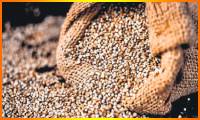
Millets & oilseeds to take up 17% rice belt in Uttar Pradesh.
The Yogi government is planning to replace around 17% of the area under paddy (rice) cultivation with millets and oilseeds in the coming years, a top official in the agriculture department said.
UP is the second largest producer of rice in the country (15 million MT) and has 60 lakh hectares of land under paddy cultivation across 70 districts.
The government plans to reduce this to 50 lakh hectares while getting the area reallocated for millets and oilseeds, a move that could mark a radical change in the cropping pattern, especially during the kharif season.
Officials said the change would be brought through concerted and extensive campaigns among farmers. Sources said the government was also planning to promote "exotic" varieties of rice which could have higher returns.
Data show that only seven districts (Bijnor, Kushinagar, Pilibhit, Chandauli, Baghpat, Varanasi and Ambedkarnagar) have high productivity (over 2500 kg/hectare). A total 55 districts have medium (2000-2500 kg/hectare) or medium-low productivity (1500-2000 kg/hectare). Five and three districts have low and very low productivity, respectively.Rice production has been registering downward fluctuation in the wake of lesser rainfall. Last year, rice production came down nationally from 111 million MT in 2021 to around 105 million MT in 2022. UP reported to have received 42% less rainfall last year and recorded acreage under rice going down by around 2.5 lakh hectares.
According to experts, the plan falls in line with the UP government's concerted efforts to promote millets which has been the focus of the Narendra Modi government at the Centre. The year 2023 is being observed as the international year of millets. With 11 lakh hectares of land under millets, UP is the second largest producer of coarse grain too.
Source: timesofindia.indiatimes.com
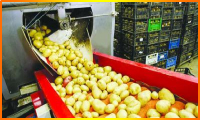
Production Linked Incentive Scheme for Food Processing Industry (PLISFPI) to facilitate expansion of food processing capacity by creating champion brands in Food Processing Sector.
Minister of State for Food Processing Industries, Shri Prahlad Singh Patel, in a written reply to a question Lok Sabha today informed that keeping in view the crucial role of entrepreneurs in development of food processing industries, Ministry of Food Processing Industries (MoFPI) supports them through its Central Sector Umbrella Scheme Pradhan Mantri Kisan SAMPADA Yojana (PMKSY), Production Linked Incentive Scheme for Food Processing Industry (PLISFPI) and Centrally sponsored PM Formalization of Micro Food Processing Enterprises (PMFME) scheme.
Under component schemes of PMKSY, MoFPI provides mostly credit linked financial assistance (capital subsidy) in the form of grants-in-aid with total outlay of Rs 4600 Cr for 15th Finance Commission Cycle. Ministry provides financial, technical and business support to micro food processing enterprises through PMFME scheme with outlay of Rs 10,000 Cr for a period of 5 Years (2020-21 to 2024-25), whereas PLISFPI is targeted to facilitate expansion of food processing capacity by creating champion brands in Food Processing Sector with total outlay of Rs 10,900 Cr for a period of 6 years (2021-22 to 2026-27).
In the written reply it was stated that Ministry has conducted evaluation study for relevant component schemes of PMKSY and amended guidelines of the schemes including its incentive structure accordingly.
Ministry has planned to organise a Global Food Event 'World Food India 2023' during 3rd - 5th November, 2023 in New Delhi. The event is intended to provide domestic investors/ producers/ processors/ institutions a platform to collaborate and partner with global stakeholders.
Source: pib.gov.in

PMFME scheme to support setting up of 2 lakh micro food processing enterprises through credit linked subsidy.
Minister of State for Food Processing Industries, Shri Prahlad Singh Patel, in a written reply to a question Lok Sabha today informed that the Ministry of Food Processing industries (MoFPI) has been implementing Central Sector Umbrella Scheme- Pradhan Mantri Kisan SAMPADA Yojana (PMKSY) since 2016-17 for overall growth and development of food processing sector, including processing of agro- products and thus increasing the income of the farmers across the country including in the state of Maharashtra and Rajasthan. Under component schemes of PMKSY, MoFPI provides mostly credit linked financial assistance (capital subsidy) in the form of grants-in-aid to entrepreneurs for setting up of food processing industries. The projects completed under component schemes of PMKSY are estimated to benefit about 30.67 lakh famers.
Also, as part of the Aatmanirbhar Bharat Initiative, MoFPI is implementing a Centrally Sponsored Scheme-PM Formalisation of Micro Food Processing Enterprises Scheme (PMFME) for providing financial, technical and business support for setting up/upgradation of 2 lakh micro food processing enterprises through credit linked subsidy during five years from 2020-21 to 2024-25 with an outlay of Rs. 10,000 crore. Out of this, a total of 22234 units and 7331 units have been allocated to Maharashtra and Rajasthan respectively.
In the written reply it was stated that MoFPI is not facing any major hardship in implementing these schemes.
MoFPI is also implementing Central Sector Production Linked Incentive Scheme for Food Processing Industry (PLISFPI) Scheme, intended to support creation of global food manufacturing champions. The Scheme is being implemented over a six-year period from 2021-22 to 2026-27 with an outlay of Rs. 10,900 crores. For easy and affordable credit to the sector, all food & agro processing activities have been made eligible under Priority Sector Lending and a special fund of Rs.2000 crore has been set up in National Bank for Agriculture and Rural Development (NABARD).
Source: pib.gov.in