
'Relationship with India top priority': Saudi Arabia Foreign Minister.
Terming the relationship with India a 'top priority', Saudi Arabia Foreign Minister Farhan Al-Saud said that the relationship between both nations has grown exponentially, adding that there is a need for measurable progress in all sectors especially the economic and trade relationship.
Highlighting the strong relationship between Prime Minister Narendra Modi and Crown Prince Mohammed bin Salman, the minister said that both leaders want to see actual results, progress in relationship between the countries.
'The relationship with India is a top priority and we need to have measurable progress in all sectors especially the economic and trade relationship,' the Saudi Foreign Minister said in an interview with President of Observer Research Foundation (ORF) Samir Saran at Raisina ‘Ideas Pod’.
Al-Saud said the relationship between India and Saudi Arabia in the last five years, has grown exponentially.
'Part of that is the very strong relationship between Prime Minister Narendra Modi and the Crown Prince who have a very strong working relationship. Both of them are very similar in the sense that they both are very result oriented. They don’t want just a nice talk, they want to see actual results, they want to see progress and that means that we in the government have a very clear direction,' he said while defining the similarities between both the leaders who believe in action.
Emphasizing on India’s rising global stature, he said, 'India is a fantastically dynamic country with huge potential and we’ve seen that especially in the last five years, the trajectory for India is fantastic. The potential that India holds is almost unmeasurable.'
Acknowledging the fact that India has played an important role in the developmental journey of the Kingdom for several decades given the large Indian presence in Saudi Arabia, he said, 'The connection has existed even before that, you know hundreds of years given the trade relationship. We’re now building on that connection, on that relationship in a way that is not just benefiting both of us, it’s really benefiting the international Community.'
He also said that India’s huge size offers great potential as a huge amount of India’s trade to Europe passes through the Red Sea.
Earlier, Saleh Eid Al Husseini, Ambassador of the Kingdom of Saudi Arabia to India, said that he wants to bring this relationship to the highest level. Speaking on the celebrations of the Kingdom’s founding day here, the envoy said he was happy to have a strong and friendly relationship between the two countries.
Underlining the strong relationship between the Kingdom and India, Husseini said, 'We are very happy to have a strong relationship with our friendly country India. Also for a long time, we have had this relationship and we have been asked to bring this relationship to the highest level that we can.'
While speaking on the foundation day celebration, the envoy highlighted the Kingdom’s governance and how the youth has been its focus as the next generation.
'We are very proud to have a country that started in 1727 and this year as I said reflects good governance and we hold our future, our children and all our Saudi Arabia is now focusing on youth on the next generation', said the Envoy.
'Our country is celebrating around 300 years and this reflects nations’ governance, reflects equity, to have the prosperity of their people. To bring modernization and at the same time to regain the culture of the society. It’s not by chance to be 300 years old unless the state is caring about its neighbours, caring about its people, seeking peace all over the world', added the envoy.
Source: siasat.com

Israeli foreign minister likely to visit India in March.
Israel’s Foreign Minister Eli Cohen is likely to visit India in March, according to persons aware of the matter. This is among Cohen’s first foreign visits after taking office as Israel’s top diplomat in late December last year.
Cohen’s visit, the people cited above said, will focus largely on economic and trade relations between India and Israel. Particular focus will be paid to the bilateral innovation and technology partnership as well as cooperation on agriculture. While defence ties remain a key feature of bilateral talks, the visit of Defence Minister Benny Gantz to India in June last year will mean that the Israeli Foreign Minister will largely focus on economic ties during his time in India.
Queries to the Indian Ministry of External Affairs and the Israeli Foreign Minister’s Office remained unanswered at press time.
The visit comes at a high point for bilateral ties, which has seen New Delhi and Tel Aviv co-operate closely on Middle-East policy, multilateral platforms like I2U2 and defence.
Trade, technology and innovation has been a particular focus of the partnership in recent years. According to figures from India’s foreign ministry, trade expanded from USD 200 million in 1992 to USD 4.66 billion in 2020-21. Investment promotion agency Invest India now estimates that bilateral trade stands at USD 7,86 billion.
'India is Israel’s third-largest trade partner in Asia and seventh largest globally. In recent years, bilateral trade has diversified into several sectors such as pharmaceuticals, agriculture, water, IT and telecom,' according to the Ministry of External Affairs.
Technology investments by Israeli firms in India run the gamut from information technology and cybersecurity to resources like water. Both countries also established the USD 40 million India-Israel Industrial R&D and Technological Innovation Fund (I4F) fund to be run by the Indian Department of Science and Technology (DST) and the Israel Innovation Authority.
Defence has also been a particular focus of bilateral ties. India’s defence purchases from Tel Aviv have run the gamut from missiles and radar systems to unmanned aerial vehicles and air defence systems; India and Israel jointly developed the Barak-8 air and missile defence through Israel Aerospace Industries and India’s DRDO.
While incumbent Prime Minister Benjamin Netanyahu has long been a votary of closer ties with India, his government has been rocked by massive instability in recent months following its controversial attempt to curtail the powers of the judiciary. Israeli civil society has been up in arms about the Prime Minister’s attempts to reduce the Supreme Court’s ability to strike down laws it deems unconstitutional.
Source: livemint.com

ECTA between India-Australia to unlock new potential in trade and investment: Albanese.
Australian Prime Minister Anthony Albanese, who is on a 4-day official visit to India, on Thursday said the Economic Cooperation and Trade Agreement (ECTA) signed between the two countries is a transformative agreement, which will unlock the next level of potential in trade and investment.
Addressing the India-Australia CEO forum in Mumbai on Thursday, Albanese expressed his sincere appreciation for the large turnout of Australian investors that came to India as well as for the key Indian business houses that participated in the event.
He added that the delegation of Australian investors is one of the most serious and high-profile ones to have visited India from Down Under.
The Australian PM also voiced optimism about the complementarities between both nations, saying that this juncture is a turning point in accelerating economic cooperation and mutual benefits in the relationship between the two countries.
Union Minister Piyush Goyal also participated in the CEO Forum along with Senator Don Farrell, minister for Trade and Tourism in the Australian government.
Goyal noted that the current goal of doubling the bilateral trade must be reset by the industries and CEOs present there as there was great potential to increase trade manifold between the two nations. He also reiterated the growth potential of the bilateral trade and investments between India and Australia.
The Union minister, from his previous visit to Australia in April 2022, recounted an example of his interaction with the CEO of Cochlear (an Australian hearing implant manufacturer). After the interaction, he reassured them that their current market share in India was only a minuscule of the potential for the business, given India's population, rapid growth in the middle class and the growing demands of the overall economy for a better lifestyle.
The Forum was organised by the Department for Promotion of Industry and Internal Trade (DPIIT), Ministry of Commerce and Industry, along with the Confederation of Indian Industry (CII) in order to leverage the ever-growing trade and investment between the two countries. The forum was co-chaired by Anish Shah, MD and CEO, of Mahindra Group and Shemara Wikramnayake, MD and CEO, of Macquarie Group.
Senator Don Farrell pointed out that USD 2.5 billion worth of trade benefitted from the lower tariffs arising from the ECTA agreement in Jan 2023 alone and reassured that this growth will continue to rise further. He urged the industry to think much bigger to satiate the demands of the growing relationship.
Both ministers welcomed the convening of the India-Australia CEO Forum and encouraged businesses on both sides to explore emerging economic and investment opportunities.
The ministers also expressed satisfaction at the progress of bilateral engagements and affirmed their commitment to further deepen and strengthen the Comprehensive Strategic Partnership for mutual benefit.
A four-year extension MoU was also signed between the Confederation of Indian Industry and the Business Council of Australia in the presence of Albanese. This partnership is tipped to go a long way in furthering the business relationship between the two countries.
The event also saw the participation from CEOs of leading companies from India and Australia across the sectors like metals and mining, telecom, food processing, education, pharmaceutical, healthcare, medical devices, banking, aviation, education, IT, auto and institutional investors.
The forum participants discussed 'How to enhance Economic, Trade and Investment relations between India and Australia, across sectors'.
The two countries have a long-standing relationship, characterised by shared values of democracy, multiculturism, economic opportunities and most importantly vibrant diaspora with strong people-to-people links. Both countries value free and open societies, respect for human rights, and the rule of law.
In the fiscal year 2022, India was Australia's 9th largest trading partner. Major exports to Australia include petroleum products, textiles and apparel, engineering goods, leather, pearls, mechanical appliances, iron and steel and gems and jewellery. Major imports include edibles, dyeing extracts, chemicals, wool, minerals and precious stones.
Source: economictimes.indiatimes.com

India and US decide to launch strategic trade dialogue.
In a significant move, India and the US on Thursday decided to launch a strategic trade dialogue to address export controls, explore ways of enhancing high technology commerce, and facilitate technology transfers. The decision to launch the new framework of dialogue was taken at a meeting between External Affairs Minister S Jaishankar and visiting US Commerce Secretary Gina Raimondo, according to the Ministry of External Affairs (MEA).
'The external affairs minister and secretary Raimondo agreed to launch a India-US Strategic Trade Dialogue, led by Foreign Secretary from Ministry of External Affairs of India and Under Secretary, Bureau of Industry and Security in US Department of Commerce,' the MEA said.
'The Strategic Trade Dialogue will address export controls, explore ways of enhancing high technology commerce, and facilitate technology transfer between the two countries,' it said.
The MEA said Jaishankar and Raimondo had a productive discussion about the India-US strategic partnership and ongoing efforts to deepen the economic and commercial engagement between the two countries, including through the Initiative on Critical and Emerging Technology (iCET) and the Indo-Pacific Economic Framework (IPEF).
'They also concurred on the need for increased bilateral strategic and high technology trade given the shared priorities of both countries in building resilient and trusted global supply chains,' the MEA said in a statement.
US President Joe Biden in May last year launched the IPEF, which is an initiative aimed at deeper cooperation among like-minded countries in areas such as clean energy, supply-chain resilience and digital trade
'Great pleasure to meet US Secretary of Commerce @SecRaimondo this evening. Conversation covered strategic trade, resilient and reliable supply chains and trust and transparency in the digital domain,' Jaishankar tweeted.
Source: economictimes.indiatimes.com
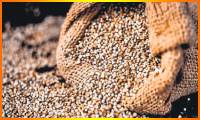
Two-day Millet Fair cum Exhibition organised in Madurai, Tamil Nadu.
The Ministry of Food Processing Industries, Government of India organized a two-day ‘Millet Fair cum Exhibition’ in Madurai, Tamil Nadu from 6-7 March, 2023. The event was organised as part of the Millet Mahotsav series, in collaboration with the Department of Micro, Small and Medium Enterprises and the Department of Agricultural Marketing and Agri Business, Government of Tamil Nadu. Tamil Nadu is known for the production of different varieties of millets including Pearl Millet (Bajra), Sorghum (Jowar), Finger Millet (Ragi), Small Millet (Foxtail Millet, Barnyard Millet, Kodo Millet, Proso Millet) and Little Millet. The district of Madurai is known for the production of Pearl Millet (Bajra), Sorghum (Jowar), Finger Millet (Ragi) and Small Millet. In the year 2019-20 the district produced, 3,548 tonnes of Pearl Millet (Bajra), 22,405 tonnes of Sorghum (Jowar), 69 tonnes of Finger Millet (Ragi) and 130 tonnes of Small Millets.
During the event, the first Common Incubation Centre under the Pradhan Mantri Formalisation of Micro food processing Enterprises (PMFME) Scheme was inaugurated by Thiru. P. Moorthy, Minister for Commercial Taxes and Registration, Government of Tamil Nadu, Thiru. T. M. Anbarasan, Minister for Micro, Small and Medium Enterprises (MSME), Government of Tamil Nadu and Thiru. M. R. K. Panneerselvam, Minister for Agriculture and Farmers Welfare, Government of Tamil Nadu at Krishi Vigyan Kendra Madurai, Tamil Nadu Agricultural University. The Common Incubation Centre has been set up for Dhal Processing and Fruit & Vegetable Processing.
Aligning with the spirit of an Aatmanirbhar Bharat and to promote entrepreneurship development, an Agri Hackathon was organized inviting aspiring entrepreneurs to submit their ideas for innovative agricultural and food processing technologies. The initiative garnered a positive response with more than 400 applications submitted. The selected applicants went through a boot camp training, out of which, four applicants were shortlisted for a funding grant, mentorship and handholding support. The dignitaries also launched 17-millet based brands to encourage micro food processing enterprises to venture into the domain of Millet processing. Additionally, a book on Millets by the Tamil Nadu Agricultural University was also launched during the event. The dignitaries later visited the stalls at the Millet-based product exhibition, which had over 150 stalls showcasing various Millet based value-added products and innovative millet-based recipes.
The two-day event was aimed at providing the micro food processing enterprises with a platform to interact with leading industry players through B2B and B2C interactions organized during the Buyer Seller Meet. Participants interacted with organizations to get a deeper understanding of marketing, e-commerce, quality parameters for online and offline retail, etc. It brought all the stakeholders of the food processing sector with special focus on millets, on a common platform and encompassed a wide range of activities like exhibition and sale of various millet-based products, live kitchen showcasing 45 Millet-based dishes prepared by 19 Self Help Groups, millet recipe demonstration, cooking competition, agri-hackathon, informative sessions on millet processing, buyer seller meet, interactive sessions between industry experts and micro food processing enterprises, SHGs, FPOs engaged in food processing. Cultural programs and art forms like Puliyattam, Poikkal Kuthirai Attam, Karakattam and Kummi enriched the event and provided the participants with a glimpse of the cultural heritage of Tamil Nadu. Millet Mahotsav received an overwhelming response with more than 6000 participants attending the event including micro food processing enterprises, self-help groups, farmer producer organizations, producer cooperatives, etc.
In addition to the Millet Mahotsav, a mega-food event World Food India 2023 is also being organized by the Ministry from 3rd to 5th Nov 2023 at Pragati Maidan, New Delhi to provide a unique platform to all stakeholders i.e. producers, food processors, equipment manufacturers, logistics players, cold chain players, technology providers, academia, start-up & innovators, food retailers, etc. to interact and have a dialogue. The event is slated to be the biggest-ever congregation of dignitaries, global investors and business leaders of major global and domestic food companies which would put India firmly on the global food landscape.
In the wake of the United Nations General Assembly declaring 2023 as the International Year of Millets, the Ministry of Food Processing Industries is hosting Millet Mahotsav across 20 States and 30 Districts in the country with the aim of creating awareness about the nutritional benefits, value addition, consumption and export potential of Millets. The States hosting the events include Madhya Pradesh, Bihar, Telangana, Tamil Nadu, Uttar Pradesh, Assam, Gujarat, Andhra Pradesh, Uttarakhand, Odisha, Punjab, Kerala, Rajasthan, Himachal Pradesh, Karnataka, Maharashtra, Chhattisgarh, Haryana, West Bengal, and Jharkhand.
Being grown in more than 130 countries, Millets are considered traditional food for more than half a billion people across Asia and Africa. Millets are important by the virtue of their mammoth potential to generate livelihoods, increase farmers’ income and ensure food & nutritional security all over the world. India is one of the leading producers of millets in the world with an estimated share of around 41 percent in global production. Recognizing the enormous potential of Millets, which also aligns with several UN Sustainable Development Goals (SDGs), the Government of India (GoI) has prioritized Millets. Spearheaded by the Honourable Prime Minister, the Government of India’s proposal for International Year of Millets (IYoM) 2023 was accepted by the United Nations General Assembly (UNGA). The declaration has been instrumental for the Government of India to be at the forefront of celebrating IYoM.
About the PMFME Scheme
Pradhan Mantri Formalisation of Micro food processing Enterprises (PMFME) Scheme is a centrally sponsored scheme launched by the Ministry of Food Processing Industries (MoFPI) on 29th June, 2020 as a part of 'Aatmanirbhar Bharat Abhiyan' with an aim to enhance the competitiveness of individual micro-enterprises in the unorganized segment & promote the formalization of this sector.
The scheme provides financial, technical, and business support for the upgradation of micro food processing enterprises in the country. The scheme is implemented in close collaboration with State Nodal Agencies of respective States. All the States/UTs have appointed Nodal Agencies for the implementation of the scheme. Applications for credit-linked subsidies for individual enterprises are approved at the district level, while applications for groups are approved at the State Level/MOFPI. MIS portal for PMFME Scheme is receiving individual applications for credit linked subsidy for up-gradation of food processing units. For monitoring & approvals, Committees at the state and district level in the States/UTs have been constituted. Under the PMFME Scheme Credit Linked Subsidy @35% for the establishment or setting up of micro food processing unit with a maximum subsidy of Rs. 10 lakhs and for common infrastructure with a maximum subsidy of Rs. 3 Cr. would be provided.
Source: pib.gov.in
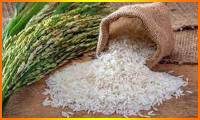
FSSAI notifies stds for Basmati rice specifying average size of grains.
The Food Safety and Standards Authority of India has notified the standards for Basmati rice (including Brown Basmati rice, Milled Basmati rice, Parboiled Brown Basmati rice and Milled Parboiled Basmati rice) through Food Safety and Standards (Food Products Standards and Food Additives) First Amendment Regulations, 2023.
These standards will be enforced with effect from August 1, 2023.
FSSAI, in a statement, has remarked, 'In order to ensure supply of standardised genuine Basmati rice in domestic and export markets, the food authority has notified regulatory standards for Basmati rice that have been framed through extensive consultations with the concerned government departments / agencies and other stakeholders as well.'
'As per these standards Basmati rice shall possess natural fragrance characteristic of Basmati rice and be free from artificial colouring, polishing agents and artificial fragrances. These standards also specify various identity and quality parameters for Basmati rice such as average size of grains and their elongation ratio after cooking; maximum limits of moisture, amylose content, uric acid, defective/damaged grains and incidental presence of other non-Basmati rice etc.'
FSSAI added that these standards are aimed to establish fair practices in the trade of Basmati rice and protect consumer interest, both domestically and globally, as being a premium quality rice and fetching a price higher than the non-Basmati varieties, Basmati rice is prone to various types of adulteration for economic gains which may include, among others, undeclared blending of other non-Basmati varieties of rice.
Due to its unique quality attributes, Basmati is a widely consumed variety of rice both domestically and globally and India accounts for two thirds of its global supply.
The regulation also specifies the broken Basmati rice name(s) including Basmati Rice Tibar, Basmati Rice Dubar, Basmati Rice Mini Dubar, Basmati Rice Mogra, & Basmati Rice Mini Mogra.
Also, the FSSAI has notified the regulations related to Blended Rice, which can be mixture of Basmati and/ or non-Basmati rice which resemble with each-other as closely as possible in final attributes.
The Regulations say that every package of Blended Rice shall carry a label detailing the rice used for blending with percentage.
Source: fnbnews.com
APEDA inks MoU with Lulu Hypermarket for export promotion of millets in GCC countries.
In a move to harness export potential of millets to the Gulf Cooperation Countries (GCCs), the Agricultural and Processed Food Products Export Development Authority (APEDA), that works under the Ministry of Commerce, Government of India, has signed a Memorandum of Understanding (MoU) with Lulu Hypermarket LLC.
APEDA aims to promote millet products and value-added products around the world in association with Lulu Group, which is an international retail hypermarket chain that operates stores and shopping malls across Bahrain, Kuwait, Oman, Qatar, Saudi Arabia, and the United Arab Emirates, Egypt, India and Far East.
As per the agreement, the group will facilitate promotional activities for millet products and enable the country to display millets and its value added products, ready to eat products in international retail chains by sourcing it from Farmer Producer Organisations, Farmer Producer Companies, women entrepreneurs and startups.
APEDA will facilitate manufacturers to send various samples of millet products to Lulu Hypermarkets, which will be showcased at its various stores. APEDA, in association with the group, will also provide assistance in labelling of the products in accordance with the requirement of different importing countries.
As a part of its series of events for the promotion of International Year of Millets (IYoM) 2023, APEDA is organising export promotion activities for millets in 16 International Trade Fairs.
India has exported millets worth $ 46.05 million during April-November 2022-23, and UAE being the major importing country of Indian millets. Signing of MoU will facilitate APEDA’s strategy to promote the export of millets and its value-added products in West Asian countries to achieve the overall set target of $100 million for export of millets and its value-added products by 2025.
The MoU was signed between Dr Tarun Bajaj, director APEDA and Salim VI, the chief operating officer of LuLu Group in presence of APEDA chairman Dr M Angamuthu, consul general of India Dr Aman Puri and M.A. Yusuff Ali, chairman & managing director of LuLu Group.
M Angamuthu said, 'It’s a mission and vision of Prime Minister Narendra Modi to promote millets in the international market. The APEDA team is ready to provide all required help to exporters, millet producers, women FPOs, to promote Indian millets across the globe. It’s a good opportunity to boost our exports as India has very distinctive traditional varieties of millets which are loved by health-conscious people. The export of millets will help in increasing the income of farmers.'
APEDA has also planned to organise millet promotional activities in South Africa, Japan, South Korea, Indonesia, Saudi Arabia, Sydney, Germany, United Kingdom and United States of America by facilitating participation of different stakeholders from India in some of the significant food shows, Buyer Seller Meets and Road Shows.
As part of the promotion of Indian millets, APEDA has planned to showcase millets and its value added product at various global platforms such as Foodex, Seoul Food & Hotel Show, Saudi Agro Food, Fine Food Show in Sydney (Australia), Belgium’s Food & Beverages Show, Germany’s BioFach and Anuga Food Fair, San Francisco’s Winter Fancy Food Show.
It is estimated that the millets market is set to grow from its current market value of more than $9 billion to over $12 billion by 2025.
Source: fnbnews.com
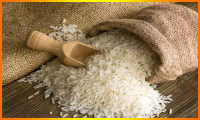
India s non-basmati rice exports jump 4% in Apr-Jan of FY23.
India’s non-basmati rice exports surged 4 per cent to 14.56 million tonnes (mt) during the April-January period of the current fiscal from 14.01 mt a year ago. This is despite the Government imposing a 20 per cent export duty on white (raw) rice and banning shipments of fully broken rice.. However, with an upward trend in freight cost, the realisation by exporters may get hit if importing countries do not absorb any increase.
The non-basmati rice segment registered a 3 per cent growth in value at $5.17 billion (Rs.41,273 crore) from $5.01 billion in the year-ago period, according to the latest data from the Agricultural and Processed Food Products Export Development Authority (APEDA). In the entire 2021-22, non-basmati rice export was 17.26 mt worth $6.12 billion (Rs.45,652.35 crore).
Freight uptrend
Exporters said when the government imposed the duty in September last year, the freight cost was about $100-$120/tonne and it was declining. While it dropped to about $50/tonne in February, it began to show an uptrend in the first week.
'Importing countries did not feel the impact of export duty as in the same period there was a fall in the freight cost. One thing is established the world now knows India as a credible destination for non-basmati rice,' said BV Krishna Rao, President of The Rice Exporters Association (TREA). There is no concern for now and exporters are ready to wait for the next kharif crop’s arrival in October to see if any policy change will be required, Rao said.
He said the increase in non-basmati rice has to be seen amid the crop failure in Pakistan and also the quantitative restriction in Myanmar. However, he said: 'The world needs Indian rice. We will seek a change in policy if at all there is a drop in export.'
Fair assessment in Sept
Rao further said even after the imposition of export duty, neither there is a substantial improvement in procurement, nor a decline in export. He said a fair assessment could be made by September about how the kharif paddy crop would be and a decision could help exporters to enter into new contracts for shipments from October-November.
'As no fresh crop from any other origin to come before September, we are fairly covered till then. A policy review at that time will be definitely of help,' Rao said.
Meanwhile, basmati rice increased 41 per cent to $3.82 billion (Rs.30,514 crore) in the 10 months to January and there was an 18 per cent surge in volume to 3.66 mt. Total exports of rice (both non-basmati and basmati) increased 16 per cent to $8.98 billion (Rs.71,787 crore).
Source: thehindubusinessline.com
FSSAI extends enforcement of norms related to brand names identical with characteristics of products.
The FSSAI has decided to extend the enforcement of regulations related to advertising & claims related to brand names identical with the characteristics of the product like fresh and natural. The food regulator has decided that the enforcement of these regulations shall be extended by six months from the date of notification so that the food businesses can exhaust their existing pre-printed packages.
Called the Food Safety and Standards (Advertising and Claims) Second Amendment Regulations, 2022, this regulation was notified in the Gazette of India on December 13, 2022, and enforced with immediate effect.
However, the food businesses made representations before the food authority seeking time as there was small but significant difference in the draft and final notification with respect to front of the pack labelling of such brand names.
'After due consideration of the representations of the food business operators and also to ensure sustainable practices for food business operations, it has been decided to extend the enforcement of sub-regulation (7) of regulation 4 of Food Safety and Standards (Advertising and Claims) Second Amendment Regulations, 2022 for a period of six months from the date of notification,' reads the direction issued by the FSSAI.
The sub-regulation (7) of regulation 4 of the final amended regulations specifies that in case of trade mark, brand name or fancy name containing adjectives such as 'natural', 'fresh', 'pure' etc., a disclaimer 'This is only a brand name or trademark, or fancy name and does not represent its true nature:(relevant one may be chosen as applicable)' shall be mentioned 'prominently' on the front of pack of the label.
It is pertinent to note that in the direction dated Oct 26, 2021, regarding enforcement of Food Safety and Standards (Advertising and Claims) Regulations, 2018, & re-operationalisation of Food Safety and Standards (Advertising and Claims) Amendment Regulations, 2021; sub-regulation (7) of regulation 4 specifies that in case of trade mark, brand name or fancy name containing adjectives such as 'natural', 'fresh', 'pure' etc., a disclaimer 'This is only a brand name or trade mark and does not represent its true nature' shall be mentioned 'below such trade mark, brand name or fancy name'.
The same provision was also included in the draft Food Safety and Standards (Advertising and Claims) Amendment Regulations, 2021, notified in the Gazette of India on Dec 27, 2021.
According to the FSSAI, representations were received from the stakeholders requesting an extension of implementation of the sub-regulation-7 due to the change in the final notification vis-a-vis draft notification as this would require changes in the artwork of the label and also to exhaust the existing old inventory of packaging materials.
Source: fnbnews.com
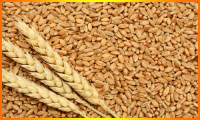
India announces 20,000 MTs of wheat assistance to Afghanistan via Chabahar Port.
India on Tuesday announced the supply of 20,000 MTs of wheat assistance to Afghanistan in partnership with United Nations World Food Programme (UNWFP) through Iran’s Chabahar Port. The announcement was made at the first meeting of the India-Central Asia Joint Working Group (JWG) on Afghanistan held here on Tuesday.
The meeting was attended by the Special Envoys/Senior Officials of India, Kazakhstan, Kyrgyz Republic, Tajikistan, Turkmenistan and Uzbekistan. Country representatives of the United Nations Office on Drugs and Crimes (UNODC) and United Nations World Food Programme (UNWFP) also participated in the meeting.
India also offered capacity building training courses for the relevant stakeholders/partner agencies of UNODC and the relevant officials/stakeholders of Central Asian Republics in the field of countering illegal drug trafficking.
During the meeting, the Special Envoys/Senior Officials exchanged views on the current situation in Afghanistan, including the political, security and the humanitarian situation. While emphasizing the respect for sovereignty, unity and territorial integrity and non-interference in its internal affairs, the sides reiterated support for a peaceful, secure and stable Afghanistan, according to a joint statement issued at the end of the meet.
They emphasized the importance of formation of a truly inclusive and representative political structure that respects the rights of all Afghans and ensures equal rights of women, girls and members of minority groups, including access to education.
India and Central Asians also discussed regional threats of terrorism, extremism, radicalization and drug trafficking and also deliberated on the possibilities to coordinate efforts to counter these threats.
They emphasized that the territory of Afghanistan should not be used for sheltering, training, planning or financing any terrorist acts and reaffirmed that no terrorist organizations including those designated by the UNSC resolution 1267 should be provided sanctuary or allowed to use the territory of Afghanistan, according to the joint statement.
The country representative of the UNWFP in Afghanistan briefed the participants on the India-UNWFP partnership to deliver foodgrain assistance to Afghan people and made a presentation on the current humanitarian situation, including the aid requirements for the year ahead. The sides took note of the current humanitarian situation and agreed to continue to provide humanitarian assistance to the Afghan people, according to the joint statement.
The country representative of the UNODC in Afghanistan highlighted the partnership of India and UNODC in fighting the menace of narcotics in Afghanistan and thanked India for providing humanitarian aid for the Afghan drug user population.
Source: economictimes.indiatimes.com