
India expanding Rupee trade with several countries, talks in advanced stages: Shri Goyal.
It is a time to leverage friendships and partnerships to solve the many problems that the world is facing today. This was stated by Union Minister for Commerce and Industry, Consumer Affairs, Food and Public Distribution and Textiles, Shri Piyush Goyal at the CII Partnership Summit 2023 in New Delhi today.
Elaborating on the theme, the Minister said that in these tough times, when the world has barely come out of COVID, when we are confronted with a conflict which took economies down, which raised inflation and consequently interest rates, which brought deep recession in many parts of the world, meeting like this helps us all to see how we can get the best for each one of us through collective solutions to global challenges and global problems.
We are looking for resilient, distributed and stable sources of growth supply chains, he said. We are seeking greater market access with minimizing the exposure to risk that many of our economies are facing, he said, adding that as the honorable Prime Minister Shri Narendra Modi said, and I quote, it is only partnerships that will get us to our goals.
The Minister pointed out that India has set an example for the world. He said that as a responsible global citizen, when we developed the COVID vaccine, we used it not only for our own citizens, who are administered 2.2 billion vaccines free of charge but we also provided vaccines to the less developed countries to the Pacific island nations to Caribbean nations, to small island states to our neighborhood. Over 250 million vaccines were provided, most of them free of charge, to other parts of the world, he added.
Speaking on the need to innovate, Shri Goyal said that all of us will have to look at innovative ideas, new ways of doing our work more efficiently, more effectively. Our startup ecosystem reflects that innovative spirit, he said pointing out that India, which barely had three or four unicorns seven years ago, today has over 100 unicorns and India's startup ecosystem is the third largest in the world.
The minister said that sustainability is a way of life in India and we don’t need to be taught or to learn from other parts of the world. He pointed out that our green goals are very ambitious and said that Prime Minister Modi introduced the concept of life that is sustainable lifestyles, which is the need of the hour. Because the waste that we are all generating across the world, more particularly in the developed world is a larger cause of this big problem of climate change, than the needs of humanity. Shri Goyal said that as Mahatma Gandhi had said, we in this generation are all trustees and custodians for our children. And it's incumbent on all of us to leave behind a better word than the one we inherited so that our children get a better future.
Shri Goyal said that we in India are committed to our sustainable goals and sustainable lifestyle. We are committed to the circular economy. We are committed to eliminating waste or reuse and recycling and I invite all our partner countries to work with India, to learn from India, to partner India in this effort to make the world a better place to live, Shri Goyal said.
Shri Goyal spoke on India’s partnership with the world economies. He said we are entering into international agreements with several countries to enable our businesses as we will enable businesses around the world. We will engage deeply with each other so that we can become a larger player on the international global economic front. He said that this effort has been led by Prime Minister Modi literally from the front line. Citing an example, Shri Goyal said that two years ago, our exports of goods and services collectively worth $500 billion dollars. Prime Minister Modi decided that India will convert the crisis of COVID into an opportunity we will not be deterred by the crisis. Prime Minister talked to all the export promotion councils in the country heard them understood the challenges they were facing. He found solutions and spoke to our mission heads across the world. And now as we celebrate 75 years of an independent India, we are marching ahead to cross $750 billion of exports of goods and services.
India today offers many competitive advantages over other competing economies, Commerce and Industry Minister said. We are focusing more on high quality of goods as well as leveraging economies of scale, particularly given the large domestic market that we offer to businesses and investors who come and work in India and to our friends in their economic engagement with India, he said.
Our MSMEs are first engaging with digitalization and as was mentioned earlier, India is developing its digital promise in the form of digital public goods for the use of the rest of the world. Singapore and India have recently partnered on UPI and we hope to do the same with UAE in the near future. We are expanding rupee trade with several countries, many of which are at an advanced stage of dialogue and finalization.
Shri Goyal said that when we talk about financing global economic recovery, a strong and responsive international institutional framework is called for. We need to also see that some non-transparent economies, whose economic systems are totally opaque, enjoy the fruits of multilateral engagement. I think it's time the world called out such countries and made them accountable and transparent.
Speaking on technology partnership, Shri Goyal said that when we talk of emerging technologies it's important that we do a skill mapping. We will find certain nations with tremendous skills. We can match that with the skill deficit, yet rich countries which need those skills. That matchmaking is what partnerships are all about, he said. Singapore and India are making a serious effort to do that matchmaking he said.
Earlier, the Minister began his speech by complimenting the two Oscar winners from India. He said that we are a proud nation today for winning two Oscars. The Elephant Whisperers highlights sustainable development and harmony with nature. But it also gives us a sense of women's development in India, with both the director and producers being women.
Source: pib.gov.in
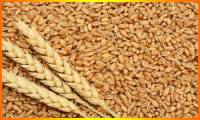
Ministry of Food Processing Industries to hold World Food India from Nov 3-5.
Ministry of Food Processing Industries is organising the second edition of 'World Food India 2023’ (WFI) from Nov 3-5, 2023, at Pragati Maidan, New Delhi, for the benefit of Indian food processing industries through collaborations with and investments from global stakeholders. The event is being organised as part of International Year of Millets 2023 activities and will have millets (shree anna), organic produce and indigenous processed food as some of the focus areas.
Curtain Raiser Event to WFI 2023 was held recently in National Media Centre, New Delhi, and was attended by wide spectrum of representatives from press & media, various Central Ministries/Departments, State Resident Commissioners & Embassies apart from senior officers of the ministry. During the event, promotional video, publicity brochure and a dedicated website for WFI 2023 was launched by Pashupati Kumar Paras, Union Minister of Food Processing Industries, Government of India, and Prahlad Singh Patel, Union Minister of State for Food Processing Industries and Jal Shakti, Government of India.
Addressing the event, Paras emphasised that India is one of the fastest-growing economies with many investment opportunities, especially in the food processing sector. He outlined five pivotal elements of the WFI 2023 as Millets- ‘Shree Anna-The Super Food of India’, Innovation and Sustainability ‘Green Food’, White Revolution 2.0, making India an export hub and focus on technology and digitisation. 'During the three-day event, we expect leading players in the food processing sector from across the globe to showcase their strengths. Industry professionals' meets, exhibitions and Food Street (a specially curated food experience arena) are also planned to explore collaborations and B2B/G contracts. The event will highlight the myriad opportunities, infrastructure available, incentives, and benefits to the investors,' he added.
Patel in his address, said, 'With the experience of previous edition of WFI held in 2017, we look forward to WFI-2023 as a flagship global event. We are proud of meeting the food needs of the world. Scientific parameters will help in the further growth of the food processing industry. Various government initiatives including the PLI schemes in the food processing industry will enhance the marketing and branding and the government is proud of standardising the quality parameters.' He added that innovation in the food processing industries has been a key differentiator globally. 'With innovation, we will be one of the strongest economies in the world. Digitalisation has enhanced the quality parameters even in self-help groups and thus improving the sector's competitiveness,' he added.
While requesting wide stakeholder participation in the event, Anita Praveen, Secretary, Ministry of Food Processing Industries, Government of India, said, 'World Food India 2023, a flagship event of the ministry, is a unique platform for global investors of food companies. We aim to make India an export hub with a major contribution from food processing and allied industries. Our focus is on value addition, processing machinery, packaging technology & material etc. Millets- ‘Shree Anna-The Super Food of India’ is one of the pillars of this event and we aim to capture the global market. There are immense investment opportunities in post-harvest management such as primary processing and storage, preservation infrastructure, cold chain, refrigerated transport and value addition in organic and nutritious foods. WFI 2023 will provide an impetus for the industry's further growth and showcase India's potential in the food processing industry to the world.'
Source: fnbnews.com

Chhattisgarh explores export opportunity.
An Export outreach program was organized at Nava Raipur on Monday by the Directorate General of Foreign Trade, Government of India to explore the possibilities of export potentials in Chhattisgarh.
The exporters and investors participating in the programme discussed the action plan to enhance exports from the landlocked state. According to officials, vital information was also given about exportable products from Chhattisgarh and government facilities given to the exporters, who shared the loopholes and suggested for its redressal to surge shipping volume from the state.
Representatives of Shefexil, TREAC, ECGC, Industries Department, Minor Forest Produce Federation, APEDA, SIDBI as well as Bank of Baroda participated in the programme, conducted by the Directorate of Foreign Trade, Government of India.
Chhattisgarh’s Raipur and Durg districts are among the 75 districts in the country shortlisted for promoting exports.
Raipur Collector Dr Sarveshwar Bhure said that Chhattisgarh had been the main exporter of many products including rice. The state government has provided numerous facilities to the exporters to encourage exports from the state, he said. The government has made special provisions for exporters in the industrial policy ranging from exemption of five percent in ‘mandi’ fee along with formation of promotion committee, Bhure added.
Asserting that Chhattisgarh was rapidly moving towards developing as an export hub due to the industry friendly policies of the state government, the Raipur District Collector said due to the policies and facilities of the government, there has been an average increase of more than 22 percent in the exports from the state in the last five years. He also informed that special efforts are being made to promote the export of rice, construction machinery and materials and processed spices from Chhattisgarh.
Bhure stressed on the possibilities of the export of wire, rods, bars, coils, TMT bars, crude steel as well as forest produce like tamarind, mahua, lac and small grain millets like Kodo Kutki Ragi etc.
Officials said exporters and investors present in the program described Chhattisgarh as a state of immense potential from the point of view of exports. The exporters demanded to continue the exemption of 5 per cent in mandi fee notified to increase the export of rice. Presently, Chhattisgarh government is giving 5 percent exemption of market fee to rice exporters for one year.
The exporters demanded concession for transportation to the exporting units saying that Chhattisgarh is a landlocked state. Some exporter groups demanded government assistance for the modernization of processing plants.
Source: newsriveting.com

Cultivation of market driven crop varieties suggested.
Farmers were told to take up cultivation of market driven crop varieties in order to enhance their income at a workshop on food processing and business opportunities at Thanjavur on Thursday.
Inaugurating the workshop jointly organised by the Agricultural and Processed Food Products Export Development Authority (APEDA), the National Institute of Food Technology, Entrepreneurship and Management – Thanjavur (NIFTEM-T) and Ponni Arakattalai, Thanjavur, the vice-chancellor of Tamil Nadu Agricultural University, V. Geethalakshmi exhorted the delta farmers to consider cultivation of crops addressing the issues of nutritional security.
Stating that the cultivation of market-driven crops of high demand would enhance the income of farmers, Dr.Geethalakshmi suggested the farmers to switch over to the cultivation of traditional paddy varieties having essential minerals and low glycaemic index.
Addressing the participants, APEDA chairman M. Angamuthu assured all possible support for the promotion of Thanjavur delta districts-based agro products through APEDA.
The General Manager, APEDA, Southern Region, Ravindra said organic certification would help tap the global market for traditional horticultural products successfully.
Wide-ranging opportunities for the micro food enterprises were explained in detail by the chief executive officer, PM-FME scheme of SASTRA University, Panjapakesan, according to a NIFTEM-T release.
Source: thehindu.com
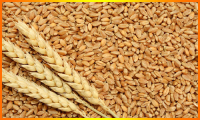
World Food India-2023 to be organised during 3-5 November, 2023 in New Delhi.
The second edition of 'World Food India-2023’ will be organised by the Ministry of Food Processing Industries, Government of India, from 3-5 November, 2023 at Pragati Maidan, New Delhi. The Curtain Raiser Event to WFI-2023 was held today in National Media Centre, New Delhi. During the event, Union Minister of Food Processing Industries, Shri Pashupati Kumar Paras, and Union Minister of State for Food Processing Industries and Jal Shakti, Shri Prahlad Singh Patel, launched the website, publicity brochure and promotional video for WFI-2023.
Addressing the Curtain Raiser event, Shri Pashupati Kumar Paras emphasised that India is one of the fastest-growing economies with many investment opportunities, especially in the food processing sector. He outlined five pivotal elements of the WFI-2023 as Millets- ‘Shree Anna-The Super Food of India’, Innovation and Sustainability ‘Green Food’, White Revolution 2.0, making India an export hub and focus on technology and digitisation.
Shri Paras said that during the three-day event, the government expects leading players in the food processing sector from across the globe to showcase their strengths.
Shri Paras added that industry professionals' meets, exhibitions and Food Street - a specially curated food experience arena, are also planned to explore collaborations and B2B/G contracts. He said that the event will highlight the myriad opportunities, infrastructure available, incentives, and benefits to the investors.
Shri Prahlad Singh Patel said that with the experience of previous edition of WFI-2017, the government is looking forward to WFI-2023 as a flagship global event. He said that India is proud of meeting the food needs of the world and the scientific parameters will help in the further growth of the food processing industry. He said that the various government initiatives including the PLI schemes in the food processing industry are enhancing the marketing and branding and the government is proud of the standardising the quality parameters.
Shri Patel emphasised that innovation in the food processing industry is a key differentiator globally, and will help India emerge as one of the strongest economies in the world. He added that digitalisation has enhanced the quality parameters even at self-help groups level, and thus improved the sector's competitiveness.
While requesting wide stakeholder participation in the event, Secretary, Ministry of Food Processing Industries Ms Anita Praveen, said that World Food India-2023, a flagship event of the Ministry, is a unique platform for global investors of food companies. She said that the Ministry aims to make India an export hub with a major contribution from food processing and allied industries. She added that the focus of the Ministry is on value addition, processing machinery, packaging technology & material etc. She said that Millets- ‘Shree Anna-The Super Food of India’ is one of the pillars of this event and there are immense investment opportunities in post-harvest management such as primary processing and storage, preservation infrastructure, cold chain, refrigerated transport and value addition in organic and nutritious foods. She emphasised that WFI-2023 will provide an impetus for the industry's further growth and showcase India's potential in the food processing industry to the world.
Vice President, FICCI Shri Harsha V Agarwal, and Secretary General, FICCI, Shri Shailesh K Pathak, provided outline of the preparations made in ensuring success of the event and brief of the arrangements at the venue for facilitating exhibitions, B2B, B2G & G2G meetings and collaborations. Being organized as part of International Year of Millets 2023 activities, WFI-2023 will have Millets (Shree Anna), organic produce & indigenous processed food as some of the focus areas, and will be held through collaborations with and investments from global stakeholders. The event was attended by wide spectrum of representatives from Press & Media, various Central Ministries/Departments, State Resident Commissioners & Embassies apart from senior officers of the Ministry.
Source: pib.gov.in
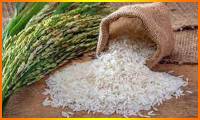
India stands firm in getting exclusive EU tag for basmati rice.
India will continue to pursue its application for an exclusive Geographical Indication (GI) tag for its basmati rice in the European Union (EU) and not consider any other solution as it could affect the exclusivity of the fragrant rice in other markets, official sources have said.
According to traders and experts, the EU is probably trying to 'browbeat India (from its firm stand) in its trade talks to gain access to its wines and whiskey'.
The development comes on the heels of the EU trying to put pressure on India to amend its application by including the basmati-growing areas in Pakistan or submit a new joint application along with Pakistan. The issue of the GI tag for Indian basmati rice has been pending since July 2018.
Pak map with Jammu
'India should and cannot accept the EU’s proposal. In August 2020, after the abrogation of Article 370 which gave special status to Jammu and Kashmir, Pakistan published a map showing Jammu as part of its territory.
'When a joint application is made, the map of both countries will have to be included. This will mean India accepting Jammu to be part of Pakistan. This is untenable,' said S Chandrasekaran, a GI expert who has written the book 'Basmati Rice: The Natural History Geographical Indication'.
The Ministry of External Affairs, which was consulted by the Ministry of Commerce and Industry, has suggested to the Agricultural and Processed Food Products Export Development Agency (APEDA) to solely pursue the application for GI tag.
APEDA, which is the nodal agency to get GI tag for Indian products, has been told not to consider other options such as submission of an amended application by including Basmati producing areas of Pakistan or submission of a fresh joint application with Pakistan.
12 objections filed
'Pakistan is yet to come up with any definition of basmati. It has no physical standard and has not notified the DNA standard. India made all these in 2003 and the Food Safety Standards Authority of India has come up with the domestic standard for basmati,' said Chandrasekaran.
When contacted, APEDA Chairman M Angamuthu said 12 objections, including two from Pakistan, were lodged against India’s application for a GI tag to basmati in the EU.
'The legal representatives of APEDA have been asked to engage with the legal representatives of those who objected to India’s GI tag application as required under EU regulations. Discussions are strictly at the level of representation and no APEDA or government functionary is involved,' he said.
'Since the consultations and informal discussions period with those opposed to our application have ended, our legal associate has submitted reports to the European Commission. The EU is now seized of the matter,' he said.
‘EU feeling obliged’
Official sources said the EC is 'feeling obliged to protect basmati originating from Pakistan (as well as India) and it prefers a single registration for the 'Basmati' name 'to respect the rights of both origins'.
'Why is the EU going the extra mile to support Pakistan, when it has to uphold the pillars of authenticity and quality standards? Looks like the EU is trying to manipulate without understanding the fact that India is sitting in an advantageous position,' he said.
Between 2001 and now, India’s basmati exports to the EU increased from 100,000 tonnes to 400,000 tonnes before slipping to 150,000 tonnes.
'During the same time, total basmati exports from the country increased from one million tonnes (mt) to 4.5 mt with demand for West Asia outstripping that of the EU. Also, the UK, which makes up 50 per cent of demand for Indian basmati had come out of the EU,' the expert said.
Also, with the issue of fungicide tricyclazole residue in rice consignments blowing over, the EU has no grounds to negotiate, he said.
Single document hope
'Is the EU trying to infuse oxygen into Pakistan basmati whose shipments are down 35 per cent this fiscal?' Chandrasekaran wondered.
Angamuthu said the European Commission has received details of Pakistan-growing areas and is expected to ask Pakistan to demonstrate that the growing areas satisfy the environmental factors of the single document as presented by India in its GI application.
Official sources said the Commission is hoping to draw a single document with its officials sitting along with Indian and Pakistani officials. 'Such a development could affect APEDA’s applications pending in other countries since the Intellectual Property offices there might object or Pakistan itself may launch objections.
However, Angamuthu said APEDA had initiated over 1,000 proceedings including oppositions and cancellations in over 40 countries across five continents to protect the name 'Basmati'. It successfully prevented several instances of misappropriation including names such as 'Basnati' 'Kasmati', 'Texmati', 'Tasmati', 'Jasmati, 'Basma', etc.
Forcing surrender
'APEDA forced a substantial surrender of several claims of a patent taken out in the US which sought to confer a monopoly on the RiceTec Inc, a US Company, for the growing, producing and marketing of rice grains that would have exposed exports of basmati from India to the US to claims of patent infringement in that country.
So far, India has got a Geographical Indication tag for Basmati in four countries and certification marks for Basmati in seven countries, including the UK and China.
'Application for GI, certification marks and logo have been filed in over 20 foreign jurisdictions to register Basmati. Major foreign jurisdictions where India’s applications for these are under various stages of processes include the EU, the US, New Zealand, Australia, Canada, Sri Lanka, etc,' the APEDA Chairman said.
Source: thehindubusinessline.com

Gujarat to directly send kesar mangoes to US for the first time
Gujarat's renowned kesar mango will be exported directly to the US for the first time this year.
The US department of agriculture's animal and plant health inspection service (USDA-APHIS) approved the Gujarat agro radiation processing facility last July.
Farmers and exporters will now be able to increase exports to the US. Gujarat Agro Industries Corporation Ltd (GAIC) developed the facility at Bavla near Ahmedabad. Thus far, Gujarat's kesar and alphonso mangoes were exported through Maharashtra.
A senior GAIC officer said, 'USDA-APHIS approved the Bavla radiation processing facility last July. The coming mango season will be the first in which Gujarat will directly export mangoes to the US market. Currently, mangoes from Gujarat reach the US through Maharashtra, which means higher logistics costs. Our facility was ready in 2014 but the approval was delayed. We believe if the weather stays good, we will see direct exports to the US of about 400 tonnes of mangoes between mid-April and June.'
According to the Agriculture and Processed Food Products Export Development Authority (APEDA), last year India's mango exports to the US was 813 tonnes, valued at Rs 33.68 crore.
Hiren Gandhi, former chairman of GCCI's food committee, said, 'The US mandates that mangoes and other food products undergo irradiation, which kills insects on the fruit. The irradiation facility will help Gujarat farmers get better prices for their kesar mangoes in the international market. The US is a big market for mangoes and quality kesar will see good demand. The Australian market will also open for direct exports from Gujarat with this facility. Irradiation also increases the shelf life of mango by at least 25 days.'
Ashish Guru, chairman of Gujarat Chamber of Commerce and Industry (GCCI) agriculture committee said, 'Gujarat is a leading mango producer, and our mangoes are of better quality than the Mexican mangoes being sold in the US. It was difficult to export mangoes directly from Gujarat but with the irradiation facility in place, Gujarat-based exporters will be able to send mangoes to the US and command premium prices because of their superior quality.'
Source: timesofindia.indiatimes.com
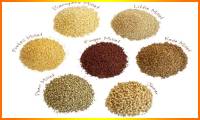
Our goal is to overcome the challenges of Amrit Kaal Shri Tomar.
Union Agriculture and Farmers Welfare Minister Shri Narendra Singh Tomar has said that the Indian Council of Agricultural Research (ICAR) is the largest and most comprehensive research institute in the world. The progress made by the institute so far is commendable. Be it achieving production targets, increasing productivity or meeting the challenge of producing climate-resilient crops, our agricultural scientists have played a vital role in every field. Consolidating upon the traditional farming since ancient times, along with the hard work of farmers, the research of scientists has proved to be a milestone in the progress witnessed in the agriculture sector. So far this journey has been satisfactory, but it is our aim to overcome the challenges during the Amrit Kaal to bring the country in the comity of developed nation by the year 2047.
Union Minister Shri Tomar said this while addressing the 94th Annual General Meeting of the Indian Council of Agricultural Research (ICAR) Society. He said that India's supremacy in the Agriculture sector is increasing all over the world, along with this the expectations from us are also rising. The target is to build a New India by 2047. New India needs new science, research, new skills and innovation because tomorrow belongs to New India. For this, the Government of India, under the leadership of Prime Minister Shri Narendra Modi, is working on the basis of new principles. ‘Sabka Saath, Sabka Vikas, Sabka Vishwas, Sabka Prayas’ is our main mantra, without leaving anyone behind, keep marching towards the goal. Former Prime Minister Lal Bahadur Shastri had given the slogan – ‘Jai Jawan, Jai Kisan’. The then Prime Minister Atal Bihari Vajpayee added ‘Vigyan’ to this slogan and our current Prime Minister Shri Narendra Modi ji has also added ‘Anusandhan’ to it. It has become a mantra for us – ‘Jai Jawan, Jai Kisan, Jai Vigyan and Jai Anusandhan’.
Shri Tomar said that the overall and balanced development of the country is being taken forward. When it comes to overall development, the Agriculture sector is like the backbone of the country. It is our responsibility to develop it. Various challenges like Climate Change are before us today. We are also facing the challenge of damage caused to the standing crops of the farmers due to natural disasters. In New India, we have to reach out to all the farmers with new technology and research. The income of the farmers has to be raised, prosperity has to be brought to their homes and the villages and the Agriculture sector has to be made prosperous, all of which has to be accomplished jointly.
The Union Agriculture Minister said that Rs. 4 lakh crore worth of agricultural exports has been achieved, which is the highest ever. In the coming times, our products of Natural and Organic Farming are going to become more popular in the world. There is a need to work with the belief that our exports will increase further in the future. Along with this, our concern has to be to ensure the quality of the production meets the global benchmark. The government's emphasis is on Natural Farming. Prime Minister Shri Modi urges that we should promote Natural Farming i.e. cow based farming. Let the focus be on ‘waste to wealth’. We should strive to improve the quality and hygiene of our products. The Agriculture Minister said that the year 2023 has been declared as the International Year of Millets (Shree Anna). The Prime Minister is going to formally launch the programme on 18th March. The International Year of Millets is not just an event but a big project to increase the production, productivity and market of Shree Anna. The consumption and popularity of Shree Anna is also increasing through the programs being organized across the country. With the popularity of Shree Anna gaining across the world, when the consumption will increase, then the responsibility of supplying it will also rest with India since we are the largest producer of Shree Anna. Scientists need to pay attention to this aspect too.
In his address, the Union Minister for Fisheries, Animal Husbandry and Dairying, Shri Parshottam Rupala praised the commendable effort put forth by ICAR in developing indigenous vaccine Lumpi-ProVac for defence against the Lumpy Skin Disease afflicting a large cattle population in the country.
Speaking on the occasion, Member, NITI Aayog Shri Ramesh Chand expressed satisfaction that our foodgrains production growth rate is faster than the country’s population growth rate and that the momentum should accelerate. He called upon the ICAR to focus its efforts on the 12 crops witnessing declining production over the years, including Cotton that supports the Textiles Industry also, besides Soyabean, Tur & Urad pulses and Oilseeds particularly Safflower. Pointing out that the consumption of Millets per person has declined from 24% to 6% over the years, Dr. Ramesh Chand said we must ensure Millets remains the staple diet of the poor since it is rich in iron and prevents anemia.
Presenting a detailed report on the achievements of ICAR during the FY 2022-23, Director General of ICAR and Secretary, DARE Dr. Himanshu Pathak said the ICAR released 323 varieties of field crops, including 266 climate resistant variants. A number of vaccines were developed by the ICAR Institutes including the H9N2 Influenza Vaccine for Chickens and vaccine for prevention of SARS-CoV2 infection in animals, he said.
Union Minister of State for Agriculture and Farmers Welfare, Shri Kailash Choudhary (through video conference), Uttar Pradesh Agriculture Minister Shri Surya Pratap Shahi, Maharashtra Agriculture Minister Shri Abdul Sattar, Himachal Pradesh Agriculture and Animal Husbandry Minister Shri Chander Kumar, Secretary, ICAR Shri Sanjay Garg and other members and senior officers were present. On this occasion, Union Minister Shri Tomar also released some publications. During the AGM, some members also presented their suggestions.
Source: pib.gov.in

India, Aus to conclude talks for comprehensive free trade agreement 'as soon as possible'.
India and Australia have agreed to conclude the negotiations for a comprehensive free trade agreement 'as soon as possible' as there is huge potential to enhance bilateral commerce in the next five years, according to a joint statement issued on Sunday. The statement was released after the meeting of Commerce and Industry Minister Piyush Goyal and Australia's Minister for Trade and Tourism Don Farrell on March 11.
Both countries have already implemented an economic cooperation and trade agreement (ECTA) in December 2022 and are now negotiating to widen the scope of that pact into a comprehensive economic cooperation agreement (CECA).
'Ministers look forward to concluding CECA as soon as possible,' the statement said.
The CECA will create new employment opportunities, raise living standards and improve the general welfare in both countries, it added.
The ministers also highlighted the importance of a smooth and timely clean energy transition as both countries work towards achieving their respective net zero goals.
'India-Australia bilateral trade exceeded USD 31 billion last financial year. Both agreed that given the trade complementarities between the two countries, there is considerable potential for significantly enhancing bilateral trade within the next 5 years,' the statement said.
Source: economictimes.indiatimes.com

ICRISAT and IOPEPC Collaborate to Boost India s Oilseed Production and Export.
The International Crops Research Institute for the Semi-Arid Tropics (ICRISAT) and the Indian Oilseeds & Produce Export Promotion Council (IOPEPC) signed a Memorandum of Understanding (MoU) on March 8, 2023, to enhance the production of quality oilseeds in India.
The MoU was signed by ICRISAT’s Director General, Dr Jacqueline Hughes, and IOPEPC’s Chairman, Mr Nilesh Vira, with the aim of strengthening long-term cooperation to increase the quantum and quality of oilseeds grown in India.
The collaboration will focus on expanding cultivated areas, deploying scientific technologies, and collaborating at all levels, including providing farmers with better quality certified seed and strengthening the supply chain of oilseeds.
In addition, the partnership will promote food safety principles, recommend policies and programs to the Government of India and to support the growth of the Indian oilseed sector.
During the discussions, Mr Vira stressed the importance of developing climate-resilient oilseed crops, given the unpredictable weather patterns affecting India’s agriculture. He cited the challenge faced by farmers in growing aflatoxin-free groundnuts, a crop that is increasingly in demand in the export market.
'Farmers want oilseed crops that can withstand climate vagaries. Changing monsoon patterns are affecting oilseed crops that usually take 110-120 days to mature. Farmers do not want to grow oilseeds due to unpredictable weather and we need to find solutions,' said Mr Vira.
Mr Kishore Tanna, Director-Groundnut Panel Convenor, IOPEPC said that India is importing 15 million tons of edible oil and that’s because farmers do not want to grow oilseeds, especially groundnuts.
Mr Tanna also drew attention to the fact that groundnut exports to the European Union had dropped to around 6000-7500 tons due to stringent import rules on aflatoxin that call for levels of not more than 2 – 4 PPB for various grades of groundnut.
ICRISAT’s Director General, Dr Hughes, highlighted the need to eliminate intermediaries in the export value chain, thereby increasing the profits for smallholder farmers. She also emphasized ICRISAT’s commitment to finding solutions to eliminate aflatoxin in groundnuts, which has detrimental effects on all consumers.
'Aflatoxin elimination is a doable challenge for ICRISAT, and partnership with IOPEPC will help ICRISAT focus on key areas of intervention applicable for the peanut sector in India,' said Dr Hughes.
The visiting team shared several avenues to shorten the export value chain and establish direct connections between farmers and exporters. One successful example they cited was the short value chain for soybeans in Rajasthan and Gujarat, which has potential for replication in other crops. They also mentioned the growing popularity of e-markets as another potential avenue for connecting farmers and exporters.
The MoU signing was attended by ICRISAT staff Dr Sean Mayes, Mr Stefan De Greling, and Dr Janila Pasupuleti, and convened by ICRISAT’s Product Placement Lead Dr Ashok Kumar and Mr Ramesh P Kolath, Deputy CEO, IOPEPC.
IOPEPC is recognized by the Ministry of Commerce, Government of India, and serves as the common forum for Indian oilseeds/vegetable oils exporters, foreign buyers, the Indian Government, R&D agencies for oilseeds and vegetable oils in India, international agencies, and many other official bodies and authorities globally.
Source: en.krishakjagat.org