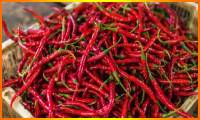
Chilli prices turn hot again on Chinese, Bangla demand.
Source: thehindubusinessline.com
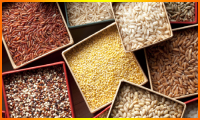
R&D in Seeds Production.
Source: pib.gov.in
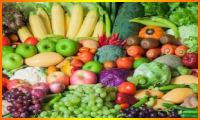
Manipur CM meets Indian envoys, discusses export of horticulture products.
Source: eastmojo.com

Promotion of Natural Farming.
State-wise details of amount released under BPKP to promote natural farming
| Sl. No. | States | Area in Ha | Amount released (Rs in lakh) |
| 1. | Andhra Pradesh | 100000 | 750.00 |
| 2. | Chhattisgarh | 85000 | 1352.52 |
| 3. | Kerala | 84000 | 1954.93 |
| 4. | Himachal Pradesh | 12000 | 286.42 |
| 5 | Jharkhand | 3400 | 54.10 |
| 6. | Odisha | 24000 | 381.89 |
| 7. | Madhya Pradesh | 99000 | 787.64 |
| 8. | Tamil Nadu | 2000 | 31.82 |
| Total | 409400 | 5599.32 | |
Government is undertaking large scale training of Master Trainers, Champion Farmers and practicing farmers on techniques of Natural Farming through National Institute of Agricultural Extension Management (MANAGE) and National Center of Organic and Natural Farming (NCONF). MANAGE has also sensitized the public representative like Gram-Pradhan on the technique and benefits of Natural Farming. Study material on 22 regional languages has been prepared, 697 Master Trainers have been developed on natural farming and 997 training were conducted on natural farming for 56952 Gram Pradhans through MANAGE.
A Digital web portal (naturalfarming.dac.gov.in) has been launched for promotion of natural farming to display information about implementation framework, resources, implementation progress, farmer’s registration, blog etc.
This information was given by the Union Minister of Agriculture and Farmers Welfare, Shri Narendra Singh Tomar in a written reply in Lok Sabha today.
Source: pib.gov.in

Department of Animal Husbandry & Dairying implements National Programme for Dairy Development (NPDD) scheme across the country.
Source: pib.gov.in
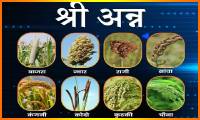
Funds for Shree Anna.
| Funds Sanctioned for Nutri cereals under NFSM during 2022-23 | ||||||||||||
| (Rs. in Crore) | ||||||||||||
| S. No. | State | Allocation | ||||||||||
| 1 | Andhra Pradesh | 8.700 | ||||||||||
| 2 | Arunachal Pradesh | 1.500 | ||||||||||
| 3 | Assam | 1.500 | ||||||||||
| 5 | Chhattisgarh | 3.310 | ||||||||||
| 7 | Gujarat | 7.470 | ||||||||||
| 8 | Haryana | 16.140 | ||||||||||
| 9 | Himachal Pradesh | 0.965 | ||||||||||
| 10 | UT of J & K | 0.615 | ||||||||||
| 12 | Karnataka | 60.430 | ||||||||||
| 14 | UT of Ladakh | 0.360 | ||||||||||
| 15 | Madhya Pradesh | 17.385 | ||||||||||
| 16 | Maharashtra | 61.935 | ||||||||||
| 17 | pib.gov.in |
|||||||||||
22 Mar, 2023

Exports begin as Mumbai markets receive a good supply of Alphonso mangoes. Regular supply of Alphonso mangoes from the Konkan region has hit the Mumbai market from this week with 10,000 to 12,000 crates arriving daily at Vashi's APMC wholesale yard. With this, export to various destinations has already kicked off. Supplies from Sindhudurg dominate the market now. Prices of a crate of Alphonso mangoes have dropped substantially and are hovering in the range of Rs 1,500 to Rs 4,000 in the APMC market. They are retailed at Rs 2,500 to Rs 6,000 for a crate. Market observers predicted that the supply volume will increase after March 25 and the prices are likely to go down thereafter. Friday witnessed the supply of 12k crates of Alphonso mangoes from the Konkan region itself. Meanwhile, exports to the three major international markets for Indian Alphonso mangoes in the Gulf, Singapore and the United Kingdom have already begun. Around 30% of the total arrivals in the Mumbai market daily are being exported now. Traders said that the Konkan mangoes usually hit the Mumbai market in mid-March. And the quantity will go up 30k crates by the end of this month and later to 40k in April. A crate comprises 4 to 6 dozen mangoes. In fact, the supply this year is more than the corresponding period last year. Out of the total 40, 000 crates of mangos of different varieties that arrive at APMC everyday, 30% are the Alphonso variety. If this was not enough, over 5,000 boxes of Alphonso mangoes from South Indian states like Karnataka, Andhra Pradesh, Kerala and Tamil Nadu arrived in the city, almost triple the supply when compared to last year. Last year at the same time, a total of 10,000 to 15,000 crates arrived in Mumbai. The robust supply has led to a dip in price. Speaking to TOI, Sanjay Pansare, APMC director and mango trader said, 'The regular supply has started arriving at the market from early this week. We are expecting an adequate supply this season, unlike last year owing to Covid. The January flowering crop will be harvested in April and May.' Source: timesofindia.indiatimes.com |
||||||||||||
22 Mar, 2023
Contribution of Agricultural Sector in GDP. As per the Second Advance Estimates of National Income, 2022-23 released by Ministry of Statistics & Programme Implementation (MoSPI), the share of Gross value added (GVA) of agriculture and allied sectors in total economy and growth of GVA of agriculture and allied sectors for the years of 2020-21, 2021-22 and 2022-23 are as under:
This information was given by the Union Minister of Agriculture and Farmers Welfare, Shri Narendra Singh Tomar in a written reply in Lok Sabha today. Source: pib.gov.in |
||||||||||||
22 Mar, 2023

PMFME scheme to support setting up of 2 lakh micro food processing enterprises through credit linked subsidy. Minister of State for Food Processing Industries, Shri Prahlad Singh Patel, in a written reply to a question Lok Sabha today informed that the Ministry of Food Processing industries (MoFPI) has been implementing Central Sector Umbrella Scheme- Pradhan Mantri Kisan SAMPADA Yojana (PMKSY) since 2016-17 for overall growth and development of food processing sector, including processing of agro- products and thus increasing the income of the farmers across the country including in the state of Maharashtra and Rajasthan. Under component schemes of PMKSY, MoFPI provides mostly credit linked financial assistance (capital subsidy) in the form of grants-in-aid to entrepreneurs for setting up of food processing industries. The projects completed under component schemes of PMKSY are estimated to benefit about 30.67 lakh famers. Also, as part of the Aatmanirbhar Bharat Initiative, MoFPI is implementing a Centrally Sponsored Scheme-PM Formalisation of Micro Food Processing Enterprises Scheme (PMFME) for providing financial, technical and business support for setting up/upgradation of 2 lakh micro food processing enterprises through credit linked subsidy during five years from 2020-21 to 2024-25 with an outlay of Rs. 10,000 crore. Out of this, a total of 22234 units and 7331 units have been allocated to Maharashtra and Rajasthan respectively. In the written reply it was stated that MoFPI is not facing any major hardship in implementing these schemes. MoFPI is also implementing Central Sector Production Linked Incentive Scheme for Food Processing Industry (PLISFPI) Scheme, intended to support creation of global food manufacturing champions. The Scheme is being implemented over a six-year period from 2021-22 to 2026-27 with an outlay of Rs. 10,900 crores. For easy and affordable credit to the sector, all food & agro processing activities have been made eligible under Priority Sector Lending and a special fund of Rs.2000 crore has been set up in National Bank for Agriculture and Rural Development (NABARD). Source: pib.gov.in |
||||||||||||
21 Mar, 2023
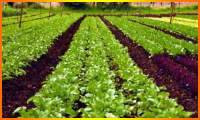
National-level cooperative societies on organic farming, exports will help raise farmers' income: Amit Shah. The national-level multi-state cooperative societies recently approved by the Union Cabinet for promotion of organic products and exports, will help increase farmers' income manifold in the next 10 years, Union Home and Cooperation Minister Amit Shah said here on Sunday. Shah, who was here to inaugurate the Agricultural Produce Market Committee (APMC) 'Kisan Bhavan', also made a strong pitch for the farmers to adopt natural farming, which he said will help increase their income and also protect the soil and environment from the harm caused by chemical fertilisers. 'I assure you that the work started by (Prime Minister Narendra) Modi saheb will not just double but increase the income of every farmer many times in another 10 years. Only two cooperative societies for export and organic products will help increase farmers' income many times,' he said. He said that PM Modi made an important decision in the cabinet to set up three multi-state cooperative societies, of which two are very useful for the state's farmers. 'One will transfer the profits to the farmers directly for the organic produce procured from them,' Shah said. Another cooperative society will help the farmers export their produce from any village in the country and serve as an export house with the profit to be transferred directly to farmers' bank accounts. 'For this, in the coming month, I will meet the chairman of district cooperative banks and APMCs in Gujarat to get them registered with cooperative societies. This will make farmers prosperous,' said Shah, who also laid the foundation stone of Junagadh district cooperative bank building here. The cabinet had in January this year approved setting up of National Export Society, National Cooperative Society for Organic Products and National Level Multi-state Seed Cooperative Society. The minister said that the arrangement for testing of land and natural farm products will be set up in each district in the coming five years for the purpose. He said the government has also decided to set up a cooperative society in each of the country's panchayats, which will help reach the Centre's schemes to the farmers. 'Cooperatives benefit farmers. The central government's budget does not reach you (farmers) because the cooperative structure is not proper. If the cooperative structure becomes strong, then all the schemes of the central government will start reaching you,' he said. Shah said that the large-scale use of urea has spoiled farm land, and lakhs of farmers have moved towards natural farming. 'We will have to move fast towards natural farming and show a way to the world. I assure you that on the basis of scientific data it is established that natural farming does not reduce yield but rather increase it,' he said. To get a better price, there is a need for marketing and certification of such produce and ensuring that fake organic products do not hit the market, he said, adding that 'Amul' has already started marketing such products. Source: economictimes.indiatimes.com |
||||||||||||