
From farmers to Industry, all should work together to strive for excellence in agriculture - Shri Tomar.
A conference of the Indian Council of Agricultural Research (ICAR) and its affiliated institutes, agricultural universities and industries was organized in New Delhi today. Union Agriculture and Farmers Welfare Minister Shri Narendra Singh Tomar and Minister of State Shri Kailash Chaudhary participated in this. Through the conference, ICAR aims to work with organizations from industry, research and academia, that are interested in ICAR's technologies, so that while achieving mutual benefits, the tie ups can widely benefit the country including Agriculture sector in the long run. Agriculture Universities along with more than 100 institutes affiliated to ICAR have various agricultural facilities including well equipped research/development facilities, laboratories/infrastructure which can be mutually used for public good.
Addressing the conference, Union Minister Shri Tomar said that if feedback is received on how industries can apply the research done by ICAR, how to take it forward by complementing each other, what do the industries working at the grassroots level want, then the delivery will improve. The importance of our agricultural products has increased in the world. It is everyone's responsibility to ensure that the quality of our products is good. The shortcomings or gaps in this sector need to be filled, as well as how India can achieve excellence in the agriculture sector while facing the current international challenges, everyone from farmers to industry should work together in that direction. The importance of such discussions increases even more during the Amrit Kaal. Our thinking should be towards fulfilling the expectations of the world from India. To render India's increasing importance on the political scene of the world and to strengthen it further and to fulfill the goal that India should stand as a developed country by the year 2047 (Amrit Kaal), towards this goal it is very necessary our discussion should be comprehensive and meaningful. Prime Minister Shri Narendra Modi himself thinks in this direction and it is his insistence that others should also move in this direction. In the global scenario, the opinion about India is changing rapidly, which needs to be changed and established faster, for this we all need to work together and move at a faster pace.
Shri Tomar said that India has made a lot of progress in the agriculture sector, but there are many challenges in the field of agriculture, identifying them and working towards their solution, so that the agriculture sector should play a bigger role in strengthening the country's economy. There should be more discussion in the direction. There is a need to work in a planned manner, moving beyond traditional agriculture, as well as making full use of technology from lab to land. Scientists associated with ICAR have done a lot of remarkable research, which is useful for the country and the world today. There was a time when we wanted to learn from the world but today the world wants to learn from India in agriculture sector. There is a need to work faster in this direction so that the farmers get the benefit of good inputs and technology, production quality improves, post-harvest losses are reduced and private investment in the agriculture sector multiplies. Although the Government of India is working on all these at its own level, the results of which are evident before all of us, but we all know that the farmers, their produce, along with research & technology besides industries, if all of them come together then this will make the economy strong. We have to ensure the farmer gets a fair price for his produce, hence the contribution of Industry assumes significance.
MoS (Agriculture) Shri Kailash Choudhary; Dr. Himanshu Pathak, Director General, ICAR; coordinator of the conference, Dr. Praveen Malik, CEO, Agrinovate India Ltd, - the commercial arm of ICAR; along with industry representatives Shri Hemendra Mathur and Shri Salil Singhal also spoke on the occasion.
Source: pib.gov.in

India can become 3rd largest world economy by skilling youth, says PM Narendra Modi.
Prime Minister Narendra Modi on Monday said skilling the youth holds the key to India becoming the third-largest economy in the world from the fifth now.
Virtually addressing a 'Rozgar Mela', or employment fair, organised by the Gujarat government at the Mahatma Mandir convention centre in Gandhinagar, Modi said nearly 1.5 lakh youth were given government jobs in the state during the last five years.
The PM emphasised on the need to create a skilled workforce on a large scale to tap growing opportunities in various sectors. 'For the new opportunities being created in the country, we need to create skilled manpower on a large scale. India can achieve the target of becoming the third-largest economy only by skilling its youth,' he said.
India became the world's fifth-largest economy last year. Modi said nearly 18 lakh youths received jobs through employment exchanges during the last few years in his home state of Gujarat, ruled by the Bharatiya Janata Party (BJP). 'During the last five years, the Gujarat government gave jobs to 1.5 lakh youths.
Moreover, nearly 18 lakh youths received jobs through employment exchanges during the last few years in Gujarat,' said the PM. At the event, attended by Gujarat Chief Minister Bhupendra Patel, more than 2,500 youths were given appointment letters.
Source: m.economictimes.com
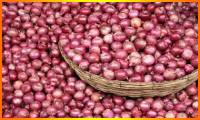
Indian onion exports jump 49% in April-Dec on demand from S-E and West Asia.
India’s fresh onion exports jumped 49 per cent in volume to 1.72 million tonnes (mt) and gained 15 per cent in dollar terms at $394 million during the first nine months of the current fiscal compared with the same period a year ago on robust demand from South-East Asian countries and West Asia.
The Agricultural and Processed Food Exports Development Authority (APEDA), which has taken several steps including the creation of an Onion Export Promotion Forum, is confident that the shipments for the financial year 2022-23 will exceed last year’s levels on higher supplies and rising demand from key buyers such as Malaysia, Vietnam and Indonesia among other countries.
'As per the trade feedback at present, the demand for Indian onions is increasing in the international market and we expect the shipments to exceed last year’s levels,' said APEDA Chairman, M Angamuthu. India exported onions worth $460 million in 2021-22 and major destinations were Bangladesh, Malaysia, United Arab Emirates, Sri Lanka, Nepal, Indonesia, Qatar, Vietnam, Oman, Kuwait, Singapore, Saudi Arab, Bahrain, Maldives and Mauritius.
Special initiatives
India, which accounts for about a fourth of the global onion output, is the third largest exporter after Netherlands and Mexico. In a bid to give further impetus to onion shipments, APEDA has taken up initiatives such as regular interaction with the trade for addressing the issues in supply chain, sensitisation of trade towards compliance of standards prescribed by the importing countries and regular follow-up with concerned stakeholders including government agencies, Indian missions abroad, exporters, R&D institutions among others, Angamuthu said.
Ajit Shah, President, Horticulture Produce Exporters Association, said while the exports are good, the growth in overseas demand is not in sync with the rise in our production. 'Due to the impact of the ban on exports imposed by India in 2019-20, countries such as Turkey, Egypt and Bangladesh among others, which are key buyers of onions, have started growing their own product, affecting the demand. Moreover, countries like the Philippines tend to favour Chinese onions and are not importing from us,' Shah said.
Further, Shah said though the exports may grow in volume terms, in value terms the shipments are likely to hover around last year’s levels as prices have come down this year.
Source: thehindubusinessline.com

India, Iceland review ties, status of negotiations on trade agreement.
India and Iceland Monday reviewed the status of ties, including trade and investments and the India-EFTA Trade and Economic Partnership Agreement (TEPA) negotiations.
India and Iceland held their third Foreign Office Consultations with the Indian side led by Sanjay Verma, Secretary (West), Ministry of External Affairs, and the Iceland side led by Martin Eyjlfsson, Permanent Secretary of State in Iceland's Ministry of Foreign Affairs.
During the talks, both sides comprehensively reviewed the status of relations in all fields, including political, trade and investments, India-EFTA-TEPA negotiations, fisheries, geothermal cooperation, capacity building, cultural relations and people-to-people contacts, a Ministry of External Affairs statement said.
Detailed discussions were held on the future direction of cooperation, including in the multilateral fora, particularly the UN, it said.
EFTA is limited to four countries - Switzerland, Norway, Iceland and Liechtenstein.
The India-EFTA Trade and Economic Partnership Agreement (TEPA) negotiations started in October 2008. Several rounds of negotiations have been held so far.
The consultation on Monday provided an opportunity to exchange views on regional and international issues of mutual interest, including developments in the neighbourhoods of India and Iceland, the EU, the Ukraine conflict, the Arctic and gender issues, according to the statement
Source: business-standard.com
US Secretary of Commerce, H.E. Ms Gina Raimondo to visit New Delhi between 7-10 March.
US Secretary of Commerce HE Ms Gina Raimondo will be visiting New Delhi, India between 7-10 March on the invitation of Shri Piyush Goyal, Union Minister of Commerce and Industry, Consumer Affairs, Food and Public Distribution and Textiles.
During the visit, India - USA Commercial Dialogue and CEO Forum will be held on 10th March 2023 to discuss cooperation in various sectors that could unlock new trade and investment opportunities between the two countries.
The Commercial Dialogue is a cooperative undertaking encompassing regular government-to-government meetings to be held in conjunction with private sector meetings, with an aim to facilitate trade, and maximize investment opportunities across a broad range of economic sectors.
The last India-USA Commercial Dialogue was held in February 2019. Since then, due to pandemic and other factors it could not be held. It is proposed to re-launch the Commercial Dialogue with strategic outlook with focus on supply chain resiliency & diversification and new emerging areas, after a gap of three years.
Earlier, India-US CEO Forum was soft-launched by Indian Commerce & Industry Minister and US Secretary of Commerce on 9th November 2022 via video-conference for which identified key priorities were increasing supply chain resilience, enhancing energy security & reducing overall greenhouse gas emissions, advancing inclusive digital trade; and facilitating post-pandemic economic recovery, especially for small businesses.
Trade, Commerce and Economy had always enjoyed a place of prominence in the India-US multifaceted strategic bilateral relations. Today, the two countries are leading trading partners of each other. India is the ninth largest trading partner for the US, while the US is India’s largest trading partner and the largest export destination. The bilateral trade in goods saw very robust growth during CY 2022, surpassing $131 billion in goods, thus doubling since 2014 (in 8 years) while total trade in Goods and Services is expected to cross US$ 180 billion. US is also the third biggest source of FDI for India, and USA is one of the top five investment destinations for India. This visit will immensely contribute towards furthering trade and commercial ties between the two countries.
Source: pib.gov.in

Some relief. India to gain from EU proposal to hike residue cap on rice fungicide.
The European Union proposes to raise the maximum residue level (MRL) for tricyclazole in rice to 0.09 mg per kg from 0.01 mg/kg after finding that the raised level is unlikely to cause any risk for consumers.
The European Food Safety Authority (EFSA) has proposed the hike in the level of tricyclazole in rice after concerns over allowing the higher limit had been sufficiently addressed.
The proposal is now expected to be ratified by the European Standing Committee on Food Chain and Animal Health in May.
India’s demand
The decision should encourage Indian rice exporters as the fungicide residue’s presence has been a concern for shipments to the EU. However, India has been seeking an MRL of 1 mg/kg for the chemical.
Tricyclazole is a fungicide that is used to control the blast disease in rice. Tests carried out by Japanese scientists on mice are reported to have led to decreased body weight gain and increased organ weight and others in the rodent’s liver.
EFSA said Corteva Agriscience had submitted an application to Italy’s competent national authority, which is the rapporteur Member State (RMS) of the EU, to set an import tolerance for the active substance tricyclazole in rice.
According to trade experts, Italy is one of the EU members who has been unhappy with the EFSA regulations since it is a significant producer of rice.
Evaluation resubmitted
The RMS drafted an evaluation report in accordance with the EU regulations. It was submitted to the European Commission and forwarded to the European Food Safety Authority (EFSA) on April 26, 2018.
'The RMS proposed to establish MRL for rice imported from Brazil at the level of 0.09 mg/kg,' it said.
In turn, the EFSA identified the gaps in the evaluation and the RMS submitted a revised evaluation report on October 7, 2022.
'Based on the risk assessment results, EFSA concluded that the short-term and long-term intake of residues resulting from the use of tricyclazole according to the reported agricultural practice is unlikely to present a risk to consumer health,' the authority said.
Hydrolysis studies conducted to investigate the effect of processing on the nature of tricyclazole demonstrated that tricyclazole 'is stable'. 'As the proposed use of tricyclazole is on imported crops, investigations of residues in rotational crops are not required,' EFSA said.
Impact on feed
As by-products from (husked) rice, rice bran may be used for feed purposes, a potential carry-over into the food of animal origin was assessed. The calculated livestock dietary burden did not exceed the trigger value of 0.1 mg/kg dry matter (DM) for all relevant animal species.
'The relative contribution of tricyclazole residues from rice hulls to the total livestock exposure was insignificant, and therefore, animal commodities were not further considered in this application,' EFSA said.
The EFSA concluded that 'the proposed use of tricyclazole on rice will not result in a consumer exposure exceeding the toxicological reference values and therefore is unlikely to pose a risk to consumers’ health'.
Source: thehindubusinessline.com

Demand for J&K, Himachal apples rises as Turkey quake hits supply.
Demand for apples from Jammu & Kashmir and Himachal Pradesh has shot up 30% as the earthquake in Turkey has halted shipments of the fruit to India, said traders. Prices of apples have risen about 25%, providing some relief to domestic growers who have been facing stiff competition from Turkish apples, they said.
'The severe earthquake that rocked Turkey last month has impacted exports of apples from the country to India. The domestic demand is now being met by the apples produced in Himachal Pradesh and Jammu & Kashmir,' said Tarun Arora, director of IG International, a fruit importing firm.
The supply of Iranian apples has also been hit due to the ongoing protest in the country, he said, adding, 'The economy in Iran is also in a mess which too is a reason for a drop in exports from the nation.'
J&K and Himachal Pradesh are the two major apple producers in the country.
'Indian apples are more in demand in the domestic market, unlike last year. A box of around 24 kg of apples was selling at ?2,000 last year. This year prices have gone up to ?2,500 per kg,' said Ravinder Chauhan, president, Apple Growers Association of India. 'This is good for the apple producers in the country as it will give them a fillip to increase production and improve the quality of apples.'
J&K produces about 140 million boxes of apples annually, while Himachal Pradesh produces about 30 million boxes. Nearly 1.6 million apple growers in these two regions depend on their production to earn their living.
'This year we are expecting that 85-90% of our produce will be consumed within the country and there will be no glut,' said Chauhan.
The earthquake in Turkey has also benefited India's tea exporters.
'Turkey has been buying tea from Sri Lanka and India. Trade relations between India and Turkey have further improved following India's help to Turkey in this hour of crisis,' said Anshuman Kanoria, chairman, Indian Tea Exporters' Association. 'Last year, Indian tea was able to increase its share in a few countries such as Turkey, which is traditionally a buyer of Sri Lankan tea. We are expecting that Indian tea exports will further increase to the country as it is the cheapest beverage. In this hour of crisis, people need a drink for comfort and tea fills the gap.'
Source: economictimes.indiatimes.com

Notice on Traceability Application under RUCO Initiative; to go live on Mar 15.
The FSSAI has issued a notice with respect to the implementation of Traceability Application under Repurpose Used Cooking Oil (RUCO) Initiative and stated that The Traceability Application will be made live from March 15, 2023.
According to FSSAI, in order to streamline the RUCO initiative and to promote ease of doing business, it has developed the RUCO Traceability Application.
'The application is designed to track the whole RUCO ecosystem, generate UCO disposal requests, enroll NFP (Non Food Product) units, recognise aggregators requested by NFP units, monitor transactions and generate data and reports on real-time basis,' reads FSSAI statement.
The Traceability Application is available on RUCO website and it provides log in facility for FBOs, UCO aggregators and NFP Units.
The Food Safety and Standards Authority of India has notified the Food Safety and Standards (Licensing and Registration of Food Businesses) First Amendment Regulations, 2017, regarding the quality of vegetable oil for repeated frying which prescribes the limit for Total Polar Compounds (TPC) to be maximum 25% beyond which the vegetable oil is not suitable for use.
Subsequently, guidelines for collection of Used Cooking Oil (UCO) by Biodiesel Manufacturers from Food Business Operators (FBOs) through authorised collection agencies were issued in May, 2019 which mandated FBOs whose consumption of edible oil for frying is more than 50 litre per day would maintain the usage record and would dispose UCO to agencies authorised by FSSAI or Commissioner of Food Safety of States/UTs from time to time.
Also under RUCO, FSSAI has been enrolling the NFP (Non Food Production) units and recognising the UCO aggregators on request of the recognised NFP units.
Source: fnbnews.com

A sweet forecast. India s fresh grape exports seen higher on ample supplies, good demand.
India’s fresh grape exports for the financial year 2022-23 are seen higher both in volumes and value on good demand from Europe, the largest buyer and ample supplies.
This is despite a delayed start to the export season and adverse factors such as a hike in import duty by one of the large buyers Bangladesh and slower shipments to Russia due to the war situation, exporters said.
'The demand is good from Europe. We are expecting this year’s exports to touch the peak levels of 2019,' said Vilas Shinde, Chairman and Managing Director, Sahyadri Farmers Producer Company Ltd (Sahyadri Farms), a large exporter of fresh grapes.
All-time high
India’s grape exports had touched an all-time high of $335 million in 2018-19 but had declined in subsequent years to factors such as Covid-related lockdown and soaring freight rates triggered by global logistics challenges and a decline in output due to the inclement weather conditions.
Though the export season was delayed by a fortnight this year and started in January’s third week due to the impact of unfavourable weather, the shipments have picked up and gained pace.
'The climate is clear now and is seen helping the production and productivity, unlike in the past three years when output suffered due to the bad weather. The only issue is shipments are not happening to Russia due to the war situation. Also, Bangladesh has increased the import duty to Rs.53 a kg from Rs.32, which is a bit of concern and may result in a decline in shipments of around 10-15 per cent to that country,' Shinde said.
Of the close to 2.4 lakh tonnes of fresh grapes exported from India, Europe accounts for over 1 lakh tonnes, followed by Bangladesh at around 60,000 tonnes. Other geographies including West Asia and Russia account for the rest.
As per the latest data from APEDA, India has shipped out grapes worth $69.65 million in the April-November period of the current financial year, an increase of 23 per cent over the same period last year. Being a short seasonal fruit, the bulk of the fresh grape shipments take place during the January-March period.
Positive growth expectations
Currently, India is the 11th largest exporter of grapes in the world and shipments have grown at a compounded annual growth rate of 12.6 per cent in the last decade.
'This year will be good and positive for the grapes exports. We will do very well,' said M Angamuthu, Chairman, APEDA. 'Because of our strong traceability system, upgraded with blockchain technology, we have managed to tap the high-value European market, which has given a boost to grape exports. APEDA is making efforts to penetrate new markets and intends to improve product diversification and value addition too,' Angamuthu added.
'Grapes exports are relatively okay compared to the last year. So far, the season has been good and we are expecting to ship out over 100 plus containers, around 1,500 tonnes,' said Pankaj Khandelwal, Chairman and Managing Director, INI Farms, which was acquired by agri-tech firm AgroStar. INI Farms exports around 100 containers of grapes annually, mainly to Europe.
Sahyadri’s Shinde said considering good demand and production this year, his organisation is expecting to clock a growth of 10-15 per cent in fresh grape shipments this year. Last year, Sahyadri shipped out around 1,100 containers, each carrying about 14 tonnes.
What the stats say
India’s grape exports during 2021-22 stood at $305.7 million, a 2.6 per cent decline over the previous year’s $314 million.
The top ten export destinations of grapes during 2021-22 were the Netherlands, Bangladesh, Russia, the UK, UAE, Germany, Nepal, Saudi Arab, Malaysia, and Thailand.
As per the third advance estimate for 2021-22, grape production is seen higher at 3.47 million tonnes over 2020-21’s final estimates of 3.358 million tonnes.
Source: thehindubusinessline.com
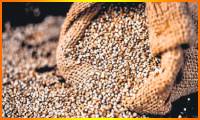
Millet Based Khareed Kendras set up in country for first time post-independence.
A two-day Millet Mahotsav was organised by the Ministry of Food Processing Industries at Agra, Uttar Pradesh, from 3-4 March, 2023. The event was inaugurated by Minister of State for Law & Justice, Prof. SP Singh Baghel. Several dignitaries, including Additional Secretary, Ministry of Food Processing Industries, Shri Minhaj Alam, were also present on the occasion.
During his inaugural address, Prof. SP Singh Baghel applauded Prime Minister Shri Narendra Modi’s decision to set the Minimum Support Price for Millets higher than Wheat as it would encourage farmers to adopt millet cultivation, especially in the regions where there is a shortage of water. Shri Baghel stated that the consistent efforts of Prime Minister Shri Narendra Modi led to the United Nations declaring 2023 as the International Year of Millets and has put India to be at the forefront of championing this initiative and built a strong name for Millets at the global level.
Shri Baghel referred to the International Year of Millets as the time for Krishi Antyodaya (Upliftment of Farmers). He said that Millets is often perceived to be associated with a poverty-based lifestyle, and there is a need to create awareness to change this perception. The Minister, who is also Member of Parliament from Agra, expressed his gratitude towards the Ministry of Food Processing Industries for the initiative of Millet Mahotsav and for selecting Agra as one of the districts to conduct the event. Uttar Pradesh is the largest producer of food grains in India and accounted for about 18.89% share (58.32 million MT) in the country’s total food grain output in 2020-21. In the year 2019-20, the state of Uttar Pradesh produced 21,71,836.00 MT millet. The different varieties of millets mainly produced in Uttar Pradesh include Sorghum, Pearl Millet, Kodo and Barnyard Millet. In the Agra district, the millet varieties produced mainly include Sorghum and Pearl Millet. In the year 2019-20, Agra produced 99 MT of Sorghum and 2,93,964 MT of Pearl Millet.
Speaking about the cultural impact of Millets, Shri Baghel said that Millet Based Khareed Kendras have been set up in the country for the first time post-independence and steps like these will contribute greatly towards the initiative of IYoM. He also talked about the nutritional benefits of Millet and how it has helped to control health problems like diabetes.
Shri Minhaj Alam, Additional Secretary, Ministry of Food Processing Industries informed the gathering that the government is organizing Millet Mahotsav in 20 States and 30 Districts across the country and these districts represent key regions engaged in the processing of Millets. He enlightened the participants about the aim and salient features of Millet Mahotsav and the importance of a holistic approach to Millet processing. He emphasized on the various qualities of Millets like minimal water requirement and adaptability according to the terrain, that makes Millets a suitable alternative to commercially grown crops. The States hosting the events include Madhya Pradesh, Bihar, Telangana, Tamil Nadu, Uttar Pradesh, Assam, Gujarat, Andhra Pradesh, Uttarakhand, Odisha, Punjab, Kerala, Rajasthan, Himachal Pradesh, Karnataka, Maharashtra, Chhattisgarh, Haryana, West Bengal, and Jharkhand.
Touching upon the importance of millets and the immense market potential for millet-based value-added products, Shri Alam talked about the opportunities in millet processing in Uttar Pradesh. He also informed the stakeholders about the various initiatives undertaken by the Ministry of Food Processing Industries to support the food processing sector and cited the role of the PMFME Scheme in empowering micro food processing enterprises by providing financial, technical and business support across the value chain.
The two-day event was aimed at bringing all the stakeholders of the food processing sector with special focus on millets, on a common platform and encompassed a wide range of activities like exhibition and sale of various millet-based products, live kitchen, millet recipe demonstration, cooking competition, painting competition, sharing of success stories, informative sessions on millet processing, interactive sessions between industry experts and micro food processing enterprises, SHGs, FPOs engaged in food processing followed by cultural programs.
In addition to the Millets Mahotsav, a mega-food event World Food India 2023 is also being organized by the Ministry from 3rd to 5th Nov 2023 at Pragati Maidan, New Delhi to provide a unique platform to all stakeholders i.e. producers, food processors, equipment manufacturers, logistics players, cold chain players, technology providers, academia, start-up & innovators, food retailers, etc. to interact and have a dialogue. The event is slated to be the biggest-ever congregation of dignitaries, global investors and business leaders of major global and domestic food companies which would put India firmly on the global food landscape.
Source: pib.gov.in