
Kerala to expand Dairy Village project to 40 panchayats: Minister Chinchurani.
Moving closer to its aim of self-sufficiency in milk production, the Kerala government will implement the Dairy Village project in 40 more panchayats during the next financial year, Minister for Animal Husbandry, Dairy Development and Milk Cooperatives J Chinchurani said.
The proposed plan envisages payment of ?50 lakh for each chosen panchayat, with the amount being contributed equally by the civic body and the State government, she said after inaugurating Milma’s H2F (Help to Farmers) project in Kochi.
The announcement comes one-and-a-half months after the government announced ?12.5 crore to implement the Ksheera Gramam (Dairy Village) project under the State’s Commercial Dairy Milk and Milk Shed Development Programme.
'From 20, we are doubling the number of the panchayats,' the Minister said at the function, which also saw the release of four new Milma products.
Appealing to dairy farmers to go for total insurance cover for their cows and calves, the Minister said the government has been striving to improve the efficiency of the State’s dairy sector by enabling a rise in the volume of milk per cow.
'When Punjab stands first in the country with 14.5 litres of milk a day from a cow, Kerala comes second with 10.6 litres. We need to go up the rank,' she said.
Releasing the logo of H2F, Chinchurani also announced the launch of compensation to APCOS (Anand Pattern Cooperative Societies) in the event of damage to their buildings owing to natural disasters. She also declared open a scheme that entitles farmers with a minimal refund if they lose their cow or calf unexpectedly.
The government will implement the decisions taken at the recently concluded State Dairy Development Department conclave on the timing of milking the cows to increase their efficacy.
'We are trying to fix the time at dawn and dusk in place of the current general practice of small hours and afternoon. This will ensure an ideal gap of 12 hours and also facilitate the dairy farmers to engage in other day-time jobs that can increase their income,' she said.
Milma’s also released new products such as sugar-free Peda, Chocolate Peda, Jack Fruit Peda and Guava Ice-cream.
ERCMPU Chairman MT Jayan said the cooperative union has submitted to the government a set of developmental projects totalling ?40 crore. 'As much as 83 per cent of Milma’s revenues go to the farmers, while the rest is used for welfare purposes,' he added.
Source: thehindubusinessline.com
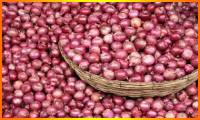
Centre directs Nafed, NCCF to buy red onion from farmers.
Amid the fall in onion prices, the government on Tuesday said it has directed cooperatives Nafed and NCCF to intervene in the market and immediately start procurement of red onion directly from farmers. National Agricultural Cooperative Marketing Federation of India Limited (Nafed) and National Consumers Cooperative Federation of India Limited (NCCF) have also been directed to simultaneously sell the procured onions in the consumption centres.
'Prices remained stable due to consistency in demand and supplies as well as export potential. However, the month of February saw a decline in prices of red onion, particularly in the State of Maharashtra where the modal rate dropped to Rs 500 -700/quintal,' the agriculture ministry said in a statement.
Experts attribute this fall due to increased production in other states, reducing dependence on the supplies from the major producing district of the country -- Nashik, it added.
In view of falling prices and to protect the interest of farmers, the ministry has directed two cooperatives Nafed and NCCF to immediately intervene in the market for the purchase of red onion. Nafed began the procurement on February 24 and has already purchased 4,000 tonne at above Rs 900 per quintal directly from farmers so far, the statement said.
Nafed has opened 40 procurement centres where farmers can sell their stock and get their payment online. It has made arrangements for the movement of the stock from purchase centres to Delhi, Kolkata, Guwahati, Bhubaneshwar, Bangalore, Chennai, Hyderabad and Kochi, it noted.
The government has been creating a buffer stock of onion in the last few years under the Price Stabilization Fund scheme to keep the supply chain smooth during the lean seasons.
In 2021-22, Nafed purchased 2.51 lakh tonne of rabi onion for buffer. This year, the government aims to buy 2.5 lakh tonne.
The Centre is in touch with state governments and keeping a close watch on the market so that additional interventions, if required, are taken for the benefit of farmers, as per the statement. Onion production in the country is pegged higher at 318 lakh tonne in the 2022-23 crop year (July-June) against 316.98 lakh tonne in the previous year.
Source: economictimes.indiatimes.com
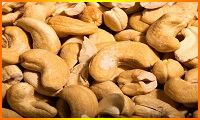
Keeping pests at bay. Now an AI-based app to identify pest, disease attacks in cashew.
The Directorate of Cashew Research (DCR) under the Indian Council of Agricultural Research (ICAR) has developed an AI-based (artificial intelligence) app and website for the identification of pests, diseases and nutrient deficiencies in cashew plants.
‘Cashew Protect’ app, launched recently for mobile phones with Android and iOS operating systems, can currently detect six pests and one disease; it will eventually be developed to identify around 60 pests that attack cashew plants, besides 20 diseases, and 10 nutrient deficiencies, from uploaded images.
Cashew Protect app
The Principal Scientist at DCR in Puttur taluk of Dakshina Kannada district in Karnataka, Mohana GS, who conceptualised and designed the app, told businessline that farmers approach scientists on WhatsApp, seeking remedies to tackle pests and diseases affecting cashew. To address the farmers’ requirement, DCR decided to launchan AI-based app.
Though there are apps for identification of pests and diseases, there was no AI-based app for cashew.
How to get info
On the use of the app, Mohana said the farmer can upload photos of the affected part -- whether it is the leaf, fruit, an entire tree, or the stem – on the app/ website.
AI technology would identify the pest or disease instantly and provide remedial measures. 'So you will come to know about the management of the whole problem,' he said.
Cashew Protect app
For example: If a farmer uploads a tea-mosquito bug (TMB) affected cashew leaf, AI technology would give the similarity percentage of the image with that of the affected plant.
'Let us say similarity is 80, or 90 , or 95 per cent. Based on the similarity, you will come to know whether identification is correct or wrong. If it is more than 90 per cent, we can be sure that it is correctly identified and it will also show the image of the TMB-affected plant that is already stored in the system,' he said.
About cases where the disease/ pest has been wrongly identified, he said the AI system identifies pests and diseases based on the image that the farmer uploads. It would provide an answer based on its previous experience.
If the farmer is not satisfied with the results, he/ she can share it with experts on the website/ app.
Data analytics
, .
Large-scale use of the app globally will help identify the location of the problem using data analysis, Mohana said.
It is important that a large number of farmers used the app since large data sets help AI technology provide solutions in a better manner.
Benefits to farmer
The farmer, in whichever part of the world he is, can use this technology to find solutions to manage disease/ pest attacks in time.
Stating that timely management is crucial for management of pests such as TMB, he said if it is identified in time, the whole tree can be saved.
'If we can identify the problem at the right stage, we can take management measures and definitely it will improve productivity in case of pests and diseases, and also nutrient deficiency,' he said.
Languages
The website/ app is available in English, Hindi, Kannada, Gujarati, Marathi, Malayalam, Tamil, Telugu, Bengali, Odia and Garo languages.
Scientists from DCR and AICRP (All India Coordinated Research Project) - Cashew, from across the country were part of the project, which has been funded by the RKVY-RAFTAAR (Rashtriya Krishi Vikas Yojana - Remunerative Approaches for Agriculture and Allied Sectors Rejuvenation) programme of the Karnataka government.
Source: thehindubusinessline.com
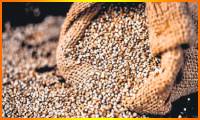
AP outfit gets first foxtail millet food safety certification.
A farmer producer organisation (FPO) based in Anantapur district of Andhra Pradesh, Sri Rapthadu Mandala Raithu Utpatti Darula MACS, supported by agri enterprise Samunnati and eFresh Agri Business Solutions, has become the first organisation to receive IndG.A.P certification for foxtail millet. The development comes at a time when the government wants to make India the millet hub of the world.
Certification schemes like IndG.A.P are designed to help farmers and exporters meet global food safety standards, essential to access overseas markets.'Adoption of G.A.P verified by a robust certification will enhance value realisation by farmers and make India globally competitive in agri exports,' said Samunnati founder Anil Kumar SG.
Source: economictimes.indiatimes.com

Maharashtra agriculture sector to grow 10.2% thanks to good monsoon: Economic Survey.
The Maharashtra Economic Survey 2022-23 has projected that the agriculture and allied sector, which is the mainstay of the state’s rural economy and engages 55 per cent of the population, will register 10.2 per cent growth in the outgoing fiscal year.
The projected growth is attributed to the good monsoon and the absence of drought for the past three years. The state recorded 119.8 per cent monsoon rain in 2022. Of the total 355 talukas (excluding those in Mumbai city & Mumbai suburban districts), 204 received excess rainfall, 145 got normal rains and only six received deficient rainfall.
As against the advanced estimate (2021-22) pegged at 4.4 per cent, followed by the first revised estimate of 11.4 per cent, the projected growth of 10.2 per cent seems a quantum leap.
The sowing for kharif season 2022-23 was completed on 157.97 lakh hectares, which was lower than last year’s 163.79 lakh hectares. The production of cereals, oilseeds, cotton and sugarcane is expected to increase by 10 per cent, 19 per cent, five per cent and four per cent respectively. But the overall production of pulses is estimated to sharply decrease by 37 per cent compared with the previous year.
The rabi crop sown on 57.74 lakh hectares shows a reverse trend for 2022-23. Though pulses production is expected to rise by 34 per cent, the production of cereals and oilseeds is likely to decrease by 13 per cent.
The increased area under sugarcane cultivation is a key contributor to the growth. The average area under sugarcane plantation, which was 12.32 lakh hectares, rose to 14.88 lakh hectares. The average area under sugar plantation in the state till four years ago stood at 9.89 lakh hectares. The rise in sugar plantation and production saw farmers turning to cash crops in larger numbers in drought-hit Marathwada.
Cotton, which is the mainstay of the backward regions of Vidarbha and Marathwada, also recorded an increase in both the area under plantation (42. 29 lakh hectares) and production (81.92 metric tonnes) in 2022-23.
According to the economic survey, the area under horticulture crops was 23.46 lakh hectares in 2022-23, as against 23.92 lakh hectares in 2021-22. As per the first advance estimates, the total area under fruit crops in 2022-23 is 8.32 lakh hectares, of which the area under mango cultivation is the highest (1.64 lakh hectares), followed by pomegranate (1.56 lakh hectares), grapes (1.19 lakh hectares), mandarin orange (1.20 lakh hectares), banana (0.91 lakh hectares) and mosambi (0.65 lakh hectares). As per the first advance estimates, the total area under vegetable cultivation is 2022-23 is 11.62 lakh hectares, of which onion is the highest (9.18 lakh hectares), followed by tomato (0.60 lakh hectares) and green chilly (0.33 lakh hectares).
Although the BJP-Shiv Sena government has pledged to promote millets, both the area under cultivation and production have dropped for the crops. Around 20 years ago, the area under millet cultivation was 72.30 lakh hectares and production was 53.16 lakh metric tonnes. In 2021-22, the area under these crops was 23.07 lakh hectares and production was 22.69 lakh metric tonnes.
Under the Maharashtra Millet Mission, innovative concepts like 'millet of the month' and 'shet tithe poushtik trundhanya' are being implemented to popularise millets.
The real challenge for the government will be to enhance the irrigation potential, especially in Vidarbha and Marathwada, to draw small and marginal farmers to millet farming. They account for up to 78 per cent of all farmers in the state.
The total area under irrigation in 2021-22 was 43.38 lakh hectares. The command area under major and minor irrigation projects was 33.19 lakh hectares, while that under minor irrigation projects was 10.19 lakh hectares.
As part of the drought-free Maharashtra mission and providing better infrastructure to farmers to access water, the government has undertaken Jalyukta Shivar Abhiyan 2.0. The project, undertaken between 2014 and 2019, has helped increase the irrigation potential.
The government plans to carry out soil and water conservation work in eligible villages where the first phase of the Jalyukt Shivar Abhiyan as well as other development programmes were not implemented.
Bridging the gap between the availability and efficient use of water in villages will be part of the project for sustainable development and agriculture.
Source: indianexpress.com

India-Russia hold high level meeting to push investment & trade ties including market access issues.
External Affairs Minister S. Jaishankar on Monday held a virtual meeting with Denis Manturov, Deputy Prime Minister of the Russian Federation and Minister of Trade and Industry, and Co-chair of the India-Russia Inter-governmental Commission on Trade, Economic, Scientific, Technological and Cultural Cooperation (IRIGC-TEC) to push investment and trade ties.
The Co-chairs reviewed the progress achieved in the various Working Group and Sub-Group Meetings under the IRIGC-TEC framework since their meeting in Moscow in November 2022 and gave guidance to prepare ground for the next in person meeting of IRIGC-TEC which will be held in New Delhi at mutually convenient dates.
The two sides agreed to work together to unlock the full potential of India-Russia bilateral trade and economic relations including through addressing the trade deficit and market access issues, according to a MEA statement. India Russia trade last year touched a record high of 31 bn usd and is expected to grow further in 2023.
The Inter-governmental Commission is a mechanism for regularly monitoring bilateral progress across the sectors of trade and economic cooperation between the two countries which was set up by an Agreement on inter-governmental Commission on Trade, Economic, Scientific and Technological Cooperation signed in May 1992.
The first session of IRIGC was held on 13 and 14 September 1994. So far, 23 IRIGC meetings have been held. 23rd Session of IRIGC was held on 14 September 2018 in Moscow. The 24th IRIGC-TEC meeting will be hosted by India.
Source: economictimes.com
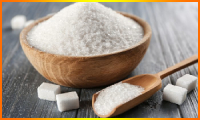
Extra 1 mln tons sugar exports possible if domestic output meets estimate: Govt official.
India, the world's second largest sugar producing nation after Brazil, can export an additional 1 million tonnes of the sweetener if the domestic output reaches an estimated 33.6 million tonnes this year, a senior food ministry official said on Monday. The government will take a call next month on allowing more quantities of sugar exports, after assessing domestic production, he said.
Sugar availability is comfortable in the country and as a result wholesale and retail prices of the sweetener are on a decline in the last one month.
The food ministry has allowed 6 million tonnes of sugar exports for the current 2022-23 marketing year (October-September).
India exported a record 11 million tonnes of sugar in the previous year.
'More exports are possible and we have a cushion for exports of additional one million tonnes, suppose the overall production reaches the estimated 33.6 million tonnes this year,' the official said.
Sugar production has already reached 24.7 million tonnes till February of the ongoing 2022-23 marketing year, while mills have despatched 4.3 million tonnes for exports so far this year, he said.
The crushing operation will come to an end by the next month and the government will review exports after assessing the final production figures, he added.
According to the food ministry, the country's sugar production has been estimated lower at 33.6 million tonnes for the 2022-23 marketing year, due to fall in production in the top three producing states.
Sugar production in Maharashtra, the country's leading sugar producing state, is estimated to be lower at 12 million tonnes in the 2022-23 marketing year, as against 13.7 million tonnes in the previous year.
Production in Uttar Pradesh is also likely to decline marginally to 10 million tonnes, as against 10.2 million tonnes, while that of in Karnataka it is estimated to drop to 5.5 million tonnes, as against 6.2 million tonnes during the comparable period, as per the official data.
About 5 million tonnes of sugar will be diverted for ethanol production this year, much higher than 3.6 million tonnes in the previous year.
Despite an estimate of lower sugar production, the official said India's total availability of sugar would be 40.1 million tonnes in 2022-23, which includes a carry-over stock of 7 million tonnes.
Initially, carry-over stock was projected to be 6.1 million tonnes but it has risen to 7 million tonnes after actual verification of stock by state governments, he added.
The official asserted that there is no supply concern and both wholesale and retail prices are on a decline in the last one month.
Wholesale price of sugar was ruling at Rs 3,841 per quintal on March 3, as against Rs 3,860 per quintal a month ago. Retail price of sugar too was down marginally at Rs 41.61 per kg, as against 41.8 per kg during the comparable period, the official added.
On cane arrears, the official said the current year has been one of best years as mills have cleared maximum dues.
Out of Rs 1,18,271 crore dues payable during 2021-22 marketing year, the pending arrear is only Rs 432 crore.
Similarly in the ongoing 2022-23 marketing year, mills have a clear 77 per cent of Rs 69,381 crore dues payable to the growers so far. Pending dues is about Rs 15,842 crore which will be paid soon, the official added.
Source: m.economictimes.com
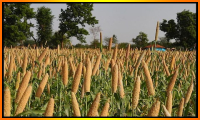
Uttar Pradesh govt looks to double millet area to 2.5 mn hectares.
Close on the heels of Prime Minister Narendra Modi christening millets as ‘Sri Anna’ (divine foodgrain), the Uttar Pradesh government is looking to more than double the cultivated area of indigenous foodgrains.
The state is targetting to increase the millets acreage from about 1.1 million hectares to over 2.5 million hectares. UP is among the top millet producing states in India with its basket comprising jowar, bajra, kodo, ragi, kottu and sanwa.
At the same time, the state will launch exclusive millet outlets and engage women rural entrepreneurs and self-help groups (SHG) in its value chain.
According to the agriculture department, the current cultivated area of jowar and bajra in UP stands at more than 170,000 hectares and 900,000 hectares, respectively.
'Apart from increasing the acreage of millets, the state is also taking steps to augment the institutional procurement of ‘Sri Anna’ to encourage farmers to adopt its cultivation,' a senior official said.
Millets offer a spectrum of low-risk crops, which are resilient to climate change. As such, the state has decided to promote the cultivation of such nutritious cereals in the rain-fed areas.
Meanwhile, the government has drafted a multi-pronged strategy to promote consumption of millets and popularise cuisine based on such cereals. UP Chief Secretary Durga Shankar Mishra issued a circular in this regard to the departments concerned, including tourism, food & civil supplies, rural development, etc.
While the state is planning to introduce millets in the mid-day meal scheme, the tourism department will organise cooking competitions for hotels and restaurants focussing on the cereal. Foodchains, hotels and restaurants have been advised to prominently display millet-based menus.
Under the one district one product (ODOP) template, bajra cultivation will be promoted in Agra and Kanpur divisions, while Mirzapur and Sonbhadra divisions will be entrusted with boosting kodo and sanwa.
Source: business-standard.com

India s Fresh Grape Exports Up on Bountiful Supplies & Strong Demand from Europe.
This is despite a delayed start to the export season and negative factors such as a duty increase by one of the major buyers, Bangladesh, and slower shipments to Russia due to the war situation, according to exporters.
'Demand from Europe is strong. We expect this year's exports to exceed those of 2019,' said Vilas Shinde, Chairman and Managing Director of Sahyadri Farmers Producer Company Ltd (Sahyadri Farms), a major fresh grape exporter.
India's grape exports reached an all-time high of $335 million in 2018-19, but have since fallen due to factors such as a Covid-related lockdown, soaring freight rates caused by global logistics challenges, and a drop in output due to inclement weather. Despite the fact that the export season was delayed by a fortnight this year and began in the third week of January due to the impact of unfavourable weather, shipments have picked up and gained pace.
Europe accounts for over one lakh tonnes of the nearly 2.4 lakh tonnes of fresh grapes exported from India, followed by Bangladesh at around 60,000 tonnes. The remainder is accounted for by other geographies such as West Asia and Russia.
According to the most recent APEDA data, India shipped out grapes worth $69.65 million during the April-November period of the current fiscal year, a 23% increase over the same period last year. Because grapes are a short-season fruit, the majority of fresh grape shipments occur between January and March. India is currently the world's 11th largest grape exporter, with shipments increasing at a compound annual growth rate of 12.6% over the last decade.
'This year will be good for grape exports. We will do very well,' said APEDA Chairman M Angamuthu. 'Because of our strong traceability system, upgraded with blockchain technology, we have managed to tap the high-value European market, which has given a boost to grape exports. 'APEDA is attempting to enter new markets while also improving product diversification and value addition,' Angamuthu added.
India's grape exports in 2021-22 were $305.7 million, a 2.6% decrease from the previous year's $314 million. During 2021-22, the top ten grape export destinations were the Netherlands, Bangladesh, Russia, the United Kingdom, the United Arab Emirates, Germany, Nepal, Saudi Arabia, Malaysia, and Thailand. Grape production is expected to be 3.47 million tonnes in 2021-22, up from 3.358 million tonnes in 2020-21, according to the third advance estimate.
Source: krishijagran.com

India considers raising palm oil import tax to help rapeseed farmers.
India, the world's biggest importer of vegetable oils, is considering raising its import duty on palm oil to help support local farmers reeling from a crash in domestic rapeseed prices, government and industry officials said on Monday.
The increase in the tax on palm oil could lift local prices, making the tropical oil a little less competitive than rival soyoil and sunflower oil.
'We have proposed an increase in import duty on palm oil to support rapeseed prices,' said a government official, who declined to be named in line with official rules.
'Rapeseed supplies from the new season are putting pressure on prices, which have fallen below MSP (minimum support price),' said the source referring to the government-set rate which acts like a benchmark for the domestic market.
If commodity prices fall below MSPs, the government usually tries to help prop up rates to protect farmers.
In spot markets, rapeseed prices were around 5,000 Indian rupees ($61.21) per 100 kg, below the government-fixed price of 5,450 rupees per 100 kg.
Indian farmers plant rapeseed, the main winter-sown oilseed, in October and November, with harvests from March. Higher prices encouraged farmers to expand the area under rapeseed.
After abolishing the basic import tax on crude palm oil (CPO) last year, India continues with a 5.5% tax on CPO shipments. The country also levies a 12.5% import tax on refined, bleached and deodorized palm oil.
'Since world prices have dropped, India is looking at raising the duty,' the source said. 'Overall food inflation might be a concern for the government, but vegetable oil prices have dropped.'
Lower rapeseed prices have hurt farmers from India's western state of Rajasthan, and the government would like to protect growers ahead of the state election, trade and industry officials said.
Rajasthan accounts for more than half of the rapeseed production.
'There is a proposal to raise the duty, and an inter-ministerial panel is looking into it,' said the second source, who also didn't want to be named citing official rules.
Source: m.economictimes.com