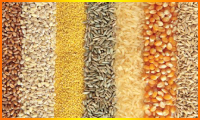
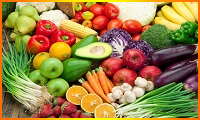
Cultivation of fruits & vegetables surpassed that of cereal grains.
Producing fruits and vegetables at minimal cost, India is one of the world's major agricultural economies. The agricultural sector of India's economy is the country's backbone. Horticulture refers to the cultivation of plants for human use, including but not limited to fruits, vegetables, and flowers. The Latin terms hortus (garden) and cultura (cultivation) are the origins of the English word 'horticulture.' It describes the practice of growing plants in a contained space, such as a garden. Every step of the horticulture process—from planting to crop management to harvesting to packing to storage to marketing and processing—requires meticulous attention to detail. Horticulture crops account for over 28 per cent of India's GDP, and India is the world's second-largest producer of fruits and vegetables after China (GDP). Much of the agricultural output is exported, and it also serves as a critical input for the food processing and distribution sectors.
The salience of the horticulture sector
India's horticulture industry has a lot of potential, and the way we grow and sell fruits is changing, which is a step in the right direction toward the next generation. By adding human intelligence and technology to farms, the country is catching up with high-value markets that were once an afterthought, mostly because farmers stuck to the old ways of farming. Things are shaking up, and they are changing rapidly. Indian fruit orchards and farms are now attracting overseas and corporate investments and modernising production methods, resulting in opening up newer markets for premium agricultural produce and boosting exports as well.
The scope and significance
Horticultural plant cultivation plays a significant role in the Indian economy by giving jobs and raw materials to food processing companies, as well as by increasing production, hence increasing profitability and export revenues from foreign currency. In the previous several decades, this field's contribution to the gross domestic product has increased its significance (GDP). It has emerged as a leading source for boosting income, alleviating poverty, and creating jobs. Some 24 million hectare, or more than 7 per cent of all agricultural land, is allocated to horticulture. India ranks second in the cultivation of vegetables such as potatoes, cauliflower and brinjal and is the leading producer of okra. In terms of the cultivation of fruits such as mango, banana, guava, lemon, and papaya, India ranks first. In India, the cultivation of fruits and vegetables has surpassed that of cereal grains.
Source: fnbnews.com
Food processing unit for Amb, stone laid.
Chintpurni MLA Sudarshan Singh Babloo today laid the foundation stone of a World Bank (WB)-funded fruit processing centre at Behar Bithal village of Amb subdivision. A sum of Rs 1.65 crore will be spent on the centre under the HP Horticulture Development Project.
The MLA said the centre would process dragon fruit, ashwagandha, aloe vera, fig and stevia. A private entrepreneur from the village, Riva Sood, had mooted the project and the products would be branded under Agriva Naturally, added Sudarshan.
DC Raghav Sharma said 5,000 saplings of dragon fruit had been planted in the district during the last two years under MGNREGA scheme. He said the fruit processing unit would provide a ready market to the horticultural produce of farmers.
He said with new technical interventions and high-yielding varieties of vegetables and fruits, the youth, too, could take up agriculture and horticulture as a profession.
Riva said her organisation was building a nursery for various types of fruits and medicinal plants. She added they were also motivating local farmers to cultivate these plants so as to increase their income.
Source: tribuneindia.com
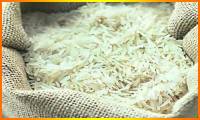
Iran: Ban on Rice Imports Lifted.
Iran has lifted restrictions it recently imposed on rice imports, according to the director general of the Commerce Bureau of the Agriculture Ministry.
'There is currently no ban on placing order [for rice imports],' Shahyad Aabnar was quoted as saying by Iran Chamber of Commerce on Wednesday, adding that order has been placed for the import of 100,000 tons of rice in the past 24 hours.
His comments came after the head of Rice Importers Association of Iran announced that rice imports have been banned since early November and no kind of rice can go through customs clearance.
'Responsible officials have cited ‘balancing out bilateral trade’ as the reason why they have banned rice imports from the countries we normally purchase the grain from,' Karim Akhavan-Akbari was quoted as saying by the news portal of Iran Chamber of Commerce, Industries, Mines and Agriculture.
It was earlier announced that only Indian rice imports were banned.
Akbari said the government decision would cause shortage in the domestic market, since local production cannot meet domestic demand for rice.
'So far this year, close to 1.27 million tons of rice have been imported. Our annual import demand stands at around 1.5 million tons. Therefore, we need to purchase nearly 250,000 tons of the grain by the end of the year [late March],' he said.
He noted that year-on-year inflation for top quality Iranian rice stands at 123.1%, adding that for high-quality foreign rice the rate stood at 45.9% in the month ending Dec. 21.
'The first six deciles of the country consume imported foreign rice, due to their more reasonable prices. The ban set on imports can result not only in a shortage of rice, but an increase in prices. In our country, rice is a staple food, coming in second after wheat in the list of the most consumed grains. Therefore, this measure can impact a large number of the population, particularly the ones with more modest means,' he said.
His remarks came after Salar Saket, the deputy head of Rice Importers Association of Iran, echoed similar concerns.
'Indian rice accounts for the highest proportion of imported rice due to its high quality and reasonable price. Iranians prefer Indian rice over other foreign types of rice and importers trade commodities for which there is demand in the market. The rice we purchase from India meets the needs of six underprivileged income deciles and also balances the price of Iranian rice. So, it is only obvious how this ban on imports can damage the market,' he said.
The ban also applied to import of tea from India.
'It will be lifted as soon as bilateral trade is balanced out or registers surplus,' secretary of Iran’s Rice Suppliers Commission, Masih Keshavarz, was quoted as saying earlier.
A total of 1.75 million tons of rice were imported into Iran during the last Iranian year (March 2021-22). The import volume set a ten-year record high, according to the secretary of Iran Rice Association.
'Last year’s imports was more than twice the volume the country needed to make for the domestic production deficiency,' Jamil Alizadeh Shayeq was quoted as saying by Mehr News Agency.
A total of 2.25 million tons of rice were produced in Iran during the last Iranian year (March 2021-22), according to the deputy head of Iran Rice Union, Ahmad Eshraqi.
Rice consumption in Iran currently stands at 3 million tons per year, about 70% of which are supplied through domestic production, according to Alireza Mohajer, a deputy agriculture minister.
India has long been a major exporter of rice to Iran. Other exporters include Pakistan, the UAE, Thailand, Turkey and Iraq.
The three northern provinces of Gilan, Mazandaran and Golestan produce are Iran’s rice production hubs.
Contract-Based Production
Contract-based cultivation of rice was launched in Iran in April 2022 for the first time.
More than 6,322 hectares of paddy fields have joined the scheme so far, the CEO of the Central Organization for Rural Cooperatives affiliated with the Ministry of Agriculture said back then.
'We estimate that a total of 15,805 tons of rice will be produced under the scheme which is being carried out in the northern provinces of Gilan, Mazandaran and Golestan. Up until now, we have distributed over 1,100 tons of seeds among farmers taking part in the plan,' Esmaeil Qaderifar was also quoted as saying by ILNA.
Agricultural Production Insurance Fund, he added, has made sure all of these contracts are insured.
'Seeds, fertilizers and pesticides are provided for farmers as part of the contract-based production scheme. The government plans to expand the scheme to all strategic agricultural products,' he said.
FAO Forecast
The Food and Agriculture Organization of the United Nations expects Iran’s rice production to reach 3 million tons in 2022, down from 3.1 million tons last year. Five-year average output has been put at 3.5cereal million tons.
In its biannual report on global food markets, FAO said Iran imported an average of 1.3 million tons of rice during the 2018-20 period.
The 2018-20 average production has been put at 2.5 million tons.
Consumption is forecast to slightly increase from 3.6 million tons in 2021 to 3.7 million tons in 2022.
Average utilization during crop years 2018-19 to 2020-21 stood at 3.6 million tons.
2022-23, 2021-22, and 2018-19 to 2020-21 average closing stocks have been put at 0.6, 0.5 and 0.7 million tons respectively.
The 2018-19 to 2020-21 average per capita has been put at 38.2 kilograms.
Limited availabilities of water for irrigation cloud rice production outlook for Iran, the report noted.
'International trade in rice is predicted to register its third successive annual increase in 2022 (January–December), with volumes exchanged across the world forecast to reach 53.1 million tons, up 3.0 percent from the 2021 all-time high. With the exception of the Asian Far East, most regions are anticipated to step up their imports over the course of the year, often aided by state efforts to contain inflationary pressure. Such steps have taken the form of import duty remissions in various African and Latin American countries, or of an acceleration of government-contracted imports, as has been most notably the case of Iraq and the Islamic Republic of Iran.'
Source: financialtribune.com
FSSAI extends deadline for health cert to accompany imported foods.
The Indian Food Safety Authority, FSSAI, has decided to further extend the deadline for its order on requirement of ‘health certificate’ with imported food consignments. The date for implementation of the order is now set for March 1, 2023.
The previous extension was until January 1, 2023.
The food authority had issued an order in August 2022 and the subsequent clarification in September on the subject, wherein the FSSAI ordered that from November 1, 2022, the imported consignment of milk & milk products, pork & pork products and fish & fish products were required to accompany by a health certificate issued by a competent authority of the exporting country.
The food authority had also prescribed the format of the health certificate to accompany such imported food categories wherein attestations were required regarding sanitary and food safety related conditions and a general condition that the source animal shall not be fed with feed containing meat or bone meal including internal organs, blood meal and issues of bovine or porcine origin material except milk and milk products and has/have not been manufactured using animal rennet.
Also, in September, FSSAI issued a clarification that an integrated/single certificate incorporating food safety related requirement/attestations is also accepted by FSSAI at the time of import clearance and it may be ensured that integrated certificates shall incorporate all the information as per format notified by the FSSAI in August 2022 order.
Meanwhile, the FSSAI has stated that the decision to extend the implementation by two months until March 1 was taken after considering the request from the WTO members wherein it was conveyed to the Indian Food Authority that many trade partners were in process of adopting the requirement.
Earlier, comments were sought from the WTO members on the subject and after considering the comments received from the trading partners in respect of implementation time, it was decided that the date of implementation of the order shall be extended by two months until January 1, 2023.
Source: fnbnews.com
India, US to use TPF meet to focus on big picture of trade ties.
Union minister for industry and commerce Piyush Goyal has said that India and the United States (US) have decided to use the Trade Policy Forum (TPF) ministerial meetings to focus on the big picture of the trade relationship, and not get bogged down by squaring off item-by-item market access related details.
The big focus in the relationship now includes deepening partnerships on semiconductor manufacturing and defence production, where Goyal said that India, unlike other countries, 'did not steal technology', in what appeared to be a reference to China. He added that given the political decision in the US not to sign any free trade pacts with any country, an India-US FTA was not a part of the discussions.
Responding to a question from HT on whether, even as the intent and nature of discussions were positive, the TPF outcomes had been incremental and therefore disappointing, Goyal said that the two countries now envisioned the forum in a different framework.
'There are market access issues which don’t come into the TPF in terms of the detailing. Both (US Trade Representative) Katherine Tai and I decided that we should leave those details to the officials to work on and continuously expand,' Goyal said.
He added that they had decided 'to move on' from the 'one is to one, we will open table grapes for you, you open mangoes for me...level of the discussion' that was in the mini-trade deal once envisaged between the two countries or in earlier discussions.
'Katherine Tai and I decided that this is not the age and day to look at I give you one item, you give me one item, and we square off issues. We both agreed we should look at the big picture, what’s good for both countries, and at the ministerial level, we set the context in which the officials then find the day-to day solutions. We did not believe that at the ministerial level, we should be putting down on paper, going forward, that on mangoes, I do this, on grapes, you do this, on pork, you do this. Those are for officials to work out.'
Goyal said that on specific issues, progress has happened on many of these items and there was ongoing work between different agencies and departments.
'We focus on the big picture. Let’s respect each other’s sensitivities, and while respecting those sensitivities, let’s move forward and fast-track our on-the-ground outcomes. Let’s move out of this one is to one ratio-based outcomes.'
Giving examples of what he termed the big picture, Goyal cited semiconductor manufacturing and defence and contrasted India’s credentials with others.
'We are looking at much deeper engagement with the US on semiconductor manufacturing. Several American companies are looking at the big Indian opportunity on defence production, making it competitive, giving an opportunity to tap into the large Indian market where we are encouraging make in India products. They feel comfortable working with India because unlike other countries, we don’t steal technology.'
The minister said India respected the sanctity of technology, allowed companies to keep technology, didn’t demand technology transfer and pointed out that while India allowed 74% ownership in the automatic route in defence production, it even allowed 100% ownership on a case-by-case basis in an expedited manner.
'Our effort in both meetings — with both Tai and commerce secretary Gina Raimondo — has been on the big picture. And, therefore, I would disagree that it is more about intent and less about substantive outcomes. I think there is a greater substantive outcome this time around than the last because we have set the principles on which this engagement can go on a fast-track.'
Responding to a separate question on the fate of a mini trade deal — which was a subject of discussion with the earlier Trump administration — Goyal said that it was 'too mini' to merit any great effort on both sides. 'We have even forgotten most of these issues and are looking at much bigger ambitions in our trade with the US.'
The minister pointed out that India has recently signed a set of free trade deals but the US is not looking at any free trade deals with any country 'as a matter of their political policy'. 'So that’s not on the table. We are focusing on greater market access, ease of doing business and looking at much larger footprint for trade, investment and business and small mini trade deals have lost relevance today.'
Source: hindustantimes.com

Russia s second largest bank launches direct payments in rupees.
Russian VTB bank, Russia’s second largest bank, launches direct payments in rupees in what would boost bilateral trade and investments in a big way.
Russian SME clients can now make transfers without double conversion, which simplifies the work on foreign trade contracts with India.
The mechanism of direct settlements allows to fix the price of a product and the payment in the national currency, and to receive individual quotes on market terms.
It also eliminates preliminary coordination of the transactions, according to the VTB’s press service.
Nine Russian banks, including VTB, opened special vostro accounts in India to facilitate Russian-Indian trade in November 2022. Certain Indian banks opened special Vostro accounts for trade with Russia.
VTB Bank and its subsidiaries form a leading Russian financial group – VTB Group uniting VTB banks located in different countries and offering a wide range of corporate banking services and products.
Source: economictimes.indiatimes.com
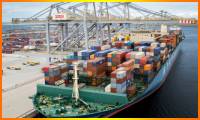
India s major ports see 9 per cent increase in traffic handled in April-Dec period.
India’s 12 major ports have seen a 9 per cent increase in traffic handled, y-o-y, for the April – December period. Total cargo handled include 576.63 million tonnes for the period under review.
Cargo handling in the year ago period stood at 529 mt, data from the Indian Ports Association showed.
Increase in traffic came on the back of a 35 per cent rise in thermal coal handling, which stood at 98 mt as against 72 mt in the year-ago period. This was followed by an increase in coking coal handling, which increased by over 16 per cent y-o-y to 43.25 mt (against 37.2 mt).
The twelve major ports include Kolkata and Haldia Dock Systems (together known as Syama Prasad Mookherjee Port), Paradip, Vishakhapatnam, Kamarajar (or Ennore), Chennai, VO Chidambaranar, Cochin, New Mangalore, Mormugao, Mumbai, Jawaharlal Nehru Port Authority and Deendayal.
Petroleum and other crude products like LPG/LNG was the largest item handled, in terms of volume, across the 12 ports. Around 176 mt of POL (petroleum, oil and lubricants) was handled during the period under review, up 8 per cent y-o-y when 163 mt was handled.
Interestingly, data from the association shows that iron-ore (including pellet) handling saw an over 20 per cent decline for the nine-month-period (9MFY23), to 29.7 mt. Iron ore shipments handled during the same period last year was 37.2 mt.
The other item which saw a fall in cargo handling was raw fertilisers; down by 5 per cent-odd to 6.3 mt (apprx).
Paradip Port
Of the major ports, traffic handled by Paradip was the highest at 96.7 mt, up 16 per cent y-o-y . Pradip accounted for 17 per cent of the total traffic. Nearly, 12.6 mt was thorough-put for December only — the highest ever for the year.
Thermal coal handling at the port increased by 15 mt, or by 71 per cent y-o-y, to 36 mt. Coking coal handling, however, declined by 4 per cent to 10.2 mt, data from Indian Ports Association showed.
Syama Prasad Mookherjee (SMP Kolkata), Vishakhapatnam, Chennai, New Mangalore and Chidambarabar were among the ports that saw significant increase in coking coal handling. In fact, SMP- Kolkata reported the highest coking coal handling at 17.2 mt, up 58 per cent, y-o-y.
Chennai, Cochin, SMP-Kolkata and JNPA did not see any thermal or steam coal handling during the period, while others like Vishakhapatnam, Ennore, Deendayal were amongst those that saw an increase in coal cargo.
Source: thehindubusinessline.com

Plant-based market in India to be worth Rs 81,000 crore.
Plant-based food products are finished food products composed from components derived from plants, such as fruits, vegetables, whole grains, nuts, seeds and legumes. A growing section of the population is opting for plant-based food products, especially plant-based 'meat', to lead better and healthier lifestyles. According to a research conducted in 2020, 62.8% Indians are extremely likely to buy plant-based products, while 48.7% of the Indian population would still choose to eat meat from conventional sources.
The recent episode of the global Covid-19 pandemic helped accelerate the push towards plant-based products like never before. The pandemic made people realise the value of life, thus compelling many to switch to healthier lifestyles in that phase. The transition towards plant-based foods is growing as people are consciously cutting down on consumption of traditional meat sources.
Plant-based foods offer a lower fat content, higher fibre content, better control over weight management, equivalent amounts of nutrition through cleaner and leaner foods and easier digestion as compared to the conventional sources of meat.
Not just India, the global market is also experiencing a growth trend in the demand for plant-based foods. Analysts predict the growth of the plant-based market in India at a CAGR of 19.75% by 2025 and estimate its value at Rs 81,000 crore. The colossal increase in the demand proves that people are eager to switch to better control over their health and are well aware of the benefits of these products.
Opting for plant-based products also carry major environmental and moral benefits. Studies have proven that the meat industry is responsible for almost 60% of all greenhouse emissions from food production. Apart from the environmental advantage, dependency on vulnerable livestock animals is also reduced, thereby making such foods cruelty-free.
Apart from the plant-based meat industry, the market for plant-based milk alternatives is also on the rise. With easy access to the informational content and a higher awareness of self, many people possess knowledge about lactose intolerance and conditions resulting from dairy products. Hence, the demand for plant-based dairy products is rising.
Additionally, plant-based dairy products also come with a certain level of fortification as they don’t have nutritional content present in them naturally when compared with dairy products. Fortification increases their nutritional value to be either equivalent or higher than the dairy products.
The benefits of adopting a plant-based diet include improved health and reduced risk of obesity, diabetes and cancer. It also reduces carbon footprint and helps conserve natural resources. A study conducted in 2021 showed that use of animals for food is responsible for 57% of all food production emissions. Large areas of additional land are needed to grow the feed that grazing animals need, and this additional land is frequently cleared by cutting down trees in forests. According to the study's calculations, most of the cropland in the world is utilised to feed cattle rather than people. Additionally, livestock emit a significant amount of methane, a potent greenhouse gas.
Extensive promotion and marketing of these products by famous personalities have led to a monumental impact on the consumers, which justifies the surge in sales. As the plant-based products market is just picking up steam in India, consumers are at advantage due to the competitiveness between multiple manufacturers. To stay buoyant, manufacturers will have to rely heavily on technology to ensure that they are ahead of their competitors.
In addition to technology, manufacturers must introduce innovation in terms of product variants and their taste to be relevant in the Indian market, as Indian food offers diversity in taste and cuisine. It is an uphill task for the manufacturers to strike a chord with the consumers in that regard.
Another huge challenge for the plant-based food manufacturers, specifically the plant-based meat manufacturers, is replicating the exact taste, texture, taste, feel and appearance of the traditional meats. Further, plant-based foods lack in essential nutrients like Vitamin B12 and calcium. Nutrient deficiency is a common problem faced by people who have adopted vegan diet.
Although plant-based foods are more nutritious given their low fat and cholesterol contents, people following veganism are prone to nutrient deficiency. Hence, fortification is a must for such products. Along with fortification, research is required to find more sources of high quality protein and other nutrients.
In the current market, plant-based food products are more expensive than conventional meat sources. This could prove to be a deal-breaker for the consumers looking for cost-effective plant-based food products. Apart from the mentioned issues, the plant-based food products stare at a logistical supply chain problem.
As most of the plant-based foods require cold storage facilities even while transportation, manufacturers fail to find a proper channel for supply and distribution of their products. Resultantly, it affects the availability of those products scarce in the local market. Consumers have to rely on a limited number of channels, most likely the manufacturers’ websites, for buying their products. In addition to these challenges, the regulatory struggles for the plant-based food industry are higher than other food tech industries.
Although the plant-based food industry is still in its formative years, its demand is only growing. With the right approach, pricing and strategy, manufacturers of plant-based food products could be a hit with the consumers.
Undoubtedly, the category is revolutionary and is certainly aimed at creating a healthy wave amongst the consumers. It provides a higher quality and cleaner source of protein than its traditional meat counterparts. An increasing number of health-conscious consumers are driving this sector towards success. A lot of confusion still exists in consumers’ minds regarding plant-based substitutes, but the market is performing good, thanks to the influence of celebrities and prominent personalities through advertisements and marketing.
A larger section of consumers is already aware of the benefits of plant-based food products. The boom in the plant-based food industry is not far away from being the daily preference in Indian homes.
Source: fnbnews.com
Connecting Bangladesh and India's Northeast of the Asean.
Bangladesh's participation in the ongoing India-Myanmar-Thailand Trilateral Highway (IMTTH) project, one of India's flagship projects under its Act East Policy, is much-awaited and hoped for.
Even during Sheikh Hasina's recent four-day visit to India from September 5 to 8 in 2022, Bangladesh's unabated interest on the matter was visible in the ministerial-level discussions that were held.
This is because India's proposal to extend the IMTTH project, so as to establish connectivity with other ASEAN powers like Lao PDR, Cambodia and Vietnam would result in an approximately 3,200 km route known as the East-West Economic Corridor (EWEC).
And, given how ASEAN connectivity remains a priority concern for both India and Bangladesh, a possible eastwards extension of the IMTTH as a division of the EWEC — that further links itself with the Greater Mekong Subregion (GMS) — is crucial if the South Asian economies want to play a more meaningful role in the post-Covid world.
Initially, when a road belt connecting India, Thailand and Myanmar was under construction, India had approached the-then Khaleda Zia-government to be a part of the project. However, it was refused back then.
The Sheikh Hasina-government, on the other hand, expressed its interest to join the IMTTH project during a virtual summit between Prime Minister Sheikh Hasina and her counterpart Narendra Modi in 2020. The matter was again brought up in discussions held during Modi's Bangladesh visit in 2021, to commemorate 50 years of bilateral ties between the South Asian neighbors.
In 2018, the Economic Research Institute for ASEAN and East Asia (ERIA) was commissioned by the Indian government to conduct a study on the feasibility of the IMTTH'S extension to the EWEC.
According to ERIA, developing a potential southern route for extension stands more feasible than a northern route.
The potential northern route passes through Myanmar's Shan state, the Myanmar–Lao PDR Friendship Bridge at Xieng Kok in Laos till Pang Hok, a primary border crossing between Laos and Vietnam. Entering Vietnam through Tay Trang, the route then connects with the cities of Dien Bien Phu Phong, Hanoi and Hai Phong.
The development of a northern route faces many challenges in the form of unresolved security issues like restrictions on foreigners entering parts of Myanmar's Shan state, and issues of poor infrastructure as noticeable in Laos, where many of its sections would require expansion for accommodating large trucks.
The potential southern route passes through the Thai cities of Mae Sot and Bangkok till Aranyaprathet at the Thailand-Cambodia border. Thereafter, the route passes through important Cambodian cities like Phnom Penh till Bavet, Cambodia's international border gate with Vietnam. After entering Vietnam, the route passes through the Go Dau port and the cities of Ho Chi Minh and Vung Tau.
The prescribed southern route has better developed roads in Thailand since it overlaps with GMS economic corridors– something that the northern route lacks. The economic returns are also to be higher in the southern route's case since the better quality of road infrastructure would result in a lower completion cost.
Extension of the IMTTH ensures economic integration and greater connectivity of India's landlocked North Eastern Region (NER) with Bangladesh and the Southeast Asian nations of Cambodia, Laos and Vietnam as Bangladesh's involvement adds additional routes for the project by both, land and sea.
Bangladeshi products are also known to be in heavy demand in the states of Meghalaya, Mizoram, Assam and Tripura that fall under the NER. These states share a border with Bangladesh and provide a big market for its fast-growing economy– and the IMTTH project would simply catalyse this opportunity further.
The eastward extension will also reduce time and transportation costs to Myanmar and Thailand, simultaneously opening wide opportunities for exporters in Bangladesh and the NER to the unexplored regions of Cambodia and Laos.
Likewise, the corridor will ensure Cambodia, Myanmar, Laos, Thailand and Vietnam greater access to the NER and Bangladesh's vast markets, reducing their heavy reliance on Chinese markets.
With regard to geographic proximity, Bangladesh and India have stronger trade ties with their Middle East neighbors like the United Arab Emirates, but their trade linkages with Southeast Asian countries like Laos and Cambodia are minimal– this is also something that could be addressed.
The Covid-19 pandemic has taught us that one cannot be overdependent on supply chains given how supply chains, movement of people and goods got disrupted during the pandemic.
Preparation of alternate routes, in addition to the existing regular route for trade and connectivity, shall be a game-changer for manufacturers and traders in Bangladesh and the NER in the post-Covid scenario.
The eastern extension of the IMTTH to Vietnam provides for such an opportunity since it establishes new/alternate sources of supply and larger markets.
Source: tbsnews.net
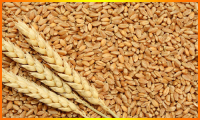
Wheat sowing up 1.4% as acreage in most States increases.
The total area under all rabi crops increased by 3.5 per cent at 682.02 lakh hectares (lh) while the sowing of wheat increased by 1.40 per cent from last year to 332.52 lh, the Ministry of Agriculture’s weekly update said.
The ongoing rabi season of the 2022-23 crop year (July-June) will determine many policy decisions as the Centre has been keeping a close watch on wheat production. While the lifting of the export ban has a direct linkage to the cereal’s production, there are curbs on rice exports with shipments of fully broken rice being banned and non-basmati white rice attracting 20 per cent export duty. In addition, the Centre will decide the restoration of entitlements of beneficiaries under the food security law as per their choice of food.
Wheat acreage has increased in Uttar Pradesh (by 2.92 lh), Rajasthan (2.52 lh), Maharashtra (1.01 lh), Bihar (0.81 lh), Chhattisgarh (0.65 lh), Gujarat (0.54 lh), West Bengal (0.09 lh), Jammu & Kashmir (0.07 lh) and Assam (0.03 lh). But there has been a drop in area in Madhya Pradesh (3.05 lh), Jharkhand (0.31 lh), Punjab (0.20 lh) and Haryana (0.19 lh).
Progress in paddy
Winter-sown paddy has been transplanted on 6.60 lh more area at 26.22 lh until Friday, which is 33.6 per cent higher from the year-ago period. This is likely to partially offset some losses seen in the kharif season after drought-affected yield in eastern parts of the country.
Pulses acreage has increased marginally to 161.09 lh against 159.44 lh in the year-ago period. The acreage of major winter-grown pulse chana (gram) is marginally down at 109.56 lh but masur (lentil) is up 6 per cent at 18.38 lh.
In the case of oilseeds, the acreage has increased to 107.52 lh as of January 13 against 99.65 lh in the year-ago period. Mustard and taramira area remains higher at 96.85 lh, up by 8 per cent.
The area under nutri-cum-coarse cereals has increased to 50.02 lh against 47.71 lh in the year-ago period. The acreage of maize is up by 21.1 per cent at 19.95 lh from 16.47 lh. The coverage of barley, which is mainly used by the distilleries for beer manufacturing, has jumped 9.7 per cent to 7.4 lh from 6.74 lh.
Source: thehindubusinessline.com