03 Aug, 2023
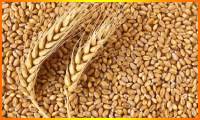
Union Cabinet approves World s Largest Grain Storage Plan in cooperative sector
The Union Cabinet, in its meeting held on May 5, 2023, has approved the ‘World’s Largest Grain Storage Plan in cooperative sector’, to be rolled out as a Pilot Project. The Plan entails creation of various agri infrastructure at Primary Agricultural Credit Societies (PACS) level, including warehouses, custom hiring centre, processing units, Fair Price Shops, etc. by leveraging the ‘whole-of-Government’ approach. The Plan is being implemented by utilising the approved outlays of the following Government of India (GoI) schemes for creation/ modernization of infrastructure facilities at PACS level:\ 1. Ministry of Agriculture and Farmers Welfare: • Agriculture Infrastructure Fund (AIF), • Agricultural Marketing Infrastructure Scheme (AMI), • Mission for Integrated Development of Horticulture (MIDH), • Sub Mission on Agricultural Mechanization (SMAM) 2. Ministry of Food Processing Industries: • Pradhan Mantri Formalization of Micro Food Processing Enterprises Scheme (PMFME), • Pradhan Mantri Kisan Sampada Yojana (PMKSY) 3. Ministry of Consumer Affairs, Food and Public Distribution: • Allocation of food grains under the National Food Security Act, • Procurement operations at Minimum Support Price The Ministry of Cooperation has constituted an Inter-Ministerial Committee (IMC), with Home and Cooperation Minister as its chairman and Ministers and Secretaries of Ministries concerned as its members for smooth and effective implementation of the Plan. The said committee is authorised to modify guidelines/ implementation methodologies of the schemes identified for convergence, as and when need arises, within their approved outlays and prescribed goals for facilitating the Pilot Project of the plan. The Ministry of Cooperation has also constituted the National Level Coordination Committee (NLCC) under the chairmanship of the Secretary (Ministry of Cooperation) to steer the overall implementation of the plan and reviewing the progress of implementation. In order to monitor the implementation of the Pilot Project and to ensure seamless integration of the plan with the existing policies/ programmes at State level, States/ Union Territories have also constituted State Cooperative Development Committee (SCDC) at State level and District Cooperative Development Committee (DCDC) in each District under the Chairmanship of Chief Secretary and District Collector respectively. The SCDC/ DCDCs also have members drawn from other departments such as Revenue, Agriculture, Horticulture, and representatives of NABARD, StCB, FCI, WDRA, CWC, SWC. The committees will, inter-alia, examine the storage gap including existing storage facilities, their capacity utilisation, capacity of proposed godowns, viability of the applicant PACS, location of the proposed project, connectivity, logistics, availability of basic infrastructure, market linkages. National Cooperative Development Corporation (NCDC) with the support of NABARD, NABARD Consultancy Services (NABCONS), Central Warehousing Corporation (CWC), Food Corporation of India (FCI), etc. is implementing the Pilot Project in 24 PACS of 24 different States/ UTs. Construction has started at five PACS, one each in the States of Tripura, Haryana, Tamil Nadu, Uttar Pradesh and Madhya Pradesh. Detailed Project Reports are under preparation for the remaining PACS. The creation of decentralised storage capacity ranging from 500 MT to 2000 MT at PACS level would reduce food grain wastage by creating sufficient storage capacity, strengthen food security of the country, prevent distress sale of crops and enable farmers to realise better prices for their crops. Since PACS would be operating as a procurement centre as well as Fair Price Shops (FPS), the cost incurred in transportation of food grains to procurement centres and again transporting the stocks back from warehouses to FPS would also be saved. The estimated cost of the project for each PACS would vary and depend upon various parameters such as storage capacity, requirement for custom hiring centre, processing units, etc. Interest Subvention under the Agriculture Infrastructure Fund would be dovetailed with the subsidies available under the identified schemes for the construction of godowns and other agri-infrastructure at PACS level.
Source:
fnbnews.com
|
03 Aug, 2023
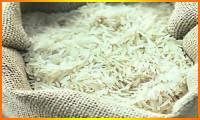
Categorise Indian rice as speciality and common varieties, say traders, exporters
With the Centre banning exports of white rice and non-resident Indians, mainly from the South, looking to get their favourite Sona Masuri or Ponni rice variety, the Centre’s policy of classifying the cereal as basmati and non-basmati has come under scrutiny. One of the arguments put forth to change the classification from Basmati and non-Basmati is that some of these rice varieties, including Red rice or Matta, Idly rice, Kichili Samba, Navara, Gobindobhog, all are priced higher and some of them fetch even higher rates than basmati. 'The usage of basmati and non-basmati is discriminatory against other special varieties. Instead, the Government should use speciality and common rice terms,' said S Chandrasekaran, a Delhi-based analyst. ‘Fix floor price’ 'It will take time for the Government to realise the value of speciality rice. Customs authorities too are finding it difficult to distinguish. We definitely need different nomenclature to recognise speciality rice,' said BV Krishna Rao, President, The Rice Exporters Association (TREA). Earlier this week, TREA wrote to Commerce Minister Piyush Goyal to have a different harmonised system of nomenclature (HSN) code for rice varieties such as Sona Masuri. 'In view of the difficulties, we are urging the Government to fix a minimum export price (MEP) for these varieties,' he said. 'The Government should classify specialty rice through special HSN code, particularly for Sona Masuri, Matta and Gobindobhog that expats consume,' said Rajesh Jain Paharia, a Delhi-based exporter. Data pointers This will help in supplies of these rice varieties flowing freely, while setting a MEP of $1,000/tonne will also help, he said. 'This will prevent them from switching over Japonica or Camolino rice,' Jain said. M Madan Prakash, President, Agri Commodities Exporters Association, agreed with classifying speciality varieties. 'These rice varieties are consumed only by a specific group of consumers such as non-resident Indians. The common variety is consumed by people in South-East Asia and Africa,' he said. Chandrasekaran said data available on rice exports from Sona Masuri to Ponni to traditional varieties are pointers that the Centre should drop classifying rice as Basmati and non-Basmati,' said. As shipments were stabilising... In fact, the ban came at a time when shipments of Sona Masuri and Ponni, two special varieties grown in South India, were stabilising after dropping from a high of 1.23 lakh tonnes in 2016-17, Similarly, data made available to businessline show that exports of red or Matta and Idly rice were finding their feet when the Centre banned exports of white rice on July 20 this year. Though Idly rice is not white rice, Customs authorities treat it as part of white rice since it is 'boiled' only once. Data show that geographical indications rice varieties such as Wayanadan Gandhakasala and Jeerakasala or Navara or Joha or Gobindobhog have all fetched over $1,250 a tonne in the global market. Again, traditional varieties of rice mainly from Tamil Nadu such as Karuppu Kavani, Poongar rice, Kichili Samba and Seeraga Samba have fetched over $1,000 a tonne in the global market. In comparison, basmati rice fetched an average $1,050 a tonne last fiscal, data from the Agricultural and Processed Food Products Export Development Authority. Returns on GI rice Data show that India stands to gain by treating Sona Masuri or Ponni or Matta or other such varieties since they have always been priced above $500 a tonne since 2015-16. For example, barring 2016-17 when Sona Masuri and Ponni rice fetched a unit value of $472 a tonne, they have always fetched over $510. In the case of matta, except for 2021-22 when prices dropped to $563 a tonne, the red rice has always fetched nearly $625 since 2015-16. In the case of Idly rice, it has fetched a low of $485 a tonne in 2017-18 and $502 in 2016-17 and for the rest of the period prices have ruled above $525. With regard to geographical indication rice, India fetched premium prices ranging from $3,000 a tonne for Kalanamak rice, $2,844 for Wayanad Gandhakasala rice and $12,916 for Wayanad Jeerakasala rice. In the case of traditional varieties grown in Tamil Nadu, Karuppu Kavani fetched $1,751 a tonne and Seeraga Samba $1,589.
Source:
thehindubusinessline.com
|
03 Aug, 2023

Food Safety and Standards Authority of India conducts regular surveillance, monitoring, inspection and random sampling of food products to check compliance of standards
Food Safety and Standards Authority of India (FSSAI) through States/UTs and its regional offices conducts regular surveillance, monitoring, inspection and random sampling of food products to check compliance of the standards laid down under Food Safety and Standards Act 2006, Rules and Regulations made thereunder. In cases where the food samples are found to be non-conforming, penal action is initiated against the defaulting Food Business Operators as per provisions of FSS Act, Rules and Regulations made thereunder. Based on information made available by the States/UTs, details of various kinds of food samples collected, analyzed, found non-conforming and action taken in the last five years is given below. FSSAI has developed a pan-India surveillance system that helps to collect the data regarding the safety and quality of food and to ensure that the food supplied in the market is safe and wholesome. The aim of such surveillance activities to identify hotspots of food safety non-compliances and adulteration. FSSAI carried out surveillance activities pan-India of various commodities as under: National Milk Survey 2016. National Milk Quality Survey 2018. Milk and Milk Products Survey 2020. Edible Oils Survey 2020. PAN India Food Survey 2021 - For Trans-fat & Acrylamide Content. National Milk Survey 2022. Jaggery Surveillance 2022. In the said surveys the possible adulterants in the commodity were tested and reported. In all the surveillance activities, efforts were made to ascertain the degree of adulteration to identify hotspots (regions) predominant in food adulteration, in addition to ensuring compliance with the quality & safety parameters. Post pan-India Surveillance activities, the State wise non-compliance data are shared with concerned States/UT’s to initiate the regulatory sampling and taken penal action, wherever necessary. The reports of such surveillance activities are available in the public domain, www.fssai.gov.in. FSSAI has taken many steps to improve consumer awareness with respect to food adulteration. The steps are as follows; FSSAI through its YouTube channel has created a dedicated playlist How to check for adulteration containing 76 short videos for checking adulteration. These videos are being uploaded on Social Media (Twitter, Instagram, Facebook) on regular basis. FSSAI has taken out a manual named DART (Detecting Adulterants with Rapid Testing). This manual is a compilation of some common adulterants and contaminants that can be tested by citizens themselves. It covers common adulterants in food products such as Oils & Fats, Sweetening Agents, Food Grains & their products, Pulses, Spices, Salt, Tea, Coffee, artificial and toxic colours, extraneous matters in food, added deliberately or otherwise. The scope and main aim of this manual is to create awareness in consumers about food adulteration detection methodology for use at household level too. This has been disseminated through social media and uploaded on the FSSAI website also for general information of the public. Awareness through Exhibitions/Melas/Outreach activities at various events like AAHAR International Food & Hospitality Fair/ Indus Food / India International Trade Fair/ International Dairy Federation World Dairy Summit 2022/ Mega Expo & Science Book Fair 2022 etc. Stall have been placed in these exhibitions where awareness through live demonstration of detecting adulteration through Magic Box was put into display for general public. Food Safety On Wheels (FSW): FSSAI has introduced mobile food testing vans called Food Safety on Wheels (FSW) to reach remote areas and conduct training and awareness activities as well. These mobile units are well equipped mobile food testing labs for conducting simple tests for common adulterants in milk, water, edible oil and other items of food of daily consumption. These FSWs are placed in different Exhibitions. Food Safety Guidebook for Teachers/Students: The lesson plan booklet provides with the detailed information of how to conduct the different test on food adulteration. These tests are mapped across the curriculum of the particular grade. These lesson plans are effective way to enhance the students learning. These books are available for free in eBook format and can be easily downloaded at https://eatrightindia.gov.in/eatrightschool/learning-books. Details of various kinds of food samples collected, analyzed, found non-conforming and action taken in the last five years: | Year | No. of Samples Analysed | No. of Samples found non-conforming | Civil Cases | Criminal Cases | | No. of Cases launched | No. of Cases decided | No. of Convictions | No. of Cases Launched | No. of Cases decided | No. of Convictions | | 2018-19 | 1,06,459 | 30,415 | 18,550 | NA | 12,734 | 2,813 | NA | 701 | | 2019-20 | 1,18,775 | 29,589 | 27,412 | 18,192 | 17,345 | 4681 | 828 | 780 | | 2020-21 | 1,07,829 | 28347 | 24,195 | 15,878 | 14,817 | 3869 | 520 | 506 | | 2021-22 | 1,44,345 | 32,934 |
pib.gov.in
|
03 Aug, 2023
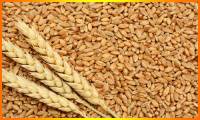
Russian wheat may shore up domestic stock
New Delhi: The Centre is considering import of 9 million tonnes of wheat from Russia via a government-to-government deal to augment domestic stocks amid rising prices, said people aware of the matter. The All-India Consumer Wholesale Price of wheat was up 6.2% to ?2,633 per quintal on Wednesday, from ?2,480 a year ago. Prices have risen as the government has imposed stockholding limits and sold the grain in the open market to traders amid concerns about a shortfall in domestic production. "The possibility (of imports) is being discussed at the highest levels," said a person aware of deliberations that are at an early stage. All-India retail inflation in cereals and products was 16.3% in June. Wholesale cumulative inflation in FY24 till June-end was 7.6%, having spiked 10.7% in FY23. "Wheat, rice and coarse cereals have seen double-digit inflation over the past six months," rating agency Crisil said in a report on Monday. A combination of low production, declining stocks and rising demand has fuelled the price rise. The government pegged India's wheat production at a record 112.7 million tonnes (mt) in 2023, but traders and millers estimate harvest at 101-103 mt due to unseasonal rains and hailstorms in February-March in the northern, central and western plains, which damaged the ripening crop. The Foreign Agricultural Service of the US Department of Agriculture recently estimated India's wheat production at around 108 mt. Wheat output fell to 107.7 million tonnes in 2022, from 109.6 mt a year earlier because of a heat wave in March. The low harvest and rising demand depleted wheat stocks, causing market prices to inch up. The central pool held 30.1 mt of wheat as of July 1, higher than the buffer norm of 27.6 mt but less than half the 60.3 mt it did in July 2021. The Centre's wheat purchases under its minimum support price (MSP) programme amounted to 26.14 million tonnes, below the target of 34 mt, triggering a rally in prices during the harvest season, when they are usually low. In June, the food ministry had to impose a stock limit on the cereal for the first time since 2008. India, the second largest producer of wheat, is mostly self-sufficient in foodgrain, although it did import wheat in 2016-17 after back-to-back droughts reduced output. The global geopolitical situation is also driving wheat prices. "Russia pulling out of the Black Sea grain deal has also raised inflationary risks since Russia and Ukraine are the world's largest suppliers of wheat and sunflower oil," Crisil said.
Source:
economictimes.indiatimes.com
|
03 Aug, 2023
Food Corporation of India has 1923 warehouses with capacity of 371.93 LMT for storage of Central Pool foodgrains
As on 01.07.2023, Food Corporation of India has a network of 1923 of warehouses (Owned/Hired) with a capacity of 371.93 LMT for storage of Central Pool foodgrains. Statement showing State-wise covered storage capacity is given below. (b) to (d): The requirement of Storage capacity in Food Corporation of India (FCI) depends upon the level of procurement, requirement of buffer norms and Public Distribution System (PDS) operations for Rice and Wheat mainly. Storage gap is assessed in the procuring States based on the highest stock levels in the last three years and in the consuming States on the basis of 4 months (6 months in case of North Eastern states and in some other states like J&K, Ladakh, Himachal Pradesh, Uttarakhand, Andaman & Nicobar and Lakshadweep) requirement under National Food Security Act (NFSA) and Other Welfare Scheme (OWS). FCI continuously assesses and monitors the storage capacity and based on the storage gap assessment, storage capacities are created/hired through following schemes: 1. Private Entrepreneurs Guarantee (PEG) Scheme 2. Central Sector Scheme (CSS). 3. Construction of SILO's under PPP mode 4. Hiring of godown from Central Warehousing Corporation (CWC)/ State Warehousing Corporation (SWCs)/ State Agencies 5. Hiring of godown through Private Warehousing Scheme (PWS) As far as timelines are concerned: On PEG Scheme, investor gets one year for the completion construction of godown from issue of letter of memorandum (LoM). Government has fixed the timeline as March 2025 before which all the projects that are under progress or being taken up under Central Sector scheme, are to be completed. Time period of 270 days for fulfillment of condition precedents (CPs) and 18 months for construction is given for development of Silos. | Central Pool Storage Capacity FCI with State Govt. Agencies as on 01.07.2023 (OB) | | (Figures in LMT) | | Zone | Sl. No. | State | Total Storage Capacity with FCI (Owned/Hired ) | Total (Owned+Hired) | | Owned | Hired | | | EAST | 1 | Bihar | 4.070 | 6.551 | 10.621 | | 2 | Jharkhand | 0.790 | 2.975 | 3.765 | | 3 | Odisha | 3.650 | 2.162 | 5.812 | | 4 | West Bengal | 9.530 | 0.296 | 9.826 | | 5 | Sikkim | 0.110 | 0.005 | 0.115 | | Total East Zone | 18.150 | 11.989 | 30.139 | | NE | 6 | Assam | 3.740 | 1.743 | 5.483 | | 7 |
pib.gov.in
|
03 Aug, 2023
FSSAI extends compliance of RDA 2020 for a period of 6 mths
The FSSAI has decided to extend the time period of compliance of Recommended Dietary Allowance (RDA) 2020 for a period of six months, after the stakeholders sought more time. The RDA 2020 was to come into force on July 1, 2023, after FSSAI had issued directions in July/August 2021 regarding the timeline for compliance with the RDA. According to the FSSAI, industry associations sought extension for implementation of the RDA-2020, owing to challenges faced in reformulation of products and inventory of old packaging materials lying with FBOs. 'After due consideration, it has been decided to further extend the date of coming into force of Recommended Dietary Allowance 2020 for compliance for a period of six months from 1st July 2023,' reads the direction issued by the FSSAI. It is pertinent to note that the Indian Council for Medical Research (ICMR) published the RDA 2020 revising the values of nutrients including vitamins, minerals and amino acids requirement per person per day and in 2021, the FSSAI had decided to adopt the same. It was decided by the FSSAI that the RDA 2020 shall come into force from July 1, 2023. The RDA per day was defined for adults and pregnant women, lactating women, adolescents, children 4-10 years, children 1-3 years and the food industry was asked to comply with the new RDA values. However, the food industry still needs time to reformulate the products, and sought extension and was granted six months to comply with the RDA 2020.
Source:
fnbnews.com
|
03 Aug, 2023

RBI nod to 34 applications from Russian banks to open accounts: Govt to Parl
The government told Parliament that India’s trade with Russia has been affected due to the difficulties in payment because of sanctions on major Russian banks including their disconnection from SWIFT, problems in insurance and re insurance coverage; and logistics, as the major shipping and logistics companies do not serve Russia bound cargo. 'Government of India has taken several steps to not andy sustain but to increase our exports to Russia, including payments in national currencies, smooth operacionalization of the International North South Transport Corridor and the Eastern Maritime (Chennai-Vladivostok) Corridor,” minister of state for commerce and industry Anupriya Patel in a written reply in the Lok Sabha. As of July 2, 2023, the Reserve Bank of India has approved 34 applications from different Russian banks for opening Special Rupee Vostro Accounts in 14 Indian commercial banks. Additionally, multiple meetings have been held with traders, banks and other stakeholders to resolve trade related issues. MSMEs in PLI The government told Parliament on Wednesday said that out of the 733 applications selected under various PLI schemes, 176 MSMEs are among the beneficiaries in sectors such as Bulk Drugs, Medical Devices, Pharma, Telecom, White Goods, Food Processing, Textiles & Drones. As on date, the Union Cabinet has not approved any proposal to add any new sectors under PLI Schemes, minister of state for commerce and industry Som Parkash in a written reply in the Lok Sabha. Startups Since the launch of the Startup India initiative in 2016, DPIIT has recognised 98,119 entities as startups as on April 20, 2023. The direct jobs created (self-reported) by the recognised startups over the last three years- 2020, 2021 and 2022 were 2.7 lakh, 2.01 lakh and 1.59 lakh, respectively. As on April 30, Rs 611.36 crore were approved for 160 incubators under experts advisory committee under Startup India Seed Fund Scheme.
Source:
economictimes.indiatimes.com
|
03 Aug, 2023
Production Linked Incentive Schemes for 14 key sectors aim to enhance India s manufacturing capabilities and exports
Keeping in view India's vision of becoming 'Atmanirbhar', Production Linked Incentive (PLI) Schemes for 14 key sectors have been announced with an outlay of Rs. 1.97 lakh crore (over US$26 billion) to enhance India's Manufacturing capabilities and Exports. The 14 sectors are: (i) Mobile Manufacturing and Specified Electronic Components, (ii) Critical Key Starting Materials/Drug Intermediaries & Active Pharmaceutical Ingredients, (iii) Manufacturing of Medical Devices (iv) Automobiles and Auto Components, (v) Pharmaceuticals Drugs, (vi) Specialty Steel, (vii) Telecom & Networking Products, (viii) Electronic/Technology Products, (ix) White Goods (ACs and LEDs), (x) Food Products, (xi) Textile Products: MMF segment and technical textiles, (xii) High efficiency solar PV modules, (xiii) Advanced Chemistry Cell (ACC) Battery, and (xiv) Drones and Drone Components. The purpose of the PLI Schemes is to attract investments in key sectors and cutting-edge technology; ensure efficiency and bring economies of size and scale in the manufacturing sector and make Indian companies and manufacturers globally competitive. These schemes have the potential of significantly boosting production, employment and economic growth over the next five years or so. PLI Schemes for all 14 Sectors have been notified by the concerned Ministries/ Departments after due approval. These Schemes are in various stages of implementation by the implementing Ministries/ Departments. The PLI scheme is expected to have a cascading effect on the country's MSME ecosystem. The anchor units that will be built in every sector are likely to set a new supplier/vendor base in the entire value chain. Most of these ancillary units are expected to be built in the MSME sector. Out of the 733 applications selected under various PLI Schemes, 176 MSMEs are among the PLI beneficiaries in sectors such as Bulk Drugs, Medical Devices, Pharma, Telecom, White Goods, Food Processing, Textiles & Drones. All the approved sectors identified under PLI Schemes follow the broad criteria of focusing on key technologies where India can leapfrog and multiply employment, exports and overall economic benefits for the economy. These sectors were approved after vetting by NITI Aayog and after detailed deliberations with concerned Ministries/ Departments. As on date, Union Cabinet has not approved any proposal to add any new sectors under PLI Schemes. This information has been provided by the Union Minister of State for Commerce and Industry, Shri Som Parkash in a written reply in the Lok Sabha today.
Source:
pib.gov.in
|
02 Aug, 2023
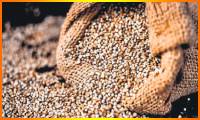
Kerala to cash in on Centre s affinity for millets.
The Centre’s initiative to popularise the growing of millets has spurred Kerala to raise its millet acreage in Attapadi, the only tribal taluk in Palakkad district. The plan is to enhance the area of cultivation under the Attapadi Millet Village project to 3,000 hectares from the present 1,200 hectares. 'We would be able to achieve the target as the yield in the first crop season in April-May-June planting is encouraging with an expected production of 520 tonnes vis-a-vis 720 tonnes in the two crop season last year,' R. Latha, Assistant Director of Agriculture, Attapadi told businessline. The Kerala government had started the Millet Village project among the tribes in Attapadi in 2017 by focussing on their health and livelihood aspects. It commenced much before India declared 2018 as the year of millets and the UN declared the International Year of Millets in 2023. Because of the traditional crop, Latha said the productivity was comparatively less due to lack of intense cultivation practices. Besides, the threat of wild animals also forced farmers to abandon the crop. The availability of essential commodities to tribals through the Public Distribution System was also a contributing factor for farmers losing interest in millet cultivation. Measures to encourage However, the government has come up with measures with subsidies to encourage millet farming by protecting farmlands through the installation of fences like electronic, beehive, solar, etc to scare away animals. This has encouraged farmers to take up cultivation. Kerala’s procurement price of millets is also the highest in the country at Rs.40 per kg compared to Rs.25 in other states. The produce from organic farms fetches a price tag of Rs.60. Currently, 192 tribal settlements are engaged in millet farming in Attapadi spearheaded by both State Agriculture Department as well as the Scheduled Tribes Department producing ragi, little millet (chama), barn-yard millet, fox tail millet, proso millet, sorghum, bajra, etc. Around 740 hectares of farm lands in 40 hamlets received organic certification which would be a major boost as they received higher prices, she said. Since the present tribal farmers are getting old, Latha emphasised the need to woo younger generations into millet farming by making them familiar with value addition to earn more revenue. Today, the first priority of the yield is to address the nutritional needs of tribal people and the rest goes to the retail market. Aimed at the export promotion of millets, Palakkad district administration conducts classes to familiarise various activities related to the shipping of products. It is also organising expos, distributing millet seeds to students to start farming at school levels. Atfam, the FPO, is also gearing up for exports on robust enquires, especially from Europe. The Technopark-based UST and NGOs such as Thanal and Pan India jointly set up a millet processing unit in Agali town, which would benefit farmers in five tribal hamlets to avoid long distance travel for processing.
Source:
thehindubusinessline.com
|
| |