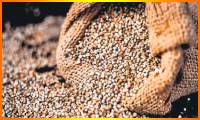
Kerala to cash in on Centre s affinity for millets.
The Centre’s initiative to popularise the growing of millets has spurred Kerala to raise its millet acreage in Attapadi, the only tribal taluk in Palakkad district.
The plan is to enhance the area of cultivation under the Attapadi Millet Village project to 3,000 hectares from the present 1,200 hectares. 'We would be able to achieve the target as the yield in the first crop season in April-May-June planting is encouraging with an expected production of 520 tonnes vis-a-vis 720 tonnes in the two crop season last year,' R. Latha, Assistant Director of Agriculture, Attapadi told businessline.
The Kerala government had started the Millet Village project among the tribes in Attapadi in 2017 by focussing on their health and livelihood aspects. It commenced much before India declared 2018 as the year of millets and the UN declared the International Year of Millets in 2023.
Because of the traditional crop, Latha said the productivity was comparatively less due to lack of intense cultivation practices. Besides, the threat of wild animals also forced farmers to abandon the crop. The availability of essential commodities to tribals through the Public Distribution System was also a contributing factor for farmers losing interest in millet cultivation.
Measures to encourage
However, the government has come up with measures with subsidies to encourage millet farming by protecting farmlands through the installation of fences like electronic, beehive, solar, etc to scare away animals. This has encouraged farmers to take up cultivation.
Kerala’s procurement price of millets is also the highest in the country at Rs.40 per kg compared to Rs.25 in other states. The produce from organic farms fetches a price tag of Rs.60.
Currently, 192 tribal settlements are engaged in millet farming in Attapadi spearheaded by both State Agriculture Department as well as the Scheduled Tribes Department producing ragi, little millet (chama), barn-yard millet, fox tail millet, proso millet, sorghum, bajra, etc. Around 740 hectares of farm lands in 40 hamlets received organic certification which would be a major boost as they received higher prices, she said.
Since the present tribal farmers are getting old, Latha emphasised the need to woo younger generations into millet farming by making them familiar with value addition to earn more revenue. Today, the first priority of the yield is to address the nutritional needs of tribal people and the rest goes to the retail market.
Aimed at the export promotion of millets, Palakkad district administration conducts classes to familiarise various activities related to the shipping of products. It is also organising expos, distributing millet seeds to students to start farming at school levels. Atfam, the FPO, is also gearing up for exports on robust enquires, especially from Europe.
The Technopark-based UST and NGOs such as Thanal and Pan India jointly set up a millet processing unit in Agali town, which would benefit farmers in five tribal hamlets to avoid long distance travel for processing.
Source: thehindubusinessline.com

India resumes pomegranate export to US.
APEDA in collaboration with the National Plant Protection Organisation of India, US-APHIS, the Maharashtra government, and the Agriculture Marketing Board and National Research Centre on Pomegranate has facilitated the export of the first trial consignment of pomegranate to the US by air route.
The shipment of the 'Bhagwa' variety of pomegranate with high antioxidant content from Maharashtra was carried out by APEDA-registered INI farms, one of the biggest exporters of fruits and vegetables. The best-known variety in India, Bhagwa, has generated a lot of demand. As part of the pilot project, 150 boxes (450 kg) of pomegranates were air-shipped to New York from the Vashi market in Navi Mumbai.
The US imposed a ban on Indian pomegranate in 2017-18 after concerns were raised over fruit fly infestation in the pomegranate seeds. After the Indian government’s initiative to discuss the matter with the US, the ban was lifted in 2022 following the fulfilment of quality standards.
Rising production in India
The Indian pomegranate production is growing by 20 to 25 per cent every year, according to the APEDA. The demand is rising, both at the domestic level and in the export market. India is a growing player in destinations in Europe, the Middle East, and Asia. According to APEDA, India competes with various players globally, but it manages to stand out with unique varieties.
UAE is the major importing country of Indian pomegranates, accounting for nearly 32 per cent of Indian global exports. India produces pomegranates throughout the year, hence its production basket is empirically larger than other countries.
Source: thehindubusinessline.com

India to host World Coffee Conference for first time in September.
India would host the fifth World Coffee Conference (WCC) for the first time in Asia from September 25 to 28 in Bengaluru. WCC also announced tennis player Rohan Bopanna as its brand ambassador.
'Sustainabilty through Circular Economy and Regenerative Agriculture' is the central theme for the event.
The event logo and theme were unveiled at an event here on Monday.
Producers, curers, roasters, exporters, policy makers and researchers from 80-plus countries would gather at WCC 2023, it was stated.
Source: economictimes.indiatimes.com

Hopeful of finalising certain FTAs in next few months, says Piyush Goyal.
Commerce and Industry Minister Piyush Goyal on Saturday said he is hopeful of India finalising certain free trade agreements (FTAs) in the next few months, which would help promote exports. India is in the final stages of concluding FTA negotiations with the UK. The country is also negotiating similar pacts with Canada and European Union (EU).
'We can leverage the free trade agreements with the UAE and Australia and we are hopeful that in the next few months, we will finalise many more free trade agreements to help you grow your business with zero duty on finished leather products and footwear available for you to exploit bigger and better markets,' Goyal said while addressing footwear industry representatives here.
The minister also asked the industry to focus on quality and sustainable manufacturing processes to tap business opportunities in the developed world.
The Indian footwear and leather industry is not only a major foreign exchange earner but being a labour-intensive sector, it also provides employment to approximately 4.5 million people, 40 per cent of whom are women.
He said that India has the capacity to become the world's largest and best-quality footwear manufacturer.
India is the second largest exporter of leather garments, third-largest exporter of saddlery and harnesses and fourth-largest exporter of leather goods in the world.
More than 95 per cent of the production units in this sector are micro, small & medium enterprises (MSME) units.
Further Goyal said that Indian size of footwear will be launched soon to help distinguish Indian footwear around the globe and reduce dependence on foreign sizing trends.
He suggested industrialists explore FTAs for technological collaborations, joint ventures of non-leather footwear, thus increasing the export of the country and enhancing the domestic market with Indian products.
Goyal highlighted the beauty of Kolhapuri footwear of Maharashtra and Mojari footwear of Rajasthan, stating that it should be an area of attraction for international buyers as well.
Talking about quality, he said the government has issued quality control norms for the sector and the government is ready to set up testing facilities for certifications.
Goyal urged the stakeholders to expand the business while keeping the focus on quality and sustainability, eco-friendly process, waste management, and exploring renewable sources for electricity.
Not only do we need to enhance our design capabilities to move up the value chain, but also bring in more investments and technology to scale up the production and produce innovative products, he added.
Source: economictimes.indiatimes.com

FSSAI for monitoring fruits & veggies against use of pesticides in high doses.
The food authority has ordered for monitoring the sale of fresh fruits and vegetables in the markets, as media reports have surfaced about these commodities having pesticides and harmful chemicals in high doses.
The FSSAI has written to all the Food Safety Commissioners in the country referring to the various media reports regarding vegetables and fruits having pesticides and harmful chemicals in high doses, being sold in major cities across India.
Further NHRC has also taken suo-moto cognisance of the issues relating to excess use of pesticides by the farmers and has directed for taking measures to minimise pesticide risk and promotion of alternative systems directed of cultivation.
The order reads, 'In order to curb the menace of excess use of pesticides during pre-marketing treatment of fruits and vegetables with the pesticides, it is requested to keep strict vigil in your respective State/UT on such Food Business Operators (FBOs) who are involved in the manufacturing/repacking fresh/surface-treated/minimally processed fruits and vegetables.'
The FSSAI has also asked to employ measures like surveillance/ enforcement and awareness activities to ensure that the fresh fruit, vegetables comply with the provisions of FSS –Contaminants, Toxins and Residues - Regulations.
'In addition, awareness building measures through information, education, communication activities under Eat Right initiative may be conducted in fruit and vegetable markets/mandis to educate consumers and food businesses about the issues,' the order further reads.
Source: fnbnews.com

India basmati rice exporters get requests for early shipments.
Indian rice exporters have been receiving requests from buyers to advance shipments of basmati rice after New Delhi banned exports of non-basmati white rice to dampen local prices, industry officials told Reuters.
The world's biggest exporter of rice surprised buyers earlier this month by imposing a ban on exports of non-basmati white rice after retail rice prices climbed 3 per cent in a month after late but heavy monsoon rains caused significant damage to crops.
'Buyers are requesting early shipments because they fear that the government might put restrictions on exports of basmati rice as well,' said Atul Garg, managing director at GRM Overseas, a leading exporter of basmati rice.
Buyers usually sign long-term contracts with the assurance of dispatching a certain quantity every month. However, some of the buyers are now requesting to ship in August what was supposed to be shipped in September and October, he said.
India exported around 4.5 million metric tons of basmati rice in 2022-23, with Saudi Arabia, Iran, Iraq, United Arab Emirates, Yemen and the United States among the top buyers.
Non-basmati white rice, which India has banned for export, is mainly purchased by Senegal, Benin, Togo, Bangladesh, and Cote d'Ivoire.
India never banned exports of basmati rice in the past but did impose export taxes in 2008.
'We are assuring buyers that there is no possibility of a ban on basmati rice exports but some buyers are afraid due to the government's recent decisions,' said another exporter based in New Delhi.
India banned wheat exports in a surprise move last year and later imposed restrictions on exports of sugar and rice.
Basmati rice is mainly produced in the northern states of Punjab, Haryana, Uttar Pradesh, and Himachal Pradesh, which were flooded earlier this year because of extremely heavy rainfall.
But basmati rice growing areas have increased in 2023 and production is likely to be higher than last year, said Vijay Setia, an exporter.
'Many farmers in Uttar Pradesh are shifting to basmati rice from non-basmati because of higher prices,' Setia said.
Source: economictimes.indiatimes.com

India agri-based sector to get opportunities amid EU's deforestation norms.
The European Union's (EU) stringent deforestation regulation would provide new opportunities for domestic agro-based industry players, as against their global competitors, as forest cover in India is increasing significantly, an official said.
While several countries in Latin America and Africa have cleared their forests for agricultural purposes, India's forest cover is increasing and there is no practice here in the country to cut forest for agri activities.
The government official said these regulations provide an opportunity for 'our industry because our forest cover has increased, our reserve forest is strong and it is increasing.
'Our forest land is different from agri land. We can demonstrate these facts to the EU and converge to some kind of understanding on this regulation'.
According to a report by think tank Global Trade Research Initiative (GTRI), India's exports of products like coffee, leather hides and paperboard worth USD 1.3 billion annually to the European Union will get impacted due to the deforestation regulation adopted by the EU.
Within three weeks of introducing the carbon border tax, the EU Council on May 16, adopted the European Union Deforestation-Free Products Regulation (EU-DR).
The report has also stated that the EU-DR appears to prioritise protecting its own agricultural sector and promoting exports, making imports more difficult, as it is a trade barrier disguised as a green measure.
The regulation covers cattle, buffalo, the meat of bovine animals, preparations, oil cake, soya beans, palm oil, cocoa bean, powder, chocolate, coffee, leather hide, skin, paper, paperboard, wood, wood articles, wood pulp, boards and wood furniture.
According to a trade expert, as the country's forest cover continues to witness an encouraging upward trend, Indian agricultural producers find themselves in a favourable position to cater to the EU's sustainable demands without resorting to forest clearance for agricultural purposes.
As per the India State of Forest Report (ISFR) 2021, India's forest and tree cover has risen by 2,261 square kilometres in the last two years with Andhra Pradesh growing the maximum forest cover of 647 square kilometres.
According to the report, India's total forest and tree cover is now spread across 80.9 million hectares, which is 24.62 per cent of the geographical area of the country.
Indian officials are continuously engaged with the EU on these issues, including CBAM (carbon border adjustment mechanism) on different platforms.
'However, one thing is clear that this is a new way of doing business and we have to conform to this. You can not just fight or sit outside as it will not help our industry,' the official, who did not wish to be named, said.
The expert said that India has limited options to counter these measures as they are for all countries which trade with the EU and not against India.
Taking the matter to the WTO dispute settlement mechanism too would not help more, because the mechanism is kind of defunct at present and imposing similar tariffs on EU products may also hurt Indian industry, the expert added.
India has to engage with the EU as it would not be possible to stop doing business with them.
EU measures are showing that they want to reduce their dependency on China and develop technologies and future-ready industry.
'It looks like some re-alignment is going on in the EU. So we have to see how we can participate in that re-alignment,' the official added.
As per the deforestation regulation, Indian exporters have to ensure that these products have been grown on land, which has not been deforested after December 31, 2020.
The new rules will apply to large firms after 18 months and small firms after 24 months. Thus, the timeline for large firms is December 2024 and for small firms is June 2025.
For the products covered under the carbon tax and EU-DR, the EU's share in India's global exports is 23.6 per cent.
The EU claims it wants to reduce its contribution to global deforestation by promoting 'deforestation-free' products, but this is seen as a deceptive narrative, the GTRI report has said.
'India has a functioning blockchain-enabled trace and track system being implemented by the Agricultural & Processed Food Products Export Development Authority (APEDA) for grape exports to the EU and other regions.
'It needs to be adopted for all covered products, and make exporters aware of the compliance requirement,' GTRI co-founder Ajay Srivastava has said.
Source: business-standard.com

Meeting between MoS (Agriculture) Sushri Shobha Karandlaje and Deputy PM and Minister for Agriculture & Food Industries of Moldova, Mr Vladimir Bolea held.
A meeting between Minister of State for Agriculture & Farmers Welfare, Sushri Shobha Karandlaje and Deputy Prime Minister and Minister for Agriculture & Food Industries of Moldova, Mr Vladimir Bolea was held today at Krishi Bhawan, New Delhi.
Welcoming the Moldovan Deputy PM and his delegation, Sushri Shobha Karandlaje mentioned about the 31 years of close and friendly diplomatic relations between India and Moldova. She expressed her happiness on opening of Moldovan Resident Mission in New Delhi. The Indian Minister also mentioned about the declaration of the year 2023 as International Years of Millets (IYOM) by the United Nations on the proposal from Govt. of India and highlighted the benefits of millets for health as well as the environment.
Both Ministers emphasized on the potential for increasing bilateral trade in agricultural commodities and for strengthening of bilateral agricultural cooperation through exchange of knowledge and technology.
Mr Vladimir Bolea congratulated India on becoming the 5th largest economy and also for India’s G20 Presidency. He proposed signing of a Memorandum of Understanding for cooperation between the two countries in the field of Agriculture which would provide an institutional mechanism for cooperation between the two countries.
Mr Bolea also expressed Moldova's interest in exporting vegetable oils to India and importing fertilizers and pesticides from India. He expressed Moldova’s support to India for its membership of UN Security Council in 2027 and informed that Moldova is a candidate to become an EU member and follows the EU standards and therefore their products are safe to consume. He highlighted the Moldovan culture of producing wine and apples as a way of life and expressed their interest in exporting these products to India.
MoS agreed to the proposal of signing of an MoU and proposed that India will soon share a draft MoU with them. She also requested the Moldovan side to send proposal for cooperation in exchange of technology. The Moldovan Minister invited Sushri Shobha Karandlaje to visit Moldova.
Source: pib.gov.in

Rice planting gathers pace as monsoon rains revive.
Indian farmers have planted 23.7 million hectares with summer-sown rice so far, according to the farm ministry's latest data, up 1.71% year-on-year, as crucial monsoon rains revived in July and helped farmers accelerate sowing.
Higher rice planting in India, the world's second biggest producer of the grain, will ease concerns about the lower output of the staple.
Earlier this month, India ordered a halt to its largest rice export category - a move that will roughly halve shipments by the world's largest exporter of the grain.
Farmers typically start planting rice, corn, cotton, soybeans, sugarcane and peanuts, among other crops, from June 1, when monsoon rains are expected to begin drenching India. Sowing usually lasts until July and early August.
Summer rains are crucial as nearly half of India's farmland lacks irrigation.
India received 10% below normal rains in June, but in some states, the rainfall deficit was as much as 60% below average.
The India Meteorological Department defines average, or normal, rainfall as ranging between 96% and 104% of a 50-year average of 87 cm (35 inches) for the four-month season.
India's weather office has forecast an average amount of rain in July despite the likely emergence of the El Nino weather pattern.
July rainfall is crucial as it accounts for most of the precipitation for the four-month-long monsoon season.
This year, the delayed arrival of monsoon rains and lower rainfall in some southern, eastern and central states held back the planting of summer crops even as the monsoon covered the entire country nearly a week in advance.
Some regions in India, including breadbasket states such as Punjab and Haryana, have received torrential rains in July, triggering floods. Still, dry weather conditions prevail in some parts of the country.
Farmers planted 17.1 million hectares with oilseeds, including soybeans, 2.3% more than a year earlier. Corn was planted on 6.9 million hectares, almost unchanged from last year. The cotton area was marginally lower at 11.8 million hectares.
Source: economictimes.indiatimes.com

Tamil Nadu tops GI chart with 58 tags; three more products join the league.
Three more products, unique to Tamil Nadu, have obtained the Geographical Indication (GI) tag, further strengthening the state’s top rank in the list of GI products.
The GI registry is to confer GI recognition for Jaderi Tiruman (Namakatti) that adore the foreheads of top deities and Vaishnavites all over the world, the delicious Matti Banana of Kanyakumari district and the Chedibutta sarees of Tirunelveli district. These are the new entrants to the GI hall of fame which has nearly 420 products so far.
While Tamil Nadu’s tally has reached 58 now, Uttar Pradesh is in second position with 50-plus products, followed by Karnataka with 48, said IPR attorney P Sanjai Gandhi, adding that the tally is as of April. Some more products have been granted the GI tag during the April-July period as well, he told TOI.
Sanjai Gandhi alone has obtained GI recognition for 40 products for various cooperative societies and government departments. Ever since Tamil Nadu government appointed him attorney two years ago, he obtained 17 GI tags. At least 15 products from Tamil Nadu are awaiting the GI registry’s nod, he said.
The GI application for Jaderi Tiruman, filed on behalf of Jaderi Thiruman (Namakatti) Producers Society in Jaderi in Thiruvannamalai district, said one of the most visible external symbols of Hindu identity is the unique mark worn on the forehead. Worshippers of Lord Vishnu wear a tilak in the shape of 'U' (called Naamam), which is believed to protect the wearer from evil.
The finger-length white Jaderi Tiruman made of hyrous silicate minerals has immense cultural, religious and medicinal significance. About 120 families in the tiny village of Jaderi in Tiruvannamalai district have been making these Namakatti for about three centuries and supplying them all over India and abroad.
The natural ingredients available in Thenpoondipattu village are collected and made into Namakatti by artisans after a tedious and time-consuming process. The skills are traditionally and hereditarily transferred from their forefathers.
The selection of the appropriate kind of clay itself requires expertise. The rocks are then crushed by the traditional rollers drawn by Tow bulls (chekku maadu). The clay is then put through a filtering process and stored in tanks for 20 days until it turns white. After this, the clay paste is cut into finger-shaped Namakattis which are sun-dried for four days. The Namakattis are then exported to Vishnu temples across the world.
The production of Namakattis depends on the climatic condition as it needs a lot of sunlight to dry, said Sanjai Gandhi, adding that the white tilak cools the forehead, protects the wearer and prevents energy loss. It is used to adorn the foreheads of idols, men, and temple elephants as well as to cure stretched skin after childbirth.
The GI tag has been conferred on Kanyakumari Matti Banana based on an application by Kanyakumari Banana and Horticulture Farmers Producer Company Limited.
Matti banana (musa sapidisiaca) is a diploid cultivar commercially grown in Kanyakumari district of Tamil Nadu. Kanyakumari located in the high rainfall zone with annual rainfall about 1,469 mm. Matti banana is mostly grown in the Agatheeswaram, Thovalai, Thiruvattar taluks, and it is a traditional table banana cultivar having medicinal value, said Sanjai Gandhi.
The fragrant fruit is known for its sweet and sub-acid flavor, firm texture and powdery nature. The 15-month crop is considered a rare variety and is grown only in the hills of South Travancore (Undivided Tamil Nadu and Kerala) near Nagercoil. Its bunches weigh 12 to19 kg with 9 to 10 hands containing fairly long fingers.
Kanyakumari Matti banana has other variants like Semmatti (red Matti), Thaen Matti (Honey Matti) and Malai Matti (Hill Matti).
Though banana is not generally recommended to infants for upto six months, Matti variety is included in the diet of infants in Kanyakumari area due to low TSS value. Tribes of Western Ghats use the corm extract of Matti as cure for jaundice.
The applicant has traced the Matti reference in several literature and government records, and also said one medium-size banana would provide approximately 13% of our daily manganese needs. Manganese helps our body make collagen and protects our skin and other cells against free radical damage. Potassium in banana helps our body maintains a healthy heart and blood pressure. The low sodium and high potassium combination help to control high blood pressure. Bananas are also rich in vitamin C that protects our body against cell and tissue damage.
Application for the third GI tag-winner, Chedibutta Sarees, has been made by Veeravanallur Sowrashtra Weavers Cooperative Production and Sales Society Limited in Tirunelveli district.
The name Chedibutta is a combination of two Tamil words -- ‘Chedi’ (plant) and ‘Butta’ (motif or design). Chedibutta saree has the iconic 'plant and flower' motif woven on the border and Pallu (edge of the saree), and these small Buttas punctuated beautifully all over the saree. This flower plant design or the Chedibutta design is the intrinsic characteristic of this saree, said Sanjai Gandhi.
It is totally a handloom product made in in art silk and cotton mix fabric. One Chedibutta saree contains eight Chedibutta designs in the body and 5 on the Pallu. The saree is woven using art silk thread while the Chedibutta designs are made using brightly coloured cotton threads.
The entirely manual process involves preparation of cotton yarn using a Charkha and the preparation of the warp beam to the complete weaving process of the saree. The weavers do not use a power loom or a peddle loom. The Chedibutta design is not made by Jacquard machines either. Multiple cotton colour yarns are used to make each design and there are colour variations from design to design within a single Saree. The weavers use pirns to wind the weft yarn during the pirn-winding process and shuttles are used as carriers of yarn during weaving.
The Chedibutta saree has a soft texture which is suitable for the tropical climate. It is comfortable in summer and warm during the winter. Due to the nature of the raw materials used, these sarees do not wrinkle easily and are easy to maintain. They weigh light too.
Source: timesofindia.indiatimes.com