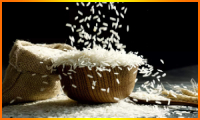
Govt amends policy on Non-Basmati White Rice; puts it in prohibited list.
The Union Government has amended the export policy of Non-Basmati White Rice and put it in ‘prohibited’ list fearing a price rise in the festive season (Navratri, Dussehra and Dipawali), which is just few months away.
The Government is already reeling under the super price rise of tomatoes and the move is to ensure lower price and maintaining availability of rice in the upcoming festival season.
A statement issued by the Ministry of Consumer Affairs, Food and Public Distribution, reads, 'In order to ensure adequate availability of Non-Basmati White Rice in the Indian market and to allay the rise in prices in the domestic market, Government of India has amended the Export Policy of above variety from ‘Free with export duty of 20%’ to ‘Prohibited’ with immediate effect.'
The domestic prices of rice were on an increasing trend. The retail prices increased by 11.5% over a year and 3% over the past month.
According to the data available with the Government, export duty of 20% on non-Basmati White Rice was imposed on Sept 08, 2022, to lower the price as well as ensure availability in the domestic market. However, the export of this variety increased from 33.66 LMT (Sept-March 2021-22) to 42.12 LMT (Sept-March 2022-23) even after imposition of 20% export duty.
In the current FY 2023-24 (April-June), about 15.54 LMT of this variety of rice was exported against only 11.55 LMT during FY 2022-23 (April-June), i.e. an increase by 35%. This sharp increase in exports can be ascribed to high international prices due to geo-political scenario, El Nino sentiments and extreme climatic conditions in other rice producing countries.
The Non-Basmati White Rice constitutes about 25% of total rice exported from the country and Government expects that the prohibition on export of Non-Basmati White Rice will lead to lowering of prices for the consumers in the country.
However, there is no change in export policy of Non-Basmati Rice (Par Boiled Rice) and Basmati Rice, which forms the bulk of rice exports.
Source: fnbnews.com
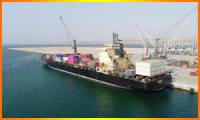
Traffic at Mundra Port surpasses pre-cyclone levels.
The average number of TEUs (twenty-foot equivalent units) handled by rail at Mundra port has crossed 5,300 in July, surpassing the levels of about 4,900 before cyclone Biparjoy hit.
The number of double-stack container trains has also increased by 33 per cent post-cyclone, accelerating their clearance from the port.
Earlier, the cyclone had disrupted operations and caused an operational downtime for about six days, the company said.
The port authorities had taken precautions to ensure the safety of human life as part of its safety and disaster management.
Post-cyclone, the port focused on restoring operations and emerged stronger, it said.
Container vessels can now berth upon arrival, reducing congestion and delays. The pendency of containers in the yard has reduced to reasonable levels, with dispatches increasing, especially on the rail side.
Post-cyclone, on July 2, the port berthed the longest vessel MV MSC Hamburg, with a carrying capacity of 15,908 TEU.
Mundra is the largest container handling port in India, having handled more than 6.6 million TEUs in FY ’23.
Its strategic location is enhanced by its connectivity to the Western Dedicated Freight Corridor, facilitating efficient movement of goods. Despite the disruption due to the cyclone, the port posted 4.4 per cent growth year-on-year in container handling in Q1 FY24.
It also serves as a crucial hub for major container train operators, including Concor, Gateway Distriparks and Hind Terminals.
To meet the growing demand, Mundra port is expanding its infrastructure by setting up a new berth, T3, with a capacity of 0.8 million TEUs, and is expected to be commissioned in Q3 of FY23.
To augment container rail handling capacity, five new handling lines and two cantilever rail-mounted gantry cranes are being introduced.
It is also improving in the receipt and dispatch yard, besides extending existing lines to accommodate long-haul containers.
A new terminal operating system is being implemented to streamline processes and minimise manual interventions. It is also moving towards automation to reduce the man-machine interface and improve overall safety and efficiency.
Source: thehindubusinessline.com

Global rice markets in turmoil as India bans export of non-basmati.
India’s decision to ban the export of non-basmati white rice has pushed up global prices, prompting multilateral lending agencies, such as the International Monetary Fund (IMF), to call for a reconsideration of the move.
Though nothing has been spelled out yet officially, sources said, the government might consider requests for government-to-government sale of non-basmati white rice, especially to West African nations where India is a major supplier.
Source: business-standard.com
One District One Product: MoFPI notified 137 products list.
The Ministry of Food Processing Industries (MoFPI) has notified 137 unique products of 713 districts across 35 States/UTs as One District One Product (ODOP) based on recommendations from the States/ UTs and in consultation with the Ministry of Agriculture & Farmer’s Welfare.
15 unique products from all the 24 districts of Jharkhand have been notified by MoFPI as ODOP. These are Peda, Honey, Jaggery, Tomato based products, Chilly based products, Lime based products, Mango based products, Guava based products, Custard Apple based products, Jackfruit based products, Potato based products, Papaya based products, and Minor Forest Produce (Tamarind, Mahua, Chironjee).
ODOP are selected based on agriculture production, presence of micro-food processing enterprises, SHGs/FPOs/Cooperative/micro-enterprises engaged in processing of ODOP, etc. and accordingly modification to the notified list is done based on recommendation of the respective State/UT government.
MoFPI is extending credit linked subsidy to the interested individual/entity for upgradation of existing or setting up of new micro-food processing facility, in accordance with the guidelines of Pradhan Mantri Formalization of Micro Food Processing Enterprises (PMFME) scheme. Establishment of Common Infrastructure projects by FPOs/SHGs/Cooperative/Govt. Entities; Seed Capital to SHG members; Marketing & Branding projects for ODOP; and Capacity Building through training institutions are also supported as per the PMFME scheme guidelines.
This information was given by Union Minister of State for Ministry of Food Processing Industries Shri Prahlad Singh Patel in a written reply in the Lok Sabha.
Source: thesamikhsya.com
PM with his vision of making India a developed nation is inspiration behind the new complex: Shri Piyush Goyal.
The Prime Minister, Shri Narendra Modi dedicated to nation the International Exhibition-cum-Convention Centre (IECC) complex at Pragati Maidan in New Delhi today and urged the nation to move ahead with the principle of ‘Think Big, Dream Big, Act Big’. The complex has been named, ‘Bharat Mandalam’.
Prime Minister also unveiled the G-20 coin and G-20 stamp at the grand opening ceremony and participated in the naming ceremony of the Convention Centre. Developed as a national project at a cost of about Rs 2700 crores, the new Convention Complex will help showcase and promote India as a global business destination.
Earlier in the day, Prime Minister performed puja at the Complex and felicitated the Shramjeevis involved in the construction of International Exhibition cum Convention Centre.
In his welcome address at the inaugural function, Shri Piyush Goyal, Union Minister of Commerce & Industry, Consumer Affairs, Food & Public Distribution and Textiles, thanked Prime Minister Shri Narendra Modi for sparing his valuable time to participate in the inauguration of the International Convention Complex – Bharat Mandapam.
He said that Prime Minister Modi has changed the way the country thinks and has inspired us to move as a nation towards the goal of becoming a developed nation. He highlighted the role of Shramjeevis and architects for the development of the Complex.
Shri Goyal pointed out the reason for having a world class convention and exhibition centre in the country for showcasing the country to the world. He said it was the farsightedness of Prime Minister that resulted in the building of this complex. He said it will now be possible to showcase to the world the output of our farmers, MSMEs, artisans and industries. He said that the various policies of the government to promote industry and to ensure the progress of the nation is also being supplemented with the building of our modern infrastructure.
Shri Goyal said that the name – Bharat Mandapam – derives its root from Lord Basaveshwara’s idea of Anubhav Mandapam, which was a pavilion for public ceremonies. This complex will be available for all people and will have all the facilities to help the country achieve the goal of making a developed and modern nation.
International Exhibition-cum-Convention Centre (IECC) project revamps the old and outdated facilities at Pragati Maidan and has been developed as a National project. With a campus area of approximately 123 acres, the IECC complex has been developed as India’s largest MICE (Meetings, Incentives, Conferences, and Exhibitions) destination. In terms of the covered space available for events, the IECC Complex finds its place among the top exhibition and convention complexes in the world. The newly developed IECC complex at Pragati Maidan comprises multiple state-of-the-art facilities including Convention Centre, Exhibition halls and amphitheatre etc.
The Convention Centre is developed as the centrepiece of the Pragati Maidan complex. It is a grand architectural marvel, designed to host large-scale international exhibitions, trade fairs, conventions, conferences, and other prestigious events. It is equipped with multiple meeting rooms, lounges, auditoriums, an amphitheatre and a business centre making it capable of hosting a wide range of events. Its majestic multi-purpose hall and plenary hall have a combined capacity of seven thousand people, which is larger than the seating capacity of the famous Sydney Opera House in Australia. Its magnificent Amphitheater is equipped with a seating capacity of 3,000 individuals.
The architectural design of the Convention Centre building is inspired by Indian traditions and showcases India’s confidence and conviction in its past while also embracing modern facilities and way of life. The shape of the building is derived from the Shankha (conch shell), and different walls and facades of the Convention Centre depict several elements of India's traditional art and culture including ‘Surya Shakti’ highlighting India’s efforts in harnessing solar energy, ‘Zero to ISRO’, celebrating our achievements in space, Pancha Mahabhuta signifying the building blocks of universal foundation - Aakash (Sky), Vayu (Air), Agni (Fire), Jal (Water), Prithvi (Earth), among others. Also, various paintings and Tribal art forms from different regions of the country adorn the Convention Centre.
Source: pib.gov.in
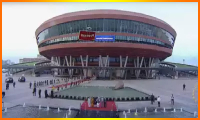
PM inaugurates International Exhibition-cum-Convention Centre (IECC) complex at Pragati Maidan in New Delhi.
The Prime Minister, Shri Narendra Modi inaugurated the International Exhibition-cum-Convention Centre (IECC) complex at Pragati Maidan in New Delhi today. He also unveiled the G-20 coin and G-20 stamp. The Prime Minister also witnessed the naming ceremony of the Convention Centre as ‘Bharat Mandapam’ carried out via drone and a cultural program that was showcased on the occasion. Visioned by the Prime Minister and developed as a national project at a cost of about Rs 2700 crores, the new IECC complex at Pragati Maidan will help in promoting India as a global business destination.
Addressing the gathering, the Prime Minister initiated his speech with a poem to indicate the new enthusiasm and mood of the nation. He said, 'Bharat Mandapam is a call for India’s capabilities and new energy of the nation, it is a philosophy of India’s grandeur and willpower.'
The Prime Minister recalled felicitating the Shramiks this morning and said that the entire nation is impressed after witnessing their hard work and dedication. He congratulated the people of Delhi as well as every Indian for Bharat Mandapam. Noting the historic occasion of Kargil Vijay Diwas, the Prime Minister paid tributes to the martyrs who laid down their lives for India during the Kargil war on behalf of the entire nation.
The Prime Minister elaborated that behind the name ‘Bharat Mandapam’ there is the inspiration of ‘Anubhav Mandapam’ of Bhagwan Basaveshwara. He said that Anubhav Mandapam represented the tradition of debate and expression. He reminded that India is acknowledged as the mother of democracy. He cited many historical and archaeological instances in this regard. 'This Bharat Mandapam is a beautiful gift by us Indians to our democracy as we celebrate the 75th anniversary of Independence', he added. He said the entire world will witness India’s strides and growing stature from here when the G20 Summit takes place in a few weeks from now at the venue.
Elaborating on the need for a world-class convention center in Delhi, the Prime Minister said that 'In the 21st century we will have to have construction suitable for the 21st century.' The Prime Minister underlined that Bharat Mandapam will be hugely beneficial for exhibitors from all across the globe and will become a medium for conference tourism in India. He further added that Bharat Mandapam will act as a platform for showcasing the capabilities of the country’s startups, become a witness to the performance of artists and actors and provide a platform to showcase the efforts of handicraft artisans. 'Bharat Mandapam will become a reflection of the Atmanirbhar Bharat and Vocal For Local campaign', the Prime Minister remarked as he highlighted that the convention center will emerge as a stage for every sector ranging from economy to ecology and trade to technology.
The Prime Minister pointed out that an infrastructure like Bharat Mandapam should have been developed decades ago. He emphasized the need to carry on creating infrastructure despite opposition from vested interests. He stressed that no society can progress by working in a fragmented manner. He said that Bharat Mandapam is an example of the far-sighted holistic working style. He explained this by informing about the steps like e-conference visa facility for more than 160 countries. The capacity of Delhi Airport has gone up to 7.5 crore yearly today from 5 crore in 2014. This will be further strengthened once Jewar Airport is operational. The Hospitality Industry in Delhi NCR also expanded considerably. This indicated a planned approach of creating an entire ecosystem for conference tourism, he said.
Underlining the infrastructure developments in the capital city of New Delhi in the last few years, the Prime Minister highlighted the newly inaugurated Parliament building and said that it instills pride in every Indian. He also gave examples of monuments like the National War Memorial, Police Memorial and Baba Saheb Ambedkar Memorial. The Prime Minister reiterated that development work of office buildings surrounding Kartavya Path is underway in full swing as the Government is giving impetus to changing the work culture as well as the work environment. He also touched upon the Pradhan Mantri Sangrahalay which provides a glimpse into the lives of every Prime Minister that India has ever witnessed. He informed that the development of ‘Yuge Yugeen Bharat’ , the world’s largest museum, is coming up fast in New Delhi..
The Prime Minister stressed that we have to think big and achieve big targets in order to be developed. That is why, he said, 'India is moving ahead with the principle of ‘Think Big, Dream Big, Act Big’'. He continued 'We are creating bigger, better and faster'. He talked about the World’s biggest Solar-wind park, the highest rail bridge, the longest tunnel, the highest motorable road, the biggest cricket stadium, the world’s tallest statue, and Asia’s second-largest railroad bridge in India. He mentioned the strides in green hydrogen,
'The entire nation is witness to the pillars of development of the present government’s this term and the previous term', the Prime Minister remarked as he affirmed that the development journey of India is now unstoppable. Shri Modi underlined that India was the 10th largest economy in the world when the present government came to power in 2014, but as of today, India is the 5th largest economy in the world. As per track record, the Prime Minister assured that India’s name will be among the top 3 economies of the world in the third term. 'This is Modi’s guarantee', he asserted. The Prime Minister also assured the citizens that in the third term, the pace of the development journey of India will increase manifold and the citizens would see their dreams come true.
The Prime Minister said that today India is witnessing a revolution of rebuilding as in the last 9 years, 34 lakh crore rupees were spent on the creation of infrastructure. This year too, capital expenditure is kept at 10 lakh crore, he informed. India is working at an unprecedented speed and scale. He said that in the last 9 years, electrification of 40 thousand km of railway lines took place as compared to just 20 thousand in the seven decades before that. Before 2014, 600 meter per month metro line was laid, today 6 Km long Metro line is being laid every month. Today, the country has 7.25 km long rural roads compared to just 4 lakh km in 2014. The number of airports increased from about 70 to about 150. City Gas distribution too reached 600 cities compared to just 60 in 2014.
'The New India is moving forward and overcoming all the obstacles that come in the way', the Prime Minister said as he underlined that the government is focusing on finding permanent solutions to problems. Giving the example of PM Gatishakti Masterplan which is becoming a game-changer for social infrastructure, the Prime Minister said that it comprises more than 1600 layers of data and aims to save the country’s time and money.
The Prime Minister drew attention to the era of the 1930s and said that the third decade of the last century has been critical to India’s freedom struggle where the goal was Swaraj. Similarly, the Prime Minister said, the third decade of this century is extremely crucial for India as our goal is a prosperous India, a ‘Viksit Bharat’. The Prime Minister reiterated that it was the result of the Swaraj movement that India gained independence. 'Now in this third decade, we have a target of ‘Viksit Bharat’ for the next 25 years', the Prime Minister said as he invigorated the citizens to realise the dreams of every freedom fighter. Speaking by experience, the Prime Minister said that he has witnessed many achievements unfolding before him and is aware of the nation’s strengths. 'India can become a developed country! India can eliminate poverty', the Prime Minister said. Citing a report by Niti Aayog, the Prime Minister informed that 13.5 crore people have come out of poverty in India in just 5 years. He also reiterated that extreme poverty is going away in India as mentioned by international agencies and credited the policies made and the decisions taken by the government in the last 9 years.
Emphasizing the need for clean intentions and correct policies the Prime Minister cited G-20 as an example. He said, 'We did not confine G-20 to just one city or one place. We took the G-20 meetings to more than 50 cities in the country. We showcased India's diversity through this. We showed the world what is India's cultural power, what is India's heritage.' Further elaborating on the manner of the G20 Presidency, the Prime Minister concluded, 'New facilities were built in many cities for G-20 meetings and old facilities were modernised. This benefited the country and the people of the country. This is good governance. We are going to make India developed by following the spirit of Nation First, Citizen First.'
Union Minister for Trade and Commerce, Shri Piyush Goyal, numerous other Union Ministers and Ministers from the government and leading industry experts were present on the occasion.
Background
The Prime Minister’s vision of having a world-class infrastructure for hosting meetings, conferences and exhibitions in the country has led to the conceptualization of the International Exhibition-cum-Convention Centre (IECC) at Pragati Maidan. The project revamps the old and outdated facilities at Pragati Maidan and developed as a National project at a cost of about Rs 2700 crores. With a campus area of approximately 123 acres, the IECC complex has been developed as India’s largest MICE (Meetings, Incentives, Conferences, and Exhibitions) destination. In terms of the covered space available for events, the IECC Complex finds its place among the top exhibition and convention complexes in the world. The newly developed IECC complex at Pragati Maidan comprises multiple state-of-the-art facilities including Convention Centre, Exhibition halls and amphitheatre etc.
The Convention Centre is developed as the centrepiece of the Pragati Maidan complex. It is a grand architectural marvel, designed to host large-scale international exhibitions, trade fairs, conventions, conferences, and other prestigious events. It is equipped with multiple meeting rooms, lounges, auditoriums, an amphitheatre and a business centre making it capable of hosting a wide range of events. Its majestic multi-purpose hall and plenary hall have a combined capacity of seven thousand people, which is larger than the seating capacity of the famous Sydney Opera House in Australia. Its magnificent Amphitheater is equipped with a seating capacity of 3,000 individuals.
The architectural design of the Convention Centre building is inspired by Indian traditions and showcases India’s confidence and conviction in its past while also embracing modern facilities and way of life. The shape of the building is derived from the Shankha (conch shell), and different walls and facades of the Convention Centre depict several elements of India's traditional art and culture including ‘Surya Shakti’ highlighting India’s efforts in harnessing solar energy, ‘Zero to ISRO’, celebrating our achievements in space, Pancha Mahabhuta signifying the building blocks of universal foundation - Aakash (Sky), Vayu (Air), Agni (Fire), Jal (Water), Prithvi (Earth), among others. Also, various paintings and Tribal art forms from different regions of the country adorn the Convention Centre.
Other facilities available in the Convention Centre include 5G-enabled fully Wi-Fi-covered campus, 10G Intranet connectivity, interpreter room equipped with cutting-edge technology to support 16 different languages, advanced AV systems with huge-sized video walls, building management system ensuring optimal functionality and energy efficiency, light management system with dimming and occupancy sensors, state-of-the-art DCN (Data Communication Network) system, integrated surveillance system and energy-efficient centralized air conditioning system.
Further, the IECC complex features seven exhibition halls and each one serves as a versatile space for hosting exhibitions, trade fairs, and business events. The exhibition halls are designed to accommodate a diverse range of industries and showcase products and services from around the world. These state-of-the-art structures are a testament to modern engineering and architectural prowess.
The development of the area outside the IECC is also thoughtfully designed that complements the beauty of the main complex and is a testimony of the careful planning and development that has gone into this project. The sculptures, installations, and murals showcase the rich cultural heritage of India; Musical Fountains add an element of enchantment and spectacle; Water Bodies such as ponds, lakes, and artificial streams, enhance the tranquillity and aesthetics of the area.
The convenience of visitors is a priority at the IECC, reflected in the provision of over 5,500 vehicle parking spaces. The ease of access through signal-free roads ensures visitors can reach the venue without any hassle. Also, the overall design prioritizes the comfort and convenience of attendees, facilitating seamless movement within the IECC complex.
The development of the new IECC complex at Pragati Maidan will help in the promotion of India as a global business destination. It will also play a vital role in boosting trade and commerce, leading to economic growth and job creation. It will support the growth of small and medium enterprises by providing them with a platform to showcase their products and services on a national and international stage. It will also facilitate knowledge exchange and encourage the dissemination of best practices, technological advancements, and industry trends. IECC at Pragati Maidan epitomizes India's pursuit of economic and technological excellence in the spirit of Aatmanirbhar Bharat and is a step towards building a New India.
Source: pib.gov.in
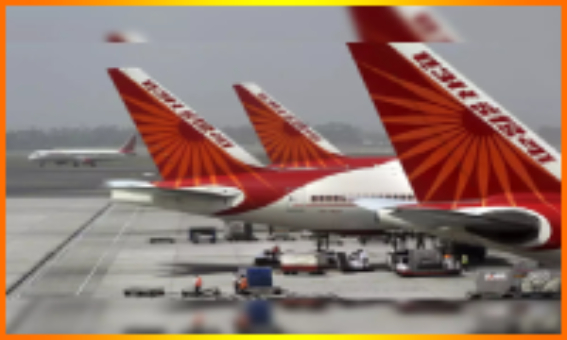
Air India aims to boost Indian cargo ecosystem, eyes 300% growth in 5 years.
Air India has placed orders for wide-body aircraft of 34 A350-1000, six A350-900, 20 Boeing 787 Dreamliner, and 10 Boeing 777X wide-body aircraft, thus bolstering India’s cargo ecosystem, the airline announced on Wednesday.
'At Air India, we see a huge potential in the air cargo industry, which the Indian Government plans to grow to 10 million tonnes by 2030. Our cargo division is implementing a series of strategic measures aimed at fostering growth and strengthening our market presence,' Air India CEO and MD, Campbell Wilson, said.
With this, Air India’s annual cargo capacity will increase by an impressive 300 per cent to 2 million tonnes over the next five years. It promises to provide the country with non-stop connection to key export markets globally.
'The belly capacity of the Air India fleet will grow significantly over the next few years, with the addition of new wide-body aircraft to its fleet this year and with most aircraft on firm order set to arrive from 2025, complementing India’s manufacturing and export growth,' the airline said in a release.
Not only will it support the economy but also help in generating greater employment prospects and boosting various business sectors, it added.
The airline further revealed that it also plans to deploy the latest IT solutions to strengthen the use of technology, including blockchain, AI, and drones to optimize productivity. It believes that these advancements will help it to deliver a wide range of services with global capabilities including pharma logistics, door-to-door logistics with global partners, and e-commerce.
In its growth plans, Air India revealed to set up three 24x7 control centres to integrate and improve customer interface, customer service and operations efficiency.
The Tata-owned airline is also investing in capital expenditure for developing airport and logistics infrastructure with joint venture partner SATS.
At present, Air India transports cargo to over 40 international as well as 38 domestic destinations. However, to foster more exports, it aims to expand its reach further through strategic partnerships, interline partnerships and trucking network connections.
Source: economictimes.indiatimes.com

Agriculture Minister invites Japanese investors to Haryana.
Haryana Agriculture and Farmers Welfare, Animal Husbandry and Fisheries Minister, Mr. JP Dalal, held a meeting with, Parliamentary Vice-Minister for Agriculture, Forestry and Fisheries, Mr. Tsunoda Hideo during his visit to Japan.
In the meeting, extensive discussions were held regarding the projects of supply chain in the horticulture sector, skill training, fisheries, agreements with the University of Agriculture and Horticulture.
The Japanese Minister assured all support and cooperation from the Japanese government and said that many Japanese companies have established their units in Haryana.
Mr. JP Dalal invited the investors to visit Haryana and also discussed in detail the modalities of future cooperation for the success of IIHM, Ganaur.
The Agriculture Minister said that on the pattern of OTA market, IIHM is also developing a Horticulture Market for fruits and vegetables in 540 acres in Ganaur, Haryana near the NCR Delhi, which will provide a big market to the farmers of Haryana. IIHM will be on the lines of Rungis market with some need-based features keeping in view the Indian conditions.
This market will cater to the requirement of 55 million population living in NCR including Delhi for fresh fruits, vegetables etc. He also discussed in detail about the farmer support system and successful operation of the market. The Haryana Agriculture Minister said that we are moving at a fast pace to set up this market and have set a target to make it operational by the end of 2024.
Delegation also held meeting with Japan International Cooperation Agency
The Agriculture Minister and other members of delegation also met the Director General (South Asia Department) of Japan International Cooperation Agency (JICA), Mr. ITO Teruyuki. It was further informed that the funding agency of the Government of Japan, has agreed to fund a multi-million-dollar horticulture supply chain project in Haryana. They have also committed to sanction this project in the next 6 months. With the coming of this project, IIHM, Ganaur will be largely benefited.
Source: en.krishakjagat.org

38,466 micro food processing units approved under PMFME since FY21.
Since 2020-21 a total of 38466 micro food processing enterprises have been approved for assistance under PMFME since 2020-21, informed Union Minister of State for Environment, Prahlad Singh Patel in a written reply in the Rajya Sabha.
Out of which 2444 micro food processing enterprises are located in Karnataka.
To ensure overall growth and development of food processing sector across the country including Karnataka, Ministry of Food Processing industries (MoFPI) has been implementing Central Sector Umbrella Scheme - Pradhan Mantri Kisan SAMPADA Yojana (PMKSY) since 2016-17.
Centre is also sponsoring PM Formalization of Micro Food Processing Enterprises Scheme (PMFME) since 2020-21 and Production Linked Incentive Scheme for Food Processing Industry (PLISFPI) since 2021-22.
Under component schemes of PMKSY, MoFPI mostly provides credit linked capital subsidy with total outlay of Rs 4600 crore for 15 Finance Commission Cycle.
Ministry also provides financial, technical and business support to micro food processing enterprises through PMFME scheme with outlay of Rs 10,000 Cr for a period of 5 Years (2020-21 to 2024-25), whereas PLISFPI is targeted to facilitate expansion of food processing capacity by creating champion brands in Food Processing Sector with total outlay of Rs 10,900 Cr for a period of 6 years (2021-22 to 2026-27).
Since 2019-20, a total of 373 food processing units have been approved for assistance under Creation/ Expansion of Food Processing & Preservation Capacities (CEFPPC), a component scheme of PMKSY, out of which 16 units are located in Karnataka.
Source: knnindia.co.in
ICAR Sees Normal Paddy Sowing This Season.
The country will see 'normal sowing' of paddy this kharif season, the National Rice Research Institute at the Indian Council of Agricultural Research (ICAR) said, allaying fears of any further increase in the food grain's prices that had peaked on account of sluggish sowing and higher exports.
There is no cause of worry for the paddy crop either in rainfall-deficient states or even in those states witnessing excessive rainfall and flooding, said AK Nayak, director at the apex rice research institute in the country.
Retail prices of non-basmati rice had increased 3% in the past one month and 11.5% in one year, despite the imposition of a 20% export duty in September 2022. This prompted the government to impose a ban on the export of non-basmati white rice.
In the eastern parts of the country, rainfall activity has picked up, boosting sowing, said Nayak, adding that the sowing window in these areas is open till August. 'This will make up for any lack in the beginning of the season,' he said.
Talking about northern states such as Punjab and Haryana which have been impacted by excessive rains and flooding, he said the paddy crop has a high tolerance for standing water and any damage is caused only if there is water above the canopy for 6-7 days or if there is submergence.
'No extensive submergence has been reported yet which will cause a significant decline in output,' Nayak said. The institute is satisfied with the way sowing of paddy has panned out in southern states during this kharif season, he said.
Despite India seeing a rainfall activity of 5% more than normal, a large part of the country is deficient in rainfall.
Most paddy-growing states such Kerala, West Bengal (Gangetic), Bihar, Jharkhand, UP (East) and Telangana have seen deficient rains. Punjab and Haryana - major rice producers in the North - have received excessive rain, causing concerns about the standing crop.
Source: economictimes.indiatimes.com